← Marketing Vanguard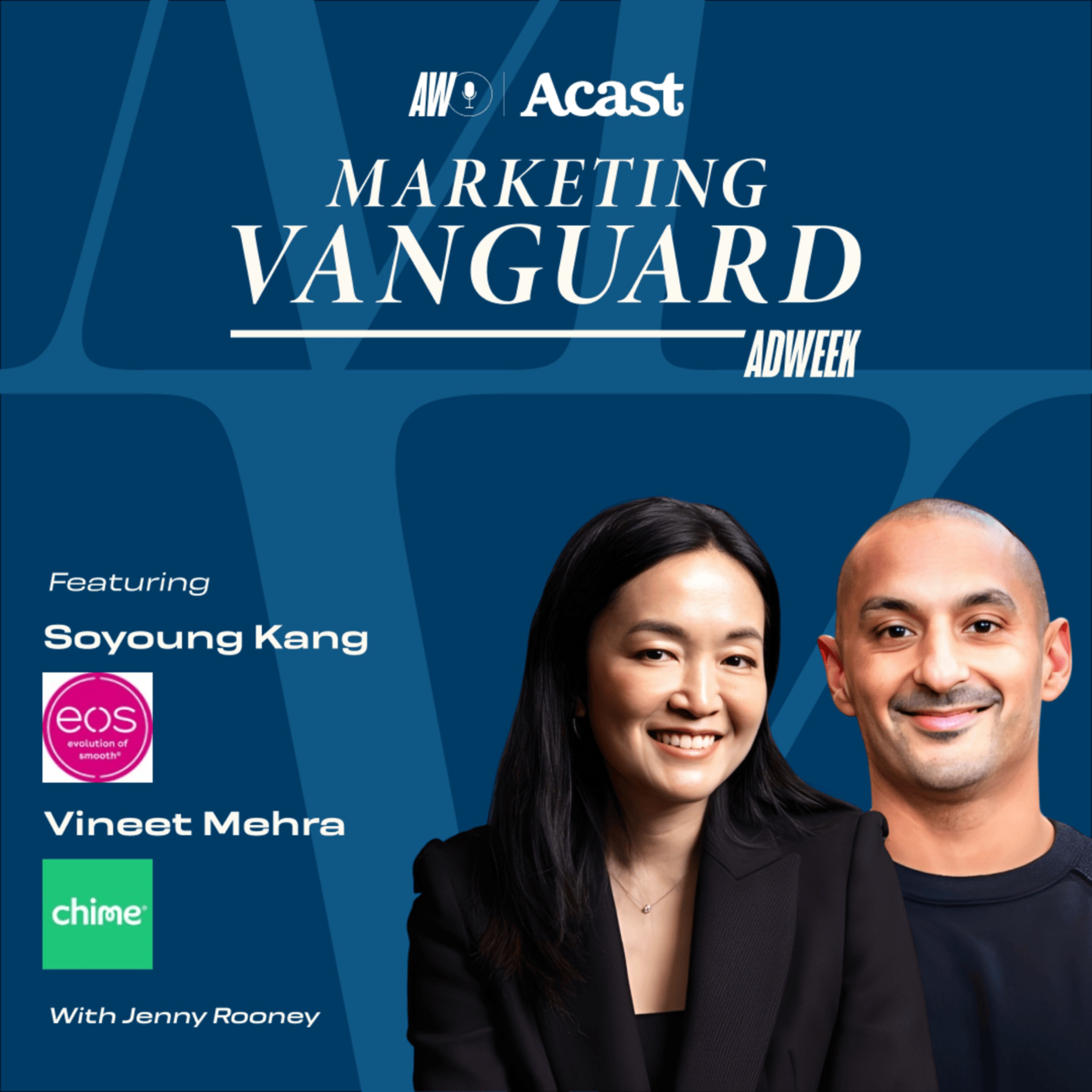
Marketing Vanguard
Building the Future of Marketing Leadership: Insights from Marketing Vanguard's Founding Members
00:32:45
Loading summary
Transcript33 lines
- [00:00]
A
Finding the right audience shouldn't feel like doom scrolling with Experian. It doesn't. Experian syndicated audiences help you reach holiday shoppers, car buyers and more across over 200 top platforms. With over 2,400 pre built audiences, there's no more doom scrolling. It's audience targeting you can trust made simple. Learn more@experian.com Adweek that's exper Ian.com Adweek the one thing that unites all of our jobs is our job is efficient growth. Right? It doesn't matter what company go into, it is growing your business commercially, your brand, whatever it might be with as efficient a capital allocation strategy as possible. Right? So the number of CMOs that might take a new job and ask for more budget is probably high. I challenge people to say take a new job and ask for less money.
- [00:56]
B
Hi everyone and welcome to the Marketing Vanguard Podcast. I'm Jenny Rooney with adweek and I am thrilled today to be joined by guests in a very special edition of the Marketing Vanguard Podcast. In fact, I'm joined by the founding members of Marketing Vanguard membership here at adweek, Su Yung Kang, the CMO of EOS Products, and Vineet Mehra, the CMO of Chime. Welcome.
- [01:22]
A
Thank you.
- [01:23]
B
So good to see you. The only thing better would be is if we were in person, so we'll have to remedy that soon. But in the meantime, thanks so much for joining me. This is really exciting. I think you all are here to share a little bit certainly about yourselves and the journeys that you all are on, but also why you raised your hands to be founding members of Marketing Vanguard and more broadly, what you think the state of the industry is, what you think the state of the role is and where you want to have impact not just for yourselves, but also for the overall community of people who hold the CMO title or equivalent titles in their organization. So again, thank you so much, Vinit Suyoung, for being here. I'd love to start by having you each tell us first a little bit about if you had to characterize where in your CMO journey you are. You know, if you had to write your own story and kind of like write your own headline, what would that be?
- [02:15]
A
Yeah, so my career is sort of a tale of two halves in a way. I started my career in CPG, P&G, J and J left as the president of the largest division at J and J. I must have been 29 or 30 years old and I thought I'd made it, realized the world was changing completely and just dropped Everything and moved to Silicon Valley and started my career in tech and you know, learned the power of working for ownership, true ownership of companies, the power of equity. Not chasing titles and prestige, but experiences and really learning the world of modern marketing that a decade ago Silicon Valley invented with direct response. And I think my unique skill set is kind of blending brand and direct response. And you know, I call this sort of the performance storytelling approach to marketing and trying to bring the best of the CPG world, the tech world together to build brands that disrupt and really take on entire categories. I've had the pleasure of creating sort of the DNA category in the country. You guys remember when genetics, consumer genetics and genomics was a huge part? That's a tough marketing challenge, right? Trying to get someone to spit in a tube, put it in a FedEx box and send it to someone. So a lot of friction in that experience, but that really became a phenomenon. I think we really struck a nerve in America. I was a global CMO of Walgreens boots and the chief customer officer during the COVID pandemic, which was absolutely insane trying to at that time vaccinate America and the UK and countries all over the world where we had locations. And now we're sort of disrupting the traditional banks here at Chime and we just had an ipo, had the experience to have sort of my second exit there. And it's a really unique experience working in VC backed companies versus PE versus public. So I've just been chasing experiences my whole life and trying to learn along the way and just do the best I can. It's been a lot of fun and.
- [04:14]
B
Really rewarding and no smooth roads to your point.
- [04:17]
A
They're all rough roads. All rough roads. But I think that's what makes it fun. I think, you know, comfort is not something I optimize for. I optimize for the challenge and the learning and it's been, it's been a lot of fun.
- [04:29]
B
And finally, Sue Young would love for you to share with everybody a little bit about your journey because I think it's been a very interesting one as well.
- [04:37]
C
Yeah, I mean, I feel like the common theme here is that nobody's journey has been from point A to point B, a linear one. And mine is no exception either. So I'd like to characterize my CMO journey as being work in progress because I feel like we're all always a work in progress congress as leaders. This is not only my first CMO role, but it's actually my first more traditional marketing role before this I've spent time in various other phases of my career as a management consultant. I spent time both on the startup side, I've spent time in large companies. And then the longest stint that I had prior to this role, which I've been in for seven years, was I spent 15 years in retail as a merchant. So nothing has looked like exactly what I'm doing now. And part of that is what still attracts me to the CMO role, because it's also a role that is truly a sample size of 1. In every organization, no two jobs are the same, no two sets of responsibilities or business challenges that we are all facing are the same. And it makes it so exciting and interesting. And so as the next challenge that I'm taking on, I'm actually, you know, just to, to be able to share with all of you, I'm taking on the next phase of my journey, which is I am taking on the role as president of eos, which is a newly created role. And I'm going to assume both the marketing and commercial respons at the organization, which is terrifying and exciting. And I just look forward to tapping into this community to help me to continue to grow as a leader.
- [06:03]
B
Love that. Well, congratulations. Let us be the first to congratulate you in person. That's amazing. Golf clap. Yes, awesome. Listen, you know, that's huge. And I think anytime we see a CMO either taking on different responsibilities, helping to reframe the role, like even as they sit within the company, frankly, that's unique. I do think that that's something that and we can get into this. Vineet, I know you have a lot of strong feelings around this, but it's this concept of ownership of the role, I guess is how I'd describe it that I think is so important for CMOs in general. Yes. To your point, Su Yung one size doesn't fit all and you know, sample size of one. Absolutely. And yet I think one thing that is common is that there has to be a sense of ownership over who you are within an organization. You cannot wait for others to tell you what your impact to a brand and more importantly a business needs to be sort of against the backdrop of that comment. Who wants to just jump in? Suyang Vineet, thoughts?
- [07:07]
C
I was actually going to say exactly this. I would echo. For me, trust has been the most important thing that I've invested in over the course of my seven years here in my role. But I think that one of the challenges challenges that CMOs have is that oftentimes trust takes time and we are expected to deliver immediate results and long term lasting results at the same time. And so the way that we have to balance how we make that impact in the short term, and yes, sometimes breaking a few things and making some big changes, as all executive leaders must do, but with also creating a long term and lasting relationship within the C suite that as the stewards of this sort of like long term, hard to measure, hard to see, sometimes for some other executives, overall equity that the organization owns, there has to be a way that we can build the relationship with the rest of the C suite that they can trust us with this incredibly important asset that is like for a lot of people, not tangible. For me, I really think about is figuring out how as an executive, I speak to near term impact and driving the top line and profitability for the total company, while also kind of pairing that with the investments that we necessarily have to make as stewards of the brand so that our brand is here for the long haul. And I think that sort of like constant balance and dance step between near term, short term and long term investment is something that we all have to be really good at injecting and frankly, almost every conversation we have with somebody else within the C suite.
- [08:38]
B
Mr. Young, specific to you, if you had to imagine you're teaching an MBA class and you're the case study, you know, to what do you attribute your elevation to the President role and your expansion of responsibility over the course of.
- [08:53]
C
The seven years, the biggest transformations that we've made have been in two areas that I've had the honor of leading, which are in our brand and what our brand stands for and how we just are engaging with our audiences and creating long term brand loyalty, engagement, passion, as well as our product innovation portfolio. So basically those two things have been the two areas that, you know, frankly were in the most need of immediate evolution. So like at some, at points it felt like revolution, but of evolution. And over the course of the seven years then we've been able to meaningfully move the business and grow the business in areas that we didn't have established footprints in before I came in. And so I do think that having that ability to point to, to meaningful building blocks within the business, but then tying that back to what you've done as a marketing leader, a product leader, an innovation leader are things that were able to bridge the gap between maybe the way that the CMO role was thought of before I came in and the impact and lasting impact that I was able to make in the role over the last seven Years.
- [09:56]
B
Yeah. Vineet, I'm sure you have a lot of thoughts on this particular topic of ownership versus you know, how much do you need to dictate as a cmo? How much do you need to react to the forces around you?
- [10:11]
A
I agree with everything that was said and you know, maybe I'll add one other angle to this. I don't think, to be honest, like every company or every CMO situation is built exactly the same. But I think there's one thing that connects us. If you come in as like a new CMO and you know I've done this, I'm a four time cmo. Right. Like you do have to adjust how you operate depending on what you're inheriting in the environment. But I think the one thing that unites all of our jobs is our job is efficient growth. Right. It doesn't matter what company go into. It is growing your business commercially, your brand, whatever it might be with as efficient a capital allocation strategy as possible. Right. So the number of CMOs that might take a new job and ask for more budget is probably high. I challenge people say take a new job and ask for less money. You know, I've tried to actually reduce my budget three years in a row here at Chime. Haven't been fully successful, but I've tried. So I think the way you have to really approach your job is just like I think all of us try to, which is a, your ultimate job is capital allocation and deploying that as efficiently as possible to drive the highest returns on that money you can. And I think if you approach it with that mindset, what I've realized over time is like that's what everyone in the C suite wants. It doesn't matter what role you're in. I think we're all here fiduciary to like grow great brands, satisfy our consumers and do it in a way that has very high returns. I think the next thing to get that credibility though is also understanding the situation you're in. So I've had the pleasure of working in PE backed companies with an exit. VC backed companies with an exit. I've also been in the C suite of public companies. They're very different love languages in each of those businesses. Right. PE is going to be more of a leveraged buyout model where cash is king. Right. And really honoring that sort of the debt the company's putting on with as much cash flow and short term cash generation and three year outcomes as possible. Right. So that's one sort of love language. And are you sort of thinking right from the start with the thesis of that private equity company was and is everything you're doing aligned to that thesis? Right? On the VC side of it, that's a little different, right? VCs take 100 shots on goal, a thousand shots on goal, and maybe not all of them are going to be successful, but are you going to be that company that's an outlier, that's going to have outsized growth and returns while being a private company? And that's a slightly different model. And in the C suite you have as many of, you know, public shareholders where kind of beat and raise type earnings and quarterly type metrics start to matter a lot. So I think at the core of it, if we as CMOs approach our early days in a new C suite about growth and efficient capital allocation, I think you're going to win a lot of fans. It's not, you know, really more than that. I think in the early days and then depending on the situation you're in, whether it's pe, bc, public and even within those, there's different situations really understanding the love language of your stakeholders and what outcomes are considered success and I think will align you very closely if your plan can lead to those outcomes. So I think it's ultimately we're here for commercial delivery and building generational brands and I think if you can balance that in the context in which you're operating, I think that's going to be key.
- [13:31]
C
Just to add on that because I think Vinit I oftentimes speak about our job as being sort of like being a portfolio manager because you're trying to do long term investment but also deliver dividends like now. And I think that when you talk about the roi, I think that sometimes where I have, have, you know, talked to other marketing leaders and, and where, where folks have struggled is talking too much about the I and maybe not enough about the R. And that's where I think that the balance of really talking about what is it that you're aiming to deliver to the business versus what did I spend, what did I make, how did I deliver, how did I allocate my budget? Really focusing the bulk of the conversation on the R is really key, right?
- [14:10]
A
Yeah, on growth basically. Exactly. It's drive growth. I couldn't agree more. Well said.
- [14:15]
B
Not to like bring it down to this, but I personally always get fascinated around like what educational backgrounds do effective CMOs have and I'm going to ask that question of you all. But if not education in the traditional sense, where else are you Getting your knowledge. Because what you're talking about, Vineet, what we're all talking about, you know, to me, that's insight that is either on the job or, you know, you did get an mba, or you focused on something completely different that enabled you to have that broad business knowledge and education as sort of a backbone for the marketing leadership that you have. But what do you think is optimal? I think from an education background, foundationally.
- [14:54]
A
You'Re asking the wrong dude here. I went to a very mediocre school. I have an undergraduate degree. This school is super easy to get into. Like, I was not a good student. I majored in music and economics, right? Like, you know, music theory and, like, economics in a not great school. And I honestly don't know if I learned much. This school gave me a platform to get recruited into my first job. I'll give it that. Right? Career Services was excellent, but I'm not sure I learned much. And this is why, like, I've really chased experiences in my career. Right? You know, I've lived in India, Singapore, Switzerland, New York, San Francisco, Chicago. I think my wife and I were counting the other day. We were like, we'd married 18 years and we've lived in 16 houses. You know, think about that. And so I've just been obsessed with learning and curiosity and all of these things of working in PE or working in VC or working in a public company. There's no textbook that can replace an experience, right? Jenny, you've heard me say I've taken three pay cuts in my life just to take that experience. And I just am obsessed with learning. And I just don't think, yes, you can listen to podcasts. I do that. Just intake as much as you can. But I think on the job is 80% of growing who you are. And I really encourage folks, especially with this crazy platform shift we're experiencing, to just get in, dig in, be curious, and have as many experiences as possible. Don't chase the titles, don't chase comfort, don't chase the pay. Just get yourself ready for a future that's going to be entirely different than I think it is. Right?
- [16:41]
D
Are you a marketer facing a big challenge or a big opportunity? Maybe you're moving to a big new job. Well, you need the Mini mba. I'm Mark Ritson, and I launched the Mini MBA to pack every little slice of valuable learning into a tiny amount of time. It will give you all the tools, all the language, and all the confidence you need to tackle any marketing challenge. That's why we like to say in the MBA major, roi.
- [17:10]
B
Now listen, the next generation, and now I have a college student, by the way, so, like, my mind's all about this. You know, the next generation is going to be here literally tomorrow in these jobs. And so this is obviously so necessary to advise, think about, you know, if you could have done anything differently, what would it have been? Su Yang over you.
- [17:31]
C
So on paper, I do have, like, the pedigrees that you would expect. Like, I have an MBA in marketing and finance, right. But in reality, nothing I do today looks like what I learned about back then. Nothing. Right? Like, it looks nothing like my education. And so I have to acknowledge that having the piece of paper and all of that stuff, it opened doors. Like, that's full stop. That's like a privilege that I'm eternally grateful for. And yet, at the same time, the things that open doors aren't the things that keep you in role and keep you getting promoted and keep you succeeding. The things that keep you in role, succeeding, and continuing to move up in your journey are the things that Vineet talked about. They are the things like curiosity, experience, saying yes, say yes to things, go for things that stretch you, even though they seem scary. Because the reality is that, you know, especially for women and or people of color, there are a lot of times that we have been held by the outside world to sort of like having to prove ourselves before we get the role. But if we have a shot to go after the role and then stretch and grow into the role, we need to seize that opportunity. And so having that bravery and having that willingness to kind of like just go for it and, you know, shoot your shot is something that I think is fundamentally very important for all talent to be thinking about, no matter where in your career you are.
- [18:50]
B
I love that because there is no path, really. I mean, it can help you, but really it's sort of the ability to learn from each other and take the opportunities, take the risks along the way that are so key. Listen, it's not easy. We all know this and we've seen, quite frankly, even just recently, you know, especially just with creative advertising, the things that are so hard in this day and age, especially with social and culturally, the challenges that we face. You know, our economic environment is very challenging right now. Listen, I would argue that those things have always been forces working against marketers. It's always been, especially since the advent of the Internet. I would argue, you know, taking risks, big swings, doing things that are meant to grab attention or push brands out of traditional bounds. Or do things differently. There's always going to be a risk of winning or losing in that regard, or winning and losing. In some respects, it's like walking a high wire, Right. I mean, don't you feel that in this role more than perhaps if you were, you know, a role that was more prescribed? Is that a fair assumption to make?
- [19:53]
A
Yeah, I think what's been really unique about the CMO role, I won't get into the history of marketing here today, but like, you know, for 30, 40 years, 50 years, it was a bit of a set it and forget it sort of model, right. There was very few places to get attention. You'd buy it and you would basically buy attention and have great creative and go. Then the direct response revolution started, fueled by the way, by VCs. And most people don't talk about this, but CMOs were the biggest technology buyers in the C Suite, right? You look at the rise of Facebook, Google, Salesforce, Adobe, all of the companies that created trillions of market cap value in like the mid 2000 kind of teens there, those were CMOs buying those products, right? So we became the largest technology buyers all of a sudden in the C Suite. And so that was a platform shift we had to deal with. There was this like east coast, west coast brand performance. I talk a lot about. It was like a Tupac Biggie divide in our industry. So that started to happen and now we're in this next evolution of like, you know, what AI is going to do and the agentification of our workforce and machines basically making all the media decisions, creative decisions, et cetera. So I think what makes our role unique, Jenny, and why we're constantly on this high wire, tightrope thing is because our role, if you think about any other C suite role, the innovation that is happening in our role over the last 30 years, it is constantly changing and not incrementally. I mean, we're having entire platform shifts every five years. And I think the biggest shift is yet to come that will make many skill sets frankly irrelevant if we're not like really careful about that. Now, the fundamentals of like brand positioning and having a story that the machines can learn off of so that your brand, even in a zero funnel world, stands out. Those things are never going to go away. But it's this constant changing of the platform that makes our roles very unique in the C suite and I think makes things like everyone's talking about curiosity, learning, chasing experiences, saying yes to things that stretch you as so young was saying it makes it very important skill Set to be a cmo, I think, versus, you know, many other roles.
- [22:16]
B
So it's interesting. You know, I do want to talk now about Marketing Vanguard because this has been a great setup for that because I think, you know, anything that you do that's new, there has to be intention around it. And I think there has to be a context against which you build things. Frankly, even when we named Marketing Vanguard, we intentionally used the word vanguard because literal definition is a group of people leading the way in new developments or ideas. That's the definition of vanguard. And what I like about that word is it's very proactive, right? That's not about reacting to things, that's actually driving the agenda, that's actually articulating the change, that's actually making the decisions that, you know, have ripple effects for not just your own brand and business, but for the practice and for the C level marketing role. So my question to you all is you all, as I said, raised your hand to be part of this. There are a ton of CMO offerings out in the world. Tons. There are clubs, there are communities, there are gatherings, there are resources. We did our homework and obviously we know all of them. They all serve a purpose and they're all unique in their own way. You know, we did land on something that we feel is unique and actually fills a need that is also unique. And this whole Marketing Vanguard community is predicated, is based on three things. Access, intelligence and influence. And I won't go into detail on that, but those are very again, intentionally chosen words and intentionally chosen buckets of offerings that we feel do two things. They advance the individual, but then they also advance the collective. Right. And this is more about not just what you plan to get out of Marketing Vanguard, but what you plan to put into it. And if there isn't that sort of flywheel reciprocity, it's not going to work. Right. So you know, my question to you, I guess, long winded question is why did you say yes? You know, what is it about this that you feel is a great new opportunity for you as an individual, but also what do you want to give and what do you want to get out of it? Vineet, I know you've got opinions, you know, as far as what you want and need it to be. So I'm curious your thoughts there.
- [24:26]
A
Yeah, I'll jump in. I'm curious about obviously Cy Young's views as well. Look, we are the most self congratulatory function, embarrassingly so, in the C suite and what we don't need is more like CMO awards and worship. And I think it's a really bad look for all of us. And you know, while we're definitely all PTSD in our careers, I don't think we need more of that. So why did I like decide to become a founding member of Marketing Vanguard? Look, I think it comes down to Adweek Scott. A unique role in our industry. Right. Adweek has a voice that it's congruent with marketing. Like, you can't think of a, in my opinion, a marketing landscape without an ad week in it. Right. Like, I remember reading these things when I was an assistant brand manager, like hoping I could do some of these things one day. It just plays a huge role. And I think because of that role. What's that Spider man quote like? With great power comes great responsibility.
- [25:30]
B
Sure.
- [25:30]
A
I think, you know, Adweek has a huge responsibility to grow our industry and our influence and what we do. Not through like self congratulatory type acts, but through actually telling the real narrative of what marketers do, the role of marketing and how commercially oriented we are. And I think I'm probably not the only CMO that's totally sick of all these demise of the CMO articles and tenures. It just none of that clickbait stuff does any of us any good. And so the reason I joined was because I think together as a founding member with all of my peers, I think we can rewrite the narrative a little bit. I think, you know, this is that influence piece that you were talking about. I think we can collectively make sure that the narrative of our industry, what we've chosen to do as a profession is really correctly attributed. That, you know, any myths are broken. Right. The myth of the like, brand only CMO or whatever is broken. Right. That we are all commercial leaders and the role of marketing is way more seminal than we think. And I think Adweek and the Marketing Vanguard group gives us a unique role to play in partnership with Adweek and the editorial teams to really tell the narrative that we want. I'll also add one other thing. I mean, the mini MBA benefit that you guys have with Mark Ritson and team is really cool, actually. I just, I have a classic case of a product marketer who is new to her role feeling a little bit of like almost imposter syndrome about like being a product marketer. We signed her up for this mini MBA and she's going to head off there and be part of that. And I think she couldn't be more excited. And you know, these are real tangible Benefits that'll help me bring the capability of my organization up. And so between influence and actual, like true world class access to programs like Richton has, I think it's a pretty powerful proposition and really proud to be a founding member with all of you.
- [27:31]
B
Well, thank you and I appreciate that, Vineet, tremendously. And on that point, you know, education is a big core fundamental for this program, even in the optics of the way we. Not just optics, but you know, we have our annual Marketing Vanguard Summit is at the University of Chicago Booth School of Business. And that is again, intentionally chosen because when you're in a room where the vibe is academic and you're actually being able to have conversations, it isn't like a stage audience arrangement, but it's a collective. And you guys have been there. Like everybody in the room is a participant. In fact, when we invite people in, we call them, you're going to be a provocateur and it puts the onus on the individuals who are in this room to actually stimulate the conversation, challenge each other, disagree with each other, because the only way you really learn, obviously, is just through disagreement and engagement and dialogue. And so I love that that piece for you resonates because that is a big part of what we're trying to do here. And the other thing I'll say is the intentionality of the curation of the community is key because you learn from the different as much as you learn from people who are exactly in your same situation. So, you know, and again, because of where we sit, we're able to curate a community that is of people who are coming from very different company sizes, by the way, very different sectors, very different industries. You know, they're not all one industry or another. They necessarily have the CMO title or equivalent title, meaning they have reached that like highest echelon of marketing leadership in any given organization. But they might be from very disparate and different kinds of companies. So while there'll be opportunities to learn from each other, especially from people who are frankly or even your direct competitors or people who are very much in the same sector and dealing with the same issues, there will also be opportunities to learn from each other in terms of the differences that the CMOs are experiencing. SU Yung, over to you. You've been quietly listening to Vineet, but I'm curious your thoughts because certainly, you know, Su Young, you've been an active participant in the industry. You know, you've given back in so many ways. I'm just curious your thoughts and kind of the why for You.
- [29:34]
C
Well, I was going to start off by saying, like, when Jennie comes asking you to be a part of something from the ground up, you don't even ask what it is. You just say yes. Because that's just how good I expect this community to be. And I say that jokingly, but kind of only half jokingly. And I say that because even from the beginning, you know, as I think about the way that you and the rest of the Adweek team have structured what Vanguard is meant to be, I think there's just so much thought and care given into creating an experience that is truly unique and creating a community that's unique. So the fact that you started off even with the question of what do you hope to get out of it and what do you hope to give back to it, like that second part being fundamental and part and parcel to the mission is different. That just already frames the entire experience in a different way. Oh, I'm expected to give back. This is not just this is an audience participation community. This is not just like get, get, get. It's also a give. And for me, that give is really. It's two things. When I think about the Vanguard summit that you just referenced and the opportunity for me to bring along my next generation leadership and talent so that they can start to really be part of these incredibly rich, dynamic conversations with the best marketing minds in the world, it's like, what kind, what other forms do you have to be able to get that kind of access not just for yourself, but for the rest of your team? I just think that's extraordinary. And for me, maybe I'll disagree just a little bit with what Vineet just said, which is that I think that as we talk about myths throughout, like history, myths have always been rooted in one little nugget of truth. It may not have been the truth, but there was always a nugget of truth that kind of created the myth. And so when I think about myths, which, you know, I agree that like the bulk of it's, you know, mostly myth, but just a little nugget of truth in things like the brand only CMO or the relevancy of the role, you know, these things that we all sort of, like, all struggle with and contend with. I think that at the heart of that is that there are those of us, myself included, who need help in different parts of the journey. I need help learning other aspects of the role that help me to overcome that little nugget of truth that might exist within a myth for me and my personal journey. And so Having access to the level of high quality content, education, community, thought partners, leaders. And I've already seen that in action. Even though the journey's been relatively new, I think I've had probably three or four different interactions where I needed an introduction to somebody and got it, or somebody reached out to me and ask me for my help and expertise or bringing along somebody to learn from the Vanguard Summit. There have been all of these instances where there's been so much that I've been able to get, but then also be able to give back to the community. And that's what really makes it unique to me. I'm just so looking forward to seeing where the rest of the journey takes me.
- [32:22]
B
Awesome. I appreciate that so much. I appreciate you referencing the Next Leader concept, which is true. And everything we do with Marketing Vanguard, every CMO invited in gets the option to bring with them into the room, virtual or real, a plus one next leader. And that's the person who's their ride or die, their close confidant, the person that they're working with day in, day out. And to your point, Su Yung, you know, the hope is that there's an added benefit certainly for those individuals, those Next Leaders, to have access to the marketing minds that we would convene, but also for the CMOs, you know, because it gives them an opportunity to really engage at a new level with those next leaders. So I lied and I did keep you close to an hour and I apologize for that. But I do think the content was really phenomenal and I and I do think that everything you guys have talked about has been totally worth listening to and I'm really grateful for your time. I'm so grateful to have you part of this journey with us.
- [33:19]
A
Thank you for listening to Marketing Vanguard, part of the Adweek Podcast Network and Acast Creator Network. You can listen and support. Subscribe to all of Adweek's podcasts by visiting adweek.com podcasts. Stay updated on all things Adweek Podcast Network by following us on Twitter Adweek Podcast. And if you have a question or suggestion for the show, send us an email@podcastdweek.com thanks for listening.
- [33:47]
D
Are you a marketer facing a big challenge or a big opportunity? Maybe you're moving to a big new job? Well, you need the Mini mba. I'm Mark Ritson and I launched the Mini MBA to pack every little slice of valuable learning into a tiny amount of time. It will give you all the tools, all the language, and all the confidence you need to tackle any marketing challenge that's why we like to say mini MBA major roi.