← Marketing Vanguard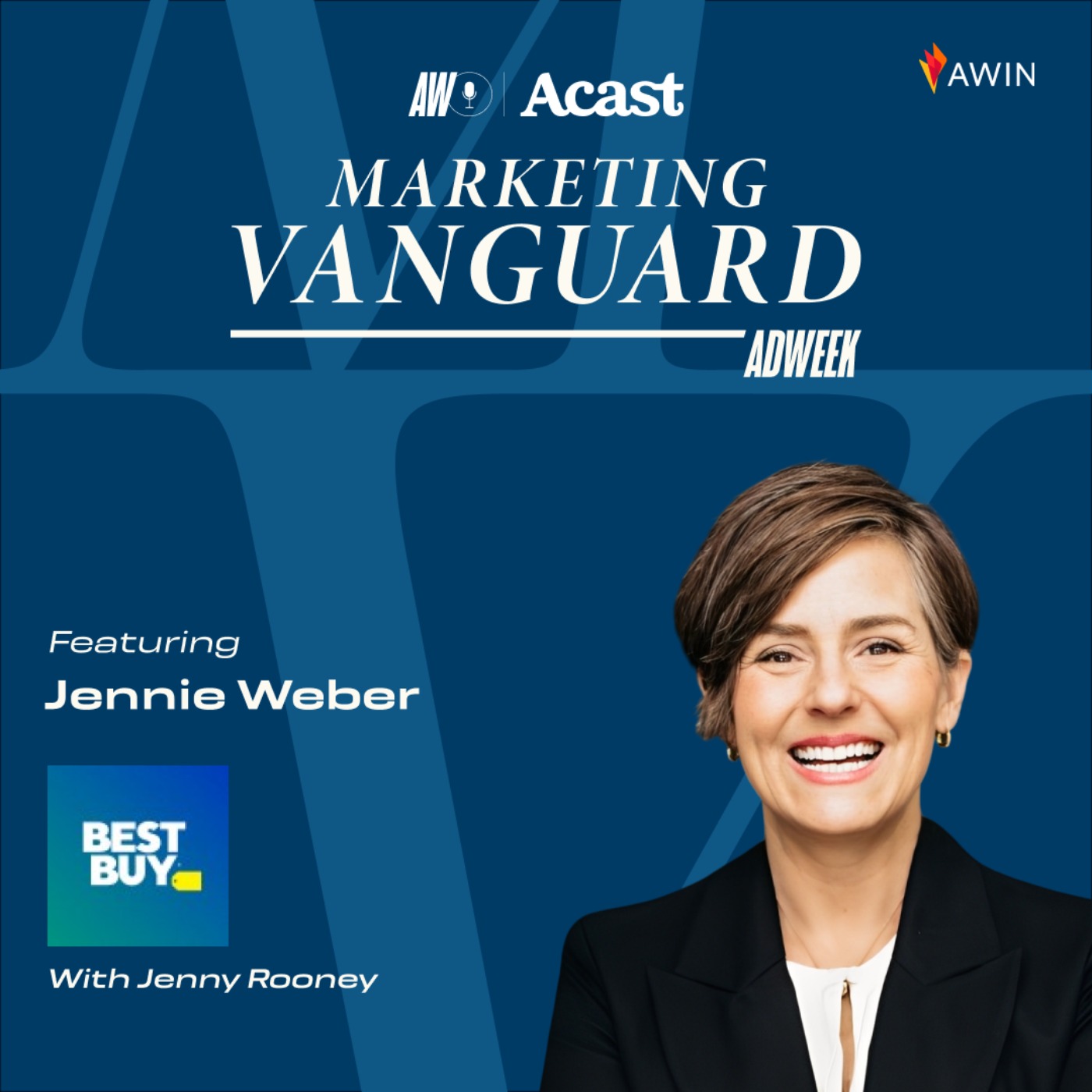
Marketing Vanguard
Building the Most Agile, Adaptable and Resilient Marketing Team: The Jennie Weber Way
00:35:32
Loading summary
Transcript50 lines
- [00:00]
A
Did you know influencer marketing drives twice as many sales as display advertising with a 37% higher retention rate. AWIN helps brands unlock the full potential of the creator economy with their influencer management solutions. Utilize their robust discovery capabilities and creator management tools to build your perfect creator roster and track full funnel performance. Visit awin Link Adweek today and start building high performing partnerships. That's a w I n Link Adweek.
- [00:34]
B
How do you create a team that can be adaptable? Gaining new skills to meet new challenges that are ahead? Resilient because not everything is going to work or not everything is going to fall into place the way we might think. So how do we have an attitude of resilience where we take that as a learning and then adapt to what we might see?
- [00:58]
A
Hi everyone and welcome to the Marketing Vanguard Podcast. I'm Jenny Rooney with adweek and I'm thrilled today to be joined by Jenny Weber. She's the CMO of Best Buy. Jenny, welcome.
- [01:09]
B
Thank you. Good to see you again. Jenny, great to see you again as well.
- [01:13]
A
I'm excited to dive in. I mean, we're going to have slightly lengthier conversation than we had just recently, but this is going to be a great opportunity for us to kind of level set. And I always like to start these podcast interviews by asking my guest to talk a little bit about themselves and tell me your brand story, if you will, starting with your background and what got you to this current role.
- [01:35]
B
Love it. I love that you frame it up as what my brand story is. That's very appropriate. So I think that's great. I'll start with this. I am the Chief Marketing Officer at Best Buy, which you mentioned, and maybe I'll give a little bit of detail on what my remit is. So I lead our marketing capabilities, which includes setting and framing up our marketing strategy all the way through to executing, whether that's media or creative. And I'm doing that both for the Best Buy brand and for our Best Buy Ads network, which you're familiar with. I also lead our membership and loyalty offerings, which is just really how do we truly engage with customers? How do we think about bringing them back? How do we reward them for their loyalty? And then I also lead our customer Insights and integration team, which I really love because I think a couple things. One, I think the customer needs to be at the heart of all of our marketing and I also really love being the customer advocate at the table when we're talking about experiences or value propositions that we're creating as a brand. So it's really a privilege to be able to be part of the work across this team. And I feel like I'm so lucky because I get to work on things that I truly enjoy and am passionate about doing, whether it's telling our brand story or thinking about our customer. And so I just feel really fortunate. And then I truly love Best Buy. It is such an incredible iconic brand and it plays such a significant role in customers lives, really helping them discover and find technology that levels up their life. Our mission statement or our purpose is enrich lives through technology. And that is just so true. I mean, technology is just an absolute linchpin in everything that we all do today. And so I love being able to be part of that. And then we just have like an incredible culture and team. So I get to work with some of the best people that have good hearts and are also just incredibly talented. So I just feel very lucky all around. A great spot to be.
- [03:54]
A
That's awesome. Would you get your education in? Let's start there and then sort of how did you work your way up to this role and where have you also had stops along your career journey?
- [04:04]
B
So interesting. I have a degree in history and I was a really young mom and navigating and juggling finishing my undergraduate degree while I was raising two little small people. And at one point I was like, okay, I think I want to be a teacher for sure. This is what I want to do. I walked into a classroom, like early in your education they have you do like classroom, you go in and you work with a teacher. And I pretty quickly realized through that experience, like, you got to have a deep passion for this and my heart is not in this. Like, I don't think this is the path that I want to take. But I really loved history and I was so far down the process that I decided to stick with history. And I got a bachelor of arts degree in history. And I think what I took from that, that I now apply all the time, every single day. I can really think through and analyze context. And so I really love context. And I think that is what history is. It's like the context of where we all came. And I can do that in my current job and do it quite often. Like for example, I get to work in the Customer Insights team. So learning about macro forces and factors, understanding people and what makes them tick. For me it was very tied into why I enjoyed history because you get to learn about people and cultures and what they did and why they did it. And then I think just in general was able to communicate really well. And obviously as a leader, that is something that we're doing every single day. So. So I did not go into teaching. I did not really use my history degree and go into a space within history. I ended up going into business. I was an insurance salesperson, which also was not going to be my long term road. But that's really where I started. I sort of learned business by being in the insurance industry and doing cold calls and working with a variety of businesses. But I really hated cold calling and so ended up basically parlaying that into an entry level marketing position. I was a marketing coordinator at a tech services company and went from there. That was sort of the start of me being in the marketing space. And I think one thing you said that really resonated with me was what was your path or the turns that you took? And I think you'll hear a lot of people say this, that their path was not linear. And that is very true for me as well. And I think that's the right thing. Like, I think to think about a path as more of a lattice or a jungle gym and like you're taking a bunch of different turns and learning and gaining knowledge and insights out of all of those that you then apply to the role that you're in is a really great frame or way to think about that path. So mine was very nonlinear. I did all kinds of things both before I came to Best Buy and then once I was at Best Buy. That I think laid the foundation for my continued success in the marketing space.
- [07:09]
A
I love that. So you've been at Best Buy now for how long?
- [07:12]
B
A little over 20 years. I am a boomerang. I did leave and come back. And my detour or my leaving was really I went and worked at a creative agency, at an advertising agency.
- [07:24]
A
It was.
- [07:25]
B
I sort of did this, like, what haven't I done yet? And what else might I need to experience in my career to be successful? And it was just one of the things that I hadn't had the opportunity to work in. And so I left Best Buy and went and worked at a small boutique agency in Minneapolis at the time called bdm. And it was such a formative experience. I learned so much. I was only there a year, so it's not like I was even there that long. But I learned so much in that experience from the creative team, from the other account executives and leaders, just in how agencies think and how that can be applied back into a corporate environment.
- [08:09]
A
What's the headline there? How do agencies think that you took away from that.
- [08:14]
B
Well, there's no barriers to the ideas. Right. Like, oftentimes I think in corporate we're very much like, well, we can't do that and this is going to be complicated and that's not going to work. And in an agency, they just are like, not hindered by any of that thinking. So they're not hindered by, like, what won't work. And then secondly, the executive creative director would assign a problem to be solved or an opportunity to multiple teams, and those multiple teams would come back with a variety of ideas. And I also really loved that. And you don't see that in corporate either. Typically, it's like this one person is going to go solve that problem. And I loved this idea that. No, actually, if you give this idea or this problem space to multiple teams, they can come back with a variety of ideas that will solve the problem. And I thought, like, that's really rich. Like, that gives you a lot to work with.
- [09:04]
A
Totally. It's like your crowdsourcing ideas. Right. Truly, so many questions in that. But I love that you did get that agency experience and how that's informing now what you're doing. Does that mean you're more unfettered with your creative ideas?
- [09:16]
B
Yes, I think so. And I think I'm more willing to lean in and provide what creative ideas I have, knowing some will be good and some will be absolutely terrible, but that I have permission and a right to also share what they might be. And so, like, I. I think that's something I might not have otherwise had if I hadn't been in that environment and learned from some fantastic creative leaders.
- [09:39]
A
I want to get into the business of Best Buy, but first I need to ask. You're in the Minneapolis area. Yes. And that's a unique stronghold of brands, I guess, for lack of a better word, I mean Minnesota, and correct me where I'm wrong, but 3M Target, Best Buy, like, there is a proximity to the auto industry, of course, in Detroit, definitely a decidedly Midwestern company. How do you think that's informed your worldview? The way you think about building the business and certainly building the brand?
- [10:10]
B
It's such an interesting insight. You're right. This area is rich with incredible companies and really incredible talent across the board. We have a really strong marketing community here and business community. A couple things that I think are interesting. There is definitely something to Midwestern grit and work ethic that I think is unique to this area and certainly at Best Buy. You see that? I mean, we have, I think A culture of folks that will really dig in and lean in to get the job done. And so you see that in how the teams come together. And, and I think that could be unique to the fact that we have very strong Midwest ties. There's something about the Midwestern stoicism and we face these darn winters. You have to be. It's so true. You gotta be resilient.
- [11:06]
A
You have to be resilient. But it's also the consumer insights because I mean, look, I think both the brand industry and the entertainment industry, obviously there's the gravitational pull to the coasts and there's just so much happening in the so called flyover states. Like the people who sort of comprise certainly in this country, but this very North America centric question, but like how do you make sure that you're keeping tabs on or finger of the pulse of the consumer sentiment, consumer need, consumer spending, and is there something obviously unique about being in the Midwest that enables you to do that ultimately in a successful way?
- [11:41]
B
It's a interesting way to think about it. I guess I would take a step back and look at it from a Best Buy perspective. And I don't know that this is because, because we're a Midwestern company, I think this is very inherent in our DNA. We really focus on and put the customer first. And I honestly think that the credit goes back to our founder, Dick Schultz. He was very much oriented and focused on how to meet customer needs. And so that has been very much part of our company and who we are and how we show up. So much so that today in a lot of our conference rooms, there's a sign on the wall that's like, what do you know about the customer? How does what you're doing solve their problem? Like it is just part of what we do. When you walk in our building, there's a sign on the stairs that says we put the customer at the heart of everything that we do. And so that shows up in everything from our marketing strategies where we really think about how does this technology make a customer's life better? Better? How does it make that customer say, oh, I didn't know it could do that or I'm so excited to use this. It shows up in the types of products that we assort and put on our shelves or put on our E Comm experience, making sure that they meet a customer need, that they truly are a standard that we are proud of and will solve problems for customers. And then it just certainly shows up in all of our branding assets and how we Go to market.
- [13:14]
A
Yeah. No, I love that. It's funny you said on our shelves and in our e commerce experience. I know that. I mean, now let's go to the fact that you are a major retailer and retail as a category has been going through so much transformation over the years. I mean, I go back to the early 2000s, where everything was brick and mortar, and then it was talked about as bricks and clicks. Like the whole progression in the advent of the Internet transformed shopping, and Best Buy has been through it all. Obviously, you started out talking about how you oversee the retail media network as well that Best Buy has, which is such a smart strategy, because obviously you have the consumer data, you have the shopper data, you have the insights around what they want, what they're spending on, et cetera, and that informs that offering. But what is it about where we are right now as we sit here in 2025? AI is just everywhere. The discussion around that is just, you know, you cannot escape it. And I don't think we've yet even figured out, like, how retail is going to continue to transform, how commerce, how shopping is going to continue to transform in truly in the age of AI. But what gets you excited about this point in time and what also gives you pause specific to the retail, you know, how to succeed in this era.
- [14:28]
B
As a retailer, you are totally right. We have seen such a transformation in the consumer that has led to a transformation in how retail comes to life. And actually, I think that's what excites me. It excites me to think about the continued transformation, how the customer will continue to evolve. And I think if you're in retail and you're tied in with what's going on with a customer and you're passionate about it, you actually let that lead you. And that's exactly what we do. You know, we see stay as far ahead of the customer as we can, but we're taking those insights and gleaning those insights from how they want to shop, what problems they're trying to solve, how we can best meet their needs in a really differentiated way. And so the fact that everything is changing, and I think changing at a much more accelerated pace, doesn't scare me or make me think like, oh, that's the end of retail. I actually just think like, no, that is the next phase of retail and the next phase phase of how we're going to meet our customer and we're going to meet them where they want us to. And so if that means that they're leveraging AI tools to do discovery. We're going to figure out how we show up there to best help them discover the right technology for what they're trying to do. And most AI search tools are reliant on the content that is out there. And AI search tools are going to try and find the best information to help the person who's doing the searching. And so very much like we do now, if we're serving up the right kind of content that truly puts the customer at the center and gets them the information they need to make the best choice, that will follow through into AI search engines as well. And so I think for me it's actually very exciting. Like this is just the next generation of what retail is going to look like and I love being on the cusp of that. And I think Best Buy is really well positioned to continue to meet customers needs in that way.
- [16:34]
A
Did you know influencer marketing drives twice as many sales as display advertising with a 37% higher retention rate. AWIN helps brands unlock the full potential of the creator economy with their influencer management solutions. Utilize their robust discovery capabilities and creator management tools to build your perfect creator roster and track full funnel performance. Visit AWIN link slash Adweek today and start building high performing partnerships. That's AWIN Link Adweek way. Yeah, no, I love that. And if you go back and you think it through, it was always like store only. Then it migrated to websites and the Internet brought people to websites. Then the dawn of mobile created a whole new shopping experience. Take it with you. Then social media, the whole social commerce and now we're in AI, the era of AI where you. Yeah, to your point it's like put the shopping experience right where the consumer is in that moment of discovery or search. So that's a lot to keep up with. It continues to transform. Obviously you have to build your team to be elastic enough to expand and contract as necessary to meet the needs. Just generally speaking because that's a whole nother, that could be a whole conversation. But high level. How are you thinking about making sure? Because you are a brand side marketer as opposed to an agency for example. And again I do think that's a difference with agencies is they are able to expand, contract, meet client needs, build teams around that. How do you think about doing that on the brand side?
- [18:07]
B
I think the way I would frame it up is more about adaptability and how do you create a team that can be adaptable, gaining new skills to meet new challenges that are ahead, resilient because not everything is going to work or not everything is going to fall into place the way we might think. So how do we have an attitude of resilience where we take that as a learning and then adapt to what we might see?
- [18:35]
A
Not as a setback and not as something.
- [18:38]
B
Absolutely right, not as a setback. It's something we're going to learn from. And how do you take that into the next strategy or the next plan or the next experience that you're building? And so I think what I'm trying to think about is how do I create an environment of adaptability and to steal the term growth mindset where we're able to take those setbacks and say, okay, what are the five things I learned from that and how am I going to apply that to what I go do next? I think that's how we're really thinking about it versus expand and contract. It's more about adaptability and driving the outcomes that we need to drive in a way where the team feels great about it, the customer feels great about it, and it truly drives value for Best Buy.
- [19:21]
A
And also, the word is learning. So you're enabling an environment for learning on the job, literally through the doing your learning. But also I would imagine that there's definitely space for a new kind of opportunity for enabling your team to access learning resources moments. That's like a, almost like an operating system, like an always on. Because things are changing so dramatically, you know, and having access to resources that continue to help them learn in real time.
- [19:47]
B
Yeah, I think access to new information and access to new tools and space to experiment. And so as we start to bring in new tool sets, how do you give the team space and time to say, oh, here's five new use cases for how I'm using this tool and I'm able to apply that to the work I'm doing. It's made me so much more efficient or it's made the work so much better. And so I, I think it is, yes, absolutely, getting teams upskilled and resources. But also so much of this is new and nascent that just giving them time and space to play with and try new things I think is hugely advantageous.
- [20:26]
A
Back to the retailer question. What becomes the role of the store in this day and age?
- [20:30]
B
Oh, I think the stores play a really significant role and will continue to. And in fact, I think what we're seeing right now with Gen Z is that there's almost a resurgence to, to get back to things that are physical in nature. I don't know if you have been to a mall Lately, but I have noticed that the malls are pretty busy and that there are people there and people want to go into spaces and places. And I think especially in technology it is a highly considered purchase. And so if they can come into a physical space and see and compare and when needed, ask a few questions of a knowledgeable associate, it really has a big impact on their shopping journey. They don't need to do it every time. It's probably dependent on what they might be purchasing. But I think the stores play a really critical role and I think that is one of our key differentiators as a brand. I'm sure you've probably seen some of the partnerships we've done. We've partnered with Meta for their Ray Ban experience. We are the only store that you can come to where you can try on and experience, experience the Ray Ban Meta glasses and really see the value that they can add to you. We have a partnership with Ikea, same thing there. How do we create a physical space for the Ikea brand where customers can come in, have that interaction, see both the appliances and the kitchen cabinetry all together in a unique way. You can't do that without a physical presence. And so like I feel like the stores, we have continued to evolve that experience. Again rooted in the customer and what they need and how they want to shop and how they want to discover. And so we're able to really offer something unique. And those partnerships are just a couple of examples of ways that we're doing that.
- [22:19]
A
I love that I was going to ask you about those brand takeovers right in the stores. So it feels like you're walking into the experience and they're like pop ups within the store, but they're really like these moments of interaction that you create for the consumer. And by the way, I think it's interesting in those two examples, one was Meta, but the other was another retailer. The openness of that, because it's smart for them, they're going to get customers that they wouldn't otherwise have access to experience the environment of their world and their brand. What about your brand collaborations? I think I've seen you done things with the NFL. Dude, perfect. How are you thinking about that? To get reach for the Best Buy brand through collabs with other brands.
- [22:58]
B
It's another really good example of where we started with the customer. And, and what we're seeing is there are, we call them passion points. So things that one have cultural momentum, are meaningful to customers and also are authentic to Best Buy. And there's like a reason for us to be there. And so with kind of those three areas really keyed into some significant passion points. One is obviously sports. There is so much cultural momentum behind sports. And let's be honest, you cannot experience sports without technology. You are watching it or experiencing it on some kind of screen and. Or multiple screens. Most people are using multiple screens when they're experiencing or part of their fandom for sports. And so we're really leaning into sports. The NFL has been an amazing partner. I think they are obviously have a ton of momentum behind them, but they are also just incredible strategic creative partners and have been amazing to work with. So we've continued to lean in there and we'll continue to do that. We love what we're doing with tgl. The reason I love TGL so much is that it is such an intersection of sports and technology. The TGL space is pretty amazing, and it is laden with technology, from the green and the way that they manage the greens to the thousands and thousands of screens that are in the experience. And so I love TGL because I felt like, oh, this is so cool, because it is this really unique intersection of sports and technology in how it comes to life. And then golf is like, such an interesting niche, but very passionate fandom, and so we loved that as well. And then, Dude Perfect has been super exciting because it ties into sports. It has that element to it, but it is also a really interesting audience for us. It is obviously a very young audience and. And their parents, and so you can see how that has, like, such great connection back to our business and the Dude Perfect team again, I just feel like they have a lot of momentum behind them. They have been incredible strategic partners. They've brought us amazing ideas, and so we've just found, like, a really good intersection there that we're very excited about.
- [25:20]
A
I love that. And yes, they're on fire. So, Best Buy, the way you're working with creators, influencers, right, I know that you have the program Best by creators. So how do you think about that? And where will you continue to work with social media influencers to build a brand?
- [25:34]
B
We launched our creator program last spring, and it has worked really well. We're very excited about it. We have grown the program to over a thousand creators that are part of the program. A little over 250have their own storefronts, and that just really allows them to create a space to. To highlight the curated technology that they talk about in their own channels and in their own spaces. And I think for me, tapping into Creators 1, it goes back to that passion point. Like, people are using technology in all kinds of ways in their lives. And I actually think creators are so great at keying in on those things that matter to consumers. The stuff that they do every day in their life, whether it's life hacks or. I mean, there's like a whole thing around how to clean your house effectively. Like tons of creators that are doing that, and I find that so fascinating. Or sports. There's all kinds of creators that talk about their passion around sports. And so for us to be able to tap into that momentum and that conversation in a really authentic way has been great. The second way that we're partnering with creators is more, I'll call it brand partnerships. And that's where we really show up, partner with them. They bring such interesting and creative ideas to the table on how they want to talk about our brand, and I love that. And so that brings us new ways to talk about the brand. I love leaning into what's authentic for them. We have one creator we worked with this holiday, Jenny Reimold, another Jenny from the Jenny Club, and she's great. And she did such a cute integration with her whole family. And then we're pulling that through as a CTV spot. So, yes, it is an influencer led campaign, but then it's such great content that we're using it more broadly than that. And so I think that's a great example of how you tie into that and how we're really strategically partnering with influencers to talk about Best Buy and the technology that we have for customers.
- [27:44]
A
I know we're talking right in the midst of your biggest selling season, the holiday season. Because as everybody knows, the day after Halloween is essentially the holiday selling season, if not sooner. Talk to me about that. This is your super bowl, right? Like, this is your moment. And talk about the campaign that you recently launched. And what will success, obviously, besides just a great sales number, what will success look like when you look back at the end of this holiday selling season?
- [28:11]
B
Yes, we all love holiday. I think every year we say this is the most important holiday ever. And it's true every year. And so we're very excited about the holiday season. And couple things. This year we actually started on Halloween. We were like, we're doing it. We are starting on Halloween. It was a Friday, so it made perfect sense. And we had this insight that I think the numbers, like 54% of customers were going to start holiday shopping in October. So we leaned in and I have to tell you, the team understood the assignment we said, have fun with it. We are going to do door boosters like lean in and have fun. And they really did. The social executions were absolutely adorable. Our communications team did a press release that is one of the best press releases I've ever seen. So everyone just had fun with it. We invited Halloween into the holiday party and kicked off our door busters on Halloween. And then we will have door busters all season long every single Friday. And again, that is leaning into this customer insight that people are going to be looking for great value this year in particular. There's a lot happening in the macro and so people are going to be looking for those moments. And Doorbusters is a great cue that we've got the best price on the products that you want. So we're very excited about that promotional plan. What I'll say about our campaign, we are continue to be really excited about Graham. He is our spokes hologram, as you may know, and we launched him last year and so we're excited to have him back this year and this year because we know customers are nostalgic. There's a little bit of nostalgia out there right now that people are yearning for a simpler time. And I think especially at holiday, when they want to gather with friends and family, that sense of nostalgia is really going to be there. So we are leveraging that in our holiday campaign. So Graham will be in spots talking to these absolutely adorable holiday figurines, characters, friends. And so I'll give you an example. One of them is this super cute porcelain deer. And she and Graham are talking about amazing holiday gifts. And so it just gives him the opportunity to have this chat about how these technology gifts are really helping customers in a unique way and allows us to lean into something kind of fun and cute. There's a cute little Santa. There's a handmade owl. I mean, they're just adorable. And it was just kind of a fun way for us to bring the holiday spirit into the campaign to interact with Graham. So we're very excited about that. Love that.
- [30:52]
A
Well, I'll be looking for that. Yeah, no, it's exciting. It is certainly upon us whether we're ready or not.
- [30:56]
B
It's here, ready or not.
- [30:58]
A
And I love that you launched on Halloween. That is awesome. And then just to come to the end here, I mean, a couple last quick questions, but let's talk about the media network because that really has become so much a part of your overall business. It's just been so important. Talk a little bit about its history and really where you all are now with that as a core part of the Best Buy business.
- [31:20]
B
Best Buy Ads is the name of our retail media network. And Lisa Valentino has been in role for a little over a year. She's the president of Best Buy Ads. And bringing her into the team has just been really incredible. She brings such a wealth of knowledge and experience in media and what it means to be a media platform. So while we'd had a really strong retail media network, and we've been working with advertisers for a long time to really showcase their products, bringing Lisa in is really helping us take it to the next level, like really accelerate growth in that space and understand what advertisers are really looking for. And I think there's some key things that I call out. One, they really want to reach customers where it matters. And obviously, as a retailer, we can do that in some really unique ways. You mentioned the store takeovers. That's a great example. So being able to be part of our store experience and be there when customers are thinking about products or considering what they're going to do and kind of show up in a unique way, that is something we can do better than anyone else. I think the second thing we know advertisers are looking for is really, how did my advertising work? That's what I want to know. Like, as the marketer, I want to know that. And so we know that's what other brands are going to be looking for. And so really creating robust measurement and reporting. And she has got a great team doing that and thinking about ways to make sure that we're closing that loop. Loop so that the advertiser knows they're putting that investment in and they're seeing that return in conversion on their products. And so we're able to do that. And then I think the third thing is just really coming up with unique partnerships, unique assets. And so, like, every time we do a partnership as a brand, whether it's with Dude Perfect or with tgl, we're thinking about ways that we can bring our advertising clients along with us. And so Lisa is really helping to map that out and figure out what those key things are that will be really important to advertisers. So I think we had a really amazing foundation, and now we're just really building on that and accelerating the business. And it's with both the advertiser and our customer in mind. So we're finding ways to really bring that advertising to life that will improve and amplify the customer experience. We don't want it to be a distraction or a barrier to that. And so I think there's ways to do that that are really powerful and effective and the direction that we're headed.
- [33:55]
A
Love that. All right, Jenny, last question. This is a question I ask of everybody who I have on the show, but who's next? Who's somebody I should have on the podcast, the Marketing Vanguard podcast. It should ideally be a CMO that you really admire because of the work they're doing, because of the brand work you see of theirs that's out in the world. It can be somebody you know really well, or it can be somebody you've never met, but you'd love to get to know better.
- [34:19]
B
Oh, that is such a good question. I don't know if you have met with Dave Schneider. You talked a little bit about Minnesota brands, and there is a pretty quiet but iconic brand here in Minnesota called Red Wing. And I have to tell you, like, the boots that they make are amazing and they meet a real consumer need for people that need real workwear boots. But then they have also become this, like, iconic fashion item. And so you should talk to Dave because first of all, he's just an absolute gem of a human being. And then secondly, I think what he's done there, he's been a long standing CMO of Red Wing, and what he's done there has been able to capture cultural momentum on what I would consider to be kind of a sleeper brand. It's pretty impressive.
- [35:14]
A
I love that so much. And I'm going to reach out to him because I've never had him on the show and I would absolutely love to talk to him to learn more about that because it's funny you mentioned him. I've always known of him and about him, but I've. I don't think I've ever actually met him.
- [35:29]
B
You'll have to ask. They did an execution, I think, with Mario, and so you'll have to ask him about that. And then they have this iconic boot that goes around. It's huge. I mean, he's just. They've done some really cool things and then his work in community is pretty amazing. Like, he does some things to really uplift the community that his brand serves. And so, yeah, I just have, like, an admiration for him and the work that he's doing.
- [35:52]
A
Well, if you're listening, Dave, I'm going to be reaching out Jenny's recommendation in the meantime. Jenny, thank you so much for joining me. This has been a pleasure. I look forward to more conversations with you in person. Next time, I hope. And in the meantime, good luck this holiday season and we'll be watching.
- [36:10]
B
Thank you so much. It's been really a joy. I appreciate it. Thank you for listening to Marketing Vanguard.
- [36:16]
A
Part of the Adweek Podcast Network and Acast Creator Network.
- [36:20]
B
You can listen and subscribe to all.
- [36:21]
A
Of Adweek's podcasts by visiting Adweek.com podcasts.
- [36:25]
B
Stay updated on all things Adweek Podcast Network by following us on Twitter DWeekPodcasts. And if you have a question or suggestion for the show, send us an email@podcastadweek.com thanks for listening.