← Marketing Vanguard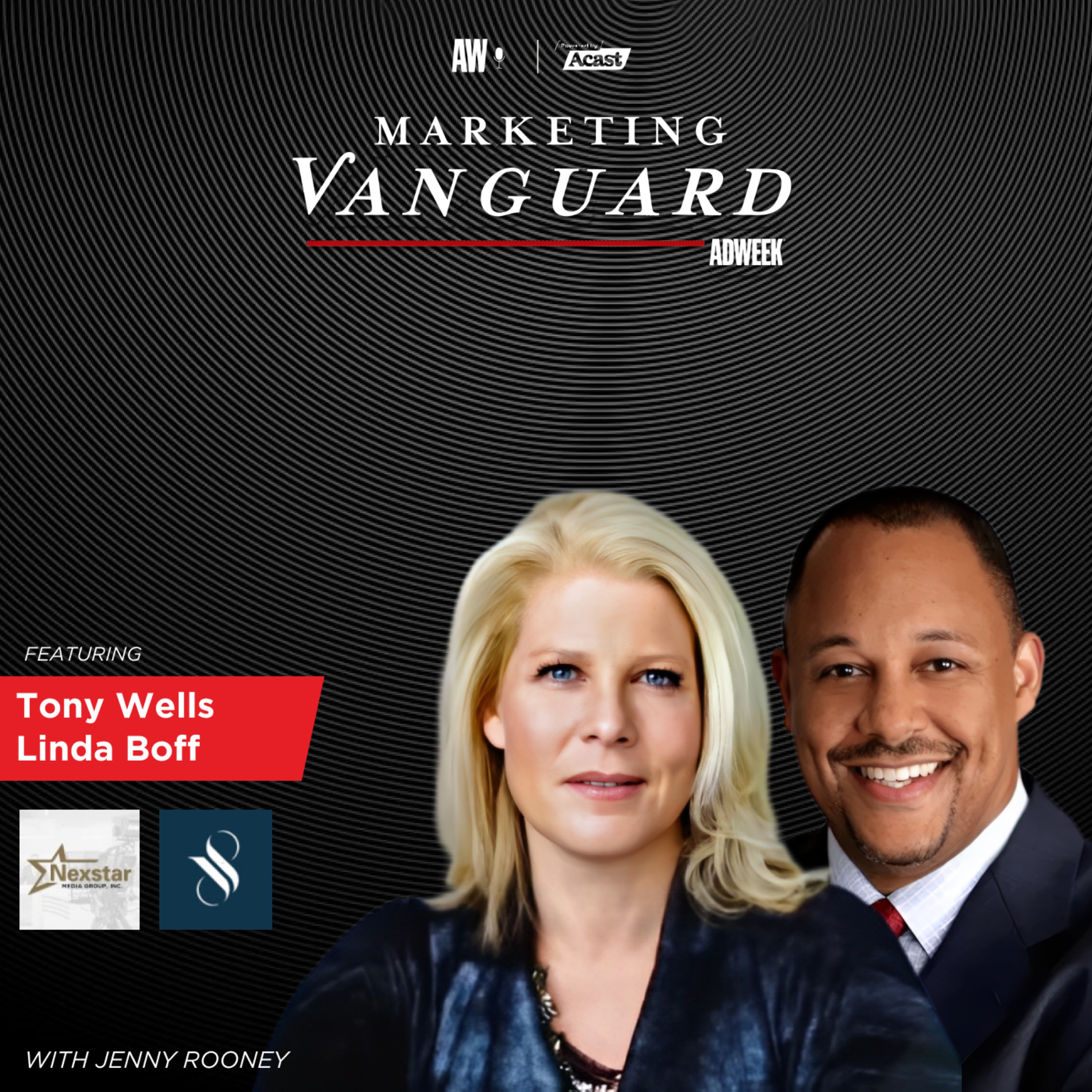
Loading summary
Transcript46 lines
- [00:02]
eBay Advertiser
Picture this. You're halfway through a DIY car fix, tools scattered everywhere, and boom. You realise you're missing a part. It's okay because, you know, whatever it is, it's on ebay. They've got everything. Brakes, headlights, cold air intakes. Whatever you need. And it's guaranteed to fit. Which means no more crossing your fingers and hoping you ordered the right thing. All the parts you need at prices you'll love. Guaranteed to fit every time. Ebay Things people love the holidays are.
- [00:33]
Instacart Advertiser
All about sharing with family meals, couches, stories, Grandma's secret pecan pie recipe. And now you can also share a cart. With Instacart's family carts, everyone can add what they want to one group cart from wherever they are. So you don't have to go from room to room to find out who wants cranberry sauce or whether you should get mini marshmallows for the yams or collecting votes for sugar cookies versus shortbread. Just share a cart and then share the meals and the moments. Download the Instacart app and get delivery in as fast as 30 minutes. Plus enjoy free delivery on your first three orders. Service fees and terms apply.
- [01:19]
Tony Wells
When you're on a board, you're not there to tell people what to do. You're there to hopefully ask questions, be provocative in a productive way so that you're helping members of the management team think about things differently. And if you haven't had that lived experience at your own company with your own board, I think that's really hard.
- [01:41]
Jenny Rooney
Hi everyone and welcome to the Marketing Vanguard podcast. I'm Jenny Rooney, coming to you live from Brand Week 2024 in Phoenix, Arizona. Thrilled to be here, joined by Tony Wells and Linda Boff. We're going to dive into a topic that is on the minds of many CMOs, which is how to get on boards. It just seems to be something that at a certain point in people's careers they start thinking about that, whether they want to get into the board space while they have full time jobs or if it's something that they think about being their next career path forward. Some folks build their careers around boards after a certain point of being in the practice. So Linda, Toni, would love to have you talk that through with me and we're going to get into it. I think it's a very important topic. So before we get into that, Toni, Linda, please introduce yourselves.
- [02:28]
Tony Wells
Linda Boff, CEO of Said Differently. Great to be here with you, Jenny and Tony.
- [02:32]
Linda Boff
I'm a recovering marketer, so most recently was at Verizon left there about a year ago and been doing some board service and some VC work, so trying to stay connected, corporate America and business.
- [02:43]
Jenny Rooney
So love that. So let's talk about this concept of, like, inflection points. At what point in your career as a CMO do you think you have license to market yourself to boards? And maybe that's phrased in an awkward way and feel free to correct that positioning. But what has to happen?
- [02:58]
Linda Boff
I think from my perspective, I've had a lot of people call me and, like, say, hey, I want to get on a board. And I'm like. I asked them, like, how old are you? Like, oh, I'm 42. I'm like, Whoa, slow down. You have plenty of time. I do think it really comes with a body of work and a reputation. And I also believe spending time in your own boardroom, navigating the politics, the contributions that you make as part of a management team and demonstrated results, I think that's the best thing that you can do to lay the foundation for board work is prove that you've helped with growth, prove that you can navigate the board room. Proof that you can navigate with other C Suite executives, to me, is a kind of a first step.
- [03:39]
Tony Wells
I would say that's great advice. To Tony's point, you need to have something to give back. Right? To be on a board is to bring experience, wisdom, and I think the ability to ask questions. Because unlike being on a management team, when you're on a board, you're not there to tell people what to do. You're there to hopefully ask questions, be provocative in a productive way, so that you're helping members of the management team think about things differently. And I think to Tony's point, if you haven't had that lived experience at your own company with your own board, I think that's really hard. I went on my first public board well into my GE career. It was Dunkin Brands, a fantastic board. And I think had I tried to do it early in my career, I would not have been a very good board member.
- [04:29]
Jenny Rooney
So this is interesting because when you talk about this, you're talking about body of work. There's this concept among CMOs that they almost. This is controversial, but some are building their own personal brand even as they're building the brand of the company that they work for. Does one or the other matter more when you're thinking about seeking a board role?
- [04:46]
Tony Wells
That's a great question. I think your experience matters a lot. At the same time, I think when boards choose board members, it's a very thoughtful process. At least that's been my experience. This is not a hey so and so would make a great candidate. I saw them on TV or I heard them on a panel because boards, unlike executive or management positions, you're on for quite some time. You're, this is a marriage, right? You're not going to come on and come off. So while I think the celebrity CMOs, so to speak, can be attractive and again, for the right brand, that might be the right fit. In my experience, the boards that I've sat on and sit on today are looking for someone who is going to be able to bring a different deep level of strategy, be a great listener, be a mentor to others. It's a broad skill set. You may come on because you have marketing experience or finance experience or HR experience and that might be the questions that you quickly jump to answer. But I think if you don't bring a quiver of tools, I don't think you're as effective a board member. And I think that broader C suite experience that Tony mentioned, super important.
- [06:08]
Linda Boff
Yeah. My perspective on this is you play for the name on the front of the jersey first and you play for the name on the back of the jersey second. And so I do think you are better served, like I said, putting up a really good body of work that is in essence your ticket to the conversation. And I don't think you can market your way onto a board much like Linda said. So it's very interesting. My experience with nom and gov committees is that that often either internal or external with a recruiting firm there's a slate of 20 or 30 candidates that they're just looking at and you don't even know that you're being looked at. And it's very different than a normal job where you apply and you interview in three or six months you know whether you got the job. And this is like being invited into a club. And it's funny, when I was first approached by my first public board, I called my CEO at ADT Security and I was like, is this the right brand for me? We were having some discussion. He's like, hey, you have to view this like a 10 year marriage and can you see yourself going and having a beer or glass of wine with these folks? Because it's about collaborative effort to guide and help a company increase shareholder value. And if you can't see yourself hanging out with these folks and not that you're always going to be friends and agree on everything, but it is a little bit of a club May be the wrong term, but you're being invited into something. And I don't think you can LinkedIn and X and Facebook and Instagram your way in, because that's not the criteria, I think, to join.
- [07:40]
Jenny Rooney
So why do companies want CMOs on their boards?
- [07:44]
Linda Boff
I think there's an evolution to this. There was a lot of focus around bringing gender and ethnicity diversity into Borg after the murder of George Floyd. I think that is now passed. And DEI and ESG have become controversial terms. I think there's a resurgence of CEO CFO candidates only. But what I find interesting in. So I've been on five boards, I'm on three now, and marketing enters into all of these conversations. But I'm very surprised that there's not a lot of marketers there. And if you look at some of the data, a lot of CEOs who are on these boards have not sat in the marketing chair. But we're talking about growth and customer acquisition and customer experience. And so I find that a CMO is uniquely qualified to be there. I just think it goes back to discussion that we had here earlier around marketing. I think often being misunderstood, talking different terminology, not being viewed as a lever for growth. And so I think as marketers, we have to solve that as an industry, and I think that's going to give us greater latitude. But there are CMOs that are making that, but there's not as many as you would expect. But I think that happens in other functions. You don't see a lot of supply chain. You don't see a lot of chros. It's been CEOs and CFOs that have been running this. And I do think that diversity of thought and functional perspective can be very beneficial too, in the boardroom.
- [09:11]
Jenny Rooney
So what are your thoughts, Linda?
- [09:13]
Tony Wells
Yeah, a lot of similar thoughts. I think marketers bring the outside world in and that's super helpful. It's super helpful in a company where you might be doing your own marketing. I think it's very helpful in the boardroom. CMOs are about growth and connecting with audiences, and I think boards are starting to appreciate that. Tony's point is spot on. It's been a CFO CEO type of seat. And I think for traditional companies that will die hard. I really do. I think we're starting to see it, but that's the slower one. I think for companies that appreciate brand, it's an easier way to get there. I think as CMOs have now been charged with driving performance and data and customer acquisition, I find that the conversation is getting a little easier because they realize that CMOs can help them unlock that side of things. But that's fairly recent times. Yeah.
- [10:12]
Jenny Rooney
So in all these cases we're assuming the person has a full time job even as they are taking on a board role. That's more often than not the dynamic. Then there's folks like Esther Lee who have left their day to day post and are spending full time in board roles. Anything about those two different contexts that you want to call out as being better or worse or harder or easier.
- [10:36]
Tony Wells
I can only speak to the one I know the best, which is staying in your role and doing board work. But I have a few friends. Irene Changbrid is one of them who left Campbell's. I think it was and is full time board and I've sat on a board with her and she's absolutely phenomenal. Absolutely phenomenal. And ran nom and gov at Duncan and I know chairs a bunch of other committees. So I really think, Jenny, it's at least the instances I've seen. I think it's a combination of where you are in your career and what it is that you're looking for. Board work is very important. It's time consuming and what I mean by that is in my own experience, any single board is not a full time job unless they're going through some type of crisis, which is maybe the least fun time. But you become very essential there. So I think of it as more where you are at your stage of what it is you want to do. I personally, as somebody who's sat in the job and on board and I think you can do both well. But I think there's a reason the term overboarded is a real term in governance and is something that boards watch out for which is to have a full time job and seven boards is. It's a high wire act. I'm not sure how somebody would do that.
- [11:54]
Jenny Rooney
I would say so yeah, Tony, we.
- [11:57]
Linda Boff
Were talking about this. GE Ventures was responsible for me getting appointed to my very first board which was a company that they had taken an investment in their Ventures team. And I was at USA at the time and so I had to get approval. Actually I joined USA with that. And so I. The reason I bring this up is that I really think that if you're a current operating executive, you're a cmo. I would say one board to me, one public board. I really wouldn't venture beyond that. Now when I was at usa, I was actually on two boards. I joined the Yelp board and I was on this Octave, the software company, which is private equity held by ge, and I would say it stretched me a little bit and I think if I had to do it all over again, I probably would have just probably left the private equity board and just focused on Yelp. I think the number that I read and I believe is true is 250 to 300 hours for a board role. Now, if you have a lawsuit or you have an activist shareholder or something goes wrong in the compliance or regulatory space, you could very easily end up on calls two or three times a week for a long, extended period of time. So you never want that to come in conflict with your day job. Like at the end of the day, if you don't do your CMO role.
- [13:16]
eBay Advertiser
Picture this, you're halfway through a DIY car fix, tools scattered everywhere, and boom, you realise you're missing a part. It's okay because, you know, whatever it is, it's on ebay. They've got everything, brakes, headlights, cold air intakes, whatever you need. And it's guaranteed to fit. Which means no more crossing your fingers and hoping you ordered the right thing. All the parts you need at prices you'll love. Guaranteed to fit every time. Ebay, things people love.
- [13:47]
Goldbelly Advertiser
Hey guys, have you heard of Gold Belly? It's this amazing site where they ship the most iconic famous foods from restaurants across the country, anywhere nationwide. I've never found a more perfect gift than food. They ship Chicago deep dish pizza, New York bagels, Maine lobster rolls, and even Ina Garten's famous cakes. So if you're looking for a gift for the food lover in your Life, head to goldbelly.com and get 20% off your first order with promo code gift.
- [14:20]
Linda Boff
Well then being a board member is probably at that point in your career is not the ticket. And then for me, I left corporate roles knowing that I had some other board opportunities that were going to be in sight for me. So for me, the transition, it was part of the way I wanted to exit the playing field a little bit and I think it's a nice off ramp in terms of staying in connected with corporate America and. But as Linda said, you're nose in, hands out, you're not getting involved in the day to day, but you're providing guardrails and governance and the strategic planning for the war itself.
- [14:54]
Jenny Rooney
So. Interesting. So you essentially answered the question, what does it afford you as you think about your career overall? What does being on a board afford an individual?
- [15:02]
Linda Boff
Well, I'm going to tell folks that often comes up is about comp. And I think that's probably the last reason you should do this. For me, it is the ability to stay connected. I view myself as a lifelong learner and so learning about a new company, providing your insight and expertise to a management team to let them benefit from that. And I think also this idea of just helping a company succeed. So to me, yes, comp. I won't say it never entered my mind, but I do think at the end of the day those are really the reasons why providing your expertise, being a part of a company still and the ability to bring governance and strategic.
- [15:46]
Jenny Rooney
Guidance to a company, there's a give back element, arguably. I mean, there really is an altruistic element to it.
- [15:52]
Linda Boff
So the management teams I'm involved with may not feel that at times. That's really why. And look, I think when you've presented to a board, like, look, I was at a company and there were 19 people on the board, like, whoa, that's a lot of opinions. And so I think if you're considering a board, you really have to make sure you just don't do it because it's been offered. Is it the right opportunity? Are the dynamics right? How does the management team and the board work together? Collaborative and because trying to get 19 people to agree on much of anything is near impossible.
- [16:20]
Tony Wells
So I'll give you two complimentary things. I learned one was being on a public board made me a better executive and it made me much better in my own boardroom. And I didn't really expect that. But to sit on the other side, you just have a different view. We've said this, but you know, providing strategic counsel and helping folks to get to hopefully a great decision made me a better leader for my own team. So I selfishly benefited from as an executive and I hope the company G that I was with at the time benefited as well. The second thing I would say, and Tony and I share this as somebody with a growth mindset, lifelong learner, I love learning about new things. Before I went on the Dunkin board, I'd never been in qsr. Now we can debate why in the world they picked me, but you know, let's leave that part aside. But it is fascinating, I think as a marketer to learn about an entirely new industry. It's just fascinating. And you have this wonderful view. I got on the board and said the first thing I asked for was can we do a tour of franchises and go in the back and see what it's all about. So I feel like neither of those were Terribly altruistic, but I do think they were incredibly meaningful to me.
- [17:45]
Jenny Rooney
Big value there. And I guess the last quick question I'll ask is, they're looking for you as opposed to you going out and choosing your companies. Is that essentially how it works?
- [17:57]
Tony Wells
Similarly, I've had many conversations with people, how do I get on a board? And I'm always tempted to say you wait for one to ask you because the process is so interesting and so very different in many ways. Recruiters are involved. So I do think on a practical level, maintaining your good relationships with recruiters who do board searches is important. So that's the practical side of me. But once you get that phone call, I think the opposite of what you should do is self promotional.
- [18:30]
Goldbelly Advertiser
Right?
- [18:30]
Tony Wells
I think it's about showing what a fit you can be. I think it's about thinking about how you can contribute. I don't think you put together that list and say, okay, this is the board I want to be on. That's my experience. Tony may have a very different one.
- [18:45]
Jenny Rooney
Well, that's interesting and I want to hear from you, Tony, in one second. But you mentioned Duncan and to me it's like, I think as marketers, you're always thinking about like strategy, right? Well, I work at ge, therefore I should go. If I'm going to be a board member, it should be on something in a completely different category. But what's cooking for me now is it's not that. It's them being strategic and thinking thoughtfully about what do I need on my board that is very coming from a vastly different industry, but brings a level of expertise that's going to bring an outside in perspective, right?
- [19:16]
Tony Wells
So much so. I mean, in my case, in Duncan's case, not a huge board, nine people. They had a lot of fantastic QSR experience on the board already. The seat they were looking to fill. And this might be an important point because it is always about the seat. Are they looking for a finance person, are they looking for a marketing person, et cetera? In this case, they were looking for a combination of marketing and digital transformation. And I checked those boxes. I was in a business that was then based in Boston. That might have helped just a teeny little bit. And then the chemistry was good. But I have a niece applying to medical to residency after medical school and it's this intricate matching that takes place. She lists her top three, they list their top three. And I don't know if that's analogous to board work, but it's not a simple. I want this at least in my experience, it isn't. There are a number of different chess pieces that fall into place.
- [20:08]
Linda Boff
Tony, I hate to disagree with you.
- [20:09]
Tony Wells
Oh, I do.
- [20:11]
Linda Boff
I would say that. So the advice I would give a CMO would be this. I would say in your 40s, spend time building a body of work that you feel proud that you can demonstrate to growth, but also get yourself on a couple of nonprofit boards that either connected with your company or around some personal passion that you have. Having that governance experience and understanding, budgets and committees and all that is a great groundwork. And then I would say in your early 50s, try to land a private equity or a private company. And there's so many programs out there now. I mean, there's women's on boards, there's black women on boards, there's pda, there's nacd. There are a ton of resources out there that you can make your profile known. And so I do believe there's an element of marketing. I mean, JP Morgan Chase has a program for companies that their ipo and Goldman Sachs has a program. And if you look, there's actually executives that run those programs. NASDAQ has a program. New York Stock Exchange, Suzanne Brown there, if you get a New York Stock Exchange CEO to recommend you, they put you in a database. So I do believe that there's spending.
- [21:20]
Tony Wells
More time with you.
- [21:21]
Linda Boff
You've got the.
- [21:22]
Tony Wells
You've got the.
- [21:22]
Linda Boff
There is. Well, there's some marketing that you can do to put yourself in a position to be noticed. I also think, quite honestly, when I decided that I was not going to be an operating executive anymore, I made a list of 50 companies that I was like, I could offer them something. And you go into their annual report. There's often a board matrix in the board that says, here are the skills that we want our board members. And you can look and see who's maybe rolling off because of tenure or whatnot. And so you can see where some of their. You can predict some of that. So I made a list. Now, the reality is I ended up landing on two boards. None of those were on my list, but they were all adjacent competitors. And that was really around letting CEOs and other board members know I'm interested and it can't be a hard sell. But hey, keep your ears and eyes open. And if you hear about anything, please keep me in mind. And those folks ended up getting calls. And then the recruiter said, do you know anybody good? And just like I normally try to do is pass it on, someone gave my name to them. So I do believe there's an element it is not direct hard sell. It's more around building awareness that you're ready but that non profit to private or public equity or private equity or VC related boards who are often small and they're going to ask you to do more work like help me sell, help me figure out the value prop so there may be more sweat equity and then go to a public board. And I'll say this last thing. I think there's benefits to public board and I mean when we're in litigation you have customers calling you and your name is very public and how to find you and so it's a little bit sexier maybe. But I also think there's something really nice about being on a private company board not having all the regulatory and compliance requirements and not having your name and what you may be comped and how everything like there's a certain amount of visibility that you take with that. And I've had people, especially in today's world throw in some real doozies around something that the company and I'm like I'm not on the management team, I'm not making the day to day decisions so. But I do believe there's an element where you can put yourself out there to potentially get noticed.
- [23:35]
Tony Wells
Tony's so much smarter than I am. It's clear he made me think of something which is particularly for the audience. Jenny, that may be listening. Think about your trade organizations too. One of the ways Tony and I connected with the A and A board but when you think about things like that, I've personally been active on A and A and Ad council certainly four as would be another one. So it's a great point. There are ways to get the experience. I think that makes you more attractive.
- [24:02]
Jenny Rooney
Yeah. So fascinating. Appreciate you both being here. So much. So thank you.
- [24:08]
Goldbelly Advertiser
Thank you for listening to Marketing Vanguard, part of the Adweek Podcast Network and Acast Creator Network. You can listen and subscribe to all of Adweek's podcasts by visiting adweek.com Stay updated on all things Ad Week Podcast Network by following us on Twitter at adweekpodcast. And if you have a question or suggestion for the show, send us an email@podcastadweek.com thanks for listening.
- [24:37]
Instacart Advertiser
Sharing all the joy that the holiday season brings has never been easier with celebrations passport from 1-800-FLowers-COM my one stop shopping site for even those hard to gift people. With Celebrations Passport I get free shipping on thousands of amazing holiday gifts like festive flowers and arrangements and fresh fruit and gourmet gift baskets from Harry and David make the holidays merrier by gifting smarter at 1-800-FLowers.com acast. That's 1-800-FLowers. Com acast.
- [25:06]
Goldbelly Advertiser
Oh my God. It's the coolest thing ever. Hey guys, have you heard of Goldbelly? Well, check this out. It's this amazing site where they ship the most iconic famous foods from restaurants across the country, anywhere nationwide. I've never found a more perfect gift than food. They ship Chicago deep dish pizza, New York bagels, Maine lobster rolls, and even Ina Garten's famous cakes. Seriously. So if you're looking for a gift for the food lover in your Life, head to goldbelly.com and get 20% off your first order with promo code gift.