← Marketing Vanguard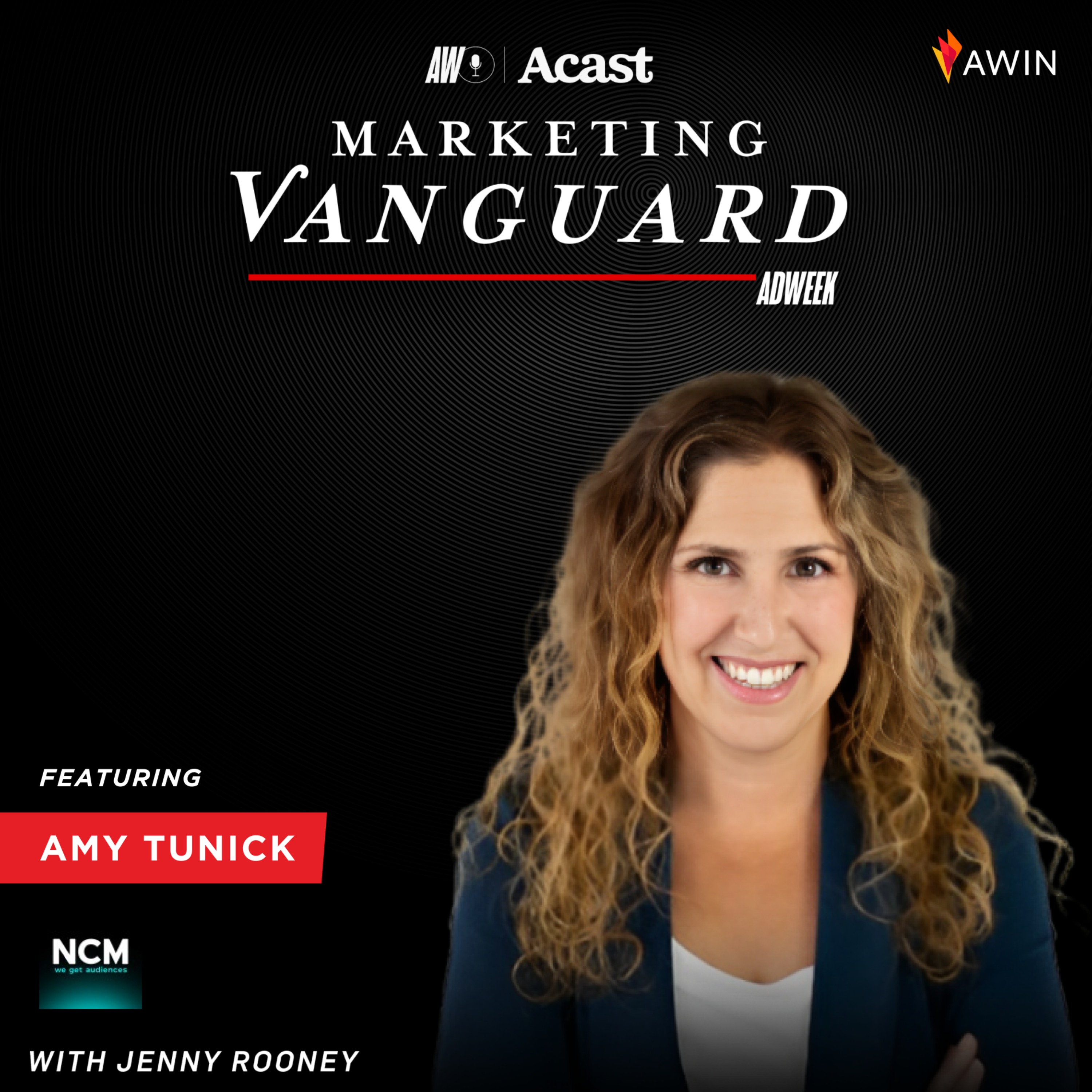
Loading summary
Transcript61 lines
- [00:01]
Activision Blizzard Media Representative
Gaming has become one of the most influential forces in entertainment, capturing the attention of billions around the world. For brands that means one this is a space you can't afford to ignore. Activision Blizzard Media helps brands connect with players in meaningful ways, reaching them the right way at the right time on the right platform. Head to ActivisionBlizzardMedia.com to read their latest research on cross platform play and discover new opportunities to reach players across mobile, PC and and console.
- [00:31]
Amy Tunick
We see cinema and that unique environment essentially as another CTV platform. Except the difference is we know the butts are in seats and we know there's no bots or fraud. It's a brand safe environment. We have no frequency issues, we actually think that we're ctv. Plus we're actually better in many ways than buying on the streamers because we can guarantee audiences in a way that they can't. Plus our scale is enormous.
- [01:03]
Jenny Rooney
Hi everyone and welcome to the Marketing Vanguard podcast. I'm Jenny Rooney here at Adweek and I'm thrilled today to be joined by Amy Tunick. She is the CMO of ncm. Amy, good to see you, welcome.
- [01:15]
Amy Tunick
Thank you. Great to be here, Appreciate it.
- [01:17]
Jenny Rooney
Yeah, it's great to see you and I'd love to just have you. We're going to talk about ncm, we're going to talk about you and would love for you to share with everybody a little bit about your personal backstory career journey that got you to this point. So let's kick it off there.
- [01:30]
Amy Tunick
Sure. I spent my whole career at the intersection of advertising and entertainment, starting in the mailroom at the William Morris Agency many years ago, which was a great way to get a handle on the business of entertainment. And the area that was most fascinating to me was the brand funded entertainment which was nascent at the time. But I shifted over into advertising. I went to work at Gray, the global ad agency which became part of WPP. And I was there for about 15 years running a division called Gray Activation PR and Talent which was essentially all the non traditional, not the TV spot type of stuff. A lot of talent partnerships, experiential strategic alignments with different entertainment properties. And then about seven or eight years ago I pivoted into media. I went over to cnn, ran their in house content studio, Courageous. And then I've been at NCM National Cinemedia as their first CMO for the last three and a half years.
- [02:24]
Jenny Rooney
So talk a little bit about that. First of all, for people who don't know, why don't you tell me what NCM Is yeah, sure.
- [02:31]
Amy Tunick
Ncm, which stands for National Cinemedia, is the largest cinema advertising platform in the us. So when you go to the movies and you sit down and all that content on the big screen, that is branded content, editorial content and ads, all movie and pop culture theme, plus the advertisers, that is the content leading up to the trailers and the feature film. And that's what NCM sells in every day to media agencies, direct to brands and to non media agencies as well. And we also activate in the lobbies through experiential marketing and with retargeting for those moviegoers after they've left the theater.
- [03:11]
Jenny Rooney
Okay, so obviously NCM itself has, I'm sure, been an unquoted journey. Where was it in its journey that it needed it? It needed a CMO for the first time.
- [03:22]
Amy Tunick
While Covid was tough for everybody, but in particular for the cinema business, there was about a six month window when literally all the movie theaters were shut down. We tried to block that out. The good news is we've completely bounced back and then some. But it was August of 2021 when I joined the company and I think it was a complete rebirth moment for C Cinema and cinema advertising in particular. It was a very exciting time to join. I love a challenger brand and a challenger industry and at that moment I was able to take all the different parts of the company that fall within marketing, whether ad sales, marketing, creative pr, trade, marketing, events, and bring everyone together and start rowing in the same direction with a very laser B2B marketing focus. And so I think they just needed some leadership in that area, especially at a time where we had to resell not just NCM and our products, but the medium in general to all those brands that had been able to pull back. And then of course, as things came back to normal, we needed to get them back on our screens.
- [04:32]
Jenny Rooney
Yeah, but people, brand marketers buy audiences, right? So if there was no audience, what were you selling?
- [04:39]
Amy Tunick
Well, during the really difficult window, it was tough. There were no audiences. To your point, the good news is that moviegoers really love that unique shared environment and shared experience. And it was about December 2021, Spider man was in theaters and there were more 18 to 34 year olds that went to that opening weekend than watch the super bowl in February. So the young, diverse Gen Zs and young millennials were unafraid. They were back before anyone else. And now fast forward three and a half years later, everybody's back, but our audience is powered by that young, diverse Gen Z which really brands can only reach at scale at YouTube, TikTok and in the movie theater.
- [05:26]
Jenny Rooney
What kind of relationship do you have with frankly actually the movie house, the movie creators? Because at the end of the day you're only as good as the content that's being shared on the big screen. So how are you working? What of relationship do you have?
- [05:38]
Amy Tunick
We have great relationships with all the studios. But you're right, the slate comes out and NCM's day today is talking about the audience. And the audience does shift slightly of course, depending on what movie is on the slate. All of the studios present their wares at something called Cinemacon which is coming up later this month. This will be my third or fourth CinemaCon and it's actually sort of a love letter between the studios and the distributing teams at the studios and the exhibitor community, which is the Regal, amc, Cinemark and all the other small distributors across the country. Our network where our screens are through those exhibitor partnerships that we have, which are long term deals. And then the studios of course need the cinema environment. One of the silver linings of COVID was they were testing out the day and date releases because most studios are part of giant media companies that do now have a streaming platform. And at the end of the day, the big audiences that see the movie in a theatrical experience are then much more likely to watch that movie on that streamer later. So the companies are now investing more in back to that windowing environment of the theatrical release followed by the streaming release later. The day and date thing didn't work. It's over. That was a big relief for us, but it was good to get it out of our system. We also work with the studios on brand partnerships. A lot of the studios do direct brand partnerships, of course, but a lot of the clients that we work with, the big national advertisers, all the way down to the little local guys, they want to access that IP as well. And so we're able to create collaborative content driven experiences or experiential events with screenings and things like that in partnership with the studios.
- [07:32]
Jenny Rooney
So you have to ink deals with all of the theater companies across the country as well.
- [07:39]
Amy Tunick
We have those deals in place. So that's our network and the three national exhibitors, amc, Regal and Cinemark are in our network as well as 37 other exhibitors. And so those our long term agreements. And that is really how we make our projections of audiences who's going to those theaters everywhere every year.
- [07:59]
Jenny Rooney
And that's your media, that's your media to Sell. And I'm. Forgive me if I missed it, are you also selling media on the streamers?
- [08:07]
Amy Tunick
No, we're not selling media on the streamers. Those are owned and operated by the studios or whoever owns the streamer. Right. There's the fastnets and all that too. But we see, see cinema and that unique environment essentially as another CTV platform. Except the difference is we know the butts are in seats and we know there's no bots or fraud. It's a brand safe environment. We have no frequency issues. We actually think that we're ctv. Plus we're actually better in many ways than buying on the streamers because we can guarantee audiences in a way that they can't. Plus our scale is enormous.
- [08:47]
Jenny Rooney
Yeah, I guess from the advertiser standpoint though, you being helpful in heading, helping them knit together their ad, their media buy somehow. Right, because if they're buying on the streamers over here and then they're buying through your distribute through your network over here, at the end of the day, CMOs marketers, they need a unified vision of their overall media buy. So I'm sure you know, what are the mechanisms you have in place to make sure that they can wed the data that they're getting from you with the data that they're getting from the.
- [09:17]
Amy Tunick
Yeah, as well. Generally that's their media agency's job who we work with very closely to help support those needs at whatever the KPIs are. Sometimes they're different I would think for why they're going to buy one channel versus another. We look at ourselves as a full funnel solution and we spent. One of the things we did during COVID was we really amped up our data and our measurement tools to become more performance marketing focused. But yeah, as it relates to a client that's spending in different places, we serve usually a very specific role within the media plan. That could be an upper funnel brand awareness piece which everyone knows on the 50 foot screen is something you can get. Or it can be a highly targeted foot traffic study. Or when we see QR code scans, we get extremely high scan through rates because you know, when people go to the theaters and they sit down, they do have their phone but they're told to put it away. And they're very much in the mindset of being entertained and so they are focused. Our ATT metrics are through the roof and therefore with a QR code we get very high scan through rates. So you know, whatever their KPI is and however we can collaborate with the media agency to Help solve their clients business goals or communications goals and hopefully cinema can be a part of that. Beyond the big screen. I've done a lot of focus over the last few years on custom branded content capabilities. Whether we produce it or they produce it, creator content is another thing. There's a lot of clients investing in that space. And even if you have a vertical piece of content, we can put that on the screen. And we also have an editorial opportunity where we create movie and pop culture theme shows, sometimes featuring creators that brands can integrate into kind of your typical old school linear TV show opportunities. So we're doing a lot of things in that space. And then I'll say it again, I love that events and experiential piece in the lobby because people spend a lot of time there, they want to hang out, they want to engage with brands and it's a very memorable way to do so.
- [11:15]
Jenny Rooney
Is that also inventory that you're selling?
- [11:18]
Amy Tunick
Yes, it is. We have the lobbies and really the whole consumer movie going journey. The minute the trailer drops and they are anticipating it or they're buying tickets in advance, we have that data so we can, it helps us with our audience projections. And then they get there and we can hit them right when they walk in. Whether it's movie posters, branded concessions or an actual lounge or other kind of photo activation. They go into the theater, they see our pre show, they watch the movie, they come out, we can hit them with exit sampling. So it's really that full journey and then they leave and they, they get reminders on their phone. We have a couple of cool tools and products that allow them to scan something and say remind me in three hours. And then they get a text from a brand on our screen. So there's a lot of ways to hit them before, during and after.
- [12:06]
Jenny Rooney
That's very cool. It's interesting. You might also, because of where you sit, you probably see trends in what content actually resonates and with whom. Like the actual physical creative product. I don't know how much you're reporting back to studios. What are some hot trends you're seeing? Are superheroes back is our murder mysteries, dramas, comedies, like is there any sort of interesting patterns or trends right now in different genre of movies?
- [12:33]
Amy Tunick
Yeah, I would say the biggest trend I've seen seen in the last two years is the horror genre. Horror is huge. People don't want to be scared on their couch by themselves. They want to be scared in the theater surrounded by friends or strangers. And it's not limited to the whole October, Halloween thing anymore. Horror is coming out all year round and there's like horror comedy. So for instance, Megan 2.0 is coming out this June. It's like horror but with a twist. There's a lot of that. And then of course there's the franchises. I think Saw 7 is coming out and there's just so much passion around that specific genre. So that's a big one. It is also commanding younger audiences. The superhero stuff is always going to be huge. What's the next Marvel movie of the year or DC Comics movie of the year? And I'll say Thunderbolts and Superman are probably two of the biggest. And then I think also the multi generational stuff is making a comeback. As you may know, Rihanna is for the first time in many years dropping new music as Smurfette in the Smurfs movie, which is one of those hybrid animation live actions coming out this summer. And I think it's just gonna be huge and people like Gen Xers like me are gonna go see it and I'm gonna bring my kids. So there's a lot of that happening as well.
- [13:54]
Jenny Rooney
Yeah, no, it's fascinating. There's so much that goes, that's produced and goes straight to streaming and bypasses the theater experience. Anything there that you're seeing from a trend standpoint and how are those decisions made?
- [14:07]
Amy Tunick
I think that I don't know for sure. Those are obviously decisions that.
- [14:12]
Activision Blizzard Media Representative
Gaming has become one of the most influential forces in entertainment, shaping culture in real time and capturing the attention of billions around the world. For brands, that means one thing. This is a space you can't afford to ignore. Today's players move fluidly between mobile, PC and console. And each platform shift changes how they play and why they engage. Activision Blizzard Media's latest research helps marketers understand not just where players are, but also why they play and why that matters. Because in gaming, impact doesn't come from entering the experience, it comes from respecting it. With a portfolio that includes some of the most iconic titles in gaming, Activision Blizzard Media helps brands connect with players in meaningful ways, reaching them the right way at the right time on the right platform. Head to activision blizzard media.com to read their latest research on cross platform play and discover new opportunities to reach players across mobile, PC and console.
- [15:13]
Amy Tunick
Amazon and Netflix and Apple and others are making internally. But what I do know is there were a couple of big news articles in the last year, specifically Apple and Amazon investing more in specific films that they were going to put in theatrical releases before they put straight to streaming. And there was a lot of commentary around that about they basically do better on the platform and there's only so many subscribers. So just having content isn't enough to drive new subscribers. They have to eventize those properties. So I don't know exactly why that happens. Another thing is with Max, there are shows that kind of get a lot of buzz, like White Lotus for instance. Those are always going to be big winners and obviously they're big streaming hits. But there are different ways that company like Warner Bros. Discovery with Max can collaborate with us to ensure that brands that come on board to partner with them around specific streaming properties. If they have a theatrical release, it's more of a full funnel from the beginning of when the movie comes out all the way through to when it's on the stream or later. So there are opportunities to cross pollinate. Everyone's a competitor and a friend at the same time for sure.
- [16:24]
Jenny Rooney
Are there categories of advertisers that you think do better in the theatrical environment than others?
- [16:30]
Amy Tunick
We have brands across every category, but some of the big ones are automotive, financial services. Travel is huge. Insurance on the more local buy level, a lot of government, healthcare, education, so colleges and universities. And we're always trying to do more in the QSR space because people, I think the number is 40% of people, after they go to the movies, they go out and eat. We know a lot about their shopping habits and how they they're in that spendy mindset. And so QSR and other retailers are other big categories for us because it's just such a natural extension of the consumer behavior.
- [17:12]
Jenny Rooney
And beyond the lobby, just literally when people are sitting and watching the screen, it's typically the advertising comes up prior to the movie, right?
- [17:21]
Amy Tunick
Correct. Yes. The large majority of our inventory is leading up to the trailers. But we do have one very special unit. It's called our Platinum Spot, which is a 62nd unit in between the trailer pack. And that's our biggest, best opportunity. We also have a spot right before the trailer is called the courtesy spot, which you probably know as the silence, your cell phone spot. And that's a very special piece of inventory as well. And it lends itself to custom content. Or it can just be your regular 30 or 60.
- [17:52]
Jenny Rooney
Yeah, for sure. It's interesting. Again, it's just the way people consume movies. You could argue that. And frankly, the trailers have become such a big. The joke right. Among moviegoers is you get about 20 minutes of content that is just trailers alone before the actual movie starts.
- [18:07]
Amy Tunick
Yeah, it's all part of the experience. The trailers are a thing that people really love. Like they. Most people want that part of the movie going experience. But I agree, 9 trailers is a little much sometimes, but you just gotta get your mindset wrapped around your time and your commitment and people are doing it 100%.
- [18:26]
Jenny Rooney
And I think it's interesting too, because. But there is a value, a value application to that time. Because you could argue that the start of the. To your point, there might be those people, those core audiences that absolutely love the trailers. They come for that experience. They actually want to literally consume those. There are the people who feel like I don't need to arrive right on time because it's going to be trailers. And maybe they're still coming into the. To the theater during that moment. But arguably at the end of the trailers, that's when mass capacity is pretty much reached in that theater. You have to think the behavior of the audience coming into the theater. And that is. That's where value comes into play as far as like where you want to buy as an advertiser and how you need to think about the audience dynamics.
- [19:09]
Amy Tunick
Absolutely. And we have a lot of data on this. And I'll say I think the number is around 90% of people are in their seats at least five minutes before the trailer starts. So there are people that are just embracing the movie going experience in full. Obviously they're there earlier because they're getting their popcorn and their concessions too, which is a major revenue driver for the theaters themselves. Sure. And if there's a chance, I would love to just mention that NCM also has this unique role as the US Representative to Cannes Lions. And there's been a lot of work we've done in particular with Ad Week to talk about our U.S. lions community and how we're engaging the whole ad industry around that.
- [19:49]
Jenny Rooney
Yeah. How did that come to pass? More the engagement with Cannes and for those listening. Cam Lyons is the award show award celebration held every year in the south of France. It follows on the Cam Film festival that takes place in May, which a lot of people are more familiar with. But for the advertising industry, Cam Lyons is definitely the. The big focal point in terms of. Of creativity, of advertising. Why did it make sense for NCM to get involved in that?
- [20:19]
Amy Tunick
Yeah, so it was something I inherited when I came here. I think my jaw dropped when I learned that we had this very special, unique role. As someone who spent 15 years on an ad agency side, getting those Cannes Lions awards is maybe the pinnacle of people's career. And the focus on creativity and the celebration on a global stage is amazing. And so I came here, I learned NCM had this role. To answer your question, I believe that when the decision was made, Cannes Lions has a rep in every market around the world. So I think there's 90 or 100 reps now. The US is certainly their biggest and most engaged market as it relates to the advertising and creative community. And back in, I think it was 71 years ago when the Cannes Lions Festival was launched. It was, as you said, sort of a extension after the Cannes Film Festival success. And film and cinema has always been a big part of advertising. In particular in Europe, there's a global ad trade organization for the cinema industry that was one of the founders of Lions back in the day. And so I think when the rep role came up, the current leadership at my company at the time just jumped on it. And I've really leaned in as an opportunity to talk about not just cinema, but just creativity, storytelling, and in particular, the next generation, the rising stars within the industry and how they'll be players and leaders in no time.
- [21:46]
Jenny Rooney
And so therefore, you're a sponsor of it or you're a partner in the.
- [21:51]
Amy Tunick
It's a partner. Essentially, being the rep is like an extension of the Cannes Lions marketing team in that particular market. The different roles that we play. One is we help with the festival jury nomination process, which is a highly competitive and coveted thing for advertising leaders. And we specifically focus on independent agencies and brands that would like to get involved through a jury roll. We also run the annual Young Lions competition in the United States. It's something Adweek's been a huge supporter of ours in terms of editorial coverage. And what that's for is the age 30 and under young professionals in advertising marketing media who can compete by answering a brief. And those winners actually get to go to the Cannes Lions Festival in France in June and compete at the global Young Lions competition. So we've leaned into that and built a community around the young people that are participating, the jurors, the mentors, the sponsors, et cetera.
- [22:50]
Jenny Rooney
How do you think about. And that's incredible work. How do you think about that as driving your business at the same time?
- [22:55]
Amy Tunick
Yeah. The reason we anchored our US Lions community brand around the Young Lions competition is precisely because of the cinema audiences that we command every day. Who are the young, diverse Gen Z's? Those are the same individuals that are in the niche field of advertising, creativity and marketing. And there's in particular, with the creator economy, there's significant crossover. Most of those moviegoers are potentially the advertising and creative and creator leaders of tomorrow. So for us, it's a great way to talk about cinema in the creative community and build different kinds of partnerships versus straight media buys. And it's also a way to lead the leaders of agencies and brands slowly into our new business world. When someone might want to be a sponsor or a mentor within the US Lions community, we certainly build a relationship there and then usually that does open us up to have the actual cinema conversation as well. So it's just, it's a light business thread but it's one that I'm really passionate about and I just, I love creatives so working with the next gen is. Is very inspiring for me.
- [24:08]
Jenny Rooney
It's exciting. We often talk about the advertising industry as being so adjacent to the entertainment industry in general. And I think over the years we've seen that mashup happen more and more. There's adjacencies there, especially with, as you mentioned, the creators coming on the scene and the way we think about content and how content gives brands as studios. Right. We're seeing more of that happen. It's not just branded content. It's like brands, yeah. Are content creators of, in and of themselves. And so it's an interesting spot for you to be because arguably you could have given your connections on both sides, you could play a role in truly actually wedding really bringing together the entertainment community and the advertiser community as we move forward into a new era of content creation and what how entertainment is defined.
- [24:58]
Amy Tunick
That that's the dream. That's the dream for sure. I even mentioned I started my career in entertainment squarely and so it's very full circle. But I agree brands are absolutely creating their own ip. They are working with directors and writers and different kinds of storytellers and all that content. I hear often they sort of lament, oh there's, there's nowhere to distribute it besides YouTube or our website. And the truth as well, there's obviously all the platforms that have opportunities for advertising advertiser funded content to live in places even if it's more entertaining. But there's also the cinema and in fact Elf Beauty is a good example of a brand. They produced a 15 minute film. It was called Cosmetics Criminals. It was tied in with the fact that they were aligned with Mean Girls, the musical that came out last January in which they had product placement and they did a partnership with us where they ran that 15 minute film on our screens leading up to the Mean Girls movie and then they did events and screenings around it. And that's like a great kind of example of brands funding entertainment and then distributing it to these content hungry young people that are of course going to see Mean Girls. And I think with the Cannes Lions thing, I know that Elf Beauty is really breakthrough in advertising and they're hoping to win more Lions and more Titanium. So it does come full circle and I think the pinnacle of creativity is also the most entertaining content that one can create and it doesn't really matter who produces it.
- [26:36]
Jenny Rooney
Love that. Amy, what's next for you? As you think about, we're fairly early in still in 25 but as you move forward, what do you expect to see this year? What are you going to be doing for the company? What can we expect to see from NCM in terms of innovation and new iterations down the pipe?
- [26:53]
Amy Tunick
Yeah, thanks. Well, we do have, we're constantly innovating in our data driven measurement products and in different ways that we can serve clients specifically in that kind of more performance marketing space. So we have some announcements and new news coming shortly on that front. And then my focus is on content whether longer form, episodic, brand funded entertainment, all the things we were just talking about creator, content creator, getting more creators on the big screen which serves the creator economy and the brands that partner with them and experiential events doing more in that space. We actually have a newbie tour, a newbie experience. Tour Nuvi is the name of our pre show hosted by Maria Menounos. The tour is coming to movie theater parking lots across the country and the idea there is to capture even more consumer engagement before they go into that movie theater experience where we can do a bigger footprint than within the lobbies, but that kind of thing, more VIP screenings, more ways for I think the advertising community to think about the movie theater and the experience as a cultural touch point, a community space, a really relevant place that they can get their message across to the right audience. And then we'll do more with Cam and this US Lions community. This year is my, I guess third or fourth year running it and we'll show up at the festival and we'll do a lot more in that just general B2B marketing hospitality space. We just got back from the Sundance Film Festival will be it possible so more to come but those are some of the areas I'm focused on this year.
- [28:31]
Jenny Rooney
Yeah. And I have to think the form factor of movies too might also create new opportunities for you. I'm thinking of the sphere in Las Vegas and IMAX has always Been something that prior to the sphere, was sort of like the fun new innovation from a viewing and experience standpoint. Yeah.
- [28:48]
Amy Tunick
Something on that note, we actually did the first ever 4DX ad this fall with Xfinity, a Comcast brand. 4DX is when you sit in the movie theater and you have environmental effects, so your chair moves, there's bubbles that come out, there's wind, there's smells and things like. So that's like an example of, I think, an innovation in that premium format space that you were just mentioning. So we hope to do more things like that, which for the brand.
- [29:15]
Jenny Rooney
Advertisers. Yeah. So it's not just the movie. That's exactly.
- [29:19]
Amy Tunick
The movies are 40x, but this was the first ever ad that was 40x and that was tied in with a wicked program. And then, of course, there's the slate. Personally, my next one up is Snow White. Can't wait. But there's a lot of great stuff to see this year. Yep.
- [29:32]
Jenny Rooney
That's very cool. What brand was the 4D X1?
- [29:35]
Amy Tunick
It was with Comcast Xfinity.
- [29:37]
Jenny Rooney
Got it, got it. Very cool. Last quick question. Who's next? Who should I have on the podcast? Is there a brand marketer, a cmo, a brand that you admire that you think is doing pretty extraordinary things, and it can be somebody who you know really, really well, or it can be somebody who you admire from afar and would love to meet?
- [29:54]
Amy Tunick
Sure. Two suggestions. You may have already worked with them. One is Dina Arnold, who is the marketing lead for Sephora. I just think Sephora is an amazing brand and the way they work across so many different audiences and products. She's just super innovative. I'm sure she'd have a lot of great things to say. And then another person to consider is Lindsay Sheftik, who leads the CMO Sidekick, which is a fractional CMO consultancy. There's so many marketing teams that are suffering from layoffs and shifts to the industry, and there's a lot more really talented consultants out there. And she's a good example of somebody who's getting in there and helping CMOs continue to run and thrive in their businesses. Two considerations. She's the former CMO of Ring the Doorbell Company.
- [30:40]
Jenny Rooney
Awesome. Amy, thank you so much. This has been a pleasure. It's always great to connect with you and thanks for sharing a little bit of insight and shedding a little light on the movie business and where brands are having some success. And we're excited to see what's next. So thank you so much.
- [30:56]
Amy Tunick
Thank you. Jenny, Great to speak with you as well. Thank you for listening to Marketing Vanguard.
- [31:01]
Jenny Rooney
Part of the Ad Week Podcast Network.
- [31:02]
Amy Tunick
And Acast Creator Network. You can listen and subscribe to all of Adweek's podcasts by visiting Adweek.com podcasts. Stay updated on all things Adweek Podcast.
- [31:12]
Jenny Rooney
Network by following us on Twitter dweek Podcasts and if you have a question.
- [31:16]
Amy Tunick
Or suggestion for the show, send us.
- [31:18]
Jenny Rooney
An email@podcastadweek.com thanks for listening.