← Marketing Vanguard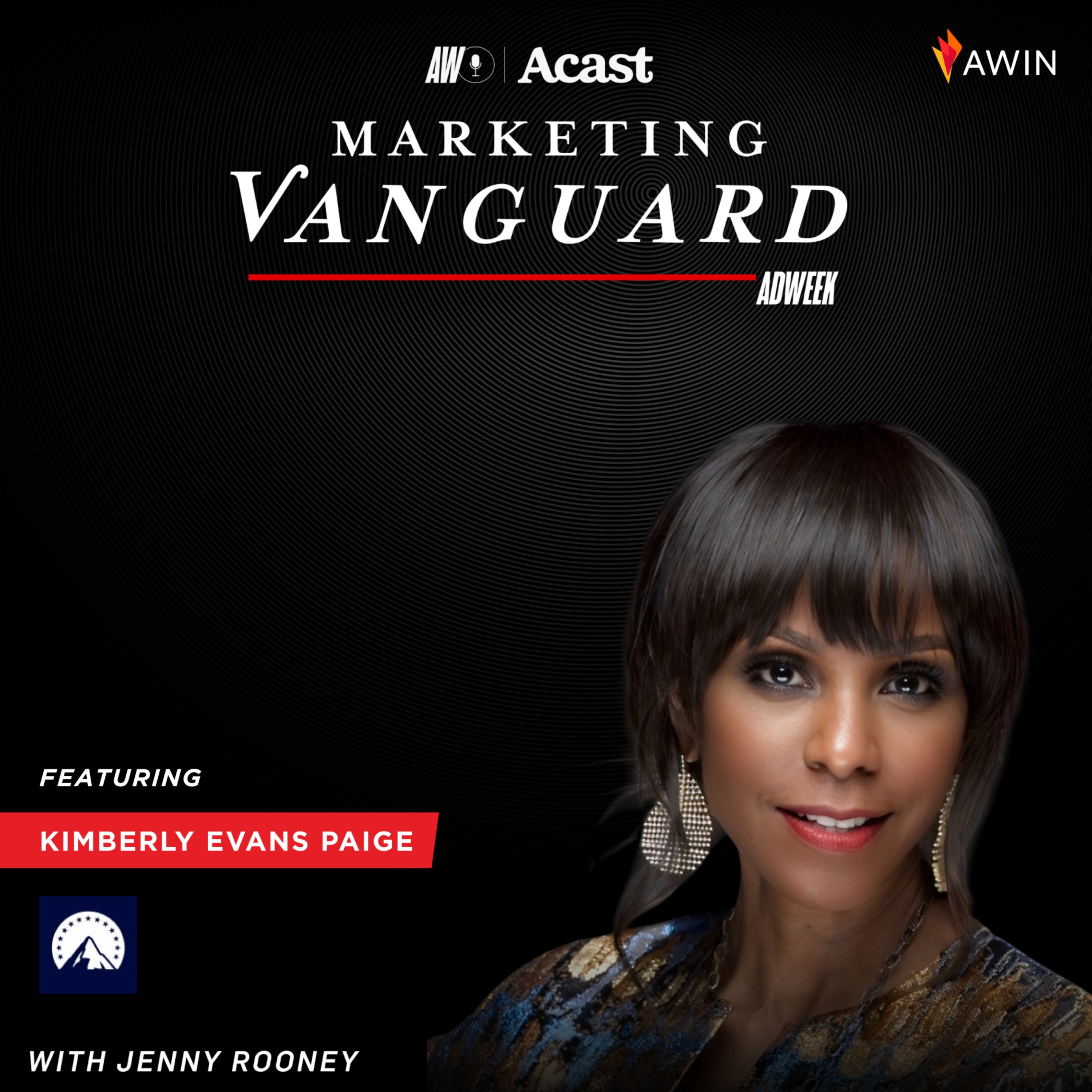
Marketing Vanguard
Culture, Commerce & Community: How BET Transformed from Media Company to Movement with Kimberly Paige
00:21:48
Loading summary
Transcript83 lines
- [00:02]
Tracksuit Representative
We know brand growth equals business growth, but do your stakeholders Tracksuit is an affordable, always on brand tracking dashboard that helps marketers and agencies prove the impact of their work on brand metrics over time. Benchmarked against competitors. Built from best in class methodology, the Tracksuit dashboard is accessible and easy to understand for everyone from CSOs and CMOs to CFOs and founders. Research shows that brand investment in good economic times and bad is essential to driving sustainable growth. The bottom line, turning off the brand tap will cost you in the long run. Tracksuit gives marketers and agencies a common language to measure and communicate brands impact. Without the $100,000 price tag. Their in house research experts will have your survey live and your full marketing funnel and brand perceptions visible in just 30 days. Check tracksuit out@gotracksuit.com.
- [01:02]
Kimberly Page
Our mission is not just about providing black content and I think that's the difference. It really is about changing outcomes for our community. I think we thrive at this intersection of content, culture and community.
- [01:15]
Jenny Rooney
Hi everyone and welcome to the Marketing Vanguard podcast. I'm Jenny Rooney with Adweek and I'm thrilled to be joined by Kimberly Page. She's the CMO of BET in what is our inaugural interview Special interview at Cannes coming live to you from just beside the Quazette. Kim, welcome.
- [01:33]
Kimberly Page
Thank you, thank you. I'm so excited to be here.
- [01:35]
Jenny Rooney
It's great to see you. I'm thrilled to have you here and yes, we're kicking it off so absolutely. Way to go. You're just coming off of judging. Fun, catching you fresh. Tell me a little bit about that. And for anybody who doesn't know, judging a Cannes Lions Award category is probably one of the most esteemed honors that one in this industry could receive.
- [01:56]
Kimberly Page
Absolutely. I was incredibly excited to be selected in the entertainment sector and it is really intense. It is intense. There's a lot of pre work you're looking at north of 200 submissions films, some incredibly long, some short branded integrations and then you go through a process of shortlisting and then when we land here in Cannes that's when we really get to debate and look at the shortlist. And so it's a very intense process by way of your phones are taking you're like in a little clandestine room. But it is so amazing to just be surrounded by other people in the industry. It's a global judging panel and just the perspective, I mean it was really, really interesting just this notion of your lived experience and what that means when you're receiving creativity and Storytelling. It was. I think we all walked away like really feeling like we had learned a lot from one another and definitely really enjoyed the submissions.
- [02:50]
Jenny Rooney
It's a mix of CMO, brand size CMOs and agency executives. Okay. Do you have others from the various facets of the industry who comprise the judging committees? Do you have ad tech folks? Do you have media?
- [03:02]
Kimberly Page
A lot of agencies, like chief creative officers, a lot of producers. We had one showrunner and then two CMOs.
- [03:11]
Jenny Rooney
So it's interesting because you also know each other, I would imagine. So it's almost interesting, the dynamics in the room. You have to sort of be super honest. Very showing up as yourself. You're not really representing your company when you're in that.
- [03:26]
Kimberly Page
Absolutely not. You are looking at. Every submission has to really stand on its own. You can't really bring in a lot of kind of background or baggage. And you really want to be true to the process. But yeah, it's a very transparent conversations, healthy debates, and at the end of the day you just really want to recognize the best work. And I think part of our conversation was what do we as a judging panel, what do we want to really signal to the world around what looks great in this environment, in this marketplace? It was a really interesting threshold in terms of as we were looking at one submission versus the other.
- [04:04]
Jenny Rooney
So first of all, congratulations on being named the judge because that's a huge honor and I do think it's something that a lot of people aspire to because of the responsibility it carries. To your point, as if CMOs didn't have enough responsibility as a judge, you know, you're. It is. I love what you said about like you're choosing work that you feel like needs to be representative of what good looks like. We're sitting here in June 2025 without disclosing obviously any, any insights or trade secrets, but like, what does good look like?
- [04:33]
Kimberly Page
It's a great question. I think for us, where we landed is one just really defining what is entertainment today. And even if you think about defining entertainment today, most of us, our biggest competitors are platforms like TikTok.
- [04:48]
Jenny Rooney
Yeah.
- [04:48]
Kimberly Page
Because that's where people are going for entertainment. Right. So it's not your Paramount versus your Fox Studios. The frame of reference is so much larger. And so when you're in this environment, you're looking at the best of the best. You really want to get back to real, true storytelling, if that makes sense. And you want to have rich stories around, rich characters and things that, you know, I often talk about, you know, this notion of marketing with big M. And you know, that really is. If it's meaningful, if it matters, it'll move the metrics. And I think we're really trying to get back to meaningful work, if that makes sense. And so we gravitated to storytelling that was rooted in authentic insights, really this notion of humanity. There were a number of moments where, you know, do you want the flashy, shiny latest tech driven or do you really want beautiful storytelling? And we ended up in the space of it's nice to really be able to see beautiful storytelling.
- [05:46]
Jenny Rooney
I love that. I think the world needs that right now.
- [05:49]
Kimberly Page
We absolutely need that.
- [05:51]
Jenny Rooney
And I would imagine you're also in a room where you're judging competitors work in some respects, whether it's you or somebody else. Is that a strange place to be?
- [06:00]
Kimberly Page
No. You know, I think I love to look at competitors work. You know, it's not this constant like looking to the left or the right. But I do think we operate in a world where content is infinite. And I think it's important to understand I'm a huge content junkie and so I watch a lot of competitive content as well. And so again, when you're really kind of saying the standard is great work because that's what our consumers are doing, they will go anywhere for great content. And so when you remove kind of it's on this platform versus this channel versus this network and really kind of say this is really good work, you know, so it was great. So saw a lot of competitive work.
- [06:40]
Jenny Rooney
I'm sure you did. Well, congrats again.
- [06:42]
Kimberly Page
Thank you.
- [06:42]
Jenny Rooney
And listen, meanwhile we're gonna talk about BET in a minute. Cause this is a huge year for you on a number of levels. But I'd love for you to just start by sharing a little bit about you. You've had extensive experience at Coca Cola. You know, you've been in the brand world.
- [06:58]
Kimberly Page
Yes.
- [06:59]
Jenny Rooney
For many years. And you've been at BET for how long now?
- [07:02]
Kimberly Page
September will be six years.
- [07:03]
Jenny Rooney
Okay, so that's a really. Frankly, that's beating the 10 year stats of the average CMO.
- [07:09]
Kimberly Page
Right.
- [07:09]
Jenny Rooney
So you've seen a lot in that six years. But obviously you've seen a lot throughout your career.
- [07:13]
Kimberly Page
Yes. Tell.
- [07:13]
Jenny Rooney
Bring us up to speed.
- [07:14]
Kimberly Page
So started my career at Procter and Gamble with many other brand managers. You know, three years of amazing work and training, development. Even now I kind of fall back on some of those fundamentals of marketing and what it, what it means to truly build highly coveted and profitable brands.
- [07:31]
Jenny Rooney
Yeah. And by the way, xpengers Are a unique subset of the CMO community.
- [07:36]
Kimberly Page
Right.
- [07:37]
Jenny Rooney
And I love coming across them because there are a few foundational. I'm going to refer to them as vanguard companies in this industry where marketers have really gotten their, they have their roots and they've gotten their start. Obviously one is P and G. I would argue Coke is another. Pepsi too has also been quite a growth starting point for a lot of senior marketers. But back to your point about P and G. Yes, hugely foundational for you.
- [08:01]
Kimberly Page
Amazing experience. Built lifelong relationships and friends coming out of P and G. You know, doing the grind in Cincinnati, Ohio. You really gotta really start to build your family. From P and G. Went to Coca Cola for 17 years. Loved beverages, still love beverages and had some amazing runs there. Ran the sprite business globally for a very long time. Had a treasured chest of assets from NBA, LeBron. Right, everyone, you know, so that was a really, really fun role. And I will point out like my last role at Coke before I left was really leading the marketing for a group called Ventures and Emerging Brands. And it was like this really cool, very small team. And our remit was really thinking about, you know, where's the beverage landscape going at the time. Obviously very strong category headwinds, carbonated soft drinks at the time. And so it just naturally had a more health and wellness lean to it. It was kind of a build it by it partner scenario once we figured out we want to be in this space versus that space. So by the time I left, I had a bone broth, a kombucha, a number of brands in the portfolio. And at the time, and this is really dating myself, but we were looking at trends and all I kept saying was people will want salad in a bottle. We didn't even have the term fresh, fresh juices back then, but we saw the trends and where health and wellness was going. And so we acquired several fresh pressed juices. And so it was a really, really fun time. It was very entrepreneurial in nature. We worked a lot with the founders and so it was just really a great role. And I still, again, regardless of the industry that I'm in, there are just some fundamental experiences that I still use. And then from beverages to beauty and now in media and entertainment.
- [09:44]
Jenny Rooney
You're Cody.
- [09:45]
Kimberly Page
Yes, I was at Cody for a while doing a major acquisition. That seems to be my theme right now. They were a major acquisition and then from Beauty went to Paramount Global.
- [09:56]
Jenny Rooney
Oh my God. I mean, what an incredibly diverse career. Like the coming together of all of those. By the way, the beverage Category. I mean, talk about innovation. Like that category is insane. And it continues to be so. Like, I can only imagine that from that you took so much all of the experiences that you've had. I remember I went to Miami University in Oxford, Ohio, which was right next to Cincinnati and very familiar with Oxford. P and G would hire a lot of marketing students out of Miami. And I. I'll never forget one of my friends did something that was like a mock agency that Miami did. And Fruitopia. Yes. Was like their product that they pitched to Coke.
- [10:35]
Kimberly Page
So portfolio at one point.
- [10:36]
Jenny Rooney
Really?
- [10:37]
Kimberly Page
See, haven't heard that brand name in a very long time.
- [10:40]
Jenny Rooney
I know maybe somebody needs to bring it back. But anyway, like a never ending, fast moving category. So anyway, but fast forward to the ET So you've been there six years. How are you sort of, how have you taken all of those experiences and bring. And brought them to bear in bec.
- [10:54]
Kimberly Page
At P. And I worked on Cascade dishwashing detergent. Right. And now in the media and entertainment. And I think as marketers, our primary role is demand creation. Right. Regardless of the category.
- [11:05]
Jenny Rooney
And so regardless of the category.
- [11:07]
Kimberly Page
The category, you know. And so I think the beauty of really having this vast experience is, is that you see consumers in a variety of different ways in terms of their journeys and things of that nature depending on what the industry is. But it's been w being in media during this time. As you can imagine, every brand is a media company. If you think about it. I mean, I think we realize that brands have to be great storytellers. And so to be in the midst of what I would really define as one of the most dynamic and competitive kind of environments is really, I think, you know, you really. I'm pulling on CPG learning, I'm pulling on tech learning. You have to pull on everything. Because our consumer is really just at a level of evolution and development and scrutiny and offerings. And so it is a very, very high energy dynamic. During crises, you don't panic. You kind of have to pivot and really be able to really keep in front of the hockey putt a bit in terms of understanding where consumers are going. And so it's been really interesting.
- [12:08]
Jenny Rooney
So what I love about what you said is every brand is becoming a media company, but all media companies are brands. Correct. So you've been on both sides of that equation.
- [12:18]
Kimberly Page
Yes.
- [12:19]
Jenny Rooney
But the coming together sort of the race to the center, if you will.
- [12:22]
Kimberly Page
Absolutely.
- [12:23]
Jenny Rooney
From perspective there is very fascinating.
- [12:25]
Kimberly Page
It is.
- [12:26]
Jenny Rooney
So you're able to apply that bet has such a strong Brand. In fact, you just jetted in from the BET Awards, which is your annual.
- [12:34]
Kimberly Page
It's our Super Bowl.
- [12:35]
Jenny Rooney
It's your Super Bowl. And this is not only that, but it's the 25th anniversary.
- [12:40]
Kimberly Page
It was talk a little bit about that.
- [12:42]
Jenny Rooney
You know those moments for the brand as a cmo.
- [12:45]
Kimberly Page
Yes.
- [12:45]
Jenny Rooney
To your point, it's the Super Bowl. I mean, you have to, I'm sure that you want to win with that. You want it to be as impactful as possible. How do you define that?
- [12:53]
Kimberly Page
So for us, we define it because to your point, we sit on both sides of the table, right? We are here as a brand representing an overall value prop. And then on the other side, we have brands that come to us because they want to engage with our audience. So you obviously have to define success by way of your sponsorship and your ad revenue. So that's always kind of at the top of the.
- [13:14]
Jenny Rooney
We're a media company too.
- [13:15]
Kimberly Page
So yeah, of the business metrics. But also as a brand, you want to really lean into these big moments, right? You want to be able to talk about really big things that are, again, that are meaningful in that matter to the brand, to your audience, to your community. And so we really, really try to be incredibly intentional because this is the time where we know we've got the largest audience of the year. And so if there are moments, if there's statements we want to make again about our audience, about our brand, this is the moment. We really have defined it as culture's biggest week in the sense of it is a four day Herculean effort as we think about culture, and specifically black culture and its role on the global stage. And so, as you can imagine, just the backdrop of what's happening in the world today. We really try to really be timely as we talk about the things that are important, but we also want to honor the artist and just give them a stage. And there's something about whether they've been on the Grammy stage or the Oscar stage, there's something about coming home when they enter our stage that it just feels as big as it is very intimate.
- [14:24]
Tracksuit Representative
We know brand growth equals business growth, but do your stakeholders. Tracksuit is an affordable, always on brand tracking dashboard that helps marketers and agencies prove the impact of their work on brand metrics over time. Benchmarked against competitors. Built from best in class methodology, the Tracksuit dashboard is accessible and easy to understand for everyone from CSOs and CMOs to CFOs and founders. Research shows that brand investment in good economic times and Bad is essential to driving sustainable growth. The bottom line, turning off the brand tap will cost you in the long run. Tracksuit gives marketers and agencies a common language to measure and communicate brands impact without the $100,000 price tag. Their in house research experts will have your survey live and your full marketing funnel and brand perceptions visible in just 30 days. Check tracksuit out@gotracksuit.com.
- [15:23]
Kimberly Page
If you can. And we were fortunate to have Kevin Hart as our host. And that was another whole variable in the mix, especially going live. It's a live show, so I'll just leave it there.
- [15:36]
Jenny Rooney
Where were you sitting as you were watching it this year?
- [15:40]
Kimberly Page
Because there was so much going on, I think we had a record level of talent involved in the show. I was backstage a lot. Again, you know, sadly the show is in LA and you know, was a lot of protests going on and so two to three security briefings a day and so you're trying to manage that all but still wanting to deliver the best show possible. Thankfully we went off without a hitch. It's fun when you're doing a live show. I mean the adrenaline's pumping, the talent is amazing. And as I mentioned, Kevin owned the stage and it was really, really, really powerful.
- [16:11]
Jenny Rooney
That's awesome. This year is the 45th anniversary of BET in general.
- [16:14]
Kimberly Page
It's a brand.
- [16:15]
Jenny Rooney
Talk about when BET launched.
- [16:17]
Kimberly Page
Yes.
- [16:18]
Jenny Rooney
Sort of what was the remit, you know, what was sort of the goal there and how has that adjusted or shifted or not? Oh, 45 years.
- [16:24]
Kimberly Page
If you think about the founder, Bob Johnson at the time, really wanted to create a space and a place where black culture could be seen, celebrated, recognized on the main. But he was a shrewd businessman as well. Right. So this wasn't a corporate social responsibility mission. He knew that there was a real viable business case. And for me, I often talk about cultural credibility and how that drives commercial viability. And if you really understand the culture, you can monetize that and you can really have a successful business. And we understand some people try to buy into the culture and co opt it in a way, but when you're truly authentic, I think it really does kind of pay dividends. And obviously you start to build equity in the brand. And being 45 years in service to this audience has been really powerful. I think the difference, as we think about 45 years later, we started as the only place now you can see black culture and black content everywhere, thankfully. So our mission is not just about providing black content. And I think that's the difference. It really is about changing outcomes for our community. I think we kind of thrive at this intersection of content, culture and community. And if you think about the last four to five years, the needs have been many. If you think about from the pandemic to the socioeconomic to the political to the social unrest, it's a lot. And when you really wake up each day and say, how can I change outcomes for my audience? How can I be of greater service? And then you think about all of those things outside of just the immediate realm of entertainment. It is a really big responsibility because we can't just entertain, we have to educate. And again, coming on the heels of a really big election, you know, our remit was to ensure that our audience had, you know, factual based data and were educated in terms of making the right choice as it relates to kind of their voting rights. And so it would be lovely perhaps just to be focused on entertainment, but we don't. And to me, that was my why of joining BET is just this notion of how can we truly advance this notion of black love and black joy and black pride.
- [18:38]
Jenny Rooney
Love that. Talk a little bit about, you know, as you think about wanting to stay relevant, thinking about brand partnerships, that there has to be. The authenticity piece has to be core. What are your some of your best brand collaborations? Who have been the brands that have been with you along the way?
- [18:53]
Kimberly Page
I think obviously the CPG space, again, if you think about our audience, very high index in terms of consumption and commerce. And so you've naturally got a lot of the CPG across all industry, again, travel and say F and B, food and beverage, all of those things. Automotive. So the indices in terms of our engagement, our early adoption, in terms of technology, social, all those things. And so I think you really have to understand that and really build that case for our partners. I want to lean into this audience, but at the end of the day, you really want to build a case of why it's viable in the immediate, in the now, next and later kind of phase. And so we do a lot of. A number of our partners come to us and say, I want to engage, but I don't know how. And so we have our integrated brand solutions team. And so, you know, whether it's, you know, a brand may come to us and say you guys do all of the creative for us, authentically integrate our brand. And so our brand solutions team is incredibly strong, kind of parallels any agency that we could work with. But the service is really end to end. As I mentioned, we are a media company, but we also really partner with several of our partners. So I think about the P and GS, the unilevers, the Walmarts of the world. Of course, those are some of our really, really big clients.
- [20:10]
Jenny Rooney
But I'm sure there's startups, I'm sure there's new.
- [20:12]
Kimberly Page
Yes, a lot of tech companies are really leaning in, and so it's an exciting time and we're really leaning into tech, even from a marketing standpoint. And so just really trying to keep the brand contemporary and fresh and dynamic, yet rooted in its heritage and values.
- [20:28]
Jenny Rooney
A question I ask on all my Marketing Vanguard interviews, or at least try to, is back to you. What's one decision you've made in the six years you've been there that you feel or you go back to or you feel like is a touchstone for you around something you feel very proud to have done that's changed the trajectory not just of the brand, but of the business?
- [20:45]
Kimberly Page
Well, you know, it's funny, when I.
- [20:47]
Jenny Rooney
Got there, CMOs don't like to take credit, I get that. But decisions are important to identify.
- [20:53]
Kimberly Page
As I was going through the process, I was really saying what's on the table, because it's not about the past 45 years, but how do you future proof it for the next 45 years? So I'm really proud that we were the first brand within the Paramount global ecosystem to get into streaming. Really proud of that. I mean, because I think we really understood, again, going back to our audience in their early adoption, high indices as it relates to content consumption and streaming. And now we've just recently launched fast channels. So getting into the streaming and really standing that up successfully was one thing that I was super proud of, I would say. The other thing was came in and said, you know, let's redesign the overall visual identity system. I know a lot of CMOs want to touch to the brand and the logo, but I wanted to do it in such a way that really signaled to the marketplace that this was not your average or your old bet. And I remember our CEO saying, you broke the logo. And I said, no, I liberated it. And it was really based off of an insight around, like, creating this beautiful black blank canvas, because I think that's what culture is. It can't be defined, it can't be bound. And so there's a dynamic that motion and movement to the logo in a way that had not been considered before. And we came second and it was a competitor for Brand Week, reposition of the year. So it was really recognized on the global stage. And I was really, really proud of that. And I think more importantly it was an overall visual identity system. But what it did was it kind of raised the bar. Our programmers, our producers, everyone kind of looked at it and was inspired at a different level. And so then the content had to raise up as well. And so I was really proud about that. But been so many things I think really proud of my team really kind of built that from scratch. In some ways. We've been having really record breaking growth. This is the first year we're kind of challenged as the market goes, but we've had some phenomenal wins over the past couple of years that I'm incredibly proud of.
- [22:49]
Jenny Rooney
Last quick question. Who's next? Who should I have on the podcast?
- [22:52]
Kimberly Page
Oh my gosh. Well I think you have several of my friends coming up next. You know, I think you know as you're thinking about brands and marketers who are really doing exciting things in the AI space because I think we're all really leaning in, but we're learning and there's such a high level of experimentation. So I would say anyone who's really kind of leaning in, it's an interesting time for marketers to say the least.
- [23:15]
Jenny Rooney
Kim, thank you so much for joining me. This has been a pleasure, likewise, and I look forward to seeing you around the closet for the rest of the week.
- [23:22]
Kimberly Page
Thank you so much. Great pleasure being here. Thank you for listening to Marketing Vanguard, part of the Adweek Podcast Network and Acast Creator Network. You can listen and subscribe to all of Adweek's podcasts by visiting Adweek.com podcasts. Stay updated on all things Adweek Podcast Network by following us on Twitter Dweek Podcasts and if you have a question or suggestion for the show, send us an email@podcastdweek.com thanks for listening.
- [23:53]
Tracksuit Representative
We know brand growth equals business growth, but do your stakeholders Tracksuit is an affordable, always on brand tracking dashboard that helps marketers and agencies prove the impact of their work on brand metrics over time. Benchmarked against competitors Built from best in class methodology, the Tracksuit dashboard is accessible and easy to understand for everyone from CSOs and CMOs to CFOs and founders. Research shows that brand investment in good economic times and bad is essential to driving sustainable growth. The bottom line Turning off the brand tap will cost you in the long run. Tracksuit gives marketers and agencies a common language to measure and communicate brands impact without the hundred thousand dollars price tag. Their in house research experts will have your survey live and your full marketing funnel and brand perceptions visible in just 30 days. Check tracksuit out@gotracksuit.com.