← Marketing Vanguard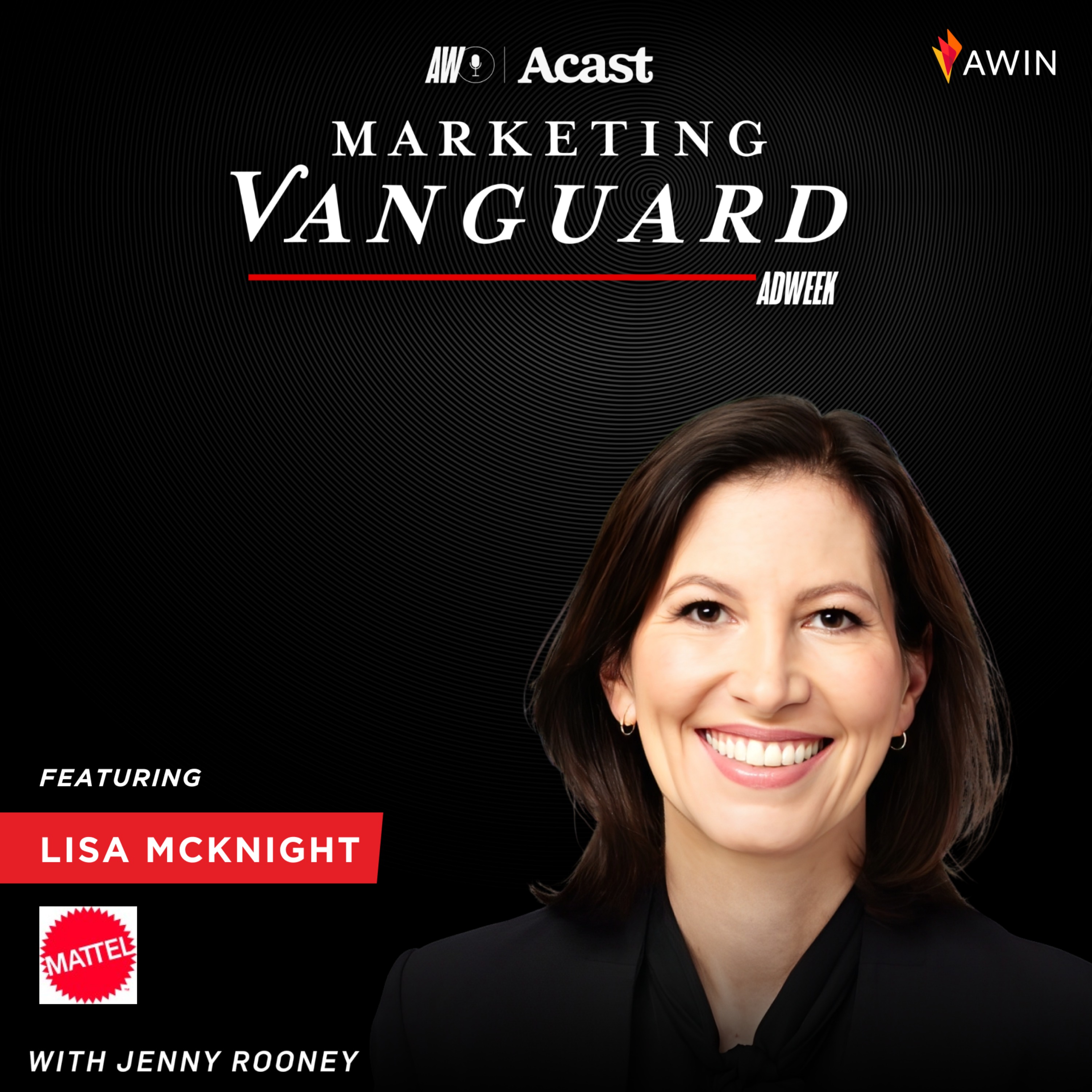
Marketing Vanguard
From Barbie to Building Sets: How Mattel's CBO Transforms Legacy Brands Through Bold Storytelling with Lisa McKnight
00:33:35
Loading summary
Transcript71 lines
- [00:02]
Tracksuit Representative
We know brand growth equals business growth, but do your stakeholders Tracksuit is an affordable, always on brand tracking dashboard that helps marketers and agencies prove the impact of their work on brand metrics over time. Benchmarked against competitors. Built from best in class methodology, the Tracksuit dashboard is accessible and easy to understand for everyone from CSOs and CMOs to CFOs and founders. Research shows that brand investment in good economic times and bad is essential to driving sustainable growth. The bottom line? Turning off the brand tap will cost you in the long run. Tracksuit gives marketers and agencies a common language to measure and communicate brands impact without the $100,000 price tag. Their in house research experts will have your survey live and your full marketing funnel and brand perceptions visible in just 30 days. Check tracksuit out@gotracksuit.com foreign.
- [01:01]
Lisa McKnight
I'm a big believer in taking swings. You know if you don't take a swing and you're passive, then you know you're just not in the mix. You're not in the game. You've got to constantly be thinking about breaking through.
- [01:16]
Jenny Rooney
Hi everyone and welcome to the Marketing Vanguard podcast. I'm Jenny Rooney with Adweek and I'm thrilled today to be joined by Lisa McKnight. She is the Executive Vice President and Chief Brand Officer at Mattel. Lisa, welcome.
- [01:29]
Lisa McKnight
Thank you Jenny. Great to be with you.
- [01:31]
Jenny Rooney
It's great to be with you as well. Now it's hard for me not to call you the CMO of Barbie because of obviously that's sort of like the biggest, boldest brand, at least in the recent past. But Mattel has so much more to it than just Barbie.
- [01:46]
Lisa McKnight
So absolutely. I've got the privilege of overseeing actually over 100 active brands and then of course we've got many more brands in our portfolio that are more nascent. But Hot Wheels is having a huge moment right now. You can see some Hot Wheels product and commemorative items behind me. But Hot Wheels is experiencing its eighth consecutive year of growth. We've got amazing collaborations and coming off of Cannes we just won a bronze lion for a collaboration with Mischief and a campaign around not Wheels. So very fun working on Hot Wheels course. Barbie Uno is another brand that is just taking the world by storm right now. Everybody wants to play Uno. We've got engagement from families and kids to adults coming together as communities to play and interact and bring their competitive spirit. So that's been a lot of fun and then tried and true 90 plus year brands like Fisher Price, Thomas the Train celebrating its 80th this year and then American Girl. Not everyone knows Mattel acquired a about 25 years ago. So that's another prized brand in the portfolio, honestly.
- [02:51]
Jenny Rooney
I mean, my kids are 18 and 16 now, but every single brand you mentioned was a huge part of our household during their growing up years. I mean, just the affinity that they had for all of those. I remember taking my daughter to the American Girl Cafe in New York and just like my son playing with the cars, like there's just so much there. You're part of the fabric, frankly of families and of childhood. I know you referenced this just a second ago, but talk a little bit about what is the role of play and, and specifically toys in our environment right now. Obviously at a time when electronic devices are just everywhere, kids at increasingly younger ages are sort of getting access to these. But where do you see tide shifting as far as the need for hands on play and toys that resonate given our sort of the moment we're in right now?
- [03:40]
Lisa McKnight
Yeah, play has actually never been more important. And we fielded a study called coincidentally a few months ago called the Shape of Play in multiple countries around the world with kids, parents and adult collectors that engage with our products to ask them about play. And again, like I said, it's never been more relevant and important. Kids, it's entertainment, it's a way for them to learn developmental skills, it's a way for them to explore identity. For adults, it can be nostalgic, it can be escapism, it can bring community. And so there are so many benefits to play and it's important right now. I think as the world has a lot of uncertainty and complexity, I think we are seeing more and more people revert back to, I'll call it analog play. Our products are things you can touch and feel and there's a deep emotional connection to them 100%.
- [04:33]
Jenny Rooney
So I'm a proud member of Gen X and I know that whatever the algorithms are doing, I'm part of now. Like I follow these on Instagram and Facebook. A lot of communities that are kind of rooted in nostalgia, especially for my generation. And so like being able to see the Fisher Price house that I played with, you know what I mean? Like, and it grounds you. It takes you back to a time that was certainly special and there was nothing else to worry about back then. But a lot of that, to your point, it really sort of formulated your identity as a kid. There was something just obviously it's resonant, if you will, with your early childhood development and beyond. So yes, I get that hugely so where are you now? Like, you've been at Mattel for quite a number of years, correct?
- [05:14]
Lisa McKnight
Yes. Over 25 years at Mattel, worked under six different CEOs, different leadership approaches, styles, strategic imperatives over the years. And I've never been more energized about the company and what's ahead. So that's what's kept me here, is I've had different experiences, different careers within the career, but always have been learning and growing and excited about what's next. And it's a thrilling time right now at Mattel.
- [05:41]
Jenny Rooney
So tell me a little bit about that. Did you always start in the advertising sphere? I mean, take me back pre Mattel. Tell me about your early career.
- [05:49]
Lisa McKnight
Yes, my early career did start in advertising. So I've always been, I would say, in the brand management space. I started my career in advertising in San Francisco. I'm a native San Franciscan. So after college, moved back to San Francisco and started working at Gray. From there, went to a small boutique agency and then landed at Footcone and Belding. Worked on a variety of clients and different industries from Fairmont hotels to Taco Bell, bank of America. And I loved the agency experience. I loved the opportunity to get exposure to different industries and client challenges and help them solve their problems through marketing communications. I loved the creative process, working with genius writers and art directors and producers. And ultimately though, realized that I had a deep interest in these business challenges and wanted to learn more about the entire business cycle and brand management holistically. And so I had the opportunity to go quote client side, and I went to work for the Gap, headquartered in San Francisco, got to work under Mickey Drexler, legendary CEO. I was there in the mid to late 90s, really exciting time for the company and worked on Gap brands, so worked on Gap, Gap Kids and Baby Gap for almost three years and loved that experience and loved again, being more of a stakeholder for the entire business, not just shepherding the communications.
- [07:16]
Jenny Rooney
So true. And by the way, I mean, that's obviously what every CMO is talking about now. And probably over the last five years that's risen in importance as part of the dialogue, right? That CMOs have to be more than just brand stewards or overseeing communications. They actually have to be part and parcel and establish themselves, frankly, as absolute necessity in the C suite. I can't believe that dialogue continues and that there's even still debate around that yet.
- [07:40]
Lisa McKnight
There is.
- [07:41]
Jenny Rooney
Look, you were a forward thinker if that was something that you felt very strongly about even back at your time at Gap, why do you think that narrative still persists and that there are still questions that swirl around? Is the chief marketing officer or chief Brand Officer a necessity in a company? I mean, to me, there are things I think that the CMO community could do to help retell that narrative. But what are you seeing from your standpoint?
- [08:06]
Lisa McKnight
Well, you're right. It is interesting that it is still a conversation. I do think, of course, the function is absolutely critical. I mean, in a world that is as complex as it is today, with all this disruption that's happening in the media landscape, in the retail landscape, having the consumer at the center of everything that you do is paramount. And that's the number one role of a cmo, is to go where the consumer is going, is to study behavior and to work on programming and products and services and experiences that influence behavior. And ultimately it's about relevance and connecting your brands to consumers. And without relevance, there is no revenue. So it does seem very obvious for those of us that have grown up through the function, if you will. I do think savvy executives and CEOs and CFOs are definitely becoming more appreciative of the benefits, the insights and the critical importance of the function. But I do think there's other ways to force that even further. At Mattel, what's unique about my role is that I co own and manage the P and L with my partner, who's our Chief Commercial officer. So we've shared accountability. So our team is not a cost center, if you will.
- [09:22]
Jenny Rooney
Yep. I mean, the fact that you're living that and actual proof of that is huge because I think we need more models of that in the industry. You've said that you sort of get behind this concept of getting comfortable with being uncomfortable in making bold brand decisions. A lot of what comes with that is the potential for failure or at least mistakes or missteps. How have you sort of cultivated that approach in your decision making style? And how do you get around the fact that, listen, especially your cfo, your CEO, everybody's watching, right? And you want to obviously deliver success at every turn, but how are you able to negotiate and navigate being bold, making bold decisions while still making sure that the risk doesn't outweigh the reward?
- [10:07]
Lisa McKnight
There are a couple mantras that I have in my approach to leadership and brand management. And one is absolutely what you're saying, which is getting comfortable being uncomfortable. The other that's connected to that is celebrating and embracing diverse voices and perspectives. I'm a big believer and I use the expression a lot that to manage the complexity of the marketplace, the complexity of these legacy brands that I have in my portfolio, it takes a village. And you absolutely need diverse voices and perspectives to help you weigh these opportunities that might be bolder and riskier than not. I'm a big believer in taking swings. You know, if you don't take a swing and you're passive, then you know, you're just not in the mix, you're not in the game. You've got to constantly be thinking about breaking through. There is again so much clutter and noise and you have to serve up your brands and your stories in fresh and relevant ways because again, there's so much choice out there. So when we do weigh opportunities that are big swings or that are making us uncomfortable, we absolutely again, value inputs from a variety of folks within Mattel and the organization. And then we've got a lot of external partners that we value. Great. And we've got cultural consultants, we've got communication partners and we pressure test and we think through worst case scenarios and we have mitigating plans. And in some instances when we've done really bold things, obviously before we go forward, of course I bring my boss CEO into the mix and sometimes we've even sent updates to the board. So everybody knows this is what we're doing. Here's the scaffolding that we built should things go in a different direction. But we go in with eyes wide open and we're pretty good, I would say, at kind of anticipating and troubleshooting all sorts of scenarios.
- [11:55]
Jenny Rooney
It's interesting. I interviewed recently, Matt Navarro is the CEO of Stanley and he said to me, actually I had him on the podcast, he said, as a CEO, I want the CMO to come to me earlier in the process and involve me in the conversation and the decision making. His point was perhaps CMOs assume that they have to go to the CEO, having figured everything out and having basically kind of served it up and say this is a done deal where the reality is they would love to be part of the conversation earlier. And it feels like that's what you've been doing. CMOs are always asked, what more do you need from the CEO? And I kind of slipped that and said to him, as a CEO, what more do you need from the cmo? And I was surprised by that response. So any sort of reaction to that and is there anything you'd add to that that you have come to realize CEOs need from CMOs Chief Brand Officers?
- [12:52]
Lisa McKnight
First of all, I guess it doesn't matter what the size of your organization is. Mattel is a fairly big organization. We've got a matrix kind of structure. And so it's all about collaboration and influence. I mean if you're, if you can't collaborate with various teams and get people on board, then you don't have any influence and you're not going to be effective. And you're right, partnering with the CEO is job number one. You want that stakeholdership to be felt by everyone, including the CEO of the company when you're taking big swings. And I think the more people feel like they're on the journey and in it with you, the more they're committed and then the more they're there again for air support if something doesn't go right.
- [13:30]
Jenny Rooney
Yeah, but I love what you're saying. So basically with risk taking and bold moves, you're creating an environment where you're probably as supportive as you possibly could be in taking those risks and making those moves. Right? The diversity of perspective, vetting a broad mix of folks to make sure that you have voiced it with a lot of people. Such an interesting strategy when you talk about bold modes. Look, I'm going to now ask about Barbie. I think we're two years out.
- [13:55]
Lisa McKnight
Yeah, exactly. Two years out from the summer of Barbie. Oh my goodness.
- [14:00]
Jenny Rooney
And listen, at the time you were interviewed a thousand times about it, right? I mean it was just like it was on repeat and rightly so. I'm going to ask you in the context of this conversation because sometimes hindsight's 2020 and now you've had the benefit of two years having passed since then. Was that the biggest, boldest move you've made?
- [14:20]
Tracksuit Representative
We know brand growth equals business growth, but do your stakeholders. Tracksuit is an affordable, always on brand tracking dashboard that helps marketers and agencies prove the impact of their work on brand metrics over time. Benchmarked against competitors built from best in class methodology, the Tracksuit dashboard is accessible and easy to understand for everyone from CSOs and CMOs to to CFOs and founders. Research shows that brand investment in good economic times and bad is essential to driving sustainable growth. The bottom line, turning off the brand tap will cost you in the long run. Tracksuit gives marketers and agencies a common language to measure and communicate brands impact. Without the $100,000 price tag. Their in house research experts will have your survey live and your full marketing funnel and brand perceptions visible in just 30 days. Check tracksuit out@gotracksuit.com.
- [15:19]
Lisa McKnight
I would say absolutely. And it was A big deal at the time because also to give you more business context, the brand was firing on all cylinders. We had just sort of emerged from a multi year turnaround, including the pandemic, and the business had doubled. And so we had this massive momentum and we had never taken the Barbie story to the big screen, nor did we initially even know what that story should be. And so there was so much risk in upsetting the Apple card and the momentum that was underway, that was very positive. Of course, as we got further into it in the development of the film with the amazing Greta Gerwig and Margot Robbie and we got more comfortable with the narrative and the storytelling. But initially there were a lot of questions, do we need this? And I still to this day have heard from people that either did not see the movie again, there's very few of them, or there were people that really did think they knew what the movie was going to be and thought it was something that wasn't for them. And that's what we were worried about was we just didn't want to serve up something that was expected. And of course we certainly didn't do that.
- [16:30]
Jenny Rooney
I mean, look, what goes through my mind is, I mean, you have people who are such Barbie purists, right? Barbie aficionados, and to your point, you'd done so much to make it such a hot brand again and the nuance of getting the movie right because you didn't want to lose them, but then this also could create opportunity for you to bring new consumers into the brand. I mean, talk about walking a line.
- [16:52]
Lisa McKnight
It was incredible. I think that was the other thing too is we were protective initially and we were definitely thinking of our core consumer, which is kids and families. And we didn't appreciate again that the brand could stretch and we could broaden the audience to young adults and frankly up to octogenarians. I mean, the massive appeal of this film was beyond. And that's what was really exciting is we were trying to think about initially our core audience. And when we started to get traction with the project and do some testing and get some reaction, we realized, wow, this really is something for everybody. And now we've, like you said, re engaged with new fans, which is really exciting. As we look to the future, 100%.
- [17:40]
Jenny Rooney
Listen, I mean, 1970s me had the Barbie dream house. I mean that was again going back to sort of core memories and the toys that defined us. So I loved going to it. My 14 year old daughter who was then 14, absolutely. I mean she and her, as I know you heard she and her friends, they all dressed in pink. They planned it all out. And this was like a moment for them to literally go to the movie theater. By the way, getting people back into.
- [18:03]
Lisa McKnight
Movie theaters, it was a big deal. Yes, in itself, too.
- [18:07]
Jenny Rooney
The fact that it became just this phenomenon and the way everybody interacted with it was different. Mine was sort of rooted in nostalgia. Hers was rooted in pop culture. And she was at an age where using it as a social sharing moment with her friends. So it's just such a phenomenon. And it will go down as one of, like, the fundamental case studies that have defined our time from an advertising, marketing, brand point of view. If and when this is, and I'm sure it already is, taught in business school classes and marketing forums, seminars. What do you hope that budding marketers take from that case study as they think about the learnings that come from that?
- [18:48]
Lisa McKnight
It's funny, like you said, I've had a couple years now to reflect a bit more, and initially I would have given more of sort of a pragmatic, marketing sort of case study response. But what I'm sort of appreciating now, and there's actually some memes going on right now about the summer, and everyone's sort of. There's some people saying they'd like the summer to be a little more Barbie and a little less Oppenheimer, candidly. But I think the fundamental fact that we led and the filmmakers led with positivity is really interesting. And I'll bring that even to our brand color pink. It's a positive, optimistic, joyful color. And like you said, people wore pink as, like, a sign of joy and identity. And men wore as much pink as women did and all ages. And it was celebratory, and it was about community. And like you said, it created culture. It was incredible. But leading with positivity, I think, is what really struck that chord and created such fandom. And I think it's something that we shouldn't forget. We need positive experiences in our lives and positive brands in our lives.
- [19:59]
Jenny Rooney
Such a great point not to be overlooked. Talk a little bit about. I know you've done some projects, the Dream Gap project. Can you tell me a little bit about that?
- [20:07]
Lisa McKnight
Yes. I love the Dream Gap Project. This was a project we created, gosh, maybe eight or nine years ago. And it's a social impact initiative that we created specific to Barbie to even the playing field for girls. We learned through some studies. There was an amazing professor out of NYU that studied how girls, starting at the age of five or six somehow started to doubt their competencies and their capabilities and started losing confidence in themselves. And he coined the phrase dream gap. And so we loved that because of course, Barbie is all about dreaming big and we are the original girl empowerment brand and we want to close any gap that is there with girls and allow them to achieve anything they want to achieve. And so we started the social mission work where we're raising money with other partners and working with NGOs where organizations like Girls Inc. Black Girls who Code can bring services and opportunities to girls and help them achieve anything that they want to achieve.
- [21:09]
Jenny Rooney
I love that. I know you've introduced dolls with special needs. Right. So how are you thinking about the inclusivity component of your work with also making sure you're balancing that between inclusivity and commercial viability?
- [21:22]
Lisa McKnight
Well, inclusivity is a huge value for Mattel. Certainly. We want to encourage, as I mentioned, diverse voices to be heard and everyone to feel invited and included to important conversations at the company. We also want society to feel that our brands are accessible and to see themselves in our brands where that makes sense. Certainly with Barbie we've been able to evolve the product line to be a better reflection of the world that we all see around ourselves. And that includes not only different ethnicities, different body types, but also people with different abilities. And we've been iterating and now I think we have over 175 different types of Barbies reflective of all different types of people. But it goes beyond Barbie. I mean we're a very purpose driven company. I'll give you a recent example with Uno in our games division. Uno, like I mentioned, is having a moment. There's so much fandom around Uno right now and what we realized is the fundamentals of the game, the mechanics are based on colors. Well, there are colorblind people in the world and so they can't play the game. So our design team created symbols and icons to make the game colorblind accessible. And we've started to roll that out now as well as a practice across all of our games. And by the end of the year, over 90% of our Mattel games portfolio will be colorblind accessible. So one of our playbook pillars is driving and leading through purpose has been embraced by a variety of different brands across the portfolio.
- [22:53]
Jenny Rooney
That's so great. No, I love that. And speaking of other brands you mentioned, with Barbie it was having a moment, right, As a brand and a product and then being able to build the movie on that basis was key. What are the other brands in the portfolio that you are thinking about doing.
- [23:07]
Lisa McKnight
Similar things around get specific around theatricals. We talked about this is the two year anniversary of the Barbie movie. Well, we also just wrapped up the production of our next big theatrical which is Masters of the Universe and that is releasing June next summer. So we're very excited about that and of course lots of learnings from the Barbie film being applied. From a marketing standpoint, of course the story is very unique and again, different filmmakers and so forth. But what's fun about Masters of the Universe is it's a more nascent brand, it's got a more niche fan following. A lot of men that collect our action figure line as well as other lifestyle product inspired from the show from the 80s. But we've got an opportunity to bring new fans into the franchise next year when the movie comes out and certainly reach kids, but also broaden to women and to a array of fans. So we're excited about what the film is going to do for that property. That as I mentioned, is a little more niche right now.
- [24:09]
Jenny Rooney
I love that question. Just more generally, what do you think is the future of brand content? Not branded content, but you know, brand first content, whether it's movies or anything else. But I mean, where are we, do you think, in the journey of that as a strategy?
- [24:25]
Lisa McKnight
Well, I think for sustainability and long term growth, you have to think about your brands as more than any single category. You have to think about them as ideas, as ip. And that's certainly been the mantra Under Anand Chris, our CEO who joined over seven years ago. We've evolved from a toy company to a toy and children's family entertainment company to now with one of the leading portfolios of IP in the world. But also now thinking about that IP as franchise as through the brand management lens and storytelling is a huge part of extending the value of these brands and then inspiring all sorts of different product expressions and experiences.
- [25:06]
Jenny Rooney
Yeah. Is this where Mattel Studios comes into play?
- [25:08]
Lisa McKnight
Yes, we have Mattel Studios amazing division led by Robbie Brenner and that is where we're not only producing theatricals, but also premium streaming shows. Scripted, unscripted, animated, live action. So really exciting time for us in the world of content creation and storytelling.
- [25:27]
Jenny Rooney
Yeah, I love that. I'm just curious, how do you think about the Mattel brand in all of this? How much is it important for you to make sure that there's at least some connectivity to the Mattel brand?
- [25:40]
Lisa McKnight
Well, we've been thinking a lot about the Mattel brand recently and interestingly the Barbie movie made the Mattel brand front and center. You could have argued that we were more of a house of brands in the past. Now we're a branded house of brands. Mattel was a character in the film with a hilarious CEO played by Will.
- [25:58]
Jenny Rooney
Ferrell, one of my favorites.
- [25:59]
Lisa McKnight
It was amazing. Great role for him. And that started to make Mattel more of a consumer facing kind of household brand. And so as we've been looking out, this year is actually the 80th anniversary of Mattel. So we are doing a commemorative product line celebrating our anniversary color, which is ruby red. Mattel is also branded color is red. But creating commemorative product. We've got an amazing philanthropic program where we're working with 80 different partners commemorating each year of the company's history and then other nice projects going through the archives, publishing some beautiful coffee table books and so forth. But Mattel is the lead brand message. In addition, we just announced a few months ago a new building set business for us. We have acquired a company called megablocks again about 15 years ago, doing very well in the preschool space, thinking these big chunky blocks. But we had an opportunity to do a little bit better with actual bricks. With clearly building and construction is a very popular play pattern right now with all ages. And when we decided to go and reinvigorate that business, we studied the Mattel brand versus Mega and realized we had more equity with Mattel than Mega. And so we've just relaunched Mattel Brick Shop as our new offering for adults in the building set space. And then we're partnering with our number one vehicles brand, Hot Wheels as the first sort of collection. So that was very intentional.
- [27:37]
Jenny Rooney
And that's a competitive category.
- [27:39]
Lisa McKnight
Yes, very competitive. There's a behemoth out there who we admire.
- [27:43]
Jenny Rooney
Yeah. But getting it right, I mean for you all, you had to find the opportunity and clearly this was the opportunity that you.
- [27:50]
Lisa McKnight
Exactly. We're excited. We've just launched, we've had incredible response from influencers and fans of the category. We had a pre sale that sold out and then we'll officially be at retail in another month. But again, thinking about the thematic of vehicles and Hot Wheels was obviously a strategic choice. But then branding the this new business as Mattel Brickshop was a strategic choice and we're really excited to see what the reaction is.
- [28:14]
Jenny Rooney
So, so fascinating. I appreciate that tremendously. Couple last few questions for you. I mean, we're coming off a can. You and I were both there. You can't not bring up AI and I'm just Curious around how you are thinking about it. You can kind of just at least give a nod to it. I know you recently announced a strategic partnership with OpenAI.
- [28:33]
Lisa McKnight
Yes.
- [28:34]
Jenny Rooney
Talk a little bit about that.
- [28:35]
Lisa McKnight
So, really excited about our strategic partnership. We're going to be working with them on products and experiences for 13 plus. So young adults and older. So early days, but very excited about thinking of new ways to play and bringing again our analog products to life. I'll give you an example that we see a lot of application in our games business. You can see behind me, Magic eight Ball. Well, you can imagine maybe an interactive eight ball, which could be kind of fun. So trying to figure out the right way to leverage AI. Again, recognizing right now it's about adults because there's so much sensitivity and privacy concerns and so forth with kids. So we're being very cautious there. But then also using AI certainly as a tool to fuel creativity, to help with ideation, to help us even with research, we're starting to embrace it across all aspects of the company. It's frankly a corporate mandate for everybody to start using these tools and seeing what's possible.
- [29:35]
Jenny Rooney
Love that. We started our conversation talking about making bold moves and even taking risks. If you think that the chief brand officer role, everything, it all comes down to those individual decisions that you have to make along the way. Right? I mean, there's forks in your road. Every day of every minute of every hour of every day you have to make decisions. Is there one key decision that you've made personally in the last year, five months, what it might be that you look back to and you're like, gosh, that really changed our trajectory or that set something in motion for the brand and business. What would you sort of identify as that?
- [30:10]
Lisa McKnight
One key decision could give many examples. I'll share one that was certainly very personal and difficult because it involved people. And frankly, those are the most difficult decisions. And by the way, our people are our superpower. And I do want to acknowledge that's what's also kept me at Mattel all these years, is the incredible people. So when you've got to make decisions about leadership changes or restructuring, it's incredibly difficult. We had been experiencing a lot of softness in our Fisher Price business, the infant toddler preschool business. And when we looked back over the past six years, while the company had been growing, we would have been growing like 2x growth rate. The Fisher Price hadn't been declining. So we had some wins with Barbie and Hot Wheels and other brands that were kind of masking the softness but we really had to address that business because again, it's a big important business where Future Price is the number one brand in the infant, child or preschool space and it wasn't acceptable to be declining. We actually got pressure also from activists on that business. So I had to make a really tough decision to reorg the business right now. We acquired it years ago and their headquarters are in East Aurora, which is a suburb of Buffalo, New York. And we had a core Fisher Price team there that works on infant and newborn and some baby gear products. We also had a preschool entertainment team that works on products that are licensed preschool toys linked to kids shows. We decided to move that business to LA to be closer to the studios and we actually rolled it under a leader that is running action figures that also works with the same studios. So there were synergies there. And then we really right sized the infant, toddler, newborn business in Buffalo and had them really focus on that business and that audience, which is not kid, it's parent because moms are making the decision. So that then also resulted in some leadership shifts. So it was a very difficult decision and it was very disruptive. But I will say the business is now turning and engagement is up on the Fisher Price campus, which is exciting. We do have new leadership which brought some great reinvigoration. But these choices really do keep you up at night a hundred percent.
- [32:21]
Jenny Rooney
I can only imagine you have to make the right strategic decision, full stop. And it makes sense that would be something. I mean, as you just started to tell that story, I knew you were going to end with we needed to bring them closer to the headquarters, California. It just made sense. So I love that because I know that anybody listening is going through something similar. Right. They're trying to also navigate headwinds, shifts, consumer trend shifting. Things. Things change. Right. And so to keep your business as relevant and as successful as possible, some of those hard decisions have to be made. So wonderful to hear that things are now on the upswing for that particular division because it is also such a beloved brand as part of the portfolio with such a rich history. So amazing. Anything else you wanted to use for us as we think about the future of Mattel? Well, we can look forward to hearing from you.
- [33:08]
Lisa McKnight
Oh, gosh. Well, yes. Lots of announcements coming in July. I can't give away too much, but one announcement we just made is Hot Wheels is partnering with F1 and we're now also participating in all the fun around the F1 movie that's coming out this weekend. And we've created A car from the fictitious team featured in the movie, which has already sold out in minutes. And so much fun. So the fandom for Hot Wheels just continues. And of course, F1, hats off to them. What an incredible franchise and sports franchise that's really taking hold all around the world.
- [33:43]
Jenny Rooney
Well, we're going to have a special Marketing Vanguard event convening moment at F1, so.
- [33:47]
Lisa McKnight
Oh, that's perfect.
- [33:48]
Jenny Rooney
Glad to invite you to that. So stay tuned. But that's excellent. And the last question I ask of everybody who's on my show is who's next? Who's somebody who has the chief marketing or Chief Brand Officer title who you admire? Either you know them really well or you admire them from afar. You just think the work they're doing is extraordinary. Who should I have on the show?
- [34:08]
Lisa McKnight
Oh, goodness. Well, again, so many incredible people out there. I'm trying to think of people I was just chatting with. I'm a huge fan of Asmita from l'. Oreal.
- [34:17]
Jenny Rooney
She's amazing.
- [34:18]
Lisa McKnight
She's amazing. And what a complex business and such a broad portfolio and they have been so digital first in their approach to demand creation and connecting to consumers. It's fascinating.
- [34:32]
Jenny Rooney
Yeah. This is the global CMO of l', Oreal, so I should absolutely invite Esmita on. Last time I was with her, I was at a WFA conference in Toronto probably two years ago now. We'll definitely reach out to her because she'd be a fantastic guest to have on.
- [34:46]
Lisa McKnight
And then I would say just hit up some of the brands that, you know, won big last week because some of the work that I saw was just incredible.
- [34:53]
Jenny Rooney
Yeah, no, hugely so. And congrats to you again.
- [34:56]
Lisa McKnight
Thank you. Yeah, love it.
- [34:58]
Jenny Rooney
Lisa McKnight, thank you so much for joining me. This has been a pleasure. So excited for everything we covered and I look forward to talking with you again very soon.
- [35:06]
Lisa McKnight
Jen, it was so much fun. My pleasure and great to see. See you.
- [35:09]
Podcast Host
As always, thank you for listening to Marketing Vanguard, part of the Ad Week Podcast Network and Acast Creator Network. You can listen and subscribe to all of Adweek's podcast by visiting adweek.com podcasts. Stay updated on all things Adweek Podcast Network by following us on Twitter Dweek Podcast. And if you have a question or suggestion for the show, send us an email@podcastdweek.com thanks for listening.
- [35:39]
Tracksuit Representative
We know brand growth equals business growth, but do your stakeholders. Tracksuit is an affordable, always on brand tracking dashboard that helps marketers and agencies prove the impact of their work on brand metrics over time. Benchmarked against competitors. Built from best in class methodology, the Tracksuit dashboard is accessible and easy to understand for everyone from CSOs and circumstances, CMOs to CFOs and founders. Research shows that brand investment in good economic times and bad is essential to driving sustainable growth. The bottom line? Turning off the brand tap will cost you in the long run. Tracksuit gives marketers and agencies a common language to measure and communicate brands impact without the hundred thousand dollar price tag. Their in house research experts will have your survey live and your full marketing funnel and brand percentage options visible in just 30 days. Check tracksuit out@gotracksuit.com.