← Marketing Vanguard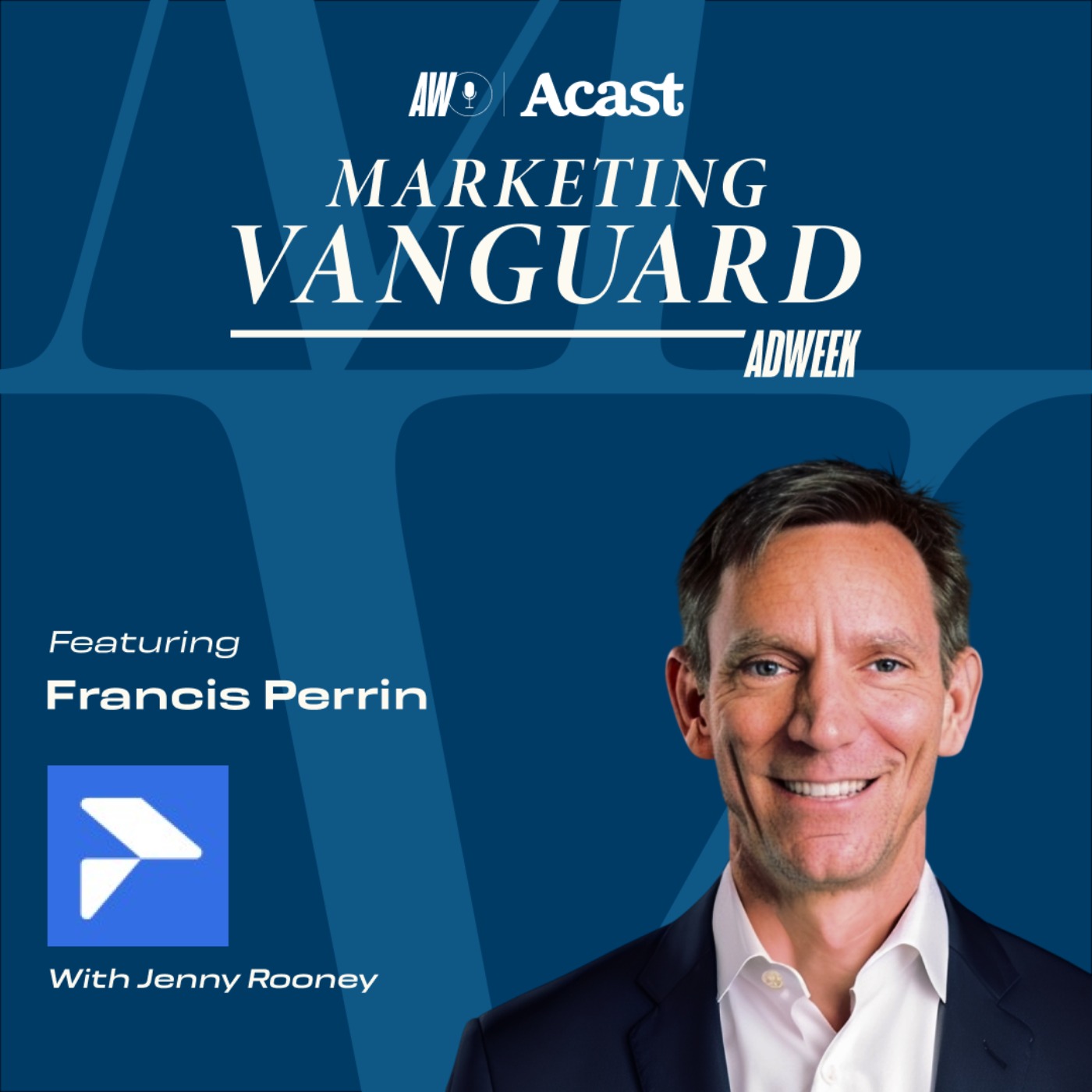
Marketing Vanguard
From Heritage to Innovation: Building a Global Energy Brand with Francis Perrin, Chief Brand and Sustainability Officer of Rehlko
00:28:05
Loading summary
Transcript57 lines
- [00:00]
A
Finding the right audience shouldn't feel like doom scrolling with Experian. It doesn't. Experian syndicated audiences help you reach holiday shoppers, car buyers and more across over 200 top platforms. With over 2,400 pre built audiences, there's no more doom scrolling. It's audience targeting you can trust. Made simple. Learn more@experian.com Adweek that's exper Ian.com Adweek.
- [00:30]
B
We don't want to be perceived as just a manufacturer of engines and generators. We want to be a global, innovative, technological energy solution provider.
- [00:43]
C
Hi everyone and welcome to the Marketing Vanguard Podcast. I'm Jenny Rooney with Adweek and I'm thrilled today to be joined by Francis Perrin. He's the CMO of Relco and and we're going to dive into what that company is, what it does, and really what Francis's mandate is as CMO and in charge of marketing strategy for the company. As you may know, in the Marketing Vanguard podcast, this is where I talk to CMOs and equivalent titles to really get inside their heads around how they're making decisions day in, day out. Being an influential, innovative business leader as a core part of the C suite, it involves making decisions at every turn that can set the trajectory of the business moving forward. So what we try to do in these conversations is break that down a little bit and sort of understand all the work that goes on behind the scenes. Midway through this episode, I will also have a sidebar conversation with Best Buy CMO Jenny Weber to discuss their latest campaign and strategy for their retail media business. Francis, welcome.
- [01:52]
B
Thank you, Jenny.
- [01:53]
C
So we did meet already. We met at the Marketing Vanguard Summit in Chicago last May, which was super exciting and it was a pleasure to have you there. I would love for you to just introduce yourself to our guests and talk a little bit about your own career journey. I know you had early roles at HCC Montreal and Columbia Business School, and then you went to major consumer brands like P&G, L' Oreal and Pernod Ricard. So let's talk about that a little bit. Share your journey for sure.
- [02:20]
B
Yeah, I'm definitely a product of cpg, started my career with png, so I've been PNG trained in my first couple years. It's funny because that really stuck with me. They really trained you really well. Then spent a few years at l' Oreal and this is where my international journey started. I was lucky enough a young Canadian guy, they sent me to Paris to work on global work. At the time it was called Interactive Marketing what is today digital. It was fascinating shaping at the time. What were websites and first digital applications for global l' Oreal brands like Garnier, l', Oreal, Maybelline. And that took me to New York where they gave me a small GM position in a startup within l'. Oreal. We were the first ones selling on E commerce in the US and long story short, I moved on, went into wine and spirit world with Pernod Ricard which funny enough, I also had an international career. They also sent me to France where I managed global brands, got exposed to some amazing brands that were growing fast in Asia and then took on a CMO role for a food company in Chicago, Bell Brands. Then took on my second CMO role for a wine company, went back to wine and spirits on the West coast with St Michel Wine Estates and after that stint moved to B2B which was a big move with Kohler. And that turned out to be an amazing move, amazing adventure because we stood up Relco as a separate business last year which was super entrepreneurial and I was able to pick from all my experiences and put that into practice in a. What we like to say we're a hundred year old startup at Relco.
- [03:59]
C
I love that. So you initially came in at Kohler, right? Which everybody should know because there is a B2C component to Kohler, even as it's a B2B so. So talk a little bit about that when you first came to Kohler.
- [04:14]
B
Yeah. So Kohler, amazing company, one of the largest still privately family owned business in the us Global by nature. All driven out of Kohler, Wisconsin and the Kohler Village. It's amazing place to see if anyone has ever been. And Kohler is known of course for their kitchen and bath things, among many things. But it's actually a very large company that does more. They into golf, they, they're into hospitality and they're into a business that nobody knows about. They're into the energy business as they manufacture bathtubs early in the 20th century. They also got into the engine business. Once you have a foundry, they created the first engines and also the first generators initially to equip farmers in the Midwest where they didn't have access to electricity. So that's the way these guys were getting power back in 1920s. And like any good brand or good business, they were able to stay relevant. Amazing heritage. They've powered the first Hollywood studios when these guys needed electricity to shoot movies, probably in places where the grid was not present. And I'm thinking the desert maybe and Places like that, like a lot of American companies, they took part of the effort during World War II. They sponsored the first expedition to Antarctica with some explorers at the time. So all this under Kohler Energy. And about two years ago, they decided big strategic move to stand up the energy business as a separate business. And I was already in that role with Kohler, and I'm sure we'll talk about that. Among the many things, one of my big tasks was to rebrand the business away from Kohler's, create our own identity, which was a huge challenge on its own. And I'm happy to share more details of some of the pitfalls and some of the challenges we faced while standing up that business.
- [06:00]
C
And I want to talk about that in a minute. But I mean, I guess the common thread is just the rich heritage of these brands that you have had the pleasure of working at. I mean, obviously P and G, obviously, l', Oreal, Pernod, Ricardo, I mean, these are global. They have histories, they have origin stories. And Kohler certainly has its own origin story. And the energy piece has a really cool story that maybe some people don't even know about. But I love when I'm talking to brand leaders whose brands just have such a rich history and some of it untapped. Right.
- [06:30]
B
The energy part of the business was unknown. And being our own company now, that changes. We want to be out there. We want to drive awareness of what we do and the strategic part of it. There's a lot of value creation just in the narrative, in our storytelling. What do we do? We don't want to be perceived as just a manufacturer of engines and generators. We want to be a global, innovative, technological energy solution provider. And that changes everything. It's asking a question, what business are we in? So that was great when setting up our purpose, too.
- [07:02]
C
Yeah, no, I love that. And Kohler, by the way, just fun fact for those listening, Kohler Wisconsin actually also has an incredible spa. It's like a really great destination in Kohler, Wisconsin. I've been there, so I have to add a plug for that. I used to live in Chicago, as a matter of fact, Frances, so I also know that region. But this is what's cool about the name Relco. And now you should decode this for those listening, for sure.
- [07:26]
B
So our challenge was to come up with a new name. And we have a lot of business partners that have been doing business. Some of our distributors, dealers, they were so attached, and our employees too, to the Kohler brand. There's so much pride in working with or for Kohler. So one of our challenges was how do we set some sort of continuity while setting ourselves free. And I think the creative solution was finding the name Ralco, which maybe some of you already found it out, but it's an anagram of Kohler. We reordered the Kohler letter to create a new name, but there's a lot of intentionality and purpose in it. The first two letters, re stands for resilience. What we do, reinvention. The KO of RELCO is an attribute to Kohler. To 100 plus years of. When this business was under Kohler, we thought, it's also modern. It sounds good. Of course, legally, with rebranding, it's always almost more of a legal project than a marketing project. And legally, it worked in all of our markets as we're a global company.
- [08:28]
C
Yeah, no, I love that. Well, I have Taylor and Travis's big announcement on the mind and she's like the master of Easter eggs. So you could argue you've got some Easter eggs. That's a. It's a name with some Easter eggs in it. One in particular. No, I love that. I mean, Kohler is such a classic American brand and it's also. It has a prestige factor. Right. So I can see where. Staying tied to it, but as you said, also sort of breaking free. That's a unique nuance to get right, for sure.
- [08:53]
B
You know, we tried to transfer as much equity and heritage. We have the rights to talk about our heritage. Part of our agreement with Kohler's. We're going to talk more about that in the next few years. I think what's interesting, just connecting to what I said earlier, my first early days at P and G, where I think P and G is the company that turned marketing almost into a science. I think what I brought to the role in the brand transition is a little bit that discipline. So we did a lot of marketing research before trying to understand the strengths of the Kohler brand in our business, what it stood for. And this is something we're actually tracking. Twice a year, we talk to our distributors. First of all, of course, the awareness that Kohler Energy is now Relico. But beyond that, some of the key attributes that we want to stand for. We're measuring our level of trust. We're measuring. Are we considered. Do you see us as a leading provider of energy solutions? We still have work to do, but we're tracking it and we're making progress and I'm sure we'll talk about that. That then makes it easy to talk to a CEO or to the C suite or to our shareholders. Because you're coming in with facts.
- [09:58]
C
I love that. Noted. And that's such a great thing for everybody listening to Take away from this, I do have to ask real quick before we move on because I do want to dive into the campaign, initial campaign that you've had and some other great things for Relco you Canadian roots. And I'm just curious, png, yes. Global but iconically American company. How do you feel your Canadian roots and experience has informed your marketing leadership style?
- [10:23]
B
I think it's really interesting because when I worked in France for l' Oreal or Pernod Ricard, they probably saw me as an American.
- [10:31]
C
Interesting.
- [10:31]
B
And when I work with American brands, because I'm French speaking, I still have that small accent, they think of me of a French guy. So we're in the middle. Canadians were known. We're very polite and diplomat. So I think that stuck with me. It's part of my style trying to drive people to agree together in a positive way. Seeing the glass half full instead of half empty. We have so much opportunities in front of us and I think this is what's great about marketing is you're always moving the business forward, supporting the business and driving growth.
- [11:00]
C
It's interesting because a lot of conversations in CMO circles these days are just about how divided. Certainly in the US there's a lot of polarization, there's a lot of division and it's hard to figure out how to build narratives and creative expression within that context. Do you have any personal opinion, thought, perspective on, especially based on what you just said?
- [11:21]
B
I also have internal calm under my so of course it's very difficult these days to please everyone. But I think you need to stick to your strategy. Even the world of energy, it's highly political. When you think about the renewables, different laws that came in or turned around that that's got a big impact for us on our strategy. But we tried to stick to our own strategy. Frankly, I don't think it's our role to get into politics.
- [11:45]
C
Yep, that's a great segue into. Correct me if I'm wrong, but your initial marketing campaign was Resilience is reinvention.
- [11:52]
B
Yep.
- [11:53]
C
Talk a little bit about that. And that is a nod, of course to the RE that you mentioned in the name earlier. But what were the strategic goals behind that campaign?
- [12:01]
B
The goal was pretty simple, was to drive awareness that Kolar energy is now relco and resilience is a very important word for us. We're I think in our business, one of the first company to really try to own that word. It's interesting. It's a bit of a flattery when we see some of our competitors using the same word to talk about their business. So business is, it's at the heart of what we do. We provide power where and when the grid doesn't. That's a way to look at our business. I'm sure we'll talk about that. We do both industrial and residential. So we're a leading global brand on the industrial side for hospitals, data centers, large gen sets. But we're a challenger on the home front in North America and I think there's place for more than one player there. When you look at generators with homes, it's got about a 6% penetration rate. You compare this to alarm systems who are above 30% or AC who are in the high 80s. When you just compare to alarm systems, people all have alarm systems. But there's more outages than burglaries. One out of four US household got a outage last year. Three quarters of these outages or more than six hours. So it's an issue when you work from home. It stops your life. So huge opportunity on the home front. I want to talk about that too. And it's interesting as a challenger or a brand right now it's a two brand market. It's our competitors and us. They're probably four or five times our size. But it's kind of fun. We're right now growing share and taking share away. And on our route to market, it's been really interesting to just own from lead generation. How do we transform the leads and then how do we convert at the kitchen table when our dealers are in front of the homeowners?
- [13:51]
C
Let's take a second to sidebar with a friend of the show. Jenny Weber, the CMO at Best Buy. Throughout her career, she has spent over 16 years growing best Buys business and she's a major champion of their retail media network. Today, Jenny joins us from the Best Buy offices in Minneapolis where last week they rolled out their We Got Next campaign. Jenny, welcome.
- [14:12]
D
Oh, thanks for having me. Jenny. It's really great to chat with you today.
- [14:16]
C
So I'm excited to dive in. Look, Best Buy ads has been in the retail media game for more than a decade. Tell me more about where business and strategy is today and where you're heading.
- [14:27]
D
Well, I like to think of us as an OG rmn. We've really been doing this for the last decade. In fact, I think we've written a lot of the playbooks for what retail media looks like. We have been quietly and very strategically building this business and now we're just excited to really take it to the next level. I think what you've seen us do, especially over the last call it year to two years, is make significant investments. We've also been investing in technology to make sure that we've got the right tool set for advertisers. And then I think you've seen us do some really unique, interesting partnerships. And this is all aimed at making sure that we have what advertisers and our partners are really looking for. And I think it just sets a really good foundation for us to accelerate. So why don't I take a second and I'll just talk a little bit about where we're going and what that future looks like. We want to be a world class retailer and we are. And now we are expanding to be a media company as well. And that is really how we're thinking about it. From my perspective as a marketer, I of course think it starts with our Best Buy customer. I'm always going to orient there. And we know that customer better than anyone else and they love technology and they really truly do use technology to take their passions to the next level. And so when you think about our partners and our advertisers, that is exactly who they want to talk to. So that customer is just so important. Our strategy is really aimed at three things. One, making sure that we have the right partnerships in place. Secondly, ease of buying, so making the buying process as easy as we possibly can. And then thirdly, creating new innovative experiences. And when I take a step back as a marketer and I think about where do I want to buy media or what do I want that to look like? Those are all the things that are important to me. And so we know that they're going to be really important to our partners as well.
- [16:45]
C
So let's talk about this a little bit more. As a company that sits at the intersection of tech and culture, how are you tapping into this positioning and making sure you're using it to engage the tech customer?
- [16:56]
D
Well, I think technology is just so central to consumers lives. And so when you think about culture, you know, I think of things like sports. Sports is so important, like it is culture. Now you think about fashion, entertainment, movies and music. First of all, creating that content and making those things requires technology. Consuming it now requires pretty incredible technology. And so, you know, we have screens in every aspect of our lives. And Best Buy is so well positioned to truly bring that to life for consumers and that benefits are advertisers. And then I think, I know you have talked to so many marketers. Being part of culture and being in that conversation is so important to keeping a brand relevant and at the forefront.
- [17:51]
C
Jenny Weber, thank you so, so much for joining me. Yeah, I was going to say, I mean, that represents huge opportunity for you. And I'm sure any marketer I talk to, I mean, they are competitive by n. It's what keeps them going and you want to win. So characterize that. I mean, not only did you transition to a B2B brand, leading with a B2B brand that's trying to also tap into the consumer household market. Not only that, but you're a challenger B2B brand in that market. So how do you characterize how that fuels you, pun intended, to make sure that that drives you towards success? I mean, that's a high bar for sure.
- [18:31]
B
And what we like to say is we're now very focused since we stood up the company away from Kohler and we're on our own, we're creating our own culture, where I think focus is a key word because also we're one of the few companies that's dedicated to energy resilience and we have a high level of respect for all of our competitors. Believe me, you look at what they do on the industrial side, we're competing with giants like Caterpillar and Cummins. But these guys, energy resilience is not their core. They do other things for us. It's, this is what we do. But at the same time, I like to say we're also surrounded by engineers. And for somebody who comes in with a little bit of creativity, like myself, coming from the B2C world, I think there's so much opportunities just to stand out. There's a sea of sameness out there when you look at the way products are presented. And so we're trying to address this and we have a lot of work underway to address this.
- [19:24]
C
Yeah, no, I love that. So let's talk a little bit about how you think about setting up your organization, agency partners, all the dynamics of making sure that you're built for success. From a budget standpoint, do you have buy in from the CEO, from the board, or whomever might need to make sure that your marketing organization is set up for success? How do you think about that?
- [19:46]
B
Yes, this was a unique opportunity when we stood up the company because we basically started with a blank sheet of paper and I had to decide what kind of organization we want. We were historically very decentralized, probably too much within our relco business we have six business units and when we started none of them talked to one another. We would show up at a trade show. We had three of our businesses with different stands that looked different and I'm not kidding. So we had a lot of low hanging fruits in a way setting up an enterprise team. And it was the same thing with our websites. Things that been decentralized, our social media presence. Those are all things we quickly addressed to make sure we're speaking with one voice and it's still underway. Like we're not done. Some of that stuff is expensive and complex. But we built a strong enterprise team really centrally. And the way we look at it is we want to do a lot of things internally. It's part of our culture. If you ever talk to someone at Kohler or Kohler, it's pretty unique. We had our own internal agency, over 100 people in a beautiful building in Kohler, Wisconsin. But now we're on our own and we need to do it. And then my philosophy when it comes to agencies on the highly strategic, where there's a lot of added value of having a third party, this is where we choose to go. External public relation was one part where we needed a lot of expertise. So we went outside on some campaign work. We're looking for that extra creativity. We just onboarded a new agency to help us stand out, cut through the clutter and the sea of sameness in our industry. Then interestingly enough, I've got my direct enterprise team but we have about 150 marketers and channel marketers spread around the world in these different businesses. So we quickly also put in place a governance and those are things you learn in global companies like l' Oreal and Pernod Ricard. Basically the brand strategy's gotta be someone has to own this and then you create clear frameworks for the people in the countries and the businesses. And you see it's very satisfying when you see this. They actually build on your work and they improve it and they take it to the next level locally in their execution. That as a global market it's always really satisfying to see.
- [21:59]
C
Yeah, you mentioned the creativity piece and you referenced the talent piece. You were at P and G. And P and G is one of those places not unlike a PepsiCo or a Mondelez or that have a rich tradition in really developing talent. Right. Being sort of like those first places that you go to sort of really hone your craft As a marketer and obviously CPG brands, B2C brands, they're very sexy, they're very appealing. They can do a lot of really outwardly creative stuff. How do you attract people to come work for a company like Relco? Is it the renegade sort of like startup mentality that you position? What's the talent branding strategy? I guess is the question.
- [22:40]
B
Interesting, because we're in the middle of creating our employer brand right now. So we're in the middle of it. We want to build on our purpose and value. I think being very purpose driven, we have a clear purpose, which is create energy solutions for a better world. Sounds very generic, but we put into action and again, a lot of intentionality behind every single word. Better world. We want to be sustainable. We also embedded sustainability in marketing. That's something I'd love to talk about too. It's in my title.
- [23:09]
C
Your title, your specific title is Chief Brand and Sustainability Officer. So that's actually very well publicized, right? As a priority.
- [23:17]
B
Yes. Yes. And the thing I found is often sustainability teams are separate from the business. It's one of their challenge to get attention. I think by embedded it in the brand, we're able to make sure everyone's working on it in the C suite. I'm the one who brings up the topic in the C suite in our meetings. And also I think we're better at marketing sustainability, which is important. Right. Often companies, and we saw this, we do great things, but we don't let the world know. So I think part of that is in my role as well.
- [23:49]
C
Yep. To tease that out and to get that story out.
- [23:53]
B
Yeah. And embedded in our company narrative, not as a separate narrative. That's really embedded in the way we conduct business. And it's really important. Again, we talk about, even in this current political climate, it's really important for a lot of our customers. When you think about people building data centers today, they have huge sustainability commitment on their own. Think about the aquascalers and I don't need to name names, but the large companies building data centers right now.
- [24:18]
C
Yeah, for sure. But you have an opportunity, I think, as a voice or as a representative in that conversation to be a thought leader for the rest of the industry or for other groups that are, or companies that are seeking to frankly nail that priority around sustainability. So that's very exciting. So what's ahead? I mean, I'm curious to understand from you as we sit here now, coming into the fourth quarter of 2025 and looking ahead to next year, what are your biggest priorities? Where are you in that journey? What can we expect to see and how are we going to see the marketing strategy really play out? Particularly interested in your media strategy, for example.
- [24:55]
B
So from a business point of view, we have a huge opportunity in the coming years, which I just talked about. It's the growth of data centers driven by AI. This is almost like a new gold rush. Data centers are being built. They all need backup power solutions.
- [25:09]
C
It's like healthcare was decades ago, right?
- [25:13]
B
Yes.
- [25:13]
C
Yeah.
- [25:14]
B
So like any great brands, if you want to stay relevant, you look at where the market's going. So data centers, we believe is going to be a huge growth segment and we see our competitors coming in, it's going to be competitive, but we have a unique story to tell. We have on the back end a lot of operational capabilities that are being built because there's a lot of demand. It's a market right now where there's more demand than supply. We're taking orders for 2027 right now for some of those solutions. So as we're stepping up our operations, we need to step up our marketing story. We're in the middle of creating a lot of work to address that market. Obviously it's not consumer goods, we're not going to run campaigns on tv, but we're going to do a lot of very targeted work to decision makers in the industry, showing up in all the right trade shows and telling our Relco story, our unique Relco stories and our capabilities.
- [26:04]
C
Last two quick questions. First is why is B2B marketing better?
- [26:08]
B
Because there's so much opportunities in low hanging fruit. I think this is something I would encourage any B2C marketer to consider making the move. I'm going to take a shot at my colleagues. I'm surrounded by engineers, the only non engineers. So I think we think differently. And things like you'll work on a new product launch and the engineer will give you the hundred reasons why this product is better. And then as marketer we'll distill that what we've learned and try to come up with a unique selling point that's truly differentiated. And that basic marketing work that I learned early in my career is still true in any business.
- [26:44]
C
Yeah, I love that. And last question, who's next? Who's somebody that is a cmo who you admire, whose work you admire? You may know this person or you might admire them from afar and have never actually met them.
- [26:58]
B
Yeah, I thought about that question, preparing for this and I'd like to nominate a good friend of mine, Phil Clement. He's the CEO of World Business Chicago, but he's a CMO at Art and he's been CMO of large brands like Aon and Johnson Control. And now he's as a CEO of World Business Chicago is marketing a city globally trying to bring investors and companies. I think this would be a very interesting podcast and very different. And he's a great guy too.
- [27:25]
C
I know Phil. I haven't spoken with him in a while. That is a great reminder to reach out to him. And by the way, I'll invite him to come to the Marketing Vanguard Summit in Chicago next year.
- [27:36]
B
That'd be great.
- [27:37]
C
Wonderful for him to tell the CMOs in the room how he's thinking about that and positioning Chicago. That's super exciting.
- [27:43]
B
Yeah. Phil has been also a very good advisor. We're on the Midwest Sustainability Committee together. So yeah. Great mentor of mine.
- [27:52]
C
I love that. And we love mentors and mentees and they're so important obviously in this industry. So Francis, thank you so much for being here. This has been a pleasure. I am so thrilled we were able to have this conversation. Thanks for being here and let's talk again soon. Hopefully in person next time.
- [28:06]
B
Thank you so much, Jenny. Pleasure was mine.
- [28:10]
A
Thank you for listening to Marketing Vanguard, part of the Adweek Podcast Network and Acast Creator Network. You can listen and subscribe to all of Adweek's podcasts by visiting Adweek.com podcasts stay updated on all things Adweek Podcast Network by following us on Twitter Dweek Podcast. And if you have a question or suggestion for the show, send us an email@podcastdweek.com thanks for listening. Finding the right audience shouldn't feel like doom scrolling with Experian. It doesn't. Experian syndicated audiences help you reach holiday shoppers, car buyers and more across over 200 top platforms with over 2,400 pre built audiences. There's no more doom scrolling. It's audience targeting you can trust. Made simple. Learn more@experian.com Adweek that's exp e R I A N com Adweek.