← Marketing Vanguard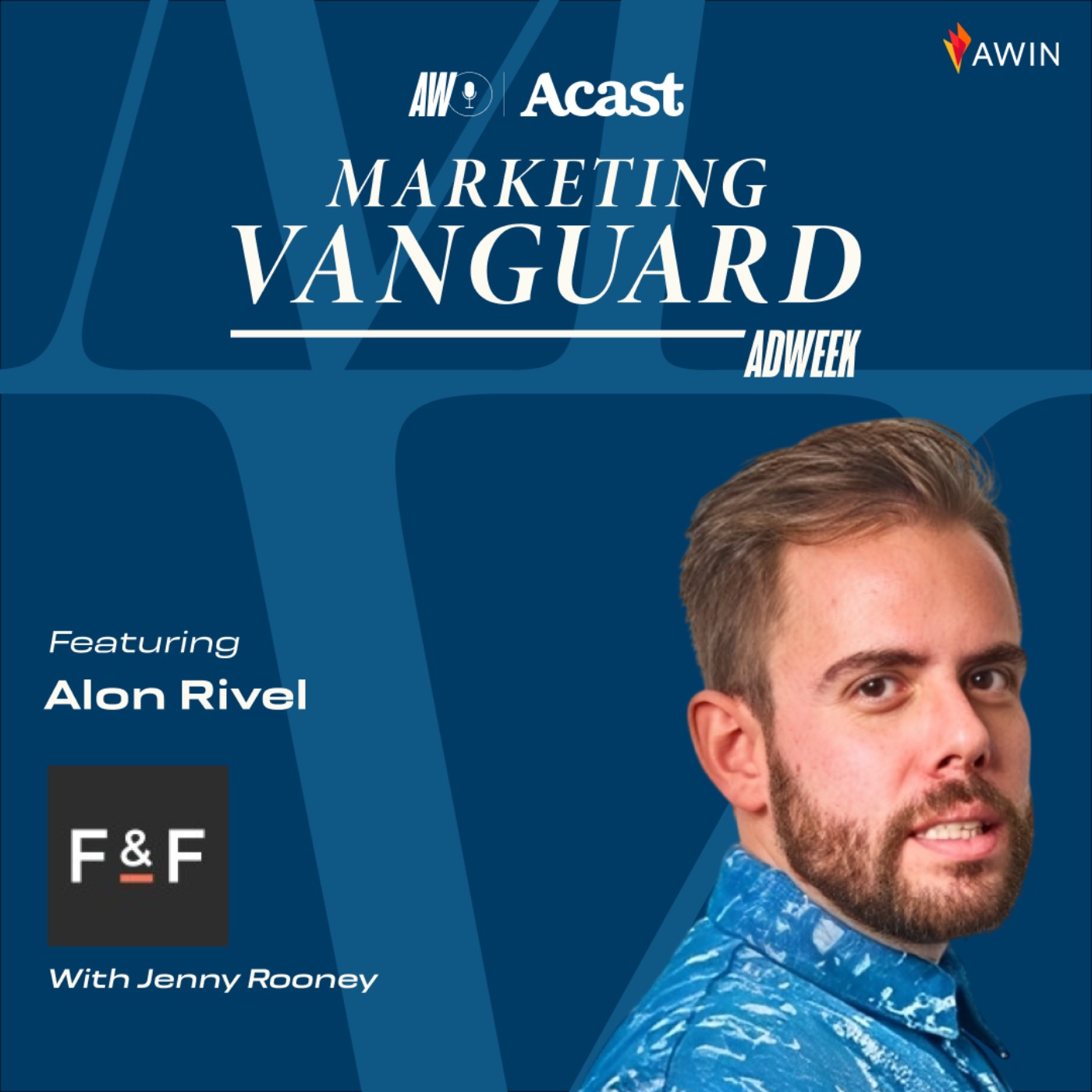
Loading summary
Transcript65 lines
- [00:01]
Alon Revelle
This episode is brought to you by Philo Ads. Want to get your brand in front.
- [00:05]
Jenny Rooney
Of the right audience?
- [00:06]
Alon Revelle
Philo Ads is the way to go. With 98% of viewing on connected TVs and over 900 million monthly ad impressions, Philo gives advertisers unmatched accessibility, flexibility and results. Power your next campaign with Philo Ads. Today, head to Ads Philo TV to get started. We are growing, but we're now growing in the way that private equity would want you to grow. I guess is another way to say it. Like, it's not like, oh, you have your model, your playbook. Like, there are places we could cut to make it more efficient for our bottom line, but we're going to lose our customer base.
- [00:46]
Jenny Rooney
Hi everyone and welcome to the Marketing Vanguard podcast. I'm Jenny Rooney with Adweek and I'm thrilled today to be joined by Alon Revelle. He's the chief Marketing officer at Feast and fetl. Alon, welcome.
- [00:57]
Alon Revelle
Thank you for having me.
- [00:59]
Jenny Rooney
It's great to meet you. I love meeting new CMOs on this show. I love learning about new brands also and I think in both cases this is going to be a fun bit of discovery for me and hearing about your story, hearing about the company story and learning a little bit about the marketing strategies, techniques and also leadership style that you bring to your role. So we'd love for you to first just introduce yourself to everybody a little bit about your career background and what led you to your role at Feast and fettle.
- [01:30]
Alon Revelle
Sure. So I had a very unique background in my experience. I kind of got to touch it all, which I think makes me a really good marketer. I started out more traditional in the TV media buying side of the industry. So I grew up in New York City and I got to go to some of those wild upfront parties and do some wild things. And that kind of gave me a good foundation of working like 16 hour days and working on a lot of big accounts and also meet a lot of people in the industry. So a lot of people who work in agency on these like massive accounts end up going to work in like sales, marketing, starting companies, tech. And that gave me just a good base of people to have access to. And then from there, you know, I ended up going to do media planning over at the New York Times Media sales. And from there I went into Bloomberg and did actual sales and I was sort of done with the like, gross corporate redline stuff. I couldn't do it anymore. I'm a very, like, outwardly, like, I don't fit into the corporate mold and I needed to do something different. And the tech was very appealing to me. So I went to work on a bunch of different B2C apps over the course of like five years. Learned everything. Like Facebook back in the day when you could do anything there. Branding, marketing. I worked in the dating app space right when like bumble was getting big. So I had a lot of fun there and got to do some really interesting stuff like actually selling people, which is a really weird thing to say, but that's what you're doing from there. We all know what happened in tech and where tech is at today. And I sort of said, get me the hell out now. And that's what landed me here. Because the last job before this I was working on a massage app, a B2C app. Massage app, very popular, one soothe. And it was just like every day other people had to be let go and cut and everything was so cac focused and bottom line. And they were owned, private equity owned. It was just like, ugh, like I couldn't. It wasn't fun. And marketing's supposed to be fun. And that's what drew me here. Where now it's an intersection of physical product and tech in one and delivering actual needs for people as opposed to just delivering fake needs. It was just people looking to see upsell.
- [03:37]
Jenny Rooney
Sure. Well, so tell me a little bit about. Do you have a traditional marketing education?
- [03:42]
Alon Revelle
Yeah, I went to umahurst. I was a double major, communication, legal studies. I didn't learn anything there. That's not where I learned anything. Yeah, like it's B.S. like, I learned it on the job. Right. Like to be a good marketer and to be good in this space, you have to have that gut. It's like when I'm interviewing people all the time, I'm like, oh, you don't get it. You like just don't get it. And you see that in 22 year olds and even 40 year olds, 50 year olds in the space. You're like, the ones who survive are the ones who get it. And I think I get it.
- [04:14]
Jenny Rooney
So what is it about your getting it? You know, where did you sort of learn that? Is it curiosity? Is it challenge? What motivates you? And sort of. Where do you think you got that?
- [04:23]
Alon Revelle
The trauma response? No, listen. Growing up gay in a closet in the early 2000s. I'm Israeli Jew. My mother is super Israeli and has the mindset of like protection and survival and having all of that instilled in me. Growing up in New York City, being out on the streets at a young age, I had to learn how to read a room and I had to figure people out for survival. Right. Like I was spending summers in Israel when there were bombs going off, literally. So you had to like be very quick at a very young age. Mixed with like hiding, being gay and making people feel comfortable around you and surviving corporate America, all of those made me have that like, instinct for what people need. And marketing is all about giving people what they need and knowing how to manipulate them essentially. Right. Like telling them that this is going to give you something and help you. That's where I think it came from, to be honest. And then mixed with seeing a lot of people doing it wrong. I've worked on a lot of different places and I was always like, oh, I could do that better or why are you doing it like that? Like working for small companies, I saw fail. And then having also the perspective of working for the New York Times where it's super successful and it's in well oiled machine. Ish. How can I pull from what this person did right and this person did wrong and do it my way? All of that shaped me.
- [05:52]
Jenny Rooney
So talk about Feast and Fetl. For people who don't know what it is, describe the company. How old is it? You know, how long have you been there and what's its growth path at this point?
- [06:02]
Alon Revelle
Yeah. So Feast and Fetal has been around for just about 10 years. I've run the company just over a year. I just hit my year a few weeks ago. We. We're growing. We want to really focus on the Northeast, primarily. The east coast is sort of where we want to stay. We grow with intentional growth. We're not focusing on conquering the US or going abroad. I think that's where a lot of companies get it wrong. Right now, since I've joined, we've acquired two companies in the space. We just launched New York City a week and a half ago. Our biggest launch to date. And those things don't happen without us making sure the operations are where they need to be. It's about ensuring that we can really get our playbook right and ensuring that we can deliver on that hospitality and that quality of service that we promise. That small batch feel, that local feel, that's our secret sauce. It's not one thing, it's all the things combined.
- [06:58]
Jenny Rooney
Is it meal delivery or is it prepared food delivery?
- [07:02]
Alon Revelle
It's meal delivery.
- [07:03]
Jenny Rooney
And are they locally sourced ingredients?
- [07:06]
Alon Revelle
Yes, we make them every week. So we're working 24, 7 in the kitchen making food. And I always say this, I like our food goes bad because it's real. So like it has a shelf life of like three to five days, depending on the item. They're constantly making food. And the food is a lot of it is locally sourced. Our ethos, our food ethos was based off of that of Whole Foods. So it's good food and we feed it to our families and everyone who works here gets the food for free. So we all live by the food. Like literally it's not just for our members, it's for us.
- [07:39]
Jenny Rooney
So it's a membership as well. Is that how talk a little bit about the business model.
- [07:44]
Alon Revelle
Basically, yes. Primarily it's a membership, but you can also order a la carte. Most of our members come in and they lock into a certain type of plan. So you could have a couple's plan, a family plan. And that just means the amount of people it serves. And you have to think of it almost like how it shows up, right. So you get like your entrees and your sides. So it's not the way a lot of our competitors work is they put every everything either they have to make it themselves or it comes kind of in the, I call it the Hungry man box. The size with the thing. It's not like that. You, you mix and match as you like. So you could get your like simply simple salmon in just a container that like mom basically made and put in your fridge for you. And then you have your like mashed potatoes on the side or your cauliflower, your green beans. And you take as much as you want to make your meals your way every night. And each plan has a different set amount of entrees and sides, which makes it very easy for the customers to pull what they need. Oh, you have three sides left for this week and then there's add ons. So you could add on lunch if you have kids, you can add on the kids menu, which I use for my son, which is great. His Mac and cheese, his pizza. He's three years old. He just started new school today. It's wild. So, yeah, it's very helpful to not have to worry about that.
- [08:52]
Jenny Rooney
That's great. So obviously this is a competitive category and by the way, there's also food delivery services that focus on different kinds of diets. You know, a carb free lifestyle or food targeting people taking GLP1s. Like we're seeing it get more specialized, I think. How are you guys positioning yourselves to be distinctive, knowing that you're not nationwide at all and have no plans to be that. But how do you make sure you stand out from the competition?
- [09:22]
Alon Revelle
When I see all of that, I get the ick because it's so wrong. It's focusing on the food and a trend. And that's not what you're solving for here. This is what we're talking about. Any meal delivery company can take a picture of what I call food porn and put their logo on it. That's not what you want. That's not what you're solving for. If I want that, I'll just go to Uber Eats and get it at my door and spend the gross amount of money to have it fast. That's not what I'm solving for. You're solving for time as a currency. Time is what people who use us need. Time to either be with their kids, time to read, to do their job, to take a break, to be present, to meditate. Just time to not have the mental load of cooking, cleaning, what's for dinner, what's for lunch, what am I giving my kids, what am I giving myself? And that is where we focus, and that makes us different.
- [10:26]
Jenny Rooney
What's the saying? You can either be fast, cheap, or good. You can only be two out of the three at any given time.
- [10:33]
Alon Revelle
We're good, we're good, we're good, we're good, we're good. And we're not just good from, like, the food, we're good to our members that everyone is so focused on, like, AI and like, we use AI, don't get me wrong, but they're using it wrong. They're using it to go faster and faster in the wrong places. AI is my assistant. It's not what my member needs. They want authenticity. You see it everywhere. Nostalgia. So in people want to sit down and eat dinner with their family. And that's what we're selling. And we really, everything needs to feel like that and everything needs to focus on that and add that value back when we get that wrong. That's where we lose. That's where a lot of our competitors are losing. They're trying to get shittier food faster everywhere. No, people want good food and they want to trust you and they want to know when you mess up that you're going to own it. When we make a mistake, we tell our members before they catch it. We're not saying, oh, let's hope they don't notice. The hospitality is such a part of the business we're building. And that's so lost. Like, we don't have AI. Bots. We have a whole member services team that is on call talking to members every day, making sure they're happy, making sure they understand how to use it. And we gift them. We show up in ways that I've never seen. Like our drivers will literally go open doors for people and put things in their fridge for those who can. You don't see that anywhere else anymore. That's how we win.
- [12:06]
Jenny Rooney
Interesting. Are you founder led? Are you VC backed pe?
- [12:11]
Alon Revelle
We're founder and we had a Series A.
- [12:13]
Jenny Rooney
Okay, so tell me again about the desire to keep it regional. And I think you're in a lot of New England. You're based in Providence, Rhode Island.
- [12:22]
Alon Revelle
Correct.
- [12:22]
Jenny Rooney
You have a desire to not grow bigger because you said that's where you think a lot of people get it wrong. But why not, you know, why not try and actually do it the right way?
- [12:33]
Alon Revelle
So we are growing, but we're now growing in the way that private equity would want you to grow. I guess is another way to say it. Like, it's not like, oh, you have your model, your playbook. Like, there are places we could cut to make it more efficient for our bottom line. But we're going to lose our customer base. So that's why we're not trying to win the US because we're still perfecting it where we are. There's still room in the markets we're in to service more people and continue to make them happy. And if we can't do that, we're not going to go launch California. There's a different need for those people. It's a different mindset and we need to continue focusing on what we do well. Right. We're not growing, we're continuing. We actually are about to, to open another kitchen for the first time, which is big for us. It's our second kitchen ever, but again on the east coast so that we can continue to maximize what we're doing. Right. And it's intentional. I call it slow growth. It's not no growth, but it's not growth that other companies do in the space that sort of lose track. Right. You look at like Panera even, Right. Not that we're Panera, but like they grew too fast. They lose that thing. We're so scared of losing that edge. We're not going to let that happen.
- [13:51]
Jenny Rooney
You're B2C, but I would imagine in some respects you're B2B because you actually have to build relationships with the providers, the suppliers, like the actual food producers, right in the equation. So talk a little Bit about that. You know, how do you build relationships with the folks that are providing the actual food to you to then go sell to your members?
- [14:12]
Alon Revelle
It depends how you look at it, right? So there's a few ways we do this. There's people that we work with locally for special curated things and then they're sort of our suppliers for things that are like our staples that are always on our. And with those suppliers, we do have a whole team. We have a procurement and sourcing team. And that's their primary job, is building those relationships and making sure that the food shows up. The potatoes are the sizes they need to be, the quality is what they need to be. And when they're not, there are full on channels where they say that needs to go back. We're not sending that out. Like, this is what I say with our members. We will send out a message and be like, the strawberries we got are not at the standard that we would ever want you to get at this time. So we're going to not send that to you even though you've ordered it. Here's a credit back. Like, that's what I mean. And when you get too big, you lose that level of, well, who cares? Send the strawberries and who cares if like five of them are bad? How many people have gotten groceries that half of the strawberries that you ordered on freshly were messed up? Right? And that's not what we want to be. And when you scale too big, you lose that. So that's how we build those relationships and ensure they're there. And we're also looking at like, really fun things more recently in marketing of like, okay, we're about to do this for Rosh Hashanah. We have a Rosh Hashanah menu and we have candidly messed up matzo balls last year and we don't want to get that wrong again. So we are working with Mamalas to do it right this year in Cambridge. And we're actually going to create like a bespoke dinner for a very influential group of New Englanders to show up and have that shared dinner plate around the Rosh Hashanah meal. So, yes, it's to our members, but also we're trying to create community through it. And that's really special. So that's why I said it's twofold. There's like the actual like sourcing the potatoes and then there's like sourcing partnerships and special moments that matter.
- [16:03]
Adweek Announcer
Finding the right audience shouldn't feel like doom scrolling with Experian. It doesn't Experian syndicated audiences help you reach holiday shoppers, car buyers and more across over 200 top platforms with over 2,400 pre built audiences. There's no more doom scrolling. It's audience targeting you can trust. Made simple. Learn more@experian.com Adweek that's E-P-E-R-I-A N.com Adweek yeah.
- [16:35]
Jenny Rooney
Were you the company's first CMO?
- [16:37]
Alon Revelle
Yes.
- [16:37]
Jenny Rooney
So talk a little bit about that. Talk about the decision making that went on the company side to feel like they had arrived at a place where it was necessary for them to have a cmo.
- [16:48]
Alon Revelle
Yeah. They were at a point where basically they were like, we're doing all this good stuff but we're not talking about it. We're not talking about it. No one knows who we are. And that was intentional at first. They wanted people to not know as they were growing. And also happened during the pandemic when they saw their growth, which makes sense. But it sort of was like, okay, what stories are we going to start telling? Like, how do we share this with our world in a local way that feels right and continue to grow other markets? So that's why they thought it was time to bring someone like me in to say there's no storytelling here. The thing that's beautiful, I'm so lucky for with this job is that it was all there. I just had to pour fire on the gasoline. And so many times you come in and there's no gasoline, there's nothing. Right. You're dealing with nothing. And I was like, oh, there's a story. There's a thing we can do that's a playbook, like, and it was just operationalizing it all, removing the fat, so to speak, and bringing in what was right and just refocusing everyone and saying like, this is our lane. This is our lane. This is our lane. I've had a lot of fun this summer, getting to do a lot of that. Finally, as you know, it takes time to get the team where you need them to be and the rest of the exec team on board. And now it's like, okay, it's starting to click.
- [18:03]
Jenny Rooney
Yep. It's interesting because for companies that have had CMOS forever and a lot of the conversations I have with CMOS is they've been at companies that are their long tenure, they've been there forever, or the companies have had a rich history of marketing, organization, focus, priority, have had a CMO role for forever and ever. And in those environments, there's Lots of conversation about, like, well, what is the need for a cmo? Is that a business imperative? I mean, these things have been talked about for decades, but, like, is it an investment or is it a cost center? So it's interesting to hear you talk about a company that is young. It's a young company. It's a growing company. It's a privately held company. Right. And so they saw the inflection point. Again, it's not rocket science, but, like, they saw the inflection point where we've got all this goodness happening. We're not telling anybody about it. And it really does go back to the fundamentals of why a CMO needs to be such an integral part of a business priority in a business engine. Because if you don't tell people what you're doing, nobody will know, and you're never going to grow. And so it's just. It just stands to reason.
- [19:05]
Alon Revelle
So I'm so glad you see that. And you're saying that because it's such a big reminder being here of, like, brand matters. Your brand is you living it. I was just talking to our COO about this. We had an executive off site, and she was saying, I don't show up as a coo. I'm living this. It's a part of me. And we all feel that I'm the exact team. And it could sound weird to say that, but not enough people are saying that anymore. They like that they need to show up as the cmo, show up as a CEO. No, Like, I'm pouring myself into this because I get it and I feel something. We are about to launch a donation program called the Feast and Fetal Fridge with Ally Forney Center. We're donating a full fridge to them in New York city.
- [19:49]
Jenny Rooney
Cool.
- [19:49]
Alon Revelle
Yeah. 200 meals every week to youth in crisis who need it. 16 to 24 have been displaced from their home. I did that because I'm a gay person who wanted to feel safety. And it fits within our brand. Self, family, tradition, culture, safety, community. All of those things matter. And it could show up in so many different ways. So, yes, we're doing it through Feast and Fetal, but I'm living this brand and bringing myself fully into it. And I'm lucky that we, as a team, all feel we can. Our COO does this. She runs our people team too, and she brings in benefits to our people that are near and dear to her heart. A lot of the people who work in our kitchen have been incarcerated, and this is their second shot. And it's ensuring that they have psychological safety tools in place, education, extra resources so that they can succeed, and understanding their place in the workplace.
- [20:46]
Jenny Rooney
Yeah, it's reminding me of companies like Dave's Killer Bread or something. And it feels like they're few and far between, or at least they're not getting as much airtime as other companies where there's a real actual. The motivation is first and foremost because somebody believes in a cause or a reason or like an actual true purpose for building the business and moving it forward. And by the way, the money comes, right?
- [21:07]
Alon Revelle
Yes, the money comes. I'll give you one more great example. One of the things I did was bring in a PR agency, and when we were sourcing through them, my God, the amount of BS I went through with these different companies. And I sat also with our COO and talked about our donation program, and she literally looked at the PR person we were considering goes, I don't care if we get new no press for biz. I don't care if it cost us hundreds of thousands of dollars and we get zero press. That's not why we're doing this. I know that's your job and that's what you want, but that's not why we do this. And if we're going to anchor our program into what gets you press, we're not doing feels radical because it's all about the bottom line. But that's what a lot of companies are missing in my mind. And working here reminded me that, like, it's not actually always about the bottom line because the business will do well if it's doing something that matters. You just gotta, like, have a good footing to be able to do that. Not a lot of companies can. And that's why a lot of them fail. A lot of people in this space fail because they're just selling you a GLP1 meal, which is a gross trendy moment. That isn't how people even want to consume food. It's doing nothing. Like, it's what you actually tell me you're going to charge me more for the same amount of food and call it like a weight loss thing. Like, what are we doing here? Yeah.
- [22:28]
Jenny Rooney
Two questions about the internal dynamics. So when you came on board, you had to build a team, Right. There was no real marketing team.
- [22:34]
Alon Revelle
It was a team, very big team. And I scaled down. Interesting, because I was like, I don't need 14 people. Wow. What are you doing? This is insane. Literally, my first day, I sat with every single person on the team and everyone was terrified of me because, like, who is this guy? What's he going to do? And I was like, what do you do here? That's it. What do you do here? Do you know how many people couldn't answer that question? There's one specifically that I was like, I remember it's awful to say, but it's in the CMO brain, right? The first thing I thought was like, oh, within a sentence, I was like, I have to fire this person. And I was at the company for like two hours and I was just like, you don't even know what you want. You've been here a year and a half and you have nothing to say.
- [23:14]
Jenny Rooney
So there was a marketing team, but there was no CMO leading that in a really dedicated way.
- [23:19]
Alon Revelle
So there was a CEO, slash founder. He's incredible and he's very smart, but what he was doing was bringing in people to, like, fill the gaps of what he didn't have time to do. And then, like, he was also managing a million other things so couldn't properly manage them. They were more like task takers and doers. And that's where he's just like, I need someone to do this. Like, I can't, I can't. This is the whole thing. Oh, my God, go do it. And then that freed him up to have so much more space to do much more important things that he needed to be doing. So he did actually a pretty damn good job. But I think he gave me a really nice, like, here, take this so I can take it here.
- [24:00]
Jenny Rooney
Yep, got it. Do you work with any external creative agencies or.
- [24:05]
Alon Revelle
So we don't yet. We're thinking about it right now. I worked on agency side, so I know what happens there and I'm very. When I open to them, I feel like, again, you lose something. Like when you do that. There are good ones out there. It's just, if I'm going to invest that, why don't I just invest it in house with like, four or five people who do it? Exceptional. So again, it's like, what are we solving for here? That's again, the growth thing. When you're like, well, why not go big? Or that's why, right? Because then you have to have this agency and then I don't have time to look at everything or I lose it. And I just look at the brands that survive. They're ones that eventually happens to all of them when they get too big, they lose their, like, thing and you're just like, eating shitty bread at a restaurant. Or like, your Chipotle doesn't make any sense. Or you're like, there's a bunch of brands. I don't want to name any of them because I don't want to make them look bad. In Boston, I was like, oof, what happened?
- [25:03]
Jenny Rooney
And yet, I'm sure you have huge goals that you have to hit. I mean, financial goals that your CEO is saying, we got to get to this.
- [25:10]
Alon Revelle
We're profitable. And yeah, we have them, but we're hating them because we're doing it right. Like, it's so weird. Like, our payback periods are so big and fast, and we got so many things right in the way that we acquire a customer. Again, when I came in, I was like, why are we using our vans in all of our ads? This is so weird. And we own our vans. And I was like, oh, I get it. Because you see the van in the street and then suddenly you see an ad of the van on Facebook, and suddenly you're like, wait, I saw that van. What's in the van? What is that? Or if there was just a picture of food, you'd be like, ugh. Another thing of food that's not going to look like that. So there's also that old school idea of like, connecting the dots of what you're seeing out in the wild and then having this like, halo effect of it seeming larger than life. Like, I've seen them on the street. And we try to do that. We try to, like, own 20, 30, 40 blocks by, like, saturating them. And it's a very hyperlocal approach that works. That's why I say, like, the growth is slow, but when we win a market, we won it, and we can then go do something else.
- [26:16]
Jenny Rooney
Yeah.
- [26:16]
Alon Revelle
And that's like, that's why I'm creating, like bespoke dinners for 20 mommy groups. Right. And like doing these little dinners in Cambridge because you're really getting into how people consume, interact, and think about food and community and not fast casual, like GLP1 food.
- [26:34]
Jenny Rooney
Sure. What's on the horizon? What's next for you, for the company? If we were to regroup it a year from now, what do you want the story to be?
- [26:42]
Alon Revelle
I'll go bigger. I'll go even bigger than a year. Like, my vision is like that we become this like your right hand operating system for your home.
- [26:51]
Jenny Rooney
Interesting.
- [26:52]
Alon Revelle
Like that, to me, is the future of this brand. Because it's like, okay, we've solved dinner. What are we going to solve next? What else are you outsourcing? And how do we do that for you? And no one's doing that. And that's really interesting to me.
- [27:08]
Jenny Rooney
Very intriguing.
- [27:09]
Alon Revelle
Yeah.
- [27:09]
Jenny Rooney
Yeah, for sure. Last cool question. I asked this of everybody, but who is next for me to have on the podcast? Who's somebody you admire from afar? What's a brand or CMO that you think is doing really cool things and you take a page from them and that you get inspiration from them?
- [27:26]
Alon Revelle
Aesop. They do, like, skincare lotion. A, E, S, O, P. Yes. Their brand is stunning. It's clean. They get it every time I walk in to one of their stores. It smells impeccable. Everyone's talking like this. Everyone's moving like this. You relax. Clean but rustic. Everything. I want to spend $3,000.
- [27:55]
Jenny Rooney
It's like surround sound experience, right?
- [27:57]
Alon Revelle
Like. Or you go to their website and you suddenly are like, yeah, I bought, like, a $60 body wash from them. Like, what? Like, it's crazy. And every time I put it on, I'm like, oh, I feel so rich. Because their product and their brand is quality and they stick to it. So it's like, actually, I trust you. And every single thing I have tried there, I keep on spending more. My lifetime value is going up because I just want to be in there. And I want someone to, like, wash my hands and talk to me gently. And I'm willing to try anything there now, so they're doing something right. And they don't have that many skus. Like, don't have that many things that they're selling, but what they're selling is up there. So I really admire them.
- [28:42]
Jenny Rooney
I love that. And that's a great example. And I'm going to go investigate to see if they have a CMO who that person might be, because I'll invite them on the show next at your suggestion. So, Alon, thank you so much. This has been really interesting. It's just such a departure from a lot of the conversations that I have. And we'll be watching Feast and Fetal and seeing where it goes from here.
- [29:05]
Alon Revelle
I love it. Thank you, Jenny.
- [29:07]
Adweek Announcer
Thank you for listening to Marketing Vanguard, part of the Ad Week Podcast Network and Acast Creator Network. You can listen and subscribe to all of Adweek's podcasts by visiting adweek.com podcasts. Stay updated on all things Adweek Podcast Network by following us on Twitter Adweek Podcasts. And if you have a question or suggestion for the show, send us an email@podcastadweek.com thanks for listening. Finding the right audience shouldn't feel like doom scrolling with Experian. It doesn't Experian Syndicated audiences help you reach holiday shoppers, car buyers and more across over 200 top platforms with over 2,400 pre built audiences, there's no more doom scrolling. It's audience targeting you can trust. Made simple. Learn more at experian.com adweek that's experian.com adweek.