← Marketing Vanguard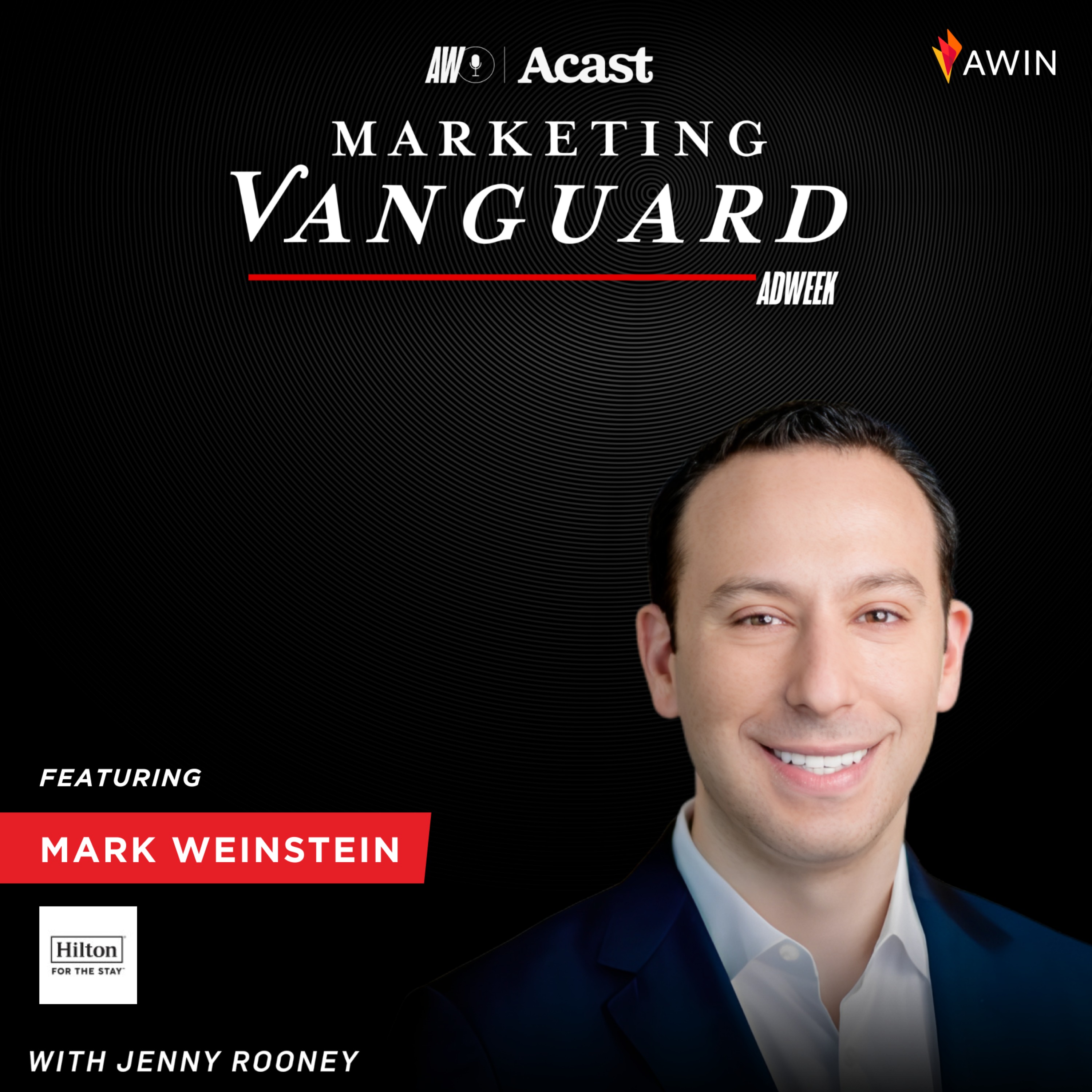
Marketing Vanguard
How Hilton Democratized Creativity Through AI—Breaking Down Barriers with Mark Weinstein
00:20:36
Loading summary
Transcript70 lines
- [00:02]
Tracksuit Representative
We know brand growth equals business growth, but do your stakeholders Tracksuit is an affordable, always on brand tracking dashboard that helps marketers and agencies prove the impact of their work on brand metrics over time. Benchmarked against competitors. Built from best in class methodology, the Tracksuit dashboard is accessible and easy to understand for everyone from CSOs and CMOs to CFOs and founders. Research shows that brand investment in good economic times and bad is essential to driving sustainable growth. The bottom line, turning off the brand tap will cost you in the long run. Tracksuit gives marketers and agencies a common language to measure and communicate brands impact. Without the $100,000 price tag. Their in house research experts will have your survey live and your full marketing funnel and brand perceptions visible in just 30 days. Check tracksuit out@gotracksuit.com.
- [01:02]
Mark Weinstein
What'S really encouraging to me is I think it's the democratization of creative. I think if you look at data and AI, there used to be so many barriers for brands. For great people out there with great creative ideas that were limited by the agency, they could afford the resources available to them, the creatives on their team. We're leveling the playing field to the point where anybody with a great idea has a chance to have breakthrough.
- [01:25]
Jenny Rooney
Hi everyone and welcome to the Marketing Vanguard podcast. I'm Jenny Rooney with Adweek and I'm thrilled to be joined as part of our special Cannes series. Mark Weinstein, he's the CMO of Hilton Hotels. Mark, welcome.
- [01:36]
Mark Weinstein
Jenny, thanks so much for having me back. Congratulations on the great activation.
- [01:40]
Jenny Rooney
Thank you. And you are one of the few return guests.
- [01:43]
Mark Weinstein
I know you were kind enough to have me back.
- [01:44]
Jenny Rooney
I'm. Well, I'm thrilled to have you back. And this is part of our special Cannes edition, as I said. So we're going to talk all things Cannes. We're going to talk all things Hilton.
- [01:52]
Mark Weinstein
Excellent.
- [01:52]
Jenny Rooney
And all things Mark too.
- [01:54]
Mark Weinstein
These are my three favorite topics. We're three for three. That sounds pretty good.
- [01:57]
Jenny Rooney
Listen, it's great to be here. It's great to see you again. As always. It's been lovely getting to know you over the years. And now we're in Cannes. This is 2025. There's so much happening in the world and yet Cannes is thriving probably more than ever. How many Cannes Lions festivals have you been to?
- [02:13]
Mark Weinstein
3 or 4 since the pandemic and then a number of years before that. So it's gotta be, I don't know, maybe 10. Yeah, it's been a number.
- [02:19]
Jenny Rooney
Yeah, I'm about There too. The energy level seems higher than normal. It just feels palpable.
- [02:25]
Mark Weinstein
It feels like the dynamic has, you know, there's these sort of chapters you can write about when the ad tech was the main theme for a while, and then creative sort of came back again after the pandemic. And now we're talking the AI, you know, creative synergy or divide how you want to look at it. And it's been a fun evolution to watch the lines keep evolving.
- [02:40]
Jenny Rooney
Absolutely. And I know you come to. Can you bring a very special guest with you?
- [02:44]
Mark Weinstein
Yes, indeed.
- [02:45]
Jenny Rooney
Paris Hilton comes.
- [02:46]
Mark Weinstein
I am the second most popular Hilton, I think, at the.
- [02:50]
Jenny Rooney
But Paris loves coming.
- [02:51]
Mark Weinstein
She does, and she's fantastic. And she loves working with adweet and telling her story. She's such an authentic brand under herself, but also ambassador for our brand.
- [02:58]
Jenny Rooney
It's great stuff. So let's talk about just. Let's start with Cannes. You said you're probably like a decade coming. What are you hoping to get? You know, why do you come every year? Why are you here this week in particular? What are you hoping to get out of it?
- [03:10]
Mark Weinstein
Yeah. What's interesting about Cannes is that you actually have the folks that are making the trends here. And so it's not about prognosticating, it's not about predicting. It's actually about the folks that are putting their hands on the keyboards to code the things, the artists that are creating, the investors that are putting the money behind it. And so I always leave with a good sense of the future, not because we're trying to predict it, but because the folks here are actually making it. And so walking around the cr, that's what you pick up on is what's going to be the thing to be on top. I think they were on top of creators a few years ago when that was kind of emerging. Cannes was all over that. And I think AI now obviously is the main theme this year. And it seems like when you leave Cannes, you kind of know where the industry is going.
- [03:46]
Jenny Rooney
I love that because I think Cannes been around for decades. Obviously it started out as an agency festival. Really. I don't know, going on 15 years ago, that CMOs actually branch side CMOs came in critical mass. Right.
- [03:58]
Mark Weinstein
And once you invite us in, we don't leave.
- [04:00]
Jenny Rooney
And then they. Which is true.
- [04:02]
Mark Weinstein
House guest. That just won't go 100%.
- [04:04]
Jenny Rooney
I do give credit to Jim Stengel, who is global CMO at the time at P and G, and I think he was the first one he's credited with. I think that's right, basically saying, I think we need brand size CMOs to come because obviously they're such a part of this equation. But at the end of the day, this is a celebration of creativity. I mean, that's core, but obviously it's expanded from there and it's branched into so many things. I mean, the rise of platforms and the beach activations, the rise of technology. To your point, all the many brands who come coming back to Hilton, and you need to take. Even as you're giving. Right, you want to leave an impact, too. So as cmo, what are you thinking about in terms of the places you want to spend your time, the conversations you want to be a part of, to make sure that you're not only coming to observe what the trends are as you describe, but also make sure that the Hilton brand is making its mark in those conversations about the future.
- [04:54]
Mark Weinstein
I think we take so much from the community is only as strong as we give back to it. And so our job is to share our best practices. Our job is to tell the stories as much as you can on a stage, on the. On the beach, tell what went wrong, you know, what are the honest mistakes that you've stepped into, what are the learnings. So we'll be on a bunch of stages telling that story. Paris and I will do a piece tomorrow. Tomorrow I'll be with McLaren. We'll celebrate our 20th anniversary of McLaren Racing and our partnership there. And we'll just be talking about the different ways that we're growing into modern storytelling, modern influencers, balancing the AI in a world that's upon us. So, yeah, I think it's our responsibility as a community to give back and participate just as much as we're taking, for sure.
- [05:30]
Jenny Rooney
People who don't know you've been at Hilton for how many years now?
- [05:33]
Mark Weinstein
15 years. Took over a CMO during the pandemic, which, if you're going to take over a CMO job when a company has basically zero revenue, that's a great time to start because the entire line is just a rocket ship. Couldn't possibly be the end of quarantine. It must be the marketing.
- [05:46]
Jenny Rooney
Exactly.
- [05:46]
Mark Weinstein
It's got to be what's going on there.
- [05:48]
Jenny Rooney
No, I'm sure that is entirely true. But before that, tell us anybody who doesn't know your career path. I'm always fascinated to see the patchwork of.
- [05:55]
Mark Weinstein
I studied marketing and finance in college, went to the University of Maryland, loved marketing, had a passion for it, and then somewhere along the way thought, you know, a finance degree might Help get a job because marketers were getting hired several months after a senior year and finance people were getting hired in the first part of their senior year. And I thought might be nice to have a job. So I went into consulting. I started at Pricewaterhouse, worked a number of different areas of consulting, knew I wanted to get back to marketing. So I ended up working at a small sales and marketing strategy firm for a couple years. And then Hilton had just been taken private by Blackstone and went from being this conglomerated, you know, 10 different brands to 24 brands, but at the time, no central marketing department. The brands were competing against each other. I was brought in to help start that journey and had the great fortune of taking on another couple of opportunities and ultimately cmo, which is great fun, great honor.
- [06:44]
Jenny Rooney
So fast forward. So the pandemic was what, five years ago now? So you've been in a CMO seat for five years. So much has changed in the world. The platforms, social, obviously AI as you referenced, but experiential is something that obviously in my conversations with CMOs, it feels like it's a no duh, like, you know, you would think. But we're living in a world where experiences are more important than ever. But Hilton sits squarely at the center of that. So how do you think about the opportunity but also the responsibility that.
- [07:14]
Mark Weinstein
It's a great question. Look, at the core of our product is the experience. I mean, ultimately I can have the best advertising in the world. I think we do some great work. I can tell whatever story I want to tell. But the authentic experience you're going to have in our product for at least 12 hours, probably multiple days, you know, experiencing us, every touch point, every interaction, everything we say and do while you're staying with us is the experience, is the product, is the brand more than maybe even the advertising. So we obsess about it quite a bit. We've looked at a number of trends that have been going on, whether it's coming out of the pandemic, leisure, you know, people taking a business trip and tacking on a leisure, you know, weekend and bringing their spouse. Along with the ability to work from anywhere, you saw more multi generational travel. So you saw people bringing grandma and grandpa and the little kids and everybody in between. And so we launched connecting rooms that you could confirm that at time of booking, nostalgia became a big play. And so we went ahead and acquired graduate hotels. That sort of plays on that love of your, of your university. You spend four years there and it's probably the big single Greatest identifier of.
- [08:14]
Jenny Rooney
Your life recently stated. The one in Providence.
- [08:17]
Mark Weinstein
Fantastic. Well, and I think those are just examples of the day in, day out product. Then you can accelerate it further by creating experiential activations. People like McLaren, we're theming a room right now for their 20th anniversary. You can stay in a McLaren suite. Like the drivers. We partnered with NBCUniversal to do one for Wicked. You could stay in the room designed by the set designer, which allowed you to live out your wicked fantasies. We do one with Paris. She created her ultimate sliving suite. And so I think you take the core product, elevate it up even further. I think the unlock in what you said and the reason why maybe it was a little bit slow to us to kind of come back to the basics of experiential is without the content component, the amplification wasn't there. So you would do an experience, you do an activation, but the scale would be dozens, hundreds, thousands of people, but not millions. With the content ability that we now have, the ability to have influencers and creators tell the story and amplify, it really doubles down on experiential.
- [09:08]
Jenny Rooney
So a lot of those insights you went through, basically a bulleted list of the insights that you're getting from your traveling consumers. How are you thinking about the implications of those unlocks for other brands, you know, and are you doing any brand collaborations or partnerships? Obviously you mentioned McLaren and Wicked, but product brands, you know, how are you thinking about that? And where are you finding the ability to share with cpg, for example, you know, because obviously it feels like those are relevant trends for other brands and other categories as well.
- [09:37]
Mark Weinstein
It's a great question. And look, I think it's symbiotic in some ways. I think there's a lot about the product world that we're learning from them. And we went a few years ago, used to get those tiny little shampoo bottles in the hotel. We wanted to be more environmentally friendly. So we worked with the CPG companies to come up with the ability to have, you know, safe, secure amenities and bigger containers, which I'm told if you have long hair, it's actually nice to have that much shampoo as well. And also for my eye vision, it's not a tiny little font that says if this is shampoo or mouthwash. So we've learned from them a ton about the product side. We do have a bunch of partners that we're thinking about in the airline space that we're sharing best practices. We work a lot with American express and with MasterCard, we're spending a lot of time talking to them about how to create experiences and bring those to life and co create. We publish a trends report every year. So every October we put out what we see as emerging trends for the year ahead of us. And we hope that others will take advantage of that, even people in our space and our competitors. We hope that by creating a more experiential economy, we all benefit from that.
- [10:31]
Jenny Rooney
Talk a little bit about, you know, we're living in an odd time for consumers and frankly, business travelers too. I mean, everybody's watching their budgets, everybody's making sure that there's intentionality around purchasing, especially with tariffs that are affecting pricing. How are you making sure that you're obtaining that share wallet that you feel like you, I hate to use the term, are entitled to or have always had or so you make sure that in the consideration set, spending on Hilton experience is right there front and center and it's not traded off for something else.
- [11:03]
Mark Weinstein
You're hitting the heart of it. I mean, the first thing is we're watching for share of wallet. So we want to make sure the customers that are choosing us that we're not giving them any other reason for whatever amount of stays they have. Even if that went from 10 stays last year to two this year, I want both of them. Right. And so our goal is to make sure that we're maintaining our share of wallet. Hilton Honors plays a huge role in making sure we keep that connection on the overall size of the wallet. I mean, that is a watch out right now. You know, you're seeing people decide in a limited, constrained environment of, you know, spend and time, what do I want to bet on? And we have to make sure people understand that it's worth it. That really is the basic question, that it's worth it. And Hilton's a brand for me. And so we spend a lot of time in our efforts to make sure that we're delivering. We promise that whether it's a vacation that now has that much more pressure on it because it might be the one trip you're taking that summer, maybe instead of flying, you're going to drive somewhere. How do we make sure that it's worth it, that you've taken that trip and it may be a painful drive when you get there. How do we make sure when you come through our hotels, that's a great experience and then on the business side that we deliver your need that if you're there for a sales meeting, we deliver a great sales meeting. That inspires the sales team to deliver great results for you. If you're meeting with clients, we're setting up the great experience that fulfills that promise we've made to you. So in some ways it's just the basic promise, but it's done with such heightened focus and that's been our focus in a time where maybe there's a little less certainty in the market than before.
- [12:21]
Jenny Rooney
Okay, so AI, so you brought that up and obviously that is obviously the tech of the moment. And for the foreseeable future it does feel different. Frankly as somebody who's covered the industries through Y2K and you know the rise of interactive agencies in the agency world, digital advertising, like it does feel like this one's different as a technology. And I. So I wouldn't put it in the same camp as other technological innovations that have come along over the years. I mean listen as a. You have to be both at student kind of back to sort of what we were saying, a student of it. But also people are looking to you as a CMO to actually.
- [13:02]
Mark Weinstein
We know.
- [13:02]
Tracksuit Representative
Brand growth equals business growth, but do your stakeholders. Tracksuit is an affordable always on brand tracking dashboard that helps marketers and agencies prove the impact of their work on brand metrics over time. Benchmarked against competitors. Built from best in class methodology, the Tracksuit dashboard is not accessible and easy to understand for everyone from CSOs and CMOs to CFOs and founders. Research shows that brand investment in good economic times and bad is essential to driving sustainable growth. The bottom line, turning off the brand tap will cost you in the long run. Tracksuit gives marketers and agencies a common language to measure and communicate brands impact. Without the $100,000 price tag, their in house research experts will have your survey live and your full marketing funnel and brand perceptions visible in just 30 days. Check Tracksuit out@gotracksuit.com.
- [14:01]
Jenny Rooney
Drive the industry forward. Talk a little bit about the two sided nature of that responsibility.
- [14:07]
Mark Weinstein
Yeah, I mean this topic is. I do agree this is very different than anything else for I think people are quick to dismiss it as another tool. It is not. It's a new way of thinking and working through what I'm struck by. On the positive side, what's really encouraging to me is I think it's the democratization of creative. I think if you look at data and AI, there used to be so many barriers for brands, for great people out there with great creative ideas that were limited by the agency, they could afford the resources available to them. The Creatives on their team. We're leveling the playing field to the point where anybody with a great idea has a chance to have breakthrough. And I think that's really exciting and scary and brave and all the things together. So that's encouraging. I think as an industry we have immense opportunity right now. So for example, we've got 1.3 million hotel rooms across the system. The ability to photo check every single photo and write copy for that, not the greatest use of our people's time and takes a lot of our time. Using AI for that is a great solve. It's not impacting any creativity, it's not impacting any storytelling. It's making the brand at scale consumable. And so if you do that, you now free more people up to work on the creative, which I love. Now they're all working together on ideaing the next big thing and moving it forward.
- [15:17]
Jenny Rooney
You're also. There's a little bit of cost savings inherent in that from a budget standpoint.
- [15:22]
Mark Weinstein
Look, I think a lot of the challenges as a CMO you run into. I've been spending a lot of time thinking about this. You work backwards from the cost of production. And what happens is when the cost of production goes too high or perceivably higher, a large portion of your budget, the non working part, so to speak, you then are scrutinizing ideas even more than ever. So you're starting to kill creativity before it can flourish. You're having to cut back on the production, you're having to cut back on the media spend. And now by able to reduce that cost, now you're in market, you try 10 things, whatever one works, you double down on, you throw nine of them away and you're no worse off than when you started. And I think that's a big change. The other one that's I don't even have my head around yet is a lot of the conversations I'm hearing seem to imply, I think subconsciously people know better than this. But we're implying that I will have AI and the customer won't like, I will use AI to do X, Y and Z and the customer will receive it. And the reality is we're talking agentic AI to agentic AI. We're going to have computers talking to each other. Ultimately the end, I still believe at the end of it will be the creative that we put in the market. That'll be what the consumer sees and reacts to and the emotional connection that commands a premium. But I don't think we've wrapped our head around. I certainly wrap my head around how you market AI to AI, and I think that's going to be one of the most profound changes in the next few years for us, if next few months, really, as we go on that journey together.
- [16:39]
Jenny Rooney
Yes. And I've heard other CMOs talk about that, that I think there's something scary about that because. And by the way, I love the candor, the level of candor, because I don't think CMOs have it all figured out. And the fact that they say that is we have to say that. Because I think anytime anybody is sort of saying, nope, I got it all in hand. A, it's not right, it's not true.
- [16:58]
Mark Weinstein
They're lying to themselves 100%.
- [17:00]
Jenny Rooney
And so it's a foreign concept. So we don't.
- [17:02]
Mark Weinstein
I don't know what it means. I really don't. I mean, I conceptually, I know what it means, but I don't know that I know the implications of it versus other tools. You can kind of see, I mean, you could kind of get to. The Internet was new at first, but you could kind of see how eventually how it was going to become commerce. It didn't take that long to get there. Social media, you kind of saw it was going to first recreate physical connections online that became their own communities unto themselves. You could kind of see that with not a whole lot of distance between invention of the capability sort of showing up on the scene. This one, to me is going to be the evolution of our lives, our careers, and how we ultimately make sure that brands stay brands and stay relevant and don't become commoditized.
- [17:37]
Jenny Rooney
Any advice to CMOs of all kinds of companies? Hilton's one of the biggest brands in the world, but, you know, they're CMOs of companies of all sizes, shape, sizes, categories. As they think about trying to figure it out, just what would be your advice to them?
- [17:50]
Mark Weinstein
I think for us, it's just been do it. I mean, you just have to start dabbling. Be honest with you. We were very worried at first about private clouds and putting the data and all the things you have to do as a company to secure your IP and everything else. And then very quickly realized you don't have the luxury of not exploring, not playing, not trying to find things to do. And I have no doubt we will make mistakes. I have no doubt we will have moments where we look silly to the customers in the journey ahead of us. But I'm also quite sure that today is the least good it'll ever be. And tomorrow. We'll say the same thing again tomorrow. And then we'll say the same thing the day after that. That every day will always be exponentially more than the day before. So just do it. Dip your foot in the pool and go for it.
- [18:27]
Jenny Rooney
Great advice. Back to Paris real quick. She's been to Cannes several times now, I think, over the last few years. What does she love about it? What does she like coming?
- [18:36]
Mark Weinstein
Yeah. I mean, the thing about Paris is not only does she know exactly who she is and what the world needs at any time and sets the trends that go with it. And I think it's been an amazing pioneer in social. She is the ultimate community builder. Her ability to bring people together and connect in authentic ways. And I think oftentimes she has to do that at scale. This is a nice, safe community for her to do that more intimately, you know, more with 30 people at a time, 50 people, 100 people at a time. I know she's done Adweek house and, you know, loves being on a smaller setting to have an authentic conversation. So I think it's that chance to, you know, be where the action is, to set the agenda for the year, but also to be in a smaller setting to do it.
- [19:10]
Jenny Rooney
She wasn't always such an influencer, like she was part of the Hilton family, but I feel like it's only in recent years that she's become much more of a face of the brand and sort of in your world, really working to drive that forward. How do you work with her and how does that sort of play out?
- [19:24]
Mark Weinstein
You know, I think the root of it was we didn't necessarily know what we wanted to be known for, and so we had to do a little soul searching within Hilton coming out of the pandemic. We've spoken about this before, our for the Stay platform and how we created that platform. It became very clear that the most authentic voice was going to be other people's voices and telling that story, which is scary as a CMO to turn over the keys. But a lot of Those communities are 10,000 followers, 50,000 followers, micro influencers that have these fan bases. But then there are people like Paris that really have an authentic connection to the brand. You know, she genuinely was mentored by her grandfather, who was the CEO of our company for years, you know, and her great grandfather was the inspiration of the entire family. And so her authentic version of the story as an actress, as a singer, as a businesswoman, a philanthropist, now a mom. Her Hilton story starts with the founding of the company and Goes all the way to how she travels the world and stays with us. And so it felt imperative to bring her back into the fold to have her tell that story.
- [20:16]
Jenny Rooney
Last couple quick questions. As you think about this week, what do you think the headline's going to be? There's again, there's so much going on in culture, the world, obviously we talked about AI. If you had to think about what you anticipate the headline coming out of Cannes this year to be, but don't use the word AI, what's it going to be?
- [20:33]
Mark Weinstein
Put AI to the side, put creators to the side. I think that what's probably being under talked about, but I think has a chance to be the headline is it's precarious to be a brand right now. You want to be authentic, you want to be in the conversation, you want to be of culture, you want to be at the moment. And yet every single day there's probably more pitfalls and more ways to do it wrong than right. And I think there's a lot of those conversations happening. Maybe not on the main stages, maybe not in quite the headlines and spotlights, but I know over drinks that's what a lot of the CMOs are talking about is how do you navigate a brand through this moment? How do you find your authentic reason for existing? How do you show up in a world that seems more fragmented and yet is looking to brands more than ever to bring them together? Maybe more than even government. Half the world got new leaders this year in government. The brands are the constant. And so I think one of the headlines will be, and again, maybe not on the main stages, but I think in the coffee shops and the periphery will be how do you navigate a brand through a modern environment where you want to be relevant, but there's a.
- [21:25]
Jenny Rooney
Lot of pitfalls, 100%. Last quick question. You get to answer this twice because you were on my podcast once before. But who's next? One person that you think I should have on.
- [21:34]
Mark Weinstein
You've got to get the folks from LEGO on. I am obsessed. I mean what I just Julie and anybody on the team, even like when you saw what they did at F1 a few weeks ago where they had human sized Lego cars with the drivers driving through it, look, that was a brand that's built in nostalgia that maybe lost its way a little bit along the way. And what Julie and the team are doing is second to none that you're getting adults to play at scale. I would get those folks back on.
- [21:54]
Jenny Rooney
And we need all need more play.
- [21:56]
Mark Weinstein
In our lives, more joy, more play and hopefully even in our case a few more stays of some travel.
- [22:00]
Jenny Rooney
Are you doing a collab with Lego? You got to have Lego people.
- [22:03]
Mark Weinstein
We got some stuff to do. We should get like that. You heard it here first. Jenny is going to get credit for that one.
- [22:08]
Jenny Rooney
Thanks Mark for joining me. It's a pleasure. Have a great week.
- [22:11]
Mark Weinstein
Thanks you as well. Thank you for listening to Marketing Vanguard, part of the Adweek Podcast Network and Acast Creator Network. You can listen and subscribe to all of Adweek's podcasts by visiting Adweek.com podcasts. Stay updated on all things Adweek Podcast Network by following us on Twitter Dweek Podcast. And if you have a question or suggestion for the show, send us an email@podcastdweek.com thanks for listening.
- [22:41]
Tracksuit Representative
We know brand growth equals business growth, but do your stakeholders Tracksuit is an affordable, always on brand tracking dashboard that helps marketers and agencies prove the impact of their work on brand metrics over time. Benchmarked against competitors. Built from best in class methodology, the Tracksuit dashboard is accessible and easy to understand for everyone from CSOs and CMOs to CFOs and founders. Research shows that brand investment in good economic times and bad is essential to driving sustainable growth. The bottom line? Turning off the brand tap will cost you in the long run. Tracksuit gives marketers and agencies a common language to measure and communicate brands impact without the hundred thousand dollar price tag. Their in house research experts will have your survey live and your full marketing funnel and brand perceptions visible in just 30 days. Check tracksuit out@gotracksuit.com.