← Marketing Vanguard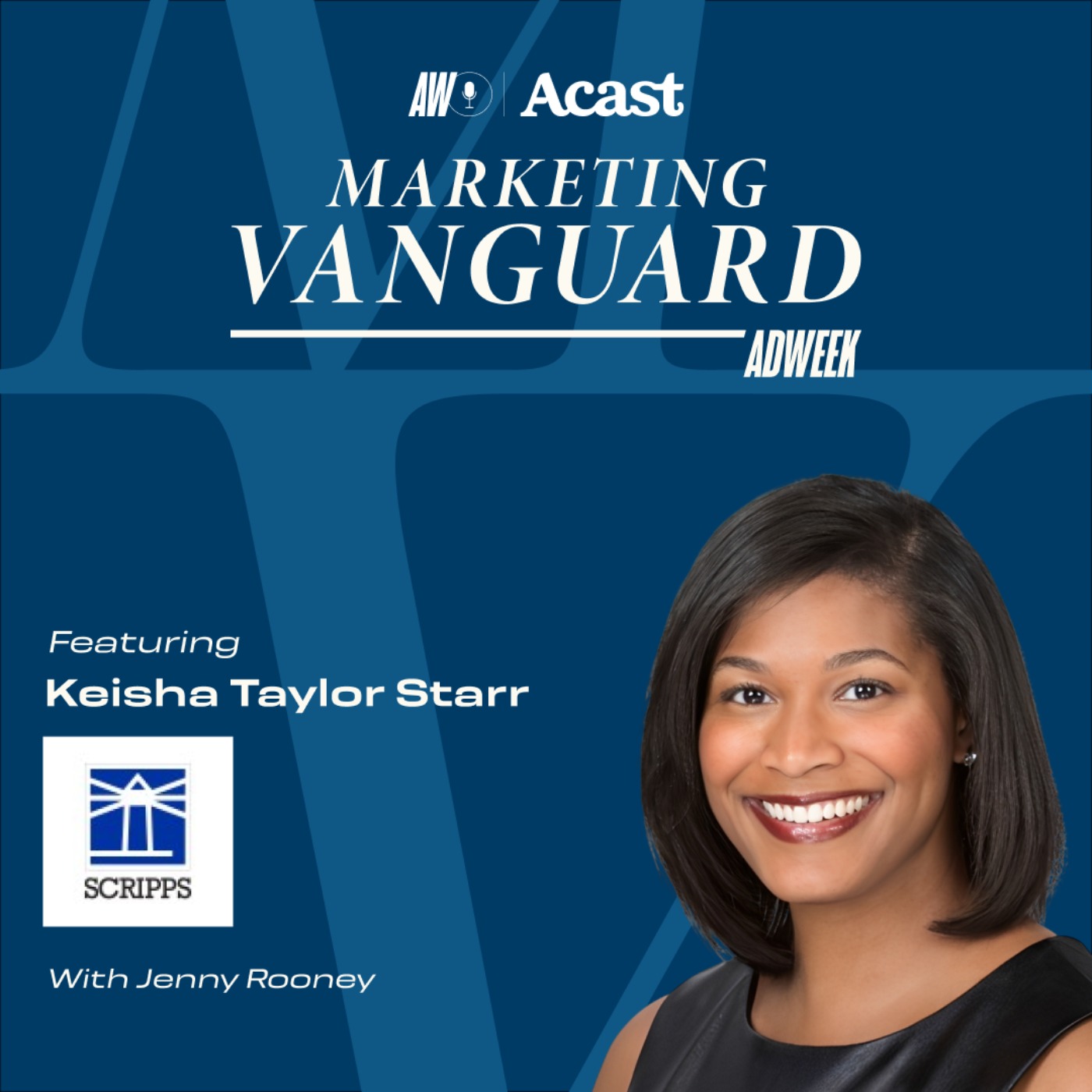
Marketing Vanguard
How Keisha Taylor Starr Turned ION Into a Women's Sports Powerhouse in 24 Months
00:25:46
Loading summary
Transcript43 lines
- [00:00]
LinkedIn Advertiser
Flowing ad budget on metrics that look great till the CFO sees them. That's bullspend. And marketers are calling it out in dashboard Confessions.
- [00:10]
Marketing Professional
I remember telling my boss, it'll be good for the brand when leads were slow. Yeah, it, it wasn't.
- [00:17]
LinkedIn Advertiser
Cut the bull. Spend LinkedIn lets you target by company job title and more. Advertise on LinkedIn. Spend $250 on your first campaign and get a $250 credit. Go to LinkedIn.com campaign terms and conditions apply.
- [00:30]
Kesha Taylor Starr
I don't know that outside of the advent of cable and the founding of television that there has been a more transformational moment right now in media. The sheer proliferation of choice and the attention economy right now around it is wild. And one of the things that we're focusing here on at Scripps is connection. Really everything for us right now is through the lens of creating connection.
- [00:58]
Jenny Rooney
Hi everyone.
- [00:58]
Kesha Taylor Starr
Welcome to the Marketing Vanguard podcast.
- [01:00]
Jenny Rooney
I'm Jenny Rooney with adweek, and I'm thrilled today to be joined by Keisha Taylor Starr. She's the EVP, CMO and general manager at Scripps Networks at the E.W. scripps Company. Kesha, welcome.
- [01:14]
Kesha Taylor Starr
Thank you, Jenny. It's really good to be here. Thank you for having me.
- [01:17]
Jenny Rooney
It's great to have you on the show. I'm so excited and I know we have a lot of shared interests and things in common that I think we're going to unpack and get into.
- [01:24]
LinkedIn Advertiser
But as I do with all my
- [01:25]
Jenny Rooney
guests, I'd love for you to introduce yourself and tell us a little bit about your own brand story, if you will.
- [01:31]
Kesha Taylor Starr
Oh my gosh. So, Jenny, I graduated from what is now the Scripps Howard School of Journalism and Communication at Hampton University. And so you can only imagine how much of a full circle moment it is for me to be now on the leadership team at Scripps and an advisory board member of Hampton's program alongside sitting on the Scripps Howard Foundations Board. So it's been a whirlwind. You know, I always wanted to be a news anchor. And so in college, I realized very quickly that for as much as I love storytelling, starting out my career, reporting live from a hurricane in a small market was not Jenny. It wasn't exactly what I was hoping for. And so I shifted my degree to the communications and advertising side of the business and everything else took off from there. I still have a really deep rock reverence for journalism and my career tracks with that. But I've just had the opportunity to work across News, sports and entertainment, nonprofit. Everything from a Fortune 500 company to a startup over the course of my career, and it's been a lot of fun, I started out on the ad agency side of the business at VBDO here in Atlanta. And we were launching AT&T's mobile product at the time. I feel old just saying that it was the mobile product for AT&T. The rigor and just the fundamental training that I got from the agency side of the business. It's just, it's unmatched, Jenny. And so in my mind, everything still starts with a good campaign brief. And so I loved the agency world, but I was so curious about the people who made decisions on the client side. And so I made the leap to client side and started working for Children's Healthcare of Atlanta. And this is where I learned to really go deep versus going broad in consumer engagement. I mean, we only had three audiences. Parents, donors, and healthcare professionals. And so while it was really deeply meaningful work coming from an account like @&t, I wanted to work on something with more breadth at that time. And so I still had a deep desire to work in media. And I was fortunate enough to get a job at Warner Brothers Discovery. At the time here in Atlanta, it was Turner Broadcasting. And I held various roles in marketing there for a decade. I worked at CNN for eight years, again, that love for news shining through. And then TNT and TBS for two years leading marketing campaigns. And so after that time, I think I realized I really needed to broaden my portfolio of work. I think so many of us go through those cycles in our careers. And so a mentor of mine recommended me for a job to lead integrated marketing at Learfield, which is a collegiate sports marketing agency. And. And that began my work in sports. And I was there for the better part of three and a half years and learned a ton about the business. But then media reeled me back in and this time with a digital news startup during the pandemic. And so while the company was somewhat short lived, my experience grew and ultimately it led me to Scripps. And so I currently serve as the executive vice president, Chief Marketing officer of the E.W. scripps Company and as the general manager of Scripps Networks. And so I'm really thrilled to be here and to be back in the media space and especially at a company like Scripps, which had a fingerprint on my career from so early on. It really, I mean, Jenny, it really is a full circle moment.
- [05:01]
Jenny Rooney
It is. And oddly enough, I share that full circle moment because I got my master's magazine journalism from the E.W. scripps School of Journalism at Ohio University in Athens, Ohio, in 1990. And the Scripps brand, the equity that that name had in terms of journalism education was unmatched. Right. I mean, it was just a force. So.
- [05:24]
Kesha Taylor Starr
Absolutely. And it shaped so many people like you and like me. And I think that's one of the reasons why I still care so deeply about the business, because we still support the journalism and that's so critical today, probably now more than ever.
- [05:39]
Jenny Rooney
Well, that's a whole thing. And there's so much in what you shared that I want to unpack. But you're in a unique position and you've had unique experience in primarily, not exclusively, but primarily, leading marketing at media brands and meeting properties, which is a whole universe unto itself. And I think what's interesting is media and marketing, what could be more fundamentally reshaped and transformed than those two areas? And I mean, you know, you can finish my thought. It's just constant change.
- [06:09]
Kesha Taylor Starr
It is full force change. I don't know that outside of the advent of cable and the founding of television that there has been a more transformational moment right now in media. Like back in the day. Jenny, you and I could go into the office after having watched one single episode of Sex and the City, and the next morning we could talk about the one single episode that we both watched and at the same time on the same network. And those days are gone. Viewing right now is so asynchronous. No one is watching as a community anymore. And I think I miss that so deeply right now. If you're saying, oh, I'm watching Sex in the City, the first question is, oh, well, what season are you on? And so it's definitely changed the landscape. And also what I've found is that we for worse, go into our homes and we choose the echo chambers of information of our choice. And one of the things that we're focusing here on at Scripps is connection. Really everything for us right now is through the lens of creating connection. Instead of media being a polarizing or isolating place, right now we're leaning into the things that connect us, like news around our local neighborhoods and local communities, sports events and experiential opportunities. And I think that's the thing that's setting us apart right now in the media ecosystem. But just the sheer proliferation of choice and the attention economy right now around it is wild.
- [07:43]
Jenny Rooney
Well, and you're right about, and you mentioned a lot of things, obviously, local focus but sports is just massive, right? It really is. Just obviously, and people have talked about this for a while, but it's almost as if every time the context changes, it gets more and more relevant and more and more necessary as the only programming that shared experience. And so tell me a little bit about what you've been driving specifically at ion. Why don't you explain to everybody what ION is, and then you can talk a little bit about what you've done very intentionally to strategically refresh it for a new audience.
- [08:16]
Kesha Taylor Starr
So ION is the biggest network within our networks division. We have seven networks. Some that people have heard of, like Court tv, some have not as much brand awareness. But ION for us is the crown jewel in our networks division. And before in years past, ION was really a network for crime procedurals. So my armchair detectives loved that network. If you wanted to watch Law and Order SVU all day on Saturday, you could absolutely do it on ion. And we really. What I love about that is, Jenny, we were ahead of the time before binging was a thing. We were stacking our programming so that every night there was a single program that viewers could tune into all day. And by the way, super fans, fan avidity, so high, because you know what to expect when you tune in and people have their nights, they're like, oh, yeah, I know I'm going to watch on Tuesday night because I know what to expect, and I have a full day of it. And so while we absolutely love that for ion, we started to see the landscape shifting and we knew we needed to make a change. And so about two years ago, we made the decision to rebrand ION as a general entertainment network. And part of that rebranding and reintroduction of the network was really focusing on women's sports. And, Jenny, I love a good trend, but what I love more is helping to define one. While a lot of networks are just beginning to expand their women's sports coverage, we made an early strategic investment to build consistent primetime programming for broadcast franchises. We started with Friday nights with the wnba, and then we followed it up with Saturday night for the nwsl. And we were the first to give women's sports a franchise night. Right now, if you are a sports fan fan, you can deeply understand the friction of finding your team. My husband, oh, my God, Jenny, if I hear him complain one more time about where he can find his football team playing, whether it's streaming or whether it's traditional linear broadcast, there's a lot of friction right now for consumers to watch sports. And as you said, that's one of the things that connects us. And so we really tried to take that friction out of it for the viewer because ION is everywhere. We're on streaming platforms. You can get it for free over the air. If you have a digital antenna, you can get it on traditional linear and cable. And so that was a big shift for us and it was a strategic shift for us. And it's been paying off in spades. We have driven record breaking audience engagement with last season, I think we had seven WNBA broadcasts that averaged a million viewers. That doesn't happen in television today outside of sports. And so that's the type of thing that helped IAM become Google TV's most watched free live channel in 2024. And so we are just continuing to see the success in bringing younger, more diverse and more dual gender audiences to the network because of these types of strategic shifts that we have to make if we want to keep up with the pace of change we're seeing in the industry right now.
- [11:27]
Jenny Rooney
Well, kudos to you for spearheading that and obviously having the results that are proving themselves out. I mean, that this was the right decision to make. And it's interesting because it's a competitive space becoming increasingly competitive. To your point, like everybody, you know, there's new entrants all the time. Thinking about how you make sure you continue to own that audience is a challenge, but also a huge opportunity for sure.
- [11:47]
Kesha Taylor Starr
Yeah.
- [11:48]
Jenny Rooney
I want to transition real quick to your title and sort of where you sit in the organization because certainly you're executive vice president, you're cmo, but you're also general manager. So I assume that does that also entail P and L responsibility?
- [12:01]
Kesha Taylor Starr
Yes. So thank goodness for mentors and people who see things in us that we don't necessarily see in ourselves. Our former chief operating officer, Lisa Knudsen. When I first joined the E.W. scripps company, it was to lead marketing for the networks division. It was exclusively focused on the networks division. And as I continued to develop my career, Lisa said, you know what, Kesha? One day I think you could run a network if you wanted to. Jenny, I had no plans. When I say no plans. Had never thought of it. The thought had never crossed my mind. But then she planted a seed and I thought, well, maybe I can. And I'm very fortunate that when she retired, our CEO Adam Simpson said, you know what, I'm going to give you a shot. And he asked me to lead the networks division. And I think Adam really believes in the power of brand just as much as he believes in the power of storytelling because he's a former journalist himself. And I think he understood that at this moment, storytelling and brand, that's the unlock for so many consumers. And it changed my role completely. But I think marketers, we sit in the middle of everything. And I think you recognize that we have to work with finance. We have to understand the research and turn that data into an insight that we can use to tell a story. We have to work with programming to say, my goodness, I think these are the themes, these are the key themes and drivers of interest to promote the content that you're going to bring to us. And I think because we sit at that intersection of everything, it uniquely positions us for this type of role. And so I've really been fortunate in that as a general manager, yes, I have a responsibility for the P and L that's different because, you know, right now I'm way more focused on driving margin than I was when I was a chief marketing officer. That's part and parcel of the job. But I work much more closely with our chief revenue officer. I am deeply engaged with finance and always thinking about how we can move the business forward. And I've had a lot of success and buy in in taking the brand in new directions and really investing more in our original content and sports and laying the groundwork with influencers and creatives, which is something that Scripps hasn't historically done. But I'm so excited that we get chance to do it now. But it just makes you think much differently about the business and how to lead it.
- [14:31]
Jenny Rooney
Well, in that you answered my next question, which was specifically, what is fundamentally different about making marketing decisions when you also control the pl? Can you give me an example?
- [14:42]
Marketing Professional
Let's be honest. Getting someone's attention these days is tougher than ever. People scroll faster, switch screens by the second, and make decisions in real time. And every brand out there is fighting for the same split second moment. Here's the thing, attention by itself, it isn't enough. That's where Warner Brothers Discovery advertising comes in. They're bringing together the world's most iconic stories, the audiences who love them, and the intelligence to turn all of that attention into real action. So brands don't just show up. They show up when it matters most. Not just to be seen, but to connect, to convert, to create real, measurable impact at every stage of the funnel. Because when audiences lean in, your brand deserves to be right there with them. Visit adsales.wbd.com to learn more. That's adsales wbd.com there's so many.
- [15:33]
Kesha Taylor Starr
I think now I have a hand in choosing the content, and that's very different than before when you have a chance in choosing the content, I'm also thinking about it with a marketer's lens. And so now I'm not only going to marketing conferences and events, I'm going to content acquisition events and conferences. And I'm sitting in rooms with studios talking about what titles they have available. And I really have to put a marketing lens on it because I'm thinking about who our audience is, what's going to resonate, but then also what is sales looking for, what are our brands looking for, how do they need to partner and engage with the clients that we're bringing. I think I've made some interesting changes with the marketing team. There are some things now that I've prioritized differently than I probably would if I had only been singularly focused on marketing. We've pulled back on certain areas and promoting certain content. In exchange, we've said, you know what, we really need to double down on sports or we really need to look at the marketing spin differently. Because this is an audience that I need to grow. Because advertisers are looking for this audience. And so it just makes you pull different levers than you typically would if you were only looking through the singular lens of marketing. You go from being really myopic to just opening up the aperture a ton. And it's been breathtaking for the past year and change to have that opportunity and to learn so much. I'm just really grateful for the chance to grow.
- [17:02]
Jenny Rooney
It's hard because if you're a CMO who doesn't have ownership over P and L or doesn't have that responsibility, it's tough to get close to that. Right. I just wonder what the alternatives are for folks in that.
- [17:12]
Kesha Taylor Starr
It's really tough and I'm so thankful to be in this position, but it is a stark difference from before and it gives me a deeper appreciation for P and L owners and just having to balance expenses and investments, taking calculated risks and being responsible and accountable for them.
- [17:32]
Jenny Rooney
Yeah, a hundred percent. You mentioned calculated risks. I mean, CMOs like to take risks in the main, but it's creative risks, it's messaging risks, it's media buy risks. Because I think there's historically been that goal to just get attention and shake things up and make an impact. Do you think that that sort of quest is at odds with now that you're on the GM side of things that make quantifiable risks, that qualifies it.
- [18:01]
Kesha Taylor Starr
I definitely look at perform. Of course, my lights will go out. I definitely look at performance much differently now than I did then. I think, you know, Jenny, because we want to do things as marketers that stand out and that grab attention. We really focus on that because we think it distinguishes us and differentiates us in the marketplace. And oftentimes it does. But now I have to look through the lens of, is it creating value for us? Because if this is an investment just to excite the marketing team on doing something new and different, but it does not create additional value for the business right now, and it's a much harder decision to make. And I empathize with leaders who've been doing this for a long time, because now I see the tension between the two. And of course, there's a world where they can live together, but I think we just have to be, especially now, especially Jenny, when we are seeing ad revenue decline alongside linear viewership declines. We have to be so much more judicious with how we invest every single dollar. And so sometimes that can cut marketing off at the knees. But it doesn't mean that we can't market. It just means we have to be a little more thoughtful and probably a little more focused on the initiatives that we choose to market and how and where we choose to show up.
- [19:19]
Jenny Rooney
I want to ask a question about. And by the way, as a mother of a daughter who absolutely 100 wants to get into the sports business in some capacity, she's a junior in high school, so she's a little ways to go. But, you know, you are a leader. You're a woman in sports in India, shaping an ecosystem system that hasn't always been built for women leaders. How has your leadership style evolved as you've gained more influence? And what do you feel is a responsibility to change not just within Scripps, but across the industry?
- [19:46]
Kesha Taylor Starr
First of all, I'm so glad that your daughter is interested in the industry, because what we need are more women behind the scenes and in the business as much as we need them on the course and on the field. And so this is where I believe that representation matters. And I hope that if she cares enough, sees this conversation or hears this conversation, she knows that there's a place for her. And I think me having a seat at the table alone exacted a measure of change, because they realize there are different voices that we need at the table. And one of the things that I share with the team all the time is that our teams and our leadership need to be as diverse as the audiences that are viewing us. And so if we don't have multiple perspectives represented at the table, then we're missing something. And I use this philosophy when we're thinking about talent and where are we looking for new talent, how are we onboarding new talent? Are we making sure that we have a really great diverse candidate slate of people to select from? And also, I think it's made me much more direct. Jenny, I am from the South. I am from rural Virginia. I was raised to be very thoughtful and respectful, but also very independent. But I think it's caused me to be much more direct. And I think you can be charmingly aggressive, and that's what I try to be. Because you still have a job to do, there is still work to be done, and your perspective is meaningful. It's one of the reasons why I think it's so important for us to have a seat at the table. And so I think it's helped me to be much more direct and to have much more candor in conversations. Because business doesn't happen when you're being too nice or too polite or too shy to say the thing that needs to be said. And that's been a growth initiative for me. And so I think that has changed my leadership. But then also, again, just being much more focused on the financial rigor and, and looking at the margins of the business, just really having a deeper appreciation for the finance and accounting side of the business has also changed for me very deeply. We always respect the numbers and marketing will always go to the head of finance and say, listen, there's a really important investment we need to make. But now I understand how that investment has to work in concert with everything else inside of the P and L. And so that's been really helpful too and has changed the, the dynamic of my career as well.
- [22:13]
Jenny Rooney
I love that. What's on the horizon? What can we expect to see from the company as we move forward? Whether it be the full network or specifically ion. What are you excited? I mean, as I sit here now talk to you, it's the start of the year. You know, there's just so much. Obviously the year kicks off with super bowl and still biggest competing moment in not just sports world, but any world of viewership and attention and advertising. And then obviously this year continues with World cup and the Olympics. I mean, there's just so many things that this culture now is centered on. And by the way, the advertising community is centered on as well. Against the backdrop of all of that, what are you excited about for you, for your company, for the brand and for the business.
- [22:52]
Kesha Taylor Starr
I mean, for the local side of the business. Because Remember, we have 40 plus local stations across the country. And so the fact that our local teams get to participate in some of the excitement and honestly, revenue upside from some of those events that you just mentioned, we are very excited about that and very excited that fans will be able to find the sports that they love on our stations. And so I think we're all really thrilled for that. But then also I'm really excited about some of the original content that we're bringing. We have a multicultural network that's African American focused. We're having more original content for that network. It's called Bounce. And then we have a network called Grit. And Grit is our western leaning network. And right now Western is having a moment. Like, I don't know about you, but I worked in Texas when I was working in sports and I bought a pair of cowboy boots and I feel like I need to pull those suckers back because Western culture and this Americana culture is really permeating our landscape in media and culture. And so I think there's a huge opportunity for us in some of the content that we're looking at for Grit. But. But then also experiential is big for us. One of the most beloved properties that we have at Scripps is the Scripps National Spelling Bee. And we are looking at, we just celebrated 100 years last year of the bee. And we're looking for ways to broaden that and bring more experiential activations around the bee because it is a beloved brand and it's IP that we really want to lean heavily into. And so those are the types of things that are on the horizon for us in addition to more sports. I mean, last year we were able to add even more sports rights to our portfolio, especially looking at women's sports. We were able to bring Athlos on board. We started our relationship with women's college basketball with a tournament over the Thanksgiving holiday. And Jenny, you can only expect for this to grow and continue because we've seen such a groundswell of excitement around it. And so we're thrilled. We're thrilled for all of that. And cheer, Jenny, we have cheer nails. So cheer competitions are about to be on ion's air starting in January of this year. And so there will be five cheer competitions that we have. And so what I love is that we are trying to be so broad in our definition of sport because it is broad and it is inclusive and we want to make sure that people know we see you and we know that others want to as well.
- [25:27]
Jenny Rooney
So. Well said. So exciting. I mean, you're absolutely leading into like the zeitgeist, cultural zeitgeist, things that are happening, the diversity of sport, like and it's niche in the best way possible, but it's big niches like a lot of people who love these things. So super smart. Last quick question. I asked this of everybody, but who's next? Who is one CMO that you know well or you don't know them, but you admire them from afar and you just think they're doing some extraordinary things and you think I should have them on the show.
- [25:54]
Kesha Taylor Starr
I am in Atlanta, so you know, I've got to pick someone from the A and we have a lot of great marketers here in Atlanta. And so one marketer that I really admire is Melissa McGee Proctor and she right now is the head of marketing for the Atlanta Hawks and for the State Farm Arena. And she just continues to amaze me with how her career has grown and shifted and just how she thinks about the business and also the game. And so I think she'd be amazing to have on.
- [26:24]
Jenny Rooney
I will be reaching out and say you sent me and we'll get that done. In the meantime, Kesha, thank you so much for joining me. This has been a pleasure.
- [26:32]
Kesha Taylor Starr
Thank you.
- [26:33]
Jenny Rooney
Hope that we can continue the conversation where we see each other next.
- [26:36]
Kesha Taylor Starr
Me too. It's been great. Thanks Jenny.
- [26:39]
Marketing Vanguard Podcast Host
Thank you for listening to Marketing Vanguard, part of the Ad Week Podcast Network and Acast Creator Network. You can listen and subscribe to all of Adweek's podcasts by visiting adweek.com podcasts. Stay updated on all things Adweek Podcast Network by following us on Twitter @AdWeekpodcast. And if you have a question or suggestion for the show show, send us an email@podcastadweek.com thanks for listening.
- [27:06]
LinkedIn Advertiser
Blowing ad budget on metrics that look great till the CFO sees them. That's bullspend and marketers are calling it out in Dashboard Confessions.
- [27:15]
Marketing Professional
I remember telling my boss it'll be good for the brand when leads were slow. Yeah, it it wasn't Cut the bulls bend.
- [27:24]
LinkedIn Advertiser
LinkedIn lets you target by company, job title and more. Advertise on LinkedIn, spend $250 on your first campaign and get a $250 credit. Go to LinkedIn.com campaign terms and conditions apply.