← Marketing Vanguard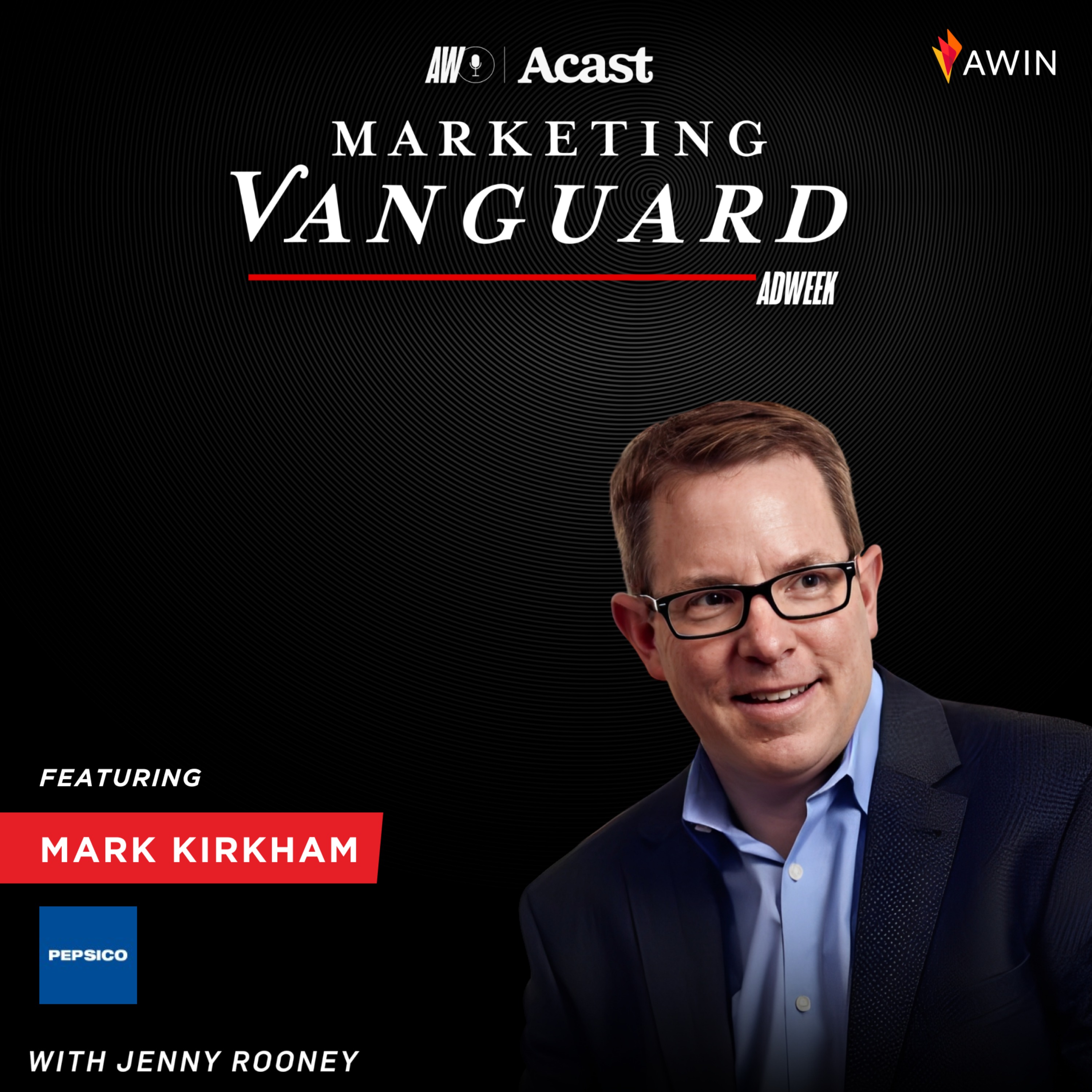
Marketing Vanguard
Innovation or Die: How Pepsi's Mark Kirkham Masters the Duality of Marketing
00:19:58
Loading summary
Transcript47 lines
- [00:02]
Jenny Rooney
We know brand growth equals business growth, but do your stakeholders Tracksuit is an affordable, always on brand tracking dashboard that helps marketers and agencies prove the impact of their work on brand metrics over time. Benchmarked against competitors. Built from best in class methodology, the Tracksuit dashboard is accessible and easy to understand for everyone from CSOs and CMOs to CFOs and founders. Research shows that brand investment in good economic times and bad is essential to driving sustainable growth. The bottom line, turning off the brand tap will cost you in the long run. Tracksuit gives marketers and agencies a common language to measure and communicate brands impact. Without the $100,000 price tag, their in house research experts will have your survey live and your full marketing funnel and brand perceptions visible in just 30 days. Check tracksuit out@gotracksuit.com.
- [01:01]
Mark Kirkham
In the beverage category. If you're not innovating, you die. It is one of those ideas where an innovation can be organic, it could be inorganic. Obviously we just brought Poppy onto the family and I think what makes it special is the duality of how do you continue to drive your core while add more and that this kind of mindset you have to kind of see every challenge as an opportunity and every opportunity is a challenge.
- [01:26]
Jenny Rooney
Hi everyone and welcome to the Marketing Van Vanguard podcast. I'm Jenny Rooney with Adweek coming to you live from Cannes. We're sitting out here in the heat alongside the Quaset. We're coming down to the end of a very busy week for so many people here in the industry, but I'm thrilled to be joined by Mark Kirkham. He is the CMO of Pepsi Beverages North America. Mark, welcome.
- [01:45]
Mark Kirkham
Thank you. I'm so glad to be here. It's hot but it's special too.
- [01:48]
Jenny Rooney
People need Pepsi.
- [01:49]
Mark Kirkham
We do actually. It's great weather for Pepsi, right?
- [01:52]
Jenny Rooney
And I should add you're a founding member of Marketing Vanguard, so thank you so much.
- [01:56]
Mark Kirkham
I'm happy to be a part of it.
- [01:58]
Jenny Rooney
Excellent. Well, we're thrilled to have you. So I'm going to just start. Mark, you've had a lot of change in your career path recently. You were recently named your role CMO, PepsiCo Beverages North America. But you have a long history with Pepsi and Pepsi is one of those companies. It's one of those foundational companies. I would argue it's a marketing Vanguard company in the industry that has long had a reputation for developing, cultivating just extraordinary marketing talent. Not unlike a P and G or perhaps a Mondelez. There have been others in the industry what brought you to Pepsi in the first place and what have you done over the last, what, 16 years? Is that correct?
- [02:35]
Mark Kirkham
Fifteen years, yeah. No, I mean, well, first off, I came to Pepsi from P and G and I came out of the Gillette side. So I've been so blessed over the last 20 years to be working across massive marketing companies, consumer centric companies, amazing brands. But what brought me to Pepsi and what frankly keeps me at Pepsi is the people, the culture, the brands and I think also our approach. I think the one thing about in a world of beverages, you always are on the go. You're always moving, you're always. There's a new challenge, there's a new opportunity, the category evolves constantly. So many new entrants and yet you sit there and have these amazing cherished brands that you get the chance to work with, to nourish, to steward. And that opportunity and responsibility is just something that kind of has always kept me there. Additionally, in the past eight, nine years, I've lived in the uk, I've lived in Ireland, I've managed, I was a CMO for International beforehand. And I've learned so much about culture, about people, about business dynamics. And that constant learning, that constant curiosity, that constant challenge has made the Pepsi experience what it is. We're a challenger brand in many of our categories and I love that, I love, I kind of feed off that. But at the same time we also have brands like Gatorade and we have our Starbucks partnership. And so you have a responsibility to nurture, build, but also a challenge to actually disrupt and evolve. And I think that's what's kept me there.
- [03:57]
Jenny Rooney
I love that you referenced the duality and the responsibility. And it's funny, like we're here at Adweek House here in Cannes and at a really high level, our overarching theme for this week is the duality of marketing. That because if you think about it, there's two sides to everything. Obviously art and science has long been something that people have talked about, but to your point, there is that double responsibility of making sure you're maintaining the integrity, the credibility, the equity of those long standing brands even as you are seen and continue to make changes and decisions that position you as an innovator because that is what your business is built on.
- [04:31]
Mark Kirkham
I mean, in the beverage category, if you're not innovating, you die. It is one of those ideas where an innovation can be organic, it can be inorganic. Obviously we just brought Poppy onto the family and I think what makes it special is the duality of how do you continue to drive your core while add more. And that this kind of mindset, you have to kind of see every challenge as an opportunity and every opportunity is a challenge. That ability to think about, well, what is the role of this innovation? How am I going to address a new cohort, how am I going to actually enter a new category, but also how am I going to continue to build the base? Because I think the larger the company, the larger the brand. Your core is so important. And continuing to innovate on the core, it's actually hard. And to be able to do that and to be at a company that has a culture of innovation and a culture of change and a culture throughout our history of being a company that's up for doing things differently and challenging convention. I think that's the kind of of duality which makes marketing fun and exciting and challenging at the same time.
- [05:32]
Jenny Rooney
There's so many places I want to go with this and we don't have that much time. But I referenced the fact that Pepsi Co. Has long been a cultivator of great talent and that is unique in the industry. I remember almost two decades ago when I was at a Competitor magazine, if you will, we had STE Nicholson on the COVID And at the time she went on, I think, to Yahoo and some other places. Perhaps at the time she was the cmo. We had her on the COVID and she was holding a potted plant and it was a metaphor for the talent cultivation. What is it about Pepsi's history that has positioned it as such a talent cultivator in the marketing industry? And what are you doing today in your role to make sure you push that legacy forward?
- [06:09]
Mark Kirkham
Well, first off, legacy is probably the most important word in kind of thinking about what do you leave behind? What did I do as a marketer? And your legacy is what defines you. And if you look at all the amazing talent, I mean, I'm here this week, the number of CMOs, of companies all around the world and definitely in our industry that came from PepsiCo is astonishing. But I think we do challenge our talent to push the envelope, to kind of try new things. The dynamics of the business, the category, how we recruit our talent, the fact that we're not a big training organization, like a lot, we do have plenty of training, but we learn by doing. I believe in the concept of leave the shirt in a better place than when you found it's a sport analogy, but I think every one of us had that. And the people who have gone on to other companies and other roles that they've never lost what it was that made it special. I was just sitting with the CMO of McDonald's. Morgan's an old friend and she talked about coming up as an intern and her experiences, first on beverages and then running Gatorade and how that helped define her. And so I think what's amazing is you've got to challenge your teams to grow and you gotta challenge your teams to try new things. I'm a pragmatic optimist. That's how I like to define myself. And the pragmatic thing is you gotta understand where you are. The optimist is there's always something new, always be curious, go out there and try new things. And I think that culture carries people on and sometimes they end up leaving the company. But the reality is they've built something so special and they've left their legacy. And I've been lucky to kind of continue to grow and stay with the company and build teams that I'm super proud of. I opened an office in Ireland, built a hundred person team out of nothing, and now I have this amazing team in North America. It's super diverse, it's super entrepreneurial. Even though we are a 90 some odd billion dollar company, but it's that culture that makes it special. And I think that's how we've been able to create such great talent and those who have gone on to do great things.
- [08:00]
Jenny Rooney
You can't talk about talent though, without thinking about skills and what's necessary now to succeed. And obviously here in Cannes, conversation inevitably goes around to AI and the new technologies that are powering and changing and shifting creativity and innovation. How are you thinking about the need for new skill sets at a really high level? When you think about sort of the buckets of expertise that you want your team and teams to have, where does your mind increasingly go?
- [08:25]
Mark Kirkham
It's as much about the tools as it is the capabilities to use them. And I think we overlook sometimes the foundational capabilities that we need as marketers to be able to Adapt tools like AI, like, I mean, the move to mobile and digital. Ten, 15 years ago, people needed the capabilities of thinking different on storytelling. People had to think differently about how they're going to end. All deliver their message in a new format, in a new model. And so I think you have to start with capabilities. And capabilities is not just about training for the sake of training. It's training with a very clear goal in mind. And it's to build the individual, it's to build, most importantly, the business. But Also it's actually to build something differentiated for that individual or for you and your brand. So if I think of AI, I mean every company's been using AI for years, mostly in the back of the house. And now that you come to the front of house, it's how has it become a tool that is actually building a capability versus being outsourced? I think too many companies outsource capabilities and what you need to do is insource capabilities and then use the tools that allow you to do new and different things. And look, AI is just one of the many tools someone was talking the other day about just use it as a sounding board. If you were co creating with a friend, it's just another friend. They just happen to be on an algorithm. And so using it is these tools. But you need the capability to understand how to use it and also how not to use it.
- [09:48]
Jenny Rooney
Yeah, I gotta give a shout out to my husband if he. I'm gonna make him listen to this episode because I will credit him. He has been a early adopter of AI in our household and frankly he works for an agency. The way he uses it in his day to day and it's a test and learn like every minute of every day in terms of how he can use it, where he can use it. In the car when we went to Hawaii, thinking about how do we create an itinerary and map things out? Like you're only as limited as what you as a human being can think about in terms of how to use it. So anyway, he's inspired me so he's gonna love that. I.
- [10:15]
Mark Kirkham
But I think what I love what you said is as a human being and I think one of the things that I worry about and that people talk about here in Canada is like, is it going to replace creativity, is it going to replace the advertising and is it going to replace marketing? No, none of the other technologies that did before it actually can make us better. But we need to build those capabilities to use it in a way that's going to make it powerful.
- [10:34]
Jenny Rooney
Yeah, for sure. Listen, you're in a category that you said it's defined by innovation. If you're not innovating, you're out of the game. I mean, it's one of the most hyper competitive categories out there and we've obviously seen so many forces at play that have caused you to have to figure out how to adapt obviously better for you foods. Thinking about that piece, thinking about the sustainability piece, thinking about the younger generations and how they're sort of gravitating to brands and a lot of the founder led brands that I think hold a lot of sway, especially with people who love origin stories and that sort of thing. Again, it's not an easy place to be. In many respects it is because you're just one of the most globally dominant brands and yet at the same time you're having to look at all the forces at play that could potentially create challenge again as cmo, how are you sort of thinking about the duality of that?
- [11:24]
Mark Kirkham
I go back to this. Every challenge is an opportunity. Every opportunity is challenge. The challenges that exist in the marketplace or the consumer, they actually do create opportunities for our current brands and any new innovation. Use Gatorade as an example. Right, Gatorade. I think one of the challenges that we have right now is not everyone knows the origin story. If you look at our creative today and shout out to Anuj and the team amazing work they've done.
- [11:47]
Jenny Rooney
We know brand growth equals business growth, but do your stakeholders? Tracksuit is an affordable always on brand tracking dashboard that helps marketers and agencies prove the impact of their work on brand metrics over time. Benchmarked against competitors. Built from best in class methodology, the Tracksuit dashboard is accessible and easy to understand for everyone from CSOs and CMOs to CFOs and founders. Research shows that brand investment in good economic times and bad is essential to driving sustainable growth. The bottom line, turning off the brand tap will cost you in the long run. Tracksuit gives marketers and agencies a common language to measure and communicate brands impact. Without the $100,000 price tag. Their in house research experts will have your survey live and your full marketing funnel and brand perceptions visible in just 30 days. Check Tracksuit out@gotracksuit.com.
- [12:46]
Mark Kirkham
They've gone back to tell the story of the 1965 Gators. And we talk about the science and we talk about how it actually gave them an edge and a performance. And to many, especially young consumers, they don't know that story. They weren't around then. And more importantly they don't know why. That's why it's so different. That's why it created the category. Then you talk about sustainability, our enhancers, our powders, our equipment business, the amazing squeeze and all the other equipment we have. That's another way to build a brand that can address some of the headwinds or the challenges in the category. And it also addresses some of the challenges from a sustainability standpoint. And then other brands like Pepsi, our zero sugar business, particularly Pepsi Zero it's been a small part of our business for many years, while our competitor has grown theirs safely. And the reality is we need to go out there and make a stand, be disruptive. So we brought back the Pepsi taste challenge with our zero sugar product, and we've gone to 25 cities. We have won in every single one of them. Not gonna mention competitors. But what we've done is really simple. We got people to try. We got people to taste and actually convince themself, wow, this is amazing. And it tastes better than the other one. And what I love about that is the simplicity. We have a responsibility. What I say is to make simple special. I think we sometimes to get too complicated too fast, and we make our jobs a lot harder than they should be. Focus on consumer need. Focus on where your brands can be relevant. Focus on the challenges and opportunities and make it special. If we can do that, we'll all be successful.
- [14:17]
Jenny Rooney
The acquisition of Poppy, what is that representative of? And do you expect us to see more of those kinds of things?
- [14:22]
Mark Kirkham
Well, I think the important thing about Poppy is, first off, it's amazing brand. You know, what that team has done and what Alison and her husband have built is something really special that had a really good origin story and created and brought people back into the sparkling category. There have been apple cider vinegar products. There have been kombuchas. But it's the branding, it's the work that they did and their backstory all the way from mother all the way through shark Tank. And what they also did was were really smart in their marketing model. You know, some of us, as the bigger the brands, the bigger the companies, the harder it is to kind of stretch. And they've done it so organically and they've built something that obviously made it so interesting for us to actually bring them into our family. The most important thing is how do you continue to maintain that while you also build your portfolio out? And it's gonna allow us to bring new consumers in. We're also gonna bring them into new channels. All these opportunities are actually why, when we look at the landscape and why larger companies go out and look for who their next partner is gonna be, you have to look at where's an opportunity where there might be a gap, whether it's consumer or category, and what is the benefit you both give each other. And I think that's where Poppy's gonna go. Distribution channel, all these different things. But then what can I learn from them? It's so amazing when you. You're like, wow, you just. You Think a little bit different. And there's so many things that we can learn and they can learn from us. So it's an exciting opportunity. But the most important thing is you gotta let them continue to be what they are and make sure that you kind of nurture that as they come into the family.
- [15:48]
Jenny Rooney
More acquisitions coming?
- [15:50]
Mark Kirkham
Not right now. I don't think so. I mean, there's always something going on in the company, but I think right now, I think it's important that we also look at the core. I like to think about the concept of core and more. You always have to think about how do you continue to build. I mean, our categories are still growing. Our brands are still incredibly powerful and loved, and we can do so much more with core. And so I would expect that we continue to do that. We'll always look for opportunities, but look for opportunities for so many consumers. Like, the penetration rate is still there. You've got the opportunity. Mountain Dew, Baja Blast as an example. Right. Amazing brand. It essentially grown in Taco Bell for 20 years. We bring it to retail. We've grown four points of penetration this year. Like, just do the math for the number of households. But again, there's so much more Runway. There's so much running in our core. We got brands like mug root Beer. Like, root beer is really cool again. And we've done some amazing work with our friends at Vayner.
- [16:41]
Jenny Rooney
People, by the way, got very thoughtful and opinionated over Poppy's root beer.
- [16:46]
Mark Kirkham
Oh, yeah, yeah.
- [16:47]
Jenny Rooney
So there's some response and reformulation happening. I know.
- [16:50]
Mark Kirkham
All I can tell you is that you got to listen to the consumer. You got to listen to consumer. But on the root beer side, there's something going on. We literally got consumers to essentially buy mug root beer, send a selfie so they could get a stick, so they could fetch a stick. Like, there's something there in these nostalgic and creative and special spaces like root beer that we all grew up with. And it's funny when you come out in places like Cannes, like, root beer is foreign. You know, fruit punch root beer. So how do you continue to nurture these brands? We've had for many years. That's. I think that's gonna be my main focus in the short term.
- [17:19]
Jenny Rooney
Super fun. Last few quick questions. We're back in Cannes. This is like home turf for you in many respects, having been led international, as you mentioned earlier. What did you take from that experience? How many years were you in?
- [17:31]
Mark Kirkham
I spent almost nine years overseas, starting in the UK and Western Europe. And Then spending time in Ireland, where I ran international, as well as our juice and our energy and our Gatorade business. So look, I think the most amazing thing about living abroad is learning new businesses, learning new cultures in many kinds, because markets are smaller, budgets are smaller, you have to do more with less, which actually makes you more nimble, it makes you more creative. We have a very diverse business model with a lot of franchise bottlers throughout the international business. So you just learn different collaboration skills. You might learn a few words and a few languages here and there. And I think you also learn about the category in a different way, both the retail side and the competitive side. And it just challenges you every day. And I think that's what keeps me just engaged and excited. And then you take that mindset back to the US When I moved back about nine months ago. I look at the US So differently now, and I see the US as many different states and countries within a country. And if you think about that, you start thinking different about Hispanics, you start thinking about different about multicultural, you start thinking different about the regions, the different cohorts. That allows you to really decompose. What too many people think is, oh, it's just one big market. And so I think that's what the kind of experience I took from there and that I'm bringing to my new role.
- [18:42]
Jenny Rooney
It's very cool. What do you think the headline from CAN 2025 is going to be?
- [18:46]
Mark Kirkham
It was really hot. I think that will be the headline. One a headline to right wrong or indifferent is going to be something with the word AI in it. I think you could just say AI stands for advertising industry. But I do think that will be out there. I think fun. And I don't mean fun like being a Cannes fun, but like fun and communication, bringing humor back. Like, it's so nice to just have fun and talk about advertising. I spent a day on the quasit hanging out with Seal, talking about making Seal a seal for Mountain Dew. Like, that was fun. Like, let's make sure do all the good, amazing, powerful, emotive work, but have a ton of fun.
- [19:20]
Jenny Rooney
That was one of the most successful in the Super Bowl.
- [19:22]
Mark Kirkham
It was amazing. Yes, it was. And it was the number one searched ad on YouTube and helped drive our business, help reframe the brand, help educate people, that it was actually a tropical lime flavor because it's kissed by a lime. And I think that's fun.
- [19:34]
Jenny Rooney
Yeah. So what do CMOs need now? What do they need from others? What is the support that you think that they need right now to do their jobs better.
- [19:43]
Mark Kirkham
Super open to sharing ideas more often earlier in the process. I mean, like we are all a network of people who have worked together for many years. Best practice, share. We don't do that enough. We wait once a year to see an output that's been shared to the world. Why don't we share stuff earlier? I've been talking to partners and potential partners here like, hey, let's do this earlier, let's share data. I think we would always keep things close to the chest for a very long time and there is a purpose for that in many ways. But in the world of creativity, in the fast moving world of technology, and especially the role of data to inform the work we do, we need to be more open to sharing and learning. And I think we can actually learn, for example from the tech industry and the tech industry marketers. They're learning every day because they have the data. They're seeing things change. But for us CPG types, I think the more we can share from our customers, from our retailers, we have all of our away from home and food service customers. I think there's a huge opportunity there and that's what I think we need to do is share more, embrace this opportunity, be curious about what other people are doing. And I have some fun along the way.
- [20:43]
Jenny Rooney
I love that. Okay, last quick question. I asked this in every Marketing Vanguard interview, but who's next Is our spirit of paying it forward? Who's one person you recommend we invite onto the podcast and interview? It can be somebody you know really well, who's doing extraordinary things or somebody you admire from afar. You just think they're doing really great work.
- [20:59]
Mark Kirkham
My dear friend Sophia at millercore's. I know that she's been here before.
- [21:03]
Jenny Rooney
Sophia Colucci?
- [21:03]
Mark Kirkham
Yes.
- [21:04]
Jenny Rooney
I don't know if I've actually had her.
- [21:05]
Mark Kirkham
I think you have to. Why? And here's a plug. She's ex PepsiCo. She's an amazing human being. They're doing great work, they're having fun, a lot of fun. They have that kind of challenger mindset and they have a huge portfolio of brands. So yeah, I think I'll pay it forward to Sophia.
- [21:21]
Jenny Rooney
Sophia, if you're listening, I'm calling you next week so we'll have her on. Mark, thank you so much for joining me. This has been a pleasure and enjoy the rest of your can and I hope to talk to you very soon. I'm sure we will be together soon, so thank you.
- [21:33]
Adweek Podcast Team
Thank you for listening to Marketing Vanguard. Part of the Ad Week Podcast Network and Acast Creator Network. You can listen and subscribe to all of Adweek's podcasts by visiting adweek.com podcasts. Stay updated on all things Ad Week Podcast Network by following us on Twitter @AdWeekPodcasts and if you have a question or suggestion for the show, send us an email@podcastdweek.com thanks for listening.
- [22:01]
Jenny Rooney
We know brand growth equals business growth, but do your stakeholders Tracksuit is an affordable, always on brand tracking dashboard that helps helps marketers and agencies prove the impact of their work on brand metrics over time. Benchmarked against competitors. Built from best in class methodology, the Tracksuit dashboard is accessible and easy to understand for everyone from CSOs and CMOs to CFOs and founders. Research shows that brand investment in good economic times and bad is essential to driving sustainable growth. The bottom line? Turning off the brand tap will cost you in last the long run. Tracksuit gives marketers and agencies a common language to measure and communicate brands impact without the $100,000 price tag. Their in house research experts will have your survey live and your full marketing funnel and brand perceptions visible in just 30 days. Check tracksuit out@gotracksuit.com.