← Marketing Vanguard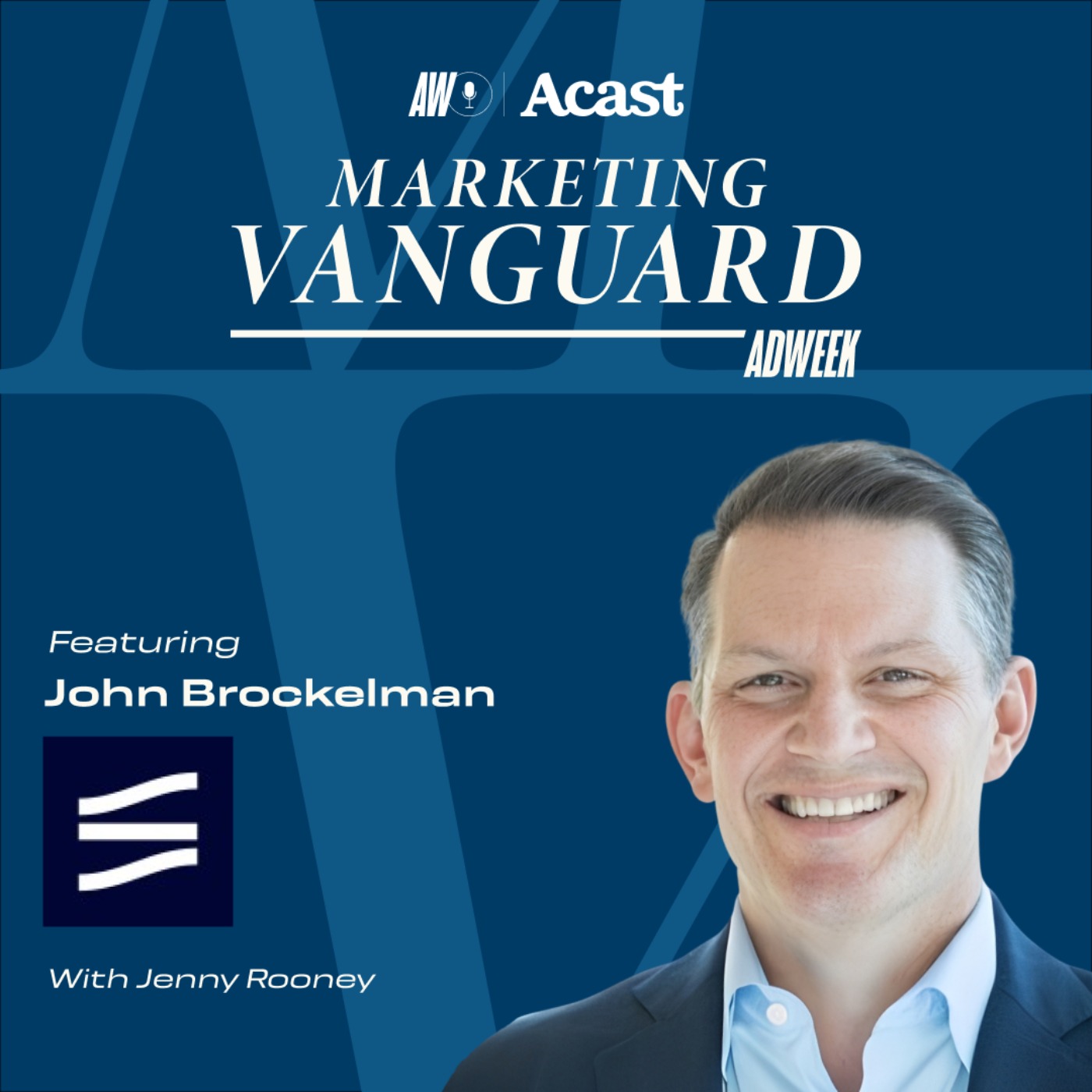
Loading summary
Transcript51 lines
- [00:00]
LinkedIn Ads Narrator
Does it ever feel like you're a marketing professional just speaking into the void? But with LinkedIn ads, you can know you're reaching the right decision makers, a network of 130 million of them. In fact, you can even target buyers by job title, industry, company seniority, skills, and. Did I say job title? See how you can avoid the void and reach the right buyers with LinkedIn ads. Spend $250 on your first campaign and get a free $250 credit for the next one. Get started@LinkedIn.com Campaign terms and conditions apply.
- [00:30]
John Brockelman
Understanding the way to connect to the audience and not necessarily being a financial services expert is something that we've definitely done. Paired them up with subject matter experts to be able to deliver those messages from a social media perspective.
- [00:46]
Jenny Rooney
Hi everyone and welcome to the Marketing Vanguard Podcast. I'm Jenny Rooney with adweek and I'm thrilled today to be joined by John Brockelman. He is the CMO at State Street Investment Management. John, welcome to.
- [00:59]
John Brockelman
Thank you, Jenny. I'm a big fan of the podcast, so I really appreciate the opportunity.
- [01:03]
Jenny Rooney
Well, that means a lot to me and I'm so glad that you listen to it and you find it valuable. There's a lot of podcasts out there in the world, so we've been trying to kind of carve our little space. But I'm excited. I always get excited when I'm on this podcast interviewing new people because it gives me a chance to understand some of the people behind the CMO title and how they're similar, but also how they're different. And a lot of that obviously is associated with the companies or the brands that they represent. But it also has a lot to do with who the individuals are and sort of what their career backgrounds and history are. So I'm going to start there and would love for you to just introduce yourself to all the listeners, sharing a little bit of your own personal backstory, your own brand story.
- [01:48]
John Brockelman
Sure, sure. Well, to start off, I'm Chief Marketing Officer for State Street Investment Management, and that is the fourth largest asset manager in the world, also the third largest provide of ETFs in the world. And traditionally we've served institutional investors as well as financial advisors. But we've got a growing focus and we'll probably get into this a little bit on the retail market, not only in the US but also from a global perspective. I actually got my start in the world of politics, maybe non traditional for a cmo, but the first nine years of my career I worked for two great governors here In Massachusetts, I worked in and out of state government and politics and working on their campaigns. I headed up research for one campaign, I was the deputy campaign manager for another and ran a statewide ballot initiative working with those two different governors. That was successful. And some of the learnings that I had from that experience, number one, results matter. So in the political world, your results are very highly public and it's pass fail on election day. You've either won or you're lost. Another area that was really helpful to me in building my career is just in the world of politics at a very young age, you get an opportunity to have a ton of responsibilities. So responsibility for dealing with the news media, multimillion dollar advertising budgets. And I was fortunate in my career in several campaigns where I actually led debate prep. And so in terms of high responsibility and high agility, I was actually the one who played the opponent in mock debate preparation for multiple governors. So having to think on your feet, having to be prepared, attention to detail was really, really a big learning for me. And then the final big one I think I took away or two big ones was, you know, really understanding your audience. So in this case, in the political world, understanding voters and what their needs are and what they're looking for, but also just the importance and consistency of messaging. And so really being able to break through with messaging, a message that connects in a rational or emotional perspective and being consistent with that throughout all of your different communications. So then moved into actually the corporate world and I worked for Fidelity Investments and there I got really an education in financial services. I got an education in business strategy planning. But one thing that was big for me working for Fidelity is really understanding the impact of the financial world can have on people's lives. And so, you know, the impact that saving for retirement or saving for that first home or saving for a college education was really very purpose driven from, from that perspective in the financial services world. And then had an opportunity to, to be here at State Street. And I've been here for the last 10 years and been the CMO for the, for the last three and a half years at the investment management line.
- [04:54]
Jenny Rooney
That's great. So you entered the marketing organization 10 years ago, you said so. Yeah.
- [04:59]
John Brockelman
At State Street. Yes.
- [05:00]
Jenny Rooney
Okay. At State Street. Yeah. No, I mean, I think it's interesting because State street has been on its own journey in that time. Look, Fearless Girl was one of the most iconic brand campaigns that we saw coming out, you know, around that 2017 mark. And that's gone down in history as something that has Just been so legendary. You were there at the time?
- [05:22]
John Brockelman
Yes, yes.
- [05:23]
Jenny Rooney
Tell us behind the, behind the scenes of it.
- [05:26]
John Brockelman
Yeah. So Steven Dizziel, who was the CMO at the time, was really able to get the initial buy in for doing something that was incredibly not just non traditional for financial services, but non traditional for marketing in general. And we worked with our Amazing ad agency, McCann and really it was an activation that was not a, you know, high dollar figure advertising campaign. It was really a, a guerrilla art installation and, and it just took off. So at the time I was head of brand marketing and communications and so I was responsible for all of the messaging and the activation of that campaign and working very closely with Steven and the agency and our whole team. And I'd love to say that we knew that it would be what it was, but we knew it was a great idea. But you know, in the first 12 hours, 12 or a billion Twitter impressions and you know, just an incredible flood of people going to the site to see Fearless Girl. It became a Google stop on Google Maps, you know, just their own Wikipedia page. It just, it was a really once in a career moment and, and I was just proud to be, to play a small part in that.
- [06:39]
Jenny Rooney
Yeah, for sure. I mean you don't forget that and everybody learns from that. And I just feel like there's, there's always going to be those moments in, throughout the history of, of this practice where, you know, there are just some incredibly breakthrough moments and viral, viral marketing and awareness that comes out of it. And yeah, to say the least, it was, it was all that and more. Fast forward to today and, and of course you've been there for 10 years, been in the CMO role for three and a half. You have that interesting history, having worked, you know, in the area of politics previously and fidelity. It's an uncommon space perhaps for some marketers who, you know, we would consider more of the traditional brand marketers. Right. And sort of the brand storytellers. But you correct me where I'm wrong in that assumption. I mean, look, you know, you've lived your career on the side of the more, you know, certainly financial services, it comes with different restrictions, right? It comes with. Not unlike pharmaceutical marketing or even law. I interviewed the CMO of a legal firm a couple of weeks ago. These are different categories and marketing and brand is defined differently in those than it is for a company like P and G or Quick Serve restaurants or even automotive kind of context set for us. You know, what's unique about certainly the area that you're in Now. And how is marketing and brand defined? And how are you working to define it there?
- [08:06]
John Brockelman
Yeah, well, I really feel like that our job in marketing is to really help the business make an emotional and rational connection. Have it making sure that marketing is very closely aligned to the business objectives and sales goals. That was one of the first things that I did when I became cmo. I knew I came from the brand marketing side of things. We had had this amazing campaign like Fearless Girl, but really wanted to make that marketing was very tightly aligned to the sales organization and the business objectives that the business was trying to drive. So that was number one for us, number two. And we've just, you know, as I mentioned earlier, we were traditionally a B2B business focused on institutions and financial advisors. And how are we helping the sales team influence new sales? How are we helping to influence new pipeline opportunities? How are we able to retain our clients? So that was critically important as a focus for us. But then the marketing team here at State street has really been challenged with how can we help be a growth engine for the business and in particular with the direct retail market. Now, these are investors who might make their purchases in a Schwab account or a Robinhood account or a Webull account. We don't own the end sale with those investors, but we want to be top of mind with them as they're making their investment choices in their personal vehicles. So I'm happy to dive into kind of how we thought about repositioning our brand. So it was on multiple levels, really. And so the first thing was really understanding what it is that we're all about and what's the essence or the DNA of our business. And so when you step back and look at our history as an organization, all the different partnerships we've entered into to create innovation in the investment space, how we operate with the clients that we serve today, when we talk to clients directly and say what's unique and special about our brand, it's really this idea of being an essential partner to our clients. And so a lot of different financial services firms can say this, but when the experience happens and we go in and we're not pushing a product, we really want to understand your problem or challenge and how can we help solve it. That may be with one of our products or we may partner with another asset manager to be able to bring that expertise in. So really established the partnership messaging from that perspective. And then we really looked at how we were going to market. And so our name at the time was State Street Global Advisors. And when we talked to clients, our clients really just referred to us as State Street. When the Global Advisors brand was created in the early 1990s, we were very institutionally focused. We were trying to move into the global, multiple new global spaces. And fast forward to now, trying to reach millions of retail investors or speak to hundreds of thousands of advisors or tens of thousands of institutions. Not a lot of people knew exactly what a Global advisor was. I made a joke that our press releases would always say State Street Global Advisors comma, the investment management arm of State Street. And so if you have to explain that in a press release in that fashion, if we're going to new markets, we're trying to reach new customers, to simplifying our brand and making it very clear what it is that we do and what we offer was so critically important. The final piece of it was just really, how do we start activating this? And so we actually had a big launch. We called it our big bang. And it happened in Times Square. We did a Times Square takeover. We did a bell ringing at nasdaq. And generally those bell ringings are reserved for kind of some corporate executives who might go in and ring the bell. But we actually brought it outside two Times Square and we partnered with the Guinness Book of World Records and set a record. We've set up a bell in the middle of Times Square and invited the public to ring the bell with us to signal a new era in investing. And so we actually set the record for the most number of people to ring a single bell in a single hour, which was awesome. Well over 550 people went through that process. So it was a really different way for us to show up as a brand and has been really fun and exciting for the team here.
- [12:24]
Jenny Rooney
I love that. I mean, and I love how, how creative you are getting. I mean, in fact, you've won, if I was looking at it correctly, you've won Effie's Cannes Lion Grand Prix, the Clios. I mean, this is something that your, your work's getting lauded.
- [12:42]
LinkedIn Ads Narrator
Does it ever feel like you're a marketing professional just speaking into the void? But LinkedIn ads, you can know you're reaching the right decision makers. A network of 130 million of them. In fact, you can even target buyers by job title, industry company seniority, skills and. Did I say job title? See how you can avoid the void and reach the right buyers with LinkedIn ads. Spend $250 on your first campaign and get a free $250 credit for the next one. Get started at LinkedIn.com campaign terms and conditions apply.
- [13:13]
Jenny Rooney
How is that energizing for the team and how are you thinking about that as cmo? I mean, do awards matter and especially in your category, do you feel. Feel like they matter?
- [13:21]
John Brockelman
I mean, it's terrific to see the recognition for the great and hard work that the team has done. I think what's been really exciting, and it started with my former boss Stephen and has translated through my leadership, is really having people think out of category. So how do we be non traditional? How do we think about ways that we can do things that are not even not financial services, but out of category across multiple industries?
- [13:50]
Jenny Rooney
Ask how that translates to talent. Because I mean, are you necessarily looking for folks who have worked in financial services to work on your teams or will you go way outside the bounds of that industry?
- [14:02]
John Brockelman
We have a mix of talent from that perspective. And so there are certain roles where I think understanding the way to connect to the audience and not necessarily being a financial services expert is something that we've definitely done. So I think in the social media space in particular, we've brought in some really great talent who understand how social media works and paired them up with subject matter experts to be able to deliver those messages from a social media perspective. But in the content space and you know, education, the type of thought leadership and content we, you really need to have people who are. Have deep expertise in financial services to be able to face off with portfolio managers or thought leaders and then be able to translate that to. To a wide array of audiences. So I. It really is a mix for us.
- [14:48]
Jenny Rooney
Oh no, I love that. And I think that's so considered. Right. It's so intentional the way you're thinking about the pockets of expertise that you need in the variety there. Talk a little bit about. I know you just recently did a collaboration with WNBA and generally how are you thinking about partnerships to build the brand and, and therefore build engagement, especially as you move more into the retail market?
- [15:11]
John Brockelman
Sure. So we're really excited about it. We're now the official investment management and ETF partner of the wnba. WNBA is not only the hottest sport in women's sports, but it's the hottest sport in all of sports. And it was a very data driven approach that we took to this. We were certainly excited about the potential prospects. But looking at the fan base in the WNBA and the characteristics of that fan base, they have a much higher percentage of fans who actually invest on their own and invest. So that target audience was critically important for us. And then yes, we have an Opportunity for things like in game branding, title sponsor for preseason, which we're going to be launching come the February time frame, but then also partnering up with the WNBA to be able to reach out to that fan base. So it's going to be critically important. We had a. We had a fun launch for this. So we not only announced it in a press release, but we also held an activation event here in Boston. We partnered up with a local community that serves kids in the Boston area through basketball. We brought seven WNBA stars to that event and ran a clinic with the kids. And then we had a big kickoff party to announce the partnership. And I think the content is still coming. It happened over a month and a half ago, and the team, in particular that social media team, has done an amazing job from a content creation perspective in partnership with not only the wnba, but the players themselves. So awesome. There's more to come and we're really excited about that one.
- [16:49]
Jenny Rooney
So tell me about what's next on the horizon. I mean, obviously a lot of change has happened recently. The rebrand wnba. What else can we look forward to seeing from you all?
- [16:58]
John Brockelman
Well, a really new and interesting market that we've been in is actually in Japan. And so it's been a very exciting campaign. It's been a partnership with the World Gold Council to promote our gold ETFs. And, you know, there's been a lot of regulatory changes that the government's made to really encourage people to invest. Japanese people tend to have a lot more cash and they really want to create incentives for people to invest. And so we've been running a campaign there. We engaged with a new agency for us, McCann Tokyo. We've activated across multiple platforms, including digital distribution platforms there, as well as done some great takeovers. I mentioned Times Square earlier. We also did Shibuya Square, right downtown Tokyo. And one of the biggest things that's been really interesting and a ton of learning for us is we quickly stood up Line, which is the most popular social media platform in Japan, and we've seen a tremendous amount of engagement and traffic. The amount of time that people spend on our digital properties after they've found us via Line has been incredible. So we've had a ton of learnings from there, and it's been just very exciting, challenging, you know, with a new and different market. But we've got some outstanding marketers who are based in Japan and APAC that have been leading that work. So that's been a good one for us.
- [18:21]
Jenny Rooney
I love that. I love that. And we'll look forward to more. More that's to come from that as well. That's great. You know, you mentioned Boston in the community. I got to ask you about that because I feel like the marketing community, marketer community in Boston is strong. And especially companies that have true Boston roots, there's something unique about that that I'm trying to find the words, how to describe it, but there's pride, right? A little bit of pride and ownership. I mean, people love Boston. A lot of passion for that. How do you think about your roots in Boston as being a, you know, frankly, a source of strength or a source of differentiation? And how much do you lean into that? How much do you not, you know, kind of an interesting.
- [19:03]
John Brockelman
It's interesting. It's a. It's a balance. And so it's for State Street. And then I think Boston in particular tend to be a more humble. Is not necessarily want to brag, but actually, you know, want to do it through. How do we help customers? How do we help clients? Heads down. Not necessarily wanting to, you know, wave the pom poms and say, you know, look at us. And so that's, you know, for a marketer, that can sometimes be a challenge. So how do we do. How do we do that? Storytelling and maintain that balance of humbleness, but then also helping to get credit for the things that we really do well. So that's how I would frame it.
- [19:43]
Jenny Rooney
Yeah, no, it is a challenge, but also an opportunity, for sure. I also want to ask you about agency relationships. You know, you mentioned Fearless Girl was done in partnership with McCann. Obviously, we are just coming out of a. Last couple weeks have been, you know, the headlines have been filled with all the talk of the Omnicom IPG merger. And there's just so much happening on the agency side of this business, you know, or of this industry. You know, agencies are. It feels like an existential crisis of sorts. And as a marketer, how do you regard the agency landscape right now? You know, kind of. What's your reaction to or take away from the consolidation that's happening in the agency world? And how are you as a cmo, thinking about pathing forward? You know, given everything? That's kind of the. How the dynamics continue to shift on the. On the agency side of things.
- [20:38]
John Brockelman
Yeah, so, I mean, a couple of things. First is, I think that we use a mix of different types of agencies to be able to support the marketing work that we're doing. And so it ranges from large agencies that have a global footprint to boutique agencies that might have a Specialized expertise to help us, you know, solve a particular problem.
- [20:58]
Jenny Rooney
Yep.
- [20:59]
John Brockelman
In terms of our McCann has been an unbelievable agency partner for us. They've helped us through this transition to speaking direct to retail and also our media buying agency, helping us enter into brand new data partnerships to be able to reach active retail investors. So really making sure for me it's making sure do I have the right talent at the agency and aimed at our organization and being able to deliver on the objectives that we're trying to reach. So I focus a lot of time and attention on do have the right people, do we have the right strategists? Are we continuing to learn from the agencies and bringing that expertise into the, into our organization as well? And is that partnership working well? So that, that's kind of how I'm evaluating it.
- [21:47]
Jenny Rooney
I love that. I mean it is a strategy, it's such a key strategy for any CMO to figure out, you know, what do I have the right pieces assembled? Do I have the right mix of pieces assembled to hit my goals moving forward? So it's interesting that you, you talk about it again that intentionally, you know, as you look to 26 and I'm my guess is that when people hear this, it will be early 26. We are just like in a moment of so much dramatic change in the marketing world. Obviously AI is, you know, you can't go anywhere without people talking about that. How are you thinking about integrating that into your operations internally? How are you thinking about, well, let's start there kind of how are you thinking about that inside your marketing organization? Where are you personally trying to drive some adoption and perhaps change?
- [22:34]
John Brockelman
Right, right. I think about it from multiple dimensions. I think the first category is marketing optimization. So how can we bring in AI to make us more efficient in whether that's how we go about advertising, our search capabilities and approaches, how do we accelerate content that we're being able to deliver in a faster fashion? How do we help it amplify the way we're doing our design work? So all of that from the maximizing marketing perspective, I think another perspective is the client experience. So how are we using AI technologies to be able to create more personalized experiences that for us, we just went through a digital transformation where we were previously organized. We were kind of set up the way we are from an organizational perspective versus an audience perspective. We undertook a big transformation to do that shift to a more audience focused. Now the next generation for us is making sure that we have a much more personalized experience from that perspective. And then the final piece is looking at it from an analytics perspective and how do we use AI to more effectively, whether it's marketing attribution, whether it's roi, all the insights that we can ultimately apply. We're at varying degrees of implementation on a lot of those areas. We've implemented in each one of those three dimensions. But we have a lot of work to do in terms of really realizing the promise of AI. Notably.
- [24:04]
Jenny Rooney
I didn't hear you say creative or creativity. Is that something that you're still. I mean, obviously the agencies are working that through themselves. Any notes on that piece?
- [24:14]
John Brockelman
Yeah, in particular, I think there's a great opportunity, maybe I think about it from a content perspective, not only from a content creation, but also a design and creative perspective. I think it's critically important. Important that you have an individual either working with a subject matter expert to create content or you have a design or creative expert to create a core asset. But then can we use AI to ultimately make us more productive? To create multiple versions and sizing and different messaging that's attached to that particular creative? I think that is critically important for us to be able to use that ability, I think also in just the ideation process. So we've seen it from the agency perspective using AI to just do rough sketches of, hey, here's a storyboard of how this could play out and rapidly moving through things that we can either say like that direction or no, that's not the right approach and we haven't invested all these huge amount of hours into what would that potentially look like? I think that's a big promise for that area in particular.
- [25:16]
Jenny Rooney
Yeah, you know, it's fascinating to hear you say that. I also am curious because I talk to a lot of CMOs who frankly some folks who have maybe perhaps stepped out of their day to day role, you know, a sitting CMO role, and they're rapidly going all in on AI, like wanting to learn as much as they can individually about it. And I don't know if it's the sort of the time and space that they have available to them, you know, perhaps in the moment of transition, but it's just fascinating to me to see how many individuals are, have just gotten, you know, frankly so excited about what the change that this is going to make and the possibilities that await. How are you personally thinking about? I mean, you're so busy, you have so much, you know, so many, so much of your time is allocated to so many things and yet is a, as an individual, as a cmo, how are you trying to find time or space and what resource sources are you going to to make sure that you personally have as much knowledge about AI and it's promise and possibility as you can.
- [26:24]
John Brockelman
Yeah, well, a big point, I would say I have to do more, no doubt. Whether it's listening to great podcasts or going to conferences to understand kind of some of the new technologies, or talking to different peers who are implementing things, or talking. Frankly, our agency partners have been really helpful in terms of whether it's the use of data, use of the design approaches. So it's kind of the all of, all of the above approach that I'm taking. And also internally, you know, there are the adoption or the excitement and enthusiasm from the team here and people who want to take this on and try. And I think the opportunity to test and learn internally with some of these tools and be able to expand is critically important. So as a leader trying to give people an opportunity to use the technology, I actually just went to a recent conference where the chief communications officer from Microsoft was talking about how you can have greater adoption internally for us as marketers. There's going to be a big change management effort because you're going to have some people who are very excited and enthusiastic about taking on AI and then others who may be more reticent. How do we make it interesting? How do we make it easy? How do we make it fun to be able to adopt some of these tools and move more quickly?
- [27:43]
Jenny Rooney
Yes, it's an, that's an interesting point because you kind of have to like, clear the road, if you will. Right. For, for everybody. And as part of your role, you know, as, as C suite, it's kind of creating the best environment for people to kind of thrive and go explore and find new things and be able to excel at it. On that point, about leadership, you know, what would your team say about you as a leader?
- [28:05]
John Brockelman
Well, I think a couple of things. One is, I think they would say that I spend a fair amount of time setting direction and aligning the team to the sales organization. But then I would say a big one is around empowerment. And so I'm not very, not very hierarchical. A lot of times I'll just deal directly with someone who's on the front. Now that might cause chaos for some of my direct reports if I'm dealing directly. But many times I'll be on the phone or, you know, quick teams to the person who's heading up social media and say, help me understand how this is working. Where are their barriers or challenges or our search team and help me understand how we're going to become more visible across these AI platforms, so dealing directly with them and then also just giving them an opportunity to show their work. And we're very fortunate that our CEO here really cares about marketing and the impact that it can have. And many times I will spend time with the CEO and I'm bringing people who are doing the work and give them an opportunity to deal directly with senior leadership on explaining a data challenge, explaining how we did something from a social media perspective or how we're trying to figure out how we get deeper engagement with our clients or prospects. And so it's not just me presenting their work, but it's them presenting their work.
- [29:23]
Jenny Rooney
I love that. What advice would you give to folks who are perhaps, you know, have been CMOs, seasoned CMOs or even CMOs who are coming up through this industry and maybe didn't consider a category like investment management, financial services as a place where they could apply their skills and thrive? What would you say to them?
- [29:41]
John Brockelman
I think financial services, you can make it pretty cool from a marketing perspective. We've done some, some pretty interesting things. We've had. We did a campaign around golf and we partnered up with Annika Sorenstam and Keegan Bradley and we said, you know what, let's do a different take on golf. Every single golf ad out there is about expertise and precision. The ball always goes in the cup, it always goes, you know, the shot is always perfect. And we said, why don't we take away most of their clubs, talk about how, you know, mid cap and middle mid sized investing by removing all their middle clubs and having them have a real challenge out on the golf course. So I think we're trying to take non traditional approaches and out of category thinking to a lot of these challenges. I would just say, you know, that's a good example. You said earlier, fearless girl, opportunity to do a partnership with the wnba. There's some really interesting things happening in financial services.
- [30:39]
Jenny Rooney
So, so good to know. Two other last quick questions. Interestingly, you said you came from politics. I mean politics, not to get into that, but I mean it's such a, it is kryptonite. It's such a, it's just such a polarized, fractured world. And in our culture right now, thoughts on how best marketers can kind of continue to navigate in such a, you know, a politically charged and fractured world. It's this, it's a tough time, right, to, to sort of navigate. Do you have any, any perspective given the fact that you came from that space.
- [31:15]
John Brockelman
Yeah, I really. And it's come a long way since I was in the political world. Social media didn't even exist back then. And the. And how rapid everything I thought it was rapid when I was in the moment in the 1990s. And so it's the speed of lightning right now. I would just say to brands and we try to focus on what it is that we do really well. And so where is it that we can offer an insight or a perspective that's really helping to solve a problem. And ultimately we're trying to go back to that purpose that I talked about earlier is look, we're trying to come up with solutions or policy ideas to help improve the way people invest and save for retirement or how do we help make it easier to save for college or help make the investment world demystify it and help people understand, you know, what it is that we offer. So I think focusing in on what is it that you do and what do you do really well and then being an educator and a partner for us is critically important.
- [32:15]
Jenny Rooney
Yep. Last quick question. Who's next? Who's somebody that I should have on the podcast? This can be somebody that you admire from afar or it can be a CMO you know really, really well. And they're just doing some extraordinary things.
- [32:27]
John Brockelman
All right, can I cheat and say two?
- [32:29]
Jenny Rooney
Sure. Absolutely.
- [32:30]
John Brockelman
I'm actually going to pick two mentors. One I mentioned earlier in the podcast, Steven Tisdale, he's a future standard. He's in the private market space. He's got a consulting background. He worked at an agency. I think he'd be a really interesting conversation for you. And then another mentor who I worked for in the Fidelity days, Krista Caron. She's the CMO at lpl. She was also got her started Xerox, but has a really interesting background where she's been in the sponsorship space, she's been in the ad tech space. And so I learned a lot. I learned a ton from both of them and I think they'd be really interesting conversations for you.
- [33:09]
Jenny Rooney
Love it. I'll reach out to both and I haven't, frankly, I haven't heard Kristin's name in a minute. So I would love to reengage and. Absolutely, Steven. So, John, thank you so much. Look forward to seeing all that's to come from State street in 26. And in the meantime, thanks for taking this time with me. Look forward to the next conversation.
- [33:29]
John Brockelman
Thank you so much for having me on. I really appreciate it. Thank you for listening to marketing Vanguard, part of the Adweek Podcast Network and Acast Creator Network. You can listen and subscribe to all of Adweek's podcasts by visiting Adweek.com podcasts. Stay updated on all things Adweek Podcast Network by following us on Twitter at Adweek Podcasts. And if you have a question or
- [33:51]
LinkedIn Ads Narrator
suggestion for the show, send us an
- [33:52]
John Brockelman
email@podcastadweek.com thanks for listening.
- [33:59]
LinkedIn Ads Narrator
Does it ever feel like you're a marketing professional just speaking into the void? But with LinkedIn ads, you can know you're reaching the right decision makers, a network of 130 million of them. In fact, you can even target buyers by job title, industry, company, seniority, skills, and Did I say job title. See how you can avoid the void and reach the right buyers with LinkedIn ads. Spend $250 on your first campaign and get a free $250 credit for the next one. Get started@LinkedIn.com Campaign terms and conditions apply.