← Marketing Vanguard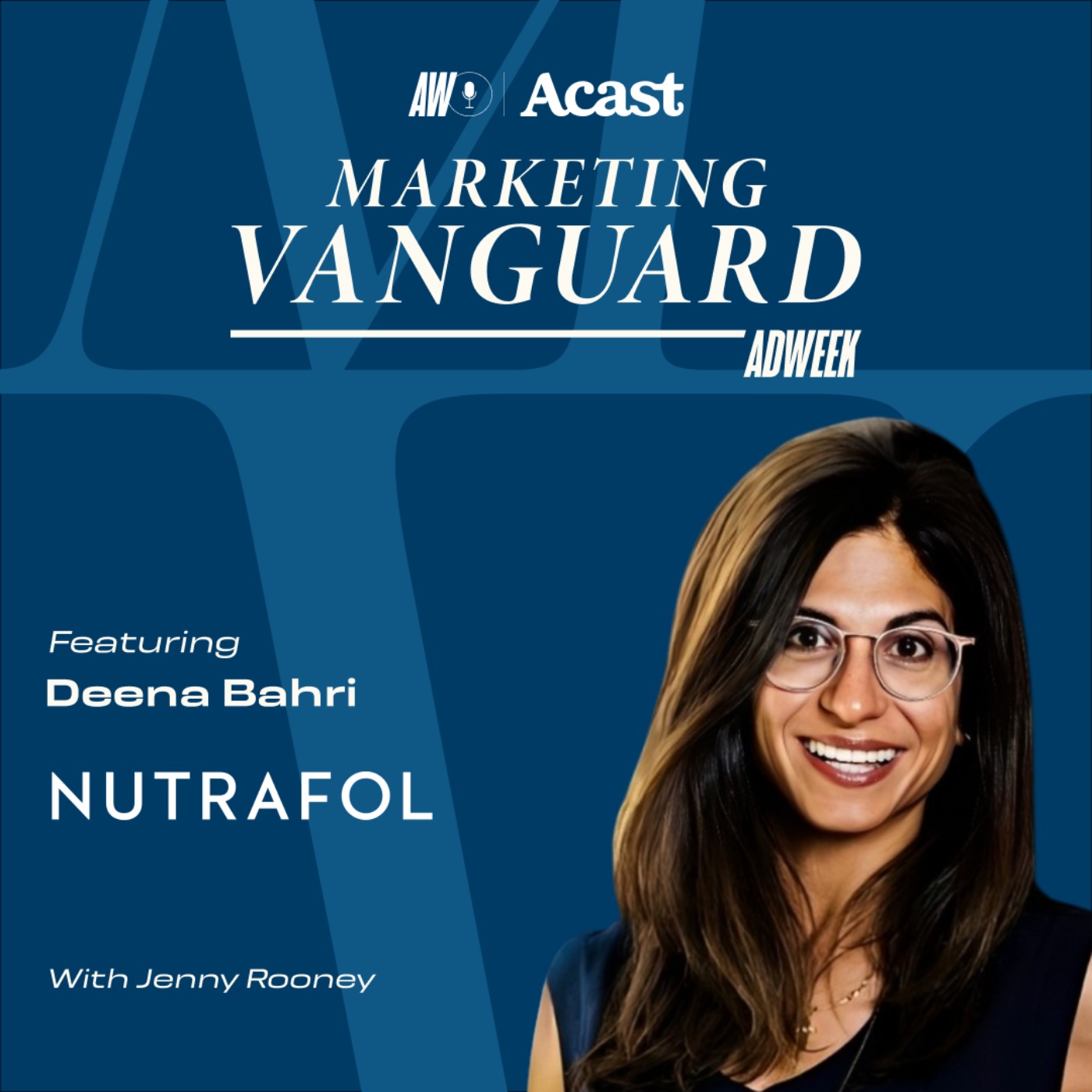
Marketing Vanguard
Making Brand Magic Happen When Everyone’s Doing the Same Thing ft. Deena Bahri of Nutrafol
00:28:15
Loading summary
Transcript57 lines
- [00:00]
LinkedIn Advertiser
Flowing ad budget on metrics that look great till the CFO sees them. That's bullspend and marketers are calling it out in dashboard confessions.
- [00:10]
Marketer
I remember telling my boss, it'll be good for the brand when leads were slow. Yeah, it. It wasn't.
- [00:17]
LinkedIn Advertiser
Cut the bull. Spend LinkedIn lets you target by company job title and more. Advertise on LinkedIn. Spend $250 on your first campaign and get a $250 credit. Go to LinkedIn.com campaign terms and conditions apply.
- [00:30]
Dina Bari
Everyone else has all the same tools on the performance front. We all have access to the AI ad products and all the data in the world. And so the playing field on that front is, I think, more or less level. I think it's the magic in the brand expression.
- [00:48]
Jenny Rooney
Hi, everyone, and welcome to the Marketing Vanguard Podcast. I'm Jenny Rooney with adweek, and I'm thrilled today to be joined by Dina Bari. She's the CMO of Nutrafol. Dina, welcome.
- [00:59]
Dina Bari
Hi, Jenny. Thank you for having me.
- [01:02]
Jenny Rooney
Well, I'm so glad you're here. We were just talking about the Marketing Vanguard Summit. I'm going to see you in Chicago in a few weeks. Really, if you think about it, we're almost into April and so it's going to be in early May. But it's just lovely to be here with you, to talk to you. I just think that you have a really interesting personal story and your career path has been very interesting, and I think what you're doing with Nutrafol is just incredibly interesting as well. So we're going to get into all of that. As is typical of my Marketing Vanguard podcast, I always ask everybody to kind of start by introducing themselves and telling us a little bit about your own brand story, maybe even your own origin story as a cmo. So let's start there.
- [01:42]
Dina Bari
Let's see. I am a lifelong consumer brand builder, over 20 years building companies, mostly having focused on young companies who are disruptive. They're providing a new solution to an existing consumer problem and that is enabled by technology. I've spent lots of years in wellness and fashion, two particular passion points of mine. Everyone who knows me knows I'm a fitness buff, I'm a health nut, and also mostly in e commerce context where both the cultural relevance and the digital excellence are sort of equally weighted. So all that leads me directly to Nutrafol, where I'm now the Chief Marketing Officer. I've been here about six months and it's been an awesome ride. Fast and furious. My story with Nutrifal actually starts almost 10 years ago when I was a customer, because I had my own hair loss experience. I had a surgery, my body had a stress response. I had huge patches of my hair falling out. And I, as most of us do in these situations, I freaked out and I did my research and I found Nutrafol and the product worked for me. And, you know, now I always say I'm. It's full circle because I started as a consumer and it really built upon so many of the building blocks from my career as a marketer.
- [02:56]
Jenny Rooney
So I love that you have a personal connection because, you know, if you can tie your work to who you are as a person and there's actual personal passion for the products, I mean, that that's the goal, right? You know, somebody said if you can't answer the question, like, would you wear your brand? And if the answer is no, then you've got a problem. You know, you need to be able to live the brand that you represent. And so let's talk about that a little bit. I mean, hair is so personal too, right? Like, it's part of you. It's something that you use. You know, it's so much of your identity. How have you worked to make sure that Nutrafol is because you have to sell the product, but you're also speaking to people for whom it is a very personal journey, and there's probably very personal stories behind their desire to engage with a product.
- [03:41]
Dina Bari
It's so true. Jenny, it's interesting, when you talk to team members, almost everybody in the company has a personal experience. To your point about how poignant it can be to have had a lived experience, then be able to tie your job to that. And I think it really helps each of us connect with the consumer experience too, because as you were saying, it's so deep and it's so personal. You know, it's not just what's on the surface and what's in the mirror, but it sort of gets at this really deep cord of confidence and identity and vitality. And so this is an insight that we hear again and again from our consumers. We spend a lot of time listening to our consumers and understanding what's driving them and what's behind, you know, the functional need, which is like, oh, I need to regrow my hair, I need healthy hair, but underneath that, I need to feel good, I need to feel confident, I need to feel empowered. So there's so much fuel in that for our mission as a business. We do spend, like I said, a lot of time Listening and understanding, whether that's from, you know, commissioned research or informal social listening. And we really tie that to our whole marketing journey. You know, we always say hair health is a journey, right? It's not about a quick fix. It's not about getting where you want to get between today and tomorrow or next week. It really does require consistency and commitment. And we think it's our responsibility as a science backed hair health company to accompany the customer on that journey to support them with value added services. You know, we have naturopathic doctors, we have tons of content and education to help them understand what, what's going on inside their body, what are the root causes that may be behind the hair loss. And even, you know, our app has this accountability check where you can upload pictures and track for yourself, hey, it's moving in the right direction because that success and that outcome for the customer really is everything in terms of building trust and what we like to think of as building enduring growth for the business.
- [05:37]
Jenny Rooney
I love that. Now, look, by the way, I'm a legit Gen Xer who grew up during the era of Men's Hair Club and Osley's growth products. And there's a history around hair growth that it's iconic in a different way. So, like, how do you think about the cultural narrative around hair regrowth, hair loss and hair growth? Because you kind of have to look at the story across generations, arguably, or at least across decades, and it's morphed and evolved. So how do you kind of come into that, you know, regard what maybe dialogue or storytelling around this had been in the past. But then think about like where we are now in the moment, where culturally and in terms of health and wellness we are, because, I mean, in 2026, we were in a vastly different place than we were in the 80s, for example, right. When the messaging was very different. But as a marketer, how much do you need to refer back to history? Think about sort of like what's gone before so that you can then think about the storytelling that needs to happen
- [06:33]
Dina Bari
now as a pioneer in this new era of hair health, we'll call it, this is something we think about a lot. We like to think of it as a before us and after. Right. And if you look back to when we were growing up and the narrative and the mindset, I think there was a lot of fear in the narrative and the brands were really coming at this. And especially, you know, at the time it was marketing to men primarily.
- [06:57]
Jenny Rooney
Very much so, yeah.
- [06:58]
Dina Bari
Fear based, like, hang on for dear life to what you've got. Right. And really playing into some of, yeah, the dark side, the dark emotion of what comes with aging and hair loss. For us, at our core, we are not a fear driven, you know, we are sort of like a love driven, empowerment driven brand that really wants to solve the problem because it's a real problem, solve it effectively based on science and lift people up and empower them to feel great about what's possible and what's coming as they embark on this hair health journey with Nutrafol. And so that flip from that fear based approach to this more empowering approach, acknowledging the vulnerability, acknowledging the tough emotions that may be coming up, but also really positioning it as a comeback, which is a line that we've used in our most recent brand campaign targeting men. I think that's a really key shift. I think another big shift that we've embraced and helped to drive through the industry is the emphasis on scientific rigor. Right. Science is the backbone of what we do. I like to say it's what the customer deserves. Like great science that's clinically backed, that is well explained so that it can be well understood by the consumer. Because I think that's us respecting the consumer. So we're making sure that everything that we're promising is backed by clinical research, physician expertise, you know, a whole body approach where we're really going after the root causes instead of just slapping a band aid and promising a quick fix. I think the last part about the change in the narrative is really destigmatizing the conversation. I think that's especially true on the female side. Right. Female consumers did not talk about hair loss. Right. And it's only similar to menopause. There's a topic you did not bring up. There wasn't a lot of information, There weren't a lot of solutions. And I think Nutrival has been a critical part of that shift in allowing people to talk openly about what they're experiencing with hair loss, women specifically, and just embracing it, making it possible, making it okay, and in some cases even like winking at it. You know, we just did a Valentine's Day campaign where we were talking to couples, we were doing sort of couple on the street interviews and talking to them about, okay, his and hers Nutrafol routines. What does that say about your relationship? What does that say about your significant other when you see on his nightside table a bottle of Nutrafol sort of winking at some of the side effects that may be experienced with prescription drugs? You know, So I think there is a range of emotion and storytelling that can happen. And some of what we do is really founded deeply in the brand truth and who we are and what we believe the customer needs. And some of that is kind of in the range of experimenting, playing Valentine's Day being the example there. Sure.
- [09:39]
Jenny Rooney
No, I love that. Well, it's interesting too, because, like, we're living in a time too when. Because my mind goes to two things, trust and effectiveness. And like, are you considered in a nutraceutical category? Is that what you're considered? Yeah. And I do think we're living in a time when obviously there's so much focus on health and wellness, like big time. And my mind goes to companies like AG1 and RO and there are some others that are not all nutraceuticals, but they're companies that have basically they're in mass enough, like there's a critical mass of companies like that that I think a lot of consumers have. Access to social media, obviously has been just a massive driver of being able to kind of get under the hood in some of these things. But it feels like you're in a receptive environment is my. I guess is my point.
- [10:25]
Dina Bari
Right.
- [10:25]
Jenny Rooney
Where there's receptivity to companies who are frankly, not traditional pharmaceutical companies. Right. In the formal definition of that. But they are health and wellness companies. So you're kind of walking into an environment right here and now that is also setting you up for success, if that makes sense. Right. And you're able to have the conversations with people who are going to be receptive. But. But you still have to prove that trust and you have to prove the effectiveness. Right.
- [10:51]
Dina Bari
Yeah.
- [10:52]
Jenny Rooney
So tell me a little bit about that communication and probably education strategy that you also had to employ.
- [10:59]
Dina Bari
Absolutely. It's such a great observation about the space and it's funny, we've been around for over a decade and I think the environment was really different in the beginning, in the early days. I wasn't part of the company then, but I know that being a category creator and a pioneer, you have to do a lot of that making space for yourself. Right. Like, we had to teach the audience about what it meant to be a nutraceutical and how a supplement could be effective as a hair loss solution and a hair health solution. So I think it's wonderful to see how the environment and the context has changed and the consumer has grown and become more educated and more receptive. And we like to think that we really helped in some part to drive that. It did require from earliest days, a lot of education. It's that scaffolding that we built from out of the gate, right. The app, the services that are offered through the Naturopathic doctor, the steady stream of content that we're publishing, the clinical studies, over 25 clinical studies that we've performed on all of our products, both the ingredients and the final formulation, on the population that they're designed for to ensure that they are effective and safe. The third party accreditations that we've invested in, you know, we most recently gained the NSF sport certification, which is sort of the highest standard for safety and trust in ingredients for supplements. So we've made investments from the earliest days and we continue to make these investments to build that trust, to show that we're not grading our own homework. We're also, we're doing our research and then we're also having third parties back it up and verify that there is total truth and trust in what we're putting out in the market. And we're always increasing our education and content that we're putting out there. We recently hired a chief medical officer back in the fall who has helped us level up the amount of education and engagement that we're doing with the community. Like two weeks ago we did an AMA on Reddit where we had the community asking Dr. Heather all of their questions in real time. So we're constantly adapting and changing. And to your point, the expectation of the customer is changing. Right. As they get more educated, they want more transparency, more information and we're moving with them. And we love it because we believe deeply that we can back it up with substance. That's again, back to our credo and our brand essence, like the substance and the science is the foundation of everything we do. So we welcome this. I would say there's always like a sharp edge, right. The sharp edge to the sword is there's more noise. Like more brands, more claims, more noise, more confusion for the consumer. And back to that word of responsibility. I think we feel and really hold carefully the responsibility as the leader in science backed hair health to bring to the foreground all of the science and data and substance that we've invested in. So we are working again to move with the market and sort of meet the customer in this new elevated sense of awareness and education.
- [14:04]
Jenny Rooney
Yeah. And by the way, I love the design and the aesthetic of the products and the packaging and everything. It's very striking. You have TV ads, right? So you do it. You're pretty aggressively, at least as a consumer. I've seen Your ads a lot on tv, talk a little bit just generally about your media strategy. And you know, I reference social media, obviously you said Reddit, that's a huge one. But then from like a, a broad reach media standpoint also, how are you regarding the landscape and what are you guys doing?
- [14:33]
Dina Bari
So we have a pretty interesting and I would call complex media mix as an E commerce native brand. We started out and even up till very recently, we're very heavily weighted towards performance marketing and digital channels where we were able to drive that response immediately and we have a lot of scale there and I would call it a pretty sophisticated engine across performance channels. More recently, and in the last, I would call it 12 months, we've been working on mixing up into upper funnel and brand channels. And even, you know, what we're doing in TV today versus what we were doing in TV two years ago is different because I think then it was very much direct response. Get the click, you know, and get people to convert. Now we are going a little bit higher up and looking to bring more people into the funnel with an earlier, more emotional conversation. And what you'll see with the men's creative is a perfect example of that, where we're engaging at the emotional level first and then nurturing people through the funnel. And that is true for TV as it is for online opportunities. You know, Reddit's been a really exciting channel for us in the last year where we're seeing success, kind of full funnel success, but especially in the upper funnel and same with all our social channels. We're sort of diversifying within channels too. Right. So, okay, meta, an amazing workhorse for us. How do we go full funnel in meta for every single channel? We're looking at that approach.
- [16:02]
Jenny Rooney
Yeah, I mean, look, I keep having conversation after conversation. That brand is the differentiator and creativity is the differentiator. At a time when like, everything can be measured now and performance. I was just talking to a CEO last week who, who said, you know, look, we spent a lot of time, effort and attention on performance and now we're waking up to the fact that there's a lot of brand equity and a lot of brand storytelling that we haven't, that we're leaving on the table that we're not really bringing to the fore and that's opportunity that we need to be doing. Especially since you reference noise. Like, the noise is only getting more intense. And so you do have to figure out how to sort of like navigate through that with creativity and brand.
- [16:40]
Dina Bari
I think the only two real differentiators at this point are brand and creative. And then trust, like you mentioned, I think those are the two vectors where you can stand apart. I mean everyone else has all the same tools on the performance front. We all have access to the AI ad products and all the data in the world. And so the playing field on that front is I think more or less level. I think it's the magic in the brand expression, maybe the ability to be nimble even as you scale. I think that's more like an operating principle that is hard to achieve for some brands. That's one of the things I love about Nutrafol. It's, it's still a startup in its core. And having spent most of my career in startup environments, there are so many things I love about young companies, including the ability to move fast and the willingness to test things and fail fast. So we have that DNA strand and I love that. And bringing that into a scaled environment I think can be a special sauce ingredient. And then trust, right? This investment that We've made over 10 years in science and clinical rigor, physician relationships and expertise, that is not something that any old brand, you know, someone can white label a product, stand up an Instagram account and look like a bonafide supplement online. And that's happening every single day. But what they can't manufacture or fake is that credibility, that trust, that network of trusted physicians, the data, the research. And that is something that we hold very dear and continue to invest in
- [18:10]
LinkedIn Advertiser
flowing ad budget on metrics that look great till the CFO sees them. That's bullspend and marketers are calling it out in dashboard confessions.
- [18:20]
Marketer
I remember telling my boss, it'll be good for the brand. When leads were slow. Yeah, it, it wasn't.
- [18:27]
LinkedIn Advertiser
Cut the bull. Spend LinkedIn lets you target by company job title and More. Advertise on LinkedIn. Spend $250 on your first campaign and get a $250 credit. Go to LinkedIn.com Campaign terms and conditions apply.
- [18:40]
Jenny Rooney
Is NAL Private Equity Backed? Is it, is it founder led?
- [18:45]
Dina Bari
So it was a start. Founder led startup for a very long time. Venture backed and was recently acquired by Unilever. So we are now an operating company within Unilever.
- [18:55]
Jenny Rooney
How does that change things for you?
- [18:58]
Dina Bari
Well, for me, you know, I've only been here six months, so I only know the world within Unilever. That being said, I do have some perspective on the change because a lot of my team members and colleagues have been around sort of before the acquisition and after. I think like with most Things there's some good and some bad that comes with this type of change. To me, we get incredible benefits from being part of a large multinational with a lot of expertise, expertise in regulatory and legal and supply chain and areas where as a young startup it's hard to really gain efficiencies of scale and to bring, you know, certain amounts of rigor or expertise. And then in other areas we're like, hey, we want to kind of keep our startup DNA strands, right? The flexibility, the quickness and speed. I think certainly the digital prowess that we have in that sort of authentic, organic digital DNA that we've got is something that Unilever really values and wants us to sort of infect them with. Those are really nice symbiosis there.
- [19:59]
Jenny Rooney
They acquired you for a reason and it's a feather in your cap, you know what I mean? So, you know, it's like I look at Poppy and now they're part of PepsiCo's portfolio. I mean, it's when companies like this get on the radar and always, you have to think these young companies are always going to be targets or you know, think about beyond the radar of big companies as acquisition targets and not all get to actually make that shift.
- [20:22]
Dina Bari
I mean, I think it's a great outcome for everyone who got to participate. You know, obviously there's like a lot of value creation that happens, but also I think it's the realization of a dream. When you're a purpose driven and mission driven based company, your dream is to help as many people as you can, right? And for us, help as many people as we can achieve their healthy hair vision, right. And address their concerns and regain the confidence and regain the healthy hair. And we're only now in a better position to do that as part of Unilever better than we were before. And I think we're also really fortunate. Unilever has this structure within the well being collective, which is the unit that we sit in, where it's made of a portfolio of acquisitions. And the whole structure is designed to support these OPCOs, as we call them, and allow them to run as independently as possible. So it's a really kind of beautiful situation where they're not trying to absorb us into the mothership and like kill everything that was good and beautiful and just, you know, eke out efficiency. They're really trying to allow us to flourish but benefit from the structure.
- [21:22]
Jenny Rooney
One other question along this line, how are the companies that we're seeing now, this sort of crop of companies that I feel like are as you Describe them young and disruptive. How are they similar but different from the DTCs that we saw about 10 years ago?
- [21:40]
Dina Bari
Wow. I mean, so many common threads. I had spent a long time at Birchbox about 10 years ago and that was so formative in my career and I think one of the poster children, right, for that first wave of DTC startups. And I often draw from that experience and draw parallels then and now, between then and now. I think this idea of solving an existing problem in a novel way is incredibly relevant. It was a different landscape, but then and now digitally native innovator, doing social and doing direct to consumer and CRM in a really disruptive way. Doing personalization in a really disruptive way. So while the technology bar has moved and obviously like what's novel has to be much more advanced today, I think that that idea of engaging with the customer in a deeper, more targeted way is very analogous. I think showing up in the spaces and places where the customer is sort of living their life, consuming content, discovering brands like that too is a great parallel. Although of course the platforms are different, right. Today it's TikTok shop instead of YouTube or Facebook, which it was 10 years ago.
- [22:44]
Jenny Rooney
I'm dating myself. But I would also say the precedent for what I we saw 10 years ago were the dot coms that we saw around, you know, the early 2000s when suddenly the World Wide web was, you know, the Internet was this tool and this distribution and this communication platform when we saw the rise and fall of things like pets.com and drugstore a hundred percent.
- [23:06]
Dina Bari
And one of the truths, I think that has reemerged each time right in the 2010s and today is that the acquisition funnel is fickle, right? So you need to figure out how to reduce your dependency on constant acquisition and instead create enduring relationships with the customer where you are serving them over time in an enduring way and where that investment to acquire the customer pays off. I think that was a critical pillar for Birchbox. That's a critical pillar here for Nutrafol. The win is in a long term customer relationship because it's better for the customer. They're going to get the hair growth results they want. If they stick with us over time, they're then going to trust us. They're then going to go tell their friends about us. That makes us happy both because we're getting bigger return on that dollar invested to acquire that customer, but also because we're fueling the organic flywheel. So I think that's a truth that has stayed consistent in each of those epics of dot com or digital growth is that you cannot count on the media landscape and the acquisition landscape being consistent. It's going to get inflated, it's going to get noisy and crowded. And so the best way to beat that is to build a recurring relationship with your customer where you're not as dependent on a new person coming in the door.
- [24:24]
Jenny Rooney
Totally. And that leads to. My next question is why are you uniquely, have you been uniquely attracted to, as you call them, young, disruptive companies in your career?
- [24:34]
Dina Bari
I think one thing is as a consumer, I am drawn to disruptors. Like I like to put my money against the brand that is not necessarily the incumbent that everyone else is using, but to make a bet. That's like maybe a little bit of my risk profile as a consumer because I enjoy the fun of being the person to discover that new thing and then spread the word. And I think as a consumer, it sort of translates over into my career where I like to be the person who took that leap. And maybe most people went with the left hand fork and I went with the right hand fork. And sure there was some risk involved, but look what I learned and look what I found. That's just part of my personality, I think in the career path, it's incredibly rewarding for me. And again, it's not for everyone. But to be on that accelerated learning path, everything just happens faster. Right? Like I used to always say, it's like a dog year a year in a startup, you learn seven years worth of things that you might have learned at like a huge conglomerate. And I just love the pace of moving quickly. You know, if you fall down, you get up quickly. Hopefully, you know, the winds come fast. The opportunities to just keep growing and learning, it's just like rapid fire and that I find that really exciting. And I think that the impact you can have on customers, even though your reach may be smaller than a huge multinational, I think you can really profoundly impact people.
- [25:57]
Jenny Rooney
What'd you major in? What was your education?
- [25:59]
Dina Bari
I was the thing that no parents wanted, an English major.
- [26:03]
Jenny Rooney
But now the tide's turning and everything.
- [26:06]
Dina Bari
Thank you, AI for making liberal arts majors desirable again. But I was double English, French literature major. And then to top off the irony, I then took a first job out of school in investment banking, for which I was ridiculously unqualified. I'll tell you, I started that job. I did not even know what a P and L looked like. But I think it was a great case study in how liberal arts prepares you to Learn and to be a critical thinker. And I think that has served me really well.
- [26:32]
Jenny Rooney
English literature and creative writing, double major.
- [26:34]
Dina Bari
I love it and I love it.
- [26:36]
Jenny Rooney
Last couple quick questions. One is, how would your team describe you as a leader?
- [26:41]
Dina Bari
I think authentic is the word that I hear repeated to me. And look, that word is used so much, but I think what it represents. Actually, Claire and I were just talking about this, and the way I characterized it was it's the head and the heart together. And I think that's very much my hallmark of how I work, how I think how I interact with my team needs to be data driven and analytical and critical. But it's human. You know, it's. We're trying to encourage people to do the best work of their lives and inspire them. And so you have to approach it from the heart as well. And that balance, I think, is. Is the magic. But I always try to show people all the wrinkles. Right. Like, I'm a working mom. My life is quite hectic. I don't have all the answers. And I think bringing that vulnerability to the room is very inspiring for people.
- [27:30]
Jenny Rooney
Yeah, absolutely. Last question. Who's next? Who's somebody I should have on the podcast? And this can be somebody that you know really well, or it can be somebody that you admire from afar, and you just think that the work they're doing or the leadership they portray is super intriguing.
- [27:46]
Dina Bari
Well, I'm gonna mention someone, and it's both for the person and the company, and that is Melissa Waters at midi. I don't know if you've already had her on your list.
- [27:56]
Jenny Rooney
I don't think I've had her on the podcast. If I have. It's been a minute, so. Yes, that would be amazing.
- [28:02]
Dina Bari
I know you know her. She's an amazing human. I think she also joined Mitty at a really interesting time. You as they're sort of like crossing into this unicorn sphere. But also, I think what MIDI is doing is really incredible. And it's, you know, part of this cohort of companies that's really changing the narrative in women's health, similar to what we did with hair loss. And, you know, I think the distribution model is really innovative. I think the narrative with the customer is really amazing and sort of the behavior change that they're driving is really incredible. So I would. I'd love to hear her talk about her company and her journey.
- [28:36]
Jenny Rooney
I'll invite her on. Thank you. And in the meantime, Dina, thank you so much for joining me. This has been a pleasure. And I've learned so much about the company and about you and I look forward to our next conversation.
- [28:46]
Dina Bari
This was so fun. Jenny. Thank you for having me.
- [28:50]
Podcast Host/Outro
Thank you for listening to Marketing Vanguard, part of the Ad Week Podcast Network and Acast Creator Network. You can listen and subscribe to all of Adweek's podcasts by visiting Adweek.com podcast stay updated on all things Adweek Podcast Network by following us on on Twitter DWeek podcast. And if you have a question or suggestion for the show, send us an email@podcastadweek.com thanks for listening.
- [29:16]
LinkedIn Advertiser
Are your ad campaigns lighting up the dashboard but not the pipeline? That's bullspend and marketers are calling it out in dashboard confessions.
- [29:26]
Marketer
My boss asked for results so I opened my dashboard for the only positive sounding metric trick I had.
- [29:31]
LinkedIn Advertiser
Impressions Cut the bull spend. See revenue, not just reach LinkedIn delivers the highest return on ad spend of major ad NETWORKS. Advertise on LinkedIn spend $250 on your first campaign and get a $250 credit. Go to LinkedIn. Com campaign terms and conditions apply.