← Marketing Vanguard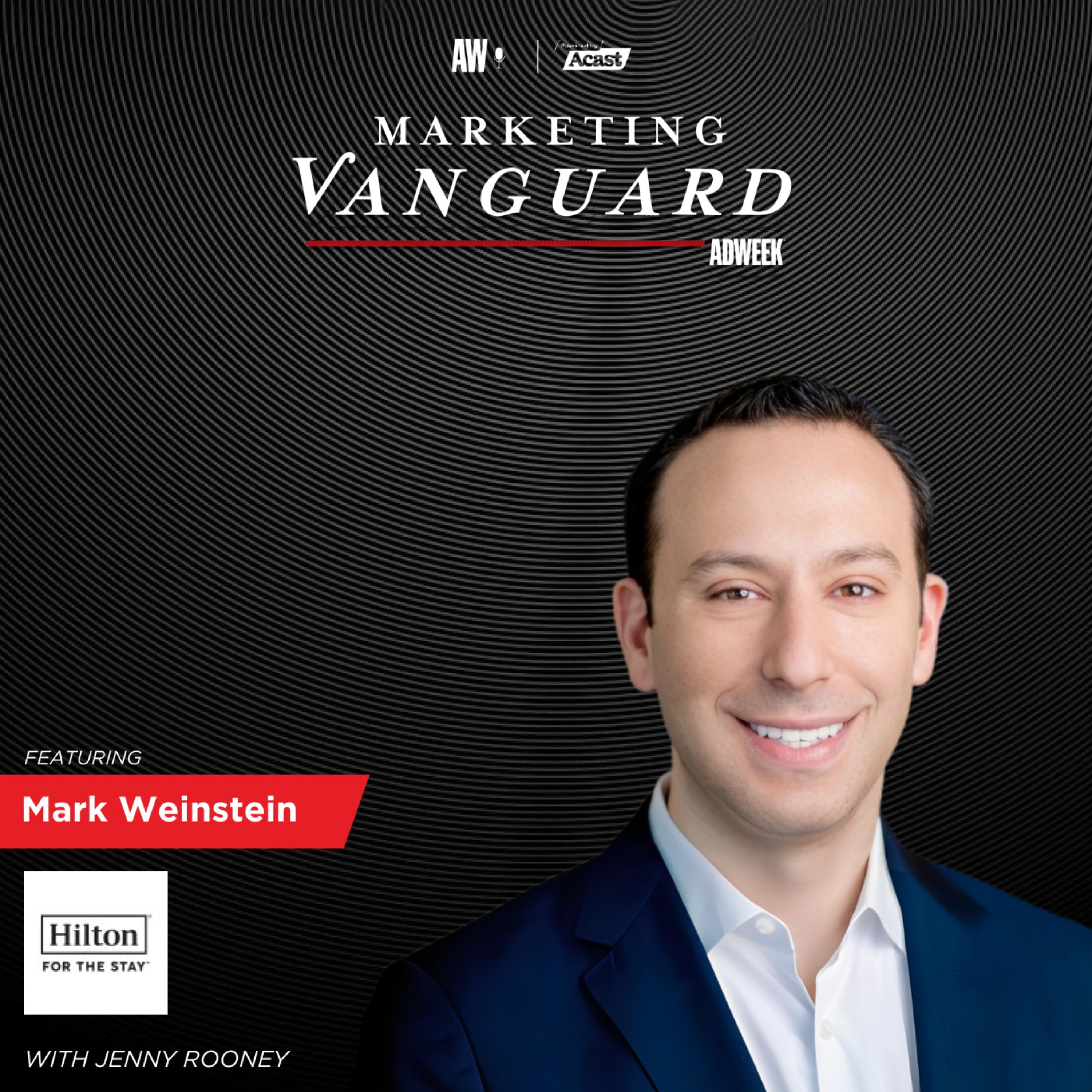
Marketing Vanguard
Marketing Leadership and Brand Evolution: Insights from Mark Weinstein, CMO of Hilton
00:17:32
Loading summary
Transcript63 lines
- [00:00]
Mark Weinstein
Gifting is hard. But here's a hint. Give the gift of connection from US Cellular. Not sure what that means. Well, here's a slightly more specific hint. You can choose four free phones and get four lines for $90 a month from US Cellular. Your family wants new phones.
- [00:16]
Jenny Rooney
So how do we know?
- [00:17]
Mark Weinstein
They told us. Yeah, the good news is that compared to wrapping presents, you're great at getting hints. So take the hint and get them four free phones and four lines for $90 a month. US Cellular built for us. Picture this. You're halfway through a DIY car fix, tools scattered everywhere, and boom. You realize you're missing a part. It's okay because, you know, whatever it is, it's on ebay. They've got everything. Brakes, headlights, cold air intakes. Whatever you need. And it's guaranteed to fit. Which means no more crossing your fingers and hoping you ordered the right thing. All the parts you need at prices you'll love. Guaranteed to fit every time. Ebay. Things people love. The world needs human connection and humanity more than ever. When I think about a world that is seemingly so polarized, seemingly so different, I think when you come together, when cultures come together, when humans break bread together, you realize the world's a heck of a lot smaller than it is. And so I think the world more than ever needs the human touch of hospitality.
- [01:22]
Jenny Rooney
Hi, everyone, and welcome to the Marketing Vanguard podcast. I'm Jenny Rooney with Adweek, and I am here live at Brand Week 2024 in Phoenix, Arizona. Thrilled to be here and recording our special edition podcasts, recordings of Marketing Vanguard. And right now I'm joined by Mark Weinstein. He's the CMO of Hilton. Mark, thanks so much for joining me.
- [01:44]
Mark Weinstein
Thanks for having me. It's like summer camp for CMOs here. This is fantastic. It's great to be here.
- [01:48]
Jenny Rooney
We're going to use that. We're going to use that metaphor.
- [01:50]
Mark Weinstein
And by the way, congratulations to you for all you've accomplished bringing this community together. And the new role is just fantastic for the community.
- [01:56]
Jenny Rooney
So thank you very much. And we were just. It's amazing that we haven't met before.
- [02:00]
Mark Weinstein
Somehow we've crisscrossed same conferences, know all the same people, been at the same dinners on different tables, but here we are.
- [02:05]
Jenny Rooney
But now here we are.
- [02:06]
Mark Weinstein
Start of a beautiful thing.
- [02:07]
Jenny Rooney
Exactly the first conversation, but certainly not the last. So.
- [02:10]
Mark Weinstein
Sounds good.
- [02:10]
Jenny Rooney
So listen, I would love for you to share with our listeners. For those who don't know you, tell me a little bit about your path to CMO of Hilton sure.
- [02:18]
Mark Weinstein
So I studied marketing and finance. Marketing was my passion in college. Finance was my backup choice to make sure I had a job coming.
- [02:24]
Jenny Rooney
Oh, gosh. So you did have to do all the math and numbers.
- [02:26]
Mark Weinstein
I did, I did. I was always the less quantitative finance person, the most quantitative marketing person. So it was always an interesting blending of never fitting in. Came out of school and went into consulting. So spent a number of years at Pricewaterhouse and then a small sales and marketing strategy firm working on blue chip brands. Hilton had just got taken private, and so I joined the company about 14 years ago. I thought I'd be there for a one year stint. Either I haven't had choices or the company hasn't choices, unclear which. And the thesis was really interesting. We had 10 brands at the time and each brand had their own marketing team, own revenue team, own sales team. And not only is it less efficient to work that way, obviously, and not have a CMO across the company, but we also realized that we were fighting for the same customers. Because you might have a preferred brand, but the reality is you're often choosing a brand based on travel, budget, need or occasion. So you're taking your kid to their soccer game. That's a Hampton, potentially business meeting at a Hilton wedding at a Waldorf Astoria. And yet having different agencies and having different marketing leaders meant that often the best idea wasn't purposely being different for the brands, it was just being opportunistically different. And so I came in to help bring that all together. Spent a number of years running loyalty Hilton honors, and we grew that from about 25 million members. That drove 45% of our business to now 65% of our business, driven by 200 million members. We're adding 83,000 new members a day on the back of that thesis. And then in June 2020, was asked to bring together the customer function and the marketing function and to be CMO for the company. And as I've told my friends, I can't recommend enough to start as a hotel CMO during a pandemic with zero revenue dollars. Because everything you do is upward.
- [03:53]
Jenny Rooney
Oh, my gosh.
- [03:54]
Mark Weinstein
Everything you do is upward.
- [03:55]
Jenny Rooney
Yes. Those are good numbers.
- [03:56]
Mark Weinstein
Yeah.
- [03:56]
Jenny Rooney
Wow. So talk to me about the loyalty unlock. Right? Like, obviously, that's the bread and butter for hospitality travel. You absolutely need to drive that engine. Talk a little bit about what you've learned in that role and the insights that you think have been most surprising to you and how you get it right.
- [04:15]
Mark Weinstein
The first thing is it does start and end with the brand. At the end of the day, I always say it wouldn't be advantageous to get the 13th bagel for free if the first 12 weren't good.
- [04:23]
Jenny Rooney
Great analogy.
- [04:24]
Mark Weinstein
So we do start with the brand. The brand is front and center, but it is loyalty is the most efficient way we have in the business to engage our customers, get to know who they are, deliver more relevant experience, help them consolidate their travel with us, make it rewarding to do so. The unlock when I got there was a really funny debate in hindsight, which was how big is too big for Hilton Honors? And the premise, the flaw that when we look back on it was we were thinking it was about the highest value customers only. So give me your highest value customers. How do we limit that population? When actually the reality is that's a small piece of the business, it's a small percentage and we're able to focus quite a bit of energy and resource because of how valuable it is. But if you want the long tail, which is most of our customers who travel infrequently, how do you make the program relevant for them? And so the unlocks along the way was, number one, you've got to create value on day one, make it easy to join, give people a reason today, not 30 trips from now, not all earn a free vacation at some point. But you know, I always talk about the grandma who takes their kids on summer vacation. What is it worth to her to sign up for Hilton Honors so we can deliver a better experience?
- [05:24]
Jenny Rooney
It's worth a lot.
- [05:25]
Mark Weinstein
It's worth a ton, right? For both the customer and for the brand. So unlock number one was making sure we have immediate value for every customer, we can point to something like free WI fi when WI fi was just being rolled out. If you join Hilton Honors, which is free to join, the ability to choose your room in the app and pick the exact room you want on a floor plan. Those are not delayed gratification that's actually valued today. Then in the middle you've got these customers who are highly loyal, but they don't have a lot of value necessarily. And so there you're trying to find partners that are relevant to them. So if they travel once or twice a year, we partner with Amazon, we partner with Lyft, we partner with American Express. We find ways to connect into your everyday life so you can either earn more points or find rewarding ways to use those points even when you're not staying in a hotel. We had this silly unlock, but it was eye opening for us if you think about it. If you want to book a free room and you have 49,000 points and the room costs 50,000 points, you have zero points effectively. Right. You can't book that room. So we rolled out what we call the slider. You can choose any number of points and money to combine so you get value for it. I think what loyalty has lost along the way is people don't get excited about earning rewards. They get excited about using rewards. That's where you build emotional resonance. That's where you build and reinforce the connection. So the second bucket really is around that, that everyday connection. And then, of course, we double down and triple down our most valuable customers. We need to make sure that we're the best at that for them. Things like we automated the process by which we give you an upgrade so that a couple of days in advance, you're getting it confirmed before you show up to the hotel. That's been the focus of our energy is being up and down that food chain of value and then finding the right partners to make that experience more motive. So whether it's working with Paris or working with McLaren F1 or the recording academy for the Grammys, what are people's passion points that we can connect to along the way? And then the last thing to your question is that I learned early on that authentic connection with the customers. I know it's cliche, I know that's a platitude to say, but when we use euphemisms like we've enhanced your value when actually you're taking something away, you lose customer trust, you lose that connection. You take the ROI of the whole thing and you break the whole model. And so being authentic about it, being transparent about it, having honest conversations, treating them as you'd want to be treated. People treat their points like it's money. Right. It's delayed gratification for a vacation. And so it's our job to unlock that thoughtfully.
- [07:29]
Jenny Rooney
So, interesting. Talk a little bit about. You'd been at the company for 14 years, you said, but you recently, in coming into the CMO role, that was a melding of oversight of loyalty and oversight of brand marketing, where before it was separate. Talk a little bit about the choice to elevate into that role and to now have a broader remit. But what has it afforded you in terms of your ability to connect the dots? Right.
- [07:53]
Mark Weinstein
Yeah, look, and whether I'm the right person for the role or not, I believe it belongs together. And I think the company has gotten to a maturation level of marketing and sophistication. Where you see it all, you're writing about it all the time in ad week. I mean, this debate around, is it brand or is it performance? It has to be both, right? If you're shortsighted enough to think it's one or the other, you're just delaying that decision to the CEO. But at some point, you have to have that balance of delivering the short term results, building a brand for the future to obviously not need to be so dependent on. We would have called lower funnel performance marketing in the traditional model. And so I think they do belong together. The company recognizes they need to be together. I think the challenge when you're a brand like us is we're 105 years old. We were born in culture, right? Conrad Hilton would take Elizabeth Taylor and Zsa Zsa Gabor and fly them to Japan and open up a hotel and believe that his quote to us was, we need to fill the earth with the light and warmth, the hospitality. He believed we could achieve world peace through travel. If you could go somewhere and get food that you recognized and have somebody speak English at the front desk, he literally grew on the back of the Marshall Plan. We were founded in culture. Somewhere along the way, you become highly efficient, the category leader. We command market premiums, we're performing commercially. And so you get complacent about the need to build the brand, right? And somewhere along the way, it's not that you consciously choose to do it, but you lose the focus a little bit. And so every day we have 500,000 team members across the world trying to deliver this brand. And yet we were, I think, letting them down a bit in our storytelling. And so bringing it together allows us to take the pie and have a thoughtful debate on what's going to be used to drive immediate returns. How do we fill hotels, maybe 8,000 hotels, 1.3 million rooms every single night that are either filled or not filled for franchisees all across the world. So that's an important driver. You're building relationships with the customers through loyalty. You're extending who you are through partnerships.
- [09:33]
Ryan Reynolds
Over the last 75 years, over 10,000 chemicals have been introduced to our food supply, yet the EU only allows 300 food additives. But at Thrive Market, we bring our members the highest quality brands and restrict more than 1,000 ingredients found at conventional grocery stores. Making the switch is easy with our Healthy Swaps scanner, which finds better versions of all your favorite pantry snacking and home essentials without the added junk dyes and fillers. Plus, it's all delivered straight to your door. So if you're looking to shop at a grocery store that actually cares about your health, go to thrivemarket.com podcast and you'll get 30% off your first order and a free gift.
- [10:14]
Mark Weinstein
Ryan Reynolds here for Mint Mobile. You know, one of the perks about having four kids that you know about is actually getting a direct line to the big man up north. And this year he wants you to know the best gift that you can give someone is the gift of Mint Mobile's unlimited wireless for $15 a month. Now, you don't even need to wrap it. Give it a try@mintmobile.com switch. $45 upfront payment required.
- [10:36]
Ryan Reynolds
Equivalent to $15 per month.
- [10:38]
Mark Weinstein
New customers on first three month plan only. Taxes and fees, extra speed slower above 40 gigabytes on unlimited. See mintmobile.com for details. And now we're telling a bigger, better story in the marketplace. We're finding influencers and creators. We're finding brands to help tell who we are. Show, not tell who we are. And so I think the unlock, again, not because it's me personally, but this idea of putting the role together really unlock this platform. Hilton for the Stay and our chance to really tell the world who we are and what we stand for.
- [11:05]
Jenny Rooney
Yeah, no, the for the stay platform has been very resonant. Talk a little bit about the mileage that campaign has.
- [11:11]
Mark Weinstein
Yeah, look, I wouldn't wish a pandemic on anybody, but never let a good crisis go to waste. We used that moment to really double down on taking care of the community. We donated a million rooms to Frontline. Medical responders. Empty hotel rooms, people sleeping in their cars didn't feel right to us. We took care of our honors members. We kept their status in place for three or four years, even when they weren't traveling. You just do all the things you have to do. We take care of our people first and foremost. So you just do all these things on autopilot. But at some point you find yourself thinking, well, how are we going to come out of this narrative? Right? Because the brand wasn't damaged. There was nothing that was wrong with us. We just were on this government and health pause, enforced pause. How would we come back out? And there was a bunch of tropey cliche ways you could have done that. We miss you. We can't wait to see you. But you know, every CMO at every travel company was having the exact same thought. And when I asked our agency, we had TBWA in, we had Dentsu and others at the table. Show me all the travel marketing, you couldn't tell who was who. If you put your finger over the logo, you can picture it, right? Empty beach, empty chair, people on a surfboard, yoga, Eat, pray, love, goji berries for breakfast. That doesn't look like a trip I've been on anytime soon recently. And yet that's what we're all saying the ideal trip is. Every airline, every hotel, every online travel agency. When we thought about it, we have a unique role, which is it doesn't matter how you get to us, doesn't matter at the end of the day how you travel. Your kid could be screaming in the car, your flight could be delayed several hours. When you cross our transom, the stay starts. That's what we do. That's our unique role. And yet in the storyline we had written ourselves out, there was no hotel in the story. So as we thought about it, we thought, well, what have we been here for all along? It's the stay. And it's both the literal stay and what happens when you on a life on the go, you spend one night with us. But also the long sort of relationship we have with the community, for example. So we went to Abuja, you know, 50 years ago, there was nothing in town. 50 years later, there's a hotel that employs 300 some odd employees every single day, that has built a power plant nearby and roads nearby and a community and now stores and a full presence. We're there for the stay in the community, our commitment to being eco friendly and preserving our sustainable commitments. We're here for a stay on the planet. We're here for a stay with our team members.
- [13:11]
Jenny Rooney
Well, and you hope that your consumers are here for the stay?
- [13:15]
Mark Weinstein
That's right. We hope with Hilton honors, you check in once and you're with us forever.
- [13:18]
Jenny Rooney
So, yeah, again, another category where there's just incredible competition. I mean, it just continues. What is the one customer consumer insight that you're paying attention to right now? Frankly, I've seen some articles about perhaps folks moving away from Airbnb or from the house rentals back to hotel experiences, that or anything like it. Where do you think consumers are right now?
- [13:40]
Mark Weinstein
It's a great question. I mean, I think broadly in the category. I think the pandemic taught us not to have a bucket list, but to have a to do list and just get it done. Right. Freedom is fragile. We never know when it's going to stop. And so if you have a place you want to go, and I think we're seeing quite a bit of that now where people are not letting school schedules or work schedules or the traditional holiday plans of a year slow you down. If you want to go see something somewhere in the world, go see it. Now. For us, on the question you're asking, we thought a lot about. And look, home sharing is a great product. It's always been there, it will always be there. There's some great brands now, like Airbnb, others doing great work in that space. It's just a different product. And so as we thought about it, we really had to define what makes our stay a stay. And we said, look, it's the combination of three things which nobody else can do. It's a great physical space, it's a great service culture, and it's a great technological enablement. It's enabling customers to be self serving when they want to be self serving, to interact with the front desk, etc. Anybody can do any one of those things, right? There are beautiful Airbnbs, there's beautiful home rentals out there, but it's missing the service, right? The pool might be empty, but who's going to bring you the drink? You might have great service somewhere, but if the room doesn't make you feel special and elevated, that's not great either. Technology, same thing. There's a lot of upstart companies that are creating disruptive travel but not putting it together. And so for us, we're seeing a lot of customers say that balance of three things together is really important to them, that that's what makes the stay and that's what commands a premium across all 24 of our brands.
- [14:57]
Jenny Rooney
I'll ask a few boilerplate or basic questions that I ask in the podcast all the time. One is, why does the world need Hilton?
- [15:03]
Mark Weinstein
The world needs human connection and humanity more than ever. When I think about a world that is seemingly so polarized, seemingly so different, I think when you come together, when cultures come together, when humans break bread together, you realize the world's a heck of a lot smaller than it is. And so I think the world more than ever needs the human touch of hospitality, and Hilton's there to provide it.
- [15:20]
Jenny Rooney
What do you want to be known for as a cmo?
- [15:22]
Mark Weinstein
I think about it on two fronts in terms of the brand. I inherited this incredible book that has, in these incredible chapters that have been written before me, I hope that my turn, my taking of the pen, my writing of a chapter helped advance the brand forward. That helped put the brand in a new position, a new trajectory that took it from being a brand that was maybe loved to truly Beloved. And it's part of people's lives. That's my brand ambition. The legacy, I believe, will come from the people that we're mentoring and teaching and growing behind us at our agencies, our creators, and ultimately the people on my team itself. And so I hope that the story will be things that people learned when they were under my tutelage or working in partnership with me or things they taught me along the way and how that unlocked for them. But I hope the legacy is both for the brand, but also for the people.
- [16:02]
Jenny Rooney
Paris is having a moment. She continues to have moments. She's pretty fantastic.
- [16:06]
Mark Weinstein
She's pretty fantastic.
- [16:07]
Jenny Rooney
You referenced her earlier. How are you continuing to develop that relationship and really, truly capitalizing in the best way possible, the relationship with her?
- [16:16]
Mark Weinstein
Yeah, look, I get to spend a lot of time with Paris, and it really is from afar. It's been interesting up close. It's impressive. I mean, this is somebody who really believes in the things she believes in, the community she created around herself, the reinvention of what she stands for and what she believes in and using the authentic connection to her community. At any time, whether that's at first it was on tv, then it's through social media, then it's through the metaverse, then she just keeps reinventing herself while having clarity of purpose.
- [16:39]
Jenny Rooney
And by the way, she's been at Cannes the last through two years, so she's very in the business.
- [16:44]
Mark Weinstein
Yeah. Which is, by the way, somebody you should get on this podcast. She is one of the best, sharpest marketers that that's out there for her own brand, but also the brand she brings on the journey for us. It's a special connection. When I made that phone call, it was immediately, yes, I want to be in. I want to come back, and I want to do this work with the brand. Her great grandfather, Lily, is the founder of our company. Her grandfather is her business mentor and was her greatest influence in her life. To hear her tell that story, at every moment of crisis in her life, she sought out our hotels. She tells quite a bit of story of running away from some of her boarding schools. And her first thought was, let me find the airport Hilton. Right. And so it's authentic. You can't make this up. And we could pay somebody to be a caricature, but she authentically has lived a brand. She remembers growing up in the hotel. She grew up in the waterfrost story in New York. She spent time in Maui. The Grandma Lea she, you know, grew up in the Beverly Hilton. And so it is her Story to tell. Yes, we're a brand. Yes, we're also selling hotel rooms in the same time, but you couldn't find that kind of authenticity. And so it's been really great fun to work with her and she's willing to indulge us with the crazy ideas.
- [17:40]
Jenny Rooney
So, all due respect to my mom, but my mom may not know Paris very well. And so you're still having to be very cognizant of the different generational cohorts, frankly, that you want to choose the brand.
- [17:50]
Mark Weinstein
At the end of the day, we don't need a spokesperson as a company. We need to have people who connect authentically with communities. And so some of them are micro influencers that have communities of 20,000 people that love to read books in hotels or love to knit or wine connoisseurs or point junkies. And some have, whether It's Paris or F1, with our driver Lando Norris, who's fighting for the world championship right now and telling the story of traveling every single weekend. They have their fan bases, sometimes bigger than we think, sometimes more focused. But when they do that, authentic connection to their fan community and letting us come in for a little while helps us connect with new customers.
- [18:21]
Jenny Rooney
Who's next? Who should I have next on this podcast? Who's somebody who you admire from afar or know very well, who's just doing what you think are extraordinary things for the brand?
- [18:31]
Mark Weinstein
Yeah, look, I could give you any number of people on my team. I mean, I think I've got, I would say three or four CMOs in the making that could each be running their own great company. I think the team over at Elf, Corey and the team are just. I mean, I know you've had those. These folks in your orbit, and I.
- [18:43]
Jenny Rooney
Haven'T actually had her on.
- [18:44]
Mark Weinstein
You should. I mean, the work they're doing is. I mean, just the returns. If you want to see a case study for marketing that it matters, that it drives top line and bottom line performance, the risk taking they're doing, the latitude that you give a CMO and a brand team over there, the work that team is doing is great. And then I would have Paris on. I think she's been that great.
- [18:59]
Jenny Rooney
We'll do it.
- [18:59]
Mark Weinstein
Yeah, we'll get her on here.
- [19:00]
Jenny Rooney
She came to Adweek House at Cannes this past summer and she was so generous with her time. But I would love to sit down and have a direct conversation with her.
- [19:09]
Mark Weinstein
I remember she told me she was calling down her list at Cannes the year before. It had been so crazy. And she said. The one I'm going to do is Adweek. She loves spending time at the Adweek house.
- [19:15]
Jenny Rooney
I love to hear it. Awesome. All right, well listen, Mark, thank you so much for joining me. This has been a pleasure and hope you continue to enjoy the rest of Brand Week. Let's talk again soon.
- [19:23]
Mark Weinstein
Thanks so much. Appreciate it. Jenny. Thanks for having me on. Thank you, thank you for listening to Marketing Vanguard, part of the Adweek Podcast Network and Acast Creator Network. You can listen and subscribe to all of Adweek's podcasts by visiting Adweek.com podcasts stay updated on all things Ad Week Podcast Network by following us on Twitter @AdWeekpodcast. And if you have a question or suggestion for the show, send us an email@podcastdweek.com thanks for listening.
- [19:55]
Ryan Reynolds
Over the last 75 years, over 10,000 chemicals have been introduced to our food supply, yet the EU only allows 300 food additives. But at Thrive Market, we bring our members the highest quality brands and restrict more than 1,000 ingredients found at conventional grocery stores. Making the switch is easy with our Healthy Swaps scanner, which finds better versions of all your favorite pantry, snacking and home essentials without the added junk dyes and fillers. Plus, it's all delivered straight to your door. So if you're looking to shop at a grocery store that actually cares about your health, go to thrivemarket.com podcast and you'll get 30% off your first order and a free gift.
- [20:36]
Mark Weinstein
Gifting is hard, but here's a hint. Give the Gift of Connection from US Cellular. Not sure what that means. Well, here's a slightly more specific hint. You can choose four free phones and get four lines for $90 a month from US Cellular. Your family wants new phones, so how do we know? They told us. Yeah, the good news is that compared to wrapping presents, you're great at getting hints. So take the hint and get them four free phones and four lines for $90 a month. US Cellular built.