← Marketing Vanguard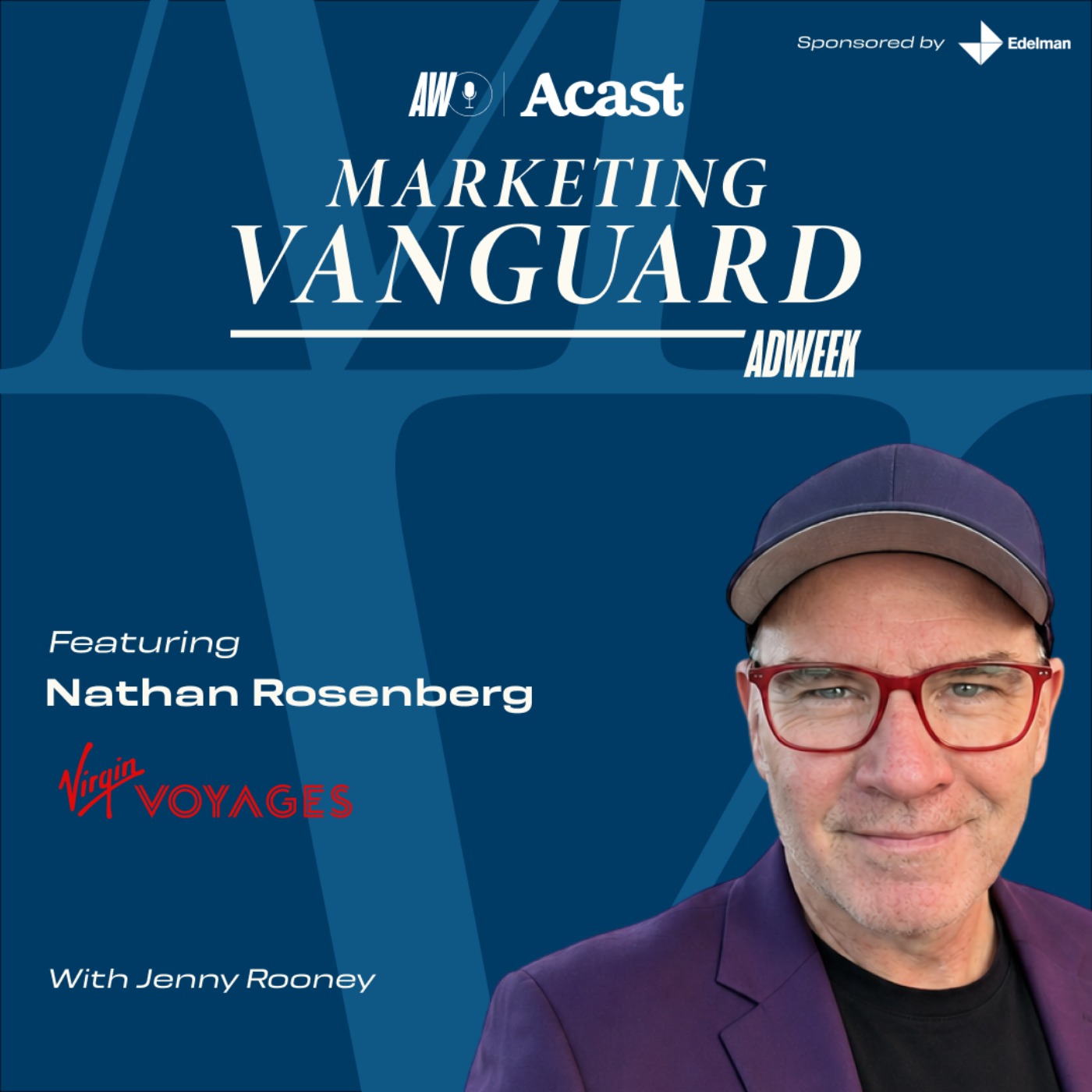
Marketing Vanguard
Marketing Vanguard at Cannes: Why the Experience Is the Brand ft. Nathan Rosenberg
00:22:28
Loading summary
Transcript97 lines
- [00:00]
Marketing Architects Host
If you like marketing conversations with actual receipts, I've got a podcast for you. The Marketing Architects digs into effectiveness research behind what drives growth, especially on topics marketers love to debate, like what happens when brand and sales goals collide. It's thoughtful, a little contrarian, and focused on ideas you can take back to your team. Search for the Marketing Architects Podcast wherever you're listening right now.
- [00:23]
Jenny Rooney
Marketing Architects.
- [00:26]
Nathan Rosenberg
When you get your repeat rate right, when people come back and they spend more with you, your cost of acquisition goes down. You don't have to invest the same level of money in advertising because ultimately that referral, even on an expensive choice LED product like ours, is possible.
- [00:40]
Jenny Rooney
Hi, everyone, and welcome to the Marketing Vanguard Podcast. Live from Cannes. I'm Jenny Rooney with adweek, and I'm thrilled today to be joined by Nathan Rosenberg. He's the Chief Marketing and Brand Experiences Officer at Virgin Voyages.
- [00:53]
Nathan Rosenberg
Correct. You did that well, by the way. You held it together. I was actually at another event yesterday where people were trading titles. It is fascinating how many titles exist in our world now to try and make people sound like they're very important.
- [01:05]
Jenny Rooney
But yours sounds very important.
- [01:06]
Nathan Rosenberg
No, I think the thing about the title I love the most is the experience word. Because it is the most important thing in a virgin organization to be focused on people, whether it's our crew or whether it's the things that happen on board the ship. Nothing else matters. So to be someone who has to champion experience, supposed to care about what it feels like when you walk on the ship, how our crew feel so they can deliver great experiences, it's a total privilege. So that reminds me that the marketing doesn't happen if you don't have the experience, right? Because it's irrelevant what the ad says.
- [01:36]
Jenny Rooney
Marketing doesn't happen if you don't have the experience, right?
- [01:40]
Nathan Rosenberg
Because the truth is what people experience.
- [01:43]
Jenny Rooney
So when does marketing become the experience?
- [01:45]
Nathan Rosenberg
It becomes when people start sharing their stories about what happens. So we happen to work in a cruise business. So people get on a ship, the moment that matters the most to me is about two weeks later when they're at a friend's place for dinner and they're talking about what they've been doing and someone says, well, how was the cruise? That's when the marketing happens. Because the ad can say whatever it wants, but the ad is not the brand. The ad is that memory that that person has when they're sitting there and they're talking about, I was at Pink Agave, the Mexican restaurant. It was amazing. The guy brought me the best cocktail I've ever had. And then I remember you knocked it over and they got you like that's the moment that matters. And in the end what happens is that conversation gets them to go, we should go together. We should literally book something next year. So don't get me wrong, we do spend money on media. We do actually try to get people into the consideration process of buying a cruise, but buying it from us. But it doesn't matter if the truth isn't on Reddit and people talking about how great that is.
- [02:40]
Jenny Rooney
That's so interesting. So tell me a little bit about you. I know you are self described lifer at Virgin Voyages.
- [02:46]
Nathan Rosenberg
I've been there a very long time. Yes, 26 years.
- [02:48]
Jenny Rooney
Okay. What do you attribute to your longevity besides probably just doing tremendous work over and over again?
- [02:55]
Nathan Rosenberg
I think in the end that this is a very human centered brand. And I'm not a traditional sort of like person who can work in a corporate organization. Like pretty much I'm Australian, I'm a little bit boshy, probably a lot for some people. I have this very sort of, this style which is much more about just literally say it like it is. But what's been great about Virgin is the fact that it is so focused on people and you get measured on actually what you're doing and the way you do it. Not just obviously whether or not you a big title, you're important or you've come from somewhere really important. And Richard himself and the philosophy he lives is all very much about we have a. It's going to sound really wanky but I'm going to say it anyway. It's like be the reason someone smiles today is the main measure we use on whether or not the company is going to be successful. And the thing is there are metrics that exist and we can sit there and look at reports and talk about outcomes, but if we aren't delivering joy and happiness, people won't come back. And so that's what I love about this brand. And also you get to shape it based on what customers want and what your crew want because it has to listen because ultimately you can't be successful without them. And so the final thing which really matters, if you take care of your people, they will take care of your customers who will take care of the outcomes which mean the shareholders win. And business that has that inverted pyramid like that. So I wouldn't work anywhere else.
- [04:11]
Jenny Rooney
So it's interesting because when I've experienced this, we all know CMOs who have gone to companies and frankly, in the end, it wasn't a right fit. And listen, there are tons of executive recruiters who spend their time making sure that it is the right fit. But so much of it is like truly putting that last puzzle piece into the puzzle. And companies aren't built the same. I mean, it is a truly sort of fit for purpose arrangement for a cmo. When you think about it, and to hear you talk about the culture there and how you're uniquely positioned to be successful and have impact in a company like Virgin Voyages, like, there's just something very resonant there. And I think, I hope that CMOs continue to take their time and do the diligence necessary to make sure that they're going to enter into an environment. I know there's been a lot of talk about this, entering into an environment where you truly can do your best work, where you're supported and where you fit the culture.
- [05:02]
Nathan Rosenberg
The thing about every interview process is it's almost like you're on a date. No one's really putting forward the truth about what the long term part of the relationship is. So you can actually think the company's doing well. I know my background's great, but there's an element of like time and place as well. And there are some people who are amazing at certain gigs and certain things that they do. But even though the organization looks like it would be a fit based on skillset, it's not the right time or the place, nor some of the right leaders in there. And I will say the one thing that's so. I've been in my job at virgin voyages 14 years and apparently the average tenure of a CMO in the chief
- [05:35]
Jenny Rooney
marketing and brand experiences role for 14 years.
- [05:38]
Nathan Rosenberg
What's the tenure of a CMO these days? Three years.
- [05:40]
Jenny Rooney
Like two years? Two, three years.
- [05:42]
Nathan Rosenberg
So I'm like Nathan 4.0 basically. But before we've had phases in the business, we had a pre construction phase, a construction phase, a launch phase, which was just to be clear, when a pandemic happened and we had to shut down the business before we even started. And then we're now in a phase of the new golden era of AI and revolution for marketing. But the thing I would say is that, and this is going to sound again, really simplistic, but it's not meant to. There's an element that the industry talks about aptitude as opposed to attitude. And I think there's an element of like resilience and being able to pivot in an environment that's changing so quickly. So the characteristics we reward quite often are the ones that aren't the ones that will survive in organizations facing into crises.
- [06:19]
Jenny Rooney
That is profound when you think about it.
- [06:21]
Nathan Rosenberg
Can I be a little controversial, please? I love my cfo. He's like, I've got a very good cfo. I was at this forum yesterday where people are talking about the complications in convincing the cfo. And I said, it drives me crazy that we have to convince the cfo, because here's the thing, all they're doing is reporting out on your work that happened last week. It's an outcome of what happened. It's not a trend of what's coming forward. They're not predicting the future, but we big up CFOs because, well, they know how to report things properly. It's like. But where are the solutions? They come from the marketing team who understand customers, who talk to the people that work in the organization. And that's one thing. It's like, you can have a great partnership, but if you're working in a company that doesn't value marketing in the first place, who thinks you're only a cost center, you aren't going to survive or succeed.
- [06:59]
Jenny Rooney
Absolutely not. So you just shared your provocation. So one of the things we do in the marketing vanguard ecosystem, if you will, in our community, is we invite CMOs in to share their provocations, to actually provoke the room, whatever that might be.
- [07:12]
Nathan Rosenberg
Okay, you got one for me there?
- [07:14]
Jenny Rooney
I do, but you're perfect for that because I think if we're not being provocative and we're not pushing the boundaries, then nothing's going to change. And I think for too long, CMOs are like, oh, woe is me. All these things are happening to me as opposed to recognizing that they are the force of change.
- [07:29]
Nathan Rosenberg
And the other thing, I talked a lot. It's weird. And I can do this. I have the luxury of working for a brand that cares a lot about brand and cares a lot about culture. And this is the thing that my CEO and my CEO is amazing. Like, literally, we've worked together for a very long period of time. We have implicit trust for each other. But he, well, grew up at Goldman, is a finance person, but also has a heart and so is incredibly human and focused on experiences and understands this thing that you can, like, for example, people get on the ship and we're worried about how much is the cost of a drink. We want to make more money, take up the price of a drink, but we know that actually if you love the experience on board and that drink costs you much. You're going to go, oh, I didn't like it. You may not book again. The $3,000, when you rebook is worth more than the $11.50 on the cocktail that we want to take to $14. And so if you know where your value chain is, if you know ultimately what your. We call them sailors, our customers are looking for, if you know ultimately what your crew can do over and over again.
- [08:21]
Jenny Rooney
You call them sailors, by the way.
- [08:23]
Nathan Rosenberg
We do.
- [08:23]
Jenny Rooney
I love that.
- [08:23]
Nathan Rosenberg
So our crew are our crew, and our sailors are people who come to sea because they're on a voyage of exploration. And also then what are the real moments of magic you can create to create enduring memories? So on our ships, for example, we know that celebrations matter. We don't have any kids on board. Like, we're a kid. Free environment, because we want people to fall in love again, to reconnect, to have moments, which we need in a world where we're like, literally logistics coordinators and all that stuff. But, like. So, for example, our IT team worked with us to create this thing called Shake for Champagne. They have this beacon technology. It's about locating people on the ship, and they're like, what else can we do with it? And we're going, well, people should be able to celebrate when they want. So we took that technology, and when you shake your phone, you can have champagne delivered to you anywhere on the ship whenever you want, basically, because we want you to be able to celebrate when you want. So the thing is, we found these emotive triggers for people that are about. This is the brand that celebrates you and lets you celebrate the way you want to. We put hammocks on the balcony so people could feel the ocean and sit out there and read a book and actually understand what it was like to go to sea when you're in the Royal British Navy, because hammocks were invented back then for all of the crew that were below decks. I think when you have those stories and you have a CEO who says, basically those stories matter because you've got to give people reasons, they'll see the price. Sure. They'll hear about the brand. Sure. But ultimately, what they'll decide on is what are they going to really believe and feel when they go on vacation with us.
- [09:36]
Jenny Rooney
And by the way, you're in a competitive category.
- [09:38]
Nathan Rosenberg
Yeah, it's very competitive.
- [09:39]
Jenny Rooney
So you need points of differentiation. You need an experience that people can obviously isolate out from any other cruise experience. And you just mentioned a lot of that. Let's talk about the fact that here you are in Cannes. How many years have you been coming to Cannes?
- [09:54]
Nathan Rosenberg
This is my fourth year, but I'd been a couple of years before that when I was in other parts of the world. So, like, I had a break of, like, three years in between. I mean, it's super cool. I mean, I love coming here now. And actually, it's been fascinating that watching almost the change of who has the pavilions on the beach and how big the pavilions get, like, it feels like all the media agencies have gone, like, off Broadway and all the platforms now literally own the beach. I mean, I love it because obviously we work directly with a lot of the platforms, and I think that's given us a chance to kind of shape our own destiny a little bit. We're also, controversially, we do a lot of our placement and advertising work through creators. So we are a brand that's very driven by storytelling. And the very best storytellers are the people that experience the product and the videos they capture. So given us a chance to kind of work with, like, Canva and Google and YouTube and Pinterest and everybody else to actually do those stories in a way which is owned by our sailors, not us.
- [10:42]
Jenny Rooney
Very interesting. What other things are you picking up on here? Here along quas do you. I mean, we're only on day one, arguably. Well, day two or day three, depending on when you arrived. But what are you feeling in the air? You know, what do you think are some of the headlines that are come out of this week gonna come out of this week?
- [10:58]
Nathan Rosenberg
I think everyone's surprised by growth in pavilion size. Like, Canva, for example, has doubled the size of their pavilion this year, which demonstrates the utility and the power of what that brand's doing in democratizing access to design tools. I think also the way the experience is being built, because what they're trying to do is show market, is that it's not just a demo moment. Like, you have to live and feel and experience the product. And then the other thing, I think it's always funny, people complain about the heat like, it is the south of France in June, basically. And, like, of course it's going to be hot. But the thing I think that's really lovely is there's a joyfulness here. I feel like, because people are coming together on a voyage of discovery themselves, it's like there's an optimism to what we're doing together. And, like, even though we have hard lives and hard jobs sometimes, and finding growth in some markets sounds impossible and feeling like the world is crazy and consumers are confused and everything's upside down. So we're also connected, but we're more disconnected than ever. The fact of the matter is you can have 2,000 friends on Instagram, but no one to call at 2am in the morning. Like that is the sort of social context we're in. But here it feels like anything's possible and it feels like every conversation feels
- [12:00]
Jenny Rooney
really, really inspiring and uplifting.
- [12:03]
Nathan Rosenberg
Yeah, and there's some pretty cool celebrities, by the way. Like, I was dancing with Janelle Monae last night. Got to meet Kiki Palmer. It's not bad if you like marketing
- [12:11]
Marketing Architects Host
conversations with actual receipts, not vibes, not vanity metrics. Quick recommendation for you. I've been listening to the Marketing Architects podcast and it's one of those shows that makes you stop and think for a second. They dig into effectiveness research around topics marketers love to debate like TV advertising, measurement, AI, and what happens when brand and sales goals collide. It's thoughtful little contrarian in the best way and focused on ideas you can take back to your team for smart, honest marketing conversations on crafting goals your CMO and CFO agree on. Search for the Marketing Architects wherever you're listening right now.
- [12:43]
Jenny Rooney
Marketing Architects. Well, you're here at Adweek House. You have way more to meet here as well.
- [12:50]
Nathan Rosenberg
Who's here?
- [12:50]
Jenny Rooney
Just stay tuned. Yes, come back. I interviewed Ashley Graham this morning with Marissa Thalberg. She is such a rock star.
- [12:56]
Nathan Rosenberg
I may not leave.
- [12:58]
Jenny Rooney
What's been your favorite cruise trip? What's your favorite trip?
- [13:01]
Nathan Rosenberg
I love the Med, basically. And we have these beautiful voyages that go out of Athens and sail up to Montenegro and through Croatia. I think the thing about cruising, which is an interesting it has a bit of a stigma for some people, but we've worked very hard to try and create an experience which feels like it's the sort of super yacht for all. And yeah, we're a design forward brand. We're an experienced forward brand, basically. So it means that we sweat things other people won't. So when you talk about competitive industry, you do have to find something that allows you to be distinct. The decision to be no kids in a category that's very family forward was not just foolish at the time, according to some people. It's actually ended up being the most important decision we made because it is the number one reason people choose us. And when you're building ships that have two and a half thousand people on them, it's like everyone goes, what's your tam? And going, there's a lot of people out there that don't want a holiday with kids and a lot of people that don't. And so that's really precious to us to find that moment. But I think, again, the most important thing for us is that we take care of our crew. And they have WI FI on board that other cruise lines don't offer them WI Fi. So if you're gonna go to sea for six months, you should take care of them. We give them the same food as our sailors eat. We make sure they have time. So I think when you take care of your people and they deliver that experience, I think it just compels us to kind of keep trying to innovate in a way. But innovation is such a weird word, especially in this industry. And everyone's discussing AI and like, here's the thing, we absolutely use an incredible amount of tools. We are doing some incredible work with Google, but that work is not in service of optimization and reducing headcount, which is what every conversation is about. And the thing is, for us, all it should do is allow the incredibly talented creative people, we have to spend their time on the stuff that matters to our sailors and our crew and not get caught up in the drudgery work. And it's been really wonderful. I mean, we were having this. I remember one of the very first debates I had two years ago with one of our shareholders about people basically saying, well, you won't need a creative team. And I'm saying, no, to be clear, they will be more important than ever before because the idea is the thing that you can expand with the tools. The ideas are very generic and stuff, and we've all played with things. But what I love is I've seen my team not just adopt, but own and expand their own capability. And that's been really exciting because I kind of fell into it about a year and a half ago with Google. I went to a forum, wasn't sure what was going on, and I literally left after that meeting going, can you please take my credit card? And it wasn't because I believed that everything they said they could deliver, they would. It's the possibility and their belief that they would get there. And one of them said to me, look, if we haven't done it now, it's probably like 45 days away. And we see the pace of that change. What's been wonderful on my marketing and sales team is literally watching them become, like, copywriters, become editors, become campaign managers, and the belief that you can test into concepts and before you actually waste resources, you can show fully formed thoughts, basically. And we can now get a campaign out into market by the weekend from today.
- [15:46]
Jenny Rooney
And you're also enabling talent's best skills to rise to the top, because it becomes sort of like an equalizer, if you will. And then the people who, frankly, do have the more strategic, the more creative, the more sort of the taste and the judgment pieces, they probably become amplified in an environment.
- [16:06]
Nathan Rosenberg
There's a phrase that we use a lot in the world, which is soft skills versus technical skills. And organizations tend to value technical skills, like in finance or legal or it.
- [16:15]
Jenny Rooney
Well, because they're measurable.
- [16:16]
Nathan Rosenberg
Yeah. Are they? Because effectively they're delivering on what ultimately marketers are trying to plan against. They just helped you build it. They're not necessarily the people who ideated against it or understood it. But here's what I've realized more than ever. And this comes from not just dealing with our sailors. It comes from dealing with our crew. The hardest skills are soft skills. Being empathetic, being vulnerable now more than ever. Yeah. Being human. Actually talking to people, listening. And there's this weird thing about American leadership culture. And I live in America. I love Miami. It's a great place. I've been here 14 years in America, and I'm an American citizen. So when I say this, I say it with a love. Why is it that we are so afraid to admit that we don't know everything? And why is it that we just can't say we need help? I don't get why people are so caught up in saying I can't show weakness or vulnerability. If you're working at a place that doesn't want you to discover new things and learn new things, you're working in the wrong place.
- [17:08]
Jenny Rooney
There you go. There you go. Another provocation. You're dropping them left and right. So I love this.
- [17:13]
Nathan Rosenberg
Oh, my Lancer. Well, spend some time with me. We got all day, my friends.
- [17:16]
Jenny Rooney
All right, last two quick questions. Again with Marketing Vanguard.
- [17:19]
Nathan Rosenberg
I thought we were gonna go for hours. What do you mean?
- [17:20]
Jenny Rooney
I wish we had for hours, but we'll have to take this offline. So over a glass of. We can do that later.
- [17:26]
Nathan Rosenberg
More than one, please.
- [17:27]
Jenny Rooney
Yes, please. But one of the things we talk about with on the Marketing Vanguard podcast is like, your leadership is all about decision making. Every minute of every hour of every day, you're making decisions, material decisions that change the direction and traject trajectory of where your company's going, never mind your brand, but truly directionally guiding where Your company goes, so what's a recent decision you've made in the last year that you look back on and say, that was a win and why?
- [17:52]
Nathan Rosenberg
Yeah, you're right. We do have to think about the size of the decision and the outcome and the impact of that decision. And I think sometimes we get caught up in. I have this decision on what I call deliberate de optimization. I'm actually kind of the reverse of optimization because we spend so much time trying to work out how to fix processes that we actually shouldn't even have in the business. And I've had to kind of break the business down to say you are trying to basically fix a process that has to be rebuilt from the ground up. So the other thing is, most marketers will tell you, we get reporting There are probably 37 reports a CMO will receive on any given week. And I'm going to ask you this, how many of you read the entire report? What are you actually doing with it? And so I've been saying to my team, if in the end there is nothing you're planning on doing from this, I don't want you working on it. I don't care if we have strategic ignorance on certain things. Because if you know what matters to your customers and your crew, if you know what drives that intrinsic value, if you know what drives choice, it is really easy to know what to ignore. And the problem is we aren't very good at ignoring things in organizations or as marketers because we feel this compulsion to try and solve every problem.
- [18:53]
Jenny Rooney
Well, it's almost like you build muscle and then it's hard to sort of let go of building that muscle because you've done it for so long.
- [18:59]
Nathan Rosenberg
But you have to cross train 100% Hyrox. You know, the great hyrox event that everyone talks about.
- [19:04]
Marketing Architects Host
Yeah.
- [19:04]
Nathan Rosenberg
You got to hire yourself in the workplace, basically, which means you build a certain amount of strength that allows you to do all different types of activities. Because marketers as well these days, we have. In my functional group, I also control crew experience and crew culture because we believe in the end, the interaction that you have with one of our crew is the thing that ultimately makes you decide whether or not this brand is what it says it will. So if we don't influence that and we don't have an ability to control that, then I can't complain. Now, if we don't have great service experiences, because I'm involved in the construction of those, because I also know it is the one single thing that in the end will drive Our repeat rate. And here's where the metrics are for the CFOs out there. When you get your repeat rate right, when people come back and they spend more with you, your cost of acquisition goes down. You don't have to invest the same level of money in advertising because ultimately that referral, even on an expensive choice LED product like ours, is possible.
- [19:54]
Jenny Rooney
Yeah. Last question. Who's next? Who's a CMO that I should have on the podcast? This can be somebody that you admire and you know them very well, or it can be somebody you've never met, but you think the work they're putting out in the world is extraordinary.
- [20:07]
Nathan Rosenberg
Actually, it's our chief growth officer.
- [20:09]
Marketing Architects Host
Okay.
- [20:09]
Nathan Rosenberg
Who I met at this event, I was at yesterday. Najo. She's. I'm from Mars Group.
- [20:13]
Jenny Rooney
Oh. She's. Nigel's great. She's amazing.
- [20:15]
Nathan Rosenberg
I'm like gay and I'm in love with her.
- [20:17]
Jenny Rooney
She's hard not to love.
- [20:18]
Nathan Rosenberg
No. Because when she talks to you, there's an intention in listening and she makes you feel smart and important, which is not easy in my case. But I left the conversation with her, feeling like I could take on the entire world. I mean, if you've already talked to her, great. But everybody should get to know her, by the way, because her perspective on things in the real world we're all living in right now I think is incredibly grounded. But also the perspective of a woman who's black I think is phenomenal because actually reminds us all that not everybody who's a man who's white gets it right. Oh, you like my rhyme? I should work in marketing.
- [20:49]
Jenny Rooney
Perfect way to close.
- [20:50]
Nathan Rosenberg
Can I ask you a question? What are you excited about at Khan?
- [20:53]
Jenny Rooney
I am excited to see people actually start to come up with solutions instead of just talking about sort of the problems and what we have to get beyond. I think it'll be fun if we can kind of start to finally surface, like action steps. And I think we certainly spend a lot of time obsessing about that. Like, the issues have to continue to be talked about, but we also have to push beyond, like do some ship and actually do some stuff. Yeah.
- [21:15]
Nathan Rosenberg
And you've been coming for how many years?
- [21:17]
Jenny Rooney
This is my 13th year, I believe.
- [21:18]
Nathan Rosenberg
And. Okay, what's the biggest change today that you're noticing?
- [21:21]
Jenny Rooney
Well, I obviously. I mean, that's just like the buzzword, and that's been that way this year and last. But also, you're right about the build outs on the beach and the power shift that's happened over the years. I mean, obviously it used to be an agency led festival of creativity. Right. It was all the agencies. And then to Jim Stengel's credit, he was the first one who said CMOs need to be going here. This is when he was global CMO of P and G. So then the CMOs started coming and then of course, we started to get the platforms and everything else, but it's like a visible manifestation of the power shift that's happened over the years. CMOs come, agencies still come, but there's a lot of money happening on the beach, and it's primarily with the companies that you referenced before.
- [22:01]
Nathan Rosenberg
And so, you know the thing that goes on the Palais. Can I tell you something?
- [22:03]
Jenny Rooney
Yeah.
- [22:04]
Nathan Rosenberg
I've never been in there.
- [22:05]
Jenny Rooney
That's a shame. And I admit that too, because I don't get into the Palais as much. But that's the whole reason why we're here. And nobody really does that anymore.
- [22:12]
Nathan Rosenberg
It's really expensive.
- [22:13]
Jenny Rooney
Is expensive. I know, but to see the work, to walk the halls, to kind of see up front or up close and personal, like what is being truly celebrated, it's just like anything else. You know, it started sort of as like that was the thing, and then it's just expanded.
- [22:26]
Nathan Rosenberg
No, I get it. But in a world where we have access to information in so many ways, if you really care about creativity, wouldn't you want everybody to see that? And why would you lock it up in a forum like that? Like, take it out to the public streets?
- [22:36]
Jenny Rooney
Democratize it.
- [22:37]
Nathan Rosenberg
Yeah, like, what are we doing? People, like, share it.
- [22:39]
Jenny Rooney
There you go. Okay, well then that's your call to action for the industry. Talking about what needs to change.
- [22:44]
Nathan Rosenberg
Get your ship together. Share more of that stuff.
- [22:46]
Jenny Rooney
Get your ship together is perfect.
- [22:48]
Nathan Rosenberg
Thank you. Right, Yeah, I caught it last time too. Happen, people.
- [22:52]
Marketing Architects Host
Thank you.
- [22:53]
Nathan Rosenberg
I'm so sorry for talking so much.
- [22:54]
Jenny Rooney
I am not.
- [22:55]
Nathan Rosenberg
Okay, great.
- [22:56]
Jenny Rooney
I've enjoyed it tremendously. So till the next.
- [22:58]
Nathan Rosenberg
Yeah, till next time. Lou. We're going to go and have a seven couple roses. Yeah, they'll be fine. Thank you.
- [23:05]
Marketing Vanguard Outro Announcer
Thank you for listening to Marketing Vanguard, part of the Ad Week Podcast Network and Acast Creator Network. You can listen and subscribe to all of Adweek's podcasts by visiting adweek.com podcasts. Stay updated on all things Adweek Podcast Network by following us on Twitter at Adweek Podcast. And if you have a question or suggestion for the show, send us an email@podcastdweek.com thanks for listening.