← Marketing Vanguard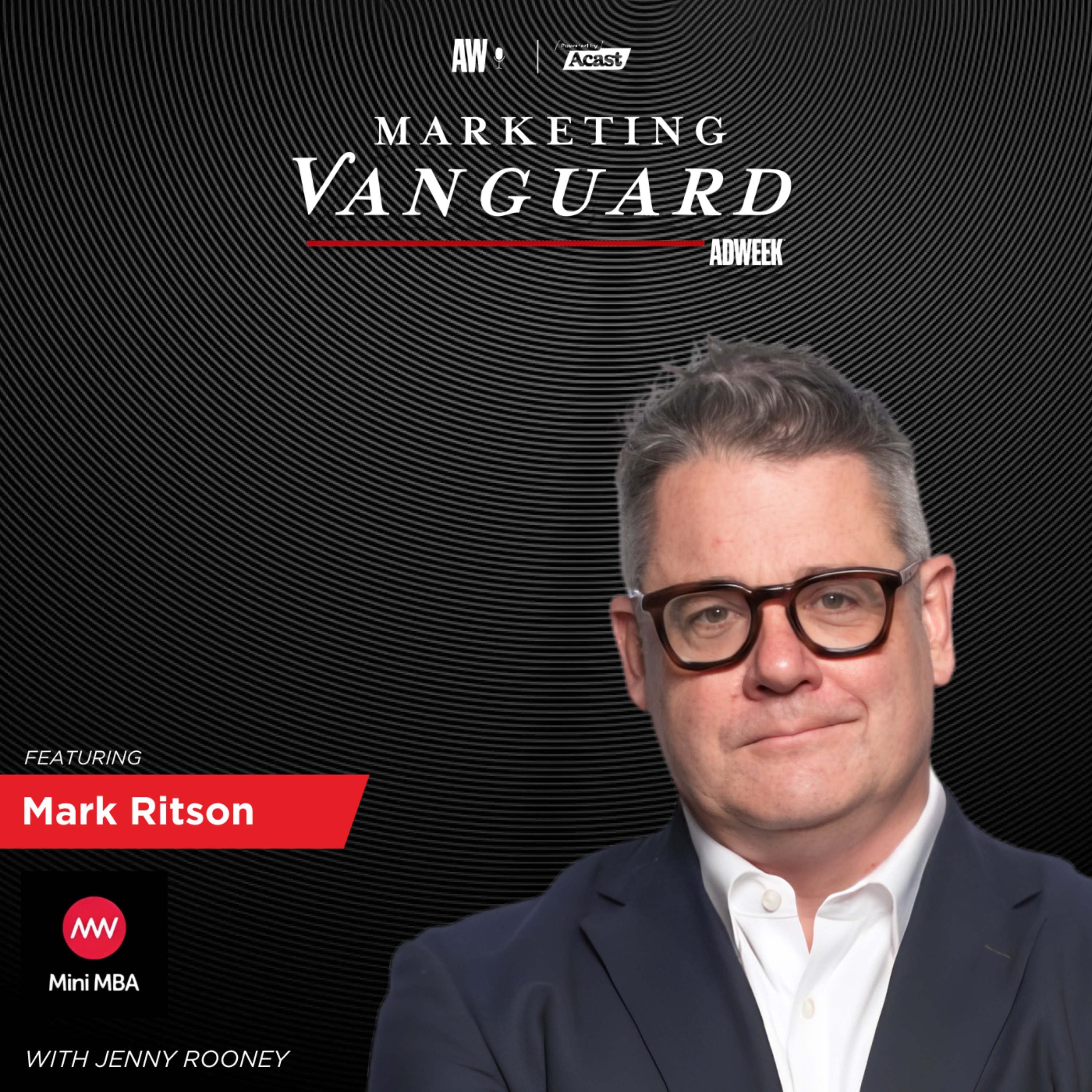
Marketing Vanguard
Marketing's Education Crisis: Mark Ritson on Why Most Marketers Are Getting It Wrong
00:22:51
Loading summary
Transcript89 lines
- [00:00]
Unnamed Student
My dad works in B2B marketing. He came by my school for Career Day and said he was a big roas man. Then he told everyone how much he loved calculating his return on ad spend. My friends still laugh at me to this day.
- [00:14]
LinkedIn Advertiser
Not everyone gets B2B but with LinkedIn you'll be able to reach people who do. Get $100 credit on your next ad campaign. Go to LinkedIn.com results to claim your credit. That's LinkedIn.com results. Terms and conditions apply. LinkedIn the place to Be To Be.
- [00:30]
IL MAQUILLAGE Advertiser
Will full coverage make me look cakey? Is my undertone neutral? Or is it cool? We get it. Finding the right foundation is hard, but with IL Maquillage it's easy to find your perfect match online, customized for your unique skin tone and coverage needs. Plus, with Try before youe Buy, you can try your full size at home for 14 days. With over 600,000 five star reviews, this best selling foundation is going viral for a reason. Take the Power Match quiz now@ilmaquillage.com Quiz I L M A K I A G E.
- [01:04]
Mark Ritson
Most of a marketer's job when it comes to ad effectiveness is to maintain a brand's salience, which is a much more brutal and basic but harder concept. Does my brand come to mind or not? In buying situations, what the consumer thinks about it has become an over elaborate mess. So most marketers in the room here have let me take an example. Positioning have seven or eight slides or a brand book and they have brand characters and they have brand purpose and they have brand associations. It's complete nonsense. Brand positioning, when it's back to its basics of effectiveness tells us you have a couple of brain cells maybe in your consumer's head. Your main job is that your brand comes to mind and they think this and maybe this about it.
- [01:49]
Jenny Rooney
Hi everyone and welcome to the Marketing Vanguard podcast. I'm Jenny Rooney with adweek and I'm here coming to you live From Brand Week 2020 Hot and sunny Phoenix, Arizona. I'm joined by Mark Ritson. Mark, it's a pleasure to have you here and by the way, have you in human form because I've sat next to you on a stage at the WFA Global Marketer Conference and you were in AI form at that time.
- [02:14]
Mark Ritson
Yeah, they created a RIT bot which I had nothing to do with. I said delighted you're doing it, but I didn't do anything. And then afterwards I got loads of complaints about this and about that. I said look, if take it up with someone else it wasn't me.
- [02:27]
Jenny Rooney
Blame that AI. But it was interesting. They leaned in. Into your. Into your Persona, if you will. And a bit of your language.
- [02:34]
Mark Ritson
Very good.
- [02:35]
Jenny Rooney
So, yeah, so they were on brand.
- [02:36]
Mark Ritson
I'm on my best behavior because I'm in the States, so I'm very conscious of the fact that it's very different here when we're in bars in America, everyone swears beautifully, but in professional settings they don't.
- [02:46]
Jenny Rooney
Yeah.
- [02:46]
Mark Ritson
Whereas everywhere else. We just do it everywhere now.
- [02:49]
Jenny Rooney
Sure. Yeah.
- [02:50]
Mark Ritson
It's a shame because you. You definitely have the best swear words in the world. You just don't use them during work hours, which I feel is.
- [02:56]
Jenny Rooney
That needs to change.
- [02:57]
Mark Ritson
I won't start it here. Don't worry. But I would care.
- [03:00]
Jenny Rooney
That could be something. We could get some headlines out of that. That would be fun, actually. So you never know.
- [03:04]
Mark Ritson
Don't even tempt me with it yet.
- [03:05]
Jenny Rooney
The week is short.
- [03:07]
Mark Ritson
I'm there if you need me to be there.
- [03:08]
Jenny Rooney
But, Mark, you are an marketing education legend in this industry.
- [03:13]
Mark Ritson
Steady on, Jenny. Steady on.
- [03:15]
Jenny Rooney
Okay. You really need no introduction, but for those who surprisingly may not know you and your body of work and where you've spent your time, would love for you to share that.
- [03:25]
Mark Ritson
Yeah. I was basically a marketing professor for 25 years. About half my career was in the States, teaching at Minnesota and MIT and the other bits in London and in Australia. I was a specialist in brand management. I did a lot of consulting on the side. A lot of consulting. And about eight years ago, I left academia and I set up my own brand, which is called the mini mba. And basically I took my marketing and branding courses and we created a really unique online format. And we've now trained about 35,000 marketers in about 40 countries. And we continue to grow. So what are we? We're an alternative for marketers. If you don't want to spend a hundred grand in two years and do the whole MBA thing, you can just get the marketing stuff better than anywhere else, I would argue, done online. That's what we do.
- [04:19]
Jenny Rooney
And you are present for that. I mean, you're like, they are getting you.
- [04:23]
Mark Ritson
It's just me. We don't do anything live because it doesn't work. But everything is created each week and then people can access it wherever they want. But it's absolutely me. Yeah. I do the Q and A's and everything. Yeah. I don't like. I never like having teaching assistants. It's. I want it to be me. So I do the whole thing and we can scale it beautifully. So.
- [04:40]
Jenny Rooney
Okay, that's wonderful. So the live thing doesn't work because people can't show up. There's. It's too hard to corral people.
- [04:45]
Mark Ritson
There's a couple of things, right? It's, we're in 42 countries, so every time zone, but most importantly, yeah, most of our average age is 44. We have very senior marketers who are very busy. They don't have time to tune in at 2pm for some kind of 20th century nonsense live thing. So we do everything. We drop it like Netflix on a Monday and it's there in podcast and video format and it works much better. The age of teaching people in rooms without windows is over. People of my generation put up with it. But I don't know if you've noticed, anyone younger than 40 is not going to sit in a room for three hours and watch a dude in a suit shout at them. So it's a model that will replace the traditional 17th century teaching model.
- [05:27]
Jenny Rooney
So interesting. And yet we do see other executive MBA programs from Kellogg and Wharton and all the others. How do you think about how people must navigate or think about choosing what you're offering against other offerings like that?
- [05:39]
Mark Ritson
Look, there's always going to be space for the top 20 business schools in the world to prosper. Everyone underneath that top 20 is going to flail and die over the next 25 years because you can't expect. I mean, I think YouTube has changed the world. If you look at a kid who's now 20, they've grown up with YouTube literally since birth and they've learned that they can go online, get mainline key information fast when they need it. They're not going to have this appetite. And executives of our generation, maybe they can. I'm very skeptical that will happen down the track. It doesn't make sense for us to be flying to places to physically sit in a room when we don't do that. We'd go to the theater, what, twice a year? It's a TV digital video world and we need to get into it.
- [06:27]
Jenny Rooney
Yet you flew to Phoenix, Arizona.
- [06:29]
Mark Ritson
Only for you, Jenny.
- [06:30]
Jenny Rooney
Join us here at Brand Week.
- [06:31]
Mark Ritson
Only for you, Ginny.
- [06:32]
Jenny Rooney
Well, thank you very much. Tell me a little bit about what you're doing here. What are we going to be hearing from you?
- [06:38]
Mark Ritson
So I have a long prevailing obsession and love for America. I mean, America is the home of marketing education. I was made a marketer here. I did my postdoc at Wharton and it changed my life. I mean, I came from the UK 1994 and it was just so far ahead, it was mind boggling. But since about 2010, the world of advertising effectiveness, the theories and practice have changed dramatically and the Americans have not kept up. So I believe they're, for the first time in the history of marketing, are far behind most of the other developed economies. And I think that's surprising. And my talk this afternoon is basically, what are they behind on? Here's data to show, thanks to my friends at Effie, that they are behind and here's what they should do about it.
- [07:25]
Jenny Rooney
Interestingly, it feels like over the last, you know this better than anybody, but, you know, witnessing this ever widening gap between marketing education and marketing practice, it's something frankly I dove into. I did a series of events with business schools across the country bringing legendary alumni back into the classroom. Not a one or two, one off or two at a time, but critical mass of like 15. Because when you start to see the patterns of like, all these people came out of Mendoza, Notre Dame, all these folks came from Rossett, Michigan. All these folks came from Fuqua, Duke. It's interesting. And that is frankly a little community. And the schools loved it because they brought that practitioner perspective in. And the practitioners loved it because they want to give back, I think, to the classrooms. We also have other frankly rock star academics in marketing, Kevin Lane Keller at Tuck and Dave Reebstein at Wharton, both heroes of mine.
- [08:19]
Mark Ritson
Yeah.
- [08:20]
Jenny Rooney
So there's incredible folks who are doing a lot of things. Rob Malcolm was a former practitioner. He's been at UT Austin. Like, there's also that model where we see practitioners go back to the classroom, talk a little bit more about this because obviously this is your sweet spot. This is where you've lived. What can the academic community generally do to meet? I mean, if marketers in real time are struggling with keeping up with the change that's happening, by the way they're making the change. How can education continue to iterate?
- [08:46]
Mark Ritson
So there's a massive structural problem with business schools. And about 50 years ago, the business schools of America, and therefore everyone else decided to follow the more traditional natural science model where you were a full time academic doing full time academic research. We didn't follow the law school medical school model. That in my opinion is horseshit. I worked a lot with medical companies and I would work a lot with professors of surgery, for example. So I'd be here or I'd be in New York City working with a professor of orthopedic surgery. He or she would be my Kol, my key opinion leader. And they'd be doing surgery four days a week and on their fifth day they'd do some teaching on how to do spinal surgery or whatever else. The question that they always ask me and other people have asked me outside of our industry is, so to be a professor of surgery, you gotta do surgery, which kind of seems obvious. And yet to be a professor of marketing, there's absolutely no requirement to do any marketing at all. And that's horseshit in my opinion. And the select few people you've just named, who are all heroes of mine, unusual in the sense that they spent more time doing marketing than teaching marketing. But let's be honest, in most American business schools and in most international business schools, the professors of marketing don't do any marketing. Not good enough. Not good enough. Not good enough. It makes no sense and you'll get a lot of rational explanations for it. They hold absolutely no weight with me. I won the teaching prize at MIT six weeks after I got there. I'm a good teacher, but I'm not that good. Right. It's not good enough. We need practitioners who are also able to teach and your efforts with alums are a perfect example of that. But it's a structural problem that won't be fixed until we really revisit the whole thing. And it's a problem for me because on one side I've got Gary Vee saying you shouldn't have any training. Yeah. In marketing, I asked LinkedIn for the statistic. 26% of American marketers have a training in marketing. Not good enough. Not good enough. Not good enough. If three quarters of our profession haven't got a training in it, no wonder the effectiveness capabilities are low. But at the same time, I have some sympathy for that 75% of ignorant American marketers. Because if you went to a traditional business school to learn traditionally taught marketing these days, I'm not sure it would make you that much better. So there's a real challenge between these two places and I'm not sure how we solve it, but it's a structural issue that has to be fixed. And I don't want to tell you it's better anywhere else. I think it's pretty much the same problem everywhere.
- [11:13]
Jenny Rooney
Yeah, you know what, it's fascinating and to your point, it's multi layered. It's not going to be fixed anytime soon. And look, I mean, marketing, the joke was, at least when I was a student, folks went into marketing in the business school because they felt it was the easiest path to take.
- [11:25]
Mark Ritson
Right?
- [11:26]
Jenny Rooney
Because you didn't have to want to do accounting or finance. Yeah. But now here we are and it is such a data heavy, math heavy part of business.
- [11:34]
Mark Ritson
It is, it is, Jen, you're right. But I think what we're also finding is the basic foundations of our discipline are not known by most of those who currently work in the discipline. I'll bet you right now if we survey that room, they couldn't name the four P's. I'll betcha the majority wouldn't know what they are.
- [11:51]
Jenny Rooney
Yep.
- [11:51]
Mark Ritson
And that's a problem for us because I'm not suggesting we should all do it one way or another. But there are certain foundations. You look at what just happened at Nike. I'm sorry, but that's a very basic set of mistakes that were made by people that should have known better. It's very abc. Right.
- [12:08]
Jenny Rooney
So I'm glad you brought up the Nike example. Obviously that's just been something that folks have been talking about for the last few weeks and it's suddenly become a case study in overnight it's become a case study and what not to do and such a learning moment. What's Mark's take on that?
- [12:23]
Mark Ritson
I think there's four basic things that were done badly there. There was a reticence to focus on the product. Having a menswear and a womenswear and a kid's wear division and walking away from specialist sporting product categories was dumb. But that's symptomatic again of most marketers. Let's again be honest about this. Most marketers aren't involved in product development anymore. In America, according to latest data, 70% have no impact on product at all. So it's expected, right, that we would screw up product? We have to be honest, most American marketers aren't marketers anymore. They're advertising people. And there ain't nothing wrong with that. But it's about 8% of our discipline. So I think Nike is entirely typical that they got product wrong.
- [13:07]
IL MAQUILLAGE Advertiser
Will full coverage make me look cakey? Is my undertone neutral? Or is it cool? We get it. Finding the right foundation is hard. But with IL Maquillage it's easy to find your perfect match online. Customized for your unique skin tone and coverage needs. Plus with try before you buy, you can try your full size at home for 14 days. With over 600,000 five star reviews, this best selling foundation is going viral for a reason. Take the power match quiz now@ilmaquillage.com Quiz I L M A K I A G E.com Quiz My dad works in B2B marketing.
- [13:40]
Unnamed Student
He came by my school for career day and said he was a big roas man. Then he told everyone how much he loved calculating his return on ad spend. My friends still laugh at me to this day.
- [13:52]
LinkedIn Advertiser
Not everyone gets B2B but with LinkedIn you'll be able to reach people who do. Get $100 credit on your next ad campaign. Go to LinkedIn.com results to claim your credit. That's LinkedIn.com results. Terms and conditions apply. LinkedIn the place to be. To be.
- [14:11]
Mark Ritson
They went far too short with their silly performance marketing look. There's an important role for performance marketing. There's just as an important role for long term brand building. And you have to get them in the right proportions. We know what the proportions are thanks to Field and Burnett. It's just people don't know Field and Burnett's work. So there was a huge short. What happens in companies like Nike is they go super short on performance because they're in love with ROI and they've come out of tech businesses.
- [14:36]
Jenny Rooney
Of all brands.
- [14:37]
Mark Ritson
Yeah, of all brands. These guys knew how to do it right. That makes sense in a way because you can fly on the fumes of your previous brand greatness for a year or two until suddenly the performance stops working because the brand stuff stopped working. So that was definitely a failure. His main failure in my opinion, this is Donaho, the CEO is he started out his tenure in 2020, which is exactly when Covid was at its worst. And there was all these lines like if you look at the online e commerce penetration of total sales in 2020, it was going through a roof because no one was going to the shops. I think he extrapolated that line. That's why he pulled out of all of his wholesale relationships, tried to set up nike.com I think it was just a silly extrapolation of data that was always gonna come back down again. So there was a bit of that going on. And I think when you add all that up together, what you've got is it doesn't take that long to screw up even a great brand. It takes three or four years. But then it happens.
- [15:35]
Jenny Rooney
Takes a long time to build a good brand and then not much time to have it.
- [15:41]
Mark Ritson
It's competitive now. You give up room for your competitors. They'll take it.
- [15:44]
Jenny Rooney
Sure, yeah, which definitely happened.
- [15:47]
Mark Ritson
Nike will come back. But all of those things are very basic is my point. There wasn't some extraordinarily it was just basic stuff done wrong and remarkably wrong.
- [15:56]
Jenny Rooney
So look, you brought up the Word effectiveness. That has been your, your mantra, your focus. It's part of who you are and your passion. Tell me a little bit about where we are right now. You've continued to talk about the concept of effectiveness which should have been just a no brainer from. Right. Where are we in that, frankly, in that journey, what are marketers getting right and wrong?
- [16:15]
Mark Ritson
Yeah, there's two things. So we are talking about ad effectiveness, which is 8% of the pie. We can't talk about marketing effectiveness more broadly because that would take us into things like diagnosis and segmentation and strategic stuff that's important. Not to say ad effectiveness isn't important, but that's our topic. And within ad effectiveness we've had a revolution thanks to predominantly, not only but predominantly the work of Ehrenberg Bass, the great institute and field, and Burnett, the great British academic advertising thinkers. Those two contributions have sparked a revolution in how we think about advertising effectiveness that has, as my data will show this afternoon, very little impact in the us so things like salience. So the American marketing model, which came out of the 1980s and 90s with Arker and Keller, which was brilliant now it seems puts too much emphasis on brand image rather than looking at salience. I still believe brand image has a role to play, but it's a much lesser role than we once imagined. Most of a marketer's job when it comes to ad effectiveness is to maintain a brand's salience, which is a much more brutal and basic but harder concept. Does my brand come to mind or not? In buying situations, what the consumer thinks about it has become an over elaborate message. So most marketers in the room here have. Let me take an example. Positioning have seven or eight slides or a brand book and they have brand characters and they have brand purpose and they have brand associations. It's complete nonsense. Brand positioning, when it's back to its basics of effectiveness tells us you have a couple of brain cells, maybe in your consumer's head. Your main job is that your brand comes to mind and they think this and maybe this about it. Most American brands are so fixated on brand image, they've ignored the salience piece of coming to mind. And they have so much wahl and nonsense in their positioning, none of it will break through. You have to be choiceful. This is a great lesson of effectiveness. And the other great lesson of effectiveness is that your consumers don't give a shit about your brand. And I think we've spent too long in America believing that consumers somehow have this great passion for our brands. Like we do. It's not true. We spend eight hours a day on our brand. Turn it around and look at it from the consumer point of view, the only point of view that matters. They have literally 5,000 brands to worry about and they spend three seconds on your brand. We have lost that orientation.
- [18:42]
Jenny Rooney
I'm going to ask you this question because now you're here in human form, not rip bot form, artificial intelligence. I'm not even going to say AI because I think everybody's sick. Well I did, but everybody's sick of hearing that good thing, bad thing, unavoidable.
- [18:55]
Mark Ritson
Thing, full of bullshit at the moment. But I think I get a little more credit than other marketing thinkers in the sense that I've always poo pooed most marketing tech as being bullshit. From VR headsets to the works.
- [19:08]
Jenny Rooney
NFTs, NFTs.
- [19:09]
Mark Ritson
I was always very clear that it was all horseshit. So I think the fact that I think AI will play a massive role in marketing deserves a bit more credit because I'm normally not of that neighborhood. My take on it is with synthetic data was looking at a new, very interesting area. So the idea that AI can produce incredibly accurate market research without consumers being present, particularly in B2B gives us an incredible opportunity. And in about four or five more years time and I'm involved in this work, we'll be able to use that synthetic data to properly run AI brand strategy, which will replace the human version, which is very suboptimal. And it will replace it because suddenly we can run a million scenarios using our synthetic data to come up with the optimum price point, the right targets, the right media buy, the right budgets, the right category entry points and we can build it in real time. And so I believe that is the role that AI will ultimately play. And then I think it will link to tactics, but only the short term performance tactics. Everyone right now is obsessed with AI is building ads for Toys R Us and everything else that's just pointless, right? You can use humans for that and it'll always be superior. But the short performance tactics and communication where we have to do 500 different messages a day and blah blah, AI has an amazing capability there. But for me the interest is strategy. I think we're on the verge of being able to do things with a brand using AI that will far surpass any kind of human capability.
- [20:42]
Jenny Rooney
Fascinating.
- [20:42]
Mark Ritson
But not yet is the key one. I mean, not in the next five years.
- [20:45]
Jenny Rooney
You mentioned B2B. Ann Mercagi was at our Marketing Vanguard Summit in Chicago this past May Former CMO of Frito Lay, many different companies. Most recently the CEO of Pernell Ricardo. Obviously, she's very outspoken, and she sat on our stage and said, Listen, B2B marketing is the most sophisticated, innovative, hard, challenging part of advertising and marketing. Giving B2B marketing its due. What are your thoughts on that? I mean, I just think we are entering into a time when, you know, and frankly, we as adweek are being much more cognizant of opening up our aperture to beyond just B2C marketing. I mean, I think we all. Everybody loves consumer marketing and advertising branding. And no disrespect, because they're doing incredible things, but I think Obviously on the B2B side, there's been incredible innovation because it's a much more complex demand. So your thoughts there?
- [21:32]
Mark Ritson
I mean, it's still pretty poor in the tactical area. If you look at the quality of the comms, I'm a big one for not even caring for many years. I get a lot of questions from the people I train, and they say, I'm in B2B. Will this be relevant for me? And I say, yep, I'm in services. Will this be relevant for me? I think the problem with this B2B2C thing is everyone goes, well, there's B2B and there's B2C. Yeah, but just look at B2C for a minute. Okay? We might be selling wart cream, insurance, fashion dresses, vacations. You know what I mean? It's bullshit to even create, in my opinion. These two buckets. At the end of the day, they're all different and they're all part of marketing. So I'd broaden it out and say, I do think B2B has become a lot more interesting, but I don't really think as a subcategory, you need to worry about it. I mean, would I take a B2B marketer into a B2C brand or vice versa? Absolutely.
- [22:23]
Jenny Rooney
And that is happen.
- [22:24]
Mark Ritson
It's happening more and more, which is good to see. More and more.
- [22:26]
Jenny Rooney
It is good to see.
- [22:27]
Mark Ritson
And to be honest, I think that's the key message now is it's all just marketing. We gotta fix marketing generally, not worry about B2B versus B2C or products versus services. But I do think, yeah, B2B has come on a lot, which is good to see.
- [22:39]
Jenny Rooney
Yeah. Last quick question I'm gonna ask you. I do ask this in every guest on the Marketing Vanguard podcast, but who's next? Who's somebody that we should have on as an interviewee here? On the Marketing Vanguard podcast can be somebody in this business really well or somebody you've never met, but you admire from afar and you just think they're doing extraordinary things.
- [22:57]
Mark Ritson
Well, I would say there's a couple of options there. I really like the guys at Evidenza that are doing all of the AI synthetic data I'd have them on. I mean the story about how it's a public story, so how they. The CMO of EY is a very impressive woman. I slightly suggested it was all bullshit, the synthetic data. And they replicated a CEO study in about seven or eight hours and sent it back to her and she was like, okay, we need you as a provider. Talk to those guys. Because I think there's so much bullshit about AI those guys are doing it and I think talking to someone that actually is working in AI and producing services in it would be a really good place to go.
- [23:36]
Jenny Rooney
Great, okay, then I'll reach out.
- [23:38]
Mark Ritson
I'd also try and get Tom Ford, but it might be a harder ask.
- [23:42]
Jenny Rooney
That could be cool.
- [23:42]
Mark Ritson
He's in semi retirement now from fashion and commercial, but he seems like he's got a bit of time on his hands and he's gonna be a film director in another year. But at the moment he's sitting out there in Palo Alto doing nothing. So I'd have a chat with Tom and Tom's great because he's retired, he's 60, he's a good looking 60. And I think he was always the smartest cat in the fashion, luxury, commercial universe. Yes, he's a designer, et cetera, et cetera. But the other half of him was just a brilliant, brilliant marketing executive. So if you could ever get an hour with Tom Ford, I just think he's solid gold.
- [24:19]
Jenny Rooney
Consider it done. We're going to give that our best shot.
- [24:21]
Mark Ritson
It wouldn't be an unpleasant hour either, I reckon.
- [24:23]
Jenny Rooney
Okay, well, sounds good. Mark, thank you so much. This has been enlightening and as always, just a pleasure to talk with you and hear about the latest you're doing for this industry. So thank you.
- [24:31]
Mark Ritson
Thank you. Bye.
- [24:32]
Jenny Rooney
Thanks for being here.
- [24:33]
Podcast Host
Thank you for listening to Marketing Vanguard, part of the Ad Week Podcast Network and Acast Creator Network. You can listen and subscribe to all of Adweek's podcasts by visiting adweek.com podcasts. Stay updated on all things Adweek Week Podcast Network by following us on Twitter D Week Podcasts. And if you have a question or suggestion for the show, send us an email@podcastadweek.com thanks for listening.
- [25:02]
Unnamed Student
My dad works in B2B marketing. He came by my school for Career Day and said he was a big roas man. Then he told everyone how much he loved calculating his return on ad spend. My friends still laugh at me to this day.
- [25:16]
LinkedIn Advertiser
Not everyone gets B2B, but with LinkedIn you'll be able to reach people who do. Get $100 credit on your next ad campaign. Go to LinkedIn.com results to claim your credit. That's LinkedIn.com results. Terms and conditions apply. LinkedIn the place to be to be.
- [25:32]
American Express Advertiser
With an American Express card, you can earn rewards even on your everyday activities. Those groceries you gotta get? Yep. Those shows you're already streaming? Those too. A big gift for a special someone.
- [25:44]
Unnamed Student
Awesome.
- [25:46]
American Express Advertiser
Even that get the benefits you deserve from the things you're already spending on. Earn on shopping, streaming, and so much more. With an AMEX card, see if you pre qualify with no impact on your credit score. Learn more about our offers@americanexpress.com check for offers. Your credit score may be impacted if you submit an application. Terms apply.