← Marketing Vanguard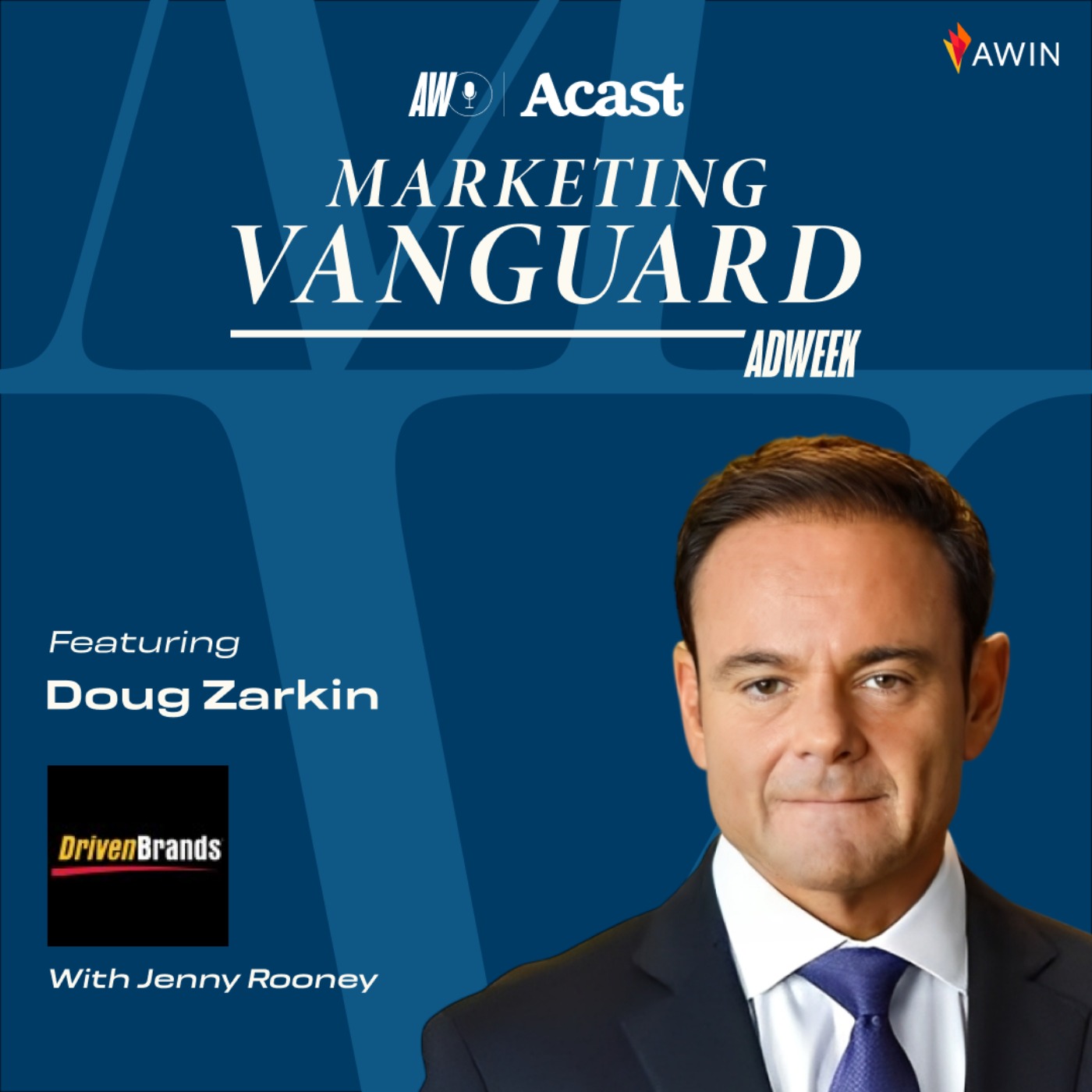
Marketing Vanguard
Rewriting the Rules of Leadership: Doug Zarkin’s ‘Thinking Human’ Approach
00:32:00
Loading summary
Transcript41 lines
- [00:00]
A
Finding the right audience shouldn't feel like doom scrolling with Experian. It doesn't. Experian syndicated audiences help you reach holiday shoppers, car buyers and more across over 200 top platforms. With over 2,400 pre built audiences, there's no more doom scrolling. It's audience targeting you can trust. Made simple. Learn more@experian.com Adweek that's exp er I ian.com Adweek Consumers want brand value.
- [00:32]
B
Whether you're making 50, 500 or $5 million, brand value equals experience as your numerator divided by price as your denominator. As long as you deliver an amazing experience, brands have to be focused first, second and third on consumer sentiment.
- [00:50]
C
Hi everyone and welcome to the Marketing Vanguard Podcast. I'm Jenny Rooney with Adweek and I'm thrilled today to be joined by Doug Zarkin and Doug is the CMO of Take 5 Oil Change. Doug, welcome.
- [01:00]
B
Thanks for having me. Appreciate it.
- [01:02]
C
It's good to see you. It's great to have you on the show. I'm excited to dive into everything that you've been working on. Obviously you are no stranger to CMO roles. You've done some extraordinary things in your career and I would love for you to start there. Let's just kick it off by having you sort of ground everybody in your own personal career journey and bring us up to speed as to the why behind your most recent move.
- [01:23]
B
Yeah, sure. I mean, this is the part of the conversation where I wish my dad was listening and maybe he would finally understand what I do for a living. My career journey really was about moving from the back to the front of the train. Started out in the agency world, spent 10 years at Saatchi, at Gray, eventually led the creation of their youth and entertainment division and then made the bold move to go to the client side and even bolder to go to work for the company for Women, also known as Avon Products, where I was their founding director of marketing for their young women's brand. Mark scaled that business to about 120 million and then made the jump to a little small brand called Victoria's Secret Pink, where I had the privilege of taking that brand from test market to national. After that, spent a few years in fashion and beauty and then the bulk of my CMO career really was at Eslo Exotica as the CMO of Pearl, where I had the privilege of doing something unique, staying in the role for 11 years, really shepherding through a complete brand transformation, two five year plans, which I think is an anomaly in this world and being able to see them through to fruition. It's amazing when you go back and you look at the opportunity to find a brand, redefine an iconic brand and then be able to see all the steps that we took. Some of them were steps forward, some of them were step backwards. But what it resulted was Pearl sitting ATOP entrepreneurs Fortune 500 and then most recently made the move to driven brands where I'm their first ever CMO for Take 5 Oil Change, which is about 1200 locations throughout the US Canada. Amazing brand that takes a commodity category and is looking to flip it on its end.
- [02:59]
C
Okay, so cool. I mean, obviously such extraordinary background experience. Talk a little bit about the 11 years piece because as we all know, the big headline around CMOS is that the job is it's two years and you're out. And that's the typical tenure stat. To what do you attribute the 11 year tenure?
- [03:15]
B
First, I think I built an amazing team. If you think about profitability at the end of the train, it starts with people, then process, then progress, and then profitability. I really focused my early years on building the right cast. And it is a cast because much like when you assemble a football team, not everybody's going to be your star wide receiver or your quarterback. And so it was really about a people assessment at the same time of really focusing on the fundamentals. One of the things I talk about in my book, moving your brand out of the friend zone is the notion that consumers make emotional decisions before they make rational choices. And Pearl was such an iconic brand, but really had lost its emotional dynamism and was trying to be everything to everyone. And as a result, it was really kind of stuck in the friend zone. It was kind of in the mid area of trust and passion. And I had a choice to make in terms of where to take it and fortunately guessed right. But more importantly had an amazing team, not only within the marketing function, but most critically, I think our operations team was able to take strategy and bring it to life. Marketing without OPS is just words. And I think the stickiness of that was slow and steady growth and then some real remarkable growth in my last five years, which is really when we saw the fruits of our hard labor removing Bogo, really doubling down on quality of care. We saw that really take hold and the result was highest ever levels of profitability for franchisees, strong growth in terms of unit and I think really a sense of where our place in the ecosystem lived, not only within the category of eyewear and eye care, but more importantly within the Real market leader of Essel Oil. Zotica.
- [04:52]
C
Yeah. And I love that. And team is something that I think is something you feel personally extremely passionate about. I know we're going to come back to that topic in this conversation, but for those who don't know what Driven brands is, Take five Oil change. I know you mentioned it at the top. Go a little deeper for people who aren't as familiar with it, talk a little bit more about it and what appealed to you in the role in the brand.
- [05:14]
B
So Driven is North America's leader in automotive services. You've probably heard of brands like Mako and Meineke. Those are within the portfolio. Sizable company. Driven is really passionate about growing. Take five. One of the remits for me is how to really add fuel to the fire. No pun intended. And take five from 1200 to. We think there's a very strong Runway for double digit growth year on year. What drove me to this role, first and foremost was culture. When I met the CEO, when I met the coo, when I met members of the board, it was, we know we're good, but we want to be great. And so that humility was super exciting for me. The second thing is they really were committed to thinking differently. Take five. While it is a market leader, isn't the market leader in do it for me Oil change. There are other brands like Jiffy Lube and Valvoline that have a head start on us. And so I love joining a challenger brand. And think about it like a race. If you're in first place, you're always kind of looking behind you thinking, all right, how far is my lead? If you're in second place, you're always looking directly at the person in front of you saying, how am I going to catch up? If you're in third, you're trying to get in the top. You're trying to really be number one. And number two, when you are the fourth largest in the category, you get a chance to think completely differently. How am I going to win this darn thing? And that excites me because one of the things I've really loved doing through the course of my career is writing playbooks, figuring out how to really evolve a business from where it is to where it's going. And the challenge of doing it in what is truly a commoditized category. Very price sensitive, not a lot of emotional dynamism when it comes to the oil light turning on or the sticker on your windshield screaming at you that you got to get your oil changed. And I Love that challenge, because I think if we can get that consumer to make that emotional decision, they will make the rational choice and we deliver in the pit, in the bay, in the shop, like nothing you've ever seen. And as my wife said, just because I had the chance to work in a shop, she is not letting me near the car. And I don't blame her.
- [07:16]
C
I.
- [07:16]
B
But you really get to see the power of your brand when you get out from behind this computer screen and you get into the front line of your business. And we have some amazing techs in our shops.
- [07:27]
C
So I'm going to ask the question, well, how are you going to do that? I mean, how are you going to get it out from fourth place? And obviously that's why they hired you, that's why they're paying you. But can you just sort of let us in on where your mind goes? I mean, for anybody listening who finds themselves in a very similar situation, whatever the category might be, being a challenger brand, being somebody who's got a lot of competitive force ahead of it, it's sort of like, what is square one?
- [07:54]
B
Yeah, square one really starts with people. I'm a little over 60 days into the role, and it's the time where you start assessing your talent, both internal and external. For me, talent is a force multiplier, not only internally, but our agency partners. And so I've been on the road pretty extensively, meeting with all of our agency partners, meeting with our team, both the marketing team, ops and finance as well, really trying to understand what makes us run. And then from the people part and ensuring that we're casted correctly, resourced correctly, is really clarifying who we are and most importantly, who we are built for. It is really hard to win if not everybody understands what are the core KPIs and what success looks like. My job is to put cars in the bay. My job is to take new locations and ramp them up. I did not come with a playbook, I came with a notebook. The plays that I'm running now are really about following my process that I've tried to build over time. Understanding that you got to start with people, then you have to start about what those people do and how they do it. Then you start gauging your progress in those areas, because you got to celebrate progress. You can't let perfection get in the way of progress, and then you can really maximize profitability. So going through my P's will hopefully allow us to ramp up pretty darn quick.
- [09:09]
C
Yeah. And that answers my question. What from those previous jobs are you taking into this role? And it is contrarian take every brand's different. So yes, you can apply the same playbook, yes, you can write into it. But obviously there are going to be things along the way that surprise you. Any surprises so far?
- [09:24]
B
Yeah, some of them I'll keep to myself. I think for me, pleasantly surprised. With the level of talent both internally and externally, I think we've got a pretty strong roster of partners. I think the need for focus, as much as consumers make emotional decisions before rational choices, marketing is really about positioning, which is about the art of sacrifice. And I use the buffet analogy. If you've ever eaten in a buffet, nobody feels good. There's the random 20 year old dude who can go polish off lobster and pizza and steak and pasta and apple pie and feel great. 99.9% of people when they leave a buffet feeling terrible. And I think one of the things that I'm trying to bring here is a little bit more rigor into what we do. How much can we afford to spend to acquire a car doing that work? Because when it comes to evaluating opportunities. So let's say it's. And this isn't the number, but let's say it's $200 we can spend to acquire a new customer. If you have a million dollar idea, you divide that by 200 and that tells you how many cars you would need just to break even. And then ask yourself who really wants to break even. And so it's embodying that mentality to make the money that we spend personal. If you were spending a million dollars, if you were spending a thousand dollars. I think one of the challenges, especially with younger talent, is these numbers are really big, but they're hard to process. And so how do you make it really simple? Take the complexity out of it. What is our cars per day target? How much can we afford to spend if we're winning? How much are we winning by if we're missing? How many cars per shop per day do we need to get? And then all of a sudden, the challenges become somewhat more manageable and I dare I say even more fun.
- [11:04]
C
So we, you know, we're at Adweek here, obviously we're trend tracking all the time. We're talking to brands and agencies and media companies and obviously keeping a finger on the pulse of where this industry is going. Obviously it's going through such transformation. There's no denying it. And by this industry, I mean advertising, marketing, brand. You're newly in seat 60 days in. How are the sort of the macro forces that we talk about in marketing affecting you as you walk into this role. Obviously AI, but it's more than just that. It's technology, it's efficiency, it's growth, all these things that we talk about. There's so many different levers that are available. And especially when you step into a new role, I would imagine it's sort of like there is a moment there of blank slate for any new CMO and for yourself as well. And it's sort of like yes, you can think about the things you've used in the past, but then you also have a chance, I would imagine to regard. Okay, wait, am I taking full advantage of all the new technologies and all the new sort of methods, partners, et cetera that are out there? How do you do that? Really fast vetting and audit of what you need to use and employ.
- [12:11]
B
Great question, lot of layers to that question. So. So I think the first thing is recognizing that we suffer from data overload. Twenty years ago, as I didn't have enough data, now I got too much and I'm a firm believer that just because you can measure something doesn't make sure doesn't mean it's meaningful. So just because you can measure it doesn't mean it's meaningful. And so it's really trying to curate what is meaningful. I think that's first and foremost much like data, you can use technology for good or for evil. And so I'm assessing what is our tech stack look like? Where do we have some gaps? For example, are we able to measure website traffic nationally but then locally at the DMA level? Why is that important? We're a multi unit brand at take five we're about 50% corporate and 50% franchise. And so I want to be able to look at performance indicators not just as a total system but DMA by DMA and then within those DMAs, the DMAs where we're growing rapidly. How are we doing? I'm also trying to assess, going back to the people part, the team's comfortability with data and with tech as an organization driven has some general rules of engagement relative to AI that I think that's evolving. But beyond that, how are we using the tech stack that we have currently? Are we asking the right questions? It's much like research we tend to focus on. Let's do research. We got to spend more time as an industry, as marketers to. Data is only as good as the questions you ask. Research is only as good as the questions that you ask. So 70% of your time should be on getting your questionnaire right. And that makes a lot easier to get insights, not just data on the back end. And then honestly, one of the things that I appreciate, Jenny, about what you're doing with groups like Marketing Vanguard is you're bringing thought leaders together. Because, look, we all have to be humble and recognize what we know, but also what we don't know. We like as marketers to talk about how smart we are. We crave the attention of getting on lists that you put out there about who's the best of the best, myself included. But it does take a really strong, smart leader to admit what they don't know. There's a lot I don't know. And I love that because the minute I stop being curious, I don't want to do what I'm doing anymore. And so getting together with other leaders, hearing people talk about their failures more, I find incredibly valuable. Like I can read about who's doing what, partnership with whom, and great, wonderful. Tell me about the three things that you did wrong. Successful failures are so important to gain insight from, and I'm trying to figure out what those are not only in my career, but also in the current company.
- [14:44]
C
Yeah, it's such a great point that I am obviously in huge agreement with and thank you for mentioning Marketing Vanguard. We're thrilled to have you be a member of it. I mean, I do think that what's unique about that is the ability to be in a closed door, safe space environment where people can be candid because candor is the only thing that's going to get us anywhere.
- [15:02]
B
We want to celebrate our colleagues that do innovative stuff. That's not. And certainly you become envious when you see somebody who had a huge win. You're like, geez, why didn't I think of that? For me, my growth is really learning from people that are doing things differently. Because it's much like it's why I wrote the book. Like, my book is not a playbook. My book is a guide. And a guidebook is just that you can determine the journey. If you can find one or two nuggets from my book that helps you to become better at what you do, more well rounded, then great, then it's more than just a nice thing to put on a lounge chair to hold a towel. I look at organizations like Adweek. I look at conferences that you run as an opportunity to focus not just on the wins, but the insights that went into it. Frankly, I would love a closed door conference where the entire conference was focused on failures Tell me when you really screwed up. Like, let's talk about it. And that's hard for people. That's really hard. I mean, at Pearl, my first venture into stripping out buy one, get one free, which was a drug the brand had been on for 20 years, was a colossal failure. And it was a colossal failure because one of the things that I didn't realize is that, and I've come to kind of articulate this as my brand value equation. Consumers want brand value. Whether you're making 50, 500 or $5 million. Brand value equals experience as your numerator divided by price as your denominator. So as long as the ratio is like 3 or 4 to 1, you can charge whatever the hell you want. So as long as you deliver an amazing experience. When I initially ripped Bogo out of Pearl, it didn't work. And the reason it didn't work was I was not well versed enough in true consumer sentiment over our experience. I was giving more credit to where we were in the mind of consumers for delivering an amazing, patient experience than we actually were. And as a result, the value equation got screwed up. So we put it back in, went back to the drawing board, did a little bit more research and began again, began a three year journey. Because I was looking like most CMOs look, to score a big win, I'm like, I'm going to pull out Bogo. I got it. And what I realized was that that value equation is the guiding point. Brands have to be focused first, second and third on consumer sentiment and we have so many tools available to us to measure it. When you have that strong experience, when your NPS score is strong, when your star score is strong, you can do anything. You can do anything. When you don't, then you start to see changes in your business, your business model. Flip your P and L backwards and that's not what I want to do. This episode is brought to you by Philo Ads. Want to get your brand in front of the right audience? Philo Ads is the way to go. With 98% of viewing on connected TVs and over 900 million monthly ad impressions, Philo gives advertisers unmatched accessibility, flexibility and results. Power your next campaign with Philo Ads. Today, head to ads Philo TV to get started.
- [18:06]
C
Yeah, what's interesting, hindsight's 20 20. And so it's interesting that there is a vulnerability piece to this. Meaning, like the further away you get from something, you can talk about it probably a little more openly and camply. Obviously it's when CMOs are going through hard times in the moment that it's really hard to talk about, especially as they continue to like, literally in real time, figure these things out, navigate them. Plus there's always, you know, you talk about, I'd love to see a whole conference just about failures. Obviously, when you're in the CMO community, all eyes are watching you. CEOs are watching you, boards are watching you, CFOs like, and not just from your company, but other companies. So I get it. But that's where I think that the fact that we need to create environments where people can feel at liberty to speak and share the things in real time that they're going through as much as the things that they can sort of like, look back on, which are phenomenal case studies for learning. I mean, it's sort of just classic psychology. We can't just do things in a silo. We need to sort of be able to pull on our peers. Talk a little bit about your book. More like, what was the impetus for that book? And I think it's been out now for, correct me, a couple of years.
- [19:14]
B
Two years. Yeah. So when I made the decision to leave Pearl Memorial Day weekend, 2023, I spent the next 16 weeks. How did you spend your summer? I spent my summer writing a book. I had the outline and the title moving your brand out of the friend zone in about 15 minutes. And then I wrote every day. It was a full time job. Why did I want to do it? The sarcastic reason was because my team and franchisees were constantly in my ear saying, you use the same analogies, you use the same constructs. You make it so easy for us to understand where we are and where we're going. And they call them Dugg isms, the educated. The more sophisticated point of view was that I have benefited in my career from some amazingly good leaders and some of the world's worst. And you learn as much from somebody who you do test as a leader than you do people that you respect. And I thought if I could pay it forward, I've been blessed to meet people like you and others that have taken the time to help me grow as a leader, that have opened doors. You put me on stage, put me in a room with folks that I probably didn't belong in, and I'm grateful for that. And writing the book was for me an opportunity to do something. My daughter's incubator business class at high school, I went and I presented it to. And that to me was like a cathartic moment. Like when she said to me, and this was from at the time, a 16 year old girl, my friends think you're really cool, dad. And I was like, wow, that's pretty neat. I'm about to torture my 15 year old son who's a sophomore in high school because I'm going to speak to his incubator class in a couple of weeks. I wanted to do it just to make a difference. It wasn't to be the all knowing playbook. Plug this in and do it. I saw a void in the market. I saw an opportunity to take the complexity and make it simple. I saw an opportunity to be vulnerable and allow others to be vulnerable and maybe spur some conversations. As we get into this world of AI and tech. The whole premise of the book is on this notion of thinking human. And to me thinking human is this. And I'll give you the personal analogy and then the professional. We all have friends in our life. Imagine if every friend of yours treated you as if you were their best friend. You picked up the phone, they would do anything, stop anything, cancel anything. Now imagine in business if you treated every customer as if they were your only customer. That's what thinking human is. And that is at the core. When you say to me, hey, it's a green field, but there are things you bring with you. That's one of the things I'm bringing. And fortunately I'm so impressed with the way that we treat every car that pulls into the bay because we really do try to treat them as if they're the only customer that's coming in, the only car that matters. Of course, working with ops, there's always ways to enhance it. And I think one of the things that's impressed me most about Driven is the humility that we operate with. We're a market leader, we do a hell of a job. We have grown record levels, but we still approach this and Ops in particular approaches this with like, what can we do a better job of? It's not the finger pointing of hey, marketing, you need to buy, drive more traffic. It's hey, what can we be doing a better job of once that car pulls in? And that just makes me as a leader want to work even harder for my OPS partners, for my brand president and for the company as a whole. Company space where Charlotte I live in New York. We're remote. I have my team all over the country, which is great because it's about great talent. I've been leading remote since before it became fashionable, since using something called Skype when you Work for a company that has global headquarters in Milan, in Paris, you better get pretty darn good doing remote. Covid just sharpened that muscle. And now I love leading remote. I think people need to have the three A's. They need to have the autonomy to make decisions, the authority to make decisions, but most importantly, the accountability. And you can also really get an understanding of the business maturity and commitment of your team when you're not standing over them in the office. If I'm calling you at 2:30 and you're nowhere to be found, car accident appointment, fine. But like, I'm trusting you and I believe that you extend trust until such time that somebody proves that they're not worthy of it.
- [23:19]
C
Absolutely not. The first CMO for the company. Correct.
- [23:22]
B
First CMO for take five. Yes.
- [23:25]
C
Interesting. Okay, that's exciting. So how did you sort of vet that? You know, we always talk about companies vetting the CMO or hiring the cmo. How did you hire the company? How did it make sense for you in terms of did you have a clear path? Did you align with the CEO? Did you feel like you had full support for marketing and for marketing leadership in a really new and deliberate way? Because obviously you talked to a lot of CMOs who feel like, you know, I thought I had buy in, I thought I had some support. And in the end they get in and things change. So how did you sort of do that? Betting?
- [23:56]
B
Yeah. I mean, without getting into detail, I was in somewhat of an unhealthy situation and was looking to make a move and was actively talking to a couple brands. And what really sold me on the company was the interview process. I had three interviews. I interviewed with my boss, I interviewed with the CEO of the company. I interviewed with a board member, and I was working with a recruiter and they were like, they want to move and they want to move now. I was also interviewing with another company. I was on my 12th interview and that was kind of giving me Ajita. Like, if it takes so many people to make a decision, like, I'm gonna. I'll probably blow up. And so we don't talk a lot about that. Like the interview culture, the way that you interview and get interviewed for a job tells you so much. I love my hiring manager. We sat down at lunch. We're kind of just shooting it. And he said, I want to bring on board. Here's the offer. Going to get something in 24 hours from HR. And I did. And it wasn't the highest salary offer, but this company is somewhere where I see the next 10 years. And that was part of my conversation, which is, is there a Runway for me to grow? And this company, if you listen to any of the earnings calls that our CEO does, he's so bullish on where we're going, it's contagious. It's a culture of performance. It's a culture of doing the right thing when nobody's looking. It's a culture of kind of, in an inarticulate way, I'll just say going out and kicking ass and taking names. And that just speaks to who I am as a person. And one of the things I've learned very quickly, we have a hell of a lot of fun. We take the how pretty seriously, and that allows us to do amazing. What's.
- [25:27]
C
Love that. So where do you go from here? Sort of. Where are you thinking about if we were to meet back again a year from now and do this conversation again? What do you want to have happened for the brand and for the business.
- [25:39]
B
In a very large sense, I hope I have made a difference not just as a leader, but as a person. As Doug. Have I inspired our talent that exists today to learn, to be curious, to grow? And is that curiosity reflecting in an improvement in performance? Have I created a culture within a culture? The chief marketing officer is sort of, in many ways, like the chief brand evangelist. And have I brought the energy to the team and really brought them together? There's something I'm going to show you. So this is something I had produced. It's called the Challenge Coin, and it comes out of anybody who's ever has any relatives in the military. A Challenge Coin is something that is given. It's a shine of respect. It's a sign of gratitude, sign of appreciation. And this is a Challenge Coin I created, and it says, you make a difference. And it has the Take five logo. And I was with my team last two weeks ago, and I gave every one of them this with the following instructions. When you engage with anybody on this brand, in the field, out of the field, your responsibility is to give this away. Your responsibility is to show gratitude, to let somebody know that they are making a difference. I have a hundred of them, so it's not a matter of, like, you don't get more. But for me, it's those small moments like, give somebody $1,000 raise, fine. Okay. Give somebody promotion, fine. But to me, I really want to inspire the two most important words in the English language, which is thank you. And if I have had an impact, great professionally, I'd get in trouble if I tell you what I want, but let's just say I am hoping to inspire the organization with not only what we do, but how we do it and hopefully continue my growth in the company. I love what we're doing, I love where we're going, and I'm excited to help us get there.
- [27:30]
C
You mentioned your son and daughter before and I can't help but ask, as you think about any sort of future CMOs listening to this conversation, what do you want them to know if there's one thing that they need to take? And again, put yourself back in the shoes of the age of being a marketing student, either college level or MBA or otherwise, or somebody not in marketing but actually has designs on getting into it. What would you say?
- [27:54]
B
So you just kicked open the door for me to give a shameless plug. My daughter is an art history and business major at GW and she wants to get into the world of galleries, museums, auctions. So if you are listening and you work for a Sotheby's Christie's and you're looking for an amazing intern, hire her. My son's a sophomore in high school, loves the world of sports. If you're looking for somebody to work for the cheap, and over the summer in marketing and partnerships, Ben Zarkin's available.
- [28:19]
C
And why should people pick marketing as a profession?
- [28:21]
B
I'm going to tell you why. Which it really comes down to this. Nobody told me this when I was in undergrad or grad school and when I started out in the agency world. There is no such thing as a right way or a wrong way. There's just a way. And the reason why there is a way is because marketing today, tomorrow and forever will be a mixture of art and science. We don't run the risk as marketers of being eliminated by AI if you're bad at what you do, sure. But marketing is so much about getting in the mindset of the consumer and to be an active listener. The questions that you ask AI, the prompts that you put in, that's all about your understanding of the business. And so to me, what I would say to any marketing student or any junior level marketer beginning their careers, stop stressing out about the right way to do something. Like just stop. If there is no way. That's a process that your company has, create it. And then you know what, you're going to look at it and you're going to be like, that was really dumb and you're going to refine it. Embrace the ambiguity that marketing brings. Finance is numbers, law, Is law. Okay, you're guilty or you're not guilty. Marketing has a degree of fluffiness in it that is frustrating for a lot of people. But I look at it as a door that you can just kick through and figure out how you're going to take ownership of it. It brings a smile to my face. I'm super passionate about it because I still go back to one of the best thrills ever, which is walking into a store, going onto an e commerce site and seeing something that you did. When I worked on General Mills in my agency days, I used to go to the supermarket and look at the cereal boxes and I was like, oh, yeah, I had a voice in that promotion. And, you know, you turn on a TV and you see a commercial that you shot and you're like, it's really cool. It's a lot of fun.
- [29:58]
C
It is a lot of fun. I think people forget the fun part of it. It really is fun. You know, I always say, I think CMOs and marketers are some of the most dynamic, passionate, driven, innovative, creative, dynamic individuals in business.
- [30:12]
B
We wear a lot of hats. We have to think like a gm, we have to negotiate like finance, we have to deal with legal, and we have to be really side by side with operations. And we have to recognize that everybody in the world thinks they're a marketer because their nephew, cousin, daughter, uncle said you should do something. So your intellectual capacity and patience is something that's gotta be pretty high. It's a muscle that I'm always working on with that level of patience.
- [30:41]
C
Last quick question. Who's next? Who's somebody out there in the world, ideally with a CMO or equivalent title, who's doing some extraordinary things, who you think you admire. Either you know that person personally or you admire them from afar by virtue of who they are and their sort of leadership style, or through the work that they're doing and putting out in the world.
- [30:59]
B
This one's going to come out of complete left field. And I actually have the pleasure of meeting this person on this Sunday. Jerry Jones, Dallas Cowboys. As a Giant fan heading down to Dallas country, we're doing a big program with the Cowboys for Take 5 and was invited to a meet and greet before the game with Jerry and the Jones family. Jerry Jones, as strong a leader as he is in the world of football, is an unbelievable marketer if you really think about everything he did and has done to create arguably the strongest IP in the world. I get five minutes with him, I'm not going to talk football. I'M going to be like, you had these decisions you made in your career. What was the insight like? What was your gut? How did you refine it? I think one of the most innovative marketers on the planet in the history of marketing was Pete Roselle. When he invented the super bowl, he recognized that it wasn't just a game, it was an experience. Jerry Jones is a modern day however old he is, he is still among the best at understanding the power of his IP and bringing it to life. So I get five minutes with him. I told my son who I'm taking to the game. I'm like, ben, your job is to take plenty of pictures with me and Jerry Jones. He's like, I don't want to meet him. I'm like, I'm not telling you. You have to meet him. You have to stand there, smile, shake the man's hand and be quiet because dad needs to learn. So I'm very excited about that.
- [32:13]
C
All right, well, put in a plug. Tell him that I'd love to have him on the show and you never know unless you ask.
- [32:18]
B
You don't ask, you don't get, as they say.
- [32:19]
C
There you go. Doug, thank you so much and enjoy that. That should be phenomenal experience for you and your son. Pleasure to have you on the show. Thank you so much for joining us today. I look forward to seeing you again soon.
- [32:30]
B
Thanks my friend.
- [32:32]
A
Thank you for listening to Marketing Vanguard, part of the Adweek Podcast Network and Acast Creator Network. You can listen and subscribe to all of Adweek's podcast by visiting Adweek.com podcasts. Stay updated on all things Adweek Podcast Network by following us on Twitter at Adweek Podcast. And if you have a question or suggestion for the show, send us an email@podcastdweek.com thanks for listening. Finding the right audience shouldn't feel like doom scrolling with Experian. It doesn't Experian Syndicated audiences help you reach holiday shoppers, car buyers and more across over 200 top platforms with over 2,400 pre built audiences. There's no more doom scrolling. It's audience targeting you can trust. Made simple. Learn more@experian.com Adweek that's exp e R I a N com Adweek.