Loading summary
Transcript59 lines
- [00:01]
Jenny
Partnerize is the only partnership management solution powering profitable growth for marketers through an end to end software platform and comprehensive service practice. The Partnerize platform delivers a fully integrated, comprehensive suite of discovery, recruitment, optimization, payment, brand safety and fraud prevention capabilities supported by unrivaled service expertise. With Partnerize, you're in control of the entire partnership marketing lifecycle, all on a single platform.
- [00:31]
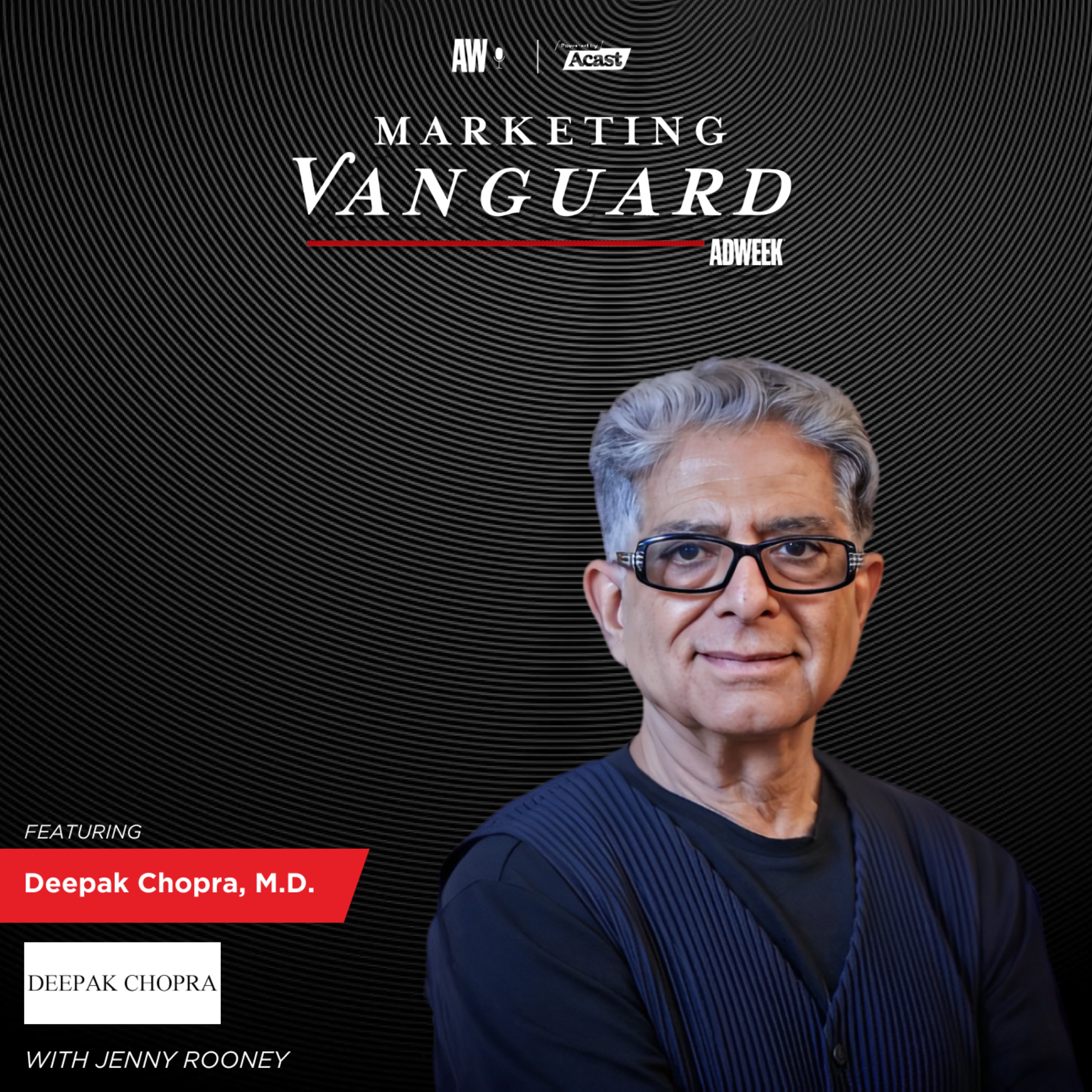
Deepak Chopra
In my mind, a brand is an encapsulated, symbolic representation of a story. So people don't buy products or services, they buy stories. And I think when leaders mistake the outcome for the story, that's when they get stressed and they're worried about the revenue and all of that, which is in any industry, that creates a lot of stress.
- [01:05]
Jenny
Deepak Chopra, thanks so much for joining me. We're thrilled to have you.
- [01:09]
Deepak Chopra
Thank you, Jenny.
- [01:10]
Jenny
It's exciting to have you here at Brand Week. We are here in Brand Week for the week at Phoenix. It's brand week 2024 and we're diving into so many things that matter for people in the brand community, people who are practitioners day in and day out in this incredible craft of marketing. But specifically for CMOs and marketing leaders, there's so much that is riding on their leadership within organizations now to drive their brands and businesses forward. You have been such an incredibly powerful voice in the concept of mindful leadership. Talk a little bit about that. Tell me what you're going to be sharing with the Brand Week audience here today on the main stage.
- [01:47]
Deepak Chopra
Well, your question is about two things. One is brands and the other is leadership. So let's talk about each of them. So in my mind, a brand is an encapsulated, symbolic representation of a story. So people don't buy products or services, they buy stories. And I think when leaders mistake the outcome for the story, that's when they get stressed and they're worried about the revenue. And all of that, which is in any industry that creates a lot of stress, also impedes with the outcome. When you're attached to the outcome, it actually interferes with the outcome. So for brands and in general, icons and society leaders, what's your story? What's your story? If I look at Apple or Starbucks or in the old days, Volkswagen or even Marlboro cigarettes, they all had a story. And the story should have a resonant plot. It should have a shared vision. It should complement everyone's strengths in the team. It should create an ecosystem of bonding, spiritually and emotionally. And it should, as I said, have a resonant plot. Contradictions, heroes, villains, anything that Makes a really good movie and then you have a story that you can buy and then people will buy your product.
- [03:31]
Jenny
Can I ask you on that point about story? Do people buy promises?
- [03:36]
Deepak Chopra
No, they want to be part of the story. Like when I came to this country, the biggest brand in automobiles was a Beetle Volkswagen. And that was the story of the hippies. So the people, the rebellion crowd. When I saw Starbucks emerge, it was a place for people to gather and get together and network and be on their computers, et cetera.
- [04:03]
Jenny
Yep.
- [04:04]
Deepak Chopra
The coffee was, by the way.
- [04:06]
Jenny
Yeah.
- [04:06]
Deepak Chopra
And when FedEx launched, it was about convenience and immediately getting to your destination with a parcel. So this person has to resonate with that story and it has to be part of their story. And that doesn't matter what the product is. It could be absolute vodka or it could be Marlboro cigarettes. Never mind. The Lone Ranger is on a respirator now. But when he was riding his horse and he was the Marlboro man. That in that era was a great story for the macho men who wanted to be seen as that.
- [04:45]
Jenny
I love that. I want to just focus on the brand piece real quick and then we can go to the leadership because I want to dive into this a little bit more. Marketers are frankly, and it's all in best intentions but obsessed with purpose and authenticity. How do you think about those words? Like how do they resonate to you when you're talking about the concept of brand's story?
- [05:05]
Deepak Chopra
Authenticity simply means pretending to be who you're not. If somebody's fake, it comes through. And purpose has to have a these days, has to have a promise. And that promise is well being these days. And that includes not just physical well being, emotional well being, social wellbeing, corporate wellbeing, community wellbeing, financial wellbeing. They're all totally interlinked. So what is your story when it comes to the well being of individuals, of families, of communities, of organizations, even of countries? So you have to pick your demographic and then you have to fulfill the promise for what that demographic is seeking.
- [05:53]
Jenny
Okay, Leaders, marketing leaders, I would argue are probably coming in. Although everybody feel free to disagree, of course. Some of the most passionate, creative, thoughtful, intentional people in the C suite. Okay, that's a gross generalization, I appreciate that. But in the main, people who choose marketing as a profession and then end up elevating to a role where they're leading marketing priority and brand priority, they happen to be. I'm going to say that they're mindful to begin with or they lean that way they're very thoughtful people. At least the people that I've come in contact with. Specific to leading a brand within an organization or leading the practice of marketing, is there anything from your vantage point that's different about being a marketing leader than being any other leader in a given company? Do you think that in the main they are more mindful or should be more mindful? Or is this something where you feel like there should be a level playing field and all leaders need to be thoughtful, intentional, passionate, mindful?
- [06:55]
Deepak Chopra
If by mindful we mean aware of the zeitgeist in society at that point in time, then that applies to leadership across the board. Okay, so right now, if I look at the Zeitgeist, what are the big things that people are talking about? Well, they're talking about war and peace. So if you're making weapons, you have an opportunity right now, but if you're also talking peace, you have an opportunity right now. The contradictions fuel marketing. You have to be aware of the contradictions of the collective conversation. So right now, one is war and peace. The other is climate change and sustainability. The third is social and gender justice, equality, economic justice, gender justice, diversity, inclusion. You have to be aware of that. The other's health right now. And there's another big one, and that's mental well being and stress. So if directly or indirectly you're eavesdropping on the conversation that's happening in this particular moment in history, then your story has to address that zeitgeist. So to me, that right now is peace, social, economic justice, gender justice, diversity, inclusion, sustainability in any form, biological sustainability, environmental sustainability, housing sustainability, business sustainability, health, huge issue. And then the absence of joy.
- [08:41]
Jenny
So let's talk about you bring up the word joy. Can we talk about your collaboration with Ulta Beauty?
- [08:46]
Deepak Chopra
I met the CMO of Ulta Beauty, Michelle, at Cannes Lion Festival, accidentally in Taxi Ride Together. And she told me that she was involved in this campaign that they had to what they call a company that maximizes joy for everyone, particularly their employees and customers, of course, are affected by. In any organization or business, there are many constituencies. There are the employers, there are the employees, there are the customers, and there are the investors. All of that. The customers are not number one. The employees are number one. If your employees are joyful, you're guaranteed that the customers will be happy too. So if you focus on employee wellbeing that there's good research to show that then the customers are happy. And if the customers are happy, the employees are happy. And then the investors are happy if you focus starting with customer employees. That's the best strategy. And Ulta was already on that road. So they invited me to create content for them for, as we collectively agreed, creating a pandemic of joy. So I just finished a whole day of recording content for them.
- [10:13]
Jenny
Okay, so that is what the project is that you're working on with them.
- [10:16]
Deepak Chopra
And it's called the Joy project.
- [10:17]
Jenny
Right, Joy project. Okay. And then so to your point, this is something that reflects internally, first within the organization.
- [10:24]
Deepak Chopra
Well, both, I think they're doing it internally and externally, social media, looking at all demographics, including TikTok, et cetera. Some of it very light, some of it very light hearted as it should be. Some of it on the surface very trivial, but some of it very deep at the same time. Addresses where people are.
- [10:48]
Jenny
Yeah. I also want to ask you about AI. I know this is an area of focus for you and a lot of what you're doing right now. So obviously that is you really can't go to any brand or marketing conference anymore without having that topic come up.
- [11:01]
Deepak Chopra
So I've been interested in AI for at least 10, 15 years. And we've had AI for a long time. Not what we are talking about AI now with the what you call large language models. But everything today is AI. Whether you use a barcode on a piece of soap or you book your flight, it's all AI. But what's happened in the last maybe 10 years and accelerated in the last two, three years is large language models which give you access to the entire database of human knowledge, literally depending on what you want. So I've just come out with a book, it's called Digital Dharma and it's how AI can elevate your personal well being and your spiritual intelligence. Because that's what I'm interested in. So that's my book. But then along with the book, even if you don't have the book or whatever, you can engage in conversation with my digital twin and it's called Digital Deepak AI and you don't need an app. You go on your browser, on your phone or whatever and you say, hey Deepak, whatever. I can't sleep at night. I have a lot of stress. I'm 35 years old, I'm single, whatever. Can you give me a meditation or some techniques or tips and it'll instantly pull out material from one of my 95 books and give you the answer with me speaking in English, Hindi, Arabic and Spanish and soon in Portuguese and Chinese or whatever language you want. So we just Launched that product about six weeks ago and we've over 100,000 conversations going on right now. And since my interest is in four areas. Number one, reflection and meditation. Number two, research on anything medical, number three, health and mental well being. And number four, spiritual intelligence. My AI deals with all those areas. The book also, and my AI deals with how to use AI as a personal confidant and somebody to reflect with. Number two, how to use it as a health coach, mental and physical. Number three, as a research assistant for anything medical or to do with spirituality and well being. And finally, how to use it as a spiritual guide. Because now you have access to all the spiritual guides of the ages, from Plato to Socrates to Parmenides to Pythagoras to the great mystics of the east, the sages of the Upanishads. And I've been doing that work for 40 years. And also my AI uses something called rag model. I don't know if you know that rag means retrieval, augmentation, generation. So if something I've said is now obsolete or disproven, it'll be taken out automatically. And if something new is on the horizon which is not on my algorithms, it'll go access that and give you the latest information.
- [14:18]
Jenny
Wow, it's just so fascinating because everything you're passionate about is very human.
- [14:22]
Deepak Chopra
Yes. And yet I met Sam Altman a while back before I wrote the book and I said, everybody's talking about AI and its problems. Can we use AI to create a more peaceful, just sustainable, healthier and joyful world? He said, yes, of course. So he's helped me a little bit with this book as well when it comes to the marketing aspect.
- [14:44]
Jenny
Yeah, for sure. What are you excited about in the horizon vis a vis that?
- [14:48]
Deepak Chopra
Now I'm getting so interested in the AI field.
- [14:52]
Jenny
Partnerise is the only global partnership management solution powering profitable growth for marketers through an end to end software platform and comprehensive service practice. The Partnerise platform delivers a fully integrated, comprehensive suite of discovery, recruitment, optimization, payment, brand safety and fraud prevention capabilities supported by unrivaled service, including the category's only in house support program. With Partnerise, you're in control of the entire partnership marketing lifecycle, all on a single platform. Partnerise gives marketers a better way to.
- [15:31]
Conveen
Partner for all your meeting, event and workplace needs. Conveen is a partner, not just the place. A preeminent global hospitality company within the meeting, event and shared workplace industries. The company and its portfolio of brands provide clients with concierge style service in house, food and Beverage in house, event production resources, and dedicated service staff, all to ensure a seamless and memorable experience.
- [16:00]
Deepak Chopra
That I have a company called Cyber Human. And we offer anyone who wants to create their story an AI twin, either if they're marketing or a company or what is your story? Let's get you an AI twin to market your story.
- [16:19]
Jenny
Amazing.
- [16:20]
Deepak Chopra
And then I'm also interested in all these wearables. So when it comes to wearables, we can integrate the variables with AI advice on sleep, on stress, on exercise, on breathing, on yoga, on emotional intelligence, all of that. And then a few months from now, we want to integrate AI with VR and XR and ambient computing and blockchain and what we call autonomous agents. Autonomous agents means let's say you have an autonomous agent, a twin of Jennifer. Then based on everything Jennifer wants or does or has desires for or stories, the autonomous agent can take over without your participation. And you can of course, monitor it and see it's obeying your vision. But this is the future. And then with autonomous agents and VR and xr, we can also use these for therapeutics. So right now, pharmaceuticals is where people go. But already some drug companies are exploring what are called electroceuticals, some are exploring digiceuticals. I'm saying let's go the next step and curate metaceuticals, which is a VR immersive experience for anxiety, for autism, for eating disorders, you name it, for inflammation, for disease. That's the next frontier.
- [17:54]
Jenny
So these autonomous agents, do marketers now need to be marketing to people's autonomous agents?
- [18:00]
Deepak Chopra
The marketers will have their own autonomous agents that will survey the landscape and give you the best advice. And even without your actually participating, if you agree, do the work for you.
- [18:14]
Jenny
Fascinating. Any examples of great mindful leaders that we have right now?
- [18:19]
Deepak Chopra
Well, one that I worked with for over a year was Al Kerry, who was the CEO of Frito Lay. And in one year we created a new story. And it was so impressive that the entire Pepsi organization wanted to have that story. We trained, I trained him and his team, and then we went down the chain and we had Frito Lay at that time had 52,000 employees. This is a while back. And every one of them was trained to be a leader. So it was what we call distributed leadership instead of centralized, which is now again something distributed. Autonomous agents. So when you drop a pebble in a still pond, it ripples to the edge and then it ripples back. So centralized, decentralized, and back and forth. For a company marketing company, I think the key is what's the vision and what's the story and what's the collective story? We all have to agree on Ultra Beauty. This is the story now, the Joy project. Okay, so what is your story? Does everybody on the team agree with that story? And there are a few other things these days that come into the strategy of the story. Maximum diversity. Maximum diversity. Not only gender, but race, but maximum diversity of storytellers. Like when you're making a good movie, you have a whole storyboard. So that has to be part of the story. And then there's deep listening to what is the collective conversation right now? What are people actually longing for? And then you have to go a little deeper than that. So first you have the vision based on deep listening. Then you have to create an emotionally intelligent ecosystem within the marketing team itself. Because people don't listen to rationality. That's totally something that we are creatures that are moved by emotions and feelings. We pretend to be rational. So you have to see who resonates at the level of feeling with that story emotionally. Then you have go a little deeper into awareness. You have to use intuition and creativity to create a story that's unique. Otherwise, I mean, the first story always wins, whether it's Apple Computer or it's Mercedes Benz or att. Then there are many copycats after that. If your story is original and you are leading with that story, you're the pioneer. Then let the others come. They'll come anyway. But most of people in the marketing business are copying somebody else's story. It has to be unique. Then it has to have an action plan. What's the action plan? Smart goals, stretching more than you can reach. Measuring everything. Making sure that everybody agrees on the story. Keeping a record of your progress. Setting time limits. And then after that, you have to also be alert to meaningful opportunities like coincidences. Like, I met the chief marketing officer in a taxi ride. So I used to teach a course called Cause Driven Marketing at Columbia University for 14 years. And it was very popular because unless you have some cause that you're directly or indirectly inspiring people by then, it's not an inspiring story. Number one, look and listen. Number two, be emotionally intelligent, which means self aware about your emotions. Empathy, compassion, even. I would go further. Love. Because the best stories are love stories anyway. Okay, so I would say number two, emotional intelligence. Number three, awareness of what society is wanting at the moment. Today, if you wanted to market, say Marlboro cigarettes, you wouldn't be able to do it. It was in the 60s, even as doctors we used to advertise in medical journals that Lucky Strike is better than Camel or something. It gives you more energy. But, you know, now that's a false story. So you have to be very aware of the collective conversation and then you have to have action plans. You have to take responsibility for your authenticity, integrity. Authenticity said, don't pretend who you're not because you'll be seen as a fake. Integrity means living up to your promise. You have to be responsible as a leader for things go wrong. You take the responsibility. If things go right, you give credit to your team because you wouldn't be able to do that. And finally, in my experience, the most successful leaders always use the word good luck or coincidences or synchronicity. If they're religious, they say grace of God. But there's this unpredictable factor which is opportunity and preparedness coming together.
- [23:49]
Jenny
Well, we're going to hear from you more on stage with our CEO Will Lee in just a bit. So, Deepak, thank you so much for joining us. Really appreciate it.
- [23:57]
Deepak Chopra
Thank you.
- [23:58]
Conveen
The most innovative marketers are the ones who dare to ask the questions that matter and encourage a culture of curiosity in their organization. That's the essence that distinguishes the 10 marketers who are being honored as winners of the inaugural Survey Monkey Curiosity Awards. The premise of the award is simple, celebrate extraordinary marketing professionals working at Survey Monkey customer companies who are driving innovation and shaping what's next for their businesses, industries and communities. And today we sit down with one of the award winners, Irina Ephraimova. Irina, how are you?
- [24:34]
Irina Ephraimova
I'm good. Thank you so much for having me.
- [24:36]
Conveen
Yes, thank you for joining us and congrats again on your win. I will say I've had the pleasure of talking to other award winners on this list and it's just been really incredible and interesting to hear how you all are kind of driven by the spirit of curiosity that the awards is based on. But before we go into the work part, tell us a little bit about your backstory. Specifically, maybe some of the parts that kind of led you to this moment.
- [25:03]
Irina Ephraimova
Oh yeah, of course. I'm very humbled and honored to get this award recognizing our work at Roblox researching consumer trends and digital expression. And I must say that a lot of my work has been connected to data and finding great stories. That's just the daily part of communications for me. I've spent 20 years plus in communications and marketing, a lot of it with big companies like Apple and hp, but also high growth startups and companies that are going public. SurveyMonkey was part of my journey as well, which is a lot about data. But my last five and a half years have been with Roblox, which is just a fascinating place to be. It's sort of shaping the future of communication and connection, People coming together in immersive 3D spaces. And when I got here, it just was like a wealth of data and stories to research for me. And intel as a communicator, I love that.
- [25:58]
Conveen
So it sounds like you've been in the tech space for quite a bit. You just mentioned a few of the big tech players in this space. Can you tell us a little bit about the work that got you nominated for this award? Specifically, what's going on at Roblox? I can't even imagine how you guys try to keep up with the changing landscape.
- [26:15]
Irina Ephraimova
Yeah, you know, when I joined five years ago, I saw a lot of these things happening on the platform that were just fascinating for me. People were dressing up, showing off their outfits to each other, posting them on social media, saying, look what my avatar is wearing to this event or concert on Roblox. And I just thought, we have to look into this and try and understand this behavior a little bit better. Because roblox now has 80 million people coming together daily for a few hours on the platform every day. And half of them, or over half, are Gen Z. So it's a really digitally savvy generation that's growing up in spaces like that. And we just wanted to understand what's driving them, what is driving the trends on the platform, why are they dressing up and what does it do for them? So we embarked on this research journey and created a digital expression trends report. And we've done it for a few years now, combining behavioral data and what we see from sales of digital items on the platform, or growing areas of items that people are creating, like hairstyles for avatars. And we combine that with survey data asking Gen Z users, why are you dressing up? Why are you buying so many hairstyles for avatars? So the results have been really fascinating and got a lot of media interest as well, just because they're so fresh and insightful. We learned, for example, that for a lot of people, dressing up as their avatars is even more important now than dressing up in the physical world. And it is really serving people's wellbeing. It's helping them more comfortably express themselves in the physical world. So just a lot of learnings from this for the industry and also for brands. For example, we learned then when people try on a branded avatar item, they're a lot more likely to buy it in the physical world later on. So all of these findings, we packaged them up in some of these reports and shared them with the broader industry and brands and consumers.
- [28:10]
Conveen
That's so fascinating. And I get that about wanting to dress up online first in person, because I feel like that takes less effort and I would want to do that as well.
- [28:22]
Irina Ephraimova
Absolutely. Such a fun area.
- [28:24]
Conveen
It is. So you kind of like inadvertently answered this next question, but in the spirit of staying on, theme of curiosity, which is what this award was based on, what role does curiosity play in your job? I mean, you kind of discussed it, you see a thread and you kind of pull on it when it comes to user behavior. But tell me a little bit more about specifically about curiosity. Yeah.
- [28:47]
Irina Ephraimova
For someone like me in communications, it's just really a very essential skill to be curious and interested in what's happening around and watch the trends, talk to people, understand their stories, and then figure out best ways to share those stories. So I love that, both digging into data and what we're seeing on the platform, but also even speaking to our creator, community and brands and finding out what they're up to and helping them figure out what their story is and sharing. So asking questions, interviewing people, sharing stories, that's just part of my daily job. And I love that.
- [29:22]
Conveen
Oh, I love that. That's a great way to stay curious and kind of every day must be different.
- [29:28]
Irina Ephraimova
Oh, absolutely. Never a dull moment with what I do.
- [29:34]
Conveen
Never a dull moment.
- [29:35]
Deepak Chopra
Yeah.
- [29:36]
Conveen
So thank you so much for sharing. For our listeners, where can we find your latest work or anything like that? Is LinkedIn or do you have an Instagram handle that you want to share with our listeners?
- [29:47]
Irina Ephraimova
Yeah, I'm on LinkedIn and I regularly share things that I find curious and interesting and some stories we're able to tell. But also we have our newsroom, corp.roblox.com news and that's where we typically share our blogs and our research and other interesting things about trends we see on the platform.
- [30:06]
Conveen
Love that. Okay, I will definitely give you a follow. And thank you so much for joining us. Irina, stay curious. Stay doing what you do. And thank you so much for joining.
- [30:16]
Irina Ephraimova
Thank you so much.
- [30:17]
Conveen
And listeners, be sure to tune in next week when we sit down with another winner of the inaugural Survey Monkey Curiosity Awards, celebrating extraordinary marketing professionals like Irina working at Survey Monkey customer companies who are driving innovation and shaping what's next for their businesses. Thank you, listeners, and we'll see you next week.
- [30:36]
Jenny
Thank you for listening to Marketing Vanguard, part of the Adweek Podcast Network and Acast Creator Network. This podcast was produced by Jordan Praetano, executive produced by Al Manarino and John Heil, and edited by Lane McGivney at Boutwell Studios. You can listen and subscribe to all of Adweek's podcasts by visiting Adweek.com podcasts stay updated on all things Adweek Podcast Network by following us on Twitter @AdWeekPodcasts, and if you have a question or suggestion for the show, send us an email@podcastdweek.com thanks for listening.