← Marketing Vanguard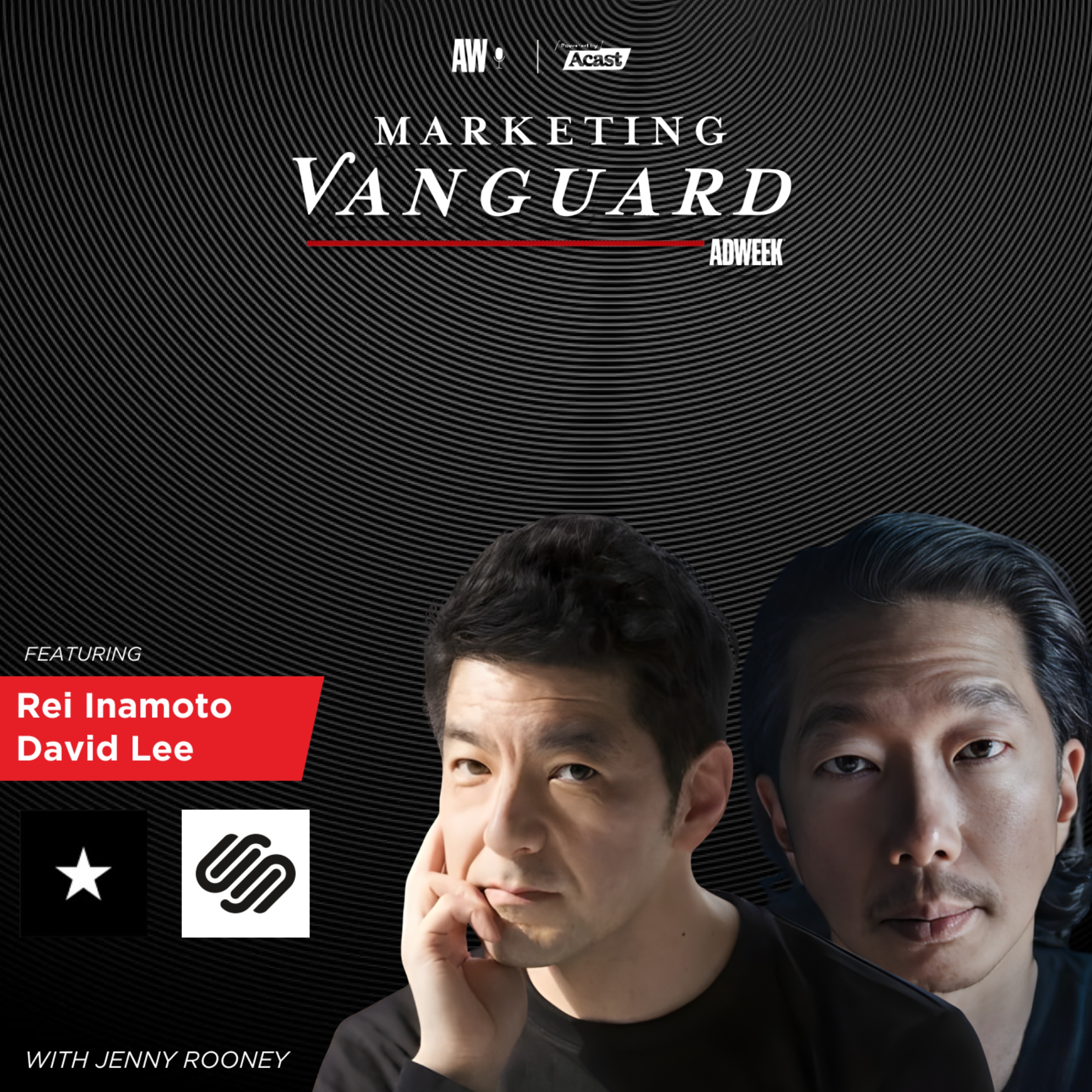
Marketing Vanguard
The Future of AI in Marketing: A Debate Between Creative Leaders at Brandweek 2024
00:30:58
Loading summary
Transcript58 lines
- [00:01]
Partnerize Representative
Partnerize is the only partnership management solution powering profitable growth for marketers through an end to end software platform and comprehensive service practice. The Partnerize platform delivers a fully integrated, comprehensive suite of discovery, recruitment, optimization, payment, brand safety and fraud prevention capabilities supported by unrivaled service expertise. With Partnerize, you're in control of the entire partnership marketing lifecycle, all on a single platform.
- [00:31]
David Lee
We do use AI in a lot of aspects of what we do at Squarespace, but here's what we don't do with AI. We never use it in any final output or work at all. And that's partly to do with the fact that we don't know where these large language models are getting their data. We don't know like legalities, it's a little bit like the Wild west right now. So we use it purely just for validating creative ideas very quickly. And that's been a very amazing part of using all these myriad of tools, is that you can go from an idea and actually validate it very quickly, whereas in the past it would take a long time.
- [01:09]
Jenny Rooney
All right. Hi everyone. Welcome to the Marketing Vanguard special edition of the Marketing Vanguard Podcast. I'm Jenny Rooney here live at Brand Week 2024 in Phoenix, Arizona. So excited to be here. This week is just so filled with insights and thought provoking concepts that we're all diving into. And we're going to do that here as well with Ray Inamoto and David Lee, two legendary creatives in this industry who have just incredible resumes in the space. And what we're going to do here is neat. We're going to create a debate here. The concept is to AI or not to AI, and they don't know. They're going to embody the different perspectives and they don't know. They're going to find out right now. I'm going to tell them who they need to represent or what side they need to represent in real time. So, David, you're going to be the no AI, and Ray, you're going to be the AI. So take a minute to digest that because that's the mantle that you're going to need to take on.
- [02:03]
David Lee
Can we switch midway?
- [02:04]
Ray Inamoto
By the way, I suggested this format and I may be regretting it, but.
- [02:09]
Jenny Rooney
This will be fun. Okay, so before we get started, could you just both explain a little bit about. For those who don't know you, which I would find hard to believe, tell us a little bit about you and your backgrounds.
- [02:18]
David Lee
I'll go first. So I'm David Lee. I'm the chief Creative officer at squarespace for almost 12 years now. I've been trying to build a brand every single day over the past decade. Plus before that, I spent many years in big agencies, small agencies, some design studios. And one of those agencies was actually where I met this gentleman sitting right next to me.
- [02:41]
Ray Inamoto
So, hi, I'm Reina Moto. I'm the founding partner of iamco. We are a global innovation firm based in New Tokyo and now Singapore. So the story between me and David, and we were dating ourselves very quickly, but it was 2004, I think I was still at that agency called RGA, and I think I was. I may have been my 20s. You were like 25, maybe. And I had a speech in Montreal, and then David and his boss Philippe came up to me. And then a long story short from that, I end up recruiting David to AKQA in San Francisco in 2005, and he's become more famous, more handsome and richer than me.
- [03:22]
Jenny Rooney
We can debate that later, but no.
- [03:24]
Ray Inamoto
I don't think so.
- [03:26]
David Lee
That's a whole different podcast.
- [03:29]
Jenny Rooney
But what's interesting too is both of them have been on the Marketing Vanguard podcast previously. And at the end of each, I asked the question, who's next? Who should I have on? And David, I interviewed you first and you said ray, and then, lo and behold, interviewed Ray, and now they're both here together. So it was a really cool dynamic here. So let's get into it. Obviously, two years after launch of ChatGPT, investors are pouring billions into this technology. By the way, as we all know, AI has been around for a long time. So I think there's just this rise in obsession, if you will, with AI and using that catchphrase based on the rise of conversational and chatgpt. But we're at a place where I think all marketers are trying to figure out, how do we meld human creativity with this technology that can be so transformative? Is it a good thing for the future of marketing or a bad thing? David, you're the no AI perspective on this. So go.
- [04:22]
David Lee
I guess I'll take this side of the coin just to set the record straight. We do use AI in a lot of aspects of what we do at Squarespace. But here's what we don't do with AI. We never use it in any final output or work at all. And that's partly to do with the fact that we don't know where these large language models are getting their data. We don't know, like legalities. It's a little bit like The Wild west right now. So we use it purely just for validating creative ideas very quickly. And that's been a very amazing part of using all these myriad of tools, is that you can go from an idea and actually validate it very quickly, whereas in the past it would take a long time. However, I do think eventually there are going to be some regulations put into place. Right now every LLM is scraping everything from the Internet without any kind of regard. And I'm going to put my artist hat on for a second because I didn't get into this business to be a marketer or even a creative director. I actually did want to be an artist and that's why I went to an art and design school. So I do have empathy for a lot of the talented creatives and artists from the past whose work is actually just being scraped from their websites, from YouTube, from Vimeo, from pretty much everywhere. And I do think in the future there's going to be a higher demand for human creativity. Right. I actually think in a strange kind of way, a lot of the AI is actually going to be for the masses. It's just like collecting art. You collect art because there's a story, there's a human story attached to it. Right. You're not. I mean, maybe the NFTs were a thing where people were at one point purchasing digital art and what have you. But I think the reason why I have art on the walls is that there's an emotional attachment to an artist and the story that's attached to that human who actually made that. And I think that's ultimately what is very priceless, like in the world. And the more and more LLMs kind of come, the more it becomes ubiquitous. I think there's going to be a massive push for human creativity. And that'll be, unfortunately, probably just for the privileged people in the world. And the AI kind of tools out there will be for the masses.
- [06:30]
Jenny Rooney
It's actually great timing. Last night we were at Taliesin West, Frank Lloyd Wright's architectural lab here in Arizona. You were there last night against the backdrop of that, because that's an environment of human creativity, ingenuity, and also leaning into the organic environment, and the nature, frankly, that exists in that desert area. And yet you are going to advocate for AI in this roleplay in this debate.
- [06:57]
Ray Inamoto
Sure.
- [06:58]
Jenny Rooney
So share your perspective against the backdrop of that and obviously against the backdrop of all of your work.
- [07:03]
Ray Inamoto
So to prepare for this debate, I had a mock debate with AI and I got 23 pages of script to humiliate David, because I was his boss and I need to make sure who is the boss. I can give you this script, by the way.
- [07:20]
Jenny Rooney
That's awesome.
- [07:20]
Ray Inamoto
Yeah. So what I did was just to, for the context, a couple weeks ago we had this conversation and instead of having the two of us sit in front of you and agree with each other, let's have a provocative conversation and to simulate. And I didn't know which side we were going to be on. So what I did was I had chatgpt on one side and I had Claude on the other side and I asked ChatGPT. So argue against me. I'm going to argue for AI and ChatGPT argue against me against AI. And then I had Claude on the left side to get ideas from it. I can tell you that the Claude is a lot more honest than ChatGPT in that Claude tells you, well, as an AI assistant, I don't have an opinion and I cannot give you a subjective perspective. So then I changed my tactic and said, oh, give me data to support this point of view and then was using that data to argue against ChatGPT, me taking the side of for AI and ChatGPT taking the side of being against AI.
- [08:25]
Jenny Rooney
So you cheated.
- [08:26]
David Lee
You basically cheated.
- [08:28]
Ray Inamoto
What green influenced? I mean, come on, this is a panel of AI, right? You said that we couldn't use AI. Did we, did we reach and prepare? Right.
- [08:36]
David Lee
Okay, Ray, come on, let's go.
- [08:40]
Ray Inamoto
Yeah, so it was interesting because we're talking about a pretty broad topic of AI or not AI. And then I think what we are talking about, there's the question of human creativity. But I think the bigger implication for the masses, like you said, for the masses, is the impact of AI. Not necessarily for the audience, at least for the time being, but it's for the creative professionals. And then within that stratosphere of creative professionals there is the top 5%, even top 1%. I would put you, David, in the top 5 to 1%. And then maybe at the very top there are people like Taylor Swift for instance, or Frank Lloyd Wright. Right. But the biggest implication that I think we have to think about is what's going to happen to the majority of creative professionals and the impact that AI will have against the majority of creative professionals. And the biggest impact in the next five years, if not sooner, is unless you're buying an Rho painting or going to a thousand dollar, $5,000 Taylor Swift concert, which by the way, they do generate a lot of money, but day to day I'm not paying $1,000 for a concert every day. I'm not buying a hundred thousand dollars painting every week, right? Not even my lifetime, perhaps. But I'm using, say, photographs from Getty or Unsplash or what have you. I'm using illustration from illustrators and whatnot. And that's the biggest impact, negative impact and a positive impact, depending on how you look at it. Negative from your perspective and positive from my perspective for AI, because it will drastically reduce the amount of time, and amount of time is money. So money and so that's one aspect of it. The second aspect of it is how audience will be comfortable with AI generated or AI produced art content. Right? So yes, there will be, I would say, far smaller minority of the audience who will want to get, quote, unquote, authentic creative output from an individual, from a company, from an entity. The majority of the audience will be perfectly comfortable as long as they are paying less money, if not no money to receive that content. So that's number one. Number two, the quality of the work, quote, unquote, the work will be good enough, say 80% of the quality of, say, human generated art, but it will be 20% or even less, 10%, let's say 90% of quality, but for 10% of the cost. And nine out of 10 times people choose less, slightly less quality for drastically less cost. And that's what AI is going to enable for the world and particularly for our industry. That will have a significant, again, from a technology perspective, positive impact.
- [11:55]
Jenny Rooney
Okay, so David, you were shaking your head in agreement, but you're supposed to be disagreeing, so counter what he just said.
- [12:01]
David Lee
This is just a strategy I use when I speak with Ray. He tends to think I'm agreeing with him when I completely disagree. No, I do think there's valid points there. I think creativity is a very loaded word. I don't think people really understand. I think our industry grabbed that word and turned it into a job, a profession, when in reality we talked about this in our last podcast. Humans are creative in nature. I hand on hard believe this is going to be our only value. Add back into the world our creativity, how to critically think about something, how to debate and critique work. And our taste is fundamentally a birthright of humans. Now, again, if AI can replicate some of that in the future, well, then we should be figuring out which bunker we're going to build in the ditch over there and prepare for what the future is going to look like. But, but I am not painting a dystopian sci fi movie feature in this because everything that you said While valid, whether that was you or code or chatgpt, I have no idea. But I think humans will always be a purveyor of the next trends and taste, right? And if you look at things like Gen Z, they're going very analog. They're bringing the fashion Trends from the 90s, right? They want wired headphones, they don't want AirPods, like everyone wants vintage cars. Now people are shooting analog photos.
- [13:22]
Jenny Rooney
Vinyl's coming back.
- [13:23]
David Lee
Vinyl has been back for a while, right? So it's just like a cyclical change where humans, when all of this is going to get so adopted, everyone's going to figure out that everything's going to look the same, the ideas are going to be the same ideas and you're going to be stuck in a sea of sameness. And everyone's going to try and find a way to find that zag moment, to break away from this. And the only way to do that is to come up with something that's fundamentally different than what these large language models are actually producing in there. I would say the second point, and I've said this before, just because you have access to the world's knowledge base and everyone has it now, which is actually an amazing thing, think of what this will actually do for developing countries and what have you, that everyone has access now to the world's knowledge base. I actually think this is a great thing and I'm all for it, but just because you have a blank text field doesn't mean you're going to make anything great from there. Because creativity, you need to have more inputs in your life to have a better output. You need to be able to reference that photographer from the past and like, why shooting it, like with a fast aperture gives it that certain look. You have to be able to reference your musical tastes. You have to be referenced that gallery that you saw in Chelsea and what have you, or in your travels in your world. And all of a sudden it's almost like we all have our own proprietary large language model in our head, right? This is what I tell people. The more you put yourself out there into the world, the more inputs you'll have, the better output you'll have and the more unique it will actually be. And I've actually tested this. I've actually asked people, it's like, hey, you can make anything now, whether it's ChatGPT Midjourney or what have you go for it. What ends up happening is a dog wearing like a party hat or something like that. People don't even know what to make. It's not a replacement for creative ideas. You still need to have a creative idea. Once you have that, yes, these tools can actually validate that. Right. And you can see if it's working or not. But it's the blank page syndrome that most people have. Give them a blank page. Good luck. If you don't actually have a creative idea in the first place and then going back to the craft aspect of it. Right. Things are going to start looking very glossy and very similar. If you use these tools, you'll realize it's like what art directors always used to do. You have to find references and you mix those references to create something kind of new. If you don't have those references, there's nothing you can put into the systems right now that looks anything remotely interesting in my eyes.
- [15:45]
Jenny Rooney
Well, that's interesting. You bring up a concept of. And the word I go to is anticipation. Like humans have the ability to anticipate or see what's coming. I asked cmos the question, what are you doing as far as within your organizations? You're the ones who should be reading the tea leaves, like looking and seeing what's coming. Not so much what's here, but you know. Yes, looking at what's here, but also anticipating what's coming next. AI can't see.
- [16:06]
Partnerize Representative
The Partnerize is the only global partnership management solution powering profitable growth for marketers through an end to end software platform and comprehensive service practice. The Partnerize platform delivers a fully integrated, comprehensive suite of discovery, recruitment, optimization, payment, brand safety and fraud prevention capabilities supported by unrivaled service, including the categories Only in house support program. With Partnerise, you're in control of the entire partnership marketing lifecycle, all on a single platform.
- [16:43]
Jenny Rooney
Partnerise gives marketers a better way to.
- [16:46]
Partnerize Representative
Partner for all your meeting, event and workplace needs. Convene is a partner, not just the place. A preeminent global hospitality company within the meeting, event and shared workplace industries. The company and its portfolio of brands provide clients with concierge style service in house, food and beverage in house, event production resources and dedicated service staff, all to ensure a seamless and memorable experience.
- [17:15]
Jenny Rooney
You can't divine the future. Can't see, correct me if I'm wrong, but see those patterns. I think humans can see the patterns that are happening and then take those inputs and then put something back out in the world that is acknowledging not literally what's here on the table, but what they see down the road too directionally. So talk a little bit more about that. I mean, is that a gap that AI doesn't currently fill, or are we getting to a place where AI also is able to anticipate. I come back to that word and have that informed creativity.
- [17:46]
Ray Inamoto
I actually have a question. When you say anticipation, do you mean anticipation in terms of how the audience will react to something that we create or.
- [17:54]
Jenny Rooney
I mean things that are happening in the world, like trends, trend tracking, trends.
- [17:57]
Ray Inamoto
Okay.
- [17:57]
Jenny Rooney
You know, yeah, yeah, like you referenced the 90s. Like, you start to see things start to bubble up and you're like, oh, gosh, that's a thing that as marketers, we need to be cognizant of or respond to or think about how we're going to need to respond to that through our creative campaigns or how we engage with our consumers, et cetera. I don't know. Is it possible for AI to be at that level of anticipation and look at all the data that's in front of it in the moment and say, this is where you need to create a campaign because that's where the puck is going? Yeah. Does that make sense?
- [18:25]
Ray Inamoto
I think so. So I think we need to. Because the word AI is such a generic term, right. And what we are talking about can quickly expand into so many different territories, like trend forecasting, for instance, or Insights. But just to bring back this conversation to the core of this debate, which is, can AI replace human creativity? And I'm even knowing that topic to will AI replace or dominate creative industries? Because that's the implication that we should all be thinking about either positive or negative. So from the perspective of, let's say, freelance creative that, you know, both you and I, David and I would hire for a project and depending on how you look at it, because it can be seen as a negative thing, and it can be seen as a positive thing. But whether we like it or not, we do live in a democratic, capitalistic society where money does dictate or at least heavily influence the direction we go. And then that influence is based on what can be done almost as good as something that human created at less cost. That's always the question. It's always a question whether we are asking that question explicitly or implicitly. That influence you, Jenny, as a brand person, marketing person, looking at the numbers one way or another, and people who might be listening to this conversation, we cannot escape from money, unfortunately, when it comes down to business. And unless you are making a personal decision or you're making a decision that more money makes sense because of quality, because of the name, because of the brand, because of certain aspects of what you are trying to get more money validates. Again, like I said earlier, nine out of 10 times the audience as well as decision makers will choose a cheaper path with good enough quality. And that's what AI enables us to achieve.
- [20:42]
Jenny Rooney
David, your counter, your reaction. Ray's made it very clear like that's a very valid position. The cost efficiencies that are so inherent.
- [20:50]
David Lee
There's always a tension between creativity and commerce, right. And there's that middle of that Venn diagram and certain people value one side or the other kind of more appropriately. And I think honestly like having the ability to create content or even ideas that are at 80%, I don't think there's anything wrong with that. Right. I've never been someone who's looked in the rear view mirror and was nostalgic for how the world used to be. I think that's wasted time. So I'm very much looking forward facing. I do, however, to counter what Ray is saying is that we are just at the beginning of this AI revolution that's actually happening and it's exponentially going quicker and quicker. So we don't know where this is going. But once everyone has access to these tools, once a lot of people are going to opt out of having their content scraped, because that's going to happen. It's not going to be a wild west forever. It's a little too early right now, so everyone's just looking the other way. Eventually we're going to get to a point where it's going to be pay to play, right? To be able to scrape, just like the New York Times and all these media publications and what have you. There's going to get to a point where everyone's going to have access to it. You're going to be out to pay to get access to this database of writing, imagery, video, content and what have you. A lot of creatives and artists are going to opt out of having their work scraped. And this is just eventually where I see the future going. And these tools, which again, I'm not in a disagreement that these tools should exist, but I do hand on hard belief that the content that's going to be produced out of there will start to become very similar. And once it's ubiquitous, you're going to look left, you look right and you're going to be like, oh, my small business looks like that small business over there. Oh, the writing doesn't have actually that much personality because I'm using the exact same tools that millions of other small business owners or independent entrepreneurs are actually using. And eventually again, the pendulum will swing back. Where I want to find a way to differentiate. I want to find a way. So I'm not saying the exact same thing on my sleeve that person's saying, I'm trying to find a way to maybe grammatically write something that's incorrect because it's charming and it's a little bit more ownable. Or I'm going to have shoot my own photography and film because everyone else's photography is really glossy and looks like stock photos over here. I do think we're at the beginning of this phase, but I do think eventually that pendulum will swing back.
- [23:16]
Jenny Rooney
Well, the article is interesting that you shared about just even the word AI. Some people are starting to react negatively to the use of the word AI.
- [23:25]
Ray Inamoto
Whether I like that statement that in the future that people will care less whether it's AI generated or not. Actually, I agree with it. But that doesn't mean that I like that point of view, if that makes sense. I think that this is a crude comparison, but the difference between digital versus analog right there are filmmakers, for instance, like Christopher Bailey. I think he chooses to shoot on film. He wants to produce his film on film and refuses to shoot on digital cameras. But that's the stubborn romantic idea of creativity. And by the way, I'm not critiquing it or criticizing it because as a creative individual I can understand that sentiment of wanting to create something that's analog and aspects of analog creation can make. Again, David and I come from a creative background and we obsess over the pixels, the details, the last 2% of something. And to us that makes a difference. But whether the majority and perhaps like 90% of the audience who's watching Christopher Bailey's film, even though that it was created on analog film or digital film, they don't care. Again, I'm not saying that I like that point of view, but I can't disagree with that point of view.
- [24:51]
Jenny Rooney
And on that note, unfortunately we're going to have to wrap, but I would say I'm sure you guys can stick around for some additional questions as people have them. And thank you both so much for joining me here and all of us today. So thank you.
- [25:02]
David Lee
Thanks Jenny.
- [25:04]
Partnerize Representative
Thank you for all your meeting, event and workplace needs. Convene is a partner, not just the place, a preeminent global hospitality company within the meeting, event and shared workplace industries. The company and its portfolio of brands provide clients with concierge style service in house, food and beverage in house, event production resources and dedicated service staff all to Ensure a seamless and memorable experience.
- [25:32]
James Francis
Welcome back, everyone. Today we're joined once more by James Francis, head of product from Convene. And we've covered a lot of things over the past few weeks, including picking the perfect venue for your event, branding your event, and the growing trend of hybrid events. James, today we're going to talk about something a little bit different and that is the future of work. First of all, hello, how are you doing?
- [25:57]
Convene Representative
Hello. Thank you for having me. I'm doing great.
- [25:59]
James Francis
Good, it's great to have you. So, future of work, where is conveen at with this? What trends are you seeing in this space? I feel like a lot of marketers I speak to, in fact, most marketers I speak to are working to hybrid model and I know that Convene, of course, outsources workspaces and meeting spaces. Can you talk a little bit about the trends you're seeing here?
- [26:20]
Convene Representative
Yeah, yeah, yeah. And this is a hot topic of debate. I think that post Pandemic a lot of businesses went hybrid. Some have mandated people come back to the office. Most recently, Amazon was the one in the news. So it's an evolving debate about the role of the office and the role of space generally in the future of work. I think we've seen a lot of different trends, a lot of rolling different things through the last few years. It's been a really interesting time to be in this space. At a very basic level, a lot of companies downsized their real estate portfolio from 2020 onwards through to now. And even if they didn't, they certainly didn't invest in large meeting and event spaces. Right. That wouldn't be where you'd put your money. Right now, most of them doubled down on small collaborative areas or making sure that there were enough phone booths in their space to accommodate a hybrid workforce. We've seen a 10% demand increase for small meeting rooms in London over the last few years. That alone, I think, is just a tangible touch point of how the shift is happening in many ways. Most companies no longer have a space to bring together all their people and I think that's a slightly worrying thing when you think about your brand and your culture. And I think that this meeting room has become part of the workplace strategy and certainly meetings and events have become part of workplace strategy. So we're seeing an increasing spend for meeting and events to make them more experiential. We're seeing them being used in new ways, we're seeing different clients. It's not so much just marketing and sometimes pnc it's also head of real estate, it's also CEO. It's like the entire organization is more involved and I think we're seeing more spend on experiential components too because people are trying to ensure that their event is a true expression of their brand and culture. And I think that a meeting event is such a great way of bringing together real people and really showing them what you're trying to do with your company and what it truly represents. It's way more tangible. Yes. And also flexible than your typical office space. You can change it for just one event and you can make it really feel like the modern day company that you are. Even if your office space is a little tired. You can bring together all your executives and team and visionaries and whoever else and really present what your business is about today versus that sort of day to day experience of going to work and just getting your work done. So I think it's such a potential engaging, high impact moment with companies. That's why we're seeing such development of it. And also the branding side of things, brands utilizing our spaces, I think it's much of the same thing. The event is such an opportunity to really immerse people in what your brand is and not just like showcase the product. Right. It's not just the bottle or not just the, like the label, it's the full experience. Right. And in the full end to end embodiment if you like, of that brand. And I think that's why experiential retail has taken off so much. Right. Like this is not a new trend necessarily and I think it's just starting to translate into the world of events and we're seeing so much more creativity come through on that.
- [29:19]
James Francis
So it's an opportunity for branding and it's an opportunity for that collaboration and those moments of connectivity that just can't be replicated via a zoom or a teams or a slack call. I'm wondering like what Reset. There's been an increase in 10% of businesses looking to book small living rooms in London. What is their feedback like? Post experience like? Do they come back to you and say our team love that. Like we got so many ideas created, like fresh ways of brainstorming and thinking. What's the feedback like from clients that are booking these rooms?
- [29:52]
Convene Representative
Yeah, we always get a lot of great feedback. We survey every single event buyer who comes from our space with a 10 question survey of everything from overall experience down to like the food and hospitality and just general comments if they've got any. I read Every single one we get, most of our company reads every single one we get, actually all the way to CEO. It's very important to us to make sure we're constantly gathering that feedback and we have a title advisory board too to make sure that we're hitting our customers in as many different ways as possible. So feedback is so important to us. I hear so much from our clients about the power of getting out of the everyday and the power of presenting something new. I think it's very difficult to express big ideas or even be creative sometimes or push people who perhaps are stuck in sort of the road of every day, be it a collaborative meeting or be a large presentation. I think getting people into a new mindset through physical space is so powerful. And I mean, I think everyone feels this on a sort of daily basis that you get tired with sitting at your home desk and you just need to go to a coffee shop to break up your thinking. Right. And like, I don't know what it is about human psychology that makes that happen, but I think it's such a powerful thing and we see that so often with clients doing away days or retreats in our spaces and how much of a difference it makes. And I think regardless of convene, I think it's a great thing to do.
- [31:12]
James Francis
Yeah, 100%. You mentioned food. There is always nice to have nice snacks and stuff at a meeting. Like that's my favorite part of going to these kind of in person meetings. So it comes back to that. Like it's about the whole experience and about all the touch points that you can connect people over.
- [31:29]
Convene Representative
Yeah. We spend a lot of time on our snack policy, ensuring we've got the full range from healthy to unhealthy to guilty pleasures and salty and sweet. That's a big part of the kind of typology that we work to and globally. So a lot of thought goes into making sure those snacks are really grey day.
- [31:45]
James Francis
I have to say, the conferences I've been at and convened spaces, I've always come away with a goodie bag of snacks and topped myself up during the day.
- [31:54]
Convene Representative
You're not alone and it's encouraged.
- [31:56]
James Francis
Well, thanks so much. This is so insightful. Thanks James.
- [31:59]
Convene Representative
Thank you for having me.
- [32:01]
David Lee
Thank you for listening to Marketing Vanguard, part of the Ad Week Podcast Network and Acast Creator Network. This podcast was produced by Jordan Praetano, executive produced by Al Mannarino and John Heil, and edited by Lane McGiboney at Boutwell Studios. You can listen and subscribe to all of Adweek's podcasts by visiting Adweek.com podcast stay updated on all things Ad Week Podcast Network by following us on Twitter at Adweek Podcast. And if you have a question or suggestion for the show, send us an email@podcastadweek.com thanks for listening.