← Marketing Vanguard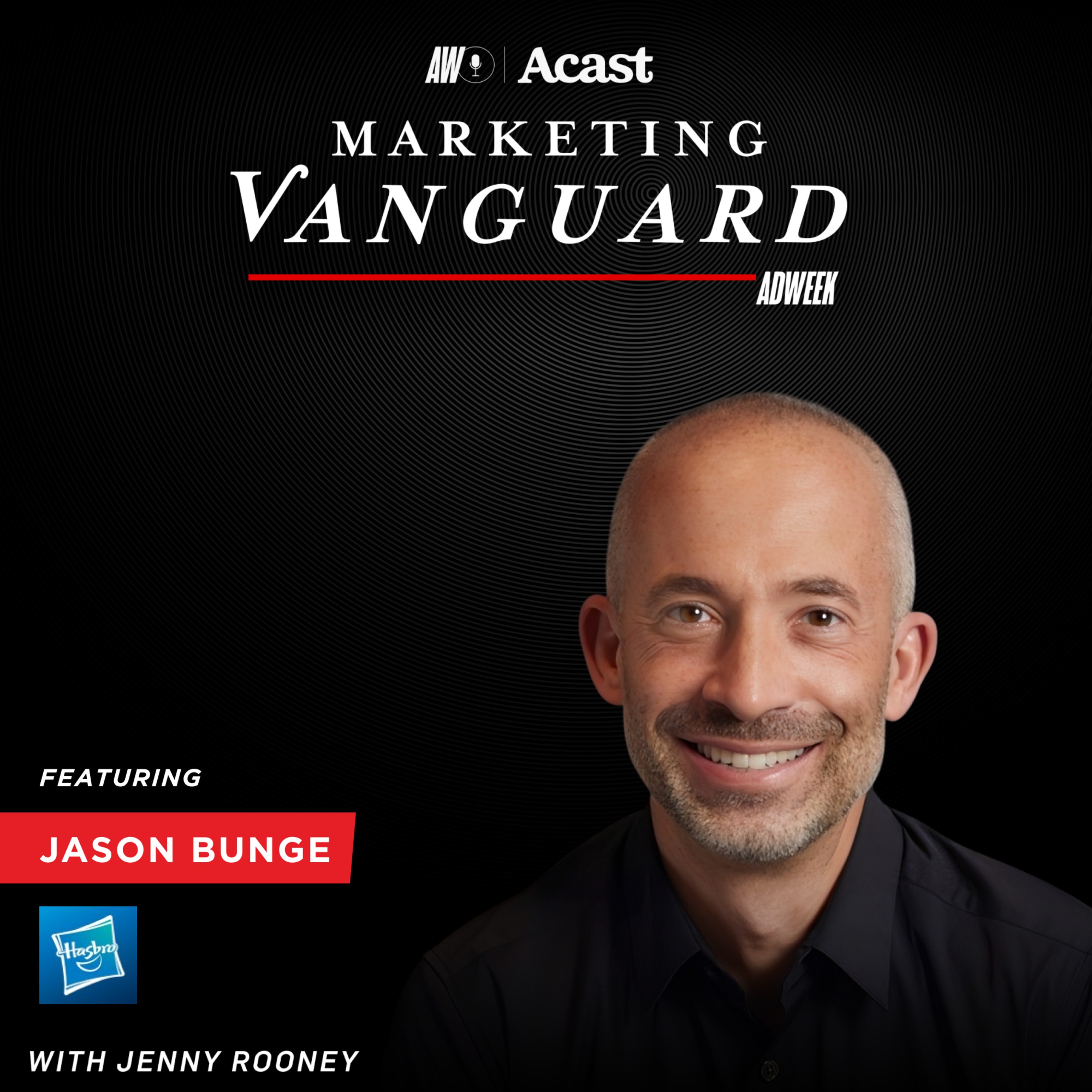
Marketing Vanguard
The Future of Play in a Digital World: Insights from Jason Bunge, CMO of Hasbro
00:36:51
Loading summary
Transcript59 lines
- [00:00]
Jason Bunch
The adults that are going back to the physical side, the millennials as they age, and even Gen Z a little bit, like, there's all this data around, they're seeking out tactile experiences outside of screen. And so what's key there for us is being relevant across their lifetime.
- [00:19]
Jenny Rooney
Hi, everyone, and welcome to the Marketing Vanguard Podcast. I'm Jenny Rooney with Adweek, and I'm thrilled today to be joined by Jason Bunch. He's the CMO of Hasbro. J. Jason, welcome.
- [00:29]
Jason Bunch
Hi, Jenny. Great to be here. I appreciate the invite.
- [00:31]
Jenny Rooney
I appreciate your being here. We were saying that it feels like a meeting long overdue. So I love meeting new people on the Marketing Vanguard podcast. It's always sort of a joy for me.
- [00:42]
Jason Bunch
Well, and likewise, and I think I've said this certainly to many others, I think any platform that allows marketing to have, you know, a voice, an appropriate voice in the conversation around brand building, consumer trends, and then obviously the role itself, I think is awesome. And Adweek has always been at the forefront of that. So I applaud what you all are doing and I'm excited, excited to play a small role in helping with that.
- [01:02]
Jenny Rooney
Well, thank you. And let's start there because I'm curious where that sort of strong opinion comes from, because that's spoken like a CMO who has known the ins and outs and frankly, the ups and downs of what it means to be a CMO in today's world, and frankly, what it's meant to be a CMO over the last 20 years. Everybody likes to talk about the fact that we're living in a moment where change is accelerated, but I would argue that we've lived through massive periods of disruption, and it feels like there's never a time when the CMO role is not facing headwinds. Challenge, opportunity, certainly. But tell us a little bit about your journey and what's brought you to this point.
- [01:39]
Jason Bunch
Yeah, I've been in marketing my whole career. Folks can go look me up on LinkedIn and look at that. And not to bore folks with it now, but really what it means is I've touched pretty much every aspect of the function in a variety of different companies, both agency as well as obviously client side, if you will, lots of different industries across technology, consumer products, and now a little bit of mixture of both here at Hasbro. And I think for me, like anyone who goes on that journey. Right. If you're. I don't care if it's marketing, finance, or any other function in the professional world, in theory, you're supposed to get wiser. I think for me, that wisdom comes from both a little bit of confidence on what the role of marketing really needs to be at a company, but also a lot of pragmatism and I think a lot of Zen as it relates to ultimately what marketing has to still do to be relevant and to build, frankly, credibility within an organization. And so happy to go down those different paths. But I think what you're going to hear from me and I think what my team hears from me is both a lot of encouragement to be proactive as a marketer and points of view and what belief systems are and what impact of the business will be, but also balancing that with an understanding that we're not finance, we're not the cfo. Those are very specific roles with very specific purposes that I think are much more understood. We're not product owners. That is the lifeblood of a success of a company. Is the product innovative, is it resonating with consumers, et cetera. But yet we still have a really important role that I think oftentimes gets defined by others. And so I'll just maybe pause there and just kind of see where you want to go after that.
- [03:10]
Jenny Rooney
Yeah, I mean, look, I think this crisis of confidence, whether real or imagined, is nothing new. And so I feel like the crisis of confidence has been on both sides. It's been on the CMO side, but it's also been on the CEO side, obviously CFO side. And there's so much nuance to that over the years. But I do feel like I'm going to kind of go against what I started by saying, which is basically that, like, change is. Is a constant, nothing new about this day and age we're living in now. I'm going to go back on that and say, especially with the advent of AI, and by that I mean not so much relative to the practice, but I think about the future of marketing. My mind goes to students who are on college campuses right now, are in business schools. I don't know. And I've spent a lot of time with business schools over the years. I'm really curious to know how many people are actually selecting marketing as a profession, given where we're at. I would like to think that's still very much a path, a growth path for people. I don't know. It does feel a little bit different right now. So that's a big question. And I don't know how you want to chew into that, but what do we need to be thinking about, not just for, like the moment now, with regard to the CMO role, but truly what it means for the future of marketing leadership.
- [04:16]
Jason Bunch
That's a great question. And I think the obvious thing to say is I don't think marketing is a one size fits all approach, you know, based on industry, company size, company product set, et cetera. However, there's this interesting question that I'll just build on yours, which is what is marketing today? And I think I would compartmentalize that question with what is the role of a cmo? What is the role of a marketer inside of a company? There's a spectrum on both, right? On one side you could have a very tactical answer to that question of like, well, marketers execute campaigns, they spend money, they drive demand, they build assets, things like that. On the other side of that is, well, actually they're impacting strategy, they're impacting product roadmap, they're influencing the future trajectory of the company and where growth comes from. And I think both those things can be true. But to your point, I think a lot of times the conflation happens between marketing as historically a outward facing set of ads, and I think we as a discipline a little bit do that to ourselves. I think again, legacy and muscle memory says, hey, awards and agencies and events in France, right? Those are all geared towards the output creatively. And again, it's not a bad thing. Like it's a little bit of the lifeblood of what consumer connection is, emotional connection is. But I think that masks, and I think it does a disservice to the fact that a lot of CMOs that I talk to, and I'll include myself in this as well, yeah, that's important. Going in and creating great engagement content is important, but that's not the purpose of marketing. It's actually an artifact of do you have great strategy for your brand? Are you able to build community? Are you influencing the rest of the C suite? All those other things actually in my mind have to be true. And then the last thing I'll pause after this, you said it already, AI, which, you know, it's almost a little cliche to say that now, but the reality is if you're not as a CMO looking to operationalize AI, I'm not even talking about go use ChatGPT to help you write an email like operationalize AI and how you go to market, you're already behind. And I think that's another part of the data side of marketing that's been emerging over the last, I'd say five to ten years. All of that Stuff comes well before the ad. And I think if we're constantly viewed as the ad team, the ad person, I think we lose. I think we're going to continue to struggle to dig out of the relevancy hole, to be honest.
- [06:42]
Jenny Rooney
Yeah. And I put the onus on the marketer community as much as anybody else. Like, I think historically, and this is not a welcome opinion, but I feel like over the years CMOs in the main or collectively talk about the external forces against them. You know what I mean? Or the fact that my CEO doesn't understand, my board doesn't understand the value marketing. I just feel like that's a very reactive kind of stance. There's a much more active role that CMOs can play in rewriting their own narrative.
- [07:07]
Jason Bunch
It's one of the top three things I think marketing has to be great at. And it's just going to build on your point. And I think there's frankly a ton of CMOs out there who do this and they're doing it well, but that is actually have a point of view. Have a point of view and then proactively set those expectations both internally and externally. And I think to your point, this is in every company I've ever been at and it's going to come off as a critique and it's definitely not meant to be because I think it's the realities of many marketers situations at companies, which is you're constantly reactive, whether that's a CEO mandate, whether that's external situational change, and those are important things to be able to be agile as a marketer. So I'm not saying that's not part of the job. But if all you're doing is being reactive to your point, you're never going to create definition for your own purpose and then it will be done for you. Marketing is one of those interesting disciplines where one of its unique attributes is that everyone else in the company thinks they know marketing better than you do, and it's because they're consumers and they're like, I know what good ads are, I know what good marketing is. And that's really the grounding of their understanding of what they think the discipline is for. So again, if you're not putting in front of them in a different point of view, a different way to think about it, a different lens to use, it's really difficult, I think, for a CMO or any marketer to frankly find both impact opportunities, but also joy in the profession. So the other thing wisdom taught me is you got to know how to smell that out. Right? As you go from company to company, there are definitely questions you can ask and poke around to see if the place you're about to join truly appreciates and understand what marketing can and could be. Or is it just, hey, no, we're going to give you a bunch of money and we need you to make sure you don't go crazy. But we need you to make good ads. I think that's something that marketers have to look out for.
- [08:43]
Jenny Rooney
I love this philosophical conversation stuff like, I could spend all day here. We're going to get to Hasbro in a second. But like you just mentioned, everybody in the organization thinks they're a marketer because they are the consumers. Right? They're thinking like consumers. By the way, that's not a terrible thing. Like at the end of the day, if marketers are supposed to be at the behest of their consumers. Oh, well, it's kind of interesting to see how the rest of your teammates might be viewing marketing. And maybe that's also. I hadn't thought of it this way before, but maybe that's a really good reference point. That's a really good focus group that marketers can actually tap into because that's where there shouldn't be a disconnect between how the consumers are viewing marketing.
- [09:19]
Jason Bunch
I totally agree. I love my colleagues as a qualitative set of feedback, it's fantastic. And I mean that truly. But at the same time, and you know this better than anybody, like here's the next sentence that always comes up, which is, well, you're not always the target audience. And I think there is truth in that, particularly now. Right? I mean, then we can move on to other stuff. But I would just say the generational differences and nothing I'm saying is news to anybody like the generational differences and not even just their kind of macro behavior, but really their kind of micro engagement with brands and how they engage and the platforms they engage on. And I said this word community earlier, which is not a new concept. Community has been around for decades. But I think, like, if we can't answer that question about what is the role and purpose of marketing, I think we get stuck. And I think we'd still let other stakeholders, as well intended as an amazingly smart as they are, to define it for us. And I don't think the CFO is looking for anyone else to define for them what the role of the CFO is. So why is the CMO let them do that?
- [10:17]
Jenny Rooney
Such a great point. Such a great point. It's all just things I think that the community needs to continue to watch out for and pay attention to. Now let's move to your current role. Obviously, Hasbro, I mean, it's got some of the most iconic IP portfolios in entertainment. You came, I think, about two years ago.
- [10:37]
Jason Bunch
Two years ago, Yep.
- [10:38]
Jenny Rooney
You're sort of in that window. You've been there long enough now. You know all the details.
- [10:42]
Jason Bunch
It's my fault from here on out.
- [10:43]
Jenny Rooney
So, yeah, grace period's over. Now. What gets you excited about Hasbro? What's the inflection point at which it's at? And for people who don't know all the brands, Transformers, Dungeon Dragons, I mean, there's just so much richness. Tell us a little bit about the.
- [10:56]
Jason Bunch
Portfolio for my role. The, like, three things, if you will, like, I think that just give me nourishment and also were reasons why I joined. Just a little bit of a bridge from our last conversation. Like, one is I get a ton of support from Chris, our CEO. Gina Guetter, our cfo is fantastic partner. The rest of the C Suite's an awesome set of partners. Our board marketing is not their number one thing to care about, but they are incredibly supportive and engaged, you know, on a topic. And so it comes in lots of different forms. But I feel that engagement and it's very much a net positive, and it's something I deeply appreciate and value, and that's important. So that's one. The second one is, and you said this, I've been really fortunate and grateful to have worked on lots of different great brands in my career. And I think just at this stage, you know, if I get to be picky, I still want to work on those things. Like, I love the emotional connection that brands have with consumers. I am one of those consumers, one of those players of whether it's games or, like you said, toys of our youth. So as a marketer, like, I just don't think there's a better remit you can be given than to really go mind the wealth of fandom and just joy that exists in nostalgia. Right. For these brands. That's my everyday. And then the third one is specific to the company structure, which is, you know, when I started and even today, like, we had our earnings yesterday and, you know, we're pleased with where we're at in terms of our journey, but the journey is actually multifaceted. Right. So, yes, historically, we are certainly a toy company. And you mentioned it, we have a fantastic IP that's beloved by millions around the world. And that will continue. And, you know, we have a lot of work to still do there. Right. If all you have to do is go back and look at what we said publicly yesterday, and our work's not done. You know, the toy industry is a tough industry for all combatants, if you will, and not unlike other industries with different challenges. Like those are just things we have to navigate. And I think the leadership team over the last couple years has tangibly made strides there. And again, like, you can go back and listen to our earnings call and you'll get all that kind of good tidbit, but that's one part of the business. But it's the way in which the world typically views us. The second part of the business, which we also talked about yesterday, is Wizards of the coast and Magic the Gathering. It's just. It's a whole different space. Right. It's been around a long time, but the business is reaching levels that it hasn't had before. And there's a new momentum behind it that frankly begets not just great product strategy, which our leaders over in Seattle have, but frankly, it also begets a new role for marketing, which I can come back to, because then the third bucket, and you heard this also yesterday and previously, is that, you know, we're launching video games next year. So if you think about as a marketer, you're like, oh, like there's this digital growth future. There's this trading card. Pretty sort of niche, but oh, my goodness, it's a niche that's now crossing into the billions of dollars. And then we have this wonderful toy legacy that we need to still. Right. Size and kind of get back to growth. The role of marketing in each of those is quite different. And so from an intellectual standpoint, it's super fun. But then also from like a just a business challenge standpoint, how do you scale? Like, we're not Coca Cola, we're not Apple. We don't have tons and tons of resources. So marketing also has to be able to address those different business needs of those three areas, but do it in a way that's scalable, efficient. So anyway, for me, like, that's just super fun.
- [13:59]
Jenny Rooney
Yeah. So the tariffs are impacting you guys, especially as it relates to the physical products. Therefore, how much of diversification of your product suite is a result of that versus the journey you were already on with wanting to move more into streaming and video games and things like that?
- [14:18]
Jason Bunch
Yeah. I think the company strategy certainly predates any tariff action. I think, if anything, what we talked about yesterday in the Call was what we're finding is there's actually resilience in the strategy. If you think about diversification of any portfolio company, which I've worked in several, the ideal portfolio situation. Right. Is you're able to kind of lean in and leverage different aspects for different purposes. So there's growth areas, there's maintenance areas, there's kind of reinvestment areas. And I think like any portfolio company, you could be different year to year, typically not quite that frequent or variable. But I think as we get smarter about the roles of these different businesses, and again, video games haven't even launched yet, we have to and will get smarter around kind of what role we want those products to play.
- [15:01]
Jenny Rooney
And.
- [15:01]
Jason Bunch
And I think tariffs, it's a current external headwind. It's something that we're managing and it's not going to be the last external headwind that we have to deal with. And so I think what I get excited about, frankly, is our company strategy, I think, is finding a lot of stability and resilience on our capability to navigate some of those external headwinds. And so I'm not shrugging off the material significance of tariffs. And you know, Gina talked about this yesterday in the call, but I actually am quite optimistic about our ability to navigate it in a way that is strategically sound and not reactive, if that makes sense.
- [15:33]
Jenny Rooney
Yeah. How much time do you spend getting your head around your product suite versus your brand lineup? How are you thinking about that?
- [15:40]
Jason Bunch
This is a whole other couple hour conversation. Is there a difference between brand and product? One of the key questions I think we have to be able to answer, and I think this goes for any company, certainly consumer facing and probably B2B as well. Where does your brand derive its value from? And I think if you go back 10 years for Hasbro, well, you can go back further if you want to make the point. I think the answer for most of the toy brands would be, well, the brand derives its value from the plastic, the toy. Fast forward. Our licensing business is incredibly successful. And you mentioned entertainment earlier. That includes lots of different forms of entertainment. And so then you're like, huh? Well, actually in the next five years, is that still true? Where do we get our value from as a brand? Is it actually broader fandom elements and it can still include toys by absolutely every measure. But I think what you're seeing is, and Disney, I think, is a great example of this, where they've been able to expand the value of where the brands get their value from across theme parks, movies, Right. Tv, et cetera. And I think what you're going to see from us is more intention around where we think a GI Joe should get its value from, where a play DOH should get its value from, where the gathering shoot its value from. And I think that is still obviously work ahead of us. And again, this is not unique to us, but I would just couch it that way, which is it's not even brand versus product. I think Chris, our CEO would tell you if we're not innovating on the product side, like, that's going to be death for the company. Like we are a product company. Like if we're not innovating constantly in those areas for our fans and players and consumers, we're not going to have a lot of success. Meaning we can't just ride the coattails of a brand. Right. We are not a company that's just going to market our way, so to speak, into great brand residents. And then whatever product we put out there is going to do fine. That's not the order of things. It's going to be the other way around. It doesn't diminish the importance of brand, it doesn't diminish the importance of that connection with consumers. But it really has to start with product, if that makes sense.
- [17:36]
Jenny Rooney
Thank you for that answer. I do think it's a really interesting question though, the way you're thinking about it, you know, how you're approaching it. Talk to me a little bit about what you guys are seeing in terms of consumer habits vis a vis play and generationally, I mean, literally the concept of play, you know, how is that being redefined? How are you working to define it? Even as you think about the forces against you that are redefining play, that's out of your hands. Right? And I mean, you know, in a world where kids, know, are looking at screens starting at sadly age 2 or, you know, if not sooner, like big philosophical question. But that's at the core of what you do. So like the future of play as a choice is. Is also critical for you as a company.
- [18:19]
Jason Bunch
I love the question. We very much think in similar ways. And you said generational. And again, this is not unique to us. I think the broader industry across lots of categories are seeing this. I think what we believe to be true is that you're seeing almost an inverse of kind of what you might expect. So you mentioned already kids earlier and earlier are getting on screens. They're certainly digital natives. Platforms like Roblox are there, social vehicles, Fortnite, et cetera. That's how they interact with friends. It's just very commonplace to them. It's not even like, oh, why would you do that? Like, well, of course I do that. That's where everyone is. So does that mean there is no room for physical play? No, but it means we have to be smarter about the products, right? And the experiences we want to put in front of those kids at those certain ages. And then the inverse part comes in is actually as they get older, what we're seeing is. And Lego would say this too in Mattel as well, like it's the adults that are going back to the physical side. There's great data around even. Not that they're old by any stretch, but like, you know, the millennials as they age and even Gen Z a little bit like there's all this data around. They're seeking out tactile experiences outside of screen. And so what's key there for us is being relevant across their lifetime. So what is the right engagement point when they're 4 years old versus 45? Is it going to be the same? No, of course not. However, that doesn't mean you can't be a Transformers fan or a Magic fan for the entirety of your life. And that's typically what we see happen for a lot of our businesses. And so our job, of course, is to maintain relevancy from an offering standpoint. And then b, I'll use the word community again, marketing's job as it relates to community is you got to create space for those folks and your fans to interact with each other physically, digitally. Maybe it's a third party platform like Roblox, maybe it's your own manufactured platform, et cetera, could be events. All these things we are seeing, and Chris mentioned this on the call yesterday. MagicCon is a conference we hold a few times a year for Magic. It's been around a while, but all we're doing is seeing higher and higher attendance every single time we do it. And if you talk to people there, it's obviously because they love the brand, but it's more that they love playing with fellow Magic fans of all ages. And so again, that's for me, a great example of you're creating a venue for your community to interact with each other and you kind of get out of the way and you let them basically do what they love most with your brand, which is play and socialize and all these things. So we very much think in terms of generational stickiness. Our product teams are really tasked with making sure they have clear sense of what offering makes Sense when. And not all brands obviously will span generations. So that's okay. And so we just need to be intentional about that. But yeah, I think you're going to hear from me what you hear from others, which is there's an aging up, right? From a physical place perspective, the word collectability is becoming a bigger and bigger thing.
- [21:09]
Jenny Rooney
Nostalgia, I mean, obviously I'm Gen X and I love all the nostalgia stuff that's circulating around.
- [21:14]
Jason Bunch
You know, I mean, as a 40 year old versus a 4 year old, your disposal income is different and so your choices are obviously more specific. And I think the brands of any category that do the best job of helping that 45 year old remember what it was like to be the four year old and give them reasons to stay engaged and pass it down, down or whatever form that takes, those are the brands that are going to win. That's where the stickiness comes from.
- [21:38]
Jenny Rooney
How do you think about building franchises? Like, is that a word that you're using an awful lot these days?
- [21:44]
Jason Bunch
I think franchise, it's one of those words that lots of folks can very legitimately define differently and I think it sends people to different places. I'll actually say for me, it goes back to the thing I mentioned earlier, which is you've got to first be able to very clearly define where your brand gets its value from. There has to be a core, right? A center of gravity and then your concentric circles around that basically is the ecosystem you build. You know, Disney, again, I think probably the best in class at this, where it's like, hey, I'm Mickey Mouse, right? Started as an animated cartoon, I build it around that, a theme park experience, I build around that, a consumer product line, et cetera, et cetera, et cetera. And they've extrapolated that of course to lots of other of their IP very successfully. But I bet if you ask them what is the core value where Mickey Mouse gets its value from, they'll have a very specific answer that I won't pretend to know what that answer is, but that is, I think, an important part of being able to even think about a franchise. Because I think sometimes when people say franchise, they're just, they go to tactics. Oh, we want a movie, oh, we want a TV show. And it's like why you got to be able to know why that's going to be accretive to the core brand value that you currently have today.
- [22:50]
Jenny Rooney
Are there brands that have done that successfully, that you've shepherded through that you feel like warranted that kind of approach?
- [22:57]
Jason Bunch
I mean, I've been a part of several that I think have tried and dabbled. Right. I mean, if I go back to Riot Games, when I was there, we launched Arcane, which was an animated Netflix series based on League of Legends. An amazing show, won Emmys. It was hugely successful with the population and certainly league fans and frankly, non league fans. But the question is, like, what does it do for the court? Because if you ask Riot and you ask them, hey, where does League of Legends get its value from? It's the game, right? It's a MOBA. It's really complicated as a game, but it has 150 million people that play it every month. So the question is like, hey, that Arcane, actually, was it accretive to that core value proposition? And so I think a lot of companies struggle with that. Right. We'll go back to Trustee's Transformers and Hasoro, like the very first Transformers movie, was a boon to the toy business. And I think sequentially, and I'm not. This is not a commentary subjectively on the quality of the movies. It's more about, is that still where the accretive value comes from for Transformers? Or maybe it's a community of hardcore Optimus prime fans who just want the latest and greatest really cool collectible on our Pulse platform. I think you have to be able to start to answer those questions because it also obviously drives investment. Do you really need to make a move anymore, or should it be some other expenditure of capital? So again, that's not saying one way is right or one way is wrong. I just think when you say franchise, I kind of go back to that core question. And before you start adding cool things around it, I think a lot of that stuff, as I've seen it, like, tends to not work because you haven't answered that core question.
- [24:24]
Jenny Rooney
How are you thinking about building the Hasbro brand and making Hasbro front and center? At least having people understand or appreciate Hasbro versus the individual brands?
- [24:35]
Jason Bunch
Yeah, it's a really good question. I think portfolio companies, and they're all a little different, like ea, we had the same topic, which is, does the Electronic Arts brand matter? And if you think about video games, the number one brand that matters the most by a long shot is the game. A distant second is the studio. And then, like, deep in the earth's core, if you go into altitude, is ea. And that might be a perfectly acceptable strategy, because at the end of the day, you're selling video games and that's. You really want fandom around the game. You don't really need fandom around ea. However, at the same company you had EA Sports and EA Sports actually as a brand connotes quality. It connotes simulation expertise. It connotes, hey, you're gonna have a good time, whether it's Madden Football, FIFA, soccer, et cetera. So you're like, oh, well, EA Sports matters. Okay, so then you go to Hasbro and it's kind of a similar situation. Like Wizards of the coast, same thing. D and D matters a lot. Magic matters a lot. Transformers matters a lot. Do consumers care as much or players about Wizards of the Coast? Hasbro? Oftentimes those corporate brands get used as like the shield for the sub brands to not take on the look what Hasbro or Wizards is doing to XYZ of my favorite thing. EA was the exact same way. I don't think there's a right and wrong in there. I think though, if you're going to invest in say your corporate brand, certainly it matters for employees. It certainly matters for future employees. It matters for partners. So I think we don't dismiss the value of that. But I think from a consumer facing standpoint, if you asked me, hey, if you have a dollar to spend, are you going to spend it on Transformers or Hasbro? I'm going to spend it on Transformers every single time. And that doesn't mean Hasbro is important. But we're a company that's not unique in the journey of, well, what do we want Hasbro to mean? It's got great legacy. If you tell someone it's Hasbro, they'll be like, oh, Hasbro's great. But what is also true, if you said, hey, did you know your favorite gamer toy is from Hasbro? Like, oh, no, I had no idea. So it's. You have to be able to decide whether that matters. And then if it does matter, you have to be choiceful about what does investment mean there. So we're definitely thinking about it. Like, it's not something we're ignoring. I think that we want to be intentional about what its purpose is vis a vis. As you said, just some amazing iconic brands that exist in the portfolio.
- [26:46]
Jenny Rooney
Question about retail, you know, and distribution, anything shifting there? That's just different new. Interesting how you're thinking about that strategy.
- [26:55]
Jason Bunch
I mean, you can look at like Circana's data on this in terms of broad consumer behavior. And this is of course very bespoke based on region around the world. But digital and E commerce continues to grow fastest. No surprise. And that's not just Amazon, you know, Central and South America. You have Libra. Right. And they're growing very fast within the toy category and obviously others, but certainly within the toy category. Does that mean that people aren't still going to Walmart in physical. No, of course not.
- [27:23]
Jenny Rooney
We lost toy stores a long time ago. I mean, that is a destination obviously dried up.
- [27:28]
Jason Bunch
Yeah. And I think it's interesting in some ways, while that I'm sure was painful for the category, I think if you want to be glass half full on that, I think the removal of that has forced toy companies to be again, more intentional about strategy on like, well, what does it mean to be successful at shelf in Walmart or Target or partner with Amazon in the U.S. right. So I would say we're seeing trends that I think are largely consistent with other categories, both from, like you said earlier, aging up, aging down, but also where people are discovering. That's the other thing. Like where people are discovering content and product. Retail media is a bigger and bigger thing.
- [28:03]
Jenny Rooney
Yeah. I was going to ask you, retail media, does that hold value for you?
- [28:06]
Jason Bunch
It does. I mean, it varies by platform, which you could probably assume, but the value vary by platform, honestly, is just about the maturity of the platform. Right. And Amazon is just well ahead of most. It doesn't mean others aren't good. But what people have caught on to, of course, is like, hey, that's a lucrative revenue stream for my world. And when you are the size of Walmart, Amazon, et cetera, you can afford to do that. And I think it'll be interesting to see how does that displace more and more kind of generic search, if you will, on something like Google versus like, no, I just go to Amazon, I search on Amazon and I find what I need. And like, that's how I get it. We definitely are seeing more and more of that type of behavior.
- [28:44]
Jenny Rooney
Yep. Last few quick questions because I know we're running low on time. Back to you and your personal career journey. Obviously, I think the red thread through it is tech. I mean, it's Skype, it's Trulia, it's Microsoft, it's Riot Games. As you said, that has been your consistent narrative as a marketer. Was that intentional? Was that by default you went to Harvard Business School? Was that for your MBA or was that for undergrad?
- [29:06]
Jason Bunch
Yeah, mba.
- [29:07]
Jenny Rooney
So talk a little bit about just for anybody who's just kind of looking at you as a model of cmo, what do you want to flag in that? And how much of that was intentional? How much is that you just feeling like tech marketing was where the most innovation and creativity could happen. Or is that something that you fell into, that you really harnessed to build your own expertise?
- [29:27]
Jason Bunch
There was definitely intention throughout my career and there was definitely serendipity. There was definitely, you know, a little bit of good fortune. And there's definitely also. I said this to a lot of folks. I just said yes to stuff. Like, I said yes to stuff that maybe wasn't really what I wanted to do, but it was an opportunity. It was something to take on more. It was to learn new things and you just say yes. And so I'm just a big believer philosophically as, and frankly, probably any function, but certainly for marketing, if someone asks you, your boss, whoever, like, hey, I got a thing that I need you to think about, you say yes. And then those things almost always beget more opportunities. So I would just, I would say that in general is kind of how I thought about my journey. I think Microsoft. I loved my time at Microsoft. I'd say the thing it taught me more than anything was I don't want to be in B2B marketing. I did that for most of my time there and I just didn't like it. It didn't speak to me as a marketer, even as a professional. And so that's the only way you're really going to learn is if you try it. So that was very informative. I liked staying in tech. I think I find tech to be, as a mindset, it's just very progressive. It's very like, get stuff done. At least when I was doing it right. I'm sure that bigger companies like always come with bureaucracy, but there was just a speed element. It wasn't worried about getting it wrong. It was like, just go do cool stuff, learn iterate and then repeat. And by the way, like, don't be stupid. And if you're gonna make too many mistakes, then yeah, you probably don't have a role. But there was a ruthlessness to it that I kind of like because it just took a lot of the noise out of the system and I just focused on results. So I grew up in that environment and then EA for me was really the first time in my career I got to work at a company where I love the products. Personally. I played video games since I was a kid, Atari, whatever. And so that was just amazing. And then of course you learn like, oh, it's just more fun to play the video games and actually have to market them because it's still a business. But I think again, that just told me, hey, if I Get to choose. This is a general space that I want to play in. You know, we all get one trip on the planet, right? So you might as well spend time in an area that you're going to be at least a little bit excited about. So that's kind of what brought me even to Hasbro. Like, I was looking at their stuff, but I don't think I can say no to a place that has all that it has. As far as advice, I would say, know what you like, create constraints for yourself. B2B. No. Great. That's a really important constraint because I have to waste time talking to amazing companies, but they weren't going to want me and I wasn't going to want those opportunities, so.
- [31:43]
Jenny Rooney
Yeah, but is Hasbro. I mean, the irony here is, is Hasbro a tech company? Is it a toy company?
- [31:47]
Jason Bunch
Ah, well, the journey continues. Let's touch base in like a year for an hour without that, we have to wait a year. But, like, let's see. Let's see how we're doing on that.
- [31:55]
Jenny Rooney
Okay, that's a perfect segue into my almost last question, which is what's next? You know, what's next on the horizon? What news can we expect to see from you? Can you tease some things? We got six months of 2025 ahead of us, and so by all means, I know you're probably planning into 26 and beyond. So talk a little bit about what we to see. What are some highlights that get you excited?
- [32:17]
Jason Bunch
I'll think about the teasing for our next chat. I probably don't have a good answer to that now. And then Andrea and other my colleagues are like, what are you talking about? Quiet. So I won't wade into those waters. But what I would say is the two biggest areas that I think we're most excited about are going to be our video game plays. Exodus has been announced already. Chris mentioned this on the call yesterday. It's. We're aiming for end of next year as a launch. That's a big moment for us. Look, I've worked, you know, Electronic Arts, right? Like, these are companies have been doing this their whole existence. This is the first time we're going to do it. So we got an amazing stable of expertise here and we have every chance of success, but, you know, success is never guaranteed. So I think, like, that's something we're very excited about and very bullish on. And then the other one, honestly, is magic. It's interesting, right? Like, it's over a billion dollars and yet most people don't know about it. And it's really complex. It's a pretty niche game, as its journey has been, you know, historically for almost 30 years. Like, Pokemon is the big standard kind of collectible card game out there globally. And if you say Pokemon and people the most people will like, oh, I know, Pokemon Magic has every opportunity to get there, is what I'll say. And our ambition is absolutely that. And so I think what you can expect from us the rest of this year and certainly all through next year, is announcements and product news and, you know, new investment areas for how we think we're going to go at that opportunity space. But Magic players, they're hungry for it. They're an amazing community themselves. And honestly, I think we owe them that. Right. Which is to have that kind of ambition. So I'd say, like, yeah, more news from us coming, you know, on the video game stuff. And Chris said this yesterday as well, and I think we could not be more excited about that. We could not be more excited about Magic. And then the other thing, again, like, not to put toy third in terms of relative, you know, that's not important, is just to say I think we're going to surprise some people with a lot of the new product innovation that's coming out the rest of this year and in the next year. And I think, you know, the bar for us as success is, yes, are we building things that are being snapped up by consumers and played with by children and adults of all ages, but we also have to, you know, right size that business. And so that's something that I think we're also pretty bullish about. So, anyway, I'll give you those answers and then, you know, I'll think about more of a fun answer, if you will, for our next time stuff.
- [34:30]
Jenny Rooney
I think I could be wrong. I think you're coming to Brand Week, our brand week in Atlanta in November.
- [34:35]
Jason Bunch
Yes. Looking forward to it.
- [34:36]
Jenny Rooney
So that will be exciting because there could be some things you share on stage. So just planting that seed there. Last quick question is, who's next? Jason? Who's somebody that I should have on the Marketing Vanguard podcast? Somebody who you admire? They can be somebody a CMO that you know really well, or it can be somebody who you haven't met yet but you admire from afar based on the incredible work they're doing.
- [35:01]
Jason Bunch
Great question. God. I can give you like, a long list of names for that one. I'll shout out a couple folks that I've actually worked with. There's a woman named Andrea o' Blaine who I hired into EA and she's still there. You're smiling, so you must know her.
- [35:13]
Jenny Rooney
I don't know her well.
- [35:14]
Jason Bunch
She's absolutely fantastic and incredibly smart and just kicking butt there. She's running the EA sports business at EA and just at the forefront of, you know, culture and stuff like that. So I would highly recommend, if you don't know her, like to reach out. And then I'd say another woman that actually I hired into Riot who has done an amazing set of things is Francine Lee, who is just CMO@ipsy. There's many more, but I call those two leaders out just because, well, one, I know them really well, but two, I think they represent the future. Like if we end where we started this conversation, I think those two individuals really represent, I think what marketing needs to be and become. And they're super agile, they're super smart, they're gonna lead in a progressive way as it relates to the function and they're not afraid to define it right. They're not wallflowers. They're gonna let someone define it for them. They're folks that are gonna get out there in front and I think super highly of em both and I think you'd enjoy meeting them.
- [36:04]
Jenny Rooney
Well, I mean, perfect ending. We circled back to where we started. I did lie, we did go over 30 minutes. So thank you for having a little bit of flexibility.
- [36:13]
Jason Bunch
I loved it. I really appreciate it. It was super fun.
- [36:16]
Jenny Rooney
Well, thank you so much, Jason. I look forward to seeing you again very soon. Following the story thanks for being on the Marketing Vanguard podcast.
- [36:24]
Jason Bunch
Thanks Jenny. Thank you for listening to Marketing Vanguard, part of the Adweek Podcast Network and Acast Creator Network. You can listen and subscribe to all of Adweek's podcasts by visiting adweek.com podcasts. Stay updated on all things Adweek Podcast Network by following us on Twitter @AdWeekpodcast. And if you have a question or suggestion for the show, send us an email@podcastdweek.com thanks for listening.