← Marketing Vanguard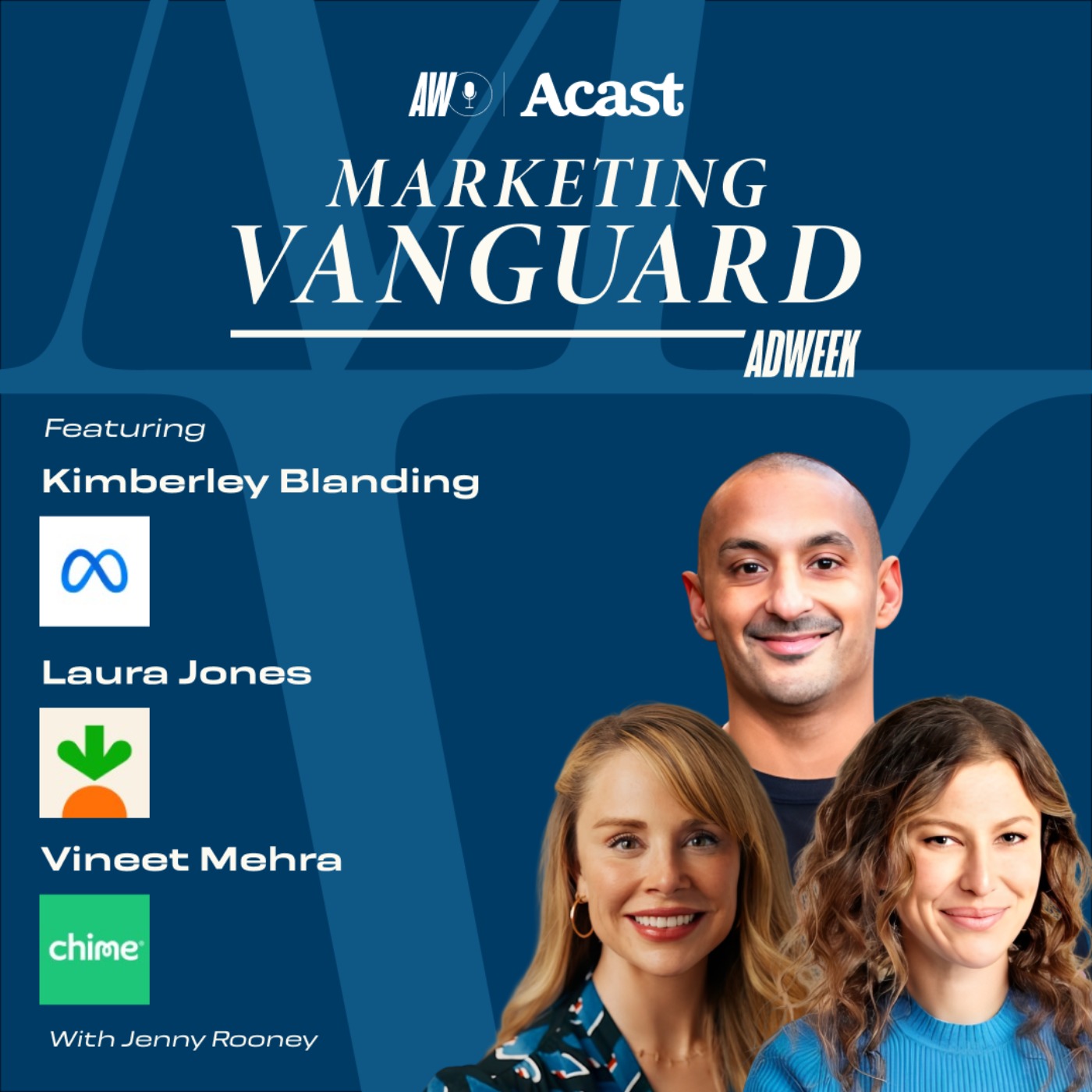
Marketing Vanguard
The Tech Titans Rewriting the Rules of Growth Marketing ft. the CMOs of Meta, Instacart, and Chime
00:28:02
Loading summary
Transcript74 lines
- [00:00]
LinkedIn Advertiser
Are your ad campaigns lighting up the dashboard but not the pipeline? That's bullspend and marketers are calling it out in dashboard confessions.
- [00:10]
Vineet Mara
My boss asked for results, so I opened my dashboard for the only positive sounding metric I had. Impressions.
- [00:17]
LinkedIn Advertiser
Cut the bull spend. See revenue, not just reach. LinkedIn delivers the highest return on ad spend of major ad NETWORKS. Advertise on LinkedIn. Spend $250 on your first campaign and get a $250 credit. Go to LinkedIn.com campaign terms and conditions apply.
- [00:31]
Vineet Mara
The way the algorithms work now is there's no real such thing as sort of like a monoculture. We all have different feeds, different content being fed to us. And so what we do in these big moments is we tend to play in these subculture areas and we're working with really authentic content in these subculture genres.
- [00:50]
Moderator (Adweek Host)
Thank you very much and a big thank you to Adweek. We really appreciate the bridge that we have between AdWeek and USA Today. So thank you for involving us and it's a real pleasure to be here. All right, I gotta get used to this. This is kind of fun. I like the different setup. I'm used to, like just looking out. But we're kind of in the round here and kind of in the middle of it. We really are in the middle of it, right? With the big game right around the corner, of course. And everybody's trying to figure out in this day and age, what does winning look like? What do we have to do differently, what stays the same, but in the middle of it. You do have this really big event happening on Sunday, which is a very big communal event that companies can tackle in different ways. So how are these companies tackling it or not tackling it or pivoting or not pivoting? So we'll find out right now with some of our experts here. First, we have, of course, Kimberly Blanding, the global director of Meta AI Wearables at Meta. And I guess that's my cue. Hold on.
- [01:43]
Kimberly Blanding
Look at this increase in awareness going up.
- [01:46]
Moderator (Adweek Host)
For the record, I bought these. They were not gifted to me. Also, we have the CMO over at Instacart. We saw the Instacart ad. For those of you who were paying attention on screen, that's running in the big game. Laura Jones got to be on set for that with Ben Stiller and Benson Boone and Spike Jones. Laura, thank you so much for joining us. And we have from Chime, the chief marketing officer, chief growth officer as well, Vineet Mara. Vineet, thank you so much, sir. Really appreciate it, we gotta be careful here because Vineet and Laura apparently are like two peas in a pod. So if they just take over this whole thing, you've been pre warned, Kimberly. I'm going to throw this first question your way and then we'll all kind of bounce it around. We certainly, over the past couple of years, I think every company is, has had to rethink its, its ways a little bit over. If you think back maybe the last two, three years, what maybe legacy rules, mindsets. Did you have that? You finally were like, you know what,
- [02:44]
Kimberly Blanding
time to let this go for super bowl, right. As we're thinking about Super Bowl?
- [02:48]
Moderator (Adweek Host)
Well, yeah, sure, if, if that's the way you want to take it. Absolutely. But you know, we could also talk a little more generally as well, just about kind of how everybody is pivoting here, especially when it comes to tech and kind of rewriting what we think winning is.
- [03:02]
Kimberly Blanding
Yeah, I mean, I think for us, of course, I'm in Super bowl headspace right now. So when I think of winning, this is our sophomore year, so last year we did it as well. And I think we had a tremendous response. And so for us, it was really about some of the traditional metrics like awareness and consideration and sales. And I think really what we've seen shift in the last few years has really been around the social conversation. So for us, we saw about three quarters of all the earned media and earned social conversation actually happen before the game or before a big campaign. And so for us, that's really what we've embraced and tapped into. And we leverage our talent and creators and a bunch of different ways that we really garner that. But that's one thing that like, we've just really leaned in. Of course, we're a social platform which really has been like the heart and the DNA of the campaign. But that has been something that we're just like, it's gotta be social first.
- [03:53]
Moderator (Adweek Host)
Laura, do you feel the same way with your campaign?
- [03:55]
Laura Jones
I do. It's also our sophomore year and I think last year we came out with a spot that, you know, I felt really proud of, but reflecting, I wish we would have done more with the content ecosystem. And so this year it was not just about the spot, it was about having teasers, having a social surround zone ecosystem. We're doing actually an IRL event tonight in la, the Great Banana Debate, because if you missed it, our ad is all about bananas. So yeah, we're really leaning into the buzz that you can build before and then afterwards paying it off with a Full funnel campaign. Because if you've seen our spot, it is, in a word, bananas. It's a little unhinged. It's designed to entertain and pique curiosity. But in order to really understand the point of the ad, which is that we're launching a suite of preference pickers that let you get the perfectly ripe banana for you or the perfectly thinly sliced deli meat. Really being able to express your preferences in Apple, that's not going to be obvious from just watching the spot. So what we're counting on is that all the 360 surround sound media will pay that off and the campaign that ensues afterwards will actually do more feature awareness and really drive that message home.
- [05:04]
Moderator (Adweek Host)
We've talked a few times now, Laura, and I learned a few things. First of all, I learned what something from the last year's campaign that you're bringing in this year, something our regret, as you called it. But then also, what is the great banana debate? What are we debating? What's going on here?
- [05:18]
Laura Jones
Okay, so for some context, instacart has delivered 1.8 billion bananas and we've had 32 million shopper notes. So people telling us exactly how they wanted their bananas. And so we decided to productize that and give you just a nice way to select and indicate that in the app. But we also just wanted to lean in on social to the question which banana best? So the debate is really, if you had to take a slightly unripe green banana or a slightly overripe spotted one, which would you do? So we engaged Anthony Poe, who's done a lot of amazing social contests, including one in San Francisco around the performative male, which was a personal favorite. And it's kind of this premise of these ridiculous debates or ridiculous contests that give people something kind of entertaining and silly to engage with. And it's actually already sold out. So who knew that a lot of people wanted to engage with that? But again, I think it's really about leaning into entertainment in this moment where we all as America need a laugh. We need something to agree on or disagree on in a low stakes way. So this week it's all about which banana.
- [06:24]
Moderator (Adweek Host)
Vineet, you Late last year, your company had the Jason Momoa campaign obviously as well, or you announced it. So I guess you could kind of relate to some of what's going on here as far as wanting to get bang for your buck and then of course, obviously figuring out which metrics are what and figuring out how you win. So how do you do that as
- [06:40]
Vineet Mara
the one person here that doesn't have a Super bowl ad. I couldn't figure out the roi. We tend to play actually a little bit differently. We've built Chime into one of the most loved brands in America, which, for a financial brand is pretty crazy. And all the love tracking we do, we're right there with, like, the Liquid Deaths and the Crocs of the world. I don't even track us against kind of the financial services brands, because that's not really our relevancy benchmark. We've done that largely through subcultures. So one way to play it, and it's a great way to play it for a lot of brands, is this idea of these big moments. What we intend instead try to do is the way the algorithms work now is there's no real such thing as sort of like a monoculture. There's not sort of one thing happening anymore. We all have different feeds. We all have different content being fed to us. And so what we do in these big moments is we tend to play in these subculture areas, whether it be fashion, music, sports. And we're working with really authentic content in these subculture genres. So we're working with creators that are, like, all about food, but we connect it to super bowl and financial products. Right. One example, we have this episodic series called Ballin on a Budget. And what it really is is it's taking sports stars, fashion people, and then sort of a fringe sort of designer, and essentially putting them together and creating conversation at the intersection of fashion, sports, and financial culture, which is around fringe culture. Right. And how people want to be spending their money nowadays. And so we tend to work more in these subcultures, connecting content together. And. And at least for us, that's been a really powerful thing, and frankly, a really new rule of growth. I think that we all have to recognize the subcultures are where it's at these days.
- [08:19]
Moderator (Adweek Host)
You mentioned about the algorithms. Did what he say about the algorithms? Was that correct, Kimberly?
- [08:24]
Kimberly Blanding
No comment.
- [08:25]
LinkedIn Advertiser
Just kidding.
- [08:26]
Kimberly Blanding
I'm kidding. Yeah. I mean, I think what you're saying is exactly correct. That is exactly what I was just gonna say. Vineet actually took the words. The whole reason we have Algorithm is that your feed looks very, very different than my feed. Your stories look very different, your recommendation, your ads, everything. So I think that makes a lot of sense, and I think it's a really smart strategy.
- [08:46]
Moderator (Adweek Host)
I'm a big Buffalo Bills fan. I'm from Western New York originally. So, yeah, a lot of content on my algorithm of the Catch that was ruled an interception. We'll just leave it at that.
- [08:55]
Kimberly Blanding
Always a heartbreaker.
- [08:57]
Moderator (Adweek Host)
They always are when you're a Bills fan. They always are. Whether it's super bowl or maybe another event. How have strategic partnerships shown up now here in 2026 compared to maybe the last two, three years?
- [09:09]
Vineet Mara
Yeah, I mean, look, I can maybe take a quick stab at it. You know, we've done some really big deals, whether with Dallas Mavericks or of an NBA jersey team. We just announced our first WNBA partnership. We're about to announce our first league deal in a couple of weeks here. We don't really look at those kind of partnerships as sort of the logo slap anymore. Right. It used to be sort of buy eyeballs by the impressions, kind of like what everyone's saying here. Really the power in those strategic partnerships is the content that you can create. Right. It's the stories that you can tell at the epicenter of sort of the culture of those partnerships. Right. So if you think about basketball culture, you can't separate the NBA from fashion, from music. And so by being in a partnership like that, it's actually, yeah, the jersey patch is fine, but it's about all the stories and influencers and creators we can put in our content to really connect with audiences through that. Essentially, it's an all access pass to be able to create great content at the core of some of these things. Right. So I think the days of the logo slap right long over. I think the brands that understand how to turn those into at scale content partnerships that went in these subcultures or in these personalized algorithms, that's kind of where it's at. And that's how we, how we think about it.
- [10:22]
LinkedIn Advertiser
Blowing ad budget on metrics that look great till the CFO sees them. That's bullspend and marketers are calling it out in dashboard confessions.
- [10:32]
Vineet Mara
I remember telling my boss it'll be good for the brand when leads were slow. Yeah, it, it wasn't.
- [10:39]
LinkedIn Advertiser
Cut the bull. Spend LinkedIn lets you target by company, job title and more. Advertise on LinkedIn. Spend $250 on your first campaign and get a $250 credit. Go to LinkedIn.com campaign terms and conditions apply.
- [10:52]
Moderator (Adweek Host)
You agree?
- [10:53]
Laura Jones
I'll take it in a slightly different direction. I think content partnerships are huge and especially I agree in sports and culture. One a trend that I've been noticing is channel partnerships. So you and I talked yesterday with Marnie from grubhub. Instacart is now embedded in the grubhub app. Uber Eats is embedded in the Instacart app. We have a partnership with Airbnb. And so content partnerships, I think are incredible for leveraging social reach. And something we've been leaning into are these channel partnerships, which are really about finding audiences that are incremental and use cases that people wouldn't think of. For example, if you're going to grubhub to order food delivery, realizing, oh, I also need groceries. So I think there's just so many unexpected ways now that brands are partnering, that brands are partnering with franchises. And it's almost like, who are you not partnering with at this point?
- [11:45]
Moderator (Adweek Host)
What's the give and take there when you're going with these different. Because again, I think there are some people, I'm sure, who would think, well, why would Uber partner with Instacart given that, you know, you can get groceries on UberEats as well?
- [11:54]
Laura Jones
Yeah. You know, I'm going to be honest and say I think we all asked that question in the beginning. But what's been so interesting is that the audience is really, really incremental because we reach a different customer base. And so it is a win win, because for us, we're serving a different use case. Obviously you think of us when you think of grocery, when you think of fill in orders, but not necessarily that I don't want to cook tonight. Now we have a solution for that as well. And for Uber Eats, it's an audience that wasn't accessing their app on their own and are coming to them through Instacart. So it's actually, I think, almost surprising on some level. And we're seeing that as well with grubhub, this incredible kind of new user group. And it really shows that I think creativity can really be an asset, you know, not just on the screen, but even in terms of your channel strategy.
- [12:39]
Vineet Mara
I think Laura's making a great point. You know, ultimately this is about growth. And the hardest thing to find as a CMO or a leader, a revenue leader of a business, is how do you find incremental growth, incremental users. And I think Laura's right on. I mean, these strategic partnerships, you know, we're doing things like, you know, a partnership with Netflix where we actually may pay for a user's one year of service. With Netflix, if you direct deposit with Chime. Now, that's not the playbook that the old banks used to use, but if I really look at my customer acquisition cost, it's half the customer acquisition cost I might do without that partnership. So I Think if you look at it from a CAC and a return on investment and sort of a where do you find new growth? I think that's a great point. Like at these strategic partnerships, there's content, then there's just straight up finding new growth avenues and you know, it's really expanding the ecosystem of how I think brands partner with everyone. I think is a great point.
- [13:33]
Laura Jones
That means our partnership needs to be coming soon.
- [13:36]
Vineet Mara
Should do that.
- [13:37]
Kimberly Blanding
I'm signing up for the podcast in the ultimate partnership. I will say, well, yeah, with Oakley. And so we have a long term partnership with Eslox Attica which have been incredible partners. We launched Ray Ban Meta with them and for us it was about finding incremental category that made sense for this and, and I think what we took, Oakley has this incredible soul and this incredible DNA and so we leaned into it. It's really hard to build credibility with world Olympians that every second counts. Nothing can get in the way of their game. And so it was this incredible opportunity for us to not only tap an incremental category that's very different than the consumer, the look and feel, even the use cases that we feature are very different versus that of Ray Ban. But also such a brand that has such a strong presence and an expectation and it is a push and pull because we're trying to explain a brand new nascent category. Yes, these are glasses. Anyone have prescription glasses? Sunglasses. Right. We all use them or a lot of people use them on a daily basis and we have to protect that. This has to be a familiar form factor. And for Oakley it is such an important part of their ethos and we're putting tech into it. But for athletes, they don't want the tech fort front and center. Nothing can mess with our game. So it was a push and pull and always making sure like we were protecting the Oakley brand but also like how are we leveling up every person's
- [15:05]
Vineet Mara
game with these when you know it was working now?
- [15:07]
Kimberly Blanding
No, I'm just kidding.
- [15:09]
Moderator (Adweek Host)
As soon as I put mine right.
- [15:11]
Kimberly Blanding
Partnering together, let's see. When we really started partnering together was probably about a year and a half ago to a year ago. And I think it was a lot of immersion and understanding going to Foothills Ranch, understanding everything about they're so passionate about their brands. And one thing that has been beautiful as a part of this, you were talking about channel partnerships and customer their athletes love their products and they wear their products all the time. And I think if I could give any hint to any marketer, find talent and Partnerships that really genuinely love your product. So that has been just a huge bonus to have that, that we've really leaned into their athletes.
- [15:49]
Moderator (Adweek Host)
That's really difficult to do. I mean, it's difficult enough to get any talent deal done right, as you guys well know. Then to also find that extra level, that's, I feel like, really where the magic happens, right? Vineet, let me ask you, because as you mentioned, of course, Chime of the three brands that we're talking about, the three companies does not have a Super bowl ad. Where do you think this big game is under leveraged from a marketer standpoint?
- [16:11]
Vineet Mara
Yeah, look, I think a lot of the action in the super bowl happens sort of outside of the big game itself. And what I mean by that is how do you kind of glom onto the conversations happening outside of the game? So things like there's a whole, like, foodie sort of revolution happening right now. If you go on social around what are people going to eat in the super bowl this year? So if you really do your social listening well, you'll see there's this whole Instagram trend on bucking the wings, bucking all the things that are sort of common. So the key is there's so much happening around the super bowl and that you just have to really get honed in on, like, what are the subcultural conversations happening everywhere around it? And that's really, I think, where there's as much action as the game. Actually, if you look at the eyeballs and sort of the engagement in some of these things happening on the side, they're actually almost as big as the impressions you're going to get from the super bowl itself. And I think goes back to Laura's point that even if you have the big spot, how do you sort of connect that story to all of the things happening around it? And I think sometimes, you know, we as marketers look for the shiny, obvious thing, the actual gold. I think a lot of times is what's happening under the surface and those movements that are starting even without us knowing. And I think that's really where it's going. That's where the world's going.
- [17:33]
Moderator (Adweek Host)
How long do the campaigns then go for?
- [17:35]
Laura Jones
So ours we're viewing as kind of a first half of the year campaign. So it actually started in January with a message on game day prep, because, of course, everyone's watching this, the playoffs, and wants, you know, lots of delicious snacks, although not wings. And, you know, definitely has a crescendo moment here. And then we'll run the ad, but bring in a series of spots that are a bit more explanatory, that actually show the feature and talk to kind of other specific category use cases. So it's, it really is an extended campaign. And I think to Vineet's point, one thing that we'll see as a result, or we are seeing as a result of this huge gold mine that sits in, in the social convers, is a push towards the ad itself, needing to be more hyperbolic, more conversation worthy. You can't treat the super bowl like a doctor ad because then it's not going to generate that response. It has to be something that is larger than life, that surprises people. And I think that's how you actually win the social conversation. Because if you're doing something that's expected, yeah, you get the 30 seconds and you get even. For us, you know, yeah, we're paying for this follow on campaign. Great. But if I can generate a ton of earned media around it, then I've just doubled my reach, tripled my reach, and I'm getting way better efficiency. So for all the paid campaigns we can all do, if you can crack culture, whether on the big screen or off it, that's really the most efficient play you can get.
- [19:03]
Moderator (Adweek Host)
How do you guys know when to innovate versus when not to? What's the signal? What tells you, okay, we can't stay with what we're doing. We gotta try something new for us,
- [19:11]
Kimberly Blanding
I think, fortunately we have access to a lot of data so we can quickly see what's working and what's not. Especially like on the social side, I think for us, for sticking with discipline are the basics of the brand. What do we stand for? What are the things? Who are we talking to? What is the key message we want to get across? Why are they using this product? And like, what do we want to land? So we really try to be disciplined about that. Whether we're doing a big super bowl campaign or an ongoing, I'd say where we really try and be innovative, especially with AI and everything coming around is like, how can we push the boundaries of things like creative and production and working, creating more content, how can we work with more creators, more efficiently? How can we tap in? You were talking about subcultures like the Oakley Meadows have really taken off in the running and the cycling. But unexpectedly, golf community, anyone wants to take a stroke off their game, those are. So how do we tap into that as well? So we've really had to be innovative again. When we started, even Oakley was like, oh, really? That's really an interesting. They weren't expecting that either. So I think we're always looking at what has to stay true, what do we stand for? And then let's innovate around the other pieces where we see it's maybe not working as well or there's other opportunities.
- [20:28]
Vineet Mara
Yeah, look at Chime. I mean we're disrupting hundred year old brands. Like innovation is just always been at the core of what we do. We opened more checking accounts than anyone in America in the fourth quarter of last year, which four years ago people barely knew us. Right. And so it's really taking, if there's product innovation taking what was a typical checking account and getting people paid two days early in America. Right. It's taking overdraft fees and eliminating them and letting people share overdraft fee boosts and bumps to each other in a social setting. There's an innovation on the product side and that just has to be at our core. And then to your point, I think we're living in a new golden age of marketing where you think about it and you can create it. And that's sort of an optimistic view of it. But I think it's on all of us now, as you said, to innovate, not just on the business models and the new products that you launch, but in how you go to market. I know there's a lot of agency folks in here. We no longer have a creative agency on retainer. We do 99% of our work in house. We're launching a big NBA spot in a couple of months here. 100% in house with some of the biggest NBA stars you've ever seen. That's not a knock on anything. There's still going to be a room for everyone, but we all have to look at our production cycles, our go to market motions. All the jobs we have to do using synthetic consumer panels is, you know, like who would have thought of those things? But we have to innovate. Not just as you said on the business models and sort of the products we're launching, but also in how we go to market. And there's never been a better time to be a marketer.
- [22:00]
Moderator (Adweek Host)
What allows you to do that, to be able to do that spot in house without an agency.
- [22:05]
Vineet Mara
An absolutely amazing in house creative team. We've got a creative director who was hand picked. We have a creative operations team. I hired the head of strategy from one of the hottest agencies, brought them all in house and it's been an unbelievable transformation for us. And a lot of the questions I get asked is well, how do you keep talent like that? I'm like well you get him to work on stuff like that and you use AI and agents and all the other things we're doing for like the 4 billion emails we send a month, right. That is now agentic and you take that work out of your in house team and give them great portfolio defining work to do and it's becoming more possible than it ever was before.
- [22:43]
Moderator (Adweek Host)
Do you think other companies will follow suit?
- [22:44]
Vineet Mara
I mean, I'll let my peers answer, but I can't imagine they won't. It's. It saves us tens of millions of dollars a year and without sacrificing the quality. Sorry for all the spiciness of this comment.
- [22:55]
Laura Jones
Yeah, we have a hybrid model. So similarly we have an in house agency, local produce and they produce about 90% of our work for Super Bowl. We did work with an amazing creative agency, FCB. Although RIP, FCB, it's now McCann and BDO but an amazing team from that world that helped us bring this to life. And I really agree with the fact that automation and AI is letting us offload the things that nobody ever liked doing to begin with like versioning or personalization and email. That was.
- [23:25]
Vineet Mara
So that's what the in house teams used to be mostly focused on.
- [23:28]
Laura Jones
Exactly. So we can really uplevel what they're doing and unleash their creativity and sometimes that means actually going back to more high craft, low tech techniques. So for example, again with our super bowl ad, we shot it on vintage tube cameras in 4, 3 ratio. So when you see it, it will not fill up your HDTV and it will look grainy and that is intentional. Thanks to Spike Jones. And for the in house team for our holiday campaign we did stop motion and they had so much fun crafting these little Rankin Bass style characters in partnership with a production company to bring to life a very kind of lost craft. And so I really think the future is blending the new and the old and pairing human creativity and ingenuity with all that technology unlocks in terms of efficiency and scale. So I think we're going to live in a world where we'll have an even broader set of tools and the most talented people will want to play on both sides.
- [24:23]
Moderator (Adweek Host)
Really curious for all three of you. Maybe one key for communicating effectively with
- [24:28]
Kimberly Blanding
the product team use the product every single day. Engine product. At least at a meta. It is a product engineering driven company and I think before I was here I was on Instagram. Just understand the product inside out Dog food, do whatever it is to get ahead of it. That has been the number one because I think then that gives you the instant credibility on the marketing side. I know the product just as well as they do.
- [24:54]
Vineet Mara
I think that's so well said. It's, you know, we call that dogfooding. At Chime. We're also a tech company. Right. And we, we just dog food the product. We have dog food versions of our app with little dog symbols and we get employees to use the most beta features because software is a beautiful thing. Right. Because you're constantly iterating and we give people the most beta versions of our app. I think that's right on. I think the other thing that's happening though is interestingly as my role and other roles involved, you know, I've got large parts of the product and engineering organization now reporting in. I think you're going to start to see this merge. You know, CPG has known this for years. You grew up at Unilever, right? I grew up at P and g my first 10 years. CPG has known this for years. There wasn't a separation between the product and sort of marketing or whatever you want to call it. I think more and more you're going to start to see that convergence even in tech, software, hardware businesses. And it's inevitable. These things have to come closer together. Because I think if there's any separation between the product experience and what you say, the consumer is going to call it out immediately. You're going to see it all over Reddit, you're going to see it all over social. If the banana comes and it's not like exactly, exactly to my ripeness level, people are going to talk about it. And so you have to be really connected on that front.
- [26:08]
Laura Jones
Agreed. I think you have to know your product, you have to know your customer. I think taking the data of 32 million shopper notes to my product team and saying, look guys, this is a clear signal of user intent. We need to give people a better way to express these preferences was pretty hard to argue with. And then the other key was some time pressure because that feature had been on the roadmap but never quite got built for years. And when I said, you know what, we have an opportunity to get in front of 130 million people in February, so we are going to need to put that on the roadmap in Q4, that actually was a very effective tactic. So I think also bringing them in on the wins. And for an engineer that is coding in obscurity to be able to say to their parents, here's my feature in a New York Times ad. Tomorrow you will see the app held by Ben Stiller and Benson Boone. You know, that's a career defining moment. And so I think bringing them in to the joy that we all get to experience when we put these things out can be a surprisingly powerful tool.
- [27:08]
Moderator (Adweek Host)
All right, let's end on a fun note here. I get the bios for all of these very prestigious panelists that we have here. And in Vinit's, he's an aspiring pizza chef. So you making pizza on Sunday for the big game?
- [27:21]
Vineet Mara
Well, I'll be at the game, so I won't be making pizza.
- [27:23]
Moderator (Adweek Host)
All right, there you go.
- [27:24]
Vineet Mara
But, you know, it's. It's definitely a passion. I lived in Europe for a little while for an assignment that I was on, and I took a month off, went to Naples and learned how to be a pizzaiolo and got certified. And I think when all this is done, when all this crazy of our jobs is done, I'll open a little pizzeria, be a little barista on the side and keep it simple.
- [27:42]
Moderator (Adweek Host)
I love that. Kimberly, what are you doing for the big game?
- [27:45]
Kimberly Blanding
I do not cook. Not only I'm not a monthly, I'm an annual subscriber to Instacart. As a result, I'm going to be at the game as well. And I'm going to be with my buddy Marshawn lynch, who is the intern. You know, everything's intern now with Vogue and whatever. He's the intern for the Seahawks. I'm super excited to see his content because now he's a photographer, so he's using our glasses to capture before, during, and after the game.
- [28:08]
Moderator (Adweek Host)
And Laura, you're going to be at the game too, right?
- [28:10]
Laura Jones
Be at the game. The Niners didn't make it, but, you know, I'll be there for Bad Bunny,
- [28:15]
Moderator (Adweek Host)
so there you go. Yeah, that's right.
- [28:17]
Vineet Mara
I know.
- [28:18]
Moderator (Adweek Host)
Can you believe we just. We talked about the big game and growth and the whole nine and finally we mentioned Bad Bunny. It took us. Took us about 30 minutes, but we got there. This was very enlightening. How about a round of applause for our panelists for Kimberly and Vineet and Laura. And again, a big thank you to Adweek for having us as well. Thank you so much, guys.
- [28:39]
Vineet Mara
Thank you for listening to Marketing Vanguard, part of the Adweek podcast network and Acast Creator network. You can listen and subscribe to all of Adweek's podcasts by visiting adweek.com podcast. Stay updated on all things Adweek Podcast Network by following us on Twitter at Adweek Podcasts. And if you have a question or
- [28:57]
Laura Jones
suggestion for the show, send us an
- [28:59]
Vineet Mara
email@podcastadweek.com thanks for listening.
- [29:05]
LinkedIn Advertiser
Flowing ad budget on metrics that look great till the CFO sees them. That's bullspin, and marketers are calling it out in Dashboard Confessions.
- [29:15]
Vineet Mara
I remember telling my boss it'll be good for the brand when leads were slow. Yeah, it's it wasn't.
- [29:22]
LinkedIn Advertiser
Cut the bull. Spend LinkedIn lets you target by company, job title and More. Advertise on LinkedIn. Spend $250 on your first campaign and get a $250 credit. Go to LinkedIn.com campaign terms and conditions apply.