← Marketing Vanguard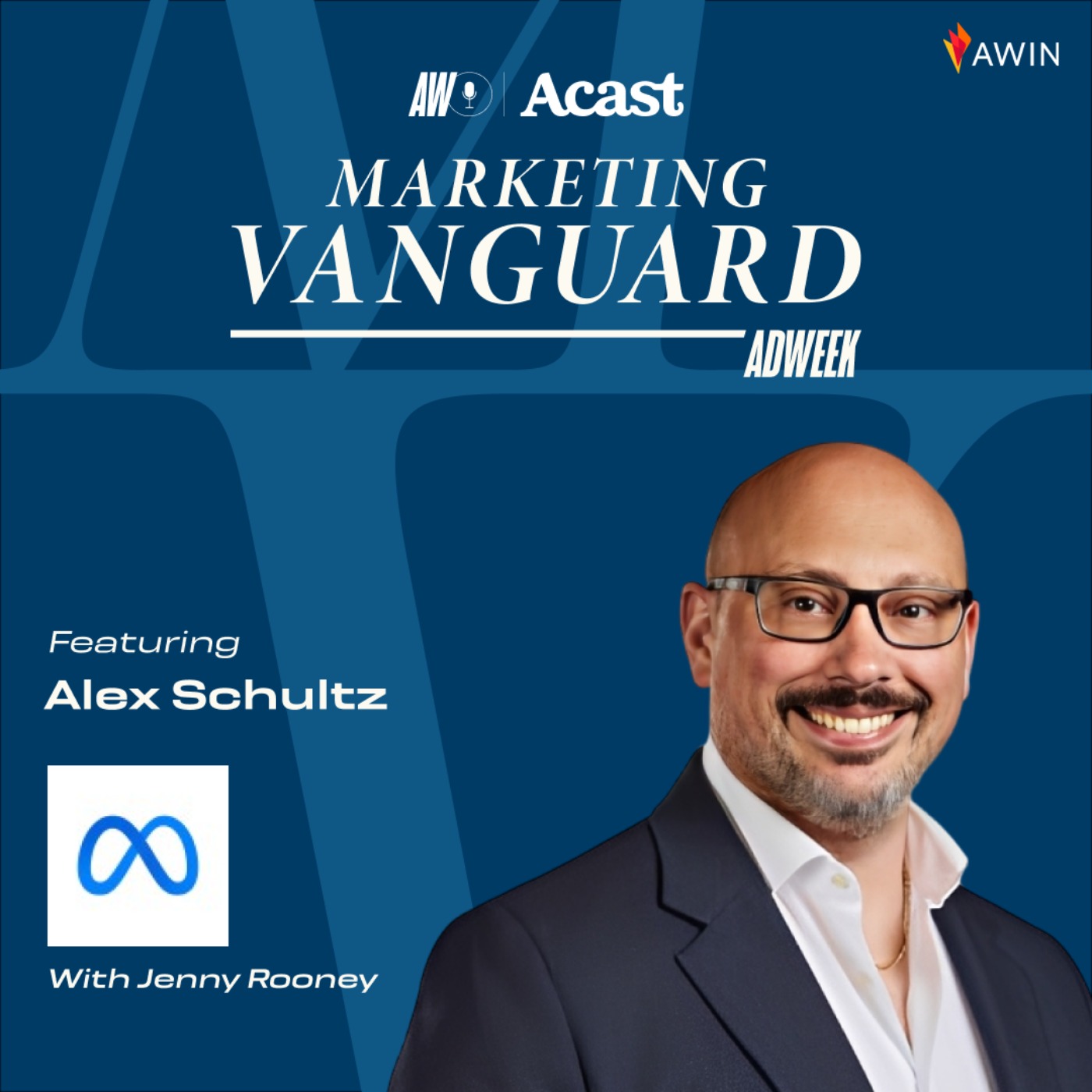
Marketing Vanguard
Timeless Marketing Principles in the AI Era: A Conversation with Meta's CMO, Alex Schultz
00:27:13
Loading summary
Transcript51 lines
- [00:00]
Experian Ad Voice
Finding the right audience shouldn't feel like doom scrolling with Experian. It doesn't. Experian syndicated audiences help you reach holiday shoppers, car buyers and more across over 200 top platforms. With over 2,400 pre built audiences, there's no more doom scrolling. It's audience targeting you can trust. Made simple. Learn more@experian.com Adweek that's exp. Er I ian.com Adweek.
- [00:31]
Alex Schultz
Everyone outside of marketing, they think the really hard thing is the ad tech and the data and so on. The fact of the matter is actually the easy thing is the ad tech and the data and coming up with that brilliant creative idea that changes everything, that's the hardest thing in marketing and everyone thinks they can do it.
- [00:52]
Jenny Rooney
Hi everyone and welcome to the Marketing Vanguard podcast. I'm Jenny Rooney with Adweek and I am thrilled to be joined again by Alex Schultz. Alex.
- [01:00]
Alex Schultz
Hi Jenny.
- [01:02]
Jenny Rooney
Welcome. So good to see you. You've actually been on Marketing Vanguard once before, so you're my first return guest, so I'm excited.
- [01:10]
Alex Schultz
Oh, repeat, I am honored.
- [01:12]
Jenny Rooney
You should be. This is very exciting, this momentous occasion. And listen, I'm excited because we're going to dive into something that is exciting for you. I know you have a new book coming out very, very soon, so we're going to dive into that. You're the Chief Marketing Officer and VP of analytics at Meta and would love for you to just say hi to everybody and introduce yourselves.
- [01:32]
Alex Schultz
Hi everyone. I do marketing and analytics at Meta. I've been there 18 years this winter, so I've been there a long time. I had air when I started. I'm British and American. I live in the UK. After nearly 20 years in the US I moved home for family reasons.
- [01:48]
Jenny Rooney
Super, super, super cool. And again, you're doing so much at Meta. There's just so much going on there. It's an exciting time, of course, but separate and apart from the work that you do there, which we spent a lot of time talking about in our last interview on Marketing Vanguard and I can refer people to that as well, you have a new book coming out in October. It's called Click Here, the Art and Science of Digital Marketing and Advertising. And I guess congratulations is in order. Is this your first?
- [02:14]
Alex Schultz
This is technically my second book. I wrote a skewer book on paper airplanes in the early 2000s, but it did sell 150,000 copies, so it wasn't that obscure.
- [02:22]
Jenny Rooney
So for all intents and purposes, this is your first.
- [02:25]
Alex Schultz
Yeah.
- [02:26]
Jenny Rooney
And listen, let's just get into it. I mean, what was the impetus for doing this? And we always ask this question of brands, but what's its origin story?
- [02:34]
Alex Schultz
I love a lot of the classics. I love Claude C. Hopkins Scientific Advertising. I love Russell Reeves reality and advertising, obviously David Ogilvie on advertising. I literally used to buy that for every single person who joined my team. I just think we don't have a book like those classics about online marketing and all the channels that have come about in the last 20, 30 years. My publisher feels the same way. And so every time people ask me, okay, you've grown up as a digital first marketer, what book should I read? I don't have something I can just hand to them, but there's a few different books. So like to hand them Viral Loop. I think that's a great book. I like to hand them Scoring Points, the Tesco Club Card story, to think about database marketing. But there's no sort of one book. And so, like, I want to write that one book. And there's a lot of hubris in that statement and I acknowledge it. But that's what I set out to try and do. And that's what Hachette, my publishing company, overall believed in. And they do own the company that currently publishes OGL Beyond Advertising. So we agree on the Gap. I believe I've written a good book for the Gap. People will have to judge for themselves.
- [03:35]
Jenny Rooney
And how long ago did this idea come to you?
- [03:37]
Alex Schultz
Oh, I've been thinking about the idea for a long time, but it was last year around now. I sat with my boss, CEO Javier Olivan, and my close colleague Naomi in Felbrick hall tea shop, and they said I should go for it. So it's like, you're in a bit. It really came about.
- [03:54]
Jenny Rooney
It's interesting that you're still practicing. I think we see books coming from people who have since left their CMO seats and maybe done something in almost like a retrospective perspective. Why this? Why now? Specific in relation to where you are in your career?
- [04:09]
Alex Schultz
Look, a ton of my job is to help advertisers buy ads. Half of my job is that. And the team keeps telling me to do thought leadership. And I don't like doing thought leadership. Like, I find it very awkward. I'm not really that guy in terms of, like, what I find fun. I thought a book is a classic form of thought leadership. The team was actually really excited. And I'm like, look, my job is to tell people, hey, here are great ways to buy online advertising. We want to set it in Context of all the channels that exist. And so being able to go out there and say, look, I'm a practitioner, I buy a lot of paid search, I buy a lot of partnerships, apps. I have to deal with finance, I have to help our CMO partners deal with their finance teams and their CEOs. I sit on a couple of boards and I work on the marketing front from those boards. And so I have this really interesting 360 view being in seat. And so I think it makes sense while I got the job and I was able to convince Mark to let me do that.
- [05:03]
Jenny Rooney
I love that it's an interesting proposition for other people who are current sitting CMOs. You know, thinking about this, frankly, I don't think I've ever talked to anybody CMO otherwise about writing a book. I mean, thought leadership is such a huge focal point for so many CMOs. Being able to transcend your title, transcend the mechanics of your job, to actually bestow perspective, wisdom, expertise on the broader community is something that a lot of CMOs aspire to and do in various ways. I haven't traditionally talked to most people about writing books in present time. I mean, it's a huge undertaking. First of all, from logistics standpoint, a time standpoint, how are you able to manage sort of your day to day, even as you were keeping this train moving as well?
- [05:47]
Alex Schultz
I would be off if I didn't say Raja at MasterCard. He has quantum marketing, so absolutely he's done one too. I wrote it on planes. So mostly the first draft I wrote on flights because living in the uk, I'm back and forth to America all the time. So I would access it. I put the outline in chapters. I wrote the first draft on planes. That was about 70,000 words. Then I gave it to the editor. The editor gave me a lot of feedback. I also gave it to two of my most negative friends, Joost Debaulk, always a good call, and a guy called Tim Junio. Tim was a CEO of a cybersecurity company and a SBP at Palo Alto Networks. And Yoast ran Yoast, the brilliant SEO plugin. And they gave me direct feedback, which included, why do you hate grammar? Why do you hate punctuation? So the editor helped me with that, but also said, this is too short. We need more examples. We need more sort of theoretical. So. So they gave me feedback throughout the book on how they wanted me to expand it. That was about 50% expansion. It grew to 104,000 words. And I did that. So on my Christmas holiday, which sounds stupid, But I was sitting by the beach in Turks and Caicos. My boyfriend was out sunning himself with our friends. So during the day I just, I had my coffee carafe and I sat, I wrote and I got it all done. And then in the evenings we all hung out and we played cards and did all the fun stuff you do as a group. That was my. And so it was amazing. So that was how I did it and it was great.
- [07:08]
Jenny Rooney
Well, I have to ask the question, Alex, was any AI used in the writing of this book?
- [07:16]
Alex Schultz
No AI was used in the writing, but the COVID design, I had a concept I wanted. I got Meta AI to actually do a draft of the concept so I could share my thinking with the Hachette team. So, yes, the COVID could not have happened without Metro AI. And it was really good.
- [07:33]
Jenny Rooney
That's very, very cool. Raja, if you're listening, all apologies, because. Absolutely. And I remember when Raja's book came out, in fact, I believe I contributed. So to your point, there have been other cases of this, but I would argue it's rare. But I do think it's exciting to think about your impetus for doing it and your objectives with it. But let's now dive into the specifics of the book. As I said, the title is Click here. The Art and Science and Digital Marketing and Advertising. What's It About?
- [07:59]
Alex Schultz
It is meant to be a practical guide to doing online marketing. It's broken into the basics, the infrastructure, the channels, and then summing up. Where a lot of the summing up is, here's what say I likely to do to it. I think some of my more controversial points on it, actually, when you think about AI marketing and chatbots, it's not that different to email marketing or SMS or snail mail back in the day or push notifications because it's the back and forth similar to direct mail. You need a database. All that's happening is the AI is now your creative and your conversion factor. So a lot of it is looking at those principles that are timeless, like what you learned in snail mail, what you learned in email, what you learned in SMS push probably is very relevant to AI chat bots and agents in the next period, even if you think about leads and sales. So anyways, those are the four big areas of the book. And the idea is it's useful to everyone from a small business to a big business. I think if you're like us, an experienced marketer, for me it's a reminder of what the basics are. I'm not trying to take you from expert to Uber expert. But I will say when I just did my audio book reading and wow, there's a lot of this stuff I'm not doing and I need to make sure I go back to the basics and ensure the team are doing the basics. Those are the four big areas. In general, I think that principles point is really, really important to me and if there's one thing that I'm pushing through the entire book, Ogoy had his useful idiot in his book, right? And for me it's the people who only focus on post click conversions as they're tracking. I'm really pushing incrementality measurement. Do that right and I hope it will be a useful book for marketers who are struggling with their cfo, their finance organization, CEO board to actually use and hand to those people and say hey, read this, learn a bit about the industry, learn how this works from one of the people who grew up from day one doing that. And it can be really useful to get everyone through all stacks of the management to think about the right kind of measurement.
- [09:55]
Experian Ad Voice
Finding the right audience shouldn't feel like doom scrolling with Experian. It doesn't. Experian syndicated audiences help you reach holiday shoppers, car buyers and more across over 200 top platforms with over 2,400 pre built audiences. There's no more doom scrolling. It's audience targeting you can trust made simple. Learn more at experian.com adweek that's E-P-E-R-I-A-N.com Adweek Pulse let's talk about that.
- [10:26]
Jenny Rooney
Let's go a little bit deeper on that. This incrementality is everything is a key principle. So what does that mean? How do you think about how it means to various people, constituents within the organization?
- [10:36]
Alex Schultz
I think what's funny is everyone outside of marketing, they think the really hard thing is the ad tech and the data and so on. And they think the easy thing is coming up with the creative idea. Whereas the fact of the matter is actually the easy thing is the ad tech and the data and coming up with that brilliant creative idea that changes everything. That's the hardest thing in marketing and everyone thinks they can do it. And so I think the thing about incrementality is everything is finding a way to communicate to the rest of the organization what value you bring to the company so that they can actually understand what you do and back you. So I do go through some of the finickity details about okay, well search doesn't have the ability to do holdouts and Lift studies. So how do you do incrementality regimen in paid search? Well, on off tests, regional tests match market tests. What do you do about SEO? You can't do on off tests in SEO Social. Most of the social companies like us offer you lift studies. So you can actually do incrementality with soci. How about in product stuff? How do you do the right kind of incrementality measurement there? And what I found working with other colleagues inside the company, but also outside the company is if you come in as a marketer to finance and you're like, here is my incrementality measurement. Here is how I am understanding these channels. And you bring that back to the finance team and then say, and by the way, at this point we stop with being able to measure. And this is where you need logic. Here's my logic. But I want to close fifth Avenue and have Lewis Hamilton do donuts on it. And I promise you it's going to be good. And I also promise you I can't measure it. You usually get allowed to do those things if you measure the other stuff well and you prove the value you're bringing to the company. So that's the core of why incrementality is so good for talking to other departments, talking to the CEO and talking to the board, and why it empowers you to do other stuff.
- [12:26]
Jenny Rooney
North Star goal is another thing that you refer to in the book. What is it? How do you define that? And what's the difference between goals and metrics? As you articulate it in the book.
- [12:35]
Alex Schultz
This gets incredibly conflated. A metric is never a goal. You have goals, you have metrics, and you have targets. A metric tries to describe a goal, but no metric perfectly describes a goal. And a target is the target you want to achieve in that metric. So when I think about North Star goal, I think back to the early days of Meta. And in the early days of Meta, we had these meetings and there were some people who thought revenue needed to be our number one. We had to focus on profitability and revenue for the company to survive, the company to thrive. And Mark had said, no, our goal as a company is to connect the world through Facebook, which is a very different goal than make money. So that Delta meant that we had a clear North Star. And when we had to make a decision, like MySpace had these ads. My favorite, and actually Cheryl's favorite back in the day was the Hulk smashing through the homepage of MySpace as a full screen takeover, jumbling things up. You remember those kind of ads. Facebook never did those because they were bad for monthly active user, which was the metric we used to understand if we were hitting our goal of connecting the world. And we had a razor where the goal was connect the world and we had a measure where we could understand if we'd hurt it that enabled us to make decisions without taking everything up to the CEO. And so that clarity of Northstar means two teams with very good objective. The biggest threat to your number one goal is not your 10th goal. The biggest threat is your number two goal. So the biggest threat to monthly active users as a metric and connecting the world as a goal was make enough money to run the business as a goal and dollars as a metric. And so having that razor, having that clear insight from what your North Star is lets decisions happen without the CEO, which makes the whole company move faster than stay aligned and reduce bites between well meaning teams.
- [14:28]
Jenny Rooney
Got it. I guess my question goes to how much of this is evergreen and how much of it is of the moment.
- [14:34]
Alex Schultz
What I've tried to do with the book is not be of the moment. I have tried to look at the timeless principles that a has stayed the case through the 20 years plus the 20 years plus that I was doing online marketing. So affiliates today it's more through creators now and influencers now. It's a different field. You can't really do paid search affiliates to the way you could in the past. But the principles of partner based marketing have stayed consistent for 30 years. So I've tried to look at the principles that stay consistent and where possible I've tried to explain how they tie back to principles that predate the Internet. So if you want to do geographic holdouts to measure search marketing, those were called out in Rossa Reeves and in Claude C. Hopkins a century ago. There are a bunch of principles that really are very long having a clear goal, metric and target that's nothing like that will change when it comes to AI and that's nothing that has changed in a century. It's just hard to do. I've actually like specifically tried to make this book as timeless as possible. Whether I've succeeded, you'll have to judge. But that something I thought really hard about.
- [15:39]
Jenny Rooney
Is it philosophical or is it tactical? Because it feels like you're coming from a philosophical standpoint as far as the premises, the basics. You're talking at a high level as well as the tactical. But you want to create fundamental guide to your point. I guess you could do both. You can do philosophical and tactical. And do you feel like You've achieved that.
- [16:00]
Alex Schultz
That's my goal throughout. The whole thing is start philosophical, get to tactical and practical and then open back out to philosophical again. Both the book overall starts that way. Like the introduction tries to be big picture and the summing up tries to be big picture and philosophical about what is timeless, what is not timeless, what are the principles, what are the tenets. But each chapter two I open up with, well, let's give you the history of measurement. Let's give you the history of partner led marketing on the Internet and how that fits in with partner led marketing in general. I mean, you think about retail ad networks today. There's this great analyst called Benedict Evans who says it feels like Amazon has taken the Sears catalog from the 1950s and, and is just implementing every tactic today in the 2000s. And it's true. You can pay Walmart for better placement on shelves. You can, it's 100% product placement is a thing in the Walmart store and in all retailers. You can pay to have banners in the store. You can pay to be on the TV screens in the store. Now you can do retail ad networks online too. It's something that's existed since before the Internet. It's existing during the Internet and it will exist in the air too. So it's the philosophy of here's the history, here's how you should think about this channel and then the practical detail of okay, so go and do it. The idea there is, it gives you tools to either talk in general terms and have people think about what's timeless or specifically get in and do some stuff.
- [17:26]
Jenny Rooney
Do you think the industry right now suffers from short termism and only just thinking about what's literally happening today and maybe as far back as the past five years? Because sometimes I just feel like somebody once told me everything's derivative. It's very hard to get to something that's absolutely, truly original.
- [17:47]
Alex Schultz
It's both when we have this recent freak out about sort of AI and replacing agencies and so on, which lets me go and step on the third rail here. And the fact of the matter is agencies today are totally different than they were when I started my career. When I started my career, creative was where the money was made. Now it's media Buy and it was all offline with this tiny thing on the side of Internet and now it's majority Internet with this smaller thing offline. If you step back and look at the history, big companies need agencies to manage each of these transitions. And big companies like mine, we use agencies to manage These transitions. And so I actually agree the spaz at can where we were both at of like AI and agencies and oh my God, is everything over? Doesn't actually fit with. When you step back and you say what is the trajectory of our industry and what does the history say? And like things are going to change and you need to adapt to the change. And Publicis is sort of AI first. And you know, you look at what's going on with Omnicom, right, and the merger, like they're trying to be big enough to handle this AI wave. And so there's actually really smart things happening now from these brilliant agency leaders to prepare themselves for the wave and be the best partner. But if you look at the five year horizon, you sort of freak out. If you look at the 20 or 40 year horizon, you go, evolution is constant in our industry and agencies rise to it, CMOS rise to it, marketing departments rise to it.
- [19:08]
Jenny Rooney
How are you thinking about the organizational structure, teams? You know, we've done so much over the years. I remember I wrote when I was at Forbes, there was a story I wrote on here's the marketing organization of the future and the internal structure, the internal team building, internal collaboration that had to happen when some of the iceberg stuff was happening had to permeate throughout the organization. So what is your best advice in the book vis a vis that and how CMOs need to be leading, guiding and structuring the organization and teams effectively?
- [19:38]
Alex Schultz
There's two ways to sort of think about it. One is the actual team and one is what happens in the world of AI. In a world of AI at least being the next period of AI. AI isn't going to take your job. Somebody using AI is going to take your job. And so I think the most important thing is to have teams that know how to use the tools. Use the tools, actually experiment with the tools. Automated ad campaigns. Five, ten years ago I thought I would never spend money on automated ad campaigns. Now I spend north of a billion dollars a year on automated ad campaigns across Google and us. You could never have convinced me that was going to happen. And so the question is, where does the creativity lie there? And it's from people who understand the tools and understand which data you pass to these companies, which tools you take advantage of, how you structure things, et cetera is actually where the juices in the squeeze. So firstly, the team of the future looks a lot like the team of today, except the people are using the AI tools. Like the agency of the future looks a lot like the agency of today, except the people are using the AI tools. Depending on how weird you think it's going to get. The second thing I'd say is, look, my team today, roughly I have a head of insights ahead of analytics, ahead of creative, ahead of consumer marketing and ahead of business marketing. That's basically how my team is structured. That could be dropped down onto any marketing team over the last 40 years that structure markets, consumers market to businesses, have a creative team, have someone who does research and insights, which by the way, all over Mad Men, and then have someone who measures the results like that is how the team is still structured to this day. And this is where I think blowing up that concept doesn't make sense. Now in the details, what are the tools they use? Of course, my team uses majority digital marketing. Most of the world is majority digital now. So exactly what they buy is different. Exactly. The ad tech stack they use is different. The creatives are brilliant at social media and doing stunts that actually go viral and all of these things. But you know what, the structure is actually very similar.
- [21:34]
Jenny Rooney
Again, this is all sort of probably reassuring to many people who might read this. I'm curious, Alex. When you write a book, in large measure you're putting personal opinion out there. You are putting forth point of view that people may disagree with. And quite honestly, you know, a lot of the people who might, the consumers of this book or the readers might disagree with your premise might have, want to debate or talk differently about some of these concepts. How do you feel like, how do you prepare yourself? How do you think about that when you write a book, put it out in the world? How do you think about ongoing engagement that follows? And how do you personally want to be able to continue the conversation that this book spurs among your peers?
- [22:13]
Alex Schultz
So I'm terrified. That's the truth. It's like this is terrifying. Like you put your thoughts out in the world, you write them. Even when I, I reread it for the audiobook the other day and I was like, probably rewrite that bit. And it was, I quote Arthur C. Clarke in profiles of the future in my prognostications on the future. And he's like, any profit of the future is doomed to be incorrect.
- [22:36]
Jenny Rooney
But it doesn't matter. Subject matter, by the way, you put yourself out there, that's part of it. It could be fiction. I mean, whatever you put out in.
- [22:43]
Alex Schultz
The world, and you do this for a career, you write your thoughts down, you put them out there. My perspective is a book is the start of a conversation in general or it's the continuation of a conversation. And so I think you can look at it either as the start of a conversation about a book that aims to talk about the entire modern channels and Internet in marketing, or you could say it's the continuation of an over century long conversation that goes back as far as Claude C. Hopkins and has many high notes along the way. I like to think about it as the latter and I think it's a contribution I'm super excited to make. I am scared there are people who are going to tell me I'm an idiot and will think on both sides. By the way, there's people who call Internet marketing one of the horsemen of dull Apocalypse. I don't know if you've seen that performances of Horsemen of the dull Apocalypse. And there are people who will look at this and say, wow, you're an oldie now. You're not talking about AI first and this, that and the other. And that's fine. I actually think it's totally fine to put it out there, especially because I gave it to my most feisty friends first, who I promise you would have told me if it was A bad or B stupid. And they didn't. So I feel even if people have a go at me, I know who's read it. Sam Altman's endorsed it, Daniel X endorsed it and then brilliant CMOs like Lara and Adobe and Antonio, my predecessor, Andrew Robertson and David Droga have both read it and endorsed it. So I feel I have pressure tested it with a. I mean think about the range of those people. I pressure testing it and we will find out what everyone else thinks. And they all read, really read it. I believe they read it. Sam may have put it in open AI, I don't know, but I'm feeling really good about it, honestly and I'm happy to be part of the conversation. And if people tell me I'm an idiot, you know what I'm going to learn from that?
- [24:26]
Jenny Rooney
They're not going to say it's, it's bad or stupid and you're not an idiot. And what an advisory board. You couldn't get a better group of people to review it and weigh in. The last question is, how do you want to disseminate this? Do you want this to be read in MBA classrooms at college campuses? You know, do you want to make sure that this gets into the hands of the next generation even as current practitioners read it? What's your sort of perfect world scenario?
- [24:52]
Alex Schultz
So actually that's something I care very passionately about. I have Taught at Stanford. I've taught a class for Harvard, of course, I've lectured for Harvard, lectured at Stanford, lectured at LBs. Now, because I live close to LBs, there's a couple of videos of me teaching in the computer science course at Stanford with Y Combinator when Sam was at YC doing the growth lecture. So I really believe in this. I am trying to reach out to experts and professors and get them to look at it and consider it. I quote, for example, Steve Tudelis at length in the book and his brilliant paper on incrementality and paid search, which is the only real academic treatise on this. The other thing I'm doing is we're kicking off, I think it's 9-18-19th with, I think it's up in Chicago, we're doing a kickoff with a bunch of academics on research using real data from the Facebook and Instagram ad system. Obviously privacy protected. It goes through all of our FTC required compliance. We don't take this stuff lightly anymore. But working with those guys to get real research out there from our company too so that people can have academic research that backs up the theory in the book or questions the theory in the book. So schools are a big part of this and the next generation, it's like for them, this will probably be the previous generation of channels. When I was growing up, TV and billboards and radio were the previous generation and you swam in that ecosystem because it already existed. I grew up with email and SMS and search and social. The next generation is going to grow up with AI chatbots and who knows what else, maybe the metaverse. So each generation should learn from the channels they're going to have to use because they're not going to zero. And the goal of this book is the principles are in there so that it's actually useful for an academic environment as well as a business. Hopefully it gets picked up at a minimum. We're going to produce some teaching materials and so on that people can use and we will share them on both the meta sites, but also a personal website by me.
- [26:49]
Jenny Rooney
Let me know how if we can have a conversation about that too. There would be a cool way for us to see, maybe slice some pieces out for our audience as well. You know, in a meaningful way, a downloadable way, which could be very cool.
- [27:00]
Alex Schultz
Absolutely. Happy to do so.
- [27:01]
Jenny Rooney
Yeah, it's been a pleasure. Congratulations. I'm excited. So tell us again when and where people can access this.
- [27:07]
Alex Schultz
So launching it at Ad Week second week in October. It's available on Amazon to pre order now. It will be available and delivered unfortunately on October 7th. That's the day I could be on stage in Macenka. So that's not a great day for it. But it will be available from October 7th to have in person and you can buy it online now and it'll be delivered in October. So please buy the book on Amazon.
- [27:27]
Jenny Rooney
There you go. Good plug. Thank you so much for being here. Alex. It's a pleasure as always to talk to you. I appreciate your giving us a little bit of the behind the scenes, or I should say behind the COVID story. Behind the story and wish you best of luck with it. And let's talk again on this and other topics again very soon.
- [27:42]
Alex Schultz
Awesome. Thank you so much for having me. I really appreciate being a repeat visitor.
- [27:47]
Jenny Rooney
There you go. Thank you so much. Bye bye.
- [27:49]
Experian Ad Voice
Thank you for listening to Marketing Vanguard, part of the Adweek Podcast Network and Acast Creator Network. You can listen and subscribe to all of Adweek's podcast by visiting Adweek.com podcasts. Stay updated on all things Adweek Podcast Network by following us on Twitter dweek Podcasts and if you have a question or suggestion for the show, send us an email@podcastadweek.com thanks for listening. Finding the right audience shouldn't feel like doom scrolling with Experian. It doesn't. Experian syndicated audiences help you reach holiday shoppers, car buyers and more across over 200 top platforms with over 2,400 pre built audiences. There's no more doom scrolling. It's audience targeting you can trust. Made simple. Learn more@experian.com Adweek that's experian.com Adweek.