← Marketing Vanguard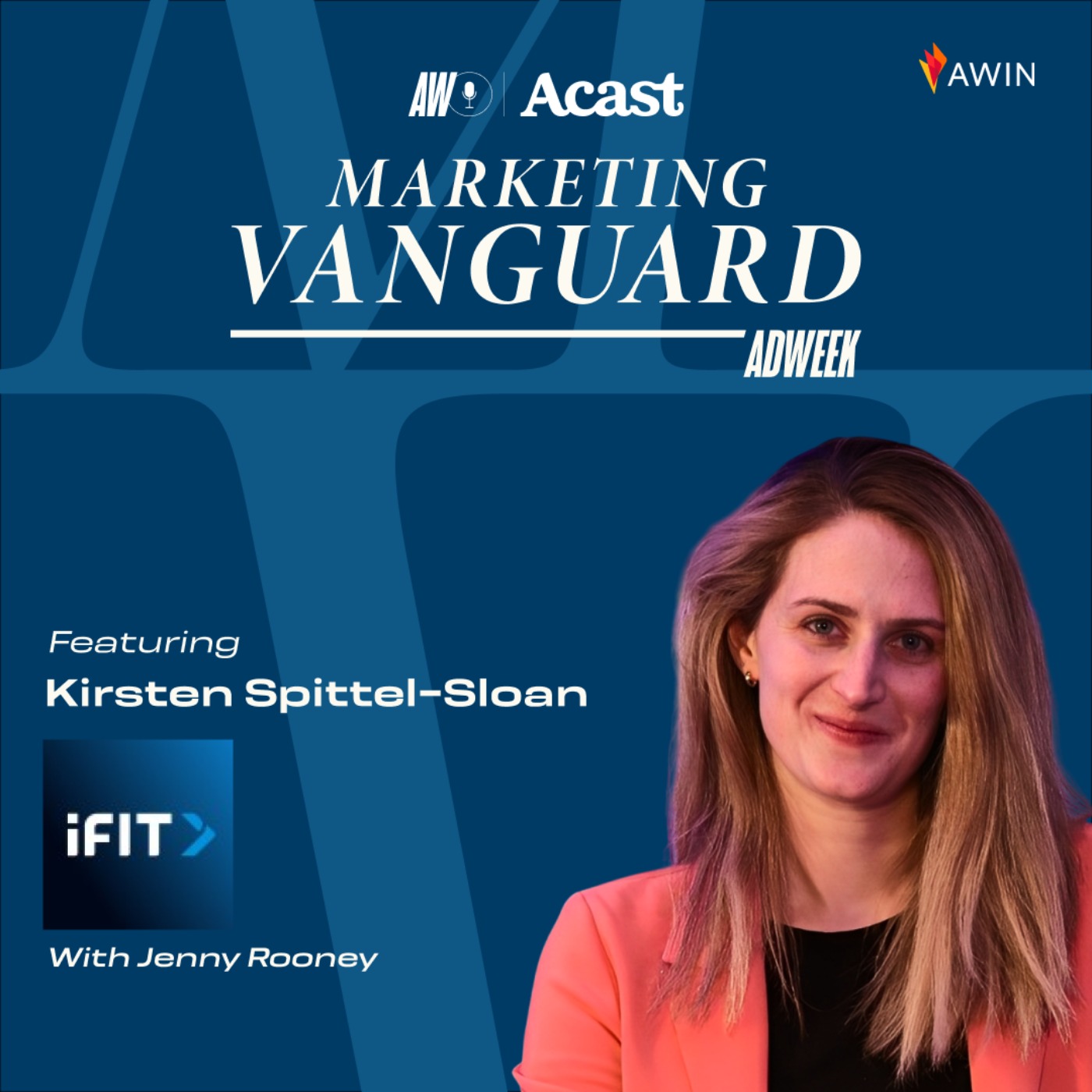
Marketing Vanguard
What Keeps iFit Ahead of the Curve? Kirsten Spittel-Sloan’s Personalization Secret
00:25:55
Loading summary
Transcript51 lines
- [00:00]
A
Did you know influencer marketing drives twice as many sales as display advertising with a 37% higher retention rate. AWIN helps brands unlock the full potential of the creator economy with their influencer management solutions. Utilize their robust discovery capabilities and creator management tools to build your perfect creator roster and track full funnel performance. Visit awin Link Adweek today and start building high performing partnerships. That's a W I n Link Adweek.
- [00:34]
B
I have a special place in my heart for anyone who's entering the marketing field right now as someone who's new because you not only have to be a technical expert, but you also need to be an artist in your storytelling and that is a lot to take on.
- [00:49]
A
Hi everyone and welcome to the Marketing Vanguard Podcast. I'm Jenny Rooney with adweek and I am thrilled today to be joined by Kirsten Spittel Sloan. She is the global marketing head of iFit. Kirsten, welcome.
- [01:01]
B
Thanks Jenny. Pleasure to be with you today.
- [01:04]
A
Well, it's exciting to be with you. I'm excited to dive in and learn more about iFit, but also learn more about you. And in the Marketing Vanguard Podcast, I love to have global marketers walk through a little bit about their backgrounds and a little bit about what got them to this place. So I'm going to start there with you and then we'll talk about IFIT after that point. So.
- [01:24]
B
Sounds good. Yeah. So prior to iFit, I was a consultant at McKinsey for about five years where I advised Fortune 500, CMOs, C CROs on growth initiatives and things like that. But I started my career sort of in the more startup Y space, if you will. So I started in startups and nonprofits in the D.C. area where I wore all the hats. So I have been a digital marketer for the better of 15 years. Learned a lot of it by just going into the details myself for the first time and really building companies and programs from the ground up. So I joined IFIT to help scale scale some of our bigger initiatives that we have going on globally. And that's sort of my sweet spot, I think about how do you take something that is in infancy and make it into something that can be quite large?
- [02:08]
A
So I love that. And obviously that's a unique path to your current role. Talk a little bit more about your time at McKinsey because I mean, that's when you were obviously spending time with CMOs and getting a firsthand look at what they're dealing with and now you're in a practitioner role. So talk a little bit about that experience and what it has afforded you.
- [02:26]
B
Yeah, for sure. So the benefit of going into management consulting is that you do get to look at multiple aspects of the business and rotate on a regular basis. Right. And so I spent most of my time at McKinsey working with tech and tech adjacent companies. So folks who are thinking about not just software as a service, but also like, how do we engage with our customers with our digital products as well as our physical products that you can experience in retail. And so really got to see sort of both ends of the spectrum when it comes to thinking about the consumer. So not just like where do they shop, how do they show up, how are they learning about products, but really how do they engage with them post sale as well. And how do you drive retention there? A lot of my clients at McKinsey were really thinking, particularly during COVID about how do we engage with people when they also don't have as many in person touch points. And so it's fascinating to watch the AI changes that are coming right now and sort of how fast that's moving because I think we have a similar leap period, if you will, during COVID when we saw consumers really go to a truly digital first touchpoint moment. Not neglecting in person, of course, but really thinking about what does that lifecycle marketing look like and how do we drive engagement and retention more broadly on that 365 view.
- [03:41]
A
Interesting. Would you recommend that all effective CMOs start their careers or include in their careers or stop it McKinsey or some consultancy?
- [03:51]
B
Not necessarily. I think what I appreciated about my experience at McKinsey is I didn't just do marketing, I did about 90% marketing, but I also did go through and I did operations projects, I did acquisition and merger projects. So I had like a well rounded post MBA experience, if you will, to really refine just some of the practitioner skills that you want in that C suite moment. When you're thinking about the broader business, I think you can get that experience in startups as well, or in your own ventures. Entrepreneurship, there's many ways to get to the same thing. I think what I was afforded in my experience at McKinsey is really seeing that in very large companies at that global scale as well.
- [04:33]
A
So now let's talk about iFit. I'm curious, how long has it been in existence? Is it part of a larger network? Is it private equity backed? What's the structure, if you will, of the company itself?
- [04:44]
B
So IFIT is a family of brands. Our best known brand is NordicTrack, which is celebrating its 50th anniversary this year. IFIT also has Proform Free Motion and of course the IFIT product underneath our umbrella. We recently acquired another brand called ReformerX. So we look at fitness holistically. We are private equity owned, so we're at L Catterton family brand. And as someone who's been newer to the business in the last two years, they bring a wealth of knowledge and just connections that are helpful as we think about skills scaling and growing the business going forward. I think ifit is unique in the sense that we do have all of these brands, but our flagship brand, iFit, is the least known. And so as a marketer, it's a good problem to have, I think in the sense of we're trying to do a lot of things to really help keep people moving and we have the opportunity to take a lot of our learnings and knowledge over the last 50 years and apply it to effectively, almost a new brand with iFit in that sense to the consumer. I'll give you the 32nd pitch, Jenny. So we all need ways to work out and move. IFIT is the platform through which we deliver those types of workouts and workout information to you. IFIT is available on mobile devices as well as the machines. So if you're on a NordicTrack machine, you can go and just do a basic run on your treadmill, but your experience is substantially enhanced when you use IFIT subscription on top of that. And that's because IFIT will not only give you a breadth of thousands and thousands of outdoor workouts, which are beautiful and we've spent lots of money filming them around the world, some are even Emmy nominated. But it also adjusts all of the workouts to you. Right. So you've done several series of workouts and you keep hitting that button up like, I wanna go faster, I feel good, I wanna go faster. It's going to learn that. And the next time you get on in a workout and say, hey Jenny, you've been progressing this faster than where it starts, like, let's keep you at that pace, let's push you a little bit harder, let's give you the best results for you.
- [06:39]
A
That's great. It's interesting because I hear personalization in that you didn't use that word, but obviously where it goes. And then you brought up AI. I mean, AI would probably play a tremendous role in furthering the personalization of the experience and the product per person.
- [06:53]
B
That's right. We put an early flag in the ground last January, I want to say, when we launched our AI coach with iFit. So AI coach today, it recommends you the next best workout. It's helping think through your schedule to make sure that you are actually showing up to do those workouts and adjustments, adjusting as needed. Right. And we're adding a lot more features to that technology to further personalize the experience to our members. Because I think one of our values as a company is like how do we create habit forming fitness? And part of that has to be that personal element. Like it's not just about the same routine for everybody because that doesn't work. So we've invested quite a bit in technology to help drive that outcome for folks.
- [07:33]
A
It's funny because you mentioned Covid before as being such an inflection point in spurring people to adopting tech and sort of the digital formats and the digital interactions, certainly with shopping. It's funny because I feel like leading up to Covid we had like the rise of the DTCs which was sort of like 16, 17, 18, 19 ish, and then like Covid hit and like sent that into hyperdrive and forgive me if my dates are off, but there was like a period of time we were progressing, then it kind of went into high speed and Covid. It's also ironic that I'm talking to you and you're the global head of marketing at iFit. Peloton obviously was like just the Cinderella story during COVID because that was also a fitness mechanism that people just rushed to, literally. So anyway, there's neither here nor there, but I do think there's an experience that you probably lived through, the Peloton case study. Obviously you were an outsider looking in at that point. But is there any learnings from that kind of the rise and fall of Peloton during COVID that you're kind of, you've been taking into sort of now well on the other side and thinking much more about all of the other inputs. You know, health and wellness is at an all time high right now. That never left us after Covid. Right. Plus you wed in the tech piece and the AI and the personalization. There's just a lot of inputs. Right. That you personally, I would imagine have garnered through everything I just talked about that you're sort of having inform how you lead the marketing for iFit. Now that's a big question. But click from it what you want.
- [09:06]
B
It is a big question, Jenny. So I'm SVP of marketing right now and in my role I look at the intersection of customer voice and operations of the business. Right. And how do we like take what we're seeing in the market to be true and how do we operationalize that and really make that the best for all of our customers globally? And I think one of the learnings from COVID and Peloton's not the only use case during that that we can point to. So many brands went through that moment. Right. I think is you need to invest along the funnel equally. And I think what we have learned, particularly as we look at some of our newer markets, is just that use case, particularly at a very fast moving pace of change. Right. So how do you tell stories that are authentic to your brand at each phase of where the consumer is in a way that's going to resonate and do it at scale? And I think that's the biggest challenge to any marketer these days is to your point, when there was the rise of dtc, everybody doubled down and they invested heavily in E commerce. Then during COVID you see like influencer marketing and social marketing take off. Right? Because everybody's on their phones more, they're at home, they're not necessarily going out and hanging out with folks. So we're looking for different voices to influence them. And now I think we're in this new moment where we're seeing this with AEO with search results and OpenAI announcing shopping in ChatGPT now, like, it's all changing so fast. And so I think for me as a marketer, the learning is like you need to keep a pulse on your customer, really know them deeply, understand where they are and not spread yourself too thin and trying to win everywhere, but rather try and stay true to this brand narrative that you're telling and pick a couple places where you can tell that super strongly. And then of course, like, have your coverage. Right. I'm not saying ignore the rest of your funnel, but, you know, pick and choose your battles wisely. Because the other piece of this is you have to be testing and learning on the back end because things change so rapidly, right. I think six months ago we started talking about aeo, right? AI Search optimization. And now I saw a stat this morning somewhere that was like 50% of US consumers are doing some version of E commerce shopping through ChatGPT or AI. That's wild. That's a huge adoption curve. Right? And so at the pace of change, we need to stay relevant, which means as marketers, we also have to learn a bunch of stuff on the go all the time. And so I have a special place in my heart for anyone who's entering the marketing field. Right. Now, as someone who's new, because you not only have to be a technical expert, but you also need to be an artist in your storytelling. And that is a lot to take on.
- [11:47]
A
It is a lot to take on. So I want to go. There's a few things you said there that I want to kind of dive into a little bit more. You said you have to know your audience, know your consumer incredibly deeply and as. As best as you possibly can. What are you doing tactically to make sure that you guys have that insight?
- [12:05]
B
Yeah, for sure. So, I mean, we do a lot of social listening, of course. We conduct survey groups and focus groups on everything from macro topics to micro topics where we want to go deep. We do. And we spend a lot of time ourselves, like, reading and collecting trend data and just trying to understand, like, where are folks shopping? What are they caring about, who's resonating with them, who's influential to them? We've in the last two years, really doubled down on our content creator, program, influencer, whoever we are calling them these days. Lots of different names for them, but folks who can help us tell our story to their audiences in their own unique way. And we've seen that be very beneficial to us. And I think that's where we also learn a lot, too, as to, like, why it works so well. And so I think back to my point on testing and learning, like, find your measurement tools that are helping you understand what's going on in the market. Sign up for things like AdWeek to know what the trends are in terms of some of the bigger pieces. But also, like, don't be afraid to go to a new channel and learn something.
- [13:05]
A
Yeah, I love that. I'm just curious, what about economists? Like, you watch economic data, trend data, consumer spending. Like, I just. I'm obsessed and I just feel like marketers hopefully are spending a lot of time there.
- [13:17]
B
So my undergrad degree was in economics and international affairs, so this is a very special place in my heart, Jenny.
- [13:23]
A
And I did not know that. Full disclosure, I should have known that. But that question was not based on what I realized.
- [13:29]
B
Yeah, no, that's good. And look, I mean, I definitely did like a 180 right out of school and went straight into business. So, like, you wouldn't have known. But yes, we look at economic data. To me, it is something that it can either be a trend of, like, hey, what has happened historically and do we see any deviations from the trend? Or it sometimes can be an indicator of something coming. Typically, economic data is lagging, though. And so something that we look at is more of the tech trends that come out. Right. And some of the cultural moments. Right. This is where social listening can be so powerful because the tools can, they can monitor the things that you care about, but then they can also monitor periphery. And I think listening to that periphery has been helpful, particularly in moments of culture. And I think the one thing that we've been doing better, but probably have a lot of room to grow in is listening to the younger generations too. And what they're up to. Our core products are for folks who are, we'll call them 28, 30 years old and up. Doesn't mean that somebody who's 21 couldn't use it. But I think we've designed something that's really for that person who's entering middle.
- [14:33]
A
Life and he has a certain income.
- [14:35]
B
Has a certain income, has a certain need. Right to fulfill. But from a marketing standpoint, we pay attention to Gen Z and soon Gen Alpha. As they enter into sort of their moment, just understand, like, what are the different ways that they're interacting with the world? Like, how are they working out? Right. What does fitness look like for that generation? So we can start to think about the other places and channels where we can meet these people as marketers.
- [15:00]
A
So the other question that I want to go back to embedded in something you said, was my mind goes to talent and my mind goes to teams and how internally you're building an organization that is really flexible and really adaptable given all the change that is going on. And honestly, and I'll just ask, you know, how do you think about salaried employees versus contractors versus like there's such a art to establishing a workforce that is going to be reactive, responsive, but also can dial up, dial down. Not unlike the way agencies frankly think about the work that they do. It's very client focused and sort of like you have to expand and contract as the needs of the business come forward. How do you think about that?
- [15:44]
B
Let's talk about the culture piece first of it, right? So as you think about scaling businesses and growing and adapting to change, particularly at a high rate of change, you need to instill in your teams two things from my vantage point. One is high trust and two is that adaptability and you as a leader in that need to showcase what that adaptability can look like. If you don't do either of those, I think you set yourself up to fail because there's a lot of moving parts. And if there isn't trust, what is the team going to like land on to say like this is the right thing for us to do as a business. So I think those are like keystone in terms of how we think about like the team culture. Then add in sort of your flex levers if you will. So we have a couple different agencies we work with. We have a bunch of freelancers on our creative side that we work with and we're testing new things too. I mean part of what's in my remit is how do we ensure that all the good things that we do in the US we apply to where relevant in our other markets around the world. And sometimes that is an exercise in localizing and sometimes it's exercising, doing something completely different. And so for us we try to staff against that with key folks who are really owning the whole problem and then pulling in resources to help them solve either like the next tranche of it or bring in some capabilities that we just don't have in house to really understand things better.
- [17:08]
A
Did you know influencer marketing drives twice as many sales as display advertising with a 37% higher retention rate? AWIN helps brands unlock the full potential of the creator economy with their influencer management solutions. Utilize their robust discovery capabilities and creator management tools to build your perfect creator roster and track full funnel performance. Visit AWIN link Adweek today and start building high performing partnerships. That's AWIN link slash ad week. Yeah, because I mean honestly like things that are sort of test and learn, the question becomes well, how much do you actually invest, you know, time, effort, resources. So it's so interesting now moving to more questions around consumer sentiment around this stuff, exercise itself. You know it's funny because honestly we're living in the era of GLP1s and I think that the concept of fitness, and you said it earlier, like especially in the context of Gen Z, like how are they defining fitness? And that gets very much more theoretical and I mean that has impact for companies like yours and brands like yours because how people define fitness is going to determine how they use it or how they're spending their time in and around it. So I'm curious your thoughts about some of those other external influences and how you're thinking about being there for their needs even as those needs might morph.
- [18:36]
B
Yeah. At a high level people are always evolving in some sense and so like change is constant and we know that. I think for us from a fitness standpoint, like the fitness trends that are coming in into light running is having its all time high again because it's social. Right. People are going there to find friends and community and sometimes even date. Like that's what running is becoming used for right now.
- [19:00]
A
But that's fantastic.
- [19:01]
B
Yeah, yeah, lots of running groups just as a point on trends we're seeing but I think for us it even more like puts a pin in the need for personalization. Right. And like the benefit that we as ifit are offering to like help you figure out what your fitness routine needs to look like to solve your problems and that's gonna even evolve. I mean I have a three year old so like my life is in constant change because it really depends on how well he slept last night whether or not I'm going to make it to the gym at 5:30. So I think having tools, having the technology that we're investing into our fitness solutions to really help make that real for people and adaptable for people is something that we believe is a big need and we're trying to help solve for.
- [19:44]
A
The other question I had was around PE backed and more and more it seems like generally speaking CMOs, heads of marketing, where they are looking for opportunities or where they might find opportunities are at PE backed companies. To many that might be an environment that they're not familiar with and maybe they've never worked for a PE back company. But it does seem to be percolating as a topic of intros to CMOs en masse, like in general, just curiosity around that. Can you speak to anything specifically to that? Like what does it mean? How has the definition of marketer and marketing maybe shift or change or is there anything new different that is put upon a marketer marketing leader within any given organization at a company that is specifically PE backed? And what would you tell other CMOs who might be considering opportunities in those kinds of environments?
- [20:36]
B
Yeah, well, I think it goes back to my point earlier I made about how marketers have to be both really technical and also great storytellers right now. I think this is true at PE backed companies as well as many places. I mean tech is another example, may not be PE backed, it may be VC backed or otherwise. But like the way that you measure marketing effectiveness is very much in light, more so I think than it used to be. And there's more technology and we're getting smarter about how we can start to measure some of those things. So I think the bar for CMOs to be really analytical has been raised and that is not going to go away is my perspective on it. But I think the balancing act is then because there is more emphasis on how do you measure, how do you know, it's effective. How do you scrutinize that next dollar you spend? Spend. It's important to balance and bring balance to that storytelling angle. Right. And ensuring that we're not losing sight of the benefit of brand and losing sight of. How do we ensure that we're not just being really p roas focused, but instead looking across all of our levers in marketing and saying, okay, here's where we're going to invest and here's the payback that we expect. But it's going to be slower because we know that we need to go and reach a new audience and tell a story, tell us to somebody new who needs to hear us a couple times before they consider buying what we're selling. So I think that's going to be the give and take. I think what's great about PE is that you get a lot of resources behind it and people supporting you. And so, yes, you're held to a high standard, but at the same time, you've got folks who are invested in the same outcomes. And I think that's a benefit of PE as well.
- [22:17]
A
That's awesome. Very well said and helpful. What's next for y'?
- [22:21]
B
All?
- [22:22]
A
What's on the road ahead? I mean, we're coming into the fourth quarter of 2020 25. We've got 26 on the horizon. Well, on the horizon, what can we expect to see from iFit?
- [22:32]
B
Yeah, so we have a couple of really exciting things happening. I don't know if you saw, but our Altra one treadmill that we launched earlier this year was on Time's best inventions list. So we're very excited about that family and its growth going forward. I mentioned we acquired the Pilates company Reformerx, so expect to see some more movement on the Pilates front from us coming up a lot.
- [22:53]
A
Is this really hot again? Like, it's just feels like it's having a moment. For sure it is.
- [22:59]
B
Yes, for sure. I think it's a really exciting modality and one that we've been just learning a lot about as a business as part of this acquisition for us. So more to come there and then pay attention. We may have a couple things coming down the pike on the IFIT side in the new year. So some cool things that I won't tell you about now, Jenny, but maybe we'll talk later on that topic when they're out.
- [23:19]
A
Perfect. We'll circle back around for that. Adweek would love to break that, so that would be great. Last couple quick questions. What would your team say about you as a leader, how would they define you?
- [23:30]
B
So I think for context, I work mostly remote, but if you ever do meet me in person, I'm six three, so my personality is very bold and blunt, but in a very loving way. And so I think my team would tell you that I will just say things as they are, but I will be there to help you work through and problem solve them the whole way through. And sometimes that can be intimidating, but usually it's best intended. And back to my point on high trust. Like for me, that's one where I have learned in my career that people are usually well intentioned. And so with my teams, I'm not here to micromanage and that's not of interest to me. And so I will give the high trust and I hope that will be received as well because that's my M.O. in terms of how I operate. And so I think they would say that I can be a lot, but I am somebody who's going to be in their court.
- [24:20]
A
Well, I love that. I have to ask you at 6:3, what was your sport? I'm assuming you had a sport.
- [24:25]
B
Yes, I was a rower.
- [24:27]
A
Amazing. So let me ask you this question because usually. So I played soccer growing up. So my analogy is usually a soccer team on a soccer field. But I'll ask you what I know about rowing. Is the coxswain, obviously is the back commanding the team and motivating them to push forward in that lineup of individuals in a rowing team, where do you sit? What is your role as a marketing leader? Are you the coxswain or are you at the front sort of leading the way?
- [24:54]
B
So I typically rode stroke seat, which would sit facing the coxswain at the back of the boat. And they set the pace, they set the tone. They very much are like keeping the cool for the team, but also have to dial it up when the coxswain tells them to. And so like I would work very closely with the coxswain to help what we call read the boat to understand, like what do we need to do to really win the race? Great.
- [25:18]
A
I will tell you, rowing is the first sport that I've been able to ask about in the context of marketing vanguard. So I've had some folks always put soccer out there, but people want to come back and say, well, can we use basketball? Can we use football? Depending on what they're used to. So yeah, we're breaking new ground here with that. But I love that last quick question. Who's next? Who is a CMO or marketer that you admire because of the work they're doing putting out in the world. And it could be somebody that you know really well, or it can be somebody you admire from afar and you've never met them, but you just think that their brand work is extraordinary.
- [25:51]
B
That's a really good question. I don't know if they have a CMO on their team, but there's a group of women that's founded together to your point on sports earlier, and I'm really excited for what they're doing with that business because not only are they treating it, it's a media company for women's sports, but they are also taking a sort of investment thesis approach to things as well. So again, not sure if one of the four of them has decided to be the cmo, but what they're doing with that is really exciting.
- [26:18]
A
I love that. Well, I'm going to look them up and in the meantime, Kirsten, thank you so much. This has really been enlightening. I've learned so much about iFit. Obviously your background is so unique and you've got incredibly great perspective that I know everybody listening has benefited from. So thank you so much for joining me.
- [26:34]
B
Thanks for having me, Jenny. I appreciate it.
- [26:36]
C
Thank you for listening to Marketing Vanguard, part of the Adweek Podcast Network and Acast Creator Network. You can listen and subscribe to all of Adweek's podcasts by visiting adweek.com podcasts. Stay updated on all things Adweek Podcast Network by following us on Twitter at Adweek Podcast. And if you have a question or suggestion for the show, send us an email at podcastadweek.
- [26:59]
B
Com.
- [26:59]
C
Thanks for listening.