← Marketing Vanguard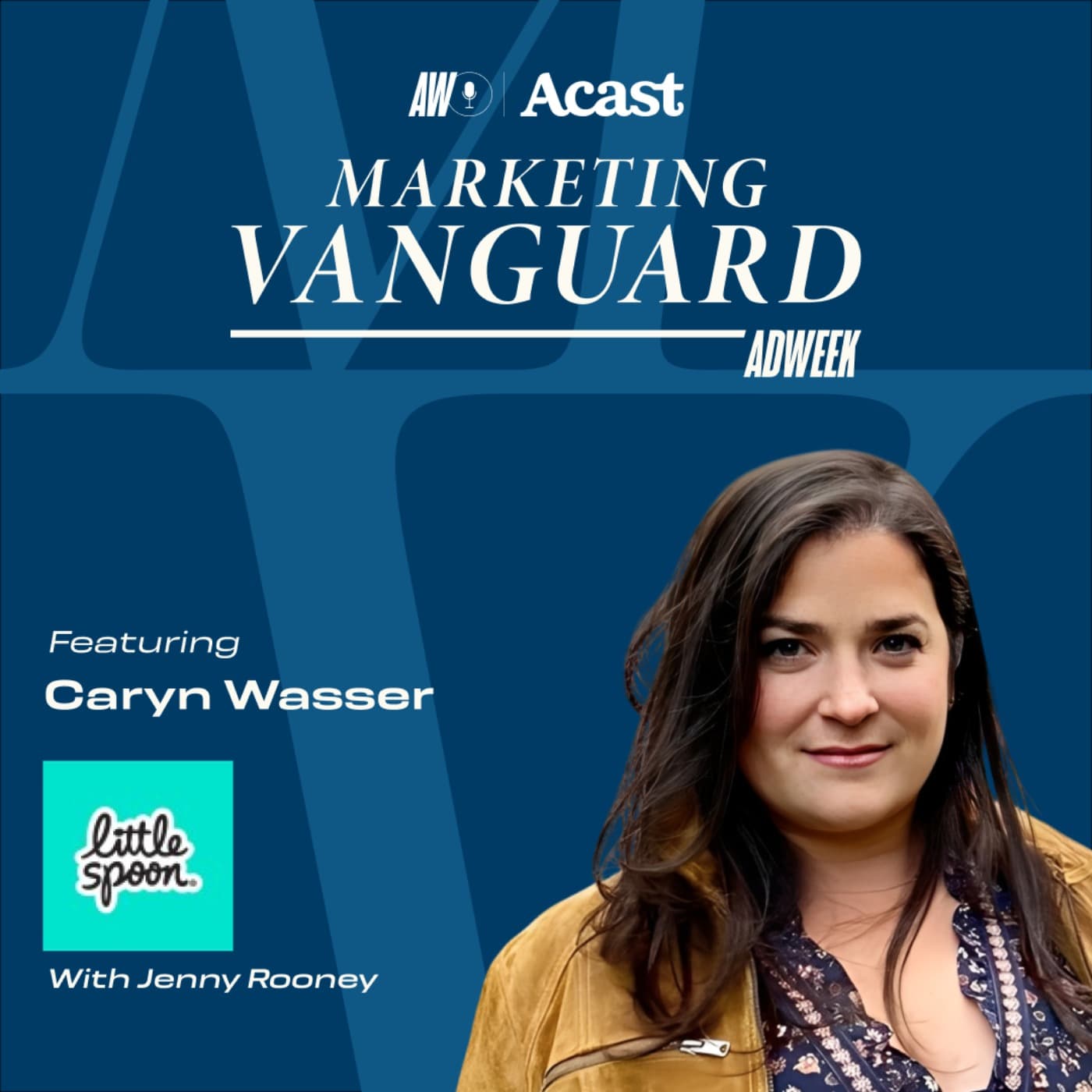
Marketing Vanguard
When Your Brand is Core to the Growth Engine, You Need to Learn How to Drive ft. Caryn Wasser
00:29:56
Loading summary
Transcript48 lines
- [00:01]
A
Who do you think does more planning for football's biggest game? The coaching staff or the advertising teams? Well, while we may not have insider access to the locker room, we do know just how much goes into fine tuning the perfect brand moment for advertising's brightest stage. On February 6, Adweek House will be touching down at the City Club of San Francisco to huddle up with the industry leaders whose winning approaches have won the competition for consumers attention. Join us to build connections, pick up playbook defining strategies and predict which creative work will will have everyone buzzing and quarterbacking on Monday morning. Head to adweek.com for more information.
- [00:42]
B
The way that we think about brand is that brand is very much core to the growth engine and therefore every marketer on this team needs to be connecting the dots.
- [00:54]
C
Hi everyone and welcome to the Marketing Vanguard Podcast. I'm Jenny Rooney with Adweek and I am thrilled today to be joined by Karen Wasser. She's the Chief Brand Officer at Little Spoon. Karen, welcome.
- [01:05]
B
Thank you. Excited to be here.
- [01:07]
C
I'm excited to have you here as I do with every Marketing Vanguard podcast. I really would love for you to tell everybody a little bit about you and then we can go into the company. But I just, I find people's individual journeys so interesting and you certainly have an interesting journey and I won't spoil it for everybody. I'll let you kind of walk us through. But you've got some incredible experience behind you that has gotten you to this role. So over to you.
- [01:33]
B
Yeah, thanks. No, I agree. I've been fortunate. So I started, I guess, just backing up. I started my career on the advertising side, actually. I spent the first six years of my career and I kind of got lucky that I started in otc, moved to cpg, did a bit of food and beverage. But everything that I touched when I first started my career happened to just be either a brand launch or a brand refresh. And so I got this great fortune of being at. I started at Gray, which is a very traditional ad agency, like literally the origin of Mad Men coming out of Gray. So very fundamental brand building knowledge really applied to me very early in my career and I just got lucky that the accounts that I was working on were these like really juicy briefs of refreshes. The brand, the business was having some issue or decline and they needed to kind of reset and re understand what needed to happen on the brand side. Or I got lucky that we were launching something new, launching a new brand or creating a new branch out of like a Pfizer entity. So I started in that traditional ad world. And I think the theme for me is that I'm a very nosy person. And so at the end of the day, how I kind of ended up on the marketing side was this, like, hey, I'm only seeing like a piece of the pie. Like, how can I really solve the problem if I'm only solving within the confines of whatever channels you're briefing me at an ad agency? So I switched from Gray to Anomaly. Anomaly is a really fantastic creative shop that basically says, give us your brief and we'll tell you how to solve it. So in my mind, that was the solution. That was how I was going to see the whole pie and I was going to get to nosy my way in. And I had the really great fortune of starting on the Budweiser account, which turned into a four year incredible journey of brand building. But ultimately I realized I was even nosier than I thought. And being on the agency side of the fence, I wanted to. Wanted to knock on the door of what the distribution team was doing. I wanted to knock on the door to understand how we could be resetting in different places and spaces. And that ultimately drove me to wanting to go client side, as they say. So long story short, I ended up client side starting on Chop the Salad company. Super interesting two years where we were able to rebrand, chopped, launch chopped in suburban markets and in the south. But it was ultimately a business working with restaurateurs. And it's hard to run a restaurant. And when you're a lover of brand and a believer in the opportunity that a strong brand foundation can create, you want that spark for something bigger. And I found my way to Little Spoon through a couple of coffee dates and they ended up creating the role for me. So I started as the second employee. There was just a couple of us in a windowless wework room. There was one category. It was less than a year into the company's launch when this was six years ago, by the way, was almost seven years ago now.
- [04:31]
C
Almost seven years ago. Okay.
- [04:33]
B
Wow. Yeah. And today we have 11 different categories. We're the largest online baby and kids food company in the US. This year we'll do north of 150 million in net revenue. And the journey has just been hard to put it towards. Incredible.
- [04:47]
C
Are you founder led? VC backed, pe?
- [04:50]
B
Founder led, yeah. So our founders, Ben and Angela, they're our CEO and our chief product officer. I work with them incredibly closely every day. We've become incredibly close friends over the last seven years. And then we have a Leading investor Valor, who we've been fortunate to have lead the last two rounds for us.
- [05:09]
C
I have so many questions based on that. First of all, yes, Anomaly, I mean, yes, Gray, obviously just like getting your feet wet there. I mean that's just like fundamental, right? Especially if you are someone who comes up through the agency world. I mean, I love that traditional creative agency, long legacy. But then to go to Anomaly, which I actually got connected to Anomaly when they were working on the Converse account and Jeff Kotchal was the CMO back then and they just did some extraordinary work, incredible work.
- [05:36]
B
My favorite search campaign ever, that Converse campaign, right?
- [05:40]
C
Just phenomenal. So, like they also have a legacy. They have obviously defined themselves as such an incredibly dynamic, unique creative agency. So. And working on Budweiser, I mean, you go like multi billion dollar global business in. You said you were nosy, but then you go to something that is. And chopped in between. But now you're. I mean, you went from one extreme to the other. So I have to think there had to be a level of fearlessness in you to make that move. Cause it's. It was different.
- [06:12]
B
Yeah, I mean, I think I was nervous to do it. I mean, totally being candid with you, with the audience. Like, when I decided to make the jump to Little Spoon, I was taking a significant pay cut. I was joining a company at the very beginning and I really debated it and I spent time talking about it with my parents and my dad said to me, karen, you're getting paid to go to business school. Take the job. And that was the best advice that I could have gotten. Because beyond having the incredibly powerful experience of being able to build this brand over the last seven years, being able to launch, we now have over 120 different products. Being able to like, create and cultivate the community and the brand experience that we've been able to foster, which is just incredibly gratifying for me. I've also learned how to run a business, how to take on headwinds, how to deal with constant change, how to like, find the awareness within me as a leader and as somebody who is ultimately trailblazing this business with the co founders. I've learned so much beyond what would have been possible for me if I was in a brand role or I was in a marketing role, you know, somewhere that had the sausage made already or was claiming to be willing to like unpack. But once things are made, all this stuff gets layered on top and it's really hard to go back to the foundation and it requires a lot of discipline. And it's really hard to be the new person who walks in and knows that's what the brand needs. But like to convince people of that is I think oftentimes like the real challenge of being a brand leader is convincing people. Because oftentimes brand leaders don't have the luxury of last touch attribution or spreadsheets that prove the tangible value. It requires founders who believe and it requires belief in that leader. So it's a totally different experience to build it from the ground up.
- [08:11]
C
Well, and also what you're able to build from the ground up is the role, the chief brand officer role, which is so interesting. And I obviously we spent a lot of time thinking about and talking about what is the role of cmo Wither the cmo, do companies still need them? How is their remit role, remit responsibility being redefined? You actually had a blank slate to come in and actually craft the role. So tell me a little bit about because few people have that experience as well. On day one, what did you think it needed to be and how has that changed since, in the last almost seven years since you've been there?
- [08:41]
B
Yeah, I mean I think especially for Little Spoon, but I would dare to say it's the case for every category. And certainly you can create and we all know to create as marketers like a villain or like a why your company exists. And especially for Little Spoon, like Little Spoon came to the market because the situation was fundamentally broken for parents. This generation of parents, they are always on, they are more time strapped than any past generation. They are statistically more likely to be part of a dual income household. There's a rise of single parents out there. There are also technologically totally and completely dependent and their lives are happening online. And that's part of what makes life always on. Like you don't just drop your kid off at daycare and go to your day. You get updates all day long from the daycare while you're working your full time job. So you pair that with also an incredibly food knowledgeable generation, a consumer that has changed so much of their own behavior as they've learned about the connection between food and health. And then you realize, okay, what this parent needs is super convenient options that are good for the child and that they feel good about and they feel proud to serve. And you go to the shelf and what's at the shelf are products that have been there since certainly like we were children ourselves. And in the case of the baby food aisle, the brands that are like the legacy players on the shelf. They've been there for nearly a century. And so really with Little Spoon, the brand, not just the product solution, but the brand had such a massive opportunity to drive the growth for Little Spoon. And really our belief is that we are brand led, our growth is because of our brand. And of course, like our experience doubles down on that and our product experience doubles down on that. I view my role as like, how does Little Spoon exist in the world? What is Little Spoon's role in disrupting this industry, in solving for people's pain points in life? And then marketing is really like an enabler of that. Marketing exposes the role that we play. But for me, truly it's about every surface, it's about every touch point. And so I think we have a tendency as marketers to over complicate and over like structure when at the end of the day what we're trying to do is show people why we exist, why we matter to them and resonate with them. And so we just get in our own way sometimes by like structuring out these roles and creating new roles. And we need this or that. You know what, like the Mad Men days, like it really is that simple and we just need to root ourselves in like what is the truth and how do we tell that story the best way?
- [11:28]
A
Who do you think does more planning for football's biggest game? The coaching staff or the advertising teams? Well, while we may not have insider access to the locker room, we do know just how much goes into fine tuning the perfect brand moment for advertising's brightest stage. On February 6, Adweek House will be touching down at the City Club of San Francisco to huddle up with the industry leaders whose winning approaches have won the competition for consumers attention. Join us to build connections, pick up playbook defining strategies and predict which creative work will have everyone buzzing and quarterbacking on Monday morning. Head to adweek.com for more information.
- [12:10]
C
I love what you just said, by the way, because it's so obvious and yet I feel like it gets lost. Like there was no ego in what you just described. Like you literally let the business dictate the role full stop. And again, I'm like stating the obvious. And yet I feel like people talk about the CMO role and CMOs talk about the CMO role as if it's almost divorced from just let the business dictate what the role should be, not dictating or crafting it sort of out in some sort of ether that is disconnected from anything else totally.
- [12:41]
B
And I think what happens is it's hard. You know, it's easy to be reactive. Everybody is. And it's easy to also, like, get enticed and intrigued by like, what the flavor of the week is. But if you design a marketing strategy without a really fundamental connection to the brand, nine times out of 10, what ends up happening is like your business is going to plateau or your business is going to decline and you're going to start to dig into it and you're going to realize that you've been an adrenaline junkie and you've just been chasing for conversions any which way not rooted in, like, the reality of what the person is living and needing and how the brand is showing up to support them. It's just really like the very simple truth that everybody point of data is a proxy for a person. And if you root yourself in, that is who is looking, that is who I am targeting, that is who the impression is. It is the mom with two kids. It is the dad who's now a single dad with twins. How do I get to their core needs? How do I express how we are the right fit for them?
- [13:49]
C
It really is human at scale, right?
- [13:51]
B
Yeah, a hundred percent.
- [13:53]
C
How are you thinking about building your teams and your org around that? And how many people do you have you hired in those six years?
- [14:00]
B
Yeah, no, for sure. I mean, I think like the theme for Little Spoon is we are just growing so rapidly and the growth has been so explosive that the team kind of jokes. But it's really true that, like, we have a different fundamental business, like almost every four to six months because the business needs change as the scale of our business continues to grow. Right now we have 25 or so people on the marketing team. And the marketing team really operates as a single operating system. True full funnel in nature. And really a breakdown of this bill of goods that we've been sold by many through the years. That, like, brand is a halo. The way that we think about brand is that brand is very much core to the growth engine. And therefore every marketer on this team needs to be connecting the dots. What's happening in organic? What's ripe? What's sticky? How do we amplify that on the paid side? What are we learning on the paid side that could actually help support organic? Like, there's gold in the comments that we get on our paid ads. There's gold in every single place and space. And so obsessing over how we really understand how each person is a link in the chain and kind of treat ourselves like detectives that are really looking at different signals as these indicators of our relevance and how we're really producing the results we want is like how we run the team. So we have department leads for each sector that you would imagine. We have an incredible art director, we have incredible brand directors, we have a lifecycle lead, a performance lead. And we really work hard to then not only have that kind of group of leads meet regularly and discuss and debate and really treat themselves like business owners, but then cultivate also because philosophically, like I want the associate marketer and I want the coordinator on these teams to understand like you're not just doing something in a silo for your channel. Like you are actually affecting the entire funnel. You are actually a part of how everything rises up. And so we really try to push that. And honestly, like you can bet that in my 2026 planning and the work that I have coming for that director level, crew and up, it's a continued push. It's like an always on how do we build more connective tissue, how do we support more knowledge sharing, more cross sharing? Because there's gold everywhere. And especially in such a digital first brand, there's literally gold in the comment that we dropped on a influencer's post that ended up getting 6,000 likes. You know that one comment got 6,000 likes. What can we learn from that? What can we discuss on that? And I think it's pretty rare right now. And it's an unfortunate reality that like the community manager of the TikTok account is spending time talking to the campaign manager for the paid approach on the platform. But what a shame for those two people not to be talking because what we learned last week is how resonant this was to the community. There's gold there and how you could turn that into convertible creative.
- [17:21]
C
Yeah, Tell me a little bit about your retail strategy because I think I saw you are sold in Target and some other big box stores.
- [17:27]
B
Just Target.
- [17:28]
C
Just Target. Okay. You started out just pure online, just E commerce. When did you make the switch to Target and what is your retail strategy moving forward?
- [17:38]
B
So it is definitely not a switch. It's definitely a yes and which is very exciting and excited to see this prove out because it definitely is unique in the D2C space. We entered Target just last month, Jenny. So it's really new. That was a big one for sure. We entered Target last month. We entered with so little spoon. Just for everybody's knowledge is a full platform. You can start with us and and stay with us from baby stage through to like early grade school. We have over 120 different products, we have 11 different categories from like Baby purees up to build it yourself lunches. So within those categories, of course, we have just a ton of opportunity to decide what we bring to shelf. What was really important with our retail approach was making sure that what we brought to retail represented the brand. We had many retailers knocking on our door saying hey, we want your pouches or hey, we would love to carry a couple of your big kid meals. And the idea of the platform is really rooted in what we think the consumer needs, which is to feel like there are real complete systems available to them and they can take the guesswork out of different parts of their lives. So we didn't want to go to retail with just like one category or kind of like a couple skus in one category. We really wanted to show up as a brand at shelf. And you know, the relationship building that we've done with Target over the last couple of years really yielded that result. So we launched in six different categories, six different aisles across baby to big kid and 23 products total. And those products are really specific in nature. They are products that are in the baby stage that can help really expose parents to Little Spoon very early in their potential life cycle with us. And then they are products that are typically add ons to the littlespoon.com experience. So think like, like snacks pouches. And then we actually launched a Target exclusive which is some of our cult followed components in our kids meals now available exclusively in the frozen aisle as like family serve bulk bags. So just very strategic in nature and designed to compound growth.
- [19:51]
C
You are going up against some major, major competition. Oh, you have to be an acquisition target. I just feel like the Gerbers of the world would just want to gobble you up. So thoughts about that? How much you can talk about or not, But I'm ask the question. I mean, because you live in a world where just success is attractive, right? So tell me a little bit about that dynamic and how you're thinking about that.
- [20:15]
B
Yeah, for sure. I mean, I think what's been incredible has been the rise of Little Spoon really correlates with some fascinating changes in the market. And some of that I think really correlates to the work that Little Spoon is doing. And I think some of that correlates to this incredible parenting community that has gotten louder and louder about what they truly deserve. Which like we're talking about food today, but I mean we could spend an entire hour talking about what parents really deserve. In the US There is a Hell of a lot lacking for them. But what you see is you see decline from these legacy players. You see that consumers are voting with their dollars for truly like better for you options. And that is really, you know, exc. And it really connects back to like why Little Spoon got started in the first place. Like just realizing, hey, there are more fresh dog food brands than there are baby food offerings. Like, dogs are the best ever, but like babies, you should be rooting for them. So it definitely like goes back to why we got started. But for us, like, it's really like we won't rest. I think the attitude we have is we won't rest until we're truly replacing Status Quo at shelf. And we're just really focused on that. We're really just determined to keep on building like breadth and depth in the in experience we offer and the products that we offer for this parent.
- [21:35]
C
Yeah. And you just gotta keep going because obviously it's the big players, but also it's other startups. So there's a lot of entrance into the market. I think you're absolutely right. The consumer demands and sentiment has shifted so tremendously. And if you're not there to meet that, then that's a huge opportunity. Ms. For sure a year from now. If we were to talk what does success look like? Where do you want the company to be at that point?
- [21:56]
B
What we're really always focused on is obviously first and foremost, we have been DTC for the almost the entirety of the last seven years. And so while we have achieved a tremendous amount of household awareness, there's so much opportunity that lies ahead for us as we enter an omnichannel stage. And I'm just excited for us to continue to drive up awareness of Little Spoon and then to continue to drive up accessibility to Little Spoon. We're really bullish about quality nutrition being a right, not a privilege. How can we do that? How can we unlock more ways as we gain more authority and have more ability to bring more options to families? We very much intend to do that. And I think the other part of it is what we're building is incredibly unique. Like, we do have a lot of competitors, but the reality is they are category level competitors. We don't have a competitor as a platform that allows parents to start and grow through each milestone. And so cultivating the continued engagement of our community and cultivating the continued use of the platform as it is intended will be a huge continued priority for us. We really want to feed your kid through these different milestones and be a part of your life for many years. And so that is exciting. That's led to a ton of product innovation, but it just leads to a gazillion and twenty different digital product experiences. A gazillion and twenty different brand projects that we are excited to stand up.
- [23:31]
C
Celebrity endorsers, influencers, creators, categories like yours often capitalize on that. Is that something that you guys have done, are doing, are thinking about doing, and if not, why?
- [23:44]
B
We have an incredibly robust, like, influencer program for sure. Absolutely. One celebrity endorser doesn't really fit the bill for us. We are building for the consumer, we're building for the parent. We get much more excited when we see, like, a celebrity has signed up for us or they've reached out to us because they need us. They actually really need us in their house. And that's the endorser that we want. We don't want to just kind of have some shiny object for you to look at so that you understand who we are. We want to actually be fueling people's multifaceted lives. And that person could be a very highly recognizable celebrity as much as it can be the person who lives next door to you. And we just want to put that goodness out there. So where we do work with celebrities, where we do work with very big name influencers, it is really rooted in is this authentic? And will that come through in the storytelling? Not a fit for our brand to just have that shiny object strategy deployed.
- [24:43]
C
Love that. Love the intentionality of that last. Two quick questions. What would your team say about you in terms of how you are as a leader?
- [24:51]
B
Oh, my God. They would be making fun of me. Like, I cannot get through a day without being made fun of for, like my weird socks. Or I am a believer that you are only as good as your brief. And by that I believe that you can't really judge a person's performance if you know that you haven't given them the right context. Because, like, I go back to my days at gray, this brief stinks. I can't solve this problem with just this information. And so context is king. And I think they all make fun of me that I always say you're only as good as your brief. But I take that really seriously. Like, your job is to keep each other incredibly well informed and for to challenge yourself. Can you cultivate big idea thinking from this? Is this this enough for the result that you're trying to seek? So I think I'm bullish about that and I care about seeing them succeed. And they do know that and I think that I just come from a place of empathy along the way that brings a lot of fun to the table and I think cultivates the right kind of trust and communication that, that a team really needs to be able to succeed.
- [26:07]
C
I love that I lied. I have two more quick questions. I'm going to be careful at how I ask this question because I don't be misinterpreted, but I spend a lot of time with CMOs who are at, as I said, big multinational companies, not unlike a Budweiser or AV in Bev and also all the way to companies that are disruptors and then everything in between. Right. And what I find that's interesting is certainly the similarities in all of those CMOs, but I'm also seeing the differences. And one thing that strikes me is when you're a CMO, a lot of the CMOs who are at the big multinational kind of legendary companies and some also, some more innovative, like they have honed their influence in the industry, meaning they become thought leaders for like the future of marketing, the future of where the puck's headed and all this stuff that we do. You strike me as somebody who is heads down, so committed to the business, focus inward that perhaps, and correct me if I'm wrong, you don't have a lot of time to think about where are you speaking on stages or what associations or organizations are you involved with. And I guess the question, maybe it's a rhetorical question I'm asking myself. Do you really think that because you strike me as an incredibly so passionate, so driven, so intentional with the work that you're doing as a chief brand officer there is it just the association with the big brand companies that afford somebody influence and that's not fair to them, by the way, because they also individuals are influential, crazy smart people. I guess the question is, how do you regard this concept of CMO influence in the industry on the work that you're doing? Is that something you aspire to?
- [27:43]
B
Is it something that you even think about? I understand the question you're asking. I ultimately think it does boil down to the affordance of time, which like I definitely don't think that I have. I definitely function like a business owner and because of the scale in which the business is growing and how, how many variables and dynamics are changing any given quarter for us, you know, I am heads down and I do think that for people similarly in my position, it just limits our ability to be like out in the world. I do think that time affordance is a Big part of it. However, I love talking about all of this stuff. I think about the influence that a marketer and a marketing leader can have as very different from a lot of the higher visibility like CMOs that are out there. Because I'm trying to grow something from a literal non place and it's just a different kind of a challenge. And I think what I use as inspiration for, like, signals or how we need to be showing up or how platforms might be evolving tend to be really different from what a very high altitude CMO might be looking at at a very highly visible company. I think there's a lot of advantages to talking to someone like me and hearing from someone like me, especially if you're attending those things. And oftentimes you're attending it because you have that entrepreneurial spirit in you and you're trying to find out how to do things in a way that's going to help your idea grow or help this small seed stage org that you've just joined grow. And I think there's a kind of like a literal altitude difference there. I'm down in the ground in the mud every day, which just makes the war stories different.
- [29:31]
C
But you have so much to give and so much for people to learn from. So we will continue to stay in touch on all the above. Because what I'm finding is there are incredible stories like yours that have, to your point, have so many learnings for CMOs of all kinds at all altitudes. And so anyway, that's a lot of what we're doing with Marketing Vanguard. By the way, last question, and this is kind of a good segue. Who's next? Who should I have on the podcast? And that can be somebody that you know really well, or it can be somebody you admire from afar just because you are truly inspired by the work they're doing.
- [30:03]
B
Yeah. Have you had Becca Milstein on? She's the founder of Fish Wife.
- [30:07]
C
No.
- [30:08]
B
She thinks like a brand leader in a big way. I know she's not the marketer, but she has just done a tremendous job and she's super, super interesting. Fish Wife has, in my opinion, completely disrupted the tinned fish category. Like, who saw that coming? So I think she would be awesome. I've had a great relationship with her through the years. She's got a great relationship with the founders of Little Spoon. And every time I get to sit next to her at a dinner, I'm like, hell, yeah, this is it.
- [30:35]
C
Okay, well, Becca, you're listening. I'm sure you're listening. And I'll be reaching out. So in the meantime, Karen, thank you so much. This has really been inspiring to me and to I'm sure everybody listening. Great story. Would love to stay in touch and keep track of what you're doing there at Little Spoon. So till the next awesome.
- [30:53]
B
That sounds great. Thank you.
- [30:54]
A
Jenny thank you for listening to Marketing.
- [30:57]
C
Vanguard, part of the Adweek Podcast Network.
- [30:59]
B
And Acast Creator Network. You can listen and subscribe to all.
- [31:02]
C
Of Adweek's podcast by visiting Adweek.com podcasts. Stay updated on all things Adweek Podcast Network by following us on Twitter Dweek Podcast, and if you have a question or suggestion for the show, send us.
- [31:15]
B
An email@podcastadweek.com thanks for listening.