← Marketing Vanguard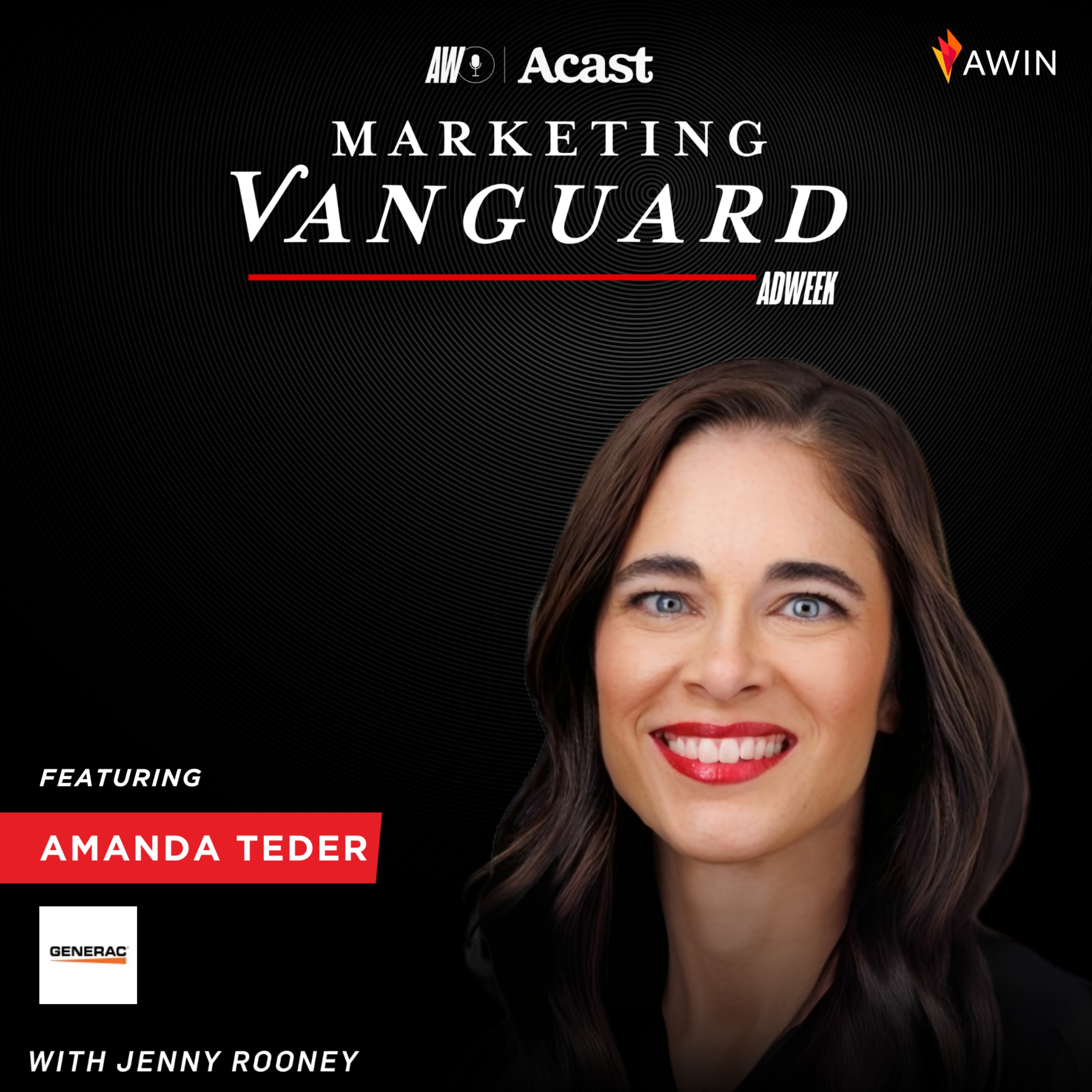
Marketing Vanguard
Why 60% of Power Solutions Fail—And How Generac Dominates the Category with Amanda Teder, CMO of Generac Power Systems
00:25:24
Loading summary
Transcript46 lines
- [00:01]
Activision Blizzard Media
Gaming has become one of the most influential forces in entertainment, capturing the attention of billions around the world. For brands, that means one this is a space you can't afford to ignore. Activision Blizzard Media helps brands connect with players in meaningful ways, reaching them the right way at the right time on the right platform. Head to ActivisionBlizzardMedia.com to read their latest research on cross platform play and discover new opportunities to reach players across mobile, PC and and console.
- [00:31]
Amanda Teeter
It is that fear of losing power that ultimately drives the purchase, right? And so there's a tension for us as marketers to say how much do we want to play on that fear versus how much do we want to flip it and really talk about the benefit or the end state where you've sort of eliminated that.
- [00:52]
Jenny Rooney
Hi everyone and welcome to the Marketing Vanguard podcast. I'm Jenny Rooney at Adweek. I'm thrilled to sit down with CMOs from so many different types of companies coming from so many different sectors, whether they be B2B, B2C and everything in between. And it's really a fortune of mine to be able to do this podcast because it enables me to meet new CMOs every day and learn more about how the marketing leadership landscape is populated with people like Amanda Teeter, who's joining me today. Amanda is the CMO of Generac, Pat Power Systems. I'm sure that you know this company, if you like. I live in a place that is frequently losing power and you need your generator to kick on to make sure that you can continue to live your life without disruptions. I have to say that's a brand that I'm sure people have a lot of affinity for in their personal lives. So. Amanda, welcome.
- [01:51]
Amanda Teeter
Thank you. Thanks so much for having me. Yes, people have a lot of affinity for the brand and we want them to have even more. So.
- [02:00]
Jenny Rooney
Well, let's talk about it. I mean, look, I don't know if many people are as familiar with the home generator category. Again, they might be familiar just because they happen to live in a region of this country where generators are pretty necessary given storms and things like that. Just tell us about the category. What's the competitive landscape and what might people, especially your peer CMOs, be prized by in the category?
- [02:26]
Amanda Teeter
Yeah, so Generac is a 60 year old company and we kind of invented the standby generator back in the day and it's really a product that automatically sort of restores your power when the power goes out. And we've now been growing that business for many years and we've started to transition into a broader set of power solutions as well, and both on the consumer side and the industrial side of the business. But as you think about that standby generator business, we really provide peace of mind for people, right? Their power goes out, and that can create a lot of disruptions in their lives depending upon who they are and kind of their background that can show up in. In a lot of different ways. And so people get to a point of frustration with losing power where they don't want to have that inconvenience or that threat even in their lives anymore. And so we really focus on helping to bring them that peace of. It's a totally discretionary category with a low household penetration and relatively low awareness. And so marketing is a super important tool to help people understand how we can help them solve their problem. And being there at that moment in time, that's what's most relevant for them. When the problem starts to kind of peak and they experience power outages or they're reminded of that time when they did, and they feel like, gosh, that's not something I want to experience again.
- [03:57]
Jenny Rooney
Well, it's interesting because it's the kind of thing where, first of all, they're not cheap. I mean, you have to be committed from a financial standpoint that this is something you feel you need to do. So my question is getting at this concept of you're not marketing yourself against the competition, because I would argue, I mean, yes, there are competitive products out there, but it feels like you're the category leader.
- [04:17]
Amanda Teeter
We are definitely the category leader. And the question for consumers, when they get into this mindset of, okay, I need to solve this problem, is really less about which solution should I purchase, and it's more about am I ready to make this investment? Because it's sort of a small construction project where you're having this sort of machine installed. And sometimes there can be trenching that needs to happen in the yard to get the gas lines in place and things. So there's elements of a small construction project, and people have to feel like they're really ready for that. And so we spend a lot of time driving awareness and making people aware of the product and the solution and what it can solve for, but then also trying to help make that experience of considering the purchase as rich as possible for those consumers by the conversations that we have directly with them, but then also through our dealers and installers who we don't own, but who play a really important role in interfacing with the consumer.
- [05:21]
Jenny Rooney
I mean, that's yes. That is somebody coming to your home. Often they have to actually get inside your home. Even though it's a stationary outdoor generator, I know from experience they have to come in, they have to kind of weave lines out through the inside of your home to the outside. It requires the connection, the electrical connection, et cetera. I mean, to your point, it's a minor construction project and that's a pretty high threshold to get people passed. Now, I loved how you started by saying we exist to give people peace of mind.
- [05:49]
Amanda Teeter
Right.
- [05:49]
Jenny Rooney
That higher order purpose is so key. And I know a lot of marketers try to get to that place where they're thinking, I'm not just selling the product, I'm selling, selling peace of mind, I'm selling quality of life, et cetera, et cetera. But you still have to get people past that. I really need this thing. And I guess my mind goes to how much do you play off of fear? Because we're living at a time when frankly, weather is so unpredictable and storms seem to come out of nowhere, and there's so many things, because it really is in a storm circumstance primarily that a home would lose power. So like, how do you have to tap into that piece of it as a motivator to enable people to say, oh gosh, yeah, I can't be left stranded without power for a string of days?
- [06:35]
Amanda Teeter
It's a great question. Yeah. I mean, it is that fear of losing power that ultimately drives the purchase. Right. And so there's a tension for us as marketers say, how much do we want to play on that fear versus how much do we want to flip it and really talk about the benefit or the end state where you've sort of eliminated that. And what we've learned is we really have to do kind of both. Right. So when consumers are in that moment where the power is out, it doesn't take much to get their interest. Right. But then in a steady state kind of environment where the power is on, we do have to spend a little bit of time reminding them of the problem that they've experienced in the past to help them get them the right frame of mind. Right. And then we start to talk about the benefit and how it can really help them. And we've really played with how much do we focus on the problem versus how much do we focus on the benefit. And what we found is that depends a lot on the region of the country where you're in, what your recent experiences have been. And so we are continuing to become more nuanced in our Communications to try to address that and really meet consumers where they are. And we have a lot of conversations with consumers on our paid digital content around what they're experiencing and how they're feeling. And that's another place where we can do some sensing as to how consumers are receiving what we're sharing in real time.
- [08:07]
Jenny Rooney
Yeah, I know the folks at the Weather Channel and over the years they have data, right? Like they as a company, they keep data and they often have said it would be in the best interest of marketers if they actually regarded weather data and sort of integrated that into their marketing strategy. Because being able to predict or have a sense of that anticipation of weather patterns and things that might affect a consumer's buying habits, life or whatever. So I could see you all thinking about that as yet another data input when you totally.
- [08:35]
Amanda Teeter
We actually have a meteorologist on staff because it is so critical to our business that having one voice that everybody in the company is going to listen to to coordinate against has proven to be really helpful. But then of course, we're really leveraging data as well and we continue to do research to understand the relationship between the weather, the outages. There's really good data in the US about power outages that's really up to date. So we're constantly leveraging that data. And storms and things do cause power outages for sure, but they tend to overlap. But they aren't always highly correlated because depending upon the region, the type of storm, it can all result in a very different power outage situation. So it is very difficult to predict how much demand will be generated by any given storm events or other sort of outage related activities. So that's a piece that we continue to build our capability and our knowledge there to help us forecast better and help us serve consumers better.
- [09:40]
Jenny Rooney
Yeah, no, I love that. I want to get to this piece about B2C versus B2B because clearly you operate in both of those spheres. Just to Finish on the B2C side, this conversation, we're supposing that homes were built without generators. And so yes, you're going to go into communities and neighborhoods where houses were built and generators weren't part of the initial build. Then meanwhile, there's a lot of new construction happening all over the country and new developments, et cetera, where I would imagine that you getting in with construction firms and sort of being part and parcel of the build would also be ideal. How are you thinking about that and making sure those two different scenarios are met in terms of market expansion?
- [10:21]
Amanda Teeter
Totally. Yeah, we Have a team that's focused up against the builder channel. And we focus on building relationships with builders at both a centralized kind of level, but then also in a more decentralized context, as well as that can sort of take place in small pockets or with smaller companies that are doing building. So we're definitely focused on that as well. More of our business at this point comes from those existing homes, which makes sense with, obviously there's more existing homes than new homes being built every year, but we focus on both, and both of those continue to be big opportunities for the business.
- [10:55]
Jenny Rooney
And then Meanwhile, on the B2B side, I mean, I think of schools, hospitals, office complexes, like, that's just a huge market for you as well, I'm sure. How is it similar or different than the consumer market for you?
- [11:08]
Amanda Teeter
It is, yeah. In both of those markets, what we've really focused on doing is building an ecosystem of solutions that can help our customers, both on the residential side and on the industrial side. So on the industrial side of the business, we really strive to be partners to businesses and helping them manage their energy needs. And so there's a lot of new use cases in that space, as well as things like data centers become more relevant, taking considerably more energy. Right. We want to be partners with companies that are building in that space. And we make a big impact serving people across many different types of industries, from hospitals to universities. So it really is almost like energy for everything. And a lot of industries, those buildings are required to have backup power. And we want to be the solution for those companies.
- [12:04]
Jenny Rooney
Yeah. So fascinating. I mean, it's just such a complex and multifaceted industry when you think about it. You personally have B2C background, which I think is super interesting. You were at Michelin before being in Generic, and before that you were at P and G. Yes. 20 years overseeing brands like Oral B. I mean, so you come from that universe, right, where, I mean, frankly, slightly more disposable products that are a ready buy. It's about a point of purchase. The dynamics of the marketing and then the sale are vastly different. Tell me a little bit about your journey, how you got from point A to where you are now and really what you've taken with you along the way.
- [12:48]
Amanda Teeter
Yeah, I think there's a few things. One, this whole idea of like, a discretionary purchase and a purchase that requires education. I've had experience in those types of categories throughout my career. So, like Febreze air fresheners early in my career. It's an amazing brand, but it's really one of those things that you have to convince people, right. That they need it and keep reminding them. And then when I worked on Oral B with electric toothbrush, the manual toothbrush was really the standard of care in the U.S. right. And so helping educate people on how an electric toothbrush can do more for them and can help improve their health. And so this generator business is sort of a page out of that book where it's something that helps to improve consumers lives and businesses situations, but it requires a level of education and nurturing to help sort of get there. And I really think that journey is something that is exciting to me to be able to sort of craft the plans and the communication along that journey. So that's been a thread that I've woven through. And the other piece that, you know, I spent 20 years in B2C at P& G and a company that truly plays to win. And looking back, some of the roles that I got most excited about were ones where I had the opportunity to really build and transform working on our new business side of the company or in Oral B, where we were able to double the revenue on that electric toothbrush fresh business just by growing the category. And so as I left P and G, I went to Michelin, I did a bunch of consulting, I stumbled across Generac and it's been a wildly successful company, growing from a billion dollars or so five years ago to now more than 4 billion. And so there's been a tremendous amount of growth which has sort of given us the privilege to transform to meet our customers needs on a larger scale and and to offer a broader suite of products both on the residential and the industrial side to increase that customer lifetime value. And so it's that foundation of strong success and growth that sort of gives us the right to sort of transform to that next phase. And that's a really interesting foundation or platform to build on when the company's been wildly successful. And it's like, how do we get to that next phase of growth is exciting.
- [15:18]
Jenny Rooney
What do you attribute all this success to and how much are you claiming has been marketing's role?
- [15:23]
Amanda Teeter
Yeah, I mean, I think historically the company has been super successful because in part the solutions that we offer have become quite relevant right. In the market as power outage hours in the US have gone up and there's less stability in the power space. Right. And so that's definitely been a piece of it. And then Generac really created some of these categories. Categories, Right. And so I think the company has a really strong foundation in Consumers and businesses minds where it's really trusted as a backup power solution when other solutions aren't working for you. Right. So there's a lot of trust there. And so what we've been trying to do from a brand standpoint is build on that and frame it more as energy solutions that are really giving you like the freedom to use power on your terms and helping people see how our full portfolio of products can do that. And the marketing team has done a lot of transformation in the past couple of years that has helped to continue that momentum.
- [16:31]
Jenny Rooney
Tell me about your team. Tell me about how you're set up internally. How big a team do you have? I'm sure you can't share budget numbers, but how are you thinking about the marketing organization within the company when you came in, what was it like? What have you done over the years that you've been there and kind of tell me what resources you have at your disposal now.
- [16:49]
Amanda Teeter
Yeah, most definitely. So from a marketing perspective, we've positioned ourselves as sort of leading the change within the company to becoming a sort of energy solutions provider and impacting the top and bottom line of the company in a meaningful way. And so my function is comprised of a lot of sub functions and is a little bit broader than some of the traditional definition of marketing. We have a lot of the traditional functions, but we also have a large customer support team. It turns out that those times when the power goes out, a lot of new consumers and businesses are interested in our products. But it's also a time when people who own our current products have a lot of questions. Right. And so we sort of get it on both fronts and we really amp up in terms of our efforts to support our existing customers during those moments as well. And then the team also owns the pricing and value realization for the company. And so we've really focused on how do we generate more profits. Right. And how do we look at pricing ecosystems and services in addition to the hardware that we've traditionally sold as a company, which of course we continue to pursue. But thinking about how do we continue to evolve in terms of how we generate revenue?
- [18:11]
Jenny Rooney
Yeah, that's so interesting. So you're helping to come up with the product bundles basically, or the ways of thinking about the offerings and the concept of pricing ecosystems.
- [18:20]
Amanda Teeter
Yeah. So yeah, it's been exciting.
- [18:22]
Jenny Rooney
So I know you personally and we'll come back to your leadership style in a minute. I know you personally. You went to Purdue undergrad, you went to University of Chicago for your mba. Classically educated marketer would you say, sure.
- [18:35]
Amanda Teeter
Let'S go with that.
- [18:36]
Jenny Rooney
Because I do believe, I think it's maybe just about half of CMOs have MBAs. Tell me a little bit about your education journey. Like, did you always want to go into marketing, number one, but did you always aspire to be a cmo?
- [18:49]
Amanda Teeter
Yeah, I mean, I didn't always aspire to be a cmo, but early in my career I recognized that I wanted to be in marketing because I definitely see that connection between human behavior and psychology and then the consumers and the end users that we're doing business with. Right. And that piece of it is really exciting and interesting to me. But I'd say from an educational standpoint, the schools I tend to, there's definitely like a focus on data engineering. And so the way I approach marketing is from a data driven perspective, but also from a, a business perspective. I'm kind of a business person first and then a marketer second. And I think the combination of those two is really important in the job I have today. And that's the sort of the types of situations from a business perspective where I can add the most value. And it's fun to be able to connect that marketing to the business because at the end of the day, marketing's role is to drive revenue and profits totally.
- [19:49]
Jenny Rooney
And you're ahead of the game if that's the case. Because listen, I mean that's what the dialogue is out there all the time, which is that marketers need to drive the business case for marketing full stop. The reason for marketing being a deeply supported part of any given organization. And they have to prove out how marketing is directly driving the business forward, not just the brand awareness and some of those softer metrics. So the fact that you come at it with a business first, business person first lens, that really is what I think every marketer, if they're not already doing, knows they should be doing. And we don't have all the time in the world on this particular call, but you know, I mean, you have to get buy in. And how have you been able to make sure that your CEO and your CFO see you as that. Right. See you as that kind of asset in the C suite? And not just because we hear, we all hear the stories of marketing being cut first when times are tight or tough, when the reality is that is the growth engine. But if there's a breakdown of communication or recognition about the power of marketing, unfortunately it defeats the purpose. Right. It creates a bad situation for the company and the opposite ironically ends up happening. So touch on Your internal dialogue with the folks that you work with and anything you made to have to be real for you to succeed.
- [21:05]
Amanda Teeter
Yeah, I mean, I think I came from a start in CPG where marketing was highly valued. And I feel like Generac, while it's a little bit of a different business, marketing is also highly valued. And I think it comes down to just like the value that the team is bringing to the company every day in terms of helping to make the business more successful. Right. And that can show up in a lot of different ways and then making sure that the dollars that we invest and the investments that we make are choiceful, but that we see an impact from those and a return on that investment. I think it's also important too that the company recognizes that, yes, marketing and investing in consumers and end users is driving the business. Right. When you work with people who recognize that, I think the job of the marketer becomes a lot easier. Right. But I think you can build from that foundation to then continue to add value across a broader range of ways that you can contribute as an organization. And I think my team has been delivering on that and so I'm proud of them for that. And I have a great team of people that as a lot of them are new and learning how to work together and it's been a really fun journey.
- [22:13]
Jenny Rooney
Well, that's a perfect segue for my next question, which is you use the word team and let's imagine for a minute that's a literal team, a literal soccer team on a field, if that's the metaphor for your team, who are you on that field? Are you the striker trying to like aggressively score goals? Are you in the midfield trying to be the connective tissue between the offense and defense? Or are you at the back protecting the goal at all costs from your competitive onslaught?
- [22:38]
Amanda Teeter
Yeah, like my six year old daughter on the soccer field, I think I am a midfielder.
- [22:43]
Jenny Rooney
I love that.
- [22:44]
Amanda Teeter
Well, she's a midfielder through and through. She really thrives in that position. But for me, yeah, I'd say I have this team that is largely new. They've been in the company less than most of them less than two years. And so they're learning the company, they're learning how to really work together, they're learning each other. And so a lot of my job is to make the connections between those team members and help them, them work together. That gets more and more sophisticated every day as they continue to build their relationships. And then I'd say that same dynamic exists on another plane with my peers. Right where we have a lot of different business groups and people who are leading different aspects of the company. And so I think marketing is uniquely positioned as the group that really touches the consumers and the customers to be a bridge in a lot of those conversations. And so that's a role that I can play with my peers, depending upon the context as well, which I feel like is more of that midfielder, connective tissue type of role.
- [23:48]
Jenny Rooney
So, yeah, love that I get a variety of answers to that question, and I think that's the strongest case for being a midfielder, which I. When I played soccer as well. I do love your analysis of that and your selection of that. But again, I've had a lot of different answers to that question. Last quick question, Amanda, is who's next? Who else should I have on this podcast? I'd love for you to recommend to me somebody who, you know, brand CMO, either B2B, B2C, somebody you admire, somebody whose work you think is extraordinary. And you could either know this person really well or you might just admire them from afar.
- [24:21]
Amanda Teeter
There's a couple people that I know really well who I think could be interesting. This business that I work on is sold to people who are a little bit older. Right. They're maybe more established, they own a home. But one thing I think is so interesting is a lot of these brands that are really focused on younger consumers and much closer to culture and in that space. So Xena Arnold, she's the CMO of Sephora. And then Debbie Beiswanger, she is SVP of marketing at Dutch Bros. Which is a coffee shop that's really growing rapidly. They're based in Arizona. And I think just the dialogue sometimes that I hear between them is so interesting to me. Right. Because they're really playing in a different space and with a different set of consumers than my world, where I'm sort of operating every day. So I think that could be interesting. I'd like to listen to that.
- [25:09]
Jenny Rooney
I love that. Well, we'll make that happen for you. And in the meantime, thank you so much for being here. I'm sure our listeners have loved listening to you, and I really look forward to meeting you in person, hopefully soon and continuing the conversation. And thank you so much for the insight.
- [25:24]
Amanda Teeter
Yeah, totally. Thank you so much. It's nice to see you.
- [25:26]
Jenny Rooney
Likewise. Take care.
- [25:27]
Amanda Teeter
Take care.
- [25:29]
Jenny Rooney
Thank you for listening to Marketing Vanguard, part of the Adweek Podcast Network and Acast Creator Network. You can listen and subscribe to all of Adweek's podcast by visiting adweek.com podcast. Stay updated on all things Adweek Podcast Network by following us on Twitter Dweek Podcast.
- [25:46]
Amanda Teeter
And if you have a question or.
- [25:47]
Jenny Rooney
Suggestion for the show, send us an email@podcastdweek.com thanks for listening.
- [25:56]
Activision Blizzard Media
Philo Ads is changing the way advertisers think about connected TV. With nearly a billion monthly impressions, 98% of viewership on CTV and fan favorite channels like Discovery, TV One, MTV, ANE own, Lifetime and more, it's a smarter, more impactful way to advertise. So switch up your ad strategy and head to Ads Philo TV to get started today.