← Marketing Vanguard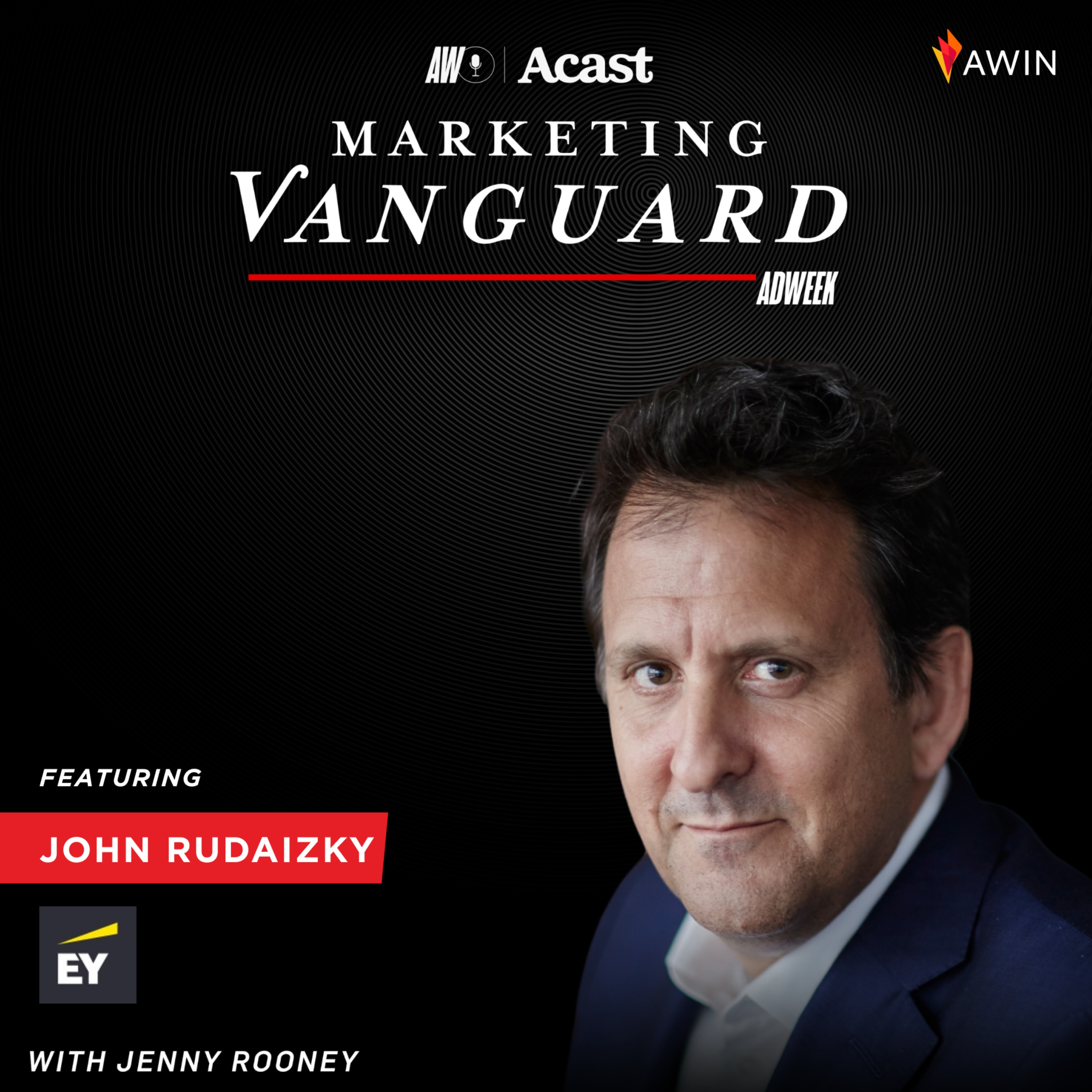
Marketing Vanguard
Why B2B Marketing Needs a Human Revolution—EY CMO John Rudaizky Reveals Why
00:34:39
Loading summary
Transcript78 lines
- [00:01]
Philo Ads
This episode is brought to you by Philo Ads. Want to get your brand in front of the right audience? Philo Ads is the way to go. With 98% of viewing on connected TVs and over 900 million monthly ad impressions, Philo gives advertisers unmatched accessibility, flexibility and results. Power your next campaign with Philo Ads. Today, head to Ads Philo TV to get started.
- [00:27]
John Rudytsky
If you look at what's happened in elections around the world, the game has changed. So for me, the intersection of classic pr, social media and the tools of marketing, that's a big transforming. And the way content is created on those platforms is very different from the way people engage. So I think that for me is how do you create content on those platforms in a way that truly engages the audience, which I think has shifted.
- [00:52]
Jenny Rooney
Hi, everyone and welcome to the Marketing Vanguard podcast. I'm Jenny Rooney with adweek and I'm thrilled today to be joined by John Rudytsky. He's the CMO of ey. John, welcome.
- [01:04]
John Rudytsky
Hi, Jenny. Fantastic to see you ahead of Can I think this might be close to the wire before can I think we.
- [01:11]
Jenny Rooney
Get some credit here, I hope, because as anybody knows, the week before Cannes is pretty intense. But actually, I'm happy that we're able to do this now because otherwise it's the ability to have focused conversation gets a little bit tough.
- [01:24]
John Rudytsky
For sure, 100%.
- [01:26]
Jenny Rooney
Well, anyway, thank you so much for joining me. We've known each other for a while and I'm excited to have this conversation and just dive in so that our audience can learn about you and about EY and what you're doing there. And frankly, as global cmo, some of what you're seeing and hearing from your peers, I mean, at the end of the day, you're a CMO living existing for a company that supports and serves CMOs. So there's a cool dynamic there for sure. But I'd love for you to start and tell everybody a little bit about you. To my knowledge, you came from the agency world and now you're at ey. But bring us up to speed on your interesting career journey.
- [02:00]
John Rudytsky
Sure. I don't know how far we want to go back, Jenny, to my market stall at university. I was thinking about my career. I think there's a common thread from my market stall or redesigning a shop front of a car shop that I worked in as a student. I think somewhere along the line, my journey has always been about creativity and commerce somewhere and I found myself at Saatchi and Saatchi which was probably the most phenomenal education inspiration around ideas at the time where there's culture, ideas were everything, world changing ideas and that infused with me a love of creating something new and I think that was probably the most defining part of my career. Then I set up my own agency where it feels sort of obvious now but at the time it was an early foray into connecting advertising with PR and and technology was a really early exploration and at the time it was all about creating stories to talk about brands and actually if I time warp now I think this kind of sea of everything is deeply connected. What was PR is social. You're making a story in social just as much you are earned and so forth. So that I often describe as my mini MBA outside of the big world into my own agency. Then I ended up with jwt, did a deal there and roll up to WPP which was just a phenomenal part of my career where it was the early days of setting up the holding company model. So working for Sir Martin Sorrell there are five of us now obviously that holding model at the time it was new and that gave me a real horizontal view of all marketing services. And so suddenly you're in with the major clients architecting, integrating everything from insight to advertising and everything in between. Because I think historically advertising was a bit snobby. Think about the English class word. There was a degree of snobbishness about that and actually if you time work today ideas are right across the experience and we can come back to that. Creativity is a far broader palette than I think it was in the early advertising era. So that was WPP and then I got this phone call from this organization ey which I really knew nothing about if I'm honest with you.
- [04:07]
Jenny Rooney
And what year was that?
- [04:08]
John Rudytsky
That was 2014. So I've been here 10 years, just over and it was a mad one I think again people thought I was a little bit mad. Why are you going to a consultancy you time now obviously if you look where the market is consultancies including us but others have been very engaged in the creative industries and I arrived and they had just launched a new business ambition which is called Vision 2020 which is to double the size of the business which seemed crazy. It was $27 billion, 270,000 people. I look at it now, it's 51 billion and 400,000 people. And what I learned was number of things being ey but one is if you have a big business strategy with a big ambition and you know how to go about Doing it, you can get there because it seemed like quite a stretch to sell them double the size of the business in then six years. Right. And I think the other thing which I think is really relevant to most marketers today is when I was going through the interview process with the CEO at the time, I was trying to show the logic of how brands drive growth as a revenue driver in B2B. B2C. That it's a revenue driver. And he sort of halted me and he said hang on a minute. Inspire our people and the revenue follow. And to that day this has been a sort of guiding part of the brand which is particularly B2B. Any people business. Right. You starting from the inside out. And I think that's guided a lot of the work that we do, which is how's it emotionally resonating with our people beyond what it's doing actually for our external audience. And I sort of wished I'd learned that. I think in my early career with lots of consumer brands you do all of this amazing work on the external face of the brand, but it's not always connected to the internal machine.
- [05:45]
Jenny Rooney
Did you help co define that role to be that or was that something that he knew coming in that needed to happen?
- [05:52]
John Rudytsky
It's an interesting question. I often say I'm not sure if they knew what they were getting or I knew what I was getting into.
- [05:58]
Jenny Rooney
Yeah, yeah, for sure.
- [06:00]
John Rudytsky
I wasn't a natural fit. I hadn't done B2B if I'm honest. I hadn't done B2B. Marketing is a vertical in that way. And what they did have is they decided that distinctive brand is a business strategy. And I think that's the thing. And the CEO, and to this day our new CEO brand is seen as part of the commercial strategy, not an add on. And I always say to people throughout my careers, I've always known when the CEOs engage with the brand and the marketing, you get to great outcomes. And so they knew what they wanted, but they didn't know how to get there. And so in many ways I went back to sort of basic principles and I bumped into someone I'd done a talk on this recently who said, you know what, you helped me frame something up in my company. Because what I went about is brands need organizing ideas. As a multiple services organization, they launched this purpose building a better working world. And I think I defined two things which is one is what's a brand idea that can hang all of these services together as a benefit to customers. And then I think the Other thing is advertising works because I hadn't been an advertiser, and so I had to go out proving that advertising could help drive their business. And so those were the two strands to it, really. So level one was creating what's become the Better questions campaign. So created that the better the question, the better the answer, the better the works. And that's now part of the sort of DNA of our organization, which is ultimately what EY is brilliant at, is asking the questions that often clients haven't even thought about and solving them with our clients. And then the other thing was proving the value of advertising in some ways. I had a fundraiser internally to say let's do it, and people believed it and it worked. So I think there are some marketing jobs that are well defined, probably going into it. But I think today no one quite knows what the marketing role is. So varied depending on what the task is, where the cycle of the business is, is a technology transformation, creative transformation. So it's a big spread.
- [07:52]
Jenny Rooney
Well, it's very meta, lowercase M, you know what I mean? There's so many layers to what you've just explained. Coming in in 2014 from the agency world, coming with the understanding and a passion for the power of advertising as part of the power of brand and driving business growth. Coming into a consultancy where at the time, as you referenced, I mean, we've seen a lot of that happen, right? The consultancy race to the middle, where the consultancies are coming into the creative agency space and vice versa. We all know that's been happening. There are a whole host of reasons for why that's happening. It's almost like you and the company recognized what was happening in the world, in the space that EY could play in a really relevant way for brand clients. But also it had to get its own story right in differentiating the brand. And were you the first cmo, by the way?
- [08:37]
John Rudytsky
I was the first partner in the role and brand. I came in as brand leader, which I hadn't done before. So my roles evolved. Originally was external comms as well. So it's evolved over the years. As a former client described, a brand is what a brand does and says it does. And early on we created a whole new brand survey, which became a metric, which is the advertising and the external manifestation of the brand has played its role. Of course it's done that. But very much as a business, EY knows that what we deliver is the brand. So in some ways it's been a symbiotic evolution of the brand as we've expanded the business, we've expanded the brand. And I think that's something that a lot of people think brand is the pretty pictures department. Right. And actually it's the fabric of your organization, it's the total experience. And therefore as a business level we run one of the biggest entrepreneur programs around the world. It's called Entrepreneur of the Year. And it's like the who's who of organizations have been there 25 years later. But what I found is ey, which you might not think is probably one of the most entrepreneurial organizations I've ever worked in. Because if I look at the build out of services over the years, it's quite phenomenal. So it's a very strange thing. Of course we're a big machine, we've got lots of all the usual things that go into making a large organization work. But equally it's very good at bringing on new services. When I started digital as nowhere. We're now probably one of the leading AI players in the marketplace and professional services. So it's that level of brand building which is delivered by the service innovation we which I think goes hand in.
- [10:08]
Jenny Rooney
Hand a hundred percent. And by the way, I mean going back to the 90s, it was accounting services largely as were many other companies in that space. And then it moved into business consulting and then the marketing advertising space was yet another area that was expanded into.
- [10:26]
John Rudytsky
It was. We've maybe taken our time in that. We've just launched Studio plus, which you would have seen. We've been buying up various companies around the world. We've got a slightly different play. We're not going into the advertising or the media space. We see fundamentally where we play is helping our clients relook at the experience. Because what's driven us, Jenny, is the intersection around the customer is now driven by the experience and the way you actually connect with people. And so that's kind of where we come in at the end and then linking to the commercial because in the end of the day you can build the most amazing experience. If it's not connected to your supply chain or it's not connected to some of the fundamentals of your business, it's not going to work. It's not going to help you grow. So I think where we look at is the front end experience and then how does that link and make sure the back delivers the results? So we talk about moving people but also the market around it.
- [11:21]
Jenny Rooney
Are there examples of client work that you've done that you want to reference?
- [11:26]
John Rudytsky
So the challenge I always have is I can't talk about anything. I keep them beating. We worked in shipping to reorientate how people experience in theme parks, in shopping centers. I don't know if you've seen one of the ads that we've done recently around transformation, where we're looking at healthcare and how you experience healthcare and electronics shopping experience. So it's sort of across the usual areas, but we don't tend to. I think the one advantage sort of traditional agency world has is they can talk publicly about all the things they do. Whereas in the. You can you see it right, where a lot of the time we're slightly hidden. So we will keep trying to allow our clients. Some do, but we just. It's just a frustration of mine. I often say the marketing job would be a lot easier. We could just say this is what we've done. We work with this country to re engineer their economy. We can't say that through to it. So.
- [12:17]
Jenny Rooney
Yeah, but you're in Cannes next week, correct?
- [12:20]
John Rudytsky
Yeah. Very excited.
- [12:22]
Jenny Rooney
What do you do there? Because that is such a festival of creativity and it's all about awards and are you able to submit awards for the work that you've done?
- [12:29]
John Rudytsky
Of course. Studio plus is one of the many strands of our business. Right. So we've just launched something called EY Parthenon, which is now a top five strategy company. So we have a broad spectrum. So my day job is obviously brand and marketing for the organization. So yes, we have some entries in. We've done some good films and content. I still love ads. We haven't quite tipped it.
- [12:50]
Jenny Rooney
You can take the man out of the agency.
- [12:53]
John Rudytsky
I can't. I can't. I think the palette is different. We don't show up in a big way. We're with Gold's House, which you probably know we do a lot around the world with them at various convening moments, which is phenomenal. And actually we've got. Starting with Rankin, the photographer. Rankin. I went to his exhibition a few weeks ago called Fake F A I K and it changed my perception around the opportunity for creativity is what he's done. I think we're all sitting there and we're all a bit nervous about it. We're all wondering what's going to happen. And of course there will be a democratization of the average. But what someone so talented as Rankin has been able to do is do creative work that he wouldn't have done six months ago. And so he's just opened a new palette for himself and he's Produced this work. That's incredible. So we're hosting a panel with a few folks and him to talk about the upside of the AI conversation because I know the downsides of it. I think in a conversation I was having yesterday that of course there's some real concerns. We have a something called eye. We built a platform. Clearly there's things around the confidence of the data. There's lots of things in society that we're all human beings, right? We're all worried about the same things to do with AI. But actually I think and people like Rankin thing we're sitting on an age of unleashing a new level of creativity that none of us have thought about. And so that's kind of the theme and the discussion around what can we get excited about. And yes, we have to manage the.
- [14:19]
Jenny Rooney
Threats of it as long as we're on the topic of AI because you can't have a conversation without it. What is being talked about within your halls and walls and how are you thinking about it from a standpoint of how much are you as a company needing to be reactive versus how do you need to set agenda vis a vis AI specifically in your area as it relates to creativity and marketing work. But perhaps even more broadly across our.
- [14:43]
John Rudytsky
Organization it's fundamental to every aspect of our business. We've got sort of both client zero on everything we do and then advising our clients of the transformation. And so in some ways we look at it as how do you build confidence in AI from the depth of it, the data of it and how you can apply it. There's what new value you can create and unlock as a business and then what's the confidence in terms of society? Because that is an important. It's always been an important part of EY we involved in regulation and helping make sure safe adoption and all the things that go around with it. So overall we've been doing huge amounts and it will change a lot of the work that we do in the sort of marketing side of it and the brand marketing side of it, we are looking at it. We have a sort of playground where people are kind of innovating. One of the team came up with a fantastic better questions engine. So rather than sitting scratching their head so I think we looking at it by like everyone there's a map to get to the future. There are legal constraints about certain adoption of how to use it. So I think we're navigating it just like everyone else. But it will radically change.
- [15:42]
Jenny Rooney
I think it'll be interesting you and I should do this interview one year from now because I mean I just think that much change I think can happen over the next 12 months. It'll be fascinating.
- [15:50]
John Rudytsky
It is. I mean what's exciting. I know I talked about the past. I suppose the last year at EY has been transformational as well. We had a new CEO lady called Jana Truncali come in and kind of reset the business for the next five years and couple of things. One is we called the new strategy all in which is a real refocus on how we can deliver for clients into the future. And so we've got this thing because we such a broad spectrum of services. We talk about together audit which is really about how we show up together goes back to studio plus it's not just the front end. It's how you pull through all of the different services around a client. So together all in this kind of Nike attitude around actually to navigate to the future. Not one person can work alone. It's about the team that you bring around to any different business problem. And then we'd had this purpose line building a better working world which remains but it was a look to say actually what's going on in the world right now. And we're all facing untold disruption. Everything, not just AI technology. You've got geopolitics going on. We're living in strange times. And so we created this new platform shape the future with confidence which is all about the mindset that there will be lots of challenges but the organizations that shape the future rather than be shaped by it will thrive. And I think in some ways whether it's AI or a new emerging technology, it's around a mindset that says let's understand the questions, get the right team around us and then we'll figure out how to shape it.
- [17:15]
Jenny Rooney
You referenced this and you're speaking to this now. But I mean so much of your job is especially with a company like KNEE that is so multilayered, has so many different divisions and multinational there's that ability or that necessity for you to come in and actually have everybody telling us the same story. I mean listen, we've talked about internal marketing since beginning of time but for you especially it feels like a tall order and I would say very much a big part of your job. I mean how much time are you spending on that versus spending time in client facing work and also the external branding of the company.
- [17:49]
John Rudytsky
We have a big team, we have a phenomenal team. I'm not day to day response for internal comms. We have fantastic team. It's a skill. Right. I never appreciate it. It's a sk. We have fantastic things about it. It does help, as I said, having a CEO in Janet who believes in the distinctive nature of that brands can help with and that they work from the inside out. So I think I'll go back to my biggest advice to any marketer is make sure you're in an organization where the leadership believes in it. But yes, you start with the inside and then push things outside. It's not the other way around.
- [18:19]
Jenny Rooney
What do you think about the competition? I mean, obviously I referenced the fact that other consultancies have moved in this direction and we've seen obviously having come from the agency side and now at the consultancy side, what new things, what new trends are you seeing in terms of generally speaking, and you don't have to talk about your competitors directly, but just what's different now than it was perhaps 10 years ago when you joined in this space in this competition for client dollars in the marketing area. Lots going on the whole coast side right now. So like as all that goes on, is that advantageous for you? Is that challenging for you? Just some of the macros around the competitive set.
- [18:58]
John Rudytsky
I've got two lenses on it because we're all different. I look at the marketing industry, the agency world, as a buyer of those services which we continue to do. So I'm in the market to buy because like I said, we're not going down somewhere. We're not trying to do our own advertising so far. So I look at it and go, that is going to go through a metamorphosis based on AI that none of us quite know yet. I think personally, those that embrace it will thrive. It's a bit like historically when digital came in, it was the ones that feared it that didn't. And so I think there's a lot of innovation going on. And if I think about social media, I've got my personal thing is social marketing is everything now. So actually it's not just about AI, it's about who can actually show up using the tactics that our kids are growing up on over and above what we used to. So for me that innovation will have to happen and we'll also let the agencies that are doing that. I think from our point of view, I think it's less about looking at other people's marketing dollars and more around how do we best serve our clients. And that's where we know there is a market for people who are looking at the experience, but integrate it in the boardroom. I know we talk about CMOs as a. It is definitely a wider aperture for us as an audience, but actually, when we tend to think of the buyer, it will include the cmo, it will include the cto, it'll include the other members of the board. And that's where we will play, is integrating it, I think. I mean, Jenny, you've interviewed lots of people, you've been around the business. Some CMOs are part of the board, some aren't. I think with technology and the customer experience, it's a team sport where you need the rest of the board enrolled and that's really why it's coming from that place rather than the other way in.
- [20:34]
Jenny Rooney
Yep. One last quick question on this AI thing. It's funny you mentioned the advent of digital.
- [20:40]
John Rudytsky
Don't know if we should talk about it, Jenny, because I shouldn't remember it otherwise. It ages you if you remember these. Well, I've read it in a textbook.
- [20:47]
Jenny Rooney
But it's funny because I can't help but refer back. I mean, everything has a precedent. Somebody once told me everything's derivative. Ultimately, you can agree or disagree, but actually what I was thinking about when you mentioned digital is that was the time when we saw, like every agency under the sun creating XYZ Digital, ABC Digital, like everybody created like their own. We're not seeing that with AI, which is interesting.
- [21:09]
John Rudytsky
There are platforms emerging, there are people developing platforms within their agency. I don't think they are because it's all encompassing. It's going to be the way you just do businesses. So, yes, we've built a platform, ey AI. We know who the people and you need experts on it. But fundamentally, we're all going to have to become experts on it. A lot of the culture change that I'm driving with the team at the moment is I'm nagging my team every day. Have you put copilot on? Because it comes up with ideas in the meeting. It's not a habit yet. I joke that ChatGPT is my best friend and I tell my friends I don't need to go to them for counseling anymore because I can. I could just talk, have a far better conversation with it.
- [21:49]
Jenny Rooney
My husband does that too. He'll be in the car, we'll drive somewhere and he just likes talking to the. To the. Yeah.
- [21:55]
John Rudytsky
So I think there's a habitual thing and I think what will emerge is people really understand how to adopt it properly. Someone had introduced me to this amazing guy who, after two hours, I sort of joke with people I could bluff myself away as the CEO of a new energy company that I've just taken over because the way he showed me how to use the data and the prompts was phenomenal. A lot of the work that we do around AI from a marketing point of view, we change the better the question to the better the prompt because actually that's the magic is those that really understand the technology and I think all of us have to spend time understanding it because otherwise everyone can get replaced in that way.
- [22:30]
Jenny Rooney
Yeah, yeah, for sure.
- [22:34]
Philo Ads
We know brand growth equals business growth, but do your stakeholders. Tracksuit is an affordable always on brand tracking dashboard that helps marketers and agencies prove the impact of their work on brand metrics over time. Benchmarked against competitors Built from best in class methodology, the Tracksuit dashboard is accessible and easy to understand for everyone from CSOs and CMOs to CFOs and founders. Research shows that brand investment in good economic times and bad is essential to driving sustainable growth. The bottom line, turning off the brand tap will cost you in the long run. Tracksuit gives marketers and agencies a common language to measure and communicate brands impact. Without the $100,000 price tag, their in house research experts will have your survey live and your full marketing funnel and brand perceptions visible in just 30 days. Check tracksuit out@gotracksuit.com.
- [23:33]
Jenny Rooney
Now let's talk more pointedly about Studio plus because this is actually an announcement that came out I think just last week. Consolidated 37 acquisitions to offer a full suite marketing design, sales, CX and AI capability. Talk a little bit about that.
- [23:47]
John Rudytsky
Yeah, so over the last few years in some ways it was often driven by client demand about extending. As I say, if you're working on the commercial aspect of a customer journey, you soon start to rub up again what's the experience that are going to drive engagement with them. And so over the last few years we bought various acquisitions. Dovum in Scandinavia which is a design innovation company Yellow in Italy, which is slightly more digital orientated. So we bought a range of them, some marketing services and really we've been discussing for some time about how to bring more of that capability in a scale way because increasing a lot of our clients are looking at this across the globe rather than individually in a country. And we have taken our time to think about what's the additive. You know I point copying anyone what's the additive ingredient? And as I say the additive ingredient for us is really that experience is the most critical area that will define a business. It's radically Changing technology. But AI is a key driver of that and really bring that advantage more holistically and globally rather than having the fragments around it. And there's a new leader behind a guy called Lawrence Buchanan who I was lucky enough before joining EY to see something he'd written and I thought that's a good enough reason to actually join EY because having worked on digital transformations, I was quite impressed with what he had written. That's the simple genesis of it. As I say, going back to the audience strategy, if you focus from what we do for our customers across the full spectrum of services. If you think about it, EY Parthenon, which is a blue color by the way, just in terms of visual, to help you see, is a sub brand which we've expanded, which is a high end strategy company all the way through the services from tax to supply chain to all the consulting assurance. And then that front end customer allows us to take clients on a transformation journey and bringing in the right people at different phases of that.
- [25:38]
Jenny Rooney
Are you engaging with the CMO on the client side or is it the CEO?
- [25:42]
John Rudytsky
Varied. I think, like I say, there's a lot of chief Technology officers involved, there's chief innovation officers. When you're thinking about innovation from a product point of view. So it is across the C suite in that way.
- [25:52]
Jenny Rooney
Where do you as a CMO feel like you're needing to level up when you wake up in the morning? What's the area, if you're being honest, that you feel like I really need to learn more and let's say AI, let's leave that out of the answer set for a minute.
- [26:05]
John Rudytsky
When I was a student, I read a book called Romancing the Brand. I've never been able to find it, but it struck me that nothing stays static. So I think from a marketing point of view, nothing static. I think social media, social marketing is the play. If you look at what's happened in elections around the world, the game has changed. So for me, the intersection of classic priority social media and the tools of marketing, that's a big transforming and the way content is created on this platform is very different from the way people engage. So I think that for me is how do you create content on those platforms in a way that truly engages the audience, which I think has shifted. That's the thing that I worry about most of all and I think probably like everyone choice, okay. Because there's so many choices in terms of connecting with customers. I think the one thing I'd say, and maybe it's Related to AI, we do a lot of sort of client experiences. So we've just done the world entrepreneur event. I think one of the big enduring things, particularly in B2B is human experience. And I think that's the thing which is probably going to override. It's not just the physical online experience, it's actually how you engage with humans. I think for brands, they're all probably going to have to think about that human contact and how they do that in a way. And that's probably the thing that I think about more than anything because brands are built through human connection. That's what makes them powerful in the end.
- [27:27]
Jenny Rooney
And everything's becoming machine created, machine driven. That's the irony.
- [27:31]
John Rudytsky
It is. I mean we always say humans at the center we've got this thought leadership, if you like, this pro where with Oxford side University, which is basically that transformations with humans, people at the center are more successful. So you can't just apply technology. You've got to remember that these are humans. And I think again, I know Australia into AI pretty rapidly, but in fact was something Rankin said to me yesterday. If the average is democratized then you have to find new ways of being creative because otherwise everyone's going to be served up the same stuff. So if you believe distinctively matters, it's going to up all of our game rather than neutralize it. So maybe that's a thing to worry about is how you're going to up.
- [28:06]
Jenny Rooney
Your game creatively up your game seriously. And I mean the next follow on question was what are you hearing from other CMOs that you're talking with in conversation with whether they're clients or non clients? What is scaring them the most? What's keeping them up at night? Where do you feel like you guys can help because there might be an opportunity there?
- [28:25]
John Rudytsky
I think it varies by industry. If you ask different CMOs and that probably goes without saying because it depends what growth cycle an industry is in as well. Because there's some that are harder than others at the moment. Right. Just based on the cycle, the economical cycle.
- [28:37]
Jenny Rooney
I feel like we try to get like one size fits all things.
- [28:41]
John Rudytsky
It doesn't work and it doesn't which ey goes to market from an industry point of view for that because it's just, it's different. I don't think it's anything that different from what it's always been, if I'm completely honest with you, which is how do I harness the ways to connect with my customer in a distinctive way? And then what are the tools to help me maximize that. And so in AI is a do less or do more strategy. I think the enduring truth of brands about having a magical connection with people is probably what still occupies most CMOs. Now, of course, you've got to get the technology platforms around and you've got to understand where it's all going, but it still hasn't changed from the basic truth, which is how do you inspire the audience to choose my brand over someone else's brand?
- [29:27]
Jenny Rooney
Yep. Last couple quick questions with Marketing Vanguard. I always try to highlight an individual cmos that one decision they made, that one choice that they made that changed the trajectory or that they look back on proudly or they feel like really made a difference. And the reason I asked this question is because it everything you're doing, everything a CMO does, it all comes down to those forks in the road that hit at every minute of every hour of every day. It's all about decisions. And especially for people who are aspiring to be CMOs. Can you just point to something recently or in the last 10 years that you've been at EY that feels like it's particularly poignant in your history there something you've done?
- [30:07]
John Rudytsky
I always say choose growth for yourself. Right. So I think the one decision joining EY was I knew I could keep growing and learning and I think that's really important. It's probably the single thing is at Saatchi, we had this thing, never content with the status quo. And so probably in never being content, you push yourselves to keep growing. And so within that, I think probably my most important decision was joining actually, because people thought I was a little bit. Why are you doing that? But it's been extraordinary and I think I've learned as much that I hope as I've been able to give as much. Okay. So yes, I'm proud of creating better questions. The work we've just done to launch Orly, I've got so many examples launching women. Fast forward the social equity work that we've done. So I've been very privileged. It's a privileged place because you get to work on so many platforms, from a purpose platform to a commercial platform. But choose growth because that then you put yourself into completely new situations. I remember years ago someone said the key to your success is the person you don't yet know. And that's kind of true. I didn't know ey and that's been a really profound part of my career and so forth. If you go back to your life, meeting your husband, you didn't know becomes a whole thing. Right. So. So I think it's choosing growth and therefore you'll find new things and be able to contribute.
- [31:20]
Jenny Rooney
I love that. And it's pushing out of comfort zones because clearly that seems like something you've done with this role. There's so much more that we could discuss. Again, I look forward to talking with you again. I do hope to see you at Cannes and on the other side of can, because it'll be interesting to see what sort of the headlines that bubble up and what this CAN will be known for. But the two last questions are, what's on the horizon for ey? What should we be paying attention to? What are you most excited about then? I'll end with my last question.
- [31:48]
John Rudytsky
I'm most excited about what we built and the energy around it, actually. I think it's an organization that's. It never stands still. I'm excited by the platform. Shape the future with confidence. I'm excited by the EY Parthenon launch. I'm excited by Studio Plus. In many ways, it's about making it successful and continuing to. Like I said, the job of marketing brand is never done, so it's more to come.
- [32:11]
Jenny Rooney
You've had a score of innovations in your product offering, so it's exciting.
- [32:15]
John Rudytsky
Yeah, exactly.
- [32:15]
Jenny Rooney
Last quick question. Who's next? Who's somebody that you admire?
- [32:19]
John Rudytsky
I know you asked that. Maybe there's kind of three different people, depending on what. Just top of mind. Rankin. I don't know if you've ever entered him.
- [32:26]
Jenny Rooney
I wrote that down, yeah.
- [32:27]
John Rudytsky
He is phenomenal. He's great to talk to you about it. He knows the platforms, he knows everything. He's got a few hacks, by the way, I think, which is quite useful, which he's taught me. I don't know if I'll know how to talk about his hacks on ChatGPT. Graham Fink. Have you ever come across Graham Fink? I know he's not a cmo, so it might not fit, but he is. I call him the David Bowie of the creative industries. I first worked with him at Saatchi's and he's just. I pulled him in the last few years to work with us on various things. He just did this film Generations, which has been successful, but he's one of the creative people that I look to who every new innovation or technology's come, he's gone, how do I use it? So you should Google him. He's fascinating and he's a real energizer. He's really good at talking about how to spark ideas. So he's great. And then the only one who's maybe the CMO of CMOs, which I don't know if you've interviewed, is David Weldon. Do you know David Weldon?
- [33:15]
Jenny Rooney
Oh, I know David. I haven't interviewed him for this, but that would be amazing.
- [33:19]
John Rudytsky
He sat through my first graduate recruitment round, so I've known David in that role. And then he became my client when he was the CMO at Vodafone many years ago. But he chairs the WFA because he's independent. He could probably talk a bit more freely about everything.
- [33:32]
Jenny Rooney
Yeah, I went there last year when they were in. I think it was Toronto, and it was a great summit and he was lovely. So.
- [33:40]
John Rudytsky
Yeah, he is. He's really good. So don't know if you want too many Brits, Jenny, on your show, but.
- [33:44]
Jenny Rooney
Those three, I'd go with great suggestions. Now, listen, John, I can ask you the soccer question that can be sort of our little psycho if you want to answer it. That's the one where I say. And that's equating your leadership style as a metaphor for how you play soccer, how you play the game, where you position yourself on the field, or I should say pitch. So if you were to consider yourself a player on a soccer team, are you the striker trying to, like, just attack and score goals against the competition? Are you at the midfield line, trying to be that connective tissue between the striker and the defensive players? Or are you back of the field protecting your goal at all costs from competitive onslaught?
- [34:20]
John Rudytsky
I just was lucky enough to spend some time with Gary Neville, who was the captain of Manchester United. And I learned a lot of sporting metaphors, particularly about how the team equates the boardroom, about who's the defender in terms of the CFO and so forth. But he was fascinating about the winning mindset that they go through. It's quite extraordinary. So for the first time I've thought about sport. It's interesting. I think I try to play both. I think sometimes I'm the goal scorer because I think sometimes I do believe that part of my strength is still to come up with ideas, unless someone else has got one. I believe you have to continue to be the spark. So sometimes I am and then bring people with me, and equally sometimes in the coaching role. And so I think that it's probably at that end. And actually there's a distinction. Sometimes you go, look, I'm in directing role, and sometimes I'm in coaching mode. And I think you got to get the balance. I think any one of us struggles today. I don't think you can sit back and never strike any goals as a leader.
- [35:13]
Jenny Rooney
I love that. Well, John, with that, thank you so much for joining me. This has been a pleasure and I look forward to continuing the conversation. Safe travels.
- [35:20]
John Rudytsky
Thank you. Jenny, nice to see you. I feel I've seen you at the start of this journey many years ago as well when I first joined you. So it's a nice top and tail.
- [35:29]
Jenny Rooney
It absolutely is. Absolutely is. So yeah. No, listen, this industry is nothing but great relationships, right?
- [35:35]
John Rudytsky
A hundred percent.
- [35:36]
Jenny Rooney
So thank you so much. I'll talk to you soon. Take care.
- [35:39]
John Rudytsky
Cheers.
- [35:40]
Adweek Podcast
Thank you for listening to Marketing Vanguard, part of the Adweek Podcast Network and Acast Creator Network. You can listen and subscribe to all of Adweek's podcasts by visiting Adweek.com podcast stay updated on all things Ad Week Podcast Network by following us on Twitter DWeekPodcasts. And if you have a question or suggestion for the show, send us an email@podcastdweek.com thanks for listening.
- [36:08]
Philo Ads
Philo Ads is changing the way advertisers think about connected TV. With nearly a billion monthly impressions, 98% of viewership on CTV and fan favorite channels like Discovery TV One, MTV, AE, OWN, Lifetime and more, it's a smarter, more impactful way to advertise. So switch up your ad strategy and head to Ads Philo TV to get started today.