Loading summary
Transcript22 lines
- [00:00]
Freedom From Religion Foundation Announcer
This Marketplace podcast is supported by the Freedom From Religion Foundation. America is an aspirational idea, one we're still working to fulfill, shaped by enlightenment ideals, reason, liberty and freedom of conscience, the belief that power comes from we the people, not a divinely appointed ruler. And while these ideals have not yet been fully perfected, they created something powerful, a framework that has expanded rights and freedoms over time. Now those freedoms and your rights are under attack. We're seeing growing efforts to blur the line between church and state, public funds to promote religion, Ten Commandments and Clause classrooms, and pushing a version of America that leaves out too many people. As our Nation approaches its 250th anniversary, the Freedom From Religion foundation is working to protect the Constitution, defend secular government, and ensure that freedom continues to expand for everyone. Because America isn't just where we started, it's what we choose next. Go to FFRF US America or text America to 51151 1America to 511511 text fees may apply.
- [01:01]
David Brancaccio
This Marketplace podcast is supported by Viking, committed to exploring the world in comfort. Journey through the heart of Europe on an elegant Viking longship with thoughtful service, destination focused dining and cultural enrichment on board and onshore. And every Viking voyage is all inclusive with no children and no casinos. Discover more@viking.com
- [01:25]
Sabri Benishore
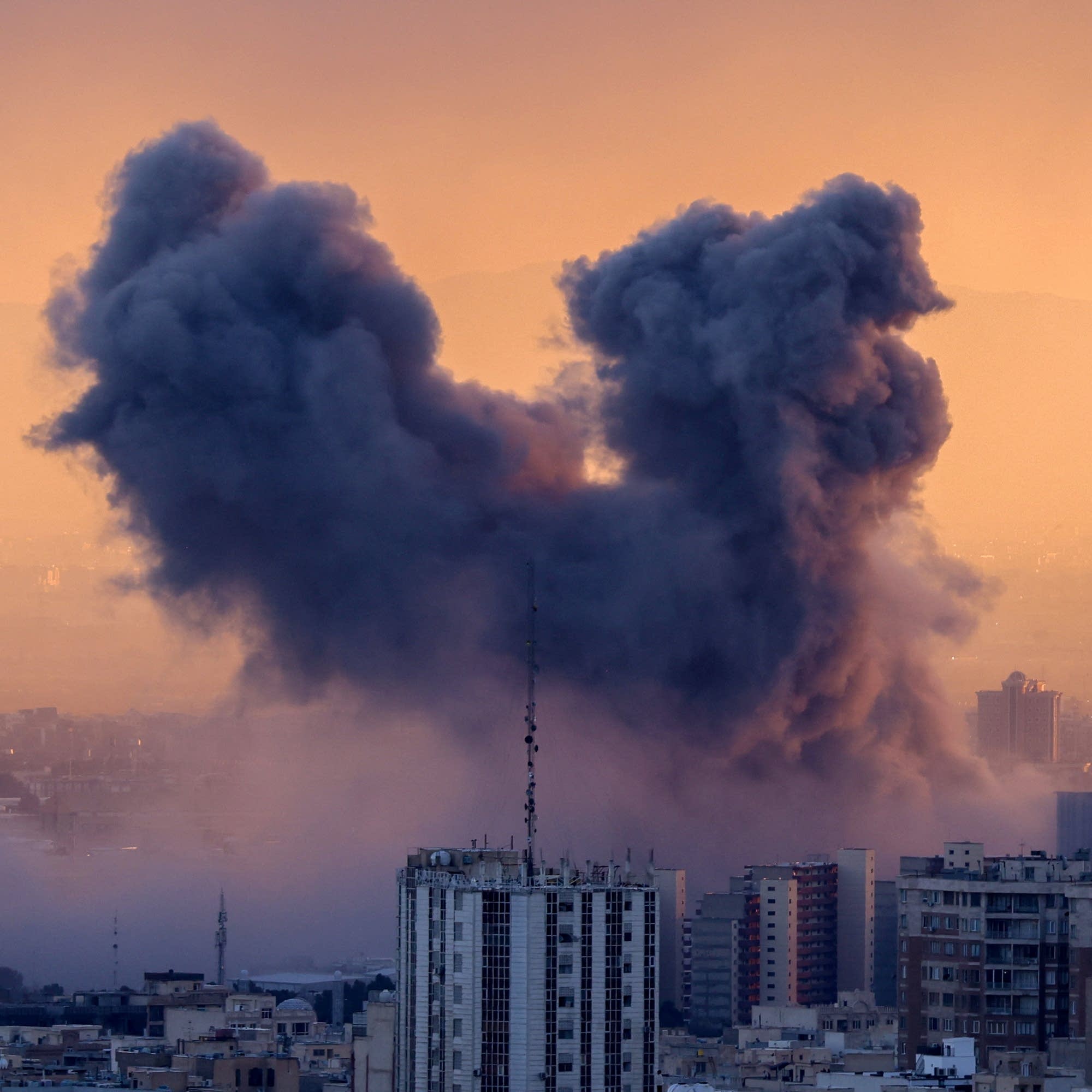
on again, off Again Peace negotiations are on again from Marketplace. I'm Sabri Benishore in New York. The US and Iran are reportedly back to working on an end to the war and sources say a deal is close. According to Reuters, Axios is reporting the deal would involve a moratorium on nuclear enrichment and an end to sanctions. Oil is down, markets are up. Russ Mold is investment director of the UK based investment platform AJ Bell and is here to talk about it all. Hi Russ.
- [01:53]
Russ Mold
Good day to you Sabri. Hope you're well.
- [01:55]
Sabri Benishore
So we have had so much back and forth. The straits open, the straits closed, peace deal coming, Peace deal failed. Are markets taking this time seriously?
- [02:06]
Russ Mold
They're taking it all very seriously. They're possibly not paying quite so much attention to the presidential social media posts as they once were given the toing and froing. But I think they were worried about the potential for an escalation between Washington and Tehran yesterday. So they seem relieved that there's been a backing off from those skirmishes after a day and that the ceasefire is held and that there is potential for a peace proposal on the table. And you can see that reflected in how The S&P 500 Nasdaq stock indices hit record highs on Tuesday and how the oil price on the West Texas Intermediate benchmark for the US has gone back below $100 a barrel.
- [02:43]
Sabri Benishore
Yeah, you know, oil prices, they have gone up, they have gone down, currently down as you mentioned. But gas prices, they just keep going up in the US $4.50 a gallon is where they're at today, which is a record. Why is that and would gas prices continue to rise even if the war winds down?
- [03:03]
Russ Mold
Clearly, if there is a peaceful solution that frees up the release of crude and means that we finance can get supply. You would like to think over time the price of gasoline at the pump will come down, but it may take time given that tankers need to get back to the Middle East. They'll need to put the stuff in the ship, they'll need to get the ship to the right destination. So it may not be an instant solution even if it happens as we all hope it will soon.
- [03:27]
Sabri Benishore
AMD reported earnings. It projected very strong growth. Its stock shot up. How much have earnings played a role in the stock market's record numbers as opposed to news from the war?
- [03:38]
Russ Mold
Markets have been pleased to see a ceasefire and they've taken the view that if things aren't escalating, then at some stage they're going to de escalate and there'll be a peaceful solution. Equally, as you say Sabri, earnings have been phenomenally strong in the first quarter. Tech has largely led the way. You saw that from AMD yesterday. And you look at the leading stocks in The S&P 500, Intel, Micron, Qualcomm, Lambda Research and Western Digital, all tech stocks, all related to AI and that theme. So yes, earnings probably have been a key factor in the strength that we've seen in the market since, you know, the March lows.
- [04:11]
Sabri Benishore
Russ Mold, Investment director at AJ Bell. Thank you so much.
- [04:15]
Russ Mold
Appreciate your time.
- [04:39]
Dell Advertisement Announcer
Dell PCs with Intel inside are built for the moments that matter. For the moments you plan and the ones you don't. Built for the busy days that turn into all night study sessions. The moment you're working from a cafe and realize every outlet's taken. The times you're deep in your flow and the absolute last thing you need is an auto update throwing off your momentum. That's why Dell builds tech that adapts to the way you actually work. Built with long lasting battery, so you're not scrambling for the closest outlet. And built in intelligence that makes updates around your schedule, not in the middle of it. They don't build tech for tech's sake, they build it for you. Find technology built for the way you work@dell.com DellPCS built for you.
- [05:32]
Freedom From Religion Foundation Announcer
This Marketplace podcast is supported by the Freedom From Religion Foundation. America is an idea, but progress isn't guaranteed. Today, those founding principles are being challenged by efforts to mix religion and government. The Freedom From Religion foundation is working to protect the Constitution and keep power where it belongs, with we the people. Visit FFRF US or text America to 511-511-text America to 511-51-511 and keep state and church separate. Text fees may apply.
- [06:02]
Sabri Benishore
So a peace deal may or may not be coming. But meanwhile, inside Iran, the economy is suffering. A million people are out of work. Food prices are spiking, businesses are closing. Before the war, economic pressure contributed to mass anti government protests. Now the Iranian people are facing new economic hardships. Javad Salehi Isfahani is a professor of economics at Virginia Tech and is here to talk about it. Good morning.
- [06:27]
Javad Salehi Isfahani
Good morning.
- [06:28]
Sabri Benishore
This is kind of a fraught question, but who do you think Iranians blame for this economic situation?
- [06:40]
Javad Salehi Isfahani
Well, that's a very interesting question too, because the answer to it has changed since the war started. I think before the war, the average person would blame the government because sanctions were kind of an invisible barrier. And it was easy to blame high prices and shortages on these two favorite explanations, inefficiency and corruption, mismanagement and corruption. You constantly hurt that. But since the war started, it's as if all the damages the sanctions were causing became visible and the government, not only it wasn't standing by the side, it was actively trying to help people survive this. So I think the government has reinvented itself, repositioned itself on the side of the people, opposing these two characters that are not very much like in Iran at all, President Trump and Prime Minister Netanyahu.
- [07:37]
Sabri Benishore
So it sounds like this experience has galvanized the Iranian people. Does that mean economic pressure would not as easily be able to force Iranian leaders to negotiate a quicker end to the war, do you think?
- [07:52]
Javad Salehi Isfahani
Yes, I think that is fair to say, and partly because the government also has a strong repressive apparatus. So the opposition is cramped. Under the circumstances, they can't really do a whole lot. I suspect that Iranians can manage another maybe 20, 30% decline in living standards. They've already lost quite a bit in the last year. And in a situation like that, you kind of get used to living in difficult times and marginal declines do not precipitate coming to the street and facing armed guards. So, you know, that's a situation that's very difficult from the distance from my position to read, but I can tell you that opinions about the war have changed drastically. Whereas maybe a fair size of the population, maybe a majority, saw the possibility that aerial bombardment would help them get rid of the Islamic Republic, they now see it as mostly destroying productive capacity and making life much harder than it was.
- [09:06]
Sabri Benishore
Javad Salehi Isfahani, professor of Economics at Virginia Tech thank you so much. Thank you a lot more to that interview@Marketplace.org I'm Sabri Benishore with the Marketplace Morning Report from APM. American Public Media
- [09:23]
David Brancaccio
Headlines shift overnight and then again in the afternoon and again in the evening. You see where I'm going with this? Hello, I'm David Brancaccio, special correspondent for Marketplace, where we deliver economic news designed to keep you both sane and informed. One of my favorite ways to make sense of it all is with the Marketplace newsletter. Every weekday our team curates must read stories from the week and delivers explainers right to your inbox. So if you want the latest from me and our team of award winning journalists, head over to marketplace.orgnewsletters and sign up today.