← Más de uno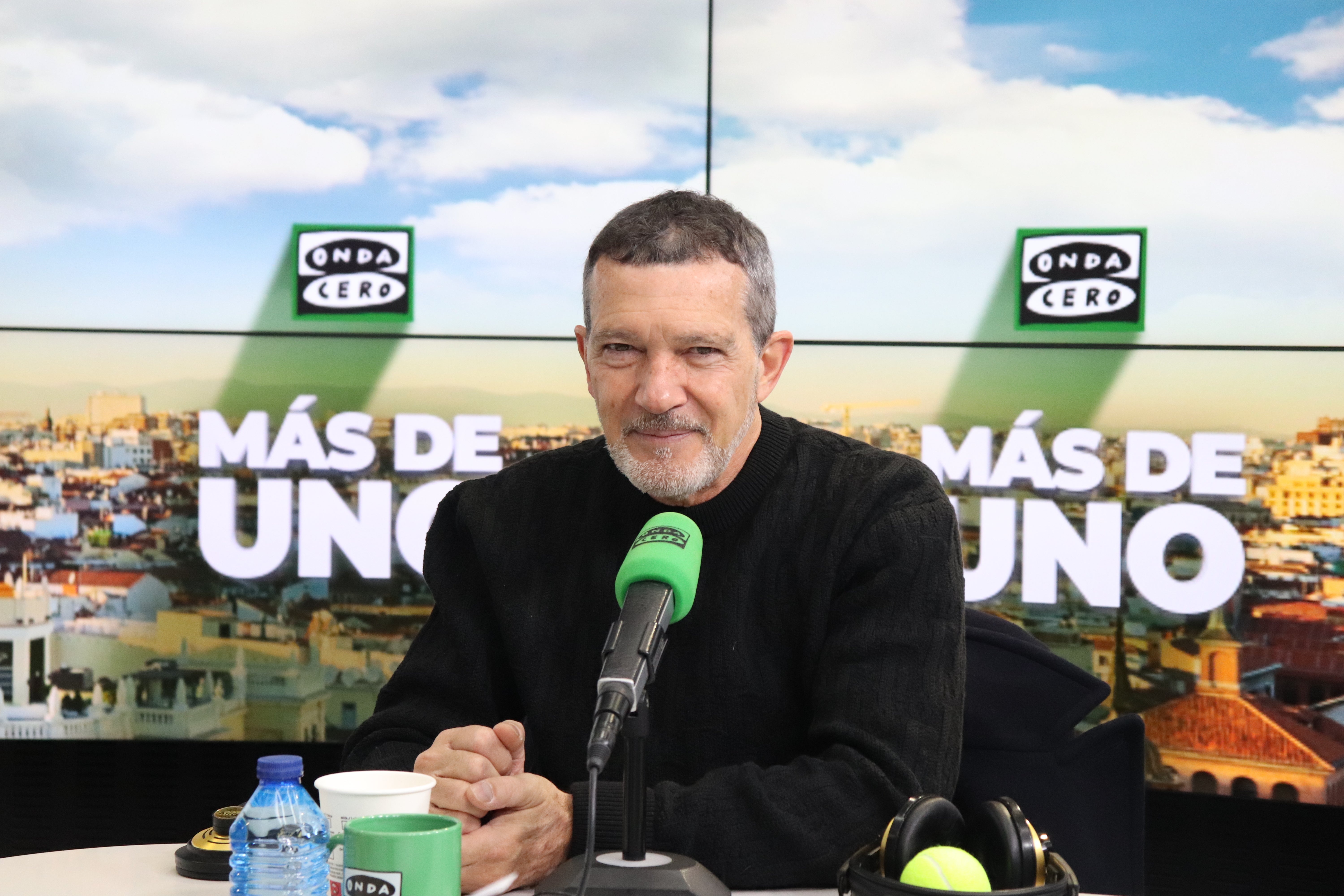
Más de uno
Antonio Banderas: "Estoy viviendo la época más feliz de mi vida"
00:26:55
Antonio Banderas presenta en 'Más de uno' el musical 'Godspell', que llega al Gran Teatro Pavón tras arrasar en su estreno en 2022.
Loading summary
Transcript82 lines
- [00:00]
Interviewer
Nos hace mucha ilusión recibir de nuevo en este programa a una de las pocas personas que puede presumir de tener un teatro y no uno cualquiera, porque están haciendo los mejores musicales que se han producido en España en estos últimos años. Lo que esta persona, que es nuestro invitado y cuyo nombre no estoy autorizado a facilitar, lo que él aún no sabe es que en los de más de uno también tenemos nuestro propio teatro, que es el Teatro Luis del Olmo, donde cada miércoles hacemos una obra de ficción de radioficción. Y te voy a enseñar el teatro invitado, cuyo nombre no puedo dar todavía. No hace falta de Televantes, porque es un teatro imaginario. Entonces es muy cómodo porque no hay que. Basta con escuchar el sonido de la puerta al abrirse y ya estamos entrando en el patio de butacas. Fíjate qué fácil es entrar a este teatro. Y hemos querido aprovechar que tenemos este escenario para representar un musical sobre la vida de nuestro invitado. Lo hemos querido necesario porque tu vida tiene mucho de musical y porque tu vida, al fin y al cabo, pues es el teatro. Esta es la primera escena. Estamos en el año 1967, en una terraza de un cuarto piso sin ascensor de la calle Sebastián. Subieron 22 en Málaga. Y ahí estás tú, con siete años y con tu hermano más pequeño. Estáis ahí jugando al fútbol con un garbanzo y se chuta con las chapas, que son las mismas chapas que recogen en los bares y que llenan estos niños de cera para que chorreen bien por el suelo. Buena idea. Y les ponen las caras de los futbolistas más famosos, como Rubén Ayala. Gol de Langlover. Esta podría ser una de las primeras veces que canta nuestro protagonista, aunque sea un golpe. Aquí Ayala, pues no juega en el Atleti, sino en el Unglobal, que es el equipo que se ha inventado nuestro niño protagonista. Les hemos contado alguna vez en este programa que era un niño muy peliculero, muy novelero. Pasan las horas y de repente, en esta misma terraza, vemos al tío Pepe con una guitarra. Tío Pepe le gusta tocar y componer con la guitarra, aunque no es muy de hacerlo en público. La música y los versos a él le nacen más bien a puerta cerrada. Pero su hermana Ana le convence con ayuda de un vinito seguramente, y un poco de queso, para que enseñe al niño a rascar la guitarra y Las primeras notas de este musical podrían ser las de aquellas clases de solfeo con las que nuestro protagonista aprendió a tocar la guitarra. Antonio Do re. Coloca bien ese dedo. Estamos ya en la siguiente escena. Este es el año 1977 y nuestro protagonista, que ya está crecidito, está empezando el sueño de su vida, que al final no ha tenido que ver ni con el balón ni con la guitarra. Él quiere ser actor de teatro profesional. Le gustaría hacer de Jesús en un musical que se llama Godspell, que vio hace un par de años en el Teatro Cervantes de Málaga. Se deja el pelo bien largo. Lo más cerca que ha conseguido por el momento, de conseguir su sueño es interpretar a Pedro en la adaptación de Jesucristo Superstar que han hecho en el colegio Los Olivos. Y por eso la segunda canción de este musical está clara. Va a sonar en playback con permiso, que es como la tuvieron que hacer con el permiso de Camilo Sesto.
- [03:24]
Antonio Banderas
Yo no le conozco, no sé ni quién es. Jamás le vi, nunca fui con él. No le conozco.
- [03:39]
Interviewer
Ya. La siguiente escena tiene lugar en Madrid en el año 80. Tiene 20 años ya el protagonista y ha venido a Madrid a ser actor, pero no le ha salido igual como él quería. Así que esta noche ha decidido que se vuelve a Málaga. Ya tiene el billete de tren. Está aquí, en la cafetería del teatro María Guerrero, esperando a que ese camarero le pase un bocadillo de estrangis. Por eso la tercera canción de este musical podría ser aquella que le cantó su amigo Joaquín mientras comían una paella malísima. La acababa de componer y decía.
- [04:14]
Antonio Banderas
Allá donde se cruzan los caminos.
- [04:20]
Interviewer
Donde.
- [04:21]
Antonio Banderas
El mar no se puede concebir.
- [04:26]
Interviewer
Donde.
- [04:27]
Antonio Banderas
Regresa siempre el fugitivo. Pongamos que hablo de Madrid.
- [04:37]
Interviewer
Saliendo de la cafetería del teatro María Guerrero, el protagonista se detiene un instante porque se le ha ocurrido una idea.
- [04:46]
Antonio Banderas
Perdona.
- [04:47]
Begoña
¿Sí?
- [04:48]
Antonio Banderas
Eres Alicia Moreno, ¿Verdad? Trabajas en administración del teatro.
- [04:53]
Begoña
Sí. ¿Qué quieres?
- [04:55]
Antonio Banderas
Perdona, es que mi nombre es Antonio Domínguez Bandera y quisiera saber qué hay que hacer para trabajar en él Centro Dramático Nacional.
- [05:05]
Begoña
Pues preséntate unas pruebas.
- [05:07]
Antonio Banderas
Dame tu número de teléfono.
- [05:09]
Begoña
¿No lo sabes?
- [05:11]
Antonio Banderas
No, es que no. Es que no tengo teléfono.
- [05:15]
Begoña
Vaya.
- [05:16]
Antonio Banderas
Ah, no, espera, espera. Me sé uno. Sí, tengo este. El de una amiga de Málaga que está viviendo aquí en Madrid.
- [05:23]
Begoña
Vale, pues permanece atento que te llamarán.
- [05:28]
Interviewer
Nuestro protagonista vive en casa de un uruguayo amigo de un novio de una amiga de Málaga, concretamente en la calle Matilde Díez, número 30. Primero ve y duerme en un sofá con un muelle en medio. Está hecho al muelle. Tanto que cuando consiga dormir en una cama normal, pues seguirá encogido para esquivar el muelle, aunque no haya muelle. Y un día la amiga de Málaga, la del número de teléfono, llama al telefonillo de esa casa.
- [05:55]
Begoña
Antonio, que te están llamando para la prueba que dicen que vayas corriendo.
- [05:59]
Interviewer
Y la respuesta a esas pruebas llegará un mes después. Y ahí comenzará una nueva vida para el protagonista de este musical. Y vendrán muchos más escenarios y muchas más canciones, aunque al final las chapas, la guitarra de su tío Pepe, el muelle del sofá. Al final vuelve el protagonista siempre a esas pequeñas cosas que le hicieron ser quien hoy es. Incluido aquel musical que vio con 14 años y que se llama Godspell.
- [06:21]
Antonio Banderas
Repara el camino al señor.
- [06:49]
Interviewer
Bueno, nuestro protagonista. Yo creo que la suerte España. Pero es Antonio Banderas. Buenos días, Antonio.
- [06:54]
Antonio Banderas
Muy buenos días.
- [06:55]
Interviewer
Bienvenido.
- [06:56]
Antonio Banderas
Estoy asombrado de la cantidad de datos, porque algunos son datos que incluso yo ya había olvidado. Por ejemplo, la calle Matilde Díez. ¿Tú sabes quién era Matilde Diez?
- [07:08]
Interviewer
La verdad es que no.
- [07:09]
Antonio Banderas
Mira que hay calles en Madrid. La primera calle donde yo casualmente me voy a vivir es una calle dedicada a una actriz malagueña que se llamaba Matilde Díez, de principios de siglo.
- [07:22]
Interviewer
Si es que pusieron el nombre de la calle sabiendo que ibas tú.
- [07:25]
Antonio Banderas
Qué va, yo entonces no. Yo no recibía esos honores en absoluto. Casualidad, Una casualidad increíble. ¿Pero sí hay muchas de esas cosas que mi tío, que era un gran guitarrista, pero además llegó a conocer a Andrés Segovia, que le decía pero usted por qué no toca en directo? Él se metía en un cuarto y se encerraba con llaves. Y solamente en los cumpleaños de su nieta o en Navidades reuníamos la familia y él salía y tocaba sus composiciones, componía, escribía música. Y pasó una cosa muy interesante y es que conoció a Federico García Lorca en Bobadilla. Y Federico García Lorca se quedó prendado de cómo tocaba la guitarra. Y entonces Federico llevaba una guitarra y se la cambió y le yo le voy a dar mi guitarra, pero usted me tiene que dar la suya. Y esa guitarra de Federico, mi familia la dio a la Peña Juan Breva en Málaga. Y allí está expuesta esa que le dio Federico García Lorca. Mi tío era hermano de mi madre. Mi madre era. Eso te va a asombrar también. Mi madre era la menor de 16 hermanos y hermanas. No había televisión y aquello era bueno. Mi abuela estuvo preñada prácticamente toda su vida, mi madre nunca la conoció. Mi abuela murió a los dos meses de haber nacido mi madre y fue criada por los hermanos. Y mi abuelo murió en la guerra de África. Entonces mi madre nunca conoció a sus padres, fue criada por hermanos que ya tenían veintiocho, veintinueve años cuando ella nace. Y uno de esos hermanos era mi tío Pepe, el que tocaba la guitarra. Ese fue el que crió a mi madre. Ese era casi como mi abuelo.
- [09:12]
Interviewer
Y los documentos sonoros que hemos ofrecido, ¿Qué te parece? Tú no sabías que estaba grabado el momento en el que tú le dices a Alicia Moreno.
- [09:20]
Antonio Banderas
Yo no llevaba micrófono entonces no sabía que alguien lo estaba grabando. Pero aquello fue crucial porque dependen en un momento determinado tu vida de tomar una decisión, volverte, bajar unas escaleras y hacer esa pregunta o de marcharte. Y a lo mejor si me hubiera marchado no estaríamos hablando ahora y mi vida probablemente hubiera tomado otros derroteros o no. Muchas veces lo he pensado. Hubiera llegado a los mismos lugares por otros caminos. No lo sé. No se puede saber, ¿Verdad? Esas cosas son.
- [09:52]
Interviewer
No se puede saber. Salvo que seas novelista. Entonces tú eliges cómo quieres. Las novelas estas de que alguien, por lo que sea, es una reconstrucción histórica, pero pasa lo contrario de lo que en realidad sucedió. Cambia completamente. Es que esta mañana leí una columna que iba sobre La conjura contra América. Sí, quítatelo los auriculares. La conjura contra América, que es una película, bueno, también ha hecho película o serie, pero es una novela de Philip Roth. ¿Cómo habría sido la historia de Estados Unidos si en lugar de ganar las elecciones Roosevelt las hubiera ganado Lindbergh, que era pro nazi? Fíjate, esa es la novela más actual que te puedas encontrar. Pero claro, tiene un giro final la novela de tal manera que pasa lo que tiene que pasar para que el curso de la historia de Estados Unidos sea el que conocemos. Durante cuatro años hay un periodo fabulado en el que quien gobierna es un pro nazi, pero luego se reorienta la historia historia para que el resultado sea el mismo. Entonces, si eres novelista puedes hacer eso, Si no, no lo puedes plantear.
- [10:57]
Antonio Banderas
No, no lo podemos, no. Pero a veces sí que lo pienso. A veces sí que lo pienso, porque mi vida ha dado unos saltos muy impresionantes. No solamente con mi venida a Madrid, El más impresionante fue mi ida a los Estados Unidos. Hay cosas.
- [11:11]
Interviewer
Fíjate que creo que lo más impresionante.
- [11:12]
Antonio Banderas
Es que regresaras de Estados Unidos. Ah, no, pero sí, pero yo ahora. Yo estoy viviendo ahora mismo la época más feliz de mi vida. Sí, porque Málaga se ha convertido en mi Ítaca personal. Después de dar viajes por todo el mundo, poder regresar a casa sin complejos de inferioridad, como antes tenía. Yo veía lo que pasaba en otros países, yo decía yo eso nunca tendré acceso. Y de pronto empiezan a caerse todos esos mitos y te ves que si eres capaz, que puedes acceder a esas cosas que parecían imposibles. Entonces regresas y lo que quieres es poner en funcionamiento una forma de vivir y una forma de entender el arte, de entender el teatro. El teatro para mí ahora mismo es muy importante, porque frente a todo lo que está pasando con las nuevas tecnologías, esa especie de cerebro de cristal que nos han metido en el bolsillo y que comanda prácticamente nuestras vidas, y que está dañando muchísimo, yo creo, a la gente joven a la que le está dando, tiene un déficit de atención extraordinario, porque las noticias rápidas, el scroll, esa cosa que se llama el scroll, debiendo cosas. Y el teatro conserva todavía frente a la inteligencia artificial, esa cosa que se llama inteligencia humana y que nos estamos olvidando de ella. Ese espacio tan pequeñito donde ocurren cosas muy grandes, donde un grupo de personas, casi de forma religiosa, se sitúa frente a otro grupo de personas para reír, para emocionarse o simplemente para reflexionar sobre el ser humano, sobre la vida y profundizar sobre ello. A mí me parece una cosa absolutamente mágica. Siempre me lo ha parecido. Yo no soy actor por el cine, yo soy actor por el teatro. El teatro es lo que a mí me llamaba la atención. Me llamaba mucho la atención porque mi padre y mi madre eran muy aficionados al teatro desde que éramos muy pequeños. Mi hermano y yo asistíamos a las temporadas que llegaban a Málaga las compañías de Madrid. Y a mí me llamaba mucho la atención la capacidad que tenían los actores muy mayores para seguir jugando, para seguir creyéndose los personajes. Y decí mira, dígase ese señor tan mayor, Guillermo Marín, todos estos grandes bodas que hemos comentado anteriormente y que están ahí en el escenario haciéndonos creer una fantasía maravillosa. Era como un espejo que yo quería saltar al otro lado con una especie de Alicia en el país de las maravillas. Pero era un mundo mágico, absolutamente mágico. Sigue siéndolo. Sigue siendo un mundo mágico.
- [13:43]
Interviewer
Para mí es que el cine y el teatro en este mundo en el que estamos ahora, ¿Que dices tú del scroll? Que todo tiene que ser corto, inmediato, llamativo, sorprendente, peligro. El cine y el teatro te obligan a hacer una pausa en esa vida. Te metes en un. En un local y durante dos horas todo lo que pase fuera no existe el cine, lo que crees que lo que estás viendo en realidad ya se hizo y te lo están proyectando, pero no está pasando en ese momento. Pero el teatro es eso para la vida. Te metes en un local, todo lo que pasa en ese momento fuera, no lo conoces ni quieres. A ser posible apagas el teléfono móvil.
- [14:23]
Antonio Banderas
A ser posible. A ser posible.
- [14:25]
Interviewer
Y durante dos horas tienes que atender a lo que está pasando allí. Y están haciendo personas de verdad que están delante de ti a unos metros. Y eso es magia.
- [14:33]
Antonio Banderas
Es muy importante decirle a la gente joven que ha de ser paciente, esa virtud que se está perdiendo. Pero es importantísima la paciencia frente a la obra de arte. Porque hay premio. Hay premio al final. En la lectura de un libro hay premio. Yo siempre les digo, leer cinco páginas al día, no más. Cinco páginas de D. Quijote. Vamos a empezar poquito a poco y te va a ir creando interés, pero hay premio porque al final de la obra de arte, incluso el estímulo que representa para la curiosidad y esa paciencia que te va a llevar a lugares que el scroll del teléfono no te lo va a dar. No te lo va a dar. Y eso es algo que quedará como un pozo. Y al final de todo eso está la creación de una personalidad fuerte. Y esa personalidad fuerte va a permitir que no seas manipulado. Ese es el gran secreto de la obra artística, el tener la personalidad suficiente como plantarte frente al mundo sin el peligro a ser manipulado En términos políticos, imagínate la importancia que tiene. Enorme.
- [15:43]
Interviewer
Otro día te vienes y hablamos de política. Bueno, de política.
- [15:46]
Antonio Banderas
Otro. Otro día, otro año.
- [15:48]
Interviewer
A esta hora me da pereza hablar de hablar tanto en las primeras horas del programa. Cuando llego a esta hora tengo una pereza terrible. Pero es verdad que tiene mucho que ver con esto de por qué se ha convertido en tan fácil mover gente para un lado o para otro, siendo la misma gente y teniendo, se supone, ideas propias. Hoy te puedo decir que lo correcto es esto que tengo a la derecha. Y mañana te digo que no, que era esto. Y van y te siguen. ¿Por qué no se lo plantean un poco?
- [16:17]
Antonio Banderas
El veneno más importante, yo creo, el veneno más tóxico de nuestro tiempo es la ignorancia. Sin duda. Por eso tenemos que trabajar también los que nos dedicamos a la artes, a pensar que podemos hacer algo por la sociedad.
- [16:31]
Interviewer
Y todavía no hemos hablado de Godspell.
- [16:33]
Antonio Banderas
Vamos a hablar un poco de Godspell, hombre. Venga, vamos a hablar un poco de Godspell.
- [16:36]
Interviewer
Está en el Teatro Pavón de Madrid hasta el 1 de marzo.
- [16:40]
Antonio Banderas
Sí. ¿Bueno, ahora estamos pensando en la posibilidad de aplazar, porque hemos tenido que llenáis todos los días? Estamos llenando, sí. Pusimos el cartel de no hay localidades el sábado. Estamos muy contentos. La respuesta está siendo extraordinaria. Entonces. Estoy muy contento. Lo que pasa es que te voy a explicar una cosa rápida. Nosotros somos una empresa muy rara. El Teatro de los Ojos es una empresa privada. No tenemos ningún tipo de ayuda pública, no la queremos. Trabajamos privado, con inversores privados, sponsors y sin ánimo de lucro, que es la rareza de nuestra compañía. Nosotros hacemos teatro porque nos gusta hacer teatro como creemos que se debe hacer. Para mí el mayor éxito y la mayor felicidad que tengo es poder, en este momento de mi vida, hacer lo que quiero hacer, con quien quiero hacerlo, de la manera que creo que debo de hacerlo. Y eso es gospel. Es un espectáculo donde no admito las pregrabaciones. El teatro en directo, musical, tiene que ser en directo, puro y duro. Si hay un trombón, es un trombón, si es una guitarra, es una guitarra, un violín, es un violín. No hay truco. Esto es lo que hay. Y los actores cantan, tanto los coros como individualmente, en absoluto directo, todos los días. Y eso la gente al final termina apreciándolo, porque no es normal, no es común. Especialmente, por ejemplo, en Gypsy o en company, donde llevaba 26 músicos en escena y 35 actores con 40 técnicos.
- [18:07]
Begoña
Por eso, sin ánimo de lucro.
- [18:08]
Antonio Banderas
Claro, para pagar todo llenase mi teatro todos los días.
- [18:15]
Interviewer
Claro. Pero como todo es de verdad, como todo es en directo, como no hay nada pregrabado, las primeras veces que hacéis la función, el espectáculo, pasarán cosas, habrá fallos, hay de todo que se olvida el texto, la letra.
- [18:31]
Begoña
Pero son cosas que tú sabes que pasan, no que sepa el espectador qué están ocurriendo.
- [18:36]
Antonio Banderas
Generalmente el espectador no se da cuenta, pero hay veces que sí. Suele ocurrir en los primeros días de representaciones, hasta que tanto técnicos como actores encuentran la horma del zapato y a partir de ahí los fallos son mínimos.
- [18:53]
Begoña
El sábado, por ejemplo, ¿Qué fallo hubo?
- [18:55]
Antonio Banderas
El sábado no tuvimos prácticamente ningún fallo, pero el día del estreno sí hubo un acople de micrófonos. Tú date cuenta que tengo a 10 actores microfonados. No podemos permitirnos el hecho de tener monitores para que ellos escuchen. Los actores en el escenario prácticamente no se escuchan. Se tienen que afinar con un piano que a lo mejor está sonando muy lejos. Es muy complicado. Entonces, al subirles un poquito la escucha, se pueden producir esos hombres.
- [19:23]
Interviewer
Pero no pasa nada, porque en esos casos hay que decir que es premeditado, es un mensaje, tiene un sentido. Pues yo no se lo he encontrado. Pues es tu problema.
- [19:34]
Antonio Banderas
Son los problemas del directo puro y duro.
- [19:36]
Interviewer
Pero cuando lleváis. ¿Cuántas funciones tenéis que hacer? ¿Hasta que tú ya estás tranquilo? Diez.
- [19:42]
Antonio Banderas
Sí, probablemente una semana. Una semana ya vas bien. Pero ya en esta semana hemos tenido funciones maravillosas. Y la función maravillosa es la que te mete más público. Ese es realmente el boca oreja o el boca a boca, como se dice. Es lo que realmente mete a público. Gospel es una obra muy especial.
- [19:59]
Interviewer
¿Cómo llegas a esta versión de Gospel? Hemos contado que tú cuando eras chiquitajo, bueno, ya jovencito, estabas enamorado de la función, soñabas José, Jesús o quien fuera. ¿Cuándo te reencuentras con Gospel, con la adaptación de Emilio Aragón, para luego convertirla en la que tú has querido?
- [20:21]
Antonio Banderas
Primero Emilio me invitó a un programa de televisión que él estaba haciendo en aquel momento. Y entonces se lo propuse. Le oye, ¿Qué te parece si producimos juntos esto? Y él me comentó que su hermana Rita había estado en una de las compañías de Gospel, que lo hizo en el año 75 aquí en Madrid. No se ha hecho en 50 años en Madrid. Y entonces me dijo que sí. Entonces lo producimos con su compañía Caribe y con el Teatro del Soho. Pero yo en aquel momento venía a Madrid a representar compañía, entonces no pude estar pegado a la dirección, estuvo pegado a la producción y ayudando desde ese punto de vista. Cuando aquello ya pasó, la compañía salió de gira por toda España. Pero yo tenía una versión muy específica en mi cabeza, donde al grupo de actores les da una identidad que antes no tenía. Los hice actores y los encerré en una iglesia en ruina, que además estaba bajo un conflicto armado que se está produciendo alrededor. Indeterminado. No sabemos dónde estamos. En realidad ahí aparece dos personajes muy inquietantes que son los que cambian la vida de estos chicos. Pero tú no sabes. Yo hacerlo, actores. Tú no sabes realmente si lo que está pasando es real o los personajes están interpretando. Entonces jugamos con lo que se llama metateatro. Jugamos mucho con el público y le guiñamos constantemente al público el segundo acto. En cualquier caso, parece que todos esos actores ya representan la obra que les han propuesto representar y parece que todo tiene un sentido mucho más claro. Pero jugamos con esa inquietud y la teatralidad. A mí eso me gusta muchísimo. El teatro son más preguntas que respuestas. No es como el cine, que es una cosa mucho más realista, que te tienen que cocinar todo para que tú te vayas a tu casa contento y el asesino lo hayan pillado y todas cosas. Aquí no. Aquí lo que yo quiero es que la gente salga y se vaya a cenar y discutan, porque a lo mejor han entendido lo mismo que han visto de maneras diferentes. Es dar snips de lo que está pasando.
- [22:22]
Interviewer
En el escenario estuvo Begoña viendo la función.
- [22:26]
Antonio Banderas
¿Qué te pareció?
- [22:27]
Begoña
Me pareció maravillosa. Me pareció divertida. Me pareció. Y mi madre, que estaba conmigo, muy preocupada. Pero Antonio viene todos los días aquí al teatro. Pero todos los días tiene que estar aquí viendo todas las funciones. Vaya curro que tiene, ¿No? Porque ahí está controlando a los actores. Y me pareció emotiva a la vez. Una función muy pegada a la actualidad, cuando es una función muy antigua, digamos. Muy pegada a la actualidad y con unos actorazos que cantan de maravilla, bailan de maravilla y actúan de maravilla. Gente joven que llena el escenario y que es una pasada.
- [23:06]
Antonio Banderas
Son muy disciplinado. Muy bueno. Tú date cuenta que Gospel en realidad nace ligada al movimiento Hippie en años 68. Primero en Offraway. Llega a Broadway en el año 70, todavía con el conflicto muy vivo del Vietnam y con una sociedad norteamericana joven que se enfrentaba al gobierno. Conflicto del Vietnam. Termina el año 75. Cuando estaba en la administración, estaba Richard Nixon de presidente. Pero todo ese tiempo surgieron muchas obras. Heer también. Era una obra que luchaba contra Jesús. ¿Y qué ha pasado? Pues que no hemos cambiado, seguimos matándonos. Y entonces la obra sigue teniendo vigencia como ha tenido la historia de Jesucristo. Durante todos estos años, es decir, los 2000 años, la gente me pero Antonio, ¿Cómo te metes en hacer una obra de teoría? ¿Le vas a protestar a Mozart porque escribió un Requiem o le ¿Qué hacemos con el Renacimiento, con Miguel Ángel? ¿Qué hacemos con Leonardo da Vinci? ¿Destruimos la última cena?
- [24:07]
Begoña
Sí, es cierto que hay un resurgir de temas religiosos. Rosalía está ahí, los Javis también, con La llamada. Es decir, ahora quizá hay menos pudor de hacer algo.
- [24:21]
Antonio Banderas
Hay menos pudor y sobre todo hay una necesidad de espiritualidad. Hay. Lo que vemos por televisión es terrible. Es terrible. La violencia es. El otro día lo comentaba en otro programa, que por primera vez empiezo a tener una reacción física ante la violencia. El otro día vi, lo comenté también, lo repito si hace falta, vi a unos miembros de brigadas de macarras antiinmigración norteamericana sacando a una mujer que tendría 30 años a guantazos de un coche y me dio una arcada viendo la televisión. Y digo joder, me está dando asco. Esto es una reacción física al ver la televisión. De pronto llegas a una obra como esta, que tiene un punto naif en el fondo y te viene a decir las mismas cosas que hemos escuchado durante muchos años. No era moral al prójimo. Hablamos del perdón, de la humildad, de la caridad, del otro. Del otro, no del yo constante, sino de nosotros. Y eso la gente es como un bálsamo. Yo lo noto en el teatro, que lloran porque creían haber perdido esas sensaciones y Gospel las recupera. Es muy bonito ver las reacciones del público, en realidad, que no queremos ganar dinero. En realidad esa es nuestra comida. Vivimos de eso, de ver que el público sale con una sonrisa, ¿Sabes? Como encantado. Es muy bonito ver esa especie de terapia que se vive en el teatro todas las noches.
- [25:59]
Begoña
Yo te quiero pedir perdón por el público de Madrid, que no sabemos llevar las palmas.
- [26:04]
Antonio Banderas
Es verdad, es verdad. Es que hay un momento que les invitamos a que toquen las palmas con nosotros.
- [26:11]
Begoña
No sabemos llevar las palmas.
- [26:13]
Interviewer
Bueno, igual erais los del sábado.
- [26:15]
Antonio Banderas
No, perdona, pero lo intentan y eso ya es importante.
- [26:18]
Begoña
Ahora Madrid, decí venga, Madrid, Madrid, que no sabes llevar las palmas. Esto en Málaga no pasa.
- [26:26]
Antonio Banderas
No, en Málaga era torte a tor, pero lo intentan.
- [26:32]
Begoña
Lo intentamos.
- [26:34]
Interviewer
Dales cuatro o cinco meses más.
- [26:36]
Begoña
Hay que hacer un previo de aprendizaje porque si no.
- [26:39]
Interviewer
Bueno, Banderas, Antonio. Antonio Banderas, gracias por conversación, como siempre, por invitarme y cuando tú quieras, ya sabes dónde estamos. Muy bien, en el pavón, de momento, hasta el día 1 de marzo, pero va. Sí, creo que vamos a prorrogar un poco, continuar Godspell. Gracias, Antonio.
- [26:54]
Antonio Banderas
A ti.