← Más de uno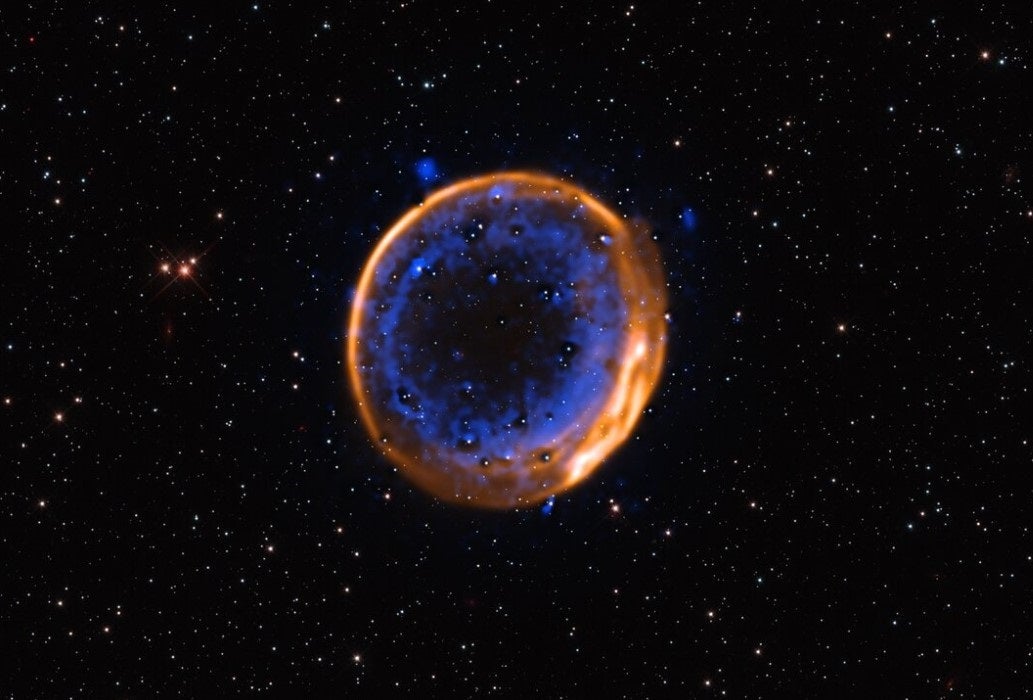
Más de uno
Cuando una estrella se apaga. Un final que no nos habían contado para la vida de las estrellas
00:12:50
Alberto Aparici nos ha abierto las puertas de su biblioteca para explicarnos que existen estrellas que no mueren con estruendo. No estallan, no iluminan el cielo como supernovas: simplemente se apagan. En esta charla viajamos al destino más silencioso...
Loading summary
Transcript83 lines
- [00:06]
Carlos
Tía Carlos que venía. Si, es verdad, es verdad. Parizi, buenos días.
- [00:09]
Alberto
Claro que vengo. No podía faltar. Oye, poca broma.
- [00:12]
Carlos
Claro, hijo. Buenos días. Por supuestísimo.
- [00:15]
Alberto
Claro que además los bancos tienen mucho que ver con los físicos, que están contratando mucho físicos y matemáticos para hacer análisis de datos y todo esto.
- [00:23]
Begoña
Claro, el big data.
- [00:24]
Alberto
Que nosotros sabemos usar las matemáticas, sabemos de eso.
- [00:26]
Carlos
Los físicos sabéis usar las matemáticas en
- [00:29]
Alberto
general, menos que los matemáticos, pero sí.
- [00:32]
Begoña
Lo que pasa es que te has venido, Alberto, sin tu famosa biblioteca.
- [00:34]
Alberto
Sí, es que hemos mirado cómo estaba la sala y hemos Habría que echar atrás cuatro tabiques, poner dos puertas nuevas y nos han mejor no, pero hubiera
- [00:43]
Carlos
quedado chula una biblioteca aquí, porque el sitio es maravilloso, rodeado de madera.
- [00:46]
Alberto
El sitio está estupendo, pero las obras eran un follón, no valía la pena.
- [00:50]
Carlos
¿Entonces no haces tu sección cómo va?
- [00:52]
Alberto
Sí que hago la sección, pero la hago a la antigua usanza. Begoña, me he paseado por Nature y Science, que es una cosa que todo divulgador debería hacer una vez a la semana, y he encontrado un temazo, un tema súper guay que creo que os va a gustar mucho.
- [01:03]
Begoña
Un tema de variable, un tema de holdear, un tema de invertir.
- [01:07]
Alberto
Mira, yo creo que es un tema todavía más poético que los mercados financieros, Jorge, Pero para no perder las buenas costumbres, y como no tengo la biblioteca, le he pedido a un colaborador del programa, y ojo, no un colaborador cualquiera, un colaborador estrella, no como los que hablamos de ciencia, que nos presente el tema, o mejor dicho, que nos lo recree.
- [01:26]
Begoña
Una recreación.
- [01:27]
Alberto
Sí, así es,
- [01:33]
Colaborador estrella
Recreación melancólica. Y cerca este de la poetisa puertorriqueñ Julia de Burgos. Julia de Burgos Había una vez una estrella que se murió de puro miedo. Las golondrinas la encontraron, las margaritas la entreabrieron y fue una fiesta en el rocío. Cuando ascendió cantando un verso todos los ríos la besaron, todas las albas la siguieron. Eso me dijo la mañana que se internó por mi sendero, lo repitió la tarde blanca y entre la noche danza en ecos. Yo sé la historia de esa estrella, su caída breve fue en mi pecho. Había una vez una estrella. Qué inmenso es ser el creerse muerto.
- [02:42]
Carlos
Qué bien lo ocutan, o se dice.
- [02:46]
Alberto
Tenemos al mejor recitador, al mejor prosoda
- [02:49]
Begoña
y un muy bonito poema de Julia de Burgos. Lo que pasa, Alberto, que yo creo que has establecido aquí un precedente muy peligroso, porque ahora todos los colaboradores van a querer tener una poesía en su sección del profesor Rodríguez Brown.
- [03:01]
Alberto
Bueno, primero habrán de encontrar un poema de un autor o autora iberoamericano que encaje también, también como este, con lo que van a contar.
- [03:08]
Carlos
Pero esto encaja con tu sección, con lo que vas a hablar hoy.
- [03:13]
Alberto
Es perfecto.
- [03:15]
Begoña
Ojalá hablaras de estrellas que mueren por el poema.
- [03:20]
Alberto
Pues eso es de lo que vamos a hablar. Claro, efectivamente, Si es que lo dice muy claramente en este poema, que por cierto se llama Poema de la estrella reintegrada y que recomiendo mucho, y creo que además a todos os suena más o menos. ¿Qué pasa cuando las estrellas se mueren? Boom. Igual no hacen exactamente ese ruido, Pero
- [03:37]
Begoña
esto es lo de las supernovas.
- [03:39]
Alberto
Esto es lo de las supernovas, efectivamente. La explosión de una estrella. Pues de eso precisamente es de lo que no vamos a hablar.
- [03:45]
Carlos
Manipulador.
- [03:48]
Alberto
Pero tiene que ver, tiene que ver porque la noticia noticiosa, la noticia que se publicó en Science hace dos semanas, es que no todas las estrellas acaban su vida con este espectáculo de luces, sino que algunas simplemente se apagan. Y no de un día para otro, dos o tres años más o menos, pero desaparecen del cielo. Había un puntito de luz y de repente queda el negro del cielo y ya está.
- [04:08]
Carlos
Pero Alberto, las estrellas no pueden desaparecer así sin más.
- [04:11]
Alberto
Esa es buena reflexión.
- [04:12]
Carlos
Son cosas muy grandes, entiéndeme. Necesitamos una explosión estelar supernóbica o algo así.
- [04:17]
Alberto
Yo como físico, estoy en contra de la desaparición de la materia. Efectivamente. No tiene sentido. Así es tal cosa.
- [04:23]
Begoña
¿Bueno, entonces qué? Esto es un misterio detectivesco, o sea, tienes que averiguar dónde está la estrella, dónde se ha escondido, detrás de dónde.
- [04:30]
Alberto
Este es un fenómeno que estamos conociendo solo hace muy poquito, es una cosa conocida desde hace muy poco. Pero creemos que estas estrellas que dejan de brillar sencillamente se deben a que un agujero negro se las ha tragado.
- [04:40]
Begoña
Dios. La peor de mis pesadillas.
- [04:43]
Alberto
Así es.
- [04:44]
Begoña
Hay agujeros negros vagando por el universo, comiéndose cosas.
- [04:46]
Alberto
Bueno, es más, así, sin más, es más. No, no es eso, es más divertido todavía. Y eso también ha de hacer que la audiencia se sienta tranquila, porque es que el agujero negro lo ha creado la propia estrella. Recordemos que esto es una cosa que le pasa a las estrellas al final de su vida. Es una cosa que les pasa cuando se mueren y una estrella sana, por poner las bases, vive en una especie de equilibrio. Por un lado tiene la gravedad que tira para adentro y por otro lado tiene la fusión nuclear que empuja hacia afuera. Y mientras esas dos cosas estén equilibradas, pues todo va OK. Pero cuando el combustible se acaba, cuando ya no hay cosas para empujar hacia afuera, entonces solo queda la gravedad, así que espachurra a la estrella en un volumen muy chiquitín y ahí es cuando se forma el agujero negro y se forma en el mismo núcleo de la estrella. Y claro, en el momento que se forma empieza a zamparse desde dentro o sea que se transforma a la estrella. Bueno, sí, una parte de la materia de la estrella se transforma y en este punto pueden pasar dos o bien la estrella explota y entonces el agujero negro se queda con las ganas de comérsela, o bien la estrella no explota y entonces el agujero negro.
- [05:46]
Carlos
Pero el agujero negro es la estrella.
- [05:47]
Alberto
El agujero negro sí está hecho con material estrella, esa es como la siguiente etapa.
- [05:51]
Carlos
Claro, entonces es como una mariposa, un gusano que se convierte en mariposa, pero más feo. Me imagino que un agujero negro no tiene tanta hermosura. ¿Y de qué depende todo esto, a ver?
- [06:01]
Alberto
Bueno, depende de lo que ocurra en los poquitos segundos que tarda en formarse este agujero negro. Esos segundos. Porque en este proceso que yo he dicho muy rápido, en realidad lo que está pasando es que la gravedad aplasta la materia y básicamente se carga la materia tal y como la conocemos. Los electrones se juntan con los protones y forman otra cosa, los neutrones se juntan y tal. Y en todo ese proceso se emiten partículas hacia afuera. Hay partículas que no pueden escapar y se van adentro, pero hay otras que sí pueden escapar y se van hacia afuera. Hay que pensar que en este punto el núcleo sólo es el núcleo de la estrella el que ha colapsado. Aún tenemos un montón de estrellas alrededor de esto que forma una especie de nube, una nube que envuelve al agujero negro. Bueno, pues estas partículas que salen del núcleo si son capaces de empujar esta nube, pues nosotros vemos una gran explosión, vemos que toda esa materia ha salido hacia afuera. Entonces digamos que el colapso del núcleo es el que está propulsando hacia afuera la estrella, entonces tenemos una supernova. Pero ¿Qué pasa si las partículas atraviesan la nube esa y no logran empujarla, por los motivos que sea, porque no es la composición adecuada, no tienen la energía apropiada? Pues entonces toda esa materia se queda a merced del agujero negro y se la va comiendo. Y se calcula que tarda unos dos o tres años en comerse lo que queda de su propio cuerpo.
- [07:09]
Carlos
¿Y si come, engorda el agujero negro?
- [07:12]
Alberto
Claro, claro, desde luego que engorda, se va haciendo más grande. Esto la física no lo perdona. Nosotros desde fuera, en este segundo caso, vemos esto que acabo de describir, que es que la estrella se va apagando poquito a poco. Y entonces hablamos de supernova fallida. Es una supernova que no ha funcionado.
- [07:28]
Begoña
¿Y que es más frecuente, Alberto? ¿La supernova o la fallida?
- [07:32]
Alberto
Pues esto es lo más divertido, porque no lo sabemos. Es que el problema es que cuando una estrella explota, la vemos porque se enciende un punto muy brillante en algún sitio.
- [07:40]
Begoña
Ah, pero cuando desaparece.
- [07:41]
Alberto
Claro, claro. Cuando desaparece. Pues era un puntito muy pequeñito en una galaxia igual lejana, y de repente deja de brillar. Pues eso ¿Cómo lo vas a ver?
- [07:48]
Carlos
Es muy difícil de ver, porque entonces esto es mentira. ¿Lo imagináis simplemente, no es una especulación?
- [07:53]
Alberto
No, no lo imaginamos. Lo que ocurre es que es una cosa que se ha visto muy poco. Es ciencia de los últimos años del siglo XXI, porque para encontrar estas supernovas fallidas lo que hay que hacer es ir a imágenes de archivo. Este grupo que ha publicado en Science, lo que ha hecho es ir a un telescopio que había hecho fotos entre el año 2009 y 2022 y a
- [08:11]
Begoña
ver cuáles siguen ahí.
- [08:13]
Alberto
Claro. Y ha visto fotos de la galaxia Andrómeda, que es una de las galaxias más cercanas y bastante grande y tal. Y en todo este catálogo tenían 20 mil candidatas, estrellas que eran muy viejas y que a lo mejor desaparecían. Y han ido monitorizando todas ellas y han visto que una se iluminó en el infrarrojo en el año 2014. Esa iluminación se supone que es cuando se forma el agujero negro. Y permaneció así hasta el 16. Y después, entre el 16 y el 19, el brillo descendió en un factor 100, porque ya el agujero negro se había zampado a todo lo que estaba produciendo ese brillo. Y en 2023 era indetectable, no existía ya la estrella. En realidad, esto se llama astronomía en el dominio del tiempo. ¿Por qué? Porque si no tienes fotos en diversos tiempos, va a ser imposible que lo veas.
- [08:55]
Carlos
Es invisible.
- [08:56]
Alberto
Es completamente imposible. Y esto a mí me parece muy bonito, porque las estrellas viven millones o miles de millones de años y de repente, este proceso, al final de su vida, ocurre en una escala humana. Si estuviéramos de verdad mirando, podríamos ver cómo la estrella se apaga poquito a poco. Lo que pasa es que, claro, estar mirando a todas las estrellas del universo. Complicado. Lo terminamos viendo a posteriori.
- [09:13]
Begoña
Sí, llevado a nosotros sería una muerte súbita.
- [09:15]
Alberto
Claro, efectivamente. Para ella esto es súper rápido. En realidad, la propia supernova es más rápida aún, porque la supernova, la explosión ocurre en pocos segundos, a lo mejor cinco, ocho, diez segundos. Pero esto que dura dos años, también es muy breve.
- [09:27]
Begoña
Y hay más de una supernova fallida que se sepa.
- [09:29]
Alberto
Bueno, a ver, esta es la buena. Esta es la que mejor se ha podido demostrar. Pero hay otra que no está mal. Hay una en una galaxia que se llama NGC. Sí, exacto. Es uno de estos nombres preciosos, fáciles de recordar, que En el año 2009 empezó a apagarse. Apagarse. Y no terminó de apagarse hasta el año 2020. Esta está a 25 millones de años luz. Luego tenemos otro par de candidatas que están a 75 millones, a 93 millones de años luZ. Como veis, todas muy lejos, todas en galaxias que no son la nuestra, digamos.
- [10:00]
Begoña
Espero que el Sol no acabe así.
- [10:02]
Alberto
El Sol no va a acabar así, te lo garantizo por un motivo muy sencillo.
- [10:05]
Begoña
¿Porque en dos o tres años se nos apaga?
- [10:07]
Alberto
No, porque el Sol no es capaz de formar un agujero negro. No tiene masa suficiente. De hecho, la mayoría de las estrellas no terminan su vida explotando. Terminan su vida perdiendo ese combustible. Y la estrella básicamente se deshace, se descompone y expulsa sus capas hacia afuera. Ojo, que eso no será bueno para la Tierra. Cuando el Sol expulse sus capas hacia afuera, nos achicharraremos, va a pasar por la Tierra y no vamos a quedar bien en todo eso. No todo es explotar. No todo lo malo es explotar.
- [10:33]
Carlos
¿Tenemos que vigilar alguna en concreto?
- [10:36]
Alberto
Bueno, en nuestra galaxia Tenemos una que es muy interesante, se llama Eta de Karina. Karina es una constelación. Eta de Karina es una estrella que está ya en sus últimos años. No sabemos sus últimos años, que morirá mañana o que morirá dentro de 10 mil años, pero cuando la vemos en telescopios, lo que vemos es un montón de nubes de gas a su alrededor. No vemos. La estrella está ya tan vieja y tan inestable que se le está escapando todo el material que tiene alrededor. Y esa estrella es la gran candidata a quizá morirse en los próximos tiempos. Que morirse podría ser supernova, entonces tendríamos espectáculo de luces o morirse podría ser.
- [11:09]
Begoña
Digamos que la estamos monitorizando para ver cómo muere.
- [11:11]
Alberto
Claro, efectivamente. Tenemos otra en nuestra galaxia que también podría ser, que es Betelgeuse, que está en la constelación de Orión. Pero yo creo que Betelgeuse le queda más. Le queda más de vida, le queda más harana que a Etae Karina. Es que Etaekarina, que busquen los oyentes las imágenes. Es que no parece una estrella, parecía aquello, unos fuegos artificiales. Es una nebulosa. Sí, sí, efectivamente. ¿De toda la materia que está perdiendo
- [11:32]
Carlos
de esto no moriremos entonces?
- [11:34]
Alberto
Bueno, yo por lo menos no, No lo tengo.
- [11:38]
Carlos
¿La tierra desaparecerá por esto?
- [11:39]
Alberto
La Tierra desaparecerá mucho antes, porque el Sol, aunque no vaya a explotar en una supernova, se va a ir haciendo grande y a medida que se vaya haciendo grande va a brillar más y en un momento dado va a achicharrar. Bueno, Mercurio se lo va a comer directamente, Venus lo va a achicharrar y la Tierra va a estar tan caliente que ya no va a ser apta para la vida. Pero para eso no hace falta que el Sol crezca muchísimo. Eso va a ocurrir dentro de 800 millones de años, que es poco para
- [12:03]
Carlos
el Sol, que crece una micra en
- [12:06]
Alberto
esta etapa de su vida. Crece muy poquito, crece como creo que es un 1% cada 100 millones de años, muy poco. Pero cuando se haga más mayor y se le acabe el hidrógeno, empezará a quemar helio y el helio va a hacer que pum. Que pegue el estirón de repente. Entonces, ¿Cuando se comerá Mercurio?
- [12:21]
Begoña
Yo lo siento por lo sumar dentro de 800 millones de años.
- [12:24]
Alberto
¿Bueno, ya habremos encontrado otro sitio, no? Creo yo.
- [12:27]
Carlos
No estaremos aquí porque no nos aguantamos
- [12:30]
Alberto
Bueno, yo igual sí.
- [12:31]
Carlos
¿Que das un rato más o te vas?
- [12:33]
Alberto
Yo es que me tengo que ir a pillar un tren.
- [12:35]
Carlos
Ah, entonces te vas.
- [12:36]
Alberto
Adiós.