← Más de uno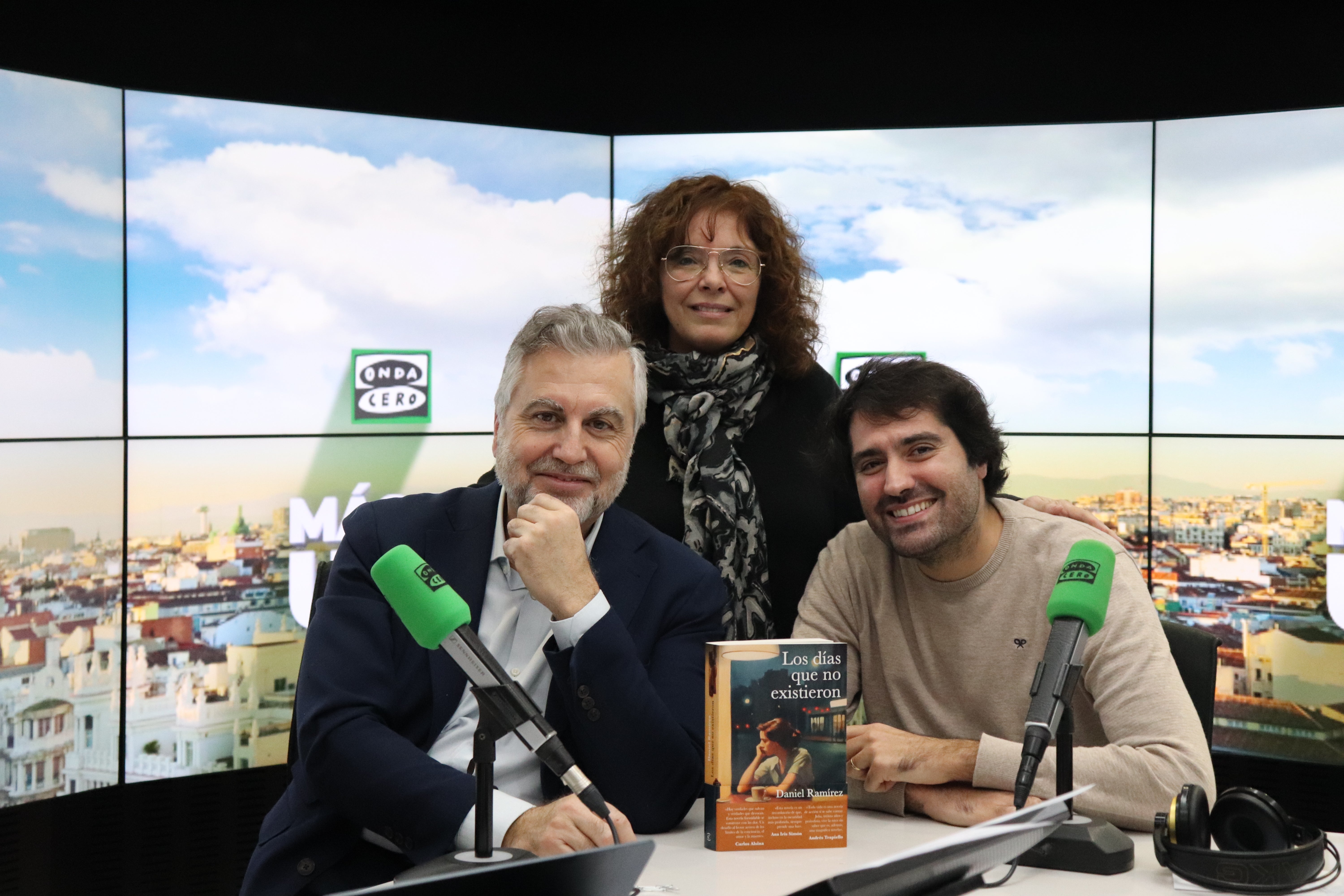
Más de uno
Daniel Ramírez presenta 'Los días que no existieron': "Hay historias que necesitan una generación o dos para ser contadas"
00:26:34
Daniel Ramírez presenta 'Los días que no existieron': "Hay historias que necesitan una generación o dos para ser contadas"
Loading summary
Transcript126 lines
- [00:18]
A
Es un momento difícil. Este momento que viene ahora es un momento difícil para el programa y es un momento difícil para el colaborador del programa, Daniel Ramírez, el que tiene apellido largo. Daniel Ramírez García Mina, el nuevo. Es un momento difícil para él porque comparece en calidad de invitado y de autor y de entrevistado, y entonces, pues él no está cómodo, esa es la verdad. Buenos días, Dani.
- [00:47]
B
Buenos días. Serán para ti, además. Es que me habéis cambiado de sitio. Angustioso. Por dos razones. La primera, porque he oteado la mesa de Begoña varias veces y veo cómo anota los libros, los subraya, los dobla, los descuartiza. Y la segunda, porque el porcentaje de entrevistados que te sobrevive a ti no es demasiado elevado.
- [01:06]
A
No, pero en esta segunda parte del.
- [01:07]
B
Programa, eso es lo que dices, el.
- [01:10]
A
Entrevistador es muy blando, es muy. Todo le gusta, ¿Sabes?
- [01:15]
B
Y en tu caso, hasta esta no verán.
- [01:17]
A
Y en tu caso. En tu caso, mi gran curiosidad es, o sea, ¿De dónde sacas tiempo para escribir? Porque además la novela no es breve, no significa que se haga larga, sino algo contrario. Pero es que aquí tiene 500 páginas. 500 páginas que tampoco son obligatorias.
- [01:43]
B
Pido disculpas a los lectores.
- [01:45]
A
No, al revés, los lectores te lo agradecemos. Pero ¿De dónde sacas el tiempo para estar aquí a primerísima hora de la mañana, con la tarea ya hecha, que significa que madrugarás, no tanto como yo, pero también madrugadas bastante, porque luego además te veo en otro? Sales en otros programas, te veo en algunas teles, tienes un trabajo en el español que no debes desatender, supongo.
- [02:06]
B
Y una familia también.
- [02:07]
A
No quería yo mencionarlo, pero en realidad la familia que crece y crece y crece. Entonces, tú cuando escribes ficción.
- [02:16]
B
A ver, yo en realidad quedaría muy pretencioso. Llevo muchos años escribiendo esta novela, ha sido una investigación larga, pero no porque esto sea crimen y castigo, sino por encontrar los ratos para escribirla. Entonces por eso. Por eso he tardado tanto en seis años. Sí, prácticamente seis años.
- [02:35]
A
Seis años. A ratitos.
- [02:36]
B
A ratitos.
- [02:38]
A
Te impones una disciplina cada semana tengo que haber escrito 20 folios cada día, tengo que haber terminado medio capítulo o.
- [02:48]
B
No, no me impongo esa disciplina, pero sí me he impuesto, por lo menos cuando ya decidí terminarla, la disciplina de tener los personajes viviendo en la cabeza todo el tiempo. Y eso sólo se consigue por lo menos escribiendo un rato cada día. Entonces fuera el rato más corto, más largo. Sí. Me decí tienes que conseguir que la novela esté dentro, con sus personajes, haciendo sus cosas, porque si no es imposible retomarla. El resto de intentos absolutamente fracasados tenían que ver con eso, con que se me moría la historia por el tiempo que tardaba en sentarme.
- [03:23]
A
¿Fueron muchos esos intentos?
- [03:25]
B
Bastantes más de los que me habría gustado.
- [03:30]
A
¿Son proyectos que ya has enterrado del todo?
- [03:31]
B
Sí, para siempre.
- [03:33]
A
No pueden ser exhumados en algún momento.
- [03:35]
B
Está muy de moda lo de exhumar, pero en este caso no vamos a.
- [03:38]
A
Exhumar nada, porque ya no les ves posibilidades.
- [03:41]
B
Ninguna.
- [03:44]
A
Hablemos del éxito, hablemos de la realidad, porque aún no hemos dicho ni cómo se titula tu novela, o sea, está siendo una promoción verdaderamente mala. Los días que no existieron. Los días que no existieron, cuyo autor es Daniel Ramírez García Mina, el nuevo. Si usted lo pide así, en la librería a la que vaya habitualmente por el nombre completo de Dani, también le van a decir cuál es la novela. Aquí en la portada veo que te han puesto solo Daniel Ramírez, y a mí se me hace corto.
- [04:11]
B
Yo propuse a Espasa poner solo el nuevo en vez de Daniel Ramírez, porque si tenemos en cuenta que El programa tiene dos millones de oyentes.
- [04:18]
A
Bueno, casi.
- [04:19]
B
¿Con que? Más de la mitad. Sólo más de la mitad. Lo compre yo. Ya he hecho el. En agosto.
- [04:23]
A
Estás haciendo como un llamamiento a la audiencia.
- [04:25]
B
Absolutamente. Están ya saliendo de casa.
- [04:27]
A
He de decir que eres el primer autor. Hay muchos colaboradores de este programa que han escrito cosas, que han escrito ficción, han escrito ensayos, pero eres el primero al que presentan aquí en la. ¿Cómo se llama esto? La solapa.
- [04:40]
B
En la solapa.
- [04:41]
A
En la solapa dice Daniel Ramírez García Mina, es periodista y escritor, trabaja en Onda Cero, en el programa de Carlos Alsina. Esto es lo primero que dicen de ti en la solapa. Y entonces yo me siento muy orgulloso.
- [04:53]
C
Y además tendría que estar mucho más orgulloso, porque la historia de la novela parte de algo que hizo Daniel Ramírez aquí en más de uno.
- [05:01]
B
Es verdad. Con nuestros centenarios, con mi primera vida, aquellos centenarios, cuando me mandasteis a saltar geriátricos y residencias particulares, entrevistando a gente que tenía 100 años o casi. Yo empecé sibilinamente a vincular muchas de esas entrevistas a la violencia política, que es de lo que se trata la novela, porque. Porque muchas de aquellas conversaciones me permitían tomar notas para luego intentar construir con verosimilitud los personajes. Y sobre todo en la trama, que tiene que ver con los nazis refugiados en España. Ahí hubo en Centenarios, un polaco que vivió en la ocupación alemana. Hubo soldados de la División Azul que me contaban cómo eran realmente los alemanes. En la distancia corta hubo una víctima del bombardeo de. De Guernica. Entonces, bueno, era un camino de ida y vuelta entre la novela y el periodismo.
- [05:55]
A
Todo eso está en nuestra página web, en el podcast, en Onda Cero Podcast.
- [06:00]
B
Pero yo prefiero que compren la novela, no que escuchen el podcast. Pero está bien.
- [06:05]
A
Pueden hacer las dos cosas, Es compatible. Si no han escuchado el podcast, lo pueden dejar para cuando termine. Además, tú también dejas para el final esta aclaración. El autor cuenta, una vez que ya hemos conducido el desenlace de la historia, cuenta como algunos testimonios reales, fruto de su labor periodística, han servido para crear personajes e historias. ¿Quieres que escuchemos cómo suena tu novela? No, el podcast no. Tu novela. Los días que no existieron.
- [06:31]
B
Vamos allá.
- [06:31]
A
Bueno, cómo suena, o cómo sonaría, digamos, si hubiéramos decidido hacer la adaptación radiofónica de la novela que empieza así.
- [06:45]
D
Julia Mendieta se ha parado en mitad de la calle a pensar en una luz amarilla que chisporrotea tras el cristal de un escaparate de una vieja librería de Lavapiés. Llueve. Ha salido de casa cuando ha sentido que no podía controlar los pensamientos. Tenía la sensación de que algo iba a explotar. Aún resuena en su cabeza la orden del director del periódico en el que trabaja.
- [07:07]
E
Quiero una gran historia que le cambia a la gente la manera de pensar.
- [07:11]
B
Ya no hay excusas.
- [07:12]
D
Quiero que busques esa gran historia y.
- [07:14]
B
Que no vuelvas a la relación hasta.
- [07:16]
E
Que no la hayas encontrado.
- [07:17]
D
Aquí, en esta acera estrecha, se percibe algo más segura. Ha llegado el momento de parar. Se va a ir unos días a casa, a San Sebastián, antes de ponerse a buscar esa gran historia. Va a intentar sosegarse. Va a abrazar a su madre.
- [07:33]
E
Oiga. Oiga, ¿Qué hace usted ahí? Me está molestando.
- [07:38]
D
El librero se ha asomado por la puerta de su tienda.
- [07:41]
F
Perdone.
- [07:42]
E
20 minutos pasmada mirando el escaparate. No me gusta que me miren. Le parezco un mono de feria.
- [07:48]
F
Justo iba a entrar ahora, pero creía que estaba cerrado. Bueno, ya me iba. Perdone.
- [07:54]
E
No, no. Ahora pase usted, que si no. Menuda pérdida de tiempo. Adelante. ¿Qué quiere?
- [08:05]
F
¿No hay más luz? Porque es que casi no veo nada y resulta que.
- [08:07]
E
Ay, tenga cuidado. Me va a salir usted cara.
- [08:12]
D
El librero, de mala gana, aprieta un interruptor y se enciende una luz más potente que es también amarilla. Julia abre algunos libros al azar. La luz amarilla, las páginas amarillas. Se siente de pronto en el centro de una postal vieja y arrugada.
- [08:29]
F
Gracias. Es una sorpresa que la librería esté abierta.
- [08:32]
E
Abro cuando me da la gana. Este Qué vale bastante. 100 euros o ciento y pico. A ver, déjeme. Primera edición. Tiene usted buen ojo. ¿Y este 60 también es una primera edición, aunque algo más reciente?
- [08:52]
F
¿Y aquel de allí?
- [08:54]
E
120.
- [08:55]
F
Vale.
- [08:57]
E
Bah, siempre es lo mismo. Tocar para no comprar, tocar para no comprar.
- [09:02]
F
Yo sí quiero comprar.
- [09:04]
E
Pues céntrese en esa mesa. Ahí Tiene libros a tres euros. Dos por cinco. Son también libros viejos, pero no tanto. Tendrán 40 o 50 años.
- [09:14]
F
Y si me aconseja alguno. Venga, que me llevo el que me recomiende.
- [09:18]
E
Bien, pero deme algún dato. No le voy a recomendar. Lo mismo si es usted veterinaria que jugadora de baloncesto. No voy a elegir lo mismo si usted lee poesía o ensayo.
- [09:29]
F
Soy periodista.
- [09:31]
E
¿Periodista? ¿Y cómo se atreve a entrar aquí? No dejan ustedes de faltar el respeto al diccionario. ¿Ve todos esos periódicos de ahí? Fascismo, comunismo, monarquías absolutas, dictaduras. Lo peor de los hombres y lo mejor de las letras. La democracia ha arruinado el periodismo. ¿Dónde trabaja usted?
- [09:56]
F
En el Universal. Pero por ser periodista no me va a dejar comprar nada.
- [10:01]
E
No soy una persona tan consecuente. Ande, tome este libro para los periodistas. Debería estar sufragado por la Seguridad Social.
- [10:12]
F
Eichmann en Jerusalén, de Hannah Arendt. ¿Y por qué nos hace tanta falta.
- [10:17]
E
La banalización del mal? Mire detrás, en la contracubierta. Ahí lo pone. Un estudio sobre la banalización del mal.
- [10:27]
A
Ay.
- [10:28]
E
Todos los días, erre que erre, banalizan ustedes el mal en cada una de sus páginas. Y lo peor de todo, con faltas de ortografía.
- [10:38]
F
Es usted muy amable.
- [10:41]
E
Si lo lee, vuelva.
- [10:43]
F
Muchas gracias. Hasta pronto.
- [10:45]
E
Adiós, Julia.
- [10:47]
D
Ahora sí sonríe. Quiere darle a entender que no la ha intimidado El librero, cuyo nombre Julia no ha preguntado, se ríe a carcajadas mientras abre una caja y empieza a colocar ejemplares en una estantería desnuda.
- [11:04]
A
Este es el punto de partida de la historia. Y ya tenemos aquí algunas claves. Por ejemplo, que la protagonista es ella, Julia Mendieta.
- [11:13]
B
Julia Mendieta, que es una periodista que acaba conociendo por casualidad a este librero que pondrá en sus manos unos papeles.
- [11:23]
A
El librero es muy borde.
- [11:24]
B
Sí, los libreros de viejo tienen. Hay que entenderlos. Entonces pondrá en sus manos unos papeles sobre la situación de los nazis refugiados en España tras la Segunda Guerra Mundial. Esto es algo que me pasó a mí. A mí me dieron esos papeles, pero la persona que me los dio, por razones que no alcanzo a entender, no me dejó escribir un reportaje. Y ese fue el punto de partida de empezar a escribir una novela sobre esto. Son unos papeles donde aparecen direcciones, nombres, etc. Y entonces yo si hemos encontrado a las primeras mujeres de la República, si hemos entrevistado a un organista de 105 años y hemos entrevistado a una superviviente de la gripe española, ¿Por qué no voy a poder encontrar a uno de los alemanes que se refugió en España? Y siempre llegaba tarde. Recuerdo, por ejemplo, uno muerto en San Sebastián en 2014 y no lo conseguía. Entonces dije esta tiene que ser la novela. Y de ahí la relación con Eichmann y con la banalización del mal, el sueño que tiene todo periodista de poder mirar a la banalización del mal a los ojos. Y es uno de los ejes argumentales de la novela, cómo Julia va persiguiendo a un viejo nazi refugiado en Madrid y la aventura que a partir de ahí se desata.
- [12:38]
A
Claro, pero julio es periodista y entonces muchas de las cosas que tú cuentas en la novela son un reflejo de la actividad diaria de los periodistas en España.
- [12:52]
B
A ver por dónde vas.
- [12:54]
A
Pues porque al final el novelista, su primer motivo de inspiración es lo que tiene a su alrededor, sobre todo si es un periodista que además es escritor y que escribe una novela protagonizada por una periodista. Hay muchas escenas que se recogen en tu novela de actividad periodística, de debate periodístico, de tensiones periodísticas, de desquites periodísticas, de rivalidades, juego sucio entre periodistas que tú has conocido en tu ejercicio profesional como espectador de zancadillas que te ponen en unas tertulias, reportajes que te roban, directores que son un poco exigentes igual, y a los que desde otros ámbitos les intentan hacer la vida imposible para arruinar su crédito y entonces difunden fotos de ellos, de su vida. Todo esto es fruto de tu imaginación.
- [13:46]
B
Todo esto no tiene nada que ver con la realidad. Y cualquier nombre que se parezca habrá sido fruto de la imaginación.
- [13:52]
A
Yo por nombres no te he preguntado. Todavía no, pero es esto de que al final un periodista que escribió una novela en la que el trabajo periodístico forma parte de sus páginas, es inevitable preguntarse hasta qué punto mucho de lo que aparece ahí es que realmente no es ficción.
- [14:12]
B
Yo creo que el novelista tiene que escribir de las cosas que le pasan y de aquello que puede escribir con verdad. Yo por eso elegí a una periodista como protagonista, por ser un oficio que creo que conozco. Y luego los otros dos ejes argumentales, el que ya hemos mencionado de los nazis refugiados en España, que tuvo un trabajo de campo que hemos mencionado parte, luego hay otros entrevistados que no aceptaron ser publicados en medios de comunicación, pero sí compartir su tiempo conmigo para la novela, como la hija de uno de los nazis que bombardeó Guernica, que para mí fue un testimonio fundamental. Y luego el heterogene argumental, la parte del terrorismo de ETA de Julia como como nieta de un asesinado por ETA, un crimen sin resolver. Ahí también hay ecos de la propia experiencia de la Pamplona natal, en mi caso San Sebastián, el suyo de los años inmediatamente posteriores al plomo de los 90 y los 2000.
- [15:12]
C
Qué bien lo has hecho, que no has contestado directamente, lo has llenado de datos y datos.
- [15:19]
B
Escucho las entrevistas que hay en este programa, entonces hay mucha gente a la.
- [15:22]
C
Que puedo mudar, se ha escapado bien.
- [15:25]
A
Ha contado lo que le interesa. Pero en esta segunda historia, que es la historia de Julia Mendieta y de la familia de Julia y del abuelo de Julia, que es asesinado, igual estamos contando más de la cuenta.
- [15:36]
C
No, yo creo que no.
- [15:37]
A
Que es asesinado. En esta segunda parte de la historia, tú le cuentas al lector al final del libro, cuando ya hemos conocido todo lo que había que saber, tú cuentas que ahí no hay un trabajo de campo como tal. Lo que hay es una experiencia directa que tú has tenido por haber crecido en Pamplona y por haber descubierto mucho tiempo después que algunas de estas cosas tan desagradables que les han pasado a muchas familias en el País Vasco y también en Navarra y en otros lugares de España, que es sentir la presión, el acoso de personas que viven muy cerca de ellos y sentir el peligro de que puedan acabar dando el paso de utilizar la violencia contra que tú todo esto lo has. No diré que lo has sufrido directamente, pero sí que lo has conocido directamente, porque personas de tu entorno más inmediato han tenido que sufrir situaciones de esas.
- [16:26]
B
Sí, yo tuve una experiencia mientras había empezado ya a escribir la novela, que me voló un poco los esquemas. Yo estaba escribiendo una novela sobre nazis refugiados en España, con esto de los papeles encontrados, las entrevistas con la hija del nazi que bombardeo Guernica y todas estas entrevistas que hemos mencionado. Y en ese momento, cuando yo estoy escribiendo, mi abuelo, fiel oyente de este programa, al que conocéis 95 años, me cuenta una historia que yo no sabía, y es que él había sido extorsionado por ETA. Esto a mí me provoca una sensación que no sabía muy bien cómo describir, pero que fue importante porque eso significaba, cuando me empecé a contar los detalles de las llamadas y de las cartas, esto significaba que en mis recuerdos no se correspondían con la realidad ni de lejos. Es decir, los momentos en los que yo iba con mis hermanos a casa de mis abuelos a jugar, no eran en realidad tan felices o todo lo felices que yo recordaba, porque mi abuelo tenía que estar pensando a qué hora salía de casa, si había una carta en el buzón, cogerla más rápido, si había una llamada de Soras, cogerla a él. Y esta era una historia que él o no había contado a la mayoría de sus hijos o la había pasado muy por encima. Y hay historias, esto también está un poco en el libro, que hay historias que necesitan una generación o dos para ser contadas, y de ahí la relación entre Julia y el librero. Cuando yo me entero de esto, digo, voy a empezar a escribir la novela de nuevo, porque necesito que a la protagonista le esté pasando esto que a mí me está pasando con una historia que no tiene nada que ver con una historia que es ficción, pero que sí puede nutrirse de esas sensaciones extrañas que yo iba teniendo y que me obligaron a revisitar todos mis recuerdos en relación a ETA, lo nuevo, lo que no sabía, pero también cosas que estaban ahí de niño y a las que quizá no había dado un análisis adulto todavía.
- [18:25]
A
Hay que explicar a los gentes que Dani es muy joven y que los gentes creen que eres muy mayor tú tienes 30 años.
- [18:34]
B
Por eso sí insulto todas las mañanas para camuflarme.
- [18:38]
A
Quiero decir que no has vivido como adulto toda aquella etapa en la que esto era nuestro cada día para mucha gente y para muchas familias, que era la presión, Amón diría la presión atmosférica, que es esto que está sucediendo todo el tiempo a tu alrededor y que te obliga a llevar una vida diferente a la que te gustaría. Tú eso no lo has vivido como adulto, lo has descubierto después como adulto por tu juventud y no sé a dónde iba. Igual que la banalización del mal. La banalización del mal en el comienzo, lo hemos escuchado en este pasaje, es el libro que el librero de lo viejo le regala, bueno, no le vende a Julia Mendieta, le entrega para luego comentarlo. Y tiene que ver con los nazis y tiene que ver con todo lo que pasó con. Pero la banalización del mal afecta también a esta otra parte, desde una parte de la sociedad vasca, sociedad navarra, sociedad española, incluso desde una parte de los medios de comunicación, ¿Se ha contribuido o se contribuye hoy a la banalización de ese otro mal que fue la actividad terrorista en España?
- [19:50]
B
Yo creo que sí, y además lo respondo con una. Con una anécdota muy concreta. Yo la teoría me la sé, sé que hay un ejercicio de desmemoria puesto en práctica desde la izquierda berchale y asumido de manera táctica por otros responsables políticos, pero esto, aunque te lo sabes en la teoría, cuando yo empiezo a revisitar todo este mundo para escribir ficción, aún así te asombra porque es siempre peor de lo que imaginas. Entonces yo tuve un recuerdo que para mí fue muy importante a la hora de escribir la infancia de Julia, el asesinato de su abuelo, su abuelo es un hombre que escribe en periódicos y que antes de un momento político importante es silenciado con los disparos. Fue por ejemplo, muy importante para mí el viaje que hice con el hijo de López de la calle al lugar donde asesinaron a su padre en Andoay. Entonces yo tuve un recuerdo que no sabía que estaba dentro de mí, y es que el primer campamento al que me mandan mis padres a un pueblo de la montaña, íbamos los chavales de Pamplona y luego ahí habría pues la cuadrilla que decimos allí, de chavales del pueblo, tendríamos ocho o nueve años. Yo no tenía ningún tipo de. Como es lógico, de conciencia política, pero sabía que había algo que se llamaba ETA y que mataban, y que yo de vez en cuando estaba jugando y escuchaba matan a no sé quién, no sé cuánto. Y entonces cuando se produce el encuentro en la plaza o en el frontón entre los chavales de Pamplona y los chavales del pueblo, y sale la palabra de ETA, algunos de estos chavales del pueblo los definen como los suyos, como los guaris, como una especie de hermanos mayores que los están protegiendo, y además lo hablaban con la misma naturalidad con la que hablábamos de fútbol o del juego que íbamos a hacer. Entonces yo supongo que esto se quedó en algún lugar de la memoria y quizá conté algo en casa o no lo sé, pero sí sé que escribiendo el libro y escribiendo esa ficción, intentando ponerme en la cabeza de una mujer de 30 años, Julia, periodista, que ha perdido a su abuelo y que es un crimen sin resolver, fue un recuerdo para mí importante, para dibujar ese personaje lleno de dolor y también de incomprensión, de esa banalización del mal que mencionábamos ahora, de cómo se puede imponer en unos sectores el apoyo activo y en otros sectores la ley del silencio.
- [22:18]
C
Pero tú has pensado, me imagino que te habrás analizado y habrás pensado qué habría hecho yo si hubiera estado ahí, Ahí es en la otra parte del bando del País Vasco o ahí en la Alemania nazi de los años 30.
- [22:32]
B
Sí, yo intento que haya en la novela, la novela no es moral, yo he intentado que el que el narrador no se inmiscuya en ningún momento en la moralidad de los personajes. De hecho, creo que tanto en el capítulo de la búsqueda del viejo nazi como en el capítulo de la resolución del crimen, hay muchas actitudes ante la violencia política, ante el terrorismo, o bien ejercido desde el Estado, desde una banda terrorista, y no se enjuicia ninguna de ellas. Y además los propios personajes van cambiando su moralidad con el paso del tiempo, y a veces aciertan y a veces se equivocan, y el narrador no dice si aciertan ni se equivocan, como es lógico. Y entonces yo he intentado que sí hubiera un interrogante de fondo todo el tiempo en la novela, que qué hubieras hecho tú de haber estado ahí, qué hubieras hecho tú de haber nacido y crecido en un pueblo de Euskadi en los años 80, o qué hubieras hecho tú de haber sido un joven deportista y con amor por la cultura en el Berlín de 1933.
- [23:31]
A
Hay una descripción en tu novela de una tertulia.
- [23:34]
C
Es maravillosa, además es súper divertido.
- [23:38]
A
Es verdad que es de televisión y no de radio. Se nota en que allí hay catering.
- [23:43]
B
Sí, es verdad. Bueno, aquí tenéis unos churros. Lo que pasa que el catering de este programa, para que la gente lo sepa, se circunscribe a los churros.
- [23:50]
A
Bueno, tenemos. Tenemos días, ¿No? Pero esto sí es ficción. Esta parte que tú cuentas, esta tertulia de televisión en la que hay dos periodistas de dos medios rivales y entonces uno le hace la puñeta a la otra. Bueno, una de ellas es juego, Julia Mendieta, y el otro le hace la puñeta sacándole asuntos personales para que ella se desestabilice durante la. Esto no pasa.
- [24:17]
B
Vamos a ver, si yo os voy a responder con claridad. Si yo hubiera creado en la novela personajes como tú, Carlos Alsina, como Pedro J. Ramírez, antes que mencionamos a los directores, o como Sonsoles o Ferreras, por hablar de los programas, habría incurrido en una falta de verosimilitud. La gente me diría pero esto no puede ser cierto. Eso está por encima de la ficción. Es verdad que me he aprovechado de esa condición de tertuliano. Es una cabronada esto. Me he aprovechado de esa condición de persona que va a los platós y a los estudios de radio para emplear algunas de las cosas, entre comillas, surrealistas que allí suceden para llevarlas a la ficción.
- [25:07]
A
Muy bien, muy correcta la respuesta.
- [25:09]
C
Después de todo esto, la novela es trepidante, entretenida y se lo van a pasar bomba.
- [25:16]
B
Eso me gusta. Me quedo con eso. Es vertiginosa, es un thriller vertiginoso donde el lector no puede dejar de leer.
- [25:21]
C
Además, de verdad, no porque lo digas.
- [25:24]
B
Tú y espero que todos. A ver, los 2 millones no, pero en fin, con que la mitad. Es que la audiencia de este programa es muy cariñosa, muy brillante.
- [25:39]
A
Hay que persuadir más, que parece que estamos imponiéndoles comprarse la novela.
- [25:44]
C
Impone Daniel Ramírez.
- [25:48]
A
Se trata de que usted tenga la obligación de comprarse la novela de Dani. Pero una buena idea que lo haga.
- [25:52]
C
Los días que no existieron, que ya está además a la venta.
- [25:55]
A
Si usted luego, por ejemplo, se compra la novela y quiere que Dani se la dedique, pues él se va a.
- [25:58]
B
Su casa y se la dedica además independientemente de la ciudad en la que esté. Yo voy allí.
- [26:03]
A
Sí, sí, o el país en el que esté.
- [26:05]
B
Sí, claro, sí, sí, es que esto es un. Es verdad para los oyentes, Hispanoamérica pública también allí.
- [26:11]
A
Bueno, que tenemos que irnos, que una cosa es que el colaborador haya escrito una novela y otra cosa es que le vamos a un programa entero, que ahora tienen que venir los de los sucesos.
- [26:19]
B
Que enhorabuena, Un placer. Muchas gracias, patrón, muchas gracias.
- [26:22]
A
Muy bien, no sólo porque la venda, sino porque guste mucho.
- [26:25]
B
Muchas gracias.
- [26:26]
A
Los días que no existieron, la novela de Daniel Ramírez García Mina, el nuevo. Hasta mañana, Dan. Hasta mañana, hasta dentro de una semana recibimos a Marlaska.