← Más de uno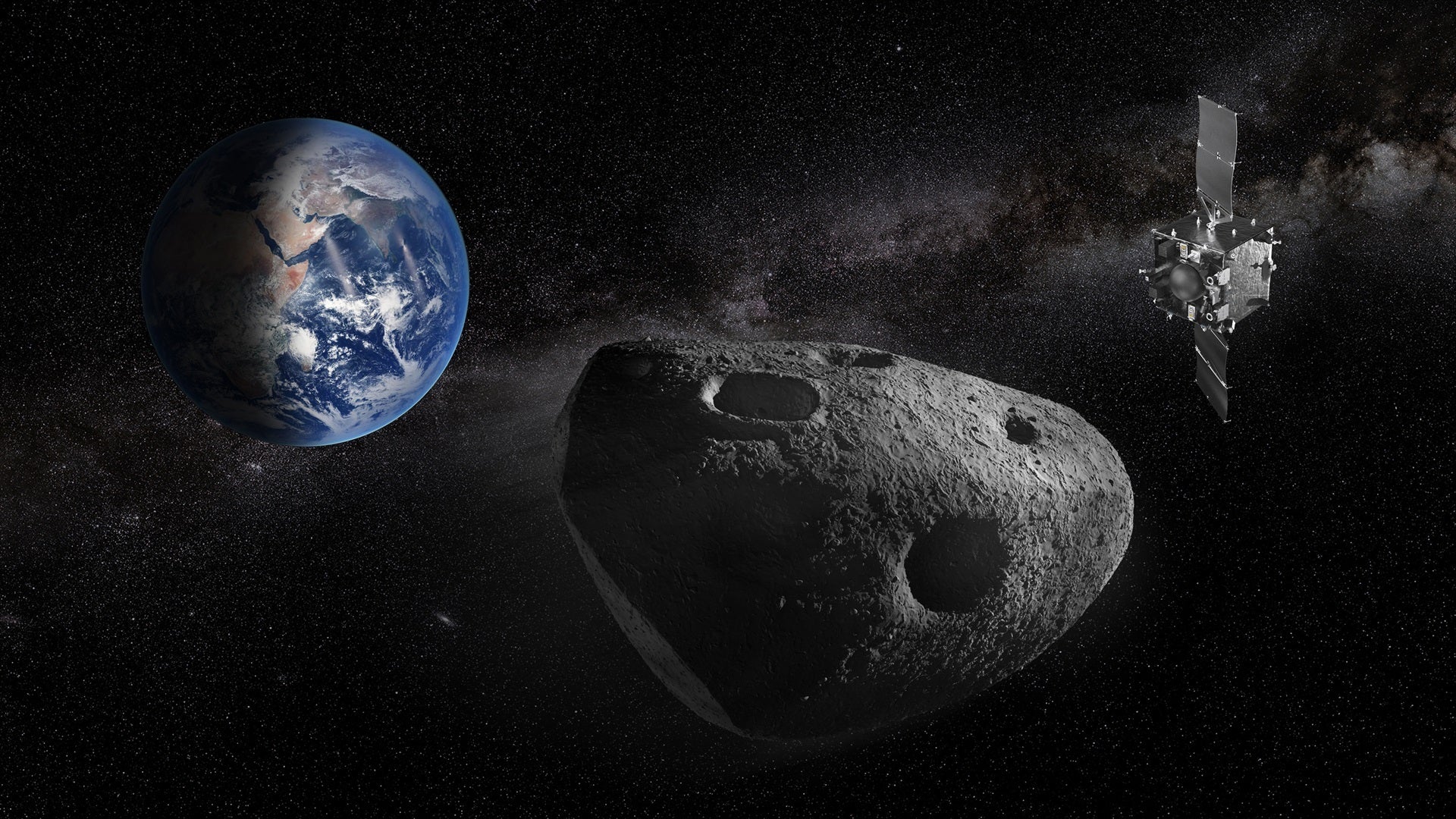
Más de uno
Defensa planetaria... contra los asteroides
00:15:58
El asteroide 2024 YR4, el riesgo —ya descartado— de impacto en 2032 y un meteorito que cayó en una casa de Alemania sirven de punto de partida para que Alberto Aparici explique en Más de uno cómo funciona la defensa planetaria. Junto a Carlos Alsina...
Loading summary
Transcript91 lines
- [00:11]
A
Bueno, ¿Tú dónde te ves, Begoña? En 2032, por ejemplo.
- [00:15]
B
Fue en el 2032.
- [00:16]
A
No falta tanto.
- [00:17]
B
Pues no. ¿Cuántos años?
- [00:18]
A
Seis años. Solamente seis años.
- [00:21]
B
Me voy recogiendo, por ejemplo, nuestro siguiente premio Ondas por un casual, No, A tu lado, siempre a tu lado en la foto. A tu lado recogiendo el Onda.
- [00:30]
A
Pues igual no va a ser a mi lado.
- [00:32]
B
¿No?
- [00:32]
A
Pues porque yo en seis años me veo más bien en casa con las pantuflas.
- [00:36]
B
Si eres jovencísimo, no puedes hacer eso.
- [00:38]
A
Bueno, pues precisamente por eso. Alberto, ¿Dónde se verá? No lo hemos saludado. Qué vergüenza. Alberto, a París y buenos días.
- [00:44]
C
Hola, hola, muy buenos días.
- [00:46]
A
Y no te hemos saludado todavía.
- [00:48]
B
Leas, perdona.
- [00:50]
A
¿Tú dónde te ves?
- [00:51]
B
Puntualiza.
- [00:52]
A
¿Dónde te ves en 2032? ¿A Parici?
- [00:55]
C
Pues no sé, me veo. Muchas cosas veo, pero por ejemplo me veo haciendo la decimocuarta temporada de esta sección. Estaría muy bien. Con la venía de la dirección, claro, con Alsina, esperemos. Y si no, pues con quien sea y ya está. Y ya puestos a pedir, haciendo tres o cuatro podcast más de los que ya hago, por lo menos uno de historia, uno de música, yo que sé. Puestos a pedir, pues pidamos cosas.
- [01:17]
A
Qué bien tener ambiciones profesionales, qué bien tener aspiraciones.
- [01:20]
C
Y personales también. Son cosas que hacen ilusión.
- [01:24]
A
Igual deberíamos explicar esto del año 2032. Aquí nunca se hacen preguntas al azar.
- [01:30]
C
Exacto. Aclaro en los oyentes que Alsina se hace esta pregunta de ese año por lo del asteroide. Esto que hemos visto este fin de semana en los periódicos es que es
- [01:37]
A
una noticia que nos toca.
- [01:39]
B
El que no chocará. El que no chocará contra nosotros en el 32.
- [01:45]
C
Exacto, exacto. En el 32. Pero ojo, que con nosotros la Tierra ya se sabía que no iba a chocar. Voy a aclarar, voy a poner en contexto esto. Se trata de un asteroide pequeñito de 50.60 metros, que el agujero que hace es importante, que se descubrió a finales del año 24 y tiene uno de estos nombres de catálogo, 2024-YR. Cuando se descubrió, resulta que salió en los periódicos, hubo un poquito de revuelo porque la órbita no se conocía demasiado bien. Y brevemente preocupó a los científicos porque la probabilidad de que chocara con la Tierra en el año 2032 era del 3%. Bueno, eso en febrero del 25, cuando ya se refinaron las observaciones, quedó claro que eso no iba a pasar, que la probabilidad era cero, pero quedaba abierto un 4% de probabilidad de choque con la Luna. Y eso habría sido bien interesante. Y hace un par de semanas se refinaron de nuevo las medidas con el James Webb, con este telescopio que tenemos ahí en el espacio, y se comprobó que, salvo cosa rarísima, tampoco va a chocar con la Luna, pero sí que pasará cerquita, pasará unos 20.000 kilómetros de distancia.
- [02:46]
A
¿Puedo confesar una cosa? Es que a mí. Yo no quiero desgracias, pero ver aparecer un cráter en directo en la Luna, sin poderlo transmitir, mientras a mí me parecería maravilloso.
- [03:04]
C
No te digo yo que no. La verdad es que sería un momento histórico. La primera vez que la humanidad habría visto eso. Pero si quieres ver cuánta gracia hace, pues pregúntale al vecino de Coblenza, en Alemania, al que este domingo le cayó un meteorito en casa.
- [03:18]
B
¿Alemania? Aquí al lado. Por Dios, qué horror.
- [03:22]
C
Pues esto es lo que pasó. A las 18.55 del domingo hubo una luz brillante que recorrió el cielo. Se vio desde Alemania, Bélgica, Luxemburgo, Francia, Países Bajos. Brilló muy intenso durante seis segundos. Y algunos testigos dicen que incluso se escuchó. A veces se escuchan los bólidos. Bueno, era una piedra, un asteroide muy pequeñín, de unos cinco metros, que se quemó en la atmósfera. Bueno, se quemó salvo pequeños trocitos, pequeñas piedrecitas. Y una de estas es la que impactó en esta casa de Coblenza. Atravesó el techo, dejó un agujero del tamaño de un balón de fútbol y causó algunos desperfectos en las baldosas del suelo. Pero por fortuna, personalmente, no pasó nada.
- [03:59]
B
Tenemos que reforzar entonces el tejado. Alberto, ¿Tú qué crees? ¿En casa?
- [04:03]
C
Sí. No, yo diría que por las amenazas que vengan del cielo. No, Estas cosas en realidad las tenemos bastante controladas.
- [04:11]
D
Ya lo veo, ya.
- [04:14]
C
Mira, para dejar más tranquila a Begoña, os propongo que hagamos una visita relámpago. Biblioteca. Y ahí tenemos una cosa un poco tranquilizadora, además.
- [04:21]
B
El techo de piedra. Buena, la tenemos.
- [04:24]
A
Un búnker. Pues venga, voy a abrir la puerta.
- [04:31]
B
Si puedes, porque cada día está peor.
- [04:33]
A
Ya mismo, ya mismo. Es que de verdad la engrasas ya la puerta.
- [04:43]
C
Pero esto le da un cuajo radiofónico que no tendría si no sonara.
- [04:47]
A
Cada día se sufre más para caer. La casa entera te chirría los dientes.
- [04:51]
B
Ya.
- [04:53]
C
Hoy no vamos a ver otros libros. Vamos a ir a tiro hecho. ¿Por? Porque voy al libro que Begoña necesita, que es este de color azul marino y blanco, que se llama Cazadores de asteroides. Lo escribió la física estadounidense Carrie Nagent. Vamos a abrirlo, a ver qué nos cuenta el librito.
- [05:10]
E
Empezó a estar claro, en cualquier caso, que un nuevo planeta tenía que esconderse en tantísimo cielo. El 20 de septiembre del año 1806, astrónomos alemanes y húngaros se pusieron de acuerdo para organizar la búsqueda. Dividieron el firmamento en 24 sectores e invitaron a otros 18 astrónomos europeos para reinvertírselos. Hacían llamar la Policía Celestial.
- [05:34]
C
La Policía Celestial. Pero es un gran nombre, la verdad es que está muy bien. Bueno, estos señores, ya hace más de 200 años de aquello, se habían propuesto encontrar un nuevo planeta. Lo que querían era peinar el cielo para cazarlo, estuviera donde estuviera, pillarlo. Pero lo que encontraron al final no fue un planeta, fue a Ceres, que es el objeto más grande del cinturón de asteroide. Es lo que hoy llamamos un planeta enano.
- [05:57]
B
¿Y por qué decías que esto nos iba a tranquilizar, Albert?
- [06:01]
C
No, es verdad que hace doscientos y pico años. No parece que tenga mucho que ver, pero es porque la Policía Celestial sigue existiendo. Lo que pasa que ya no se llama así, ahora se llama Defensa Planetaria, que es un nombre también bastante guapo, pero es básicamente una red de científicos y de telescopios que lo que hacen es hacer esto, peinar el cielo ahora en busca de asteroides y de cometas que pudieran en algún momento chocar con la Tierra. Y así lo sabemos con antelación y podemos preparar, digamos, defensas de verdad, que pueden ser planes para desviar o para destruir esas rocas celestes y que no nos caigan en la cocina de casa,
- [06:34]
B
como este señor de la mano masivas hacia lugares ignotos.
- [06:39]
C
Bueno, en principio eso no se plantea. Lo que se plantea es que no caiga.
- [06:44]
A
Son como vigilantes de asteroides, un poco de película de Bruce Willis, diríamos, una cosa así.
- [06:49]
C
Sí, bueno, suena un poco a película, pero en realidad es un campo científico hecho y derecho. De hecho ya tiene. Ya está judito, porque esto empezó a tomar impulso a principios de los 90 y se debió además a cosas que una de ellas por lo menos nos suena, porque a principios de los 90 ocurrieron dos eventos científicos que tuvieran que ver con esto. El primero es que se demostró que la extinción de los dinosaurios había tenido algo que ver con este gran asteroide que había impactado con la Tierra. Esto fue en el año 91. Pero es que luego, sin que nadie estuviera preparado para ello, en el año 94 presenciamos en directo cómo un cometa impactaba contra Júpiter. Fue el cometa Showmaker Levy, que se rompió en trozos y chocaron todos contra Júpiter. La coincidencia de estos dos eventos le dio un empujón grande a esto de la defensa planetaria. La gente se lo empezó a tomar en serio y desde entonces tenemos estas brigadas de policías celestiales que vigilan las inmediaciones de la tierra 24 7, me imagino, ¿No? Sí, sí, claro. Sobre todo los telescopios, que son robóticos.
- [07:45]
A
Te habría quedado redonda la sección, no es por sacarle un. Pero te habría quedado redonda la sección si ahora hubiéramos podido hablar con una persona que integre las fuerzas de defensa planetarias, que esté, por ejemplo, librando en este momento, que pueda desentenderse un momento.
- [08:04]
C
Pues marchando. Pues marchando, porque lo he buscado precisamente y tenemos comunicación con una de las personas más importantes en este país en esto, que es Julia de León. Ella es investigadora en el Instituto de Astrofísica de Canarias, pero es que además es la responsable de la Agencia Espacial Europea en España para esto, para la defensa planetaria. Madre mía.
- [08:22]
A
¿Nos está escuchando entonces?
- [08:23]
C
Nos está escuchando Julia de León.
- [08:25]
A
Buenos días.
- [08:27]
D
Hola, ¿Qué tal? Buenos días.
- [08:28]
A
Buenos días. Guau, qué honor.
- [08:29]
B
¿Qué hay que hacer para ser DP? Es decir, hay que hacer unas oposiciones.
- [08:35]
A
¿Lleváis uniforme?
- [08:36]
D
Me encanta, me encanta ser policía planetaria o celeste o como se llame.
- [08:43]
B
Qué chulo. Pero uno lo es, o le dicen o. ¿Tú estarías bien que formaras parte de la defensa planetaria? ¿Cómo se hace, Julia?
- [08:51]
D
Uno trabajando muchísimo y haciendo una carrera bastante sólida, demostrando que tienes conocimientos y que sabes caracterizar estos objetos y que tienes acceso a los observatorios, a los telescopios desde donde se hacen estas vigilancias. Y después de muchísimos años en la comunidad de ciencias planetarias, pues bueno, pues te invitan a participar. Básicamente es así.
- [09:16]
A
¿Pero tenéis localizados todos los asteroides que podrían chocar con la Tierra? Y si es así, ¿Hay alguno que nos tenga que preocupar, julio?
- [09:26]
D
Bueno, aquí realmente el principal problema es que los objetos, los asteroides más pequeños, entre comillas, yo llamo pequeño a todo lo que sea de menos de un kilómetro, pero obviamente no son pequeños, no los tenemos totalmente localizados, en el sentido de que el censo, la población no está totalmente identificada, las mejores estimaciones, nos falta un poco más de la mitad por detectar, por identificar y localizar. Ese es el principal problema. Entonces, ahora mismo la gran mayoría de los esfuerzos en esta vigilancia están en algo tan simple como detectarlos. Este es el principal escollo que tenemos ahora mismo.
- [10:10]
B
¿El de Alemania se os pasó entonces?
- [10:13]
D
El de Alemania se nos pasó, pero es que es imposible detectarlo, es un asteroide muy pequeño y primero no podemos detectarlo cuando está suficientemente lejos de la Tierra como para poder tomar alguna medida o advertir de la trayectoria de entrada. Ni siquiera lo podríamos detectar estando muy, muy, muy próximos a la Tierra, porque es muy pequeño. Entonces este tipo de objetos, afortunadamente, la atmósfera terrestre los suele desintegrar, siempre puede quedar alguna piedrita, como es el caso de este pobre ciudadano alemán que creo que le ha hecho un agujero que
- [10:49]
C
le ha roto la casa.
- [10:51]
A
Hombre, pero no riáis, Mala suerte, el
- [11:00]
B
asteroide se podrá quedar, digo yo.
- [11:04]
D
Bueno, es mala o buena suerte, según lo veamos. Son muy pocas las probabilidades de que un trozo de un asteroide impacte en tu casa. A mí me haría feliz,
- [11:16]
C
Es que es eso. Ya puestos a que nadie salga herido. Oye, pues tienes una anécdota para contar el resto de tu vida.
- [11:20]
B
Y una pregunta técnica, ¿Lo que cae te lo quedas tú por haber caído en tu casa, Julia, o no es posible?
- [11:28]
D
Es una pregunta muy pertinente, porque de hecho hay incluso cazadores de meteoritos, una vez que ya está en tierra, los llamamos meteoritos y hay bastante polémica porque se intenta crear algún tipo de protocolo o legislación en el que uno si descubre realmente esto, es el que lo encuentra se lo queda. Es un poco la ley de la selva. Pero lo ideal es que lo dones o que lo entregues a los museos de ciencias o las instituciones, porque claramente tiene un alto contenido científico y hay incluso un mercado de venta de compra de meteoritos. Y bueno, ahí estamos intentando recuperar todos los posibles y que la gente un poco tenga conciencia de que puedes quedarte un trozo a lo mejor, pero es importante que se entreguen en los centros especializados para que se aporte a la ciencia.
- [12:17]
A
¿Tenéis localizados los asteroides? Vale, entonces hay algunos tan pequeños que no hay manera de detectarlos y que le dan siempre al mismo señor de Alemania, ¿Qué le vamos a hacer? Pero ¿Y los grandes? Si tenéis detectado uno grande que por la trayectoria que lleva es una amenaza para la Tierra, ¿Qué se hace o qué se puede hacer para evitar que se nos venga encima?
- [12:44]
D
Pues eso es un poco el segundo componente de lo que es la defensa planetaria, que es probar tecnologías de desvío de este posible impacto en el caso de que fuera a suceder. Ya hemos hecho experimentos al respecto, en concreto la NASA, con la misión DART, que seguro que nos suena a todos, En septiembre de 2022 hicimos impactar una nave espacial en una pequeña piedrita que le daba vueltas a otra más grande, en un entorno súper seguro, no venía en colisión con la Tierra, demostrando la capacidad que tenemos con esa nave, ese peso, esa velocidad, etcétera, de mover esa pequeña piedra en la órbita que estaba dando alrededor del asteroide más grande, con bastante éxito. De hecho, conseguimos desplazarla, moverla en el espacio más de lo que habíamos previsto y por lo menos ya tenemos los números y podemos tener unas estimaciones con un poco de precisión de qué somos capaces de hacer a nivel del tamaño de la piedra, de los tiempos de reacción, de construcción de la nave, lanzamiento, llegada, etc. Ahora tenemos otra misión, Sí, perdona, la contrapartida europea que vamos ahora, que ya la lanzamos en 2024, que es era de la Agencia Espacial Europea, que vamos al mismo sistema para estudiarlo con mucho más detalle. Pues cuatro años después de ese impacto.
- [14:06]
B
Pero empezasteis contra una piedra chiquitita que
- [14:10]
D
estaba girando cuarenta y pico metros. No, era muy pequeña.
- [14:13]
B
No era muy pequeña. El gordo, no nos vamos a liberar del gordo gordo.
- [14:18]
D
Ese es el tamaño principal, a partir del cual ya un impacto con la Tierra puede causar daños importantes. Estamos hablando de ciudades regiones, eso ya lo consideramos un impacto con muchísimas consecuencias. Entonces, por encima de los 100 metros, ya si impacta con la Tierra, hace un daño a nivel eso, grandes ciudades regiones.
- [14:43]
B
¿Entonces ya en todas las peli siempre dicen va a impactar en Nueva York o va a impactar en Los Ángeles, o sea, con tanta precisión se sabe dónde impactaría un asteroide de este tipo?
- [14:55]
D
Sí, si conocemos su posición y su trayectoria con suficiente tiempo de antelación, se puede predecir perfectamente el camino que va a seguir.
- [15:05]
C
De hecho, la hora es importante porque como la tierra va girando dependiendo a qué hora llegue, impacta en un sitio, impacta en otro.
- [15:11]
D
Claro, sí, sí, sí. Eso sí, se puede predecir con bastante.
- [15:13]
B
Yo me he quedado más tranquila, pero bueno, está bien que haya policía de esto.
- [15:18]
A
Yo me siento mucho más seguro. Sí, sobre todo porque no soy alemán, pero qué manía.
- [15:24]
B
Ni americano, que es donde van a
- [15:26]
C
impactar todos, que lo normal es que caiga en el Pacífico o en Rusia, porque son los más grandes.
- [15:34]
A
Julia, muchas gracias por haber hablado con nosotros esta mañana.
- [15:36]
D
Bueno, gracias a ustedes.
- [15:38]
A
Buenos días a Parisi, que tengas una buena tarde.
- [15:41]
C
Vosotros también.
- [15:42]
A
Ponte a cubierto por si acaso. En 4 minutos contamos las noticias de las 12 de la mañana. Una hora menos en Canarias.