← Más de uno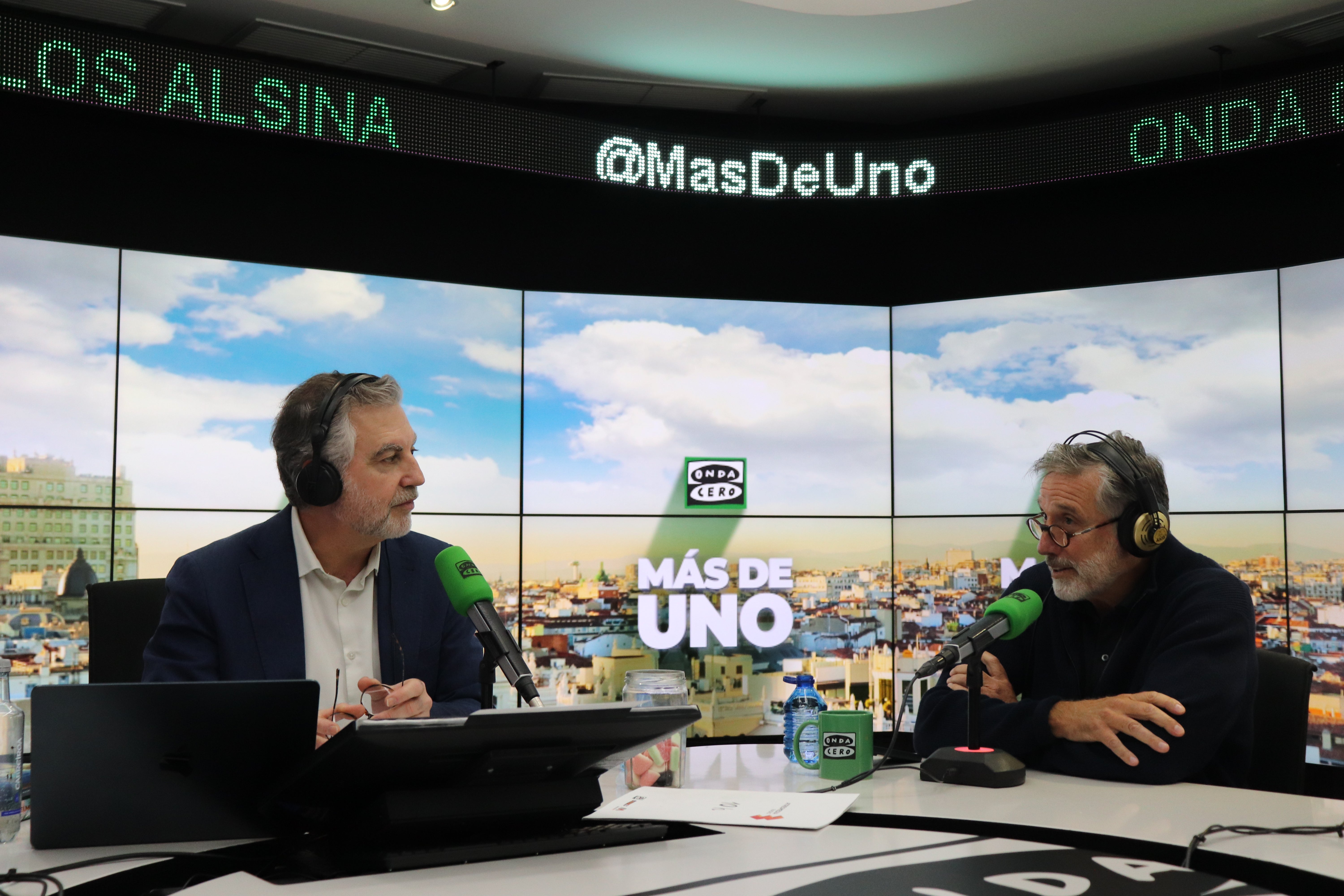
Más de uno
Emilio Aragón promociona 'Lucha de Gigantes'
00:35:08
El payaso, actor y músico ha acudido a Más de uno a presentar su espectáculo de música 'Lucha de Gigantes' donde contará con la presencia de Raphael, Ara Malikian o El Kanka.
Loading summary
Transcript279 lines
- [00:06]
A
Estamos en la quinta hora de más de uno en Onda Cero. Son las diez y catorce minutos. Una hora menos en Canarias. Estamos estrenando semana. Es el día favorito de Paula. Púa. El lunes, ¿Verdad, Paula?
- [00:15]
B
Sí, el lunes y el martes. Y el miércoles. Jueves.
- [00:18]
C
Sí.
- [00:18]
B
Todos.
- [00:18]
A
Todos los días son tus favoritos. Entonces ninguno es tu favorito. ¿No tienes día favorito?
- [00:24]
B
A ver si el sábado, pero es que.
- [00:25]
A
Súper cerca, por favor. El sábado no estamos aquí. Es uno de los pocos días que no estamos aquí. Buenos días. Hola.
- [00:33]
C
Muy buenos días. Yo estoy muy bien. Recibiendo esta primavera. Deseando que llegue siempre.
- [00:37]
D
No siempre. Lo que.
- [00:38]
A
La primavera no ha empezado todavía.
- [00:39]
D
Bueno, hay que engolar la voz para hablar.
- [00:41]
C
Sí, sí. Él sabe que yo cuando hago radio soy otra persona. Bueno, la estoy buscando.
- [00:45]
A
La voz de radio todavía. Ojalá fueras otra persona. No, la primavera empieza el día 21.
- [00:51]
C
Bueno, pero mi corazón.
- [00:52]
A
Estamos hoy a día 9. Entonces. No, todavía no.
- [00:55]
C
Mi corazón florece el espíritu, la esperanza de lo renovado. ¿Me entiendes?
- [00:59]
A
Han florecido los almendros. Eso sí, pero hace ya tiempo.
- [01:02]
C
Pues es el almendro, porque ahora florecen
- [01:04]
A
en febrero los almendros.
- [01:05]
C
Y los idus de marzo. ¿Cuándo es eso? Los idus de marzo en idus.
- [01:09]
D
Vale.
- [01:10]
C
Nominativo.
- [01:11]
A
Está Goyo Jiménez también con nosotros. Buenos días, Goyo. ¿Cómo vas?
- [01:14]
E
Buenos días. Mis días favoritos son el lunes y el jueves. ¿A partir de las 11, o sea,
- [01:19]
A
cuando acaba tu intervención en este programa, quieres decir?
- [01:22]
E
Bueno, solo deduces.
- [01:23]
A
¿Tú estás incómodo o algo con nosotros?
- [01:26]
E
En absoluto. Estoy incomodísimo.
- [01:28]
B
Se ve.
- [01:28]
E
Toco a las 11.
- [01:29]
A
Vale, vale. Buenos días, Begoña.
- [01:31]
B
Hola, buenos días.
- [01:32]
F
¿Qué tal?
- [01:32]
A
¿Estás cómoda con nosotros?
- [01:34]
F
Sí, muy cómoda. No me gusta el lunes, pero estoy muy cómoda. Esta mañana me he levantado y he pensado ¿Es domingo hoy? Qué bien, ¿No? Y de repente he dicho no.
- [01:41]
B
Pasa que no.
- [01:42]
A
¿Y no te da una gran alegría encontrarte con nosotros?
- [01:45]
F
Encontrarme, sí, pero es que llegar hasta aquí no es alegre, pero sí.
- [01:49]
A
¿Qué tal, Borja? ¿Tú cómo estás, caroño? Mal también. Sí, fatal. Fatal. Este es un programa que transmite ilusión.
- [01:55]
D
Esta es la hora del humor. Esto es.
- [01:58]
B
Imagínate la tertulia como es.
- [02:01]
A
Que bajona. Amar en tiempo revuelto. ¿Cómo es la expresión? Con estos bueyes tengo que arar con hijos.
- [02:05]
C
Sí, sí, con estos mimes.
- [02:06]
A
No os lo toméis a mal. Con estos mimbres tenemos que hacer un
- [02:10]
E
cesto, o sea, venimos a un sitio donde nos llaman bueyes y entiende y quiere que estemos cómodos o cestos.
- [02:17]
A
Sí, porque el buey es un animal muy noble. Tengo entendido, tengo entendido. Bueno, bueno, recibimos hoy en este programa en más de uno aquí en Onda Cero, en la quinta hora a Emilio Aragón.
- [02:35]
D
Lo único bueno del lunes viene a
- [02:36]
A
levantar un poco el programa en vista de vuestro estado de ánimo.
- [02:39]
D
Os escuchaba y me venía el recuerdo de mi suegro cuando le preguntá Manolo, ¿Te viene bien ese día? A partir de una edad todos los días son domingos.
- [02:51]
A
¿En serio? ¿Y qué edad es?
- [02:56]
D
¿Jubila? Bueno, él ya tenía ya ochenta y pico. Para mí todos los días son domingos. Me da igual, me parece una frase muy bonita. Todos los días. Todos los días deberían ser domingo.
- [03:05]
A
Ojalá.
- [03:06]
B
En el corazón de Agustín todos los días es domingo y primavera.
- [03:10]
C
Yo soy de volante, yo soy una persona que vuela cometas, o sea, es importante esto, por ejemplo.
- [03:16]
A
¿Tú vuelas cometas?
- [03:17]
C
Sí, a veces pierdo el hilo y me despisto, pero estoy ahí de verdad.
- [03:22]
A
Oye, que te están preparando un programa de homenaje. Igual no debería. Agustín, perdón, que a lo mejor es una sorpresa.
- [03:30]
F
¿Es sorpresa, no?
- [03:31]
A
Pues hablemos entonces de Milena.
- [03:32]
C
¿Pasa algo? Estoy bien de salud.
- [03:33]
A
No, no pasa.
- [03:34]
C
No, no, para, para.
- [03:35]
A
No, no pasa nada. Una indiscreción.
- [03:40]
C
De veras que te ha fallado.
- [03:42]
A
No, pero hablemos entonces de Emilio Aragón. Sí, por favor, no habrá cosas que hablar.
- [03:47]
C
Sí, sí, sí. Venga, balones fuera.
- [03:49]
A
Emilia, ¿Por dónde queréis que empecemos? Por Lucha de Gigantes, por Telmolobo, por vete tú a saber qué. Porque en la cabeza de Emilio Aragón habrá mil proyectos.
- [04:00]
D
Ahora mismo Lucha de Gigantes, que es lo más intermedia. Lucha de Gigantes al miércoles en el Teatro Real. Es un concierto que la idea y la ilusión pretendemos que se convierta en una cita anual. Tuvimos un primer concierto en el Real, un segundo en el We Think y este tercero en el Real Y nos gustaría que siguiera siendo en el Real porque es mucho más recogido y luego podemos ir cambiando de estilos musicales. Aunque en este. En este concierto yo creo que lo interesante es que los músicos que van a participar no tienen nada que ver uno con otros. Rafael Ara Malikian, Alice Wonder, Travis Wirtz, Ismael Serrano, El Kanka, Salvador Sobral, la Mari de Chambao, Víctor Martín. Ellos van a cantar sus canciones y luego también harán cruces y colaborarán unos con otros. Va a ser muy bonito.
- [05:01]
F
Aquí lo habéis puesto con Rafael, ¿Lo sabes?
- [05:04]
D
Y cómo ¿A quién habéis emparejado con Rafael? Pues Rafael con Ara Malikian y con
- [05:11]
A
un tal Emilio Araguas.
- [05:12]
D
Y conmigo, que además me ha pedido que le acompañe al piano solo. ¿Piano solo te lo ha pedido?
- [05:18]
A
De esas formas que tiene Rafael de pedir las cosas, que no puedes decir que no.
- [05:21]
D
Sí, sí. No he podido decir que no porque
- [05:25]
A
te sientes ya atrapado. No puedes decir que no y entonces te entra el vértigo ese de tengo que tocar el piano.
- [05:33]
D
Para Rafael, muchísima ilusión. Y para mí es un honor porque podré decir a mis nietos Yo acompañé a Rafael en el Teatro Real. Además tuve la oportunidad de volver a colaborar con él en un programa que hice post pandemia que se llamó BSO en Movistar. Y fue un auténtico regalo. Porque además ahí es donde ves cuando alguien es grande, grande como Rafael, en el que él dice que sí, que viene al programa, no pone ninguna condición y cuando entra en el plató le esto es lo que vamos a hacer. Te mira 10 segundos, lo procesa y OK. Y lo hace. Hay que ser muy grande para aceptar este tipo de colaboraciones.
- [06:26]
B
Pero esos 10 segundos te acojonas un poco.
- [06:31]
D
Un poquito, sí, un poco.
- [06:32]
C
Sergio Leone se queda aquí un rato.
- [06:37]
F
Una mirada de duelo.
- [06:38]
B
No,
- [06:40]
A
Rafael es estupendo. Y aparte muy grande, muy generoso. Con programas como este, por ejemplo. Desde aquí siempre estamos muy agradecidos a Rafael, que viene, oye, sin pedir nada. Estos, por ejemplo, vienen, pero porque luego se les vosotros sí, pero él no.
- [07:04]
E
Completa la frase.
- [07:05]
D
Estás dejando todo ahí al aire.
- [07:06]
C
Hoy se le da un dinerillo ahí fuera.
- [07:09]
A
No, pero tú imagínate cuántas entrevistas no habrá hecho Rafael desde que empezó en esto. Cuántas. Y sin embargo tiene la generosidad de que parezca que la que le estás haciendo en este momento es la mejor que se ha encontrado nunca.
- [07:22]
D
Así es.
- [07:22]
A
¿Por qué? Porque es un artista.
- [07:24]
D
60 años de profesión que se dicen rápido. Yo me acuerdo. Yo todavía recuerdo.
- [07:29]
F
¿Cuántos llevas? Perdona, que te.
- [07:31]
A
Hombre, Begoña, bonita.
- [07:34]
F
No, es que era muy chiquit.
- [07:36]
D
Pues Yo empecé hace 50 años, porque además yo empezaba. Bueno, incluso si contamos el tiempo que yo iba con mi padre, porque a mí lo que me encantaba era ir los fines de semana, mi padre tenía el programa de televisión y los viernes bolos. Íbamos en aquel 124 14 30 blanco, que no me olvido. Íbamos a cualquier rincón de España sin aire acondicionado, a veces en verano y en invierno tampoco puedes abrir la ventanilla
- [08:08]
C
porque se frena el coche. Ni una cosa ni otra.
- [08:12]
D
Bueno, luego una época ya mejor en la que vino un Citroën. Pero vamos, yo recuerdo que íbamos a los teatros, a los polideportivos y claro, yo me sentaba aprender, igual que también me escapaba cuando no tenía clase o por las tardes al plató también a marear por allí. Pero antes estábamos hablando Agustín y yo, fuera de micro, hablando sobre el humor, sobre la comedia, sobre lo complicado. Le hablaba que estuve viendo el estreno, una película de un gran actor argentino que a mí me encanta, la última película de Campanella, que se llama Parque Lezama. Y Luis Brandoni, para mí que es un grande argentino, hablaba sobre lo de colocar y hablábamos utilizando símiles deportivos. Hay veces que jugar sin balón es muy complicado en comedia, el que utiliza la mímica, el que aparentemente no está ahí. Pero también es muy difícil el que te. Porque para mí la comedia, yo creo que como muchas cosas en la vida, es música. La comedia es ternaria. Para mí es un vals. Un, dos, tres. Un, dos, tres mil tú tienes el que da el pase largo, luego el que da el pase y el que remata. Y en comedia es exactamente igual, pero si te pasa mal el balón, luego el remate a lo mejor no queda bien. Tienes que ser muy bueno para rematar, para colocarla, como decimos, para recolocarla. Y eso lo tienen unos elegidos. Muy pocos elegidos tienen ese don. Y tener bis cómica, eso lo tienes. Pero aunque puedes tener bis cómica, pero luego también se trabaja. Hay que trabajar mucho la técnica.
- [10:01]
C
Las tres test. Las tres test.
- [10:03]
A
Eso os digo yo a vosotros todas las semanas, que hay que dejarlo un poco más.
- [10:08]
C
Las tres técnica, talento y trayectoria.
- [10:13]
A
¿Y tú por cuál vas?
- [10:16]
C
Yo estoy con la trayectoria, pero que la veo curva.
- [10:20]
A
Bueno, entonces que hace 50 años, incluso hace más de 50 años, te escapabas para ir a ver el rodaje.
- [10:26]
D
Con eso quiero decir que al final es toda una vida. Bueno, y si contamos ya los desayunos y las cenas y las comidas y las que estás escuchando toda la vida Pues al final, pero hace 50 es
- [10:35]
A
cuando debutaste delante del público.
- [10:38]
F
¿Y por qué mudo?
- [10:39]
D
Porque mi padre lo había sido. Y porque cuando entrabas manejar la mímica es muy importante. Manejas la mímica luego, claro, luego tienes otro tránsito que es encontrar tu voz, que también es otro. Otro paso. A mí por ejemplo, me encantaría a la vejez viruela. Me encantaría hacer un programa. Un programa, un. Una función solo de mímica, un espectáculo yo solo en el escenario, pero solo con mímica. No tipo Marcel Marceau, aquel que se pintaba de blanco, sino utilizando otros elementos como la música, tocar el piano, la guitarra, otros instrumentos, pero que se pueda entender aquí o en China. Y esa es una asignatura pendiente que vete tú a saber cuándo, a lo mejor. Pero sí que me gustaría antes de morirme, intentarlo, vamos.
- [11:33]
A
Sí, porque después ya no.
- [11:35]
C
Después como mímica queda.
- [11:39]
E
Queda solo un gesto.
- [11:40]
C
A lo mejor esa mímica japonesa tan lenta.
- [11:43]
A
Aquí somos muy partidarios. Es línea editorial del programa de la inmortalidad. Lo que pasa es que aún si tú estás en contra, no pasa nada. Será voluntario. Pero que aquellos que no quieran morirse no tengan porque mueres.
- [11:56]
E
Bueno, por eso nos hemos hecho autónomos.
- [12:02]
C
Pensé que estabais a favor de la mímica en radio, digo, no sé yo.
- [12:06]
A
Bueno, tiene su.
- [12:07]
C
Hemos hecho mismo.
- [12:10]
A
No es fácil, pero cuando funciona.
- [12:13]
C
Oye, venga, va. Bueno, yo he hecho magia aquí y no la habéis apreciado.
- [12:18]
F
Sí, pero porque se te vio el hipapiroflexia y globoflexia.
- [12:21]
C
Hombre, es que la radio es eso.
- [12:24]
D
Eso sí que es difícil.
- [12:25]
A
Ahora tengo que hacer una pausa, pero hay una pregunt. Que en realidad yo le tenía que haber hecho a Emilio antes de empezar, que nos han contado que alguien de tu familia tiene una churrería. Este programa solo tiene dos líneas editoriales. Una es a favor de la inmortalidad cuando se pueda y otra es a favor de los churros. Parece que el churro y la porra da alegría, transmite entusiasmo a cualquiera que no le gustan churros españoles.
- [12:55]
D
Es cierto que es cierto. Mis hijos tienen. Porque maravillas no has traído. Envidia a lo mejor tenía que haber traído. Que es una pena, no es por nada, pero son buenísimos las porras y los churros. Pero claro, ellos pensaban, oye, entrar en una churrería pero sin que salgas con olor aceite en el cuerpo. Se podría conseguir, Se podría lograr y lo han conseguido. Entonces Bueno, tienen varias abiertas, varias.
- [13:26]
A
Envidia ya es.
- [13:27]
F
Bueno, pues tienen alguna móvil, o sea, que se pueda.
- [13:32]
D
Creo que alguna vez lo han hecho. No es por nada, no es porque sean mis hijos, pero son muy trabajadores, son muy emprendedores y ahí están remangados haciendo distintas cosas. Igual que hablan de churros, hablan de diseño, o hablan de publicidad, hablan de moda.
- [13:51]
E
Te doy otra idea para tus hijos. Una churrería en la que entras, sales y sin engordar.
- [13:58]
D
Te mando un abrazo, que no te he dicho nada, perdóname.
- [14:01]
E
No es necesario.
- [14:03]
C
A ver, la idea de la churrería. A ver, a ver, a ver.
- [14:06]
E
La idea de la churrería es que entras, sales sin olor y sin calorías. Es decir, te hinchas a churros. Claro, eso ya es la panacea de los churros.
- [14:14]
A
Yo no estoy muy de acuerdo.
- [14:15]
C
Churro vegano, a ti te gustan las calorías.
- [14:18]
A
Tiene ese punto de culpabilidad necesaria. Qué alegría me transmite, qué bien estoy pasando comiéndome esta porra que es la quinta que me como. Esta.
- [14:27]
E
Demasiado tiempo has pasado tú sabiendo que
- [14:31]
A
estoy haciendo algo que igual no. El churro. Claro, pero eso te da más felicidad todavía, la culpabilidad que se te pasa pronto. Esa es la verdad. Porque al día siguiente vuelven a venir aquí las porras y los Hoy es que no hemos traído, fíjate.
- [14:44]
B
Ya es raro.
- [14:45]
D
Yo tengo pausa.
- [14:47]
A
No, no, no, si eres tú quien quiere hablar.
- [14:50]
D
No, que yo recuerdo. Yo llegué a España en el año 73, que veníamos de Buenos Aires, de Argentina, y yo recuerdo ir a recoger los sábados y domingos por la mañana la churrería, los churros y las porras con el junco qué recuerdo.
- [15:09]
A
Perdona, eso no me acuerdo.
- [15:11]
D
Hay que recuperar esto del junco.
- [15:16]
F
Ya podían hacer un junco de mentira, recuerdo, desbloqueado de silicona o yo que sé. Un junco.
- [15:21]
D
Hay que inventar por qué.
- [15:22]
C
Claro, una brida de estas tipo junco.
- [15:26]
A
Una brida, pero de algún material que no sea plástico. Bueno, ahora lo pensamos y mientras vamos a hacer una pausa, que esté es una radio comercial. ¿Que tienes hambre?
- [15:36]
B
Sí, hombre, ahora ya.
- [15:37]
A
Pues lo siento, un minuto. Ahora mismo. Voy a completar algunos datos porque hemos hecho muy mal, muy mal. El concierto es el miércoles real. El concierto se llama Lucha de Gigantes. Es el beneficio de Acción contra el Hambre, que no lo habíamos contado. Pero yo lo cuento. ¿Qué dirá usted? Pues si es el miércoles, ya estarán todas las entradas vendidas. Da igual, porque hay una fila cero. Esa no se acaba nunca. La fila cero cabe muchísimo.
- [16:05]
F
Infinita.
- [16:05]
D
Así es.
- [16:07]
A
Entonces tú puedes donar si quieres en Acción contra el Hambre Org. Ahí tienes para la posibilidad. Y ya está. Es que esto no lo había yo contado antes y digo, pues no quiero dejar de contarlo. Y antes de que hablemos de otras cosas, estamos con Emilio Aragón esta mañana aquí, pasando la mañana aquí en la radio. Emilio Aragón, para muchas de las personas que nos están escuchan, porque hemos hablado de los payasos de la tele de hace 50 años. La mayoría de nuestros oyentes es que no habían nacido hace 50 años. Una audiencia muy joven.
- [16:36]
C
Qué pasa el archivo de Rutve está ahí.
- [16:38]
D
A mí me pasa.
- [16:39]
A
Yo creo que estáis. El otro día yo vi una de las aventuras de los pedazos de la tele, que era el trío de la bencina. No me preguntes cómo acabé yo ahí buscando no sé qué. Yo creo que es una de las primeras veces en las que no sólo se escucha Emilio Aragón, sino que cada.
- [16:54]
D
Ah, sí, sí, sí.
- [16:55]
A
Cantáis.
- [16:56]
D
Lo buscaré.
- [16:57]
A
Cantáis el Alí, Cante Alí, Cante Alí.
- [17:02]
D
En ese momento lo recuerdo.
- [17:05]
A
Está todo ahí. Está todo ahí.
- [17:07]
D
Y lo bien que me lo pasaba con. Yo tuve la suerte de poder trabajar con mi padre y con mi tío y con mi primo. Mi tío. Antes estábamos hablando de lo de pasar el balón, de ayudar a que alguien remate. Si alguien. Mi padre y mi tío siempre dijeron que el mejor de los tres era mi tío Gaby, porque era muy difícil el trabajo de lo que antes llamaban el carabinero. El trabajo del que era muy complicado. Estoy viendo un documental en dos partes de Mel Brooks, que lo recomiendo, buenísimo. Y hay un momento en el que salen Carl Reiner y él. El hombre de los mil años. Bueno, pues Carl Reiner hace de cara blanca y cómo coloca, cómo ayuda a que Mel Brooks remate el chiste es brutal. Pero vamos, yo ya digo, he tenido la suerte de poder, pero ya no solamente con mi padre o con mis tíos, sino a lo largo de mi carrera, y esto no es falsa modestia. He tenido la suerte tener compañeros de viaje de los que he podido aprender mucho, muchísimo. Por ejemplo, me viene a la memoria Pedro Peña, el señor Manolo es médico de familia Cortinita le vino. Y Pedro, que era de la generación de los que. Claro, Pedro me decía. Yo no tenía. Yo no aprendí en una escuela como Russell Crowe. En una entrevista dijo hace Poco le preguntaron ¿En qué escuela estudiaste? Y en la escuela de Russell Crowe. Pues Pedro Peña yo aprendía entre bambalinas, mirando a ver cómo lo hacía este actor o esta actriz y tal, y yo intentaba copiar de la mejor manera posible. Bueno, pues yo podía trabajar con Pedro Peña. Yo he aprendido, he visto los recursos, cómo los utilizaba, qué técnicas utilizaban, o por ejemplo, cómo daba ejemplo con algo que parece que debería ser normal pero que no lo es. Como era. Se sabía, no solamente su personaje, se sabía el texto tuyo, el tuyo, tuyo, y cuando te equivocabas, él te decía y te lo decía. Esa generación que pasó hambre, pasó dificultades, tuvo que aprender de la mejor manera que pudo. Y cierro porque no quiero que se convierta en monólogo. Él perteneció. Pasó una compañía que se llama la compañía Lilliput de Zarzuela, que era una compañía infantil de zarzuela por Valladolid. Aquí hay una historia, aquí hay una novela. Él va a la función y le dice su con 11 años yo quiero ser eso. Su padre era el que proyectaba las películas en. En un pequeño cine que tenía. Y él estaba enamorado. A su madre no le gustaba la idea de que su hijo entrara en la farándula, al mundo del teatro. Y el padre lo llevó. A la mañana siguiente hablaron con los directores de la compañía Lilliput, se subió en autobús y no volvió. Y no volvió hasta. Volvía cada diez meses a su casa. Y así creció en esa compañía.
- [20:19]
C
Con otros, no, Él estaba sirviendo, además servía el chiste también a Lina Morgan. Eres imprecios de partener, o sea, era una cosa.
- [20:26]
D
Era grande. Entonces, claro, me considero un afortunado haber podido crecer en una carrera con personas tan grandes y de las que he podido aprender mucho. Y el que piense que sabe. En esta profesión, si crees que lo sabes todo, estás equivocado. Y además seguro que Goyo, que nos está escuchando y que tú, Agustín, Paula, seguro que os habéis sorprendido muchas veces al salir al escenario y decís esto va a funcionar como un tiro. Y lo dices y no se ríe nadie.
- [21:05]
A
Aquí pasa eso también,
- [21:08]
D
lo de recoger
- [21:09]
C
chistes del suelo, lo llamamos recoge lo que está muerto.
- [21:12]
A
Levántalo, levantalo.
- [21:12]
C
Llévatelo, Llévatelo. Si no lo quiere nadie.
- [21:14]
A
Déjame que te lía. Cómo empieza hoy una crónica que publica de diario a veces. Escuchándote ahora contar la historia de Pedro Peña. El 19 de mayo de 1937, mientras España estaba metida en la guerra civil, dos payasos de cara empolvada y cucuruchos en la mollera se colaron en la portada de un diario local. La imagen era pequeña pero muy impactante porque les mostraba a pie de trinchera actuando frente a decenas de soldados republicanos. Encontrarla me abrió un mundo, dice el autor de este ensayo, que es Pedro Corral, porque al investigar descubrió, descubrí que esos dos payasos eran Pompov y Teddy, los nombres artísticos de Josemaría y Teodoro Aragón, o sea, los tíos de Gaby, Fofó y Milicia, que se pasaron buena parte de la guerra yendo a festivales benéficos a favor de los niños huérfanos que había quedado huérfano, como se comenzó a la guerra. Y sin cobrar una sola peseta, se diría en aquel momento. Tan solo recibían algún paquete de comida como compensación. Dice que esta es una de las historias que más le ha gustado encontrar a Pedro Corral, que estaba investigando sobre cómicos
- [22:14]
C
y Nabucodonosorcito. ¿No había uno
- [22:18]
D
que se puso para
- [22:19]
C
tener nombre grande también en el mismo cartel?
- [22:21]
D
Sí, se lo puso, sí, pero vamos, hacer comedia en tiempos complicados también es arriesgado. Había un payaso durante la Guerra Civil que se llamaba Ramper. ¿Ramper?
- [22:33]
C
Sí, el de la bici. El de la bici chiquitita.
- [22:36]
E
Sí que hay una gota. Es para el eje.
- [22:39]
D
Exacto. Ramper. Y parece ser que en una función salió con un cubo lleno de serrín e iba tirando el serrín y decía Serrín de Madrid, serrín de Madrid. Y lo detuvieron,
- [22:55]
A
Mencionaba Emilio, médico de familia. Hacía audiencias del 40%. ¿Cómo ha cambiado esto? Ahora haces un 13 y eres Dios con un 13%.
- [23:10]
E
Hizo un 13. La última cena.
- [23:13]
B
Dios mío, lo que contabas antes del chiste.
- [23:17]
E
Esto pasa demostrando una.
- [23:24]
D
Pero por otro lado, también para el equipo fue una alegría que os podéis imaginar el día que después, una época en la que no existían los móviles, bueno, sí existían los nokias aquellos, pero se seguía utilizando el teléfono. Y cuando a mí me llamaron a las siete y media, ocho de la mañana, que salían los datos y me dijeron lo que habíamos hecho en el primer programa, en el piloto nos pusimos literalmente a saltar porque veníamos de una situación un poco complicada. El caso es que funcionó, pero claro, luego venía. El problema era cómo sostienes eso en el tiempo sin caer, sin que las historias caigan, sin venderte entre comillas, ya sabemos todos a lo que me refiero. Sin llegar a hacer cierto tipo de comedia o cierto tipo de situación complicada. ¿Cuál era?
- [24:17]
F
Perdona que te pregunte.
- [24:19]
D
Pues mantener esa audiencia. Mantener los. Claro, es que teníamos audiencia.
- [24:24]
F
Veníais de una situación complicada, ¿Cuál era?
- [24:27]
D
Nosotros hicimos primero un programa que se llamaba Noche, noche, que los primeros dos programas no funcionaron, fueron un desastre. Yo venía de hacer el VIP noche, vine antena 3, hicimos el noche, noche y los primeros dos hicieron. Veníamos de hacer 30 y picos e hicimos un 12 y pico. Eso os podéis imaginar lo que es. Lo logramos resucitar hasta un 20 y pico, algo así. Luego hicimos el juego La oca, que funcionó. Pero nosotros teníamos vocación de hacer ficción, teníamos muchas ganas de hacer ficción y llevábamos un par de años y al final llegamos a un acuerdo de nuevo con Telecinco, pero claro, era una moneda al aire, era un brindis al sol, hacer ficción. Un equipo que no había hecho nunca ficción. De hecho, muchos nos decían pero deberíais llamar a directores de cine y tal. No, no, nosotros queremos hacer y creemos que sabemos lo que queremos hacer. Y bueno, fueron cinco años maravillosos. Médico de familia no solamente se hizo en España, nosotros vendimos los derechos a Italia. Que pasó una cosa. Italia estuvieron 10 años, Portugal, Alemania. Pero hubo una cosa muy bonita y es que en el diario La República salió un artículo en el que decía ¿Cómo es posible que funcione un programa en el que la mamá no aparece, en el que la figura es el nono, es el abuelo y el actor, que era Lino Amphi, se convirtió en el nono de Italia durante mucho tiempo? Los anuncios del inserzo de allí. Fue una época muy bonita, pero de muchas horas de trabajo. Es curioso porque hay gente que todavía me ¿Pero cuánto tardabais en hacer un programa de esos? ¿Un día, una mañana? Y eran capítulos, a lo mejor, que tardamos nueve días en hacerlos. Diez días. Porque eran cuatro tramas. La trama principal, la segunda, la tercera edad, la de los niños. Hay una anécdota muy bonita y es que no os pasa una cosa terrible, que es que os olvidáis de nombres con una facilidad pasmosa.
- [26:48]
F
Tienes muchos nombres en tu vida.
- [26:49]
A
Es mucho peor cuando te olvidas de nombres de ministros, El tramo informativo me refiero, y te sale decir el de las gafas bajito.
- [27:03]
E
Por eso muchos políticos dicen ese hombre que usted me nombra. Porque no se acuerdan.
- [27:08]
A
Es terrible cuando te pasa.
- [27:09]
D
Iba a contar una anécdota y no me acuerdo.
- [27:11]
C
No te acordaba de la.
- [27:11]
F
Es hombre, mujer, europeo, americano.
- [27:13]
A
Podemos jugar a eso.
- [27:16]
D
En la tercera temporada creo que fue. Creo que fue la tercera temporada. Queríamos hacer la temporada que aparecía la primera novia del abuelo y hacer toda una trama dedicada a la tercera edad. Y había una grandísima actriz, María Jesús Prendes, que yo estaba enamorado de ella y la llamé por teléfono. Jesús, hombre, ¿Cómo estás? Estuve hablando. Estuvimos hablando un rato del programa y tal. ¿Para qué me llamas, hijo? Bueno, pues es que hemos pensado. Y le cuento la idea y me ¿Pero ¿Cómo para que yo participe en el programa? Ah, no, no. Mira, te voy a explicar. Yo he descubierto a mi edad que existe un panadero, que existe un kiosquero, que existe un carnicero. Era esa generación que trabajaba todos los fines de semana de giras en el teatro, que no paraban y no tenía una vida privada, una vida personal. Yo te lo agradezco horrores, pero no. Yo prefiero seguir viendo a mi carnicero, mi panadero. Y me pareció un.
- [28:22]
A
¿Puedes dejar el móvil, Paula? Púa. Perdóname, Emilio. No me gusta reprochar nada a los colaboradores en directo porque estamos en el programa, tenemos un invitado gran prestigio. Estás dando una imagen muy mala.
- [28:36]
B
Es que estoy mirando una cosa de las Fallas.
- [28:37]
A
Pues peor me lo pones.
- [28:39]
C
Hay un error.
- [28:40]
A
No organices tus días libres y tus vacaciones aquí en el programa en directo.
- [28:44]
B
Perdona, ¿Que vacaciones? Si lo estoy haciendo por ti, por tu ninot.
- [28:50]
A
Hombre, os traigo. Es que yo tengo un Ninot este año.
- [28:54]
C
¿En serio?
- [28:55]
A
¿Cómo que en serio? Si lo hemos contado aquí varias veces ya.
- [28:58]
C
Papel maché de este
- [29:01]
A
de la falla, Avenida Ecuador, Alcalde Gurrea. Ahí salgo yo. Es el momento cumbre de mi carrera. ¿Yo pienso
- [29:09]
C
ninot, muñeco de cera y que?
- [29:11]
A
No, de cera no es.
- [29:14]
C
Los grados de la fama por span.
- [29:16]
A
¿Qué le pasa a Mininot? Perdóname.
- [29:18]
B
Pues a ver, yo no te quería decir nada porque era una sorpresa, pero como sabéis, yo soy valenciana, entonces he hecho unas cuantas llamadas para ver si se podía indultar tu Uninot.
- [29:27]
A
Muy bien. Vamos, que no está bien que vayas por ahí diciéndole a la gente lo que tiene que votar y eso. Pero has conseguido.
- [29:33]
B
Pues a ver, te cuento. A ver, es que no. Mira, a ver, me han dicho que se hace por votación popular y que el año pasado ni Not Indultat tuvo unos 13.000 votos. Pero no te preocupes, porque yo en Valencia conozco muchísima gente.
- [29:47]
F
A 13.000 oyentes seguro que tenemos en Valencia.
- [29:51]
A
Y Paula, que tiene muchas familias. Moviliz tus amigos.
- [29:54]
B
Mira, de momento ha votado mi madre.
- [29:56]
A
¿Y quién más?
- [29:57]
F
Vamos bien.
- [29:59]
B
Arturo Baix, lo tengo casi casi convencido.
- [30:02]
A
Apalabrado. Vale.
- [30:04]
E
Latre también, ¿No?
- [30:05]
B
Sí, Latre me ha dicho que se lo tiene que pensar.
- [30:07]
A
Venga, que vuelva Latre al programa. Vale.
- [30:11]
C
Qué rápido vendemos.
- [30:12]
A
Sí, la verdad es que sí.
- [30:14]
B
Por no arder.
- [30:14]
F
Todo sea por no arder.
- [30:15]
A
Asegurado. Tengo uno y dos.
- [30:18]
C
Tú habrás votado, ¿No?
- [30:20]
B
Yo es que llego a Valencia cuando ya acaba el plan.
- [30:25]
A
Solo tengo el voto de tu madre.
- [30:26]
B
Bueno, sí, pero a ver, Solo faltan ya 12.999. No voy a hacer lo que quiero. Lo hago todo yo, Carlos. Lo hago todo yo.
- [30:33]
A
Es que quedan 10 días para la crema.
- [30:38]
B
Hasta el 19. Bueno, no, porque el 15 es la planta y ahí ya tienes que estar tú salvado. No está todo perdido. Tengo otro plan, que es el día de la crema, ir a la falla y cuando tu ninote empiece a quemarse, ese es otro plan. He pensado que mientras, cuando empieza a quemarse, poner este audio que me ha hecho la IA con tu voz.
- [31:01]
C
Ah, mira.
- [31:02]
A
Socorro, socorro, me quemo.
- [31:08]
D
A ver, a ver.
- [31:09]
F
Por la otra vez la IA.
- [31:11]
A
Socorro, socorro, me quemo.
- [31:13]
F
Un poco quemado.
- [31:15]
B
Socorro de quemado. A ver si cuela y alguien te saca. ¿No te ha gustado? Tengo este otro audio también.
- [31:22]
A
No me quiero quemar. Bastante quemado me tiene Paula. Púa. Claramente sortea el que ha puesto la voz es una inteligencia artificial. Bien poco inteligencia eres tú.
- [31:32]
B
Un lunes.
- [31:33]
A
No me quiero quemar.
- [31:38]
C
Si es que
- [31:41]
A
sí, estoy de acuerdo con lo de bastante quemado me tiene Paula.
- [31:44]
B
Como último intento yo lo voy a hacer. Recuerdo a los oyentes que aún se puede votar y como aliciente os digo que si se salvan Linot, Carlos Alsina se compromete a hacer todos los programas de la siguiente temporada. Peinado de fallera.
- [31:59]
A
Ni me voy a comprometer a eso.
- [32:00]
B
Pues es que si no pones de tu parte, Carlos, yo tampoco. Se puede hacer.
- [32:04]
A
Los demás no tienen que pedir nada. ¿Para que es? Voten.
- [32:07]
F
No lo sabes. Eso no lo sabes.
- [32:10]
B
Una ayudita siempre está bien.
- [32:12]
A
Paula. Es que no se acuerda de un programa que se llamaba Ni en vivo ni en directo.
- [32:15]
C
Respeto.
- [32:17]
A
También lo hacía aquí Emilio.
- [32:22]
C
Sonaba eso y él iba siguiendo una línea blanca.
- [32:25]
A
Esa era la música original del programa.
- [32:29]
D
Sí. Que era El puente sobre río. El puente sobre el Dioguay.
- [32:34]
A
Si, eran sketches.
- [32:37]
D
Hoy sería complicado hacer un programa así porque. Por producción. Claro. Hacer un Sketch que dura 30 segundos, toda la producción que hay que hacer para solamente sacar 30 segundos. Un programa de media hora es caro.
- [32:50]
A
Te diría. No renta
- [32:53]
C
a línea blanca.
- [32:54]
E
De locos, bro.
- [32:55]
D
De locos. Había un programa, recuerdo, en la BBC que se llamaba No son las Noticias de las 9 con Rowan Atkinson. Que ahí empezó. Ahí empezó. Y luego también surgieron réplicas en distintos países. En Australia había algunos muy buenos, en Estados Unidos. Y claro, a mí me parece que el sketch es un recurso muy bueno, que es como el relato literario, que son tres páginas. Pero claro, tienen que ser muy buenas, si no, aquello no funciona. Y la verdad es que lo pasamos muy bien. Y yo tuve mucha suerte porque yo había presentado ese guión, ese piloto, antes de las elecciones del 82. Entonces ganó Felipe y lo que suele suceder, cambió todo aquel guión. Seguramente habrá paz, pero si no, no me llamó. Me llamaron dos o tres meses después y pudimos hacerlo. Y tengo unos recuerdos increíbles.
- [33:54]
C
Bueno, yo los tengo yo de niño. Perdona, perdón, dime.
- [33:57]
E
No, no, digo que yo recuerdo toda mi familia diciendo la economía de nuestro menos amba, más trabajo.
- [34:06]
C
Ahí va Goyo. Exactamente.
- [34:08]
E
Eso iba menos zamba.
- [34:10]
C
Es que lo decíamos en el instituto.
- [34:12]
A
Soy Emilio Aragón. Usted no lo es.
- [34:14]
E
Eso es.
- [34:15]
D
¿Y el saludo de la mano, que? El saludo de la mano. Es curioso porque.
- [34:19]
A
20 segundos.
- [34:20]
D
Miquel Fortún. ¿Tenemos que irnos ya?
- [34:22]
F
Sí. 20 segundos tienes Miquel Fortún.
- [34:24]
D
Miquel Fortún, que era el realizador que hizo las veces de padre mío. Porque yo empecé ese programa, yo tenía 22 años. Entonces escribir y dirigir y hacer un programa. Yo me venía un poco grande y Miquel me abrazó y me llevó de la mano durante aquellos maravillosos dos años.
- [34:42]
A
Tienes que venir otro día para hablar de Telmolobo. Son tus cuentos. Es que no tengo tiempo para más. Ya os tenéis que ir. Gracias, Emilia Aragón, por la visita y
- [34:50]
D
que no olvidemos que existen organizaciones como Acción contra el Hambre, que trabajan decenas de miles de personas día a día para intentar erradicar esta lacra terrible que padece la humanidad que es el hambre y que es increíble que todavía sigamos sufriendo.
- [35:02]
A
Gracias, Emilio.
- [35:03]
D
Gracias a vos.
- [35:03]
A
A los demás también en cinco minutos y contar.
- [35:05]
C
A ti, a ti, a ti también.