← Más de uno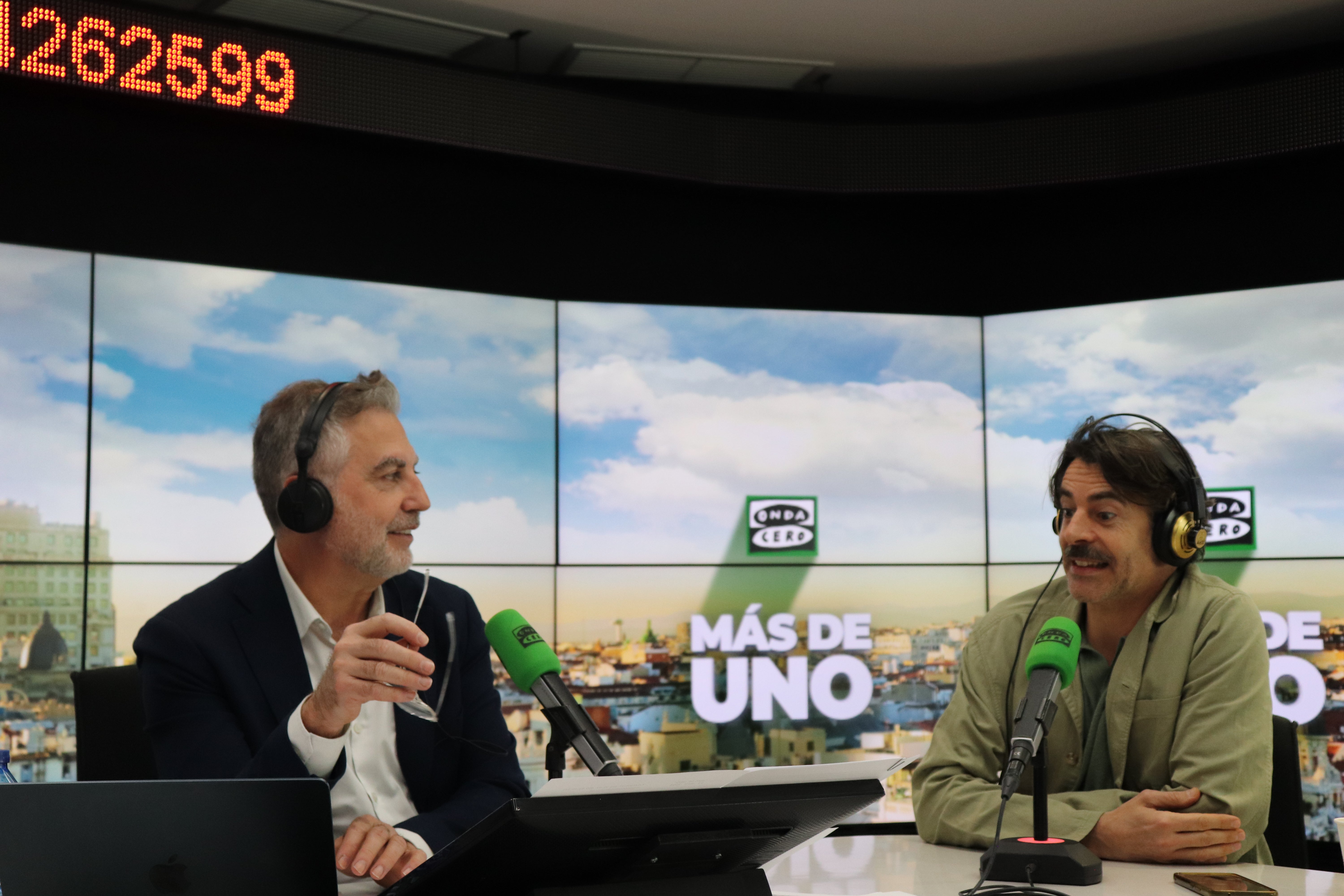
Más de uno
Entrevista con Eduardo Noriega por el estreno de 'La ahorcada'
00:28:02
El veterano actor ha conversado con Carlos Alsina y Begoña Gómez de la Fuente sobre su último largometraje y los aprendizajes que ha tenido durante su carrera, incluidos sus primeros pasos como como intérprete.
Loading summary
Transcript121 lines
- [00:06]
Interviewer/Host
Más de uno en onda cero, donde alsina.
- [00:14]
Las once y cuarto de la mañana. Son las diez y cuarto en Canarias y esta es justo la hora en la que hay que contar una historia que no es como las de las 8 de la mañana. Porque esta no es corta. Es una historia compleja. Es sorprendente, tiene giros de guión inesperados. Y sobre todo, es una historia muy inquietante. Bueno, es una historia que suena así.
- [00:44]
Narrator/Voice Actor
La mujer abre los ojos. Sigue en el árbol. Menos mal. A pesar del horrible dolor de cuello, se siente aliviada de continuar allí.
- [00:56]
Interviewer/Host
Podrán enterrar mi cuerpo, pero no a
- [00:59]
Narrator/Voice Actor
mí, se dirá a sí misma cuando unos tipos con guantes de plástico la fuercen a bajar del árbol y hasta
- [01:06]
Interviewer/Host
la misma tierra se negará a trabarme. Me escupirá.
- [01:13]
Eduardo Noriega
No me arrepiento. Jamás me iré. Jamás.
- [01:27]
Narrator/Voice Actor
La noche es larga. Primero llega una ambulancia, después la policía. La meten en una de esas bolsas de muerto que contienen los gases y olores de la vida terminada. Franny se atreve a mirarla. Se frota las manos con nerviosismo. Las piernas le tiemblan como las de un viejo que lleva demasiado tiempo en pie.
- [01:49]
Eduardo Noriega
Agentes, ¿Les falta mucho? Quiero volver dentro. Aún falta, caballero. Paciencia. Vamos a ver. ¿Usted conocía a la mujer, No? No era nadie.
- [02:02]
Narrator/Voice Actor
Al escucharlo, la mujer del árbol se sobrecoge desde su rama. Nadie, de verdad. Un año de amor y no era nadie. Los policías despachan a Fran y vuelven con sus pesquisas. Será una noche larga.
- [02:18]
Interviewer/Host
Ya podía haberse tirado al río.
- [02:22]
Narrator/Voice Actor
Desde su árbol. Ella escucha las palabras de su amante, se siente lúcida, lo ve todo con Clar. Entiende a Fran, a su amor, que hubiera preferido verla muerta en un río, flotando lejos, donde nadie pudiera relacionarles, tragando algas, sin lodo, como una sirena indefensa. Así hubiera podido fingir que ni siquiera la conocía, que no era nadie. Pero eso no va a suceder. Ella no va a desaparecer. Fran no la va a olvidar.
- [03:05]
Interviewer/Host
Si fuera una ficción sonora, sonaría así de turbador. Es el comienzo de la novela La horcada, de Maite Navales, que pasado mañana, el miércoles día 15, sale a la venta en Planeta. Pocas veces coincide que casi a la vez que el lanzamiento del libro, se estrena su versión cinematográfica. El libro se publica este miércoles y la película, que se llama igual, la orcada se estrena una Semana después, el 22 de abril. Y ahí a este Fran que acabamos de escuchar en este fragmento que hemos adaptado, sí le podemos poner rostro, porque lo interpreta uno de los actores, me han puesto aquí, más veteranos ya del cine español, que es Eduardo Noriega. Buenos días, Eduardo.
- [03:46]
Eduardo Noriega
No sé si de los más veteranos,
- [03:48]
Interviewer/Host
pero ya llevo tiempo en este vértigo da eso, ¿No? Uno de los más veteranos, además coincide
- [03:54]
Eduardo Noriega
con el aniversario de Tesis, que es este, que fue ayer, el aniversario del estreno. 30 años de tesis y 30. Pues ya éramos jóvenes, podemos decir.
- [04:06]
Interviewer/Host
Éramos jóvenes, pero hay gente mucho más veterana.
- [04:10]
Eduardo Noriega
Sí, claro.
- [04:12]
Interviewer/Host
Tú aspiras a llegar como ellos, llevar, por ejemplo, 60 años haciendo.
- [04:18]
Eduardo Noriega
Yo acepto premios de honor, pero todavía me queda recorrido.
- [04:23]
Interviewer/Host
Fíjate, el otro día había Carmen Maura, por ejemplo, que es capaz de hacer dos películas al año.
- [04:28]
Eduardo Noriega
Sacristán. Hay mucha gente muy veterana y en activo.
- [04:32]
Interviewer/Host
Lo que pasa es que con los años ellos explican que van siendo cada vez más selectivos físicamente. ¿Sabes que tú sí que lo sabes, yo no, que un rodaje al final tiene una exigencia física también? Entonces eligen muy bien los papeles, se administran.
- [04:49]
Eduardo Noriega
Hay una anécdota muy buena de Fernán Gómez, que él decía, yo me he especializado en papeles pequeños, justo en la última época. Y decía, coño, es que físicamente ya no podía. Pero él lo decía como que había sido una voluntad suya. Nada que ver con el físico, ni con la edad, ni con la exigencia.
- [05:09]
Interviewer/Host
Bueno, vamos a hablar de la película entonces.
- [05:11]
Eduardo Noriega
Vamos a hablar de la Orcada.
- [05:13]
Interviewer/Host
¿Que se pasa más miedo? ¿Grabando una película de terror o siendo espectador de esa película de terror? Yo es que me veo tener que
- [05:21]
Eduardo Noriega
hacer lo que hacen siempre. Siempre es horrible.
- [05:23]
Interviewer/Host
Siempre eres pesado.
- [05:24]
¿Tú crees que grabáis asustados?
- [05:25]
Es que no sé. Es que dais susto.
- [05:28]
Eduardo Noriega
No, es cierto que depende de la película que estás haciendo, hay estados de ánimo que se contagian. Si la película es muy dramática y hay pérdidas tremendas, al final estás con una nube gris y estás dándole vueltas a temas muy desgraciados, muy dolorosos, y al final eso acaba contagiándote. Y lo mismo si estás haciendo una comedia, es muy probable que haya muchas más risas. A veces no. A veces estás haciendo una comedia y hay pésimo ambiente y es horrible levantar un chiste cuando te llevas fatal. Pero en el caso del terror no, porque el caso de terror. Además, el cine del terror es maravilloso en cuanto a la mecánica y en cuanto a los trucos que funcionan en cámara y que cuando lo está rodando no funcionan en absoluto. Una pasada de alguien por el marco de una puerta. En efecto, de sonido es terrorífico. Claro. Pero cuando tú lo grabas es una cosa muy mecánica y muy aburrida que pase alguien. Pero sí que hubo alguna cosa extraña, no voy a decir ya a la altura de Poltergeist, de la famosa película, pero sí que hubo alguna cosa extraña con la casa. Al director alguien le dijo un médium, alguien que tenía cierta capacidad de percepción.
- [06:46]
Interviewer/Host
Y no era Begoña, era otro médium.
- [06:48]
Eduardo Noriega
Sí, le dijo no,
- [06:52]
Interviewer/Host
algo va a
- [06:52]
Eduardo Noriega
ocurrir con alguno de tus protagonistas. Le dijo antes. Y yo tuve un accidente de moto. Y eso me lo contó a mí hace una semana. Pero no me dijiste nada. ¿Cómo te iba a decir? Yo tuve un accidente de moto con bastante susto. A una semana empezar a rodar. De hecho me trasladaba por Madrid por la M, porque iba a un ensayo y el director me estaba esperando y yo no llegaba. Y él cuando me estaba esperando ay, madre. Que ha pasado algo. A mi madre que ha pasado algo. Porque este otro le había algo va a pasar con uno de tus protagonistas.
- [07:22]
Interviewer/Host
¿Y por qué este otro habló con el director?
- [07:24]
Eduardo Noriega
Porque el director le consultó, le pasó el guión y le quiero que me digas cómo lo sientes. Porque en la película hay elementos para psicólogos. Hay una niña que tiene capacidad de percibir, hay un personaje que es capaz de meterse en los sueños de alguien y manipularlos, hay una médium que revisa la casa. Entonces, como había este tipo de situaciones en la película, él quería consultarlas con el médium para que técnicamente estuvieran bien escritas, pero también por si sentía algo raro. ¿Qué dices? Sí, sí, sí. Es que la mata. Es un personajazo. La mata. El director lo tienes que traer aquí porque es muy divertido y además que él cree en estas cosas. Pero luego yo me he dado cuenta que muchísima gente feliz y por muchísima gente cree en estas cosas. Yo hice una película de fantasmas con Guillermo del Toro, y a mi Guillermo del Toro, vamos, no es que creyera en fantasmas, es que aseguraba que había visto fantasmas y lo contaba con tal contundencia, con tal que me asustaba y todo.
- [08:25]
Interviewer/Host
¿Me convenció un poco, o sea que
- [08:27]
tú no crees en estas cosas?
- [08:29]
Eduardo Noriega
Bueno, creo y no creo, porque hay cosas que pasan y que suceden, que son inexplicables y a veces tú te autosugestionas y a veces. Pero sí que creo que hay gente que tiene una capacidad, una sensibilidad de percepción, por ejemplo, una intuición muy desarrollada. Y sí que creo que hay gente que tiene esta capacidad de ser médium o de interceder de repente entre personas que estamos vivas y personas que no se acaban de ir, que algo así sucede.
- [09:01]
Interviewer/Host
Este médium auténtico, al que Lamata consultó como fuente de autoridad, como verificador, ¿Está seguro de que no le dijo nada más al autor, por ejemplo, de cosas que pasarían una vez que se estrena?
- [09:17]
Eduardo Noriega
Pues no, esto me lo ha contado. Bueno, hablamos ahora estamos en plena promoción, hablamos casi diariamente y hace dos días, hace tres días me no, bueno, es que este me dijo que iba a suceder algo. ¿Digo, pero por qué no me has contado esto antes? No, no, a ver si te asustas, a ver si te tiras, abandonas el
- [09:36]
Interviewer/Host
proyecto, o él mismo podía haberlo abandonado. La película va a generar todo tipo de trastornos para quienes participéis en ella. Pues yo me voy.
- [09:43]
Eduardo Noriega
Claro, Efectivamente. No sucedieron grandes cosas, lo hemos pasado muy bien y además creemos que tenemos una película muy interesante. Así arranca la novela de Maite Navales,
- [09:53]
Interviewer/Host
con la mujer ahorcada en el árbol.
- [09:55]
Eduardo Noriega
Sí, es una mujer que no se quiere ir. Que no se quiere ir, que se siente.
- [10:01]
Interviewer/Host
Además te interrumpe una noche prometedora porque tú llegas a casa acompañado.
- [10:06]
Eduardo Noriega
Lo que pasa es que Fran tiene bastante a menudo este tipo de noches.
- [10:10]
Interviewer/Host
Es donde juegues, la casa donde juega.
- [10:12]
Eduardo Noriega
Pero ella le interrumpe. Sí, sí. Por eso dice esta frase tan cruel que a mí me costaba mucho y que yo intentaba quitarla como fuera de la película. Decía ¿Por qué no se ha tirado el río? Estamos haciendo un tío un poco sobrado, pero no vamos a hacer un desalmado. Y Maite Navales, que se inspiró, entre otros, en Stephen King, el cementerio de animales, también se inspiró en La rosa y el ruiseñor de Oscar Wilde, el cuento de Oscar Wilde. Y es verdad que coincide tanto en el cuento como en la novela y en la película, que hay un hombre que se cree un poeta con profundos sentimientos y en realidad es un egoísta sin alma que destroza a un pequeño ruiseñor y este es Fran. Pero a mí me parecía decir, alguien que se acaba de suicidar en tu casa, ¿Por qué no se ha tirado al río? ¿Por qué no se ha tirado a las vías del?
- [11:04]
Interviewer/Host
Porque tú no eres desalmado, pero el
- [11:05]
Eduardo Noriega
protagonista sí, sí que lo es un poco. Sí, sí. Y lo bueno de esta película es que no hay buenos y malos, sino que todos tienen sus lados. Y un poco cómo somos los seres humanos, que no somos de una sola pieza y de un solo color.
- [11:21]
Interviewer/Host
¿Tú sabes si cuando uno alquila una casa para hacer una película de terror cobra más? Yo lo haría, porque no sé como la maldices un poco en esa casa luego pueden pasar cosas, ¿No?
- [11:34]
Eduardo Noriega
Lo que sucede. El cine español. A ver, el cine español no tiene tanto dinero para hacer una película, pero claro, cuando alguien va a alquilar su casa, lo que te da una producción por dos meses siempre es mayor que un alquiler normal.
- [11:50]
Interviewer/Host
Claro, claro.
- [11:50]
Eduardo Noriega
Lo cual un ciudadano normal y corriente que ah, dos meses en mi casa. Sí, claro. Pero en cuanto alguien le dice que somos del cine, que te paguen mucho más, a los dos días vienen y oye, ¿Qué pensamos? No, no, pues si, tenemos un acuerdo. Ya. Pero bueno, es que clar casa, en cuanto alguien les aconseja, suben de repente de forma desmedida, o sea que no fue fácil localizar la casa. Necesitábamos una casa que tuviera ciertos elementos, que tuviera un jardín, que tuviera un árbol, un árbol mágico. Había elementos que tenían que tener la casa. Y finalmente la encontramos en Teruel y es una casa maravillosa. Pero te aseguro que lo que hizo la dirección artística, cómo pintó la casa, cómo la decoró, porque la casa es de un productor musical, que soy yo, y cómo se decoró con guitarra, con discos de oro y un piano. Claro, los dueños vieron aquello y dijeron
- [12:44]
Interviewer/Host
que la dejen así, ¿No?
- [12:45]
Eduardo Noriega
Que la dejen así porque la quería vender y que la vean así. Valía mucho más la casa, de repente, solo verla así. Sí, sí.
- [12:54]
Interviewer/Host
Y luego, bueno, no le pregunto que
- [12:57]
Eduardo Noriega
es el final de la película, en
- [13:00]
Interviewer/Host
el podcast que hizo Sanguino sobre el rodaje de Los otros, que es bien divertido, maravilloso. Ahí cuenta lo de la casa, que es también de Cantabria, la casa de Cantabria, que es propiedad de un aristócrata,
- [13:13]
Eduardo Noriega
una casa donde se ha rodado muchísima,
- [13:15]
Interviewer/Host
que hay que aplazar el rodaje, creo que son dos veces, porque Nicole Kidman no puede venir en esas fechas de España y que cada vez que se aplasta el aristócrata dueño la casa sube el precio y no perdona lo que ya ha cobrado. Aunque la casa no se haya utilizado
- [13:30]
Eduardo Noriega
para rodar, ya es otro contrato.
- [13:32]
Interviewer/Host
Y una de las veces le dicen es que tenemos que rodar en el mes de julio, es en verano. Y entonces él es que en verano complicadísimo, porque mi mujer lo único que disfruta durante el año es esos días en esta casa, porque el resto estamos viviendo en otro sitio y ella eso no lo perdona, Entonces ¿Cómo lo voy a decir yo?
- [13:48]
Eduardo Noriega
Y tenemos la primera comunión de mi
- [13:50]
Interviewer/Host
nieta, suelta más viruta y al final la mujer se va con sus amigas a pasar el verano a no sé dónde.
- [13:56]
Eduardo Noriega
Claro, y esa casa es una casa que no se puede sustituir por otra. Ahí pueden jugar contigo lo que quieran y te pueden pedir lo que quieran y más a una producción de Hollywood. Pero sí, sí, es muy curioso el mundo del cine, luego lo vemos muy glamuroso y luego tiene unas cosas, unas
- [14:17]
Interviewer/Host
negociaciones tremendas, los espectadores nos fijamos mucho y queremos y entonces te vemos tocar el piano y entonces yo estoy todo el rato pendiente ¿Será él? ¿Será él? No será sus manos, son tus manos.
- [14:29]
Eduardo Noriega
¿Sí, claro que sí, o sea que
- [14:30]
Interviewer/Host
sabes tocar el piano, sabes cantar?
- [14:31]
Eduardo Noriega
Bueno, bueno, yo no sé hacer nada. Es verdad que estudié solfeo y piano cuando era niño, pero lo abandoné durante muchos años, salí renegando el conservatorio, como que era una cosa muy odiosa porque los demás iban a judo, a baloncesto, y yo iba al conservatorio, era un rollo patatero. La forma en que se enseñan los conservatorios es claramente mejorable Ahora yo creo que ha cambiado mucho, pero entonces era estudiar armonía, estudiar eso era un rollo y lo dejé muchísimos años y desde hace unos años esta parte estoy retomándolo ya de adulto. ¿Que echa de menos de repente te compraste un piano? No, el piano fue un regalo que me hizo mi madre cuando yo era jovencito, como para animarme a que no lo dejara. Y cuando yo me vine a Madrid me traje ese piano. Es un piano de pared, muy sencillo, pero me lo traje a Madrid porque era un recuerdo muy especial de mi madre y ahí lo tengo y es el que toco. Claro, y cogerlo por gusto es otra cosa. Y ahora agradezco mucho tener una base musical y una base de piano donde yo no soy un virtuoso y además que hago locuras porque me propongo tocar partituras que no están a mi alcance, pero por el mero hecho de practicar, por el mero hecho de saber que nunca voy a ser capaz de tocar eso, nunca, porque estoy hablando de partituras de profesional. Y sin embargo, ahí hay un placer en el trabajo, en picar piedras, sabiendo que nunca voy a terminar la escultura.
- [16:04]
Interviewer/Host
Eso pasa en la interpretación. Sabes que hay un papel de estos que todos los actores desean hacer alguna vez, alguno de los clásicos, Shakespeare, alguna de estas. Hay algún papel que sabes que te va a resultar, no te digo yo, imposible, muy difícil poder llegar a hacer verdaderamente bien. Y a pesar de eso, pues yo empeño mi vida en conseguirlo.
- [16:28]
Eduardo Noriega
Seguramente hay papeles que luego ya pasan y ya no te pertenecen por edad, por contexto, yo que sé, cuando estudias en el arte dramático y estudias a Shakespeare, cuando eres estudiante, haces todos los grandes, haces pequeñas escenas de los grandes personajes, Ricardo III. Son mitos que todos los actores aspiran alguna vez a hacer. Pero por ejemplo, Romeo, claro, Romeo tiene 15 años, tiene 16 años, ¿Cómo vas a hacer un cincuentón de Romeo? Aún así, a veces hay actores que se meten ahí y todo. Pero sí, sí, el mundo de la interpretación es maravilloso, porque el mundo de la interpretación a mí me fascina, me apasiona y es inacabable, inagotable. Y cuando estás preparando un personaje, cuando estás moldeando lo que estás con una pequeña cantidad de barro, puedes hacer lo que quieras. Todo es válido, todo es fallido, pero ese proceso de pruebas es maravilloso cuando todavía no está el espectador, cuando todavía no está la cámara, no te exigen un resultado que ahí ya es muy estresante. Claro, Pero el proceso es maravilloso y por eso creo firmemente en los ensayos, para equivocar, para probar, para romper tus propios esquemas mentales de cómo tú habías imaginado. Nosotros mismos nos ponemos muchas barreras, porque según leemos un texto, nos imaginamos una primera forma de hacerlo, y a veces se queda grabado en tu cabeza y cuesta. Necesitas la ayuda de alguien, necesitas el ensayo, la repetición y el error para hacerlo de forma diferente. Y que tú de repente, pues no había imaginado que esto se pudiera decir así, pues a lo mejor por ahí va el personaje, No lo sabemos. Y bueno, yo creo que nunca terminas de hacerte como actor, nunca. Porque a medida que vas creciendo adquieres, espero, algo más de profundidad en la vida, tú como ser humano, y tienes más elementos que aportar a los personajes.
- [18:31]
Interviewer/Host
Has dicho que se han cumplido 30 años de tesis y el Noriega de aquel momento, de hace 30, en algún momento se planteaba. Tú eras de plantearte el futuro cuando eras un crío,
- [18:46]
cuando estabas en la azotea de sus tíos.
- [18:49]
Yo me veo dentro de ¿Dónde te ves dentro de 30 años? Ya no ha sido.
- [18:55]
Eduardo Noriega
¿De que va, que va? Mira, ya fue una casualidad remota que yo adquiriera la documentación para presentarme a la Escuela de Arte Dramático de Madrid, porque ni siquiera te la enviaban por correo, tenías que venir a Madrid a por ella. Era algo para los estudiantes de una Escuela de Arte Dramático de Santander que soñábamos con venir a Madrid, porque Madrid era la escuela oficial pública y homologada esa o Barcelona en catalán, Con lo cual para la gran mayoría de los españoles era venir a Madrid el sueño. Hasta eso fue muy casual. Yo vine a hacer las pruebas y me quedé en Don Oso Cortés, en casa de mis tíos, y me subí a la azotea de Don Oso Cortés a pasar los textos porque tenía la prueba. Al día siguiente, yo ahí recitando el texto, la gente me un tarao en la azotea que hace como que de clama.
- [19:47]
Interviewer/Host
No te tires, no te tires.
- [19:49]
Eduardo Noriega
Y no, no, que va. Ya entrar en la Escuela Artedramática de Madrid ya era una cosa imposible, dificilísima. Yo estuve dos noches sin dormir cuando recibí la carta que me habían admitido, porque ahora tenía que decir en casa, oye, que esto, esta broma.
- [20:02]
Interviewer/Host
¿No habías dicho nada en casa o que?
- [20:03]
Eduardo Noriega
Sí, sí, sí. Mi casa era como. No sabía ni lo que era arte dramático. ¿Cómo que te vas a ir a estudiar Arte dramático a Madrid? ¿Qué es eso? Estudia algo serio, estudia algo que te dé de comer. Pero bueno, me apoyaron y me dejaron hacer lo que quería. Y como era el trato que teníamos. Tú aprueba Selectividad y luego haz lo que quieras. Si quieres trabajar, trabaja y si quieres estudiar, estudia. Y entonces no tuvieron más remedio que aceptarlo. Pero jamás, jamás imaginé en la Escuela Arte Dramático. Ya el primer año hablábamos entre nosotros y decíamos si, en cuatro años, que es lo que dura esto, no Hemos conseguido un papelito en teatro, nos hemos dado una oportunidad, nos hemos hecho un viaje, hemos conocido el mundo del teatro por dentro, pero nos volvemos para Santander o para Jaén o para donde sea y montamos el kiosco en otro sitio. Era nuestra idea. Pero ya hacer un papel en teatro ya era un sueño, un papel pequeño, acceder a una prueba ya era un milagro, o sea que jamás, jamás me veía como actor profesional y menos estar 30 años después aquí hablando de una película.
- [21:13]
Interviewer/Host
¿Y cuándo fue el primero, el primer
- [21:15]
Eduardo Noriega
papelín chiquitito, el primer papel profesional en un largometraje fue como un Chormendariz, una película se llama Historias del Cronen? Fue también muy.
- [21:23]
Interviewer/Host
Pero ¿Habías terminado ya la escuela o todavía no?
- [21:26]
Eduardo Noriega
Estaba en segundo. Yo estaba celebrando mi cumpleaños en Santander. Es una historia breve, ya verás.
- [21:34]
Interviewer/Host
El Cronen.
- [21:35]
Eduardo Noriega
No, no, digo, estoy en Santander celebrando mi cumpleaños y hay alguien que Ay, coño, el libro estaba por allí, el libro de Mañas. Joder, de esto habría que hacer una película, dice un amigo mío en un cumpleaños. Y ahí se quedó esa frase. Y salimos de fiesta y al día siguiente mi madre vino a despertarme diciéndome ya es la tercera vez que intento levantarte, te llaman de la productora de Elías Querjeta. Yo pegué un bote, me di en la litera con la cabeza, le di un abrazo a mi madre, le mamá, es el productor más importante del cine español. Y fui corriendo al teléfono y a partir de ahí empiezo a pensar, porque me dicen no, bueno, estamos haciendo Historias del Cronen, ¿Quién de estos cabrones me está haciendo la broma? La voz no la reconocía. Qué hermano de estos cabrones. Entonces ya mi tono fue todo sí, claro, claro. ¿Y vendrías a Madrid? ¿Y qué queréis que vaya hoy? Y me dice no, hoy es un poco precipitado, pero mañana. Digo, pues mañana, mañana voy a Madrid.
- [22:42]
Interviewer/Host
¿A qué hora te viene bien?
- [22:43]
Eduardo Noriega
Entonces cuelgo el teléfono, claro, era para verme, ¿Como el teléfono? Y empiezo a llamar a mis colegas, ninguno está levantado, están todos en la cama. Ya me empieza a hacer sospechar. Al día siguiente, a las 8 a.m. me saco un billete de autobús y todo el viaje diciendo qué cabrones. No he podido averiguar quién ha sido, tenía que hacer el viaje. Y no, no, luego resultó que era real. Pero sí, sí, esa es buenísima. Esos fueron mis primeros días de rodaje en un largometraje. Yo no había hecho nunca nada. Eso fue hace 32 años.
- [23:18]
Interviewer/Host
La Orcada es la película basada en la novela. La película se estrena la semana que viene. Sale Eduardo Noriega, como estamos contando, y otras personas.
- [23:26]
Eduardo Noriega
La mayor Salamanca protagoniza la película, que está muy bien, por cierto.
- [23:29]
Interviewer/Host
Y el rodaje estuvo lleno de situaciones seguramente inquietantes.
- [23:34]
Tiene de todo.
- [23:35]
En un rodaje de una película como esta hay que meterse un poco en el clima. ¿Entonces os obligan a estar todo el tiempo así, temiendo que vaya a suceder alguna cosa? ¿No ponen música de tensión? ¿Vamos a rodar música de tensión?
- [23:48]
Eduardo Noriega
Debería, pero hay algún maquillaje que sí que impresionaba mucho. No vamos a desvelar gran cosa, pero había algún maquillaje que costaba mirar y que impresionaba mucho al equipo técnico. Y a los que de repente veían, decían, ¿Pero esto qué es?
- [24:03]
Interviewer/Host
¿Y en un rodaje de una película como esta está prohibido reírse para no romper un poco?
- [24:09]
Eduardo Noriega
No, no, no, que va, nada que ver. Al revés. Yo creo que además la mata. El director utiliza el humor constantemente. De hecho, cuando no está de buen humor es que ha pasado algo heavy. Pero él comunica siempre a través del humor, lo cual está muy bien.
- [24:24]
Interviewer/Host
El día que no hace una broma,
- [24:25]
Eduardo Noriega
maldito, aléjate de él, porque algo gordo ha pasado.
- [24:29]
Interviewer/Host
Y esos días, me interesa mucho este aspecto del rodaje, esos días en los que el director no tiene un buen día, es cuando que ha dormido poco, por ejemplo, te ha tenido un disgusto o lo que sea, o le han recortado el presupuesto, cualquier cosa de esas. ¿Que pasa? ¿Esos días son los días en los que se trabaja mucho más deprisa o al revés, los días en los que no acabamos nunca?
- [24:52]
Eduardo Noriega
No, no, esos días se trabaja, ya no hay conversaciones, ya no hay chistes, está todo el mundo con el culo apretado. Y si se calma y se queda con.
- [25:00]
Interviewer/Host
No le satisface nada de lo que.
- [25:02]
Eduardo Noriega
Claro, esos días si está cruzado, no suele suceder nunca, y menos con la mata. Pero yo recuerdo un día que estaba cruzado y encima había. Pues parte del equipo había montado. A la hora de comer, que tenemos un catering establecido por la producción, pues de repente un grupo había dicho, vamos a comer una paella aquí en el jardín. Entonces montaron el camping gas con la paella. El director, que estaba cruzado ese día, lo que me faltaba. Estos aquí, camping. Esto de aquí de barbacoa. Estoy pagando un catering para que hagáis la paella aquí. Jijija. Como ve una cerveza, vuelan cabezas.
- [25:45]
Interviewer/Host
Terrible.
- [25:47]
¿Quién fue el promotor de la paella?
- [25:50]
Eduardo Noriega
Hombre, no lo puedo decir. Yo creo. ¿Aquí tiene nombre y apellido? ¿Tiene nombre? No, no, no. Digo el famoso dentro del equipo, porque organizaba todas las quedadas, pero del departamento
- [26:01]
Interviewer/Host
técnico, del departamento artístico.
- [26:02]
Eduardo Noriega
Eléctrico. Eléctrico. Eléctrico. Los eléctricos son los más peligrosos.
- [26:06]
Interviewer/Host
¿Ah, sí?
- [26:07]
Eduardo Noriega
Sí, sí.
- [26:08]
Interviewer/Host
Porque son los más bromistas.
- [26:10]
Eduardo Noriega
Sí. Pues si. Una noche, una noche fría, quieres buscar de repente una cerveza por ahí escondida, pues te acercas al camión de los eléctricos. Míralo. Recuerdo rodando de Walking Dead, que era un despliegue tremendo. Éramos 500 personas de equipo desplazándonos por toda España. El despliegue de camiones era. Jamás pude tenerlos en una sola foto del campamento que formábamos como los cómicos antiguos, aunque un poco más sofisticado. Y parábamos en hoteles y con camiones modernos. Y recuerdo que una noche, que dice frío tremendo, pero un frío tremendo. Y estábamos. Yo estaba buscando una cerveza porque habíamos cenado y de repente no entraba yo hasta las cuatro de la mañana. Y dije, a ver, una cervecita tampoco me va a hacer daño. Pero claro, el alcohol está prohibido, obviamente. ¿Hasta que alguien me vio que estaba ahí, al del catering, intentando Oye, algo tienes por ahí escondido? No, no tenemos nada, está todo prohibido. Y alguien me golpeó en el hombro y me. Entonces yo le seguí por el campamento, me subo un camión. Bueno, es que tenían ahí un despliegue, tenían la mesa, tenían calefacción, digo. ¿Tenéis calefacción? Somos eléctricos. Las cervezas heladas. Hay que hacerse sin pais. Eléctricos.
- [27:31]
Interviewer/Host
Bueno, Eduardo Noriega, gracias por la visita y que vaya muy bien la película. Y que vaya muy bien todo lo que haga.
- [27:37]
Eduardo Noriega
Sí, de parte de La Mata solamente quiero decir que el que se lo quiera pasar muy, muy, muy bien, pasando mucho, mucho miedo, tiene que ir a ver la Orcada el 22 de abril a La Mata.
- [27:47]
Interviewer/Host
Habrá que invitarle al programa, por alusiones.
- [27:49]
Eduardo Noriega
Sí, sí, sí. Su versión de que tenga un buen día. Sí, casi todos. Da mucho juego.
- [27:56]
Interviewer/Host
Gracias, Eduardo, Que tengas buen día.
- [27:58]
Narrator/Voice Actor
A vosotros.
- [27:58]
Interviewer/Host
Enseguida recibimos a Marlaski Rendules en territorio negro.