← Más de uno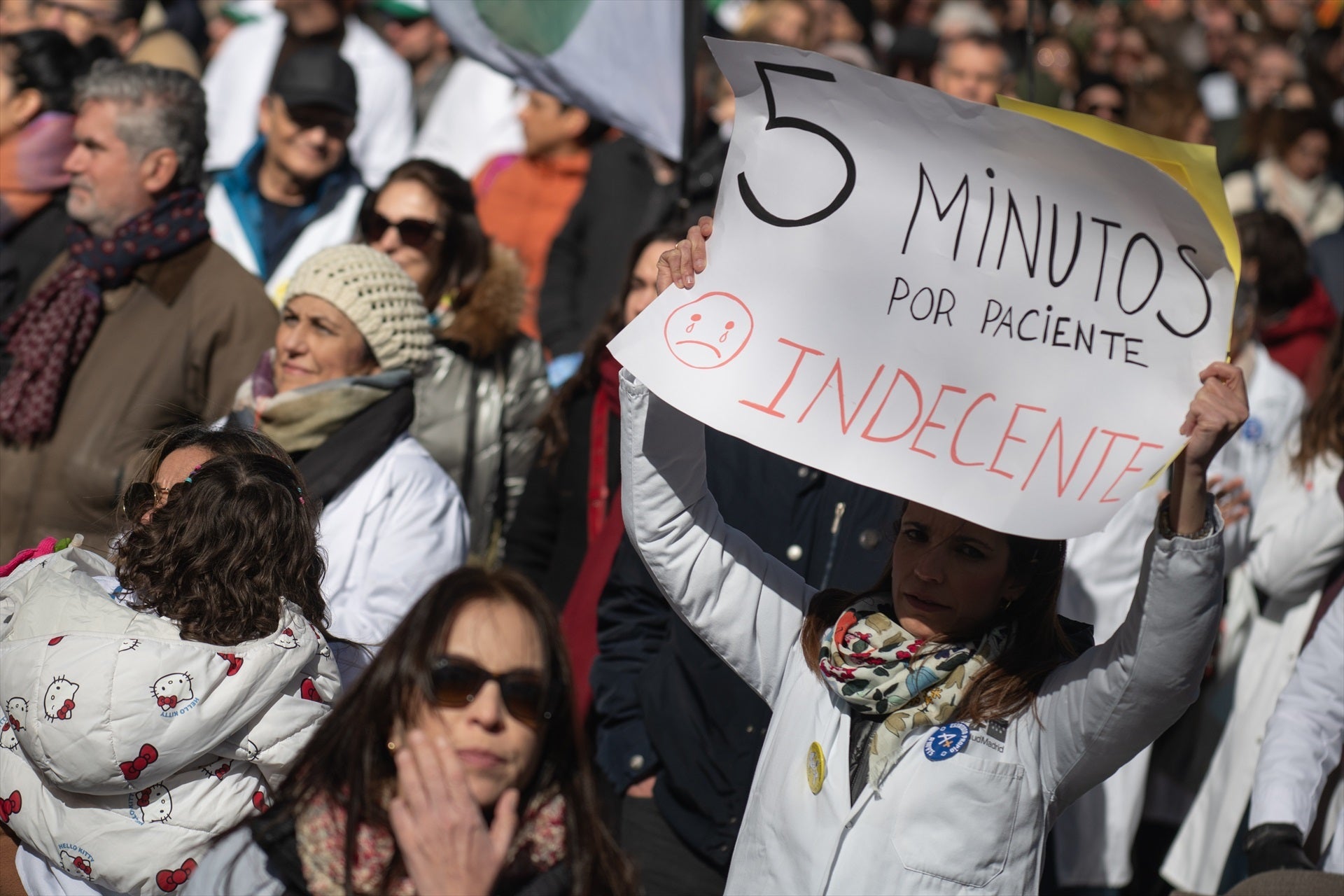
Más de uno
Los médicos reprochan a la ministra Mónica García su falta de voluntad para solucionar el conflicto: "La receptividad ha sido nula"
00:07:22
Víctor Pedrera, secretario general de la Confederación Española de Sindicatos Médicos, ha explicado en Más de uno cuáles son las exigencias de los profesionales sanitarios que han comenzado una huelga indefinida este lunes.
Loading summary
Transcript13 lines
- [00:00]
A
Espera de que ese momento llegue. Os recuerdo que aquí en España para esta semana tienen convocada una huelga los sindicatos que representan a la profesión médica. Los seis sindicatos que representan a los médicos en nuestro país convocan esta huelga durante toda esta semana y si nada cambia seguirán en los próximos meses. Naturalmente están decretados los servicios mínimos y doy por hecho que los médicos van a cumplir los servicios mínimos que están decretados, pero eso no quita para que al haber una huelga pueda haber algún. Alguna incidencia, o sea, lo puedan notar o lo podamos notar los usuarios de la sanidad que somos los pacientes. Tengo el teléfono a Víctor Pedrera, que es el secretario general de la Confederación Española de Sindicatos Médicos, convocante también de este paro que se ha iniciado en esta jornada. Señor Pedrera, buenos días.
- [00:52]
B
Hola, muy buenos días.
- [00:53]
A
Uy, tenemos un retardo enorme en esta llamada telefónica entre que yo hablo y me escucha el señor Pedrera. A ver si conseguimos entendernos a pesar de ese retardo. El señor Pedrera. Dice la ministra Mónica García en una entrevista que publica hoy el diario El País, que las reivindicaciones que quedan vivas y que motivan esta huelga que son abstractas y que por eso ella entiende que no es la herramienta o el instrumento adecuado convocar una huelga para conseguir esas reivindicaciones. ¿Por qué? ¿Bueno, a ella le parecen abstractas y lo explica, pero a usted le parece que sus reivindicaciones lo son abstractas?
- [01:32]
B
Para nada. Son unas reivindicaciones yo creo que muy claras y perfectamente explicadas en nuestro decálogo de reivindicaciones. La primera de ellas es que los médicos exigimos ser nosotros quienes negocien directamente con la administración cuáles son nuestras condiciones laborales. Hasta ahora lo que ha ocurrido en el ámbito de la negociación es que ella ha cerrado, perdón, el Ministerio ha cerrado una negociación de unas condiciones laborales que afectan a los médicos sin los MÉD, con sindicatos que tienen representatividad en el resto de colectivos y en el colectivo médico, que es el colectivo que se diferencia del resto de colectivos en condiciones laborales, pues evidentemente no tienen esa representatividad. Esa es la primera situación abstracta. La segunda ha sido la clasificación de los grupos profesionales, donde hacen un batiburrillo y mezclan graduados de 4 años con graduados de 12 años, independientemente del nivel de responsabilidad que asume cada uno. Y bueno, ya si entramos en lo que es la jornada laboral, tampoco es nada abstracto que se hable de jornada laboral de 35 horas para todos los trabajadores de la sanidad, menos para los médicos, que se sigue hablando de jornadas de 45 horas en cómputo cuatrimestral, cuando en la realidad se traduce unas semanas de 70, 80 y 90 horas, con ese exceso de horas que se retribuyen por debajo de la hora ordinaria. Es decir, estoy hablando de 23 euros brutos de media, más o menos, varía de unas comunidades a otras, pero vamos, por ahí circula la retribución que se hace, que son obligatorias, que no contemplan el derecho al descanso, que se contemplan a otros trabajadores, que no se computan para las jubilaciones en horas que uno ha trabajado y no ha hecho. En definitiva, yo creo que son condiciones nada abstractas las que nosotros reclamamos que se negocien con nosotros.
- [03:14]
A
Leyendo las opiniones de la ministra, no parece que sea muy receptiva en este momento a todas estas demandas o reivindicaciones que están planteando ustedes. Esta es la primera vez que todos los sindicatos de la profesión médica están detrás de una convocatoria de huelga. Le pregunto si podemos hacernos a la idea de que no va a ser solo hoy. No parece que haya en el Ministerio mucha voluntad de intentar llegar a un entendimiento para que la huelga se descoque cuanto antes, que podemos tener por delante como poco toda esta semana de huelga.
- [03:43]
B
Por desgracia, yo pienso que sí. Llevamos ya un año de negociaciones con el Ministerio y después de ese año la receptividad que ha habido ha sido nula. De hecho, nos hemos sentado yo creo que quince, veinte ocasiones hasta que el Ministerio, entiendo que forzado por los sindicatos mayoritarios, me refiero a los sindicatos de clase, UGT, Comisiones Obreras y el CSIF, pusieron pie en pared y dijeron que si o se negociaba con ellos, montaban un conflicto. Han decidido que el conflicto con ellos es más interesante controlarlo que con nosotros y por lo tanto así están las cosas. Yo creo que si no se recapacita y se llega a la conclusión y se ve la evidencia de las cosas como están, que tenemos una sanidad en la cual faltan cada vez más médicos en un país donde no faltan médicos. En España hay que recordar que somos el primer país del mundo en número de facultades de medicina por habitante, que somos uno de los principales productores para la expresión de egresados en medicina, o sea de graduados y a pesar de eso, cada año faltan más médicos en la sanidad pública faltan médicos ¿Por qué? Pues porque las condiciones laborales se están espantando los médicos de la sanidad pública y nos quedaremos con una sanidad pública sin médicos y yo entiendo que una sanidad sin médicos no es sanidad, o sea que aquí llegamos a un acuerdo y se hace una política más amable con nuestro colectivo y se nos atrae hacia la sanidad pública o entraremos en un bucle creo que de autodestrucción que a nadie nos conviene, ni a los médicos como profesionales, ni a los médicos y al resto de pacientes como usuarios.
- [05:16]
A
Cuando ustedes demandan, Víctor, tener un estatuto propio y diferente del resto de los colectivos del del personal sanitario, ¿Es porque ustedes consideran más que los demás o quieren privilegios respecto de los demás profesionales de la sanidad?
- [05:31]
B
No, simplemente porque tenemos unas condiciones laborales distintas a los demás. A ningún trabajador de la sanidad pública se le fuerza a hacer, insisto, más de 35 horas. Ninguno tiene el régimen de incompatibilidades que tienen los médicos, ninguno asume el nivel de responsabilidad que asumen los médicos y por supuesto, si las condiciones laborales son distintas, queremos ser nosotros los interlocutores directos con la administración para negociar condiciones, como tienen que ser, en qué términos se tiene que hacer, el exceso de jornada que se requiere para un médico, cómo se deben pagar esas guardias, qué derecho tiene a descansar y a conciliar un compañero. En definitiva, si tú no te encuadras en las mismas condiciones en un marco laboral, evidentemente a ti se te tendrá que aplicar otro marco laboral. Y ese es el marco laboral que queremos que se nos aplique un marco laboral diferencial porque nuestras condiciones, insisto, son difer.
- [06:21]
A
Bueno, que se van a cumplir los servicios mínimos y lo podemos dar por hecho. Una cosa es la huelga y otra cosa es desatender o incumplir lo que está.
- [06:27]
B
Pero eso ahora y siempre. Ahora y siempre. El médico nunca ha faltado a su deber deontológico como profesional que es. Y es más, insisto, y más con los servicios mínimos que han impuesto muchas comunidades. Hay que recordar que algunas comunidades, como es el caso de la valenciana murciana, han impuesto servicios mínimos de más del 75%. Es decir, que en torno a un 80% de profesores, digo 80% porque han puesto el 75% de los servicios ordinarios en los servicios no esenciales y el 100% de los esenciales. Esenciales me refiero a UCI, servicios de urgencia y demás. Y con ese 80% de personal que no se va a poder poner de huelga, el servicio está más que garantizado. En un país donde, por ejemplo, en verano tenemos coberturas del 50%. En ese momento parece ser que los servicios mínimos no son tan esenciales como en el momento que los médicos plantean una protesta.
- [07:17]
A
Señor Pedrera, gracias por haber atendido esta llamada y que tenga buen día.
- [07:20]
B
Muchas gracias.
- [07:21]
A
Gracias. El secretario general de la Conferencia.