← Más de uno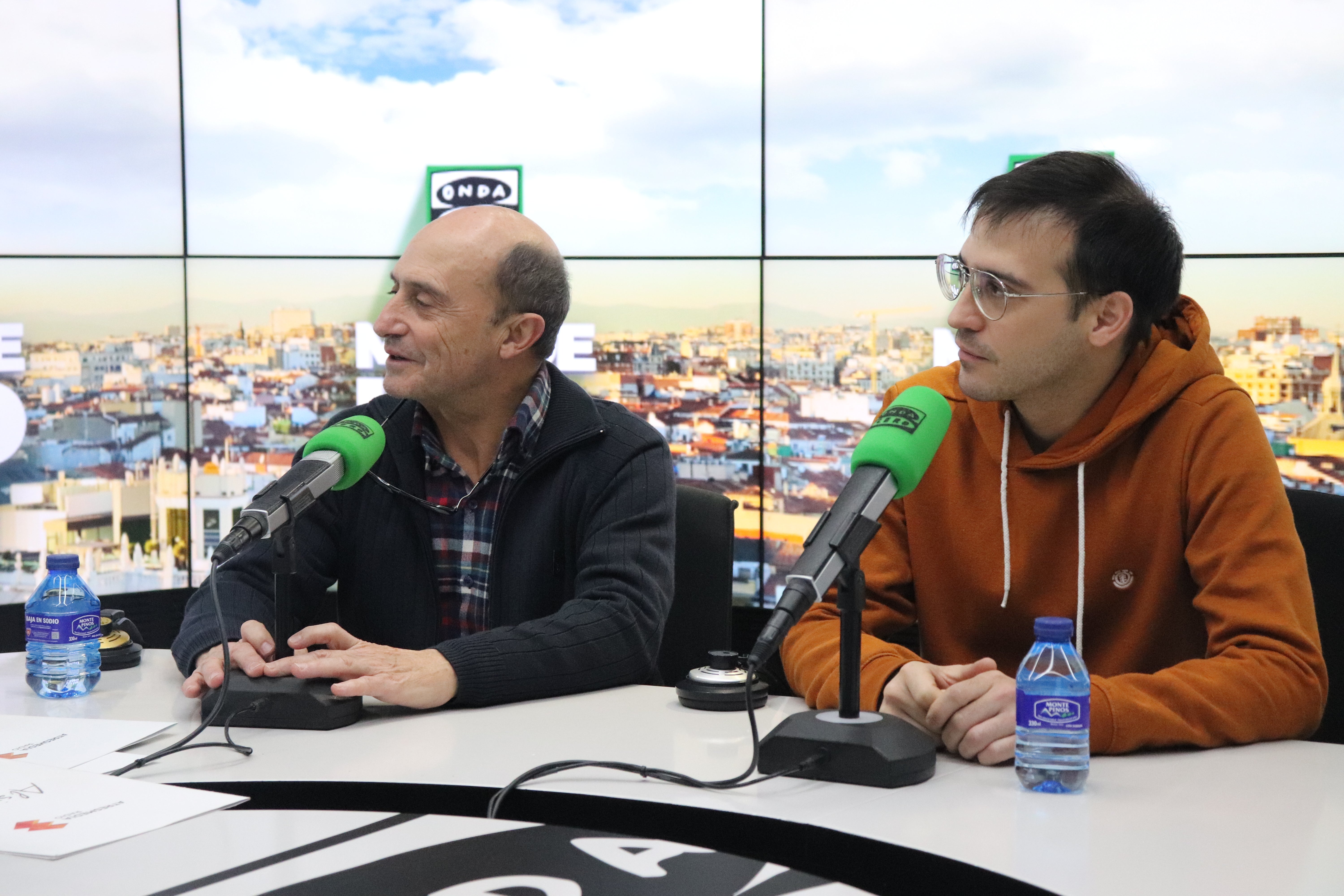
Más de uno
Pepe y Samuel Viyuela reviven su experiencia en la grabación de la radioficción de Navidad de Carlos Alsina
00:28:48
El celebre actor conocido por su participacion en series como Aida, ademas de peliculas y obras de teatro, ha estado acompanado de su hijo en una entrevista en Mas de uno.
Loading summary
Transcript174 lines
- [00:08]
Presenter 1
Más de uno en onda cero, donde alsina.
- [00:35]
Presenter 2
Lo que les voy a contar ahora es una historia que ocurrió hace 20 años. Bueno, para ser precisos, porque aquí nos gusta ser muy rigurosos con los datos, ocurrió hace 20 años, 4 meses y 2 semanas, día arriba, día abajo, porque tampoco hay que concretar ya. Es la historia de un castigo. En un día como el de hoy, en el que estamos esperando a que vengan los Reyes Magos, pues hablar de castigos casi casi es mentar al diablo. Pero es un castigo que salió pues bien, más o menos, creo yo. Una historia que ocurre en unos días, al contrario de lo que pasa hoy, de mucho calor, porque en Mérida durante el mes de agosto hace un calor insufrible. Y allí había ido a parar, por cuestiones profesionales, una familia. La familia viajaba desde Madrid. En principio la idea era que fuera solo el matrimonio, la esposa, el marido. El marido era quien tenía trabajo aquellos días, pero decidieron llevarse con ellos también a su hijo de 16 años. El chaval estaba en esa época rebelde, insurrecta, desobediente, indisciplinada, indomable, o sea, adolescente. Le habían quedado unas cuantas, unas cuantas, muchas asignaturas para septiembre. Entonces le tú te vienes con nosotros y así no te escapas de estudiar. Lleva la cresta si quieres. No tenemos nada en contra de los punkies, pero tú tienes que estudiar. Y fue entonces, una vez que llegaron a Mérida, cuando el padre tuvo aquella idea. El padre a este le van a dar ganas de estudiar a fuerza de deslomarse. A trabajar. Que pruebe lo que es el trabajo de verdad. Ya verás cómo le nace el amor por los estudios en su cabeza. Era un plan perfecto, sin fisuras. No he contado a qué iba Mérida. El padre. El padre es que era actor. Bueno, sigue siendo actor. Magnífico actor y enamorado del teatro. Por eso estaba muy emocionado por actuar en el Teatro Romano de Mérida, en el Festival de Teatro Clásico. Era su segunda vez allí e iba de protagonista interpretando nada menos que a Rómulo el Grande en un montaje de Esteban Ferrer. Pero volviendo a la historia del plan, el plan que trazó este actor, que se llamaba Pepe, por cierto, para que su hijo, el punky, aprendiese lo que era el trabajo duro de verdad, cuando los atrecistas y los electricistas iban a empezar con el montaje. Entonces el padre habló con Juanjo Llorens, que era el director técnico de la obra, y le dijo mira Juanjo, ese de ahí, el de la cresta en mi hijo, tú podrías ponerle de machaca, que tú mandaré lo que te haga falta. Subir y bajar cables, a cargar con cajas, a colocar los focos ahí en el gallinero, que trabaje y que sude. A veces los castigos los carga el diablo. Porque lo que ocurrió fue que el hijo de este actor, Pepe, el hijo se llama Samuel, con la cresta bien tiesa, engominada, se puso a trabajar como el que más, cables, focos, para arriba, para abajo, subiendo, bajando gradas, trabajando con ilusión además porque le gustaba formar parte de una compañía. Tanto que el día en el que falló un figurante, este Samuel levantó la mano y dijo que de lancero hago yo. Pero te tendrías que quitar la cresta, En la Roma imperial no había punkis. Y da igual, que de lancero hago yo. Y entonces sacrificó su peinado para subirse por primera vez a un escenario que no era un escenario cualquiera y encima al lado de su padre. Y ahí sintió por primera vez la energía que dicen que se siente cuando el público aplaude al final de una representación. 3.000 personas entregadas ahí en Mérida. Venga aplaudir, venga a aplaudir, venga a aplaudir. Y Samuel pensando. No sé lo que pensara. Lo que está claro es que debió gustarle, porque después de aquello empezó a estudiar como querían sus padres, aunque no a estudiar lo que querían sus padres. Se puso a tomar clases con Mar Navarro, con Luis Luque, con Juan Carlos Coraza y con muchos más para poder formarse como actor. Así que aquel castigo que Pepe Villuela pensó para su hijo Samuel, pues más que un castigo fue un regalo. Que esto sí, este sí es el día. Los regalos sí son un 5-1. Como es 5 de enero, nos damos nosotros el regalo de recibir en este programa a los Villuela.
- [05:14]
Pepe Villuela
No es que esté con la boca abierta todavía, porque es un periodismo de investigación. Absolutamente cierto todo lo que habéis dicho.
- [05:23]
Presenter 2
Tres años investigando este asunto.
- [05:28]
Samuel Villuela
Uno de.
- [05:29]
Pepe Villuela
Nuestros secretos mejor guardados. Y vosotros habéis accedido.
- [05:33]
Presenter 2
Bueno, porque tenemos fuentes.
- [05:34]
Pepe Villuela
Qué barbaridad.
- [05:35]
Samuel Villuela
¿No se lo has contado tú?
- [05:36]
Pepe Villuela
Yo no le he contado nada. ¿Y tú? No, yo pensaba que eras tú el que.
- [05:40]
Presenter 2
El que lo cuenta nunca cuenta que lo ha contado.
- [05:43]
Pepe Villuela
Las fuentes se ocultan y tienen derecho.
- [05:45]
Presenter 2
Las fuentes se ocultan. Y yo como periodista tengo derecho a.
- [05:48]
Samuel Villuela
No, pero qué barbaridad.
- [05:50]
Presenter 2
Pero esto lo hemos contado más o menos bien.
- [05:53]
Pepe Villuela
Totalmente, muy bien contado por punto.
- [05:55]
Presenter 2
Buenos días, Samuel, por cierto.
- [05:57]
Samuel Villuela
Muy buenos días.
- [05:57]
Presenter 2
Saludado. Pepe. Ya es un habitual del programa, afortunadamente, no podéis quitaros. Ya ha venido varias veces en estos 11 años que llevamos. 11 años llevamos.
- [06:09]
Pepe Villuela
No lo sé.
- [06:09]
Presenter 2
Qué barbaridad. Pero Samuel es la primera vez que viene, entonces le tenemos que dar enhorabuena por invitarme. Entonces, la cresta, exactamente cómo era de.
- [06:22]
Samuel Villuela
Altura, era una cresta bastante pronunciada. Traía disputas en casa y por ahí hay una foto. Un día de cabreo, fue en Mérida También me decí ¿Cómo vas a salir con eso así? Para rebajar un poco los humos, mi padre se puso un cepillo de barrer en la cabeza y aproximadamente.
- [06:45]
Pepe Villuela
Sí, sí, era una forma de contemporizar. A nosotros lo que. A nosotros, su madre y a mí, lo que nos daba miedo era que se hacía demasiado visible y que ya había tenido algún que otro problema con gente que no soporta las diferencias. Y entonces había sido perseguido, había recibido algún puñetazo. Entonces no era la estética, era el peligro que corría por su significación a través de esa cresta. Nosotros estábamos de acuerdo con que la llevara, pero nos daba miedo. Ese era el único problema con respecto a la cresta. Y Samuel, claro, en aquel momento adolescente, era una persona que se reivindica. Buscaba su sitio.
- [07:23]
Presenter 2
Claro, porque no nació con cresta. La cresta fue una elección personal.
- [07:28]
Pepe Villuela
Sí, sí, sí. Fue una apuesta por sí mismo.
- [07:31]
Presenter 2
Y la opción de alisarse un poco la cresta no se planteaba tampoco.
- [07:34]
Pepe Villuela
No, no. Además es que nos dimos cuenta de que cuanto más decíamos, era peor. Era mejor, más visible y más de colores. No había forma de convencerle. Y bueno, tampoco era cuestión de hacer ninguna barbaridad. Sencillamente, bueno, pues aguantar la barbaridad, que no fue tan barbar, pero fue. Tú vienes a Mérida a estudiar y aparte vas a trabajar. Pero mira, sí aquí yo tuve sus consecuencias, creo que buenas.
- [08:00]
Presenter 2
¿Pero crees hoy? Hoy dices qué buena. En aquel momento pensabas lo mismo.
- [08:06]
Pepe Villuela
Bueno, esto es un llamado o una forma de solidarizarnos con todos los padres que tienen hijos adolescentes. Se pasan malos momentos, pero se superan. Los hijos al final vuelven al redil y al final, ya ves, no lleva cresta o tampoco podría se parece su padre. Los genes aplican. Correcto.
- [08:27]
Presenter 2
Los genes son terribles para algunas cosas. Sí. ¿Pero tú, Samuel, tú en ese momento es cuando descubres que tienes una vocación por la cosa artística y por el escenario, o de antes ya tenías alguna predisposición?
- [08:45]
Samuel Villuela
Creo que hubo un adoctrinamiento muy bien llevado por parte de mis padres, porque ya ellos trabajaban en el Teatro de la Abadía cuando empezó, y muchas veces a mi hermana y a mí nos llevaban después del colegio, y entonces veíamos ensayos, veíamos representaciones, y yo creo que inevitablemente ahí ya el germen empezó. Pero yo recuerdo efectivamente aquel verano de Mérida como un punto de no retorno, cargando focos en el gallinero, montando en el gallinero de Mérida, viendo el escenario, viendo toda la parafernalia, surgió algo. Y sí, efectivamente, recuerdo cuando faltó aquel figurante y yo tuve que. Llevaba la cresta decolorada y tuve que pintarla de negro para peinarla, para que efectivamente no podía subir al escenario con esa cresta. Y todos los técnicos te has vendido.
- [09:37]
Presenter 1
Te has ido al otro lado, te has pasado.
- [09:40]
Samuel Villuela
Pero es que aquella sensación, como has dicho, éramos. Pues que había un montón de figurantes en ese montaje. Yo estaba en segunda fila vestido de romano, y recuerdo el primer oscuro y el aplauso del público, y cómo eso golpeó en mi pecho de manera literal, y pensé esto es una barbaridad. Todos estos aplausos que van para ese equipo de actores que han estado ahí, para todas las personas que han generado ese montaje. Hubo algo magnético. Sí, sí, sí.
- [10:14]
Presenter 2
Y eso. Y que te libraste del trabajo duro, que es el de subir los focos.
- [10:20]
Samuel Villuela
Bueno, es que eso también tiene lo suyo. Eso también es muy bonito. Y cuando trabajas en el teatro, muchas veces tú te lo guises, tú te lo comes. Hay algo de cuando te produces, que tienes que montar, tienes que desmontar, tienes que interpretar. Y bueno, forma parte el mundo del circo, el mundo del teatro tiene mucho de esto.
- [10:39]
Presenter 2
Sí, el teatro, como pasa con las películas, hay superproducciones en las que hay un equipo inmenso con un presupuesto. Y luego está lo otro, que es lo más habitual, es la pequeña productora, que muchas veces es el propio actor que se sube al escenario con sus colegas o su familia, arriesgando su dinero.
- [10:57]
Samuel Villuela
Y Pepe sigue con el payaso.
- [10:59]
Presenter 2
¿Pepe es tu padre?
- [11:00]
Samuel Villuela
Pepe es mi padre.
- [11:02]
Presenter 2
Igual le llama Pepe.
- [11:04]
Samuel Villuela
Papá, papá, Pepe Como cambia una letra en casa.
- [11:07]
Presenter 2
¿Es Pepe también?
- [11:09]
Pepe Villuela
No lo sé, la verdad, no lo sé. Me nombra Pepe. Bueno, sí, me suele llamar Pepe o padre.
- [11:18]
Samuel Villuela
Padre y madre.
- [11:20]
Pepe Villuela
¿Pero lo de Pepe desde pequeñito, no?
- [11:22]
Samuel Villuela
Tu padre.
- [11:23]
Pepe Villuela
Tu padre.
- [11:23]
Samuel Villuela
Como mi madre decía. Tu padre no sé qué. Pues el paso es tu padre.
- [11:28]
Pepe Villuela
Sí, yo era tu padre para él.
- [11:31]
Presenter 2
Bueno, está aquí Jorge Abad. Buenos días, Jorge.
- [11:33]
Guest 1
¿Qué tal?
- [11:33]
Guest 2
Buenos días.
- [11:34]
Guest 1
¿Disfrutando de esta conversación?
- [11:35]
Presenter 2
¿Quiero yo copar aquí?
- [11:37]
Samuel Villuela
No.
- [11:38]
Guest 1
Además, hoy ganamos los del peinado. Que ahora lo contracultural es el calvo. En estos tiempos en los que cualquiera se pone pelo. Pues no.
- [11:48]
Presenter 2
Ahora es una elección.
- [11:49]
Pepe Villuela
Ahora es una elección. A veces me preguntan, ¿Tú ahora por qué no me reconocería nadie? No se, dejaría de ser yo. Perdería mi identidad. Si yo ahora parezco un día con un tupé, ya no sería Pepe.
- [11:59]
Presenter 2
Bueno, a Pepe le conoce toda España. Le conoce toda España porque lleva muchos años trabajando y has hecho mil cosas. Y hay gente que te recordará por El milagro de Petinto. Gente que recordará por las series de televisión, por los espectáculos tuyos propios. Aunque por lo que más se te recuerda, ¿Desde cuántos días han pasado? Desde el día de Navidad. Por lo que más se te conoce en España, pues es por haber interpretado a Jacob Marley en nuestra ficción navideña de este año.
- [12:32]
Character in Radioficción
¿Qué es eso? ¿Qué pasa? ¿Qué es ese ruido internal? ¿Acaso estoy soñando?
- [12:37]
Pepe Villuela
No sueñas. Yo. Estás despierto. Levanta de la cama. Venid.
- [12:51]
Character in Radioficción
¿Pero qué haces? ¿Quién eres?
- [12:54]
Pepe Villuela
Sabes de sobra quién soy.
- [12:56]
Character in Radioficción
No, no lo sé. Aquí no hay luz. No te veo.
- [12:59]
Pepe Villuela
No necesitas verme. Pero espera. Espera que enciendo una vela. Ahora ya me ves.
- [13:06]
Character in Radioficción
No, No quiero verte.
- [13:08]
Pepe Villuela
¿Qué haces? No te tapes los ojos.
- [13:10]
Character in Radioficción
No quiero verte. No puedes ser tú.
- [13:13]
Pepe Villuela
Pero claro que soy. ¿Quién más podría ser? Ebenezer. Ninguna otra persona sabe cómo llegar hasta tu cuarto.
- [13:19]
Character in Radioficción
Paparuchas. He dicho que no puede ser tú.
- [13:21]
Guest 2
¿Por qué?
- [13:22]
Pepe Villuela
¿Porque estoy muerto?
- [13:23]
Character in Radioficción
No, porque es mudo.
- [13:26]
Pepe Villuela
Bueno, mudo del todo no, hombre.
- [13:29]
Presenter 1
Era hombre de poca.
- [13:31]
Presenter 2
Seguir escuchando la ficción en la página web.
- [13:35]
Pepe Villuela
Lo recomiendo. Es que la radio tiene una magia especial. Tanto para lo que tiene que ver con la información como lo que tiene que ver con la ficción. Uno se queda pegado cuando las cosas están bien hechas. No puede.
- [13:45]
Presenter 2
Además, tú eres uno de los actores que más. Radioficción. Aquí lo llamamos radioficción. Diseño, ficción sonora, radioteatro. Pero tú eres de los que más se ha prodigado. ¿Donde los programas se sigue prodigando?
- [13:55]
Pepe Villuela
Es que me gusta mucho. Cada vez que suena el teléfono y hay una propuesta de este tipo, digo sí, sea lo que sea, porque me apasiona. Me gusta muchísimo. Yo creo que es un intermedio entre lo que es la lectura y lo que es la tradición oral. Cómo encandila la propia palabra sin necesidad de imágenes, porque las imágenes las pone quien escucha. Él va creando su propia. Cada escuchante, cada oyente, cada persona que oye una historia va creando su propia escenografía, su propia imagen, Seguramente hasta el propio físico de los personajes. Mágico.
- [14:32]
Presenter 2
En esta afición que hemos hecho de esta Navidad, que está inspirada un poco en Scrooge, o sea, en el Cuento de Navidad de Dickens. Pero luego, ¿Qué estás queriendo decir?
- [14:47]
Pepe Villuela
No quiero decir que es la versión libre. No, no, pero no es tan libre. Yo creo que es como una rama que nace de ese tronco, muy bien traída, que no es una invención loca, que uno dice, ¿Pero qué me están contando? Si esto no tiene nada que ver con el Cuento de Navidad de Dickens. Tiné todo que ver. Y además yo creo que lo mejora, a lo mejor es insultar a Charles Dickens, pero que por lo menos ofrece una posibilidad más y da idea de cómo de una historia pueden surgir otras muy hermosas a partir de la propia imaginación de quién va a hacer la versión.
- [15:23]
Presenter 2
Y en esta versión del Cuento de Navidad hay un Jacob Marley más joven. Recuerdan cómo ha sido la vida tanto de Scrooge como del propio Marley.
- [15:36]
Guest 1
Se asoman a verlo.
- [15:36]
Presenter 2
Claro. Se asoman a verlo, exactamente. Iba a decir el Villa, el Marley difunto, convertido en espíritu, es el que acompaña a Scrooge para recordarle cómo ha sido algunos momentos de su vida. Y en esa vida aparece el Marley de joven también. Y quien interpreta a Marley de joven es el Bijuela joven, que es Samuel. ¿Cuánta experiencia tienes en ficción sonora, en radioficción?
- [16:05]
Samuel Villuela
Pues bastante menos que la de mi padre.
- [16:08]
Presenter 2
Bueno, todo el mundo tiene menos que tu padre.
- [16:10]
Samuel Villuela
Él es un veterano. Muchas cosas, Sí, alguna cosita, alguna radioficción. Y sí, la verdad es que bastante menos. Podríamos decir que he tonteado, he tanteado un poco.
- [16:24]
Presenter 2
¿Pero lo has disfrutado o lo has sufrido?
- [16:27]
Samuel Villuela
Lo he disfrutado muchísimo. Muchísimo, la verdad. Es una manera de jugar. Lo mismo que decía todo lo que tiene que completar a través de la imaginación, que el canal sea la voz, trabajar únicamente con ese medio completa mucho. Hace que puedas jugar un montón con todo.
- [16:46]
Guest 1
Y además, por algún tipo de milagro, la voz de Samuel se parece mucho.
- [16:49]
Presenter 2
A la de Pepe.
- [16:50]
Samuel Villuela
Por lo que sea.
- [16:51]
Guest 1
Por lo que sea, os llevan por teléfono a casa y todavía es confundido.
- [16:56]
Pepe Villuela
Ahora ya no, porque ya vivimos en casas separadas. Pero cuando Samuel era adolescente y vivía en aquella época de la cresta, cuando llamaba a sus amigos y me decían Samuel, yo decía cuidado, cuidado, que No soy yo.
- [17:07]
Guest 1
¿No extendías? ¿No prolongabas un poco?
- [17:09]
Pepe Villuela
No, no. Tenía mucho interés en saber cosas que quizá no debería saber.
- [17:13]
Samuel Villuela
Bueno, es que de hecho, una vez llamaron unos amigos de mis padres a casa. Mis padres no estaban, yo lo cogí y la conversación duró un rato. Y fue bastante extraño, porque claro, son unos amigos que vienen mucho a casa, pero claro, son amigos de mis padres. Entonces yo no les invité a venir. Entonces para ellos fue raro no recibir una invitación para venir. Entonces terminaron oye, ¿Pero está bien si nos pasamos ¿O no? Yo le claro, claro, pasaros. Colgamos y al minuto llamaron y eres Samuel, ¿Verdad? Nos confunden mucho por la voz.
- [17:44]
Presenter 2
Vamos a escuchar un momento de la radioficción en la que aparece este Marley joven, o sea, Samuel Villuela, en conversación con el Scrooge joven.
- [17:53]
Guest 2
¿A ti cuál de las hermanas Fesiwick te gusta?
- [17:57]
Samuel Villuela
Vaya pregunta.
- [17:58]
Presenter 1
A ver. La guapa es tu Josephine.
- [18:01]
Guest 2
Oye, que no es mía.
- [18:03]
Presenter 1
¿Pero vas a salir con ella?
- [18:05]
Guest 2
Si el Sr. Fesiwick me da permiso, te lo dará.
- [18:09]
Presenter 1
Eres el novio ideal.
- [18:11]
Guest 2
¿Eso por qué lo dices?
- [18:13]
Presenter 1
Pues porque eres honrado, no tienes doblez, quieres progresar en la vida, tratas bien a las chicas. Eres un poco lelo.
- [18:24]
Guest 2
Pero no tengo un chelín.
- [18:26]
Presenter 1
Y también eres guapo.
- [18:29]
Guest 2
¿Ah, sí?
- [18:30]
Presenter 1
Quiero decir que las chicas te encuentran guapo. Bueno, eso me han dicho.
- [18:36]
Guest 2
¿Te cuentan a ti lo que piensan de mí?
- [18:38]
Presenter 1
Sí. Seguro que para que te lo diga. Somos amigos, ¿No?
- [18:43]
Guest 2
Claro. ¿Por qué lo preguntas?
- [18:45]
Presenter 1
Porque los amigos se lo cuentan todo.
- [18:48]
Guest 2
Yo te cuento todo.
- [18:50]
Presenter 1
Pero yo a ti no.
- [18:51]
Guest 2
Pues empieza, hombre.
- [18:54]
Presenter 1
A estas horas hay que dormir.
- [18:56]
Guest 2
Prefiero seguir hablando. ¿Qué me tienes que contar?
- [19:01]
Presenter 1
A lo mejor algún día soy capaz, pero ahora no.
- [19:04]
Guest 2
¿Por qué no me va a gustar lo que me cuentes?
- [19:07]
Presenter 1
Porque ni siquiera yo sé lo que me gusta.
- [19:10]
Presenter 2
Si usted quiere escuchar la radioficción, completa.
- [19:13]
Pepe Villuela
Cuando ganas a todo el mundo. A ver si se lo cuenta ahí mucho, mucha tela.
- [19:18]
Presenter 2
Aquí te das cuenta de lo dulce que suena tu hijo cuando se pone dulce.
- [19:25]
Pepe Villuela
Pero sí eso yo lo sabía desde que nació. Eso yo lo sabía. Por eso me sorprendió tanto ese empujón, que cuando llega la adolescencia te pega como padre y te dice apártate, que ahora no te necesito. Eso cree en ellos, pero realmente sí te tienes que apartar. Y fue un golpe para mí cuando llegó la adolescencia y de pronto ese niño con el que yo había tenido una relación tan intensa, tan cerrada, tan firme, de pronto se convierte en un adolescente inclemente que no te quiere ni ver y que un día que vas al instituto a recogerlo, te da la espalda, se vuelve y luego te echa la bronca en casa y ¿Cómo se te ocurre venir, buscarme? Este no es mi hijo. Y efectivamente, durante un tiempo dejan de ser por lo menos lo que tú pensabas. Sí, sí. De su dulzura yo tengo pruebas muy grandes, pero también de su dureza durante la adolescencia. Ahora ya no hay. Niega.
- [20:20]
Presenter 2
La adolescencia es una etapa de enajenación. Se han enajenado, son otras personas distintas, pobres.
- [20:25]
Pepe Villuela
Todos pasamos por ahí y luego ya vuelve.
- [20:29]
Presenter 2
Ahora voy a contar a los oyentes una cosa que igual no debería ¿Cómo se hace, cómo se prepara la ficción navideña? Porque lo siguiente es escuchar el resultado. Pero antes yo le preguntaba a Samuel si lo había disfrutado, lo había sufrido, porque en realidad cada uno grabáis vuestro papel, vuestra parte por separado, no tenéis quien os da la réplica. En realidad es Carlos tú, a través del micrófono de orden. Exactamente. Al que Pepe ya ha sufrido, quiero decir, ya ha disfrutado como director de actores unas cuantas veces he disfrutado.
- [21:04]
Pepe Villuela
Es exigente, pero ya es muy bueno.
- [21:08]
Samuel Villuela
No se conforma. Y cuando lo tiene y distintas versiones, porque efectivamente, como al estar por separado luego necesita hacer encajar todas las piezas, me parece que tiene que hacer un trabajo tan fino.
- [21:21]
Pepe Villuela
Sí, además siempre trabaja con el. Por si acaso. Vamos a hacer una más. Creo que ya lo tengo, pero vamos a hacer una por si acaso, con esta variación, a ver si lo podemos hacer. Y tú estás todo el tiempo no solamente en acción, sino en alerta, diciendo vamos a ver, que no sé si lo estoy haciendo bien, porque tampoco estás escuchando la réplica tal y como es muy bonito y luego cuando lo escuchas.
- [21:40]
Presenter 2
Bien hecho, no está escuchando la réplica, no está escuchando el acompañamiento de los efectos de la música, que todo eso supongo que ayuda mucho a los actores. Estáis desnudos. Sentido figurado.
- [21:54]
Pepe Villuela
Bueno, aunque los tuviéramos, nadie nos iba a ver.
- [21:59]
Presenter 2
El directorio, por si acaso. ¿No te puedes quitar algo más?
- [22:02]
Guest 1
Eso no lo iba a desconcentrar.
- [22:06]
Presenter 2
Bueno, yo lo que quiero es daros las gracias por haber participado en nuestra afición de Navidad este año. Y ya liaros para el año que viene.
- [22:13]
Samuel Villuela
Por favor, mucho.
- [22:14]
Pepe Villuela
Cuenta con. Voy a decir con nosotros, cuenta conmigo por lo menos él que hable por sí mismo. No quiero hablar con nosotros.
- [22:23]
Presenter 2
¿Y qué estáis haciendo ahora? Esto también me interesa mucho. ¿Qué estáis haciendo o qué vais a hacer o qué estáis preparando cada uno?
- [22:30]
Pepe Villuela
¿Quieres tú empezar?
- [22:31]
Samuel Villuela
Empieza tú cada uno por vuestro lado.
- [22:33]
Presenter 2
Salvo que estéis preparando algo en común, que no lo sé.
- [22:35]
Pepe Villuela
Pues mira, ambas cosas. Yo estoy con un par de giras compaginándolas. El barbero de Picasso, estuvimos aquí hablando de ello. Guito Nofre, que es otra adaptación de una novela picaresca que hicimos y que me tiene contentísimo. Tengo previsto para este festival de Mérida próximo, y luego puedes decir si participas o no. Estaremos allí con Timón de Atenas la segunda semana de julio. Y de cara a un plazo más largo, estamos preparando un nuevo texto teatral basado en la figura de Cervantes y la generación del 27, en la que también participamos como compañía familiar.
- [23:16]
Presenter 2
Cervantes y la Generación.
- [23:17]
Pepe Villuela
Sí, una especie de sueño de Cervantes con ese hilo conductor que provoca y que propicia la literatura y la lengua entre distintas generaciones pertenecientes a épocas muy diversas, pero que a través de una especie de magia subterránea hace que estén unidos, que muchas formas de ver la propia España, tanto de unos como de otros, de Cervantes me refiero, tengan coincidencias con connotaciones con la actualidad. Ese es un proyecto que estamos armando ahora mismo, pero que nos queda año y medio.
- [23:49]
Presenter 2
Si estáis armando significa que estáis escribiendo.
- [23:51]
Pepe Villuela
Escribiendo y pensando en cómo hacerlo, porque esos meandros y esos subterráneos de los que hablaba son a veces complicados y te pierdes. No es por aquí por donde quiero ir y conectar la gente. Da la vuelta, da la vuelta, da la vuelta, rompe todo esto. Bueno, pues por lo menos sabes por dónde, ¿No? Que ya es mucho. Esas son las cosas que están.
- [24:13]
Samuel Villuela
Bueno, lo mío va a ser mucho más breve. Estamos ahora con la producción, estamos intentando mover un espectáculo que produjimos el año pasado con la compañía de El Vodevil, compañía familiar, Abiertos en canal. Estuvimos esta temporada abriéndola en el Teatro Infanta Isabel, y como nos fue bastante bien, estamos intentando ahora volver a entrar y buscando teatros para moverlo más. Y después para el verano voy con mi padre a Mérida, con Timón de Atenas.
- [24:43]
Pepe Villuela
Y este proyecto de Cervantes.
- [24:45]
Samuel Villuela
Y este proyecto de Cervantes todavía después.
- [24:47]
Guest 1
Que supongo será para hacerlo coincidir con el centenario de la generación de.
- [24:51]
Pepe Villuela
Eso es, si, la idea es estrenarlo en el Festival de Almagro en el verano del 27. Y sí, nos parece que es una fecha a recordar y a tener en cuenta por todas las connotaciones culturales, connotaciones también políticas del momento en el que estamos viviendo. También. También convulso, complicado. Estará presente sin duda, como no puede ser de otra manera, la Guerra Civil y como digamos, ese momento de explosión y de implosión, tanto para afuera como para adentro, que destruye una sociedad. Un canto a la no violencia, al pacifismo, a la búsqueda de alternativas a través de la palabra y del arte, para evitar que la sociedad se convierta.
- [25:40]
Presenter 2
En corta, en seco. Vidas no sólo las que terminan porque son asesinados o muertos o lo que sea, sino las que cambian ya para siempre. Vidas que igual ya han podido tener un camino artístico fructífero y de reconocimiento en España, y que por la Guerra Civil acaban siendo personas que están en el exilio en México, dedicado a cualquier otra cosa con la que poder ganarse la vida.
- [26:06]
Pepe Villuela
Curiosamente se da una circunstancia, es que la generación del 27 que conocemos, de la que hablamos normalmente, es una generación de personas, intelectuales, exiliados, pero también hay otra generación del 27, esa otra generación del 27 que sí se quedó en España y que por afinidades ideológicas o mayor afinidad con el franquismo, pudieron quedarse, pero esa generación era todo un bloque. Es decir, Edgar Neville, que pertenecía a esa otra generación del 27, era amiguísimo de García Lorca, por ejemplo, aunque ideológicamente estaban polarizados o separados, había muchísimas más cosas que humanamente y artísticamente les unían. Bueno, pues este texto pretende ir en ese sentido, buscando conciliación y buscando la posibilidad de encuentro entre divergencias de todo tipo. Porque siempre creo que es mucho más lo que debe unirnos o lo que nos une que lo que nos separa. Esa es la filosofía con la que estamos trabajando en ese texto qué vamos a ver.
- [27:07]
Presenter 2
Pues con todas esas cosas que estáis preparando, anda que no vais a tener motivos para volver a este programa. Hablar de lo que os dé la gana, como siempre.
- [27:17]
Pepe Villuela
Qué gusto.
- [27:18]
Presenter 2
Como siempre. Bueno, que tengáis unas felices Reyes Magos. Habréis cruzado los dedos para que se.
- [27:24]
Samuel Villuela
A ver, qué viene. Algo tendrá que caer.
- [27:27]
Presenter 2
¿Qué viene? ¿No has pedido nada en concreto? Hay que mandar cartas. Si. No, no.
- [27:31]
Samuel Villuela
Yo intento tener la mente abierta y agradecer lo que venga, no vaya a ser.
- [27:36]
Presenter 2
Pero será porque alguien lo ha pedido por ti. Porque los Reyes, yo tengo entendido que si no se les ha pedido nada concreto, dicen, ah, pues será que no quiere nada.
- [27:43]
Samuel Villuela
Lo bonito de las familias es que hacen por cuidarse entre ellas. Entonces, a lo mejor estoy quitándome yo como responsabilidades.
- [27:54]
Presenter 2
Ya habrá escrito alguien la carta para todos.
- [27:58]
Guest 1
Al final los padres tenemos que estar en todo.
- [28:00]
Pepe Villuela
Al final. Sí, yo creo que sí. Tenemos más responsabilidades y tácitas muchas veces.
- [28:05]
Presenter 1
Basta.
- [28:06]
Samuel Villuela
Tú ahora con la nieta.
- [28:07]
Presenter 2
Ya a la nieta. Otro día puedes venir a hablar solo de la nieta.
- [28:11]
Pepe Villuela
Es otro capítulo. Ese es otro capítulo.
- [28:14]
Presenter 2
El nuevo Pepe Villuela renovado.
- [28:18]
Pepe Villuela
Increíble. Sí que renueva. Sí que renueva. Sí que te hace. Yo creo que sí que rendimos. Rejuvenecen. No tanto las cremas, que tampoco utilizo, ni los trasplantes, que no me pienso hacer, ni estiramientos. Pero los nietos rejuvenecen. De pronto tienes que venir un día.
- [28:35]
Presenter 2
A hablar solo de Lola. Solo de eso. Bueno, gracias, Samuel. Gracias, Pepe. Que tengáis un día estupendo. En 20 minutos nos ponemos ya en las 12 de la mañana, una menos en Canarias. A la vuelta de esta pausa vamos a hablar de criminales. Session, session.