← Más de uno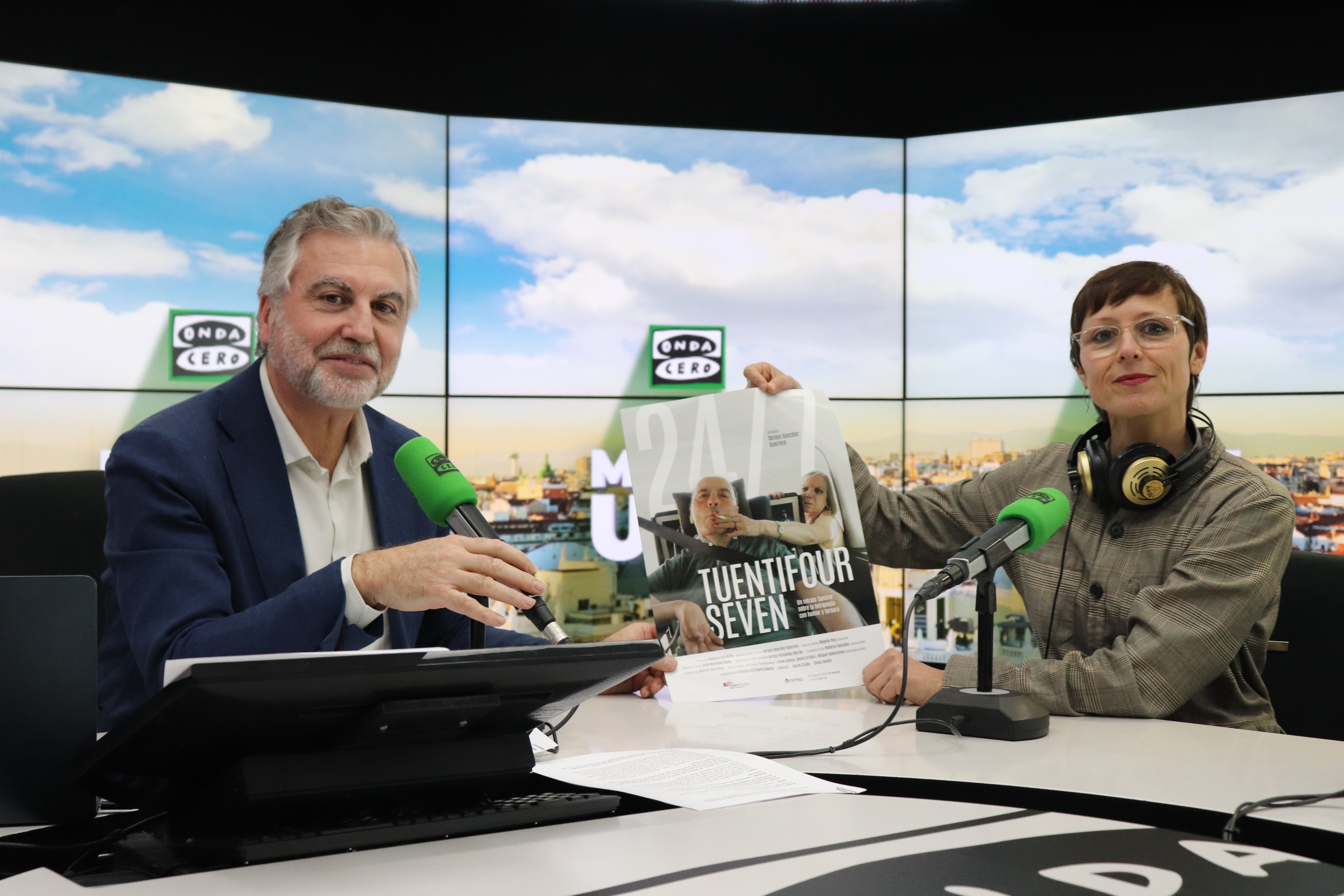
Más de uno
Soraya González Guerrero presenta 'Tuentifourseven', el documental en el que narra ocho años del cuidado de su padre tetrapléjico
00:25:12
Soraya González Guerrero ha explicado en Más de uno cómo ha sido la grabación de su proceso personal de sufrimiento junto a su familia.
Loading summary
Transcript53 lines
- [00:01]
Soraya González Guerrero
Más de uno en Onda Cero, donde Alsina.
- [00:06]
Interviewer
Y cuando llegue este momento, ¿Cuál es el tiempo que hará cuando nos den las uvas esta noche? MAMEN RODRÍGUEZ ASTRE Las uvas, Juan Diego,
- [00:14]
Narrator/Weather Reporter
Las tomaremos con frío y mucha humedad, pero en la Puerta del Sol no se espera nada de agua. Incluso es posible que ya no veamos ni nubes. Sí que llegará el frente a Madrid, pero se espera que pase entre las 5 y las 9 de la noche, por lo que sí se mojarán todos aquellos que terminen el año corriendo la San Silvestre a estas horas, cuando empiece 2018, el Frente lo encontraremos sobre Cataluña y Baleares. Despedimos por tanto el año con precipitación.
- [00:43]
Interviewer
Mientras muchos españoles nos preparábamos aquel 31 de diciembre para despedir el 2017, Soraya se encontraba junto a su madre y sus hermanos en el Hospital Nacional de Parapléjicos de Toledo. Su padre llevaba seis meses ingresado y el equipo médico les dijo que no había mucho más que hacer, que del pecho para abajo no iba a poder mover nada el padre. Y entonces Oraya decidió comprarse una cámara con la que comenzaría a grabar a su padre en el hospital y más adelante a grabarle en casa. Y fue grabando y grabando y grabando y grabando y grabando. Las primeras imágenes que recogió muestran a una familia que se esfuerza en parecer feliz ante esa cámara. Se ve champán en copas de plástico, y se ve en bromas, y se ve confeti. Y se ve también un pulpo a la gallega que la madre había llevado al hospital en un tupper.
- [01:30]
Soraya González Guerrero
Su primera Navidad así la pasamos en el Hospital de Parapléjicos de toledo.
- [01:34]
Interviewer
Ventana, papá. ¿Ves tu mano reflejada con el polvorón? Súbete a la boca, venga.
- [01:39]
Soraya González Guerrero
Queríamos hacerle feliz a toda costa. ¿Qué es eso, mamá?
- [01:47]
Interviewer
Pulpo.
- [01:47]
Soraya González Guerrero
Los tengo que preparar. No había nada que celebrar por aquí en mis parches.
- [01:53]
Interviewer
Desde aquellas Navidades, ora ya. Ha utilizado la cámara como una escafandra de la que protegerse del dolor. Y en todo ese tiempo ha registrado conversaciones con su padre mientras le daba de comer o cuando le sacaba a pasear. Ha captado muchos momentos también de desesperación, como cuando su padre se peleaba con Alexa para que le pusiera Alexa Satisfaction
- [02:14]
Soraya González Guerrero
de los Rolling Alexa, siéntete.
- [02:17]
Co-host/Commentator
Aquí estoy, Alexa, satisfecho de los Rolling Stone.
- [02:22]
Soraya González Guerrero
Solo está disponible con Amazon Music en línea Vaya.
- [02:25]
Interviewer
Pues bueno, en estos momentos que recoge este documental del que vamos a hablar, no solo aparece el padre de Soraya, que es el objeto de cuidado y de afecto del resto de la familia, también vemos a su madre, que es esa mujer que mientras todos intentaban entender lo que había ocurrido, se quedó al lado de él 24 horas al día, 7 días a la semana, es decir, 24 7. Estas imágenes que ha venido grabando Soraya en todos estos años han dado como resultado este documental que se llama así, Twenty for Seven. Son ocho años de darle al REC y en este tiempo Soraya ha descubierto que aquellas imágenes no sólo contaban la historia de su padre, sino que cuentan la historia de toda una familia aprendiendo, aprendiendo con mejores y peores momentos cómo es esto de tener que cuidar a uno de los suyos. Soraya es Soraya González Guerrero, es la hija de Pedro y de Gloria y es la directora de este documental 24 7. Buenos días, Soraya. Buenos días y gracias por acompañarnos.
- [03:22]
Soraya González Guerrero
Muchas gracias a vosotros y a vosotras.
- [03:24]
Interviewer
Un saludo a tu padre y a tu madre por si acaso nos estuvieran escuchando. Están escuchando, están escuchando. ¿Cuánto habéis cambiado todos los integrantes de la familia en estos ocho años? Aparte de que habéis cumplido ocho años todos más. ¿Cuánto os ha cambiado la situación de tu padre y la consecuencia que esa situación ha tenido en la de todos los demás?
- [03:46]
Soraya González Guerrero
Bueno, son ya casi diez porque. Casi diez años. Porque es verdad que la película la terminé de grabar hace tres años de grabar, pero luego la he montado la postproducción, por eso el dinero que también para empezar lo tenemos bastante asumido y colocado. Yo a mi padre ya le tengo. Lo tenemos muy normalizado, incluso tiene un nieto que ha nacido con mi padre ya en silla de ruedas y lo tiene súper naturalizado, el que vaya en la grúa cuando viene a comer y luego le llevamos a acostarle la siesta en la grúa, la silla de ruedas, incluso le gusta empujarle. Entonces lo tenemos bastante normalizado y. Y luego hemos. Yo creo que también a partir de el tiempo te hace colocar las cosas, cosas que pueden ser muy duras y que no te imaginas que te parece como. Porque yo recuerdo los primeros meses que me despertaba y decía esto es una pesadilla, de pronto despertar mi padre se ha quedado tetrapléjico y era como que no lo asumía, era como muy desgarrador. Ahora no lo es para nada y lo tenemos totalmente normalizado. Entonces yo creo que es un proceso
- [05:01]
Interviewer
natural en principio, aparte de ser desgarrador y que supongo que todo el tiempo te estás preguntando por qué se subió a ese andamio, qué necesidad tenía. El accidente que sufre tu padre, aparte de ser desgarrador, debe ser como tener delante una cuesta arriba que no te ves capaz de subir. De repente todo se te ha puesto tan complicado que no te sientes capaz de seguir adelante, de seguir con ellos, sabiendo que no te queda otra, no te queda más remedio que seguir. Debe ser una sensación de impotencia tal. De repente es algo que no controlas, que no depende de ti, que hay mil cosas que tienes que ir aprendiendo y descubriendo, porque nunca te habías visto en esa situación, habías imaginado que pasarás por ahí.
- [05:44]
Soraya González Guerrero
Sí, es una incertidumbre total. Y sobre todo cuando una persona tiene un accidente y te quedas de un día para otro dependiente. Totalmente. Asumir eso, que bueno, afortunadamente está el Hospital Nacional, que ahí pueden estar estas personas bastantes meses para rehabilitarse y también yo creo que para ir haciendo la familia también para ir aprendiendo, cómo luego el alta, pero aún así, los primeros años es una incertidumbre total, porque además no sabes qué ayudas te van a dar, es todo como una incógnita, no sabes si se va a adaptar, cómo vamos a organizar los cuidados. Sí que sientes una soledad muy profunda y es como un poco estar en shock, pero tener que resolver, como que no te da tiempo a estar triste y a volverte a llorar, porque tienes que echar para adelante y ver cómo nos organizamos y además poner buena cara porque quieres que él tampoco se venga abajo. Entonces eso sí, es una sensación, como tú dices, de incertidumbre y también de shock. De shock, pero a la vez tengo que seguir para adelante.
- [06:49]
Interviewer
Y él que además tiene todo el derecho del mundo a estar cabreado como una mona por lo que le ha pasado, porque al final es él quien no puede mover sus piernas y sus brazos. Tienes que aprender, supongo, también lo veo en el documental, tienes que aprender a convivir con sus malos humores, que pueda salir por cualquier lado, en cualquier momento, porque quien realmente lo está pasando peor de todos es él. Y ese saberse necesitado de los demás todo el tiempo, supongo que para una persona como tu padre, con la de tu padre, habiendo llevado una vida muy a su aire, digamos, de repente saberte dependiente de otras personas tiene que ser un trago muy complicado.
- [07:30]
Soraya González Guerrero
Sí, es ser el cabeza de familia y haber tenido como el control. De pronto que decidan por ti. Yo creo que no es tanto que te atiendan, que mi padre, por ejemplo, no controla los esfínteres, necesita que le laven. Eso lo lleva estar desnudo, eso lo lleva fenomenal. Lo que no lleva bien es que de pronto tengamos que tomar decisiones por él, o que de pronto tengamos que tomar. Sí, eso lo lleva muy mal. Que gestionemos la vida diaria, pues eso no lo asume. Es complicado.
- [08:05]
Interviewer
Cuando decides empezar a grabar, ¿Cuál es la reacción de quienes están a tu alrededor? ¿De tus hermanos, de tu madre y de tu padre? Porque la cámara. Vale que podemos olvidarnos de que la cámara está ahí, pero siempre es un elemento perturbador. De alguna manera, cuando tú ves una cámara, lo que te sale es querer quedar bien ante la cámara.
- [08:27]
Soraya González Guerrero
Es que la cámara, para empezar, es una cámara muy pequeñita que parece. De hecho, muchas veces se pensaban que estaba haciendo fotos y yo la integraba. Yo la cámara la llevaba, porque al principio yo no sabía hacia dónde iba. Era como lo has contado, como una escafandra que convertía ese momento íntimo en un. En una forma algo creativo. Y la cámara pasa bastante desapercibida. Los primeros momentos, de hecho, en la escena que habéis puesto de Toledo, yo ahí grabo, me acabo de comprar la cámara y estoy grabando un poco, aprendiendo a manejar el objetivo. De hecho, varias imágenes en esas primeras imágenes están desenfocadas. Pero ahí no me. Yo estoy como. No, es que me ha comprado la cámara y estoy probando ahí como que se vivió. Y luego, como estás tan arrasado por esa realidad que estás viviendo, es que no están ni fijándose. Si, yo estoy grabando. De hecho, yo es que ni me acordaba que había grabado esas imágenes. Y luego cuando yo sí les hago entrevistas, que primero hago conversaciones con mi padre, ahí me sorprende que él no dice nada para quedar bien. Él es que es como. Es cuando le grabo. Además, yo solía poner la grabadora y la dejaba cerca de donde. Porque yo he grabado más audio que imagen, porque mi idea al principio era hacer algo más de escritura y le grababa las conversaciones para luego poder mezclar mis ensayos y mis reflexiones con las conversaciones. Entonces yo la cámara la dejaba, era una cámara buena, la dejaba, la enganchaba o en la cama o en la silla y se nos olvidaba que estaba.
- [09:59]
Co-host/Commentator
Hay una secuencia que dice tu padre pero es necesario que me grabes poniendo la cámara en la nariz. Justamente en la nariz. Era como que era la hija ya de la cámara.
- [10:08]
Soraya González Guerrero
El tonto.
- [10:09]
Co-host/Commentator
La cámara que va todo el rato con la cámara para todos lado. Y eras tú y la cámara. Te integrarían en un pack.
- [10:15]
Soraya González Guerrero
Sí, sobre todo cuando él ha estado. Porque está muchas veces hospitalizado, yo he aprovechado mucho para grabarle y ahí sí que muchas veces decía pero que te van a ver, pero que te van a echar del hospital. Pero en general ha pasado bastante desapercibida la cámara. Yo la dejaba, incluso a veces la dejaba en un trípode y sucedía una escena que yo luego la veía y a mí se me olvidaba también que la vida transcurría y yo ponía una cámara que grababa la vida.
- [10:44]
Interviewer
Te has encontrado con un montón de imágenes que ni eras consciente que las.
- [10:47]
Soraya González Guerrero
De hecho he descubierto un montón de verdades incómodas que para mí ha sido bastante revelador.
- [10:52]
Interviewer
¿Como cuáles verdades incómodas? ¿A qué te refieres?
- [10:54]
Soraya González Guerrero
Pues por ejemplo, sobre mí misma. Yo que soy superfeminista y siempre digo hay que repartir los cuidados, hay que tener en cuenta a las madres, me he dado cuenta de que yo todo el rato estaba enfadada con mi madre y cuestionando que ella pusiera límites a los cuidados, porque de pronto para mí la víctima o la persona, mi padre se queda así, es como que no podemos poner límites. Y yo al grabar me di cuenta, por ejemplo, en una conversación, que además la grabé por teléfono, que a mi padre le han dado el alta. Entonces yo estoy obsesionada con que salga a la calle, porque a él le encanta el sol. Y además había estado tres meses en el hospital sin ver el sol. Estaba muy deprimido. Pero ha bajado a la calle todo el rato. Pero ha bajado mi madre. Mira, no he dormido en toda la noche, me ha estado todo el rato despertando. Y le pero no ha bajado a la calle. Y mi pero solo estáis pendientes de vuestro padre. ¿Y yo qué? Entonces además lo dice con una fuerza y con mucha rabia. Y yo ¿Pero qué dices? Y yo eso lo grabo y ¿Pero qué digo? Efectivamente, es que yo al final soy como el resto del mundo. Te estoy mirando, te estoy juzgando, porque estás poniendo límites a los cuidados. Entonces, ser conscientes de que el machismo y el patriarcado nos atraviesa hasta lo más íntimo. Y cómo los cuidados además son muy tramposos, hay muchas aristas, son muy complejos. Y aún sigo descubriendo verdades incómodas.
- [12:22]
Interviewer
Es que la verdad de que los cuidados inevitablemente tienen límites, porque las personas a las que de repente se les viene encima a cuidar a otra. Primero lo que tú has dicho, que hay que aprender, que no llegamos aprendidos. Y no hay una escuela a la que tú puedas ir para que te enseñen. El hospital de parapléjicos. Claro, ahí aprendes a ver cosas, pero luego tienes que ir a casa, que supongo que ese momento también fue complicado. En el hospital al final está todo organizado para que una persona que tiene problemas o imposibilidad de moverse esté atendida. Y luego te tienes que ir a tu casa, donde la casa no está pensada para eso. Supongo que tendrías que hacer ahí una inversión económica, medir con la cinta métrica que cabe en cada sitio y que no cabe, por dónde se puede pasar y por dónde no se puede pasar. Todo eso lo vais aprendiendo sobre la marcha. Sobre todo tu madre. Y cómo hace ella para yo también tengo que cuidarme un poco a mí misma, porque si no, ¿Cómo yo voy a cuidar a otra persona? Porque si a ti te cuesta ahora verte a ti misma diciéndole ¿Por qué no ha bajado todavía a la calle? Supongo que esa reflexión se la haría tu madre antes, antes que tú.
- [13:32]
Soraya González Guerrero
Mi madre desde el principio sí que manifiesta una resistencia. Al principio, cuando mi padre tiene el accidente, está en la UCI, su vida corre peligro, ahí estamos todos volcados. Pero en el momento en el que mi padre va a Toledo, ahí de hecho se presupone que la familia se va a vivir a Toledo, porque es parte del proceso de rehabilitación y de las pacientes. Y mi madre cuando la preguntan ¿Vas a vivir aquí en Toledo? ¿Vas a alquilarte? Y mi madre yo no me voy a ir a vivir a Toledo. Empieza a poner límites. Y ahí la claro, tú no tienes por qué venirte a Toledo, nos organizamos, vamos viniendo los hijos a verle, porque ahí hay una realidad, que si no íbamos por las tardes no le levantaban. Ahí hay terapias y muchas ayudas por la mañana, pero por las tardes son las familias las que tienen que estar con los pacientes. Y si yo no iba o no iban mis hermanos, mi padre se quedaba en la cama. Entonces mi madre manifestó el primer límite ya desde el comienzo y de hecho intentó suicidarse dos veces porque se sentía muy sola, porque nosotros, pues ella de pronto no se sentía con ganas de ir. En Navidades fue un poco porque le dijimos 20 que está papá, casi se lo suplicamos, que luego va y hace el pulpo a la gallega, intenta estar bien, pero ella manifestó varias veces los límites. Y ahora el documental ha acabado, pero la vida sigue. Y ahora podría haber un segundo documental. Entonces mi madre, por ejemplo, después de que yo hago el montaje, al final la que más ha deteriorado es mi madre. Ahora ha tenido un cáncer, le han quitado un riñón, de hecho ahora tiene una dependencia de grado 2, está con muchos problemas de espalda, y ella ya, por ejemplo, sí que ha dicho que no puede más, porque aunque tengamos la ayuda a domicilio, son muy pocas horas al día. ¿Al final quien está con él? Porque además un paciente con una lesión medular y que tiene tetraplegia, no sólo que no puede moverse, es que tiene infecciones constantemente, ahora tiene síncopes, van pasando muchas cosas, escaras, infecciones. Entonces es mucha tensión y mucha presión y mucha responsabilidad cuidar a una persona así.
- [15:29]
Co-host/Commentator
Fuerza física también.
- [15:30]
Soraya González Guerrero
Fuerza física está la grúa, pero al final es que ocurren cosas, tienes que moverle, vestirle, que además tiene rigidez muscular y cada vez es más difícil vestirle. Entonces mi madre ahora, por ejemplo, sí ha dicho que ya ha pedido que busquemos una plaza en una residencia y eso daría para otro documental, porque llevamos un año, pues mi padre evidentemente es una persona, tiene 74 años, él no quiere ir a una residencia, pero ahí ahora ya sí que estamos, yo creo que toda la familia como bueno, pues es que. Es que no te puede cuidar, mamá, tienes que irte. Entonces vamos a buscar una residencia donde estés bien. Y llevamos un año dialogando con él y a veces lo entiende, otras veces dice como que él sigue sin ser consciente de que necesita 24 horas cuidados, pero yo no necesito tantos cuidados, es como que él a día de hoy sigue sin ser consciente de todos los cuidados que necesita. Entonces, bueno, pues ahí es verdad que tienes que ir poniendo límites y yo creo que mi madre ha pues yo es que ya no puedo. Ha sido un límite físico, que su cuerpo, su salud, le han dicho ya no puedes hacerte cargo. Y bueno, pues ahora estamos gestionando eso. Pero bueno, como ya estamos más habituados a hablar en mi familia, lo bueno que tiene es que hablamos de todo con mucha naturalidad.
- [16:53]
Interviewer
Y os sentís ya menos culpables de lo que os podíais sentir al principio a la hora de hablar claramente de las cosas, de hasta dónde podemos llegar y hasta dónde no podemos llegar, de qué vamos a tener que encargar a otras personas. Esa parte que tenemos ahí, y tu madre lo explica también en el documental, esa parte inicial de me cuesta mucho, yo solo llego hasta aquí porque es como que tengo la obligación de poder llegar a todo, entonces me siento culpable por tener que es que no doy para más. Eso, claro. Con todos los años que lleváis vosotros ya de experiencia, ¿Eso se llega a superar en algún momento?
- [17:32]
Soraya González Guerrero
Es complicado porque de pronto se pone muy malito mi padre, cada dos por tres se pone muy malito y está a punto de morirse. Entonces cuando le ves tan vulnerable, de pronto no. Pero ahora como está muy malito, porque estamos en la lista de espera para una plaza pública, que es otra, llevamos desde mayo esperando, pues claro, mi madre si nos llaman ahora, yo no sé si querría, pero es que si dices que no le van a volver a poner en el inicio de la lista, entonces lo tenemos más o menos claro. Mi padre es el que pone más resistencias, aunque cuando hablamos con él le pero si vas a estar bien, vas a estar atendido, vamos a ir a verte, vas a salir, te vamos a sacar los fines de semana, vamos a poder hacer pequeños viajes. Pero eso cuesta, cuesta porque la vida va teniendo de pronto recaídas. Pero más o menos estamos un poco. Yo creo que eso, que estamos unidos y unidas toda mi familia y tenemos claro que eso va a ser así. Pero yo entiendo que luego cuando ese episodio llegue y veamos. El otro día fui a ver una residencia, porque claro, estamos mirando residencias concertadas hasta que nos den la pública, que tampoco hay plazas. Es que es un temón. El tema de los cuidados. Pues yo sé que va a ser muy doloroso cuando mi padre entre en la residencia porque yo vi a gente mucho más mayor que él. Luego también había gente que hacía su vida, pero bueno, mi padre es una persona dependiente para todo, pero está muy bien de la cabeza y es joven relativamente. Entonces encontrar el equilibrio, que él esté en una residencia, porque además suelen organizarse por plantas según lo dependiente que eres, pues que él encuentre el equilibrio entre estar con gente que está bien, su salud cognitiva está bien, pero que a la vez él necesita una asistencia continua. Pues bueno, ahí yo no sé, es otro episodio, pero bueno, lo llevaremos.
- [19:18]
Interviewer
¿Pero sigues grabando o ya no graba?
- [19:20]
Soraya González Guerrero
Pues he seguido grabando, pero. Pero con discreción y con cautela. Y así con momentos muy puntuales.
- [19:28]
Co-host/Commentator
¿Y han visto la película de tus padres?
- [19:30]
Soraya González Guerrero
Sí, sí, sí, la vimos. Pues la vieron en el cine de hecho, porque hice una campaña de microfinanciación para la postproducción. Entonces el primer corte yo lo hice hace dos años, hice como un montaje que todavía le faltaban cosas. Entonces ahí lo puse en los cines Golem y vinieron casi 400 personas que habían puesto dinero y lo vieron mis padres y mis hermanos. Entonces sí que se quedaron. Se quedaron muy impresionados. Yo creo que se quedaron un poco en shock. Mi madre y mi padre sí que habían ido viendo cositas, pero yo les decía ¿Queréis que veamos todo antes? Me dijeron no, mejor lo vemos en pantalla grande. Sí que les pedí algunas escenas que me parecen que son, porque hay mucha intimidad grabada. Entonces una escena en la que mi madre habla del Satisfyer, la pregunté ¿Cómo te ves poniendo esta escena? Y me dijo bueno, me dijo me da un poco de vergüenza, pero bien en ese sentido, mucha confianza. Y también le pregunté a mi padre por una escena en la que las de ayuda a domicilio le llevan asear. Entonces también le pregunté ¿Sale desnudo? Aunque no de perfil en la silla, Pero me parecía importante también ese momento que pude grabar reflejándolo en el espejo para que no salieran las caras de las trabajadoras. Y también me dijo que adelante. Entonces bueno, que ha sido todo positivo.
- [20:51]
Interviewer
¿Te han llegado ya comentarios de personas que han visto el documental y que están en situaciones?
- [20:55]
Soraya González Guerrero
Sí, la verdad que ahora estoy haciendo una gira por diferentes territorios, la he estado presentando en festivales y ahora ya estoy en momento presentación pública. Y los coloquios la verdad que son maravillosos. Yo creo que todo el mundo se siente interpelado, porque al final es un tema universal del de los cuidados y no es que tengas a alguien grande pendiente, es que todo el mundo tiene alguna situación de sus abuelos, su padre, su herman, alguien que de pronto ha enfermado, que se sienten muy interpelados y muy interpeladas entonces por el tema de los cuidados. Luego también he hecho pases con personas con diversidades cognitivas, motoras y también les pregunto cómo sienten que está representada y les encanta que haya un tratamiento desde el humor, que no haya un tratamiento victimizante de las personas, que no haya un dramatismo y un paternalismo, sino que se trate de igual a igual, con dignidad, sin condescendencia. Pero bueno, yo creo que la verdad es que para mí ahora mismo lo mejor está siendo el presentarlo y el hacer coloquios con diferentes organizaciones. De hecho este miércoles lo ponemos en el CIADAC, que es el Centro de atención al Daño Cerebral sobrevenido, porque también hay muchas que no es una lesión medular, pero muchas personas tienen un ictus y de pronto también son muy dependientes, tienen que ir, algunas personas recuperan, otras no del todo. Entonces vamos a ponerlo ahí en un horario que es a las tres y media, porque va a estar el personal sanitario, van a estar las familias, las personas usuarias y creo que también la gente que lo ha visto, también lo han visto en el Hospital Parapléjicos de Toledo, lo están poniendo para el personal, como en los cursos de formación. Y también la verdad que el feedback que me llega es bastante positivo, me parece que me alegro mucho de que sea útil para gente que trabaja en el sector de los cuidados o para gente que está viviendo situaciones de cuidados dependientes desgarradores. También creo que sales con un poco de oxígeno, de agarrarte a la vida, de agarrarte a las pequeñas cosas, que creo que también hay gente que lo agradece.
- [23:00]
Co-host/Commentator
Porque el tema de la muerte digna, que también lo tratas en el documental, tú has dicho que en el Hospital de Terapéuticos de Toledo has aprendido que los enfermos no quieren una muerte digna, que lo que quieren es una vida de calidad.
- [23:14]
Soraya González Guerrero
Eso es, sí, sí. A mí ahí conocí cuando estuvo a mucha gente, mucha gente joven, mucha gente mayor, como mi padre, porque hay muchos hombres que se jubilan y tienen muchos accidentes domésticos por su actitud temeraria y ahí. Sí, yo lo que vi es que la gente de hecho no quiere morirse, quiere vivir con, o sea, quiere vivir, pero claro, para vivir dignamente tienes que tener recursos y a veces pues no hay recursos, depende mucho de las familias el poder ofrecer una vida de calidad y. Pero sí hay una tendencia a agarrarse a la vida también es legítimo que no te quieras agarrar, pero es que al final hay como un instinto de supervivencia o en el caso de mi padre ha sido así, unas ganas de vivir y de disfrutar hasta de una calada de un cigarro.
- [24:02]
Interviewer
Es que lo que es muy difícil es querer agarrarse a una vida miserable, por eso te quieres agarrar a la vida, siempre que tu vida pueda tener unas condiciones mínimas de dignidad, si lo queremos llamar así. Yo creo que nadie quiere morirse por morirse, es porque no soporta la situación en la que se encuentre.
- [24:20]
Soraya González Guerrero
Pero incluso cuando tú te imaginas, yo me imagino si me quedara tetrapléjica y a mí lo que me sale es como yo no sé si querría vivir y mis hermanos también que lo pregunto, pero de pronto cuando te pasa es que a veces la imaginación es mucho más terrorífica que la realidad. Cuando tú vives algo lo vas colocando, vas tomando tus decisiones y a lo mejor no tiene que ver con lo que tú pensabas antes, tiene que ver
- [24:46]
Interviewer
con ir resolviendo situaciones cotidianas cada día. Bueno Soraya, un gusto recibirte en el programa y conocerte. Muchas gracias por habernos acompañado.
- [24:54]
Soraya González Guerrero
Pues muchísimas gracias y que vaya muy
- [24:56]
Interviewer
bien en el documental y con todo lo que has seguido grabando, pues igual algún día.
- [25:01]
Soraya González Guerrero
Próximo capítulo.
- [25:02]
Co-host/Commentator
Un beso a los papis
- [25:05]
Interviewer
que nos estarán escuchando lo que estarán escuchando su hija. En 20 minutos llegamos a las 12, una hora menos en Canarias. Ahora mismo continuamos.