← Más de uno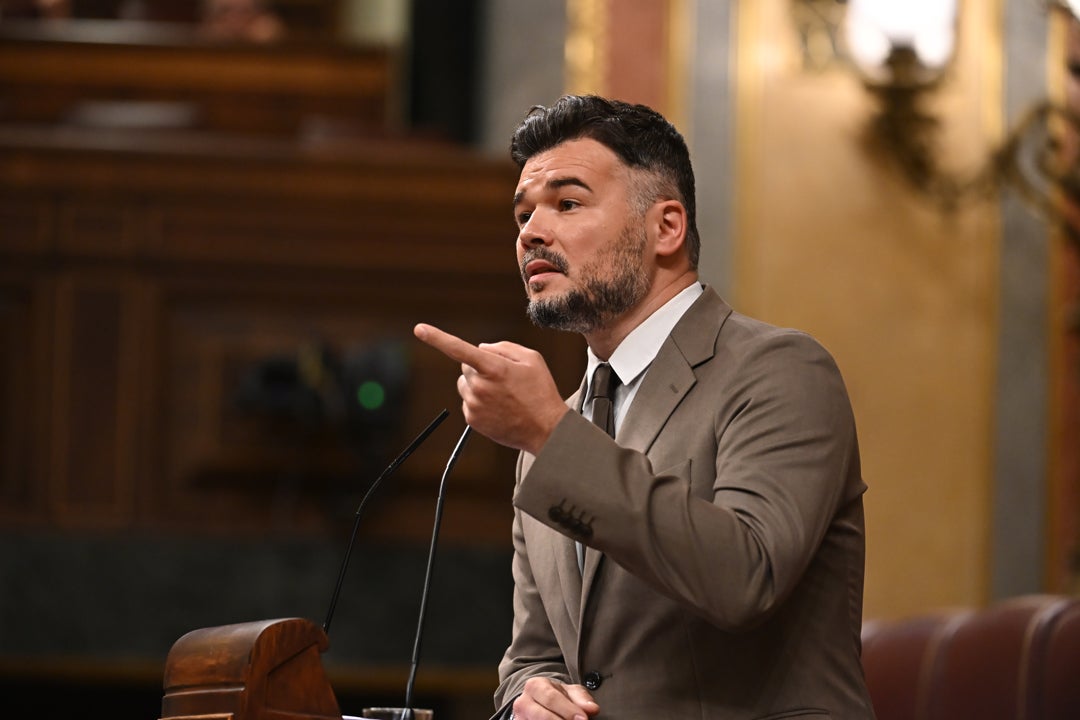
Más de uno
Tertulia: ¿Puede Gabriel Rufián liderar la izquierda española?
01:10:12
Pilar Velasco, David Jiménez Torres, Pilar Gómez, Marta García Aller y Rubén Amón analizan la actualidad política.
Loading summary
Transcript308 lines
- [00:07]
A
Aquí estamos estrenando una nueva jornada, un nuevo día que se llama martes 10 de febrero del año 26. Y a esta hora, como siempre, echamos un vistazo a la prensa. Hoy la pregunta del día en los diarios es qué es exactamente lo que ha hecho Feijóo con Vox o por qué. Donde el diario El Mundo ve a Feijóo retando a Vox, La Vanguardia le ve tendiendo la mano y La Razón le ve poniéndolo la alfombra. Son tres títulos para un mismo asunto. El Mundo Feijóo reta a Vox a compartir gobiernos. La Vanguardia Feijóo tiende la mano a Vox para acelerar acuerdos. La Razón El PP tiende la alfombra a Vox para alcanzar un acuerdo de gobierno. La respuesta de Vox a esta alfombra. La alfombra es lo que ensanche sería humillarse ante el socio que chantajea. Feijóo tiende la alfombra. La respuesta de Vox es esta, que también destaca La Razón Abascal mete a Guardiola en un callejón sin salida. Le dice que o acepta sus condiciones o hay repetición electoral. Corría el mes de julio del año pasado cuando Miguel Tellado, número 2 de Feijóo, compareció en este programa para anunciar a los españoles que bajo ninguna circunstancia el PP gobernaría en coalición con Vox. Gobernaría España. Porque hasta ahí podíamos llegar. Acuerdos con Vox sí, pero acuerdos con Vox sí, por supuesto, pero Vox en el Gobierno no.
- [01:26]
B
Y creemos que Vox en el Gobierno no.
- [01:29]
A
Esto es acuerdo sí, pero Vox en el Gobierno de España no. Palabra de Miguel Tellado, que es palabra de Núñez Feijóo. Palabra. Parole. Parole.
- [01:37]
B
Palabra.
- [01:38]
A
SIETE meses DESPUÉS Que si la alfombra para gobernar juntos Extremadura, Aragón, Castilla y León y lo que vaya llegando se entiende ya que incluida España o esa es la interpretación que hacen hoy muchos diarios. Al final Feijóo se ha resignado a que también España necesitará un gobierno de coalición si es que él quiere encabezar ese gobierno. Varios de los periódicos en los que Feijólio con mayor interés creo, instan hoy al PP a dejarse ya de vaivenes y asumir que está condenado a gobernar con Santiago Abascal. No son los dirigentes políticos los únicos que cambian de opinión. También a veces los diarios pueden modificar sus posiciones. Editorial del Mundo El PP lleva dos años instalado en la ficción de que podría gobernar en solitario. Ha sufrido un baño de realidad está obligado a una claridad estratégica que lleva demasiado tiempo esquivando. Editorial de La Razón. El PP y Vox están obligados a escuchar a los votantes, negociar y acordar. Están condenados a entenderse. Editorial del diario ABC, que parece calcado el de La Razón. Dice condenados a entenderse. No hacerlo sería defraudar a quienes les han votado. El PP ha abierto los ojos y ha asumido este nuevo equilibrio. Añado que lo ha asumido sin esperar a Castilla y León, sin esperar a Andalucía, sin esperar ya nada, dice. Dos escaños abajo en Aragón y todo cambió en el diagnóstico de Génova 13. Editorial del Españ génova extrae las lecciones correctas porque la mayoría social desea que las fuerzas de la derecha se entiendan, pero el PP debe mantener su identidad y mantenerse pactando con Vox en la centralidad. Y dos huevos duros. Mantenerte en la centralidad gobernando con la extrema derecha viene a ser como ver a Sánchez centrado mientras gobierna con su mar con Esquerra, con. Con Bild. Centrémonos, centrémonos todos. Parecería leyendo hoy algunos diarios que era el PP quien se resistía hasta ahora a gobernar con Vox. Pero en rigor es que viene siendo al revés. El PP ya ha gobernado con Vox y en este momento es Vox quien se resiste a gobernar con el PP. Viñeta de Paridis Hoy en el diario El País. Abascal, vestido de domador, látigo en mano, exhibe el aro por el que hará pasar a Núñez Feijó que instalado en una nube, pues se dispone ya a pasar por Escoge en su crónica Elisa García de Blas en El País el verbo forzar. El PP quiere forzar a Vox a entrar en sus gobiernos con consejerías fuertes para que así se desgaste. Azcón le ofrecerá Sanidad o Asuntos sociales. Tranquiliza mucho. A punto que se ofrezcan consejerías de las más sensibles a otro partido, no por su conocimiento de la materia, sino para que sufra gestionando esas consejerías. Añade la crónica de Elisa. Pero otra cosa es que Vox quiera ese regalo envenenado. Claro usted que Abascal es tonto. El Confidencial interpreta que el PP encara las elecciones de Castilla y León en estado de alerta. Dirigentes desolados, dice, dan por hecho que a Mañueco no le va a ir bien. Aunque Mañueco anoche lanzó en la brújula este mensaje que electoralmente yo creo que es imbatible. El mensaje en solitario se gobierna mejor.
- [04:32]
B
He presidido un gobierno en solitario, ha funcionado mejor, ha sido más eficaz y.
- [04:37]
C
Hemos conseguido muchas más cosas para las.
- [04:39]
B
Personas de Castilla y León aún en minoría. Sí, sí.
- [04:42]
A
¿Como resistirse a un mensaje electoral como este del Sr. Franueco? Bueno, hay más de resaca electoral sobre Pedro Sánchez, ese líder de partido que en campaña estaba interesadísimo en el voto de los aragoneses y que ahora que ya han votado actúa como si no le importara lo más mínimo. Dice el diario El País que Sánchez evita la autocrítica. Es la no noticia o como dice La Vanguardia, que el PSOE minimiza su derrota y achaca el fracaso al PP. Achacar tu fracaso a tu adversario es una forma de aplaudirle por su eficacia en minimizarte. Por cierto, la notable aportación que ayer hizo la señora Mínguez, portavoz de la ejecutiva del PSOE, sobre Abascal como líder de los gremlins no encuentra mucho eco en los diarios.
- [05:29]
D
Ya lo siento, se multiplica. Como los Gremlins. El Sr. Feijó le ha dejado mojado Y es que a partir de las 12 de la noche no se tiene que dar de comer a los ultras.
- [05:39]
A
Premio al título demoledor para este del diario La Razón que dice Moncloa se jacta de cumplir con su plan mientras el PSOE se queda en los huesos. A una señora que ayer vio a Pedro Sánchez en Cueto Hortajar le pareció necesario, por cierto, animar al presidente a que coma más.
- [05:59]
D
Contigo.
- [06:00]
A
Fuerza, fuerza, fuerza. Era un acto controlado en territorio afín, dice El Independiente esta mañana. Federaciones del PSOE piden reflexión y autocrítica tras el desplome en Aragón Ferraz vive en otro planeta Jordi Sevilla firma una tribuna hoy en El Confidencial que empieza con esta pregunta dirigida a Pedro Sá ¿Cuántas derrotas electorales más necesitas porque tienen confianza o la tuvieron? ¿Cuántas derrotas electorales más necesitas, Pedro, para aceptar que es imprescindible un cambio de rumbo para el PSOE? ¿De verdad crees que las sucesivas derrotas en autonómicas garantizarán la victoria en generales por el temor a la extrema derecha? La verdad es que juntando todo lo que cuentan hoy los diarios lo que nos sale es que el PP está deseando que Vox gobierne con ellos para desgastarlo y el PSOE está deseando que Vox gobierne con el PP para que la gente se asuste. Siendo así, ya solo falta que Vox también esté deseando gobernar para que nos gobierne. Premio al título para iniciados y gente se suda en general. Para este del diario La Vanguardia que Aragón deja una España proeuropea que puede ser controlada por Vox. Leo a Enric las elecciones en Aragón tenían que haber reforzado al PP como futuro interlocutor gubernamental con los centros de poder internacionales y sin embargo, lo han debilitado. Alemania propone una Europa a dos velocidades y España tendrá que pronunciarse al respecto. Para completar o compensarnos esta visión de alto vuelo, me voy a la página 10 del mundo, donde Candela Ibáñez habla con unos paisanos del pueblo de Moscardón, provincia de Teruel, que le explican que han votado a Vox por la caza porque están hartos de los otros partidos, porque Abascal se dejó caer por allí en campaña electoral y porque tiene buen porte. Porque Abascal tiene buen porte. Que se enteren en Alemania.
- [07:59]
E
Más de uno. Onda Cero.
- [08:04]
D
Carlos Alsina.
- [08:06]
A
Hacer fácil lo difícil hasta convertirlo en sencillo es un arte. Una hortaliza fresca y bien formada con sabor auténtico no surge de la nada cuando vas a hacer la compra. Detrás hay tierra, hay cuidado, hay personas, hay técnica, hay estudio. Eso son las patatas, los puerros, las zanahorias de Somos Hijolusa. El secreto de lo sencillo es que no es sencillo. Una zanahoria o una patata y ya.
- [08:27]
E
No, no. Meses de trabajo, siembra, selección.
- [08:30]
A
Pero parece tan fácil.
- [08:31]
D
Ese es el secreto.
- [08:32]
A
Somos Hijolusa. El secreto de lo sencillo es que no es sencil. Entre tanta vorágine informativa, es un buen momento para buscar la calma y que no pase nada. Es tiempo de ventanas cortizo.
- [08:54]
E
¿Sabes qué pasa cuando el camión de la basura irrumpe en tu calle cada.
- [08:57]
D
Madrugada para despertarte sin piedad con el insoportable ruido de ese motor revolucionado en la puerta de tu casa? Con Ventanas Cortizo no pasa nada. Localiza tu tienda más cercana en ventanascortizo.
- [09:08]
E
Com y disfruta del silencio de tu hogar.
- [09:10]
D
Ventanas Cortizo, no pasa nada.
- [09:21]
A
Aquí está el gallo, la torre. Como cada mañana a esta hora. Buenos días, Rafa.
- [09:25]
C
Buenos días, Carlos Alsina. Te iba a decir que hasta ahora Pedro Sánchez todavía no se ha pronunciado sobre el resultado del PSOE en Aragón, pero es que a esta hora aún no lo ha hecho del de Extremadura. ¿Cuál es la razón? Pues que quizás no se sienta concernido. No hay mayor señal de decadencia de una organización política que el que sus dirigentes se dediquen a liquidar poder real para procurarse poder orgánico. Y la Operación Alegría es un ejemplo perfecto de esa clase de transacción. Alegría se quedará para controlar la Federación Socialista Aragonesa después de haberle procurado el peor resultado de su historia. Poder real a cambio de poder orgánico. Hay que saber distinguir entre lo que es un desafío y y lo que es un problema. El PP tiene un desafío, que es cómo integrar a una fuerza populista que aspira a sustituirlo y cómo frenar la emergencia de una fuerza antiinmigración y cada vez más antiliberal cuando el clima mundial favorece su crecimiento. Eso es un desafío. Y un problema es lo del PSOE, que en cada elección se aleja más del gobierno hasta el punto de competir antes con Vox por conservar el segundo lugar que con el PP por ganar las elecciones.
- [10:31]
B
Eso es un problema.
- [10:32]
C
Y además está arrastrando a toda la izquierda en su caída. ¿Cómo será la cosa que hasta Rufián se propone como solución? Ala. Buen programa.
- [10:42]
A
Lo mismo para ti, Rafa. Que tengas buen programa. A partir de las 7, la brújula en Onda Cero. Gracias por madrugar con nosotros.
- [10:48]
C
Es mi trabajo.
- [10:55]
A
Muchos hemos madrugado. Nuestros ahorros no deberían estar durmiendo. Para evitarlo, Borja, está Bestinver, que son.
- [11:01]
F
Los expertos en inversión en renta variable, renta fija y alternativos. Invertir y operar con Bestinver es sencillo. A través de su app móvil, por teléfono, con su equipo de especialistas o en una oficina de Bestinver. Los ahorros de 50 mil personas ya no duermen y se invierten gracias a Bestinver. Infórmese en Bestinver Es.
- [11:24]
D
Más de uno en Onda Cero.
- [11:44]
A
Desde este momento, aquí, en la radio, en la radio que se escucha, la radio que influye, la radio que gusta, la radio que entretiene, la radio que crece, la radio está Pilar Velasco. Buenos días.
- [11:53]
D
Muy buenos días. Alsina.
- [11:56]
A
Buenos días. Pilar Gómez.
- [11:57]
E
Hola, buenos días.
- [11:59]
A
¿Qué tal?
- [11:59]
D
Muy bien.
- [12:00]
A
Me alegro muchísimo. Buenos días. David Jiménez Torre.
- [12:04]
B
Buenos días, Carlos.
- [12:07]
A
No, es que últimamente me equivoco mucho.
- [12:08]
E
Con los nombres, ya no solo con la hora.
- [12:11]
A
Gracias, Pilar. No, porque a Elsa García le he llamado Elisa. No me habéis dicho nada ninguno de vosotros. Me lo ha tenido que decir la audiencia. Buenos días. Marta García. Ayer igual es que no me estabais atendiendo.
- [12:22]
D
Buenos días.
- [12:24]
A
Buenos días, Marta, ¿Qué tal? Muy bien, gracias.
- [12:26]
G
Me alegro tanto.
- [12:27]
A
Ayer, fíjate Pilar Gómez, que me equivoqué. Con lo que no me había equivocado todavía nunca es con los cumpleaños. Ayer felicité a los oyentes que cumple años el 9 de marzo en lugar del 9 de febrero. ¿Qué tal, Amón?
- [12:38]
F
Ya están felicitados los despachando el género.
- [12:43]
B
¿Y tú? Tú ahí.
- [12:45]
A
¿Y qué quieres que hagamos? Como una pausa y un recibimiento especial mínimo.
- [12:49]
F
El mismo tratamiento que a los demás.
- [12:51]
E
Lo de tu libro ya pasa, el.
- [12:53]
A
Mismo tratamiento te estoy dando. Bueno, a ver, mira, ya que nos lo ha dejado ahí votando el gallo la Torre en la figura de Gabriel Rufián. Gabriel Rufián, ya sabéis que ayer publicó al rebufo del batacazo de las izquierdas, bueno, de las izquierdas, no todas, sobre todo el PSOE de Podemos, Izquierda Unida consiguió un escaño, que tampoco es gran cosa, pero el chuntaragonesista, que de derechas no es, entiéndeme, pues ha duplicado su representación parlamentaria, o sea que no todas a la izquierda. Pero no, que ayer publicó Rufián este mensaje, Twitter lo que sea, en el que si no sería bueno pensar en algo diferente a todo lo que hemos hecho hasta ahora para evitar lo que se viene encima, que es la ola de las derechas. Bueno, esto digo, si queréis empezamos por ahí porque hay una noticia que ha difundido esta mañana el Diario del País que dice que Izquierda Unida, Sumar, Más Madrid y los comunes, o sea, en común, lanzarán su alianza de las izquierdas el próximo día 21 de febrero en un acto en el Círculo de Bellas Artes de Madrid. Izquierda Unida, no está Podemos, ¿Vale? Izquierda Unida, esta es la noticia. Izquierda Unida, Sumar Más Madrid, o sea que Sumar, lo que fue Sumar, pero sin podemos el día 21 en Madrid, entiendo que lo que presentará es que se ha cambiado de nombre y con.
- [14:12]
E
Yolanda o sin Yolanda Díaz, esto aún.
- [14:13]
A
No se sabe si es la candidata.
- [14:16]
D
O no es la candidata. Yolanda Díaz.
- [14:18]
E
A mí me suena que era así.
- [14:19]
D
Información sin Yolanda Díaz como candidata, No, sin Yolanda Díaz. Lo que se sabe hasta ahora, porque lo ha difundido también fuentes de Sumar, es que es complejo esto con tanto frente, muy complejo.
- [14:30]
A
Sumar se va a llamar la alianza de las izquierdas.
- [14:32]
D
Mi pregunta esta mañana era ¿En qué se diferencia el movimiento de Gabriel Rufián con el diputado de Más? El acto que van a hacer, no sé si es el día 18 de este acto que sí es oficial, que sí tiene a las organizaciones y que parece un preacuerdo o un acuerdo entre Sumar Madrid, los Comunes e Izquierda Unida. Las cuatro organizaciones acuerdan que tienen que empezar a crear ese artefacto nuevo para las siguientes elecciones generales. Esto está bien visto electoral.
- [15:05]
A
¿Por qué dices que no está Yolanda Díaz?
- [15:07]
D
Porque Yolanda Díaz Fuentes de Sumar, parece que no va a ir directamente al acto por diferenciarlo con el gobierno, por separar gobierno y organizaciones. Entonces si va a estar manejando, iba.
- [15:18]
A
A estar en el movimiento este nuevo como se llame, que es el mismo que había.
- [15:22]
D
Parece que no va a estar en el acto del 21 de febrero y que son las cuatro organizaciones las que han acordado empezar a crear ese. Bueno, sí, lo llamo artefacto porque Movimiento, Artefacto electoral, pero no lo digo bien.
- [15:37]
G
Plataforma, check.
- [15:39]
D
Movimiento Próximas Generales. Movimiento próximas generales.
- [15:42]
A
¿Qué se diferencia la candidatura de Sumar, que a día de hoy incluye las marcas de Izquierda Unida, Más Madrid en Común y el movimiento Sumar de este nuevo artefacto en el que estarán Izquierda Unida, Más Madrid en Común y el movimiento Sumar?
- [15:58]
G
Pues en que no está Yolanda Díaz, pues la vamos dejando un poquito de lado porque.
- [16:05]
D
No, no, la diferencia es que hay.
- [16:07]
E
Dudas sobre que sea la candidata.
- [16:08]
D
La diferencia es que ya es oficial que empiezan a trabajar en la siguiente candidat electoral. Las marcas de izquierdas a la izquierda del PSOE están un poquito desarmadas en el Congreso. Recordar que entraron ocho partidos en Sumar en el movimiento Plurinacional y son seis. Se fueron los Comunes, se fueron partes de los Comunes, se fue Podemos al grupo Mixto y efectivamente se llama descomposición.
- [16:30]
A
Se llama balkanización, orden que saco la maza.
- [16:33]
G
Una palabra nueva que leo en la crónica del País que es Precoalición.
- [16:37]
E
Ah, precoalición.
- [16:38]
G
Precoalición es muy buena también.
- [16:42]
E
Pero a mí me gusta también la marca blanca nueva de Rufián. Porque si damos por bueno que la que ha dicho El País que se presenta el día 21 es la precoalición o el artefacto Precoaliciones.
- [16:54]
A
Mal nombre, porque original suena a precuela y es más bien. Ni siquiera es una secuela. Es lo mismo con otro nombre.
- [17:05]
E
Pero la marca blanca que es la de Rufián. Emilio de Más Madrid, no recuerdo el apellido Perdón, es que no recuerdo.
- [17:11]
D
Emilio Delgado. Emilio Delgado.
- [17:14]
B
Solo falta Fofó Emilio Delgado.
- [17:17]
E
Esta parte que además que van a.
- [17:19]
A
Verse también, perdonad mi ignorancia, pero ¿Quién es Emilio Delgado?
- [17:25]
D
Un diputado de Más Madrid de la formación Mónica García, ministra de Sanidad.
- [17:31]
F
Como lo estáis contando, Arrasan.
- [17:33]
A
Que me perdone Emilio, pero yo he dicho Emilio.
- [17:36]
E
¿Ves?
- [17:36]
D
Y tú peor que yo.
- [17:37]
E
Entonces la marca blanca esta. Yo por ahora lo que sé es que tienen cuatro hombres que también ya me parece demoledor, ¿No?
- [17:45]
D
Efectivamente.
- [17:47]
E
Van voy a hacer una coalición y dicen vamos a irnos.
- [17:52]
A
La coalición es de Gabriel y Emilio, ¿No?
- [17:54]
E
Y un señor de Bildu. Y un señor de Bildu que tampoco recuerdo el nombre. Pilar. ¿Se lo sabe un señor de Bildu?
- [18:01]
D
No, es de Matutes.
- [18:03]
G
Matute.
- [18:04]
D
Pilar Gó. A ver, yo he preguntado también si se había adelantado una novela de Miguel Miura, si se había adelantado este movimiento de presentar las cuatro formaciones para las generales por lo que había la propuesta de Gabriel Rufián con Emilio Delgado que ha generado mucha confusión en las organizaciones. Recordar ayer que salieron en cascada, salió Mónica García diciendo que no le gustaba mucho, salió Bildu Otegui diciendo que Junqueras tiene mucho malestar porque si Gabriel Rufián persiste en montar esta coalición entonces no pintará nada en Esquerra Republicana. Pinta poco, pero es decir, no es compatible si tú quieres montar un movimiento nacional o con las izquierdas no es compatible o plurinacional no es compatible con Esquerra que se va a presentar solo a las elecciones. Yo creo que sí, que se ha adelantado este movimiento y que genera confusión la diferencia. ¿Nombrabas a Podemos en la idea de Rufián? Sí estaría. Podemos ha dicho alguna vez que Irene Montero podía ser la única mujer que queda además en estas marcas o que ha dicho que está dispuesta a liderar esa coalición y esto que se presenta con su mar Yone Belarra, pero ha sido Rufián, más Rufián ha señalado más a Irene Montero. Pero bueno, en cualquier caso lo de rufián es plurinacional con Bildu, con Esque, con Izquierda Unida no pinta que vaya a salir. Y esto que se produce el 21 de febrero, pues es más oficial. A saber cómo acaba.
- [19:34]
F
El heraldo del nacionalismo catalán se sacrifique por un proyecto patriótico que nos salva de la extrema derecha.
- [19:40]
B
Es que es extraordinario y sobre todo cuando precisamente si hay un momento en el que Vox empieza a crecer es a raíz de La crisis de 2017, impulsada y avalada, entre otros, por Gabriel Rufián. La gente que ayudó a provocar la reacción españolista que dio pie al auge de Vox es la gente que ahora nos dice que va a frenar a la extrema derecha.
- [20:00]
G
Gabriel Rufián quiera arreglar el país del que se quería separar. Tiene también. Pero a mí me parece que forma parte de esta anomalía permanente en la que vivimos. Porque veamos también en Cataluña cómo hay un trasvase de votos entre Alianza Catalana, que son profundamente independentistas y racistas, y Vox, que efectivamente es el partido que crece cuando surge el procés. Entonces hay gente que está dispuesta a votar a uno o a otro, a Vox o Alianza sobre todo.
- [20:28]
E
Hay gente que lo tienen el pelo todo el rato.
- [20:30]
G
Yo que sé, a lo mejor.
- [20:31]
B
Bueno, demuestra hasta qué punto el tema de la inmigración moviliza mucho más que.
- [20:35]
E
Temas de votan en las generales a Vox y en Cataluña Alianza Catalana, que.
- [20:40]
G
Por eso todo el rato, no sé.
- [20:43]
E
Pues a lo mejor. Y en Extremadura. De cómo está la izquierda, Es decir, la Chunta es la única que se ha salvado porque tiene un proyecto totalmente diferente y regionalista que no tiene nada que ver. Viendo cómo está la izquierda, lo que proponen ahora vamos a hacer una coalición de cuatro, Antes eran de cinco, porque ya podemos no estar. Una precoalición. Perdón, pero es que a la vez que me hago una precoalición ya tengo otros señores que deberían estar en esta coalición que están creando otra cosa que debe ser la precoalición de la precoalición. Entonces, ¿Es con esta división realmente dónde piensan ir?
- [21:18]
G
Es lo más clásico de la izquierda. Tampoco.
- [21:23]
E
¿Alguien podría ponerse a pensar, pero Rufián.
- [21:26]
A
A quién tiene detrás?
- [21:27]
F
A Rufián No tiene ni Esquerra, que es lo sorprendente.
- [21:32]
A
¿Algo más? Tendrá mucha gente que le sigue en un buen entendimiento, una parte de su mar sondeado.
- [21:44]
F
Lara Hernández, que estuvo aquí, era partidaria de la iniciativa de Rufián.
- [21:49]
D
Sí, pero más como abrir debate que como. Claro. Lo que tiene sobre todo Rufián son apoyos. Más que organizaciones oficiales dispuestas a que él lidere esa posible.
- [22:02]
A
Tiene apoyos en el PSOE, por plantearlo ya abiertamente. Detrás de esta operación está el PSOE, que se ha dado cuenta de que su socio Sumar está amortizado, que no vende ya un colín, que no tiene falta refundar, no sólo cambiándole el nombre a Sumar para que ahora se llame Alianza de las izquierdas, sino cambiar de líder, de candidato, pero para sujetarse en.
- [22:21]
F
Una muleta que tenga más prosperidad de.
- [22:22]
A
Lo que hay ahora para tener con quién pactar.
- [22:25]
D
¿La clave ahora es votable en Extremadura?
- [22:28]
A
Esta es la pregunta a la que.
- [22:29]
D
No me habéis respondido como líder a.
- [22:32]
A
Liderar la coalición política detrás de lo de Rufiano, ¿No? Esto es la clave.
- [22:35]
E
Si, la posibilidad de que decían que sí. Yo no sé si eran rumores malintencionados que estaban reuniéndose con el ministro Bolaños. Acordaros esas fotos que era luego un café. Yo esto no.
- [22:44]
A
Si Rufián ha dejado de ser.
- [22:46]
D
Llevan caminos separados, aunque Esquerra haga la coalición.
- [22:50]
A
Si Rufián ha dejado de ser independentista, pues también está en su derecho a cambiar de opinión. Que lo diga, tampoco pasa nada.
- [22:55]
D
Y aclarar qué agenda pone por delante.
- [22:57]
A
He mirado la prensa independentista, bueno, los diarios que están así en la órbita independentista. ¿Que decían hoy sobre Rufián? La palabra que más se lee en las crónicas es personal, Proyecto personal, proyecto individual, proyecto propio, partido de autor, pensando.
- [23:11]
F
En lo suyo unilateral.
- [23:13]
A
Y lo que más se destaca es que Esquerra le ha dicho que si quiere ser el candidato de Esquerra en las generales, ahí tiene la posibilidad, está por supuesto invitado a serlo. Otra cosa no. Otra cosa no, porque claro, en Esquerra están diciendo algo que es muy coherente, que es nosotros somos un partido independentista y catalán que lo que quiere es que Cataluña se separe de España. Nosotros si en España gana la ultraderecha, pues más razón para irnos. Pero no queremos otra cosa que eso. Y somos un partido que no se presenta con nadie más. Y se le recuerdan dos cosas hoy a Rufián en las crónicas de la prensa independentista o de la órbita. Digamos por ejemplo que no asistió el sábado a la manifestación por el mal servicio de cercanías que se celebró en Barcelona. La verdad es que Rufián tampoco reside en Cataluña ya desde hace tiempo. Digo que igual, igual es que ya para. No sé quién lo contó el otro día, que Rufián reside en el País Vasco, me parece, porque cambió también de vida personal y de familia y ya está, cada uno vive donde quiera. Y se le recuerda también que pudiendo hablar catalán en el Congreso, que es una de las novedades de esta legislatura, gracias a la exigencia independentista se habilitó la posibilidad hablar en catalán en el Congreso todo el tiempo. Y para eso hay intérpretes que Rufián, sin embargo, siempre elige hablar en español. De vez en cuando dice alguna frase en catalán pero él utiliza el español como idioma habitual y esto parece que muy en consonancia con la doctrina independentista y de Esquerra Republicana, pues tampoco está.
- [24:43]
D
Lo que sí es consciente Esquerra Republicana, con todo el malestar que tiene Junqueras con si Rufián sigue por este camino, no va a tener sitio seguramente en las listas de Esquerra porque no se puede estar con los partidos de Madrid y con Esquerra Republicana. Pero lo que sí tienen claro es que tampoco andan sobrados de liderazgos y que Rufián sí ha conectado con saber desarmar el discurso de la extrema derecha y conectar con una agenda social que la izquierda, como hemos visto en la campaña de Aragón y vimos en la campaña de Extremadura, le está costando conectar. Y eso sí que es una tensión en Esquerra Republicana, porque tú puedes quitar a Rufián, pero es que tampoco, como digo, están boyantes ni Esquerra ni la izquierda de voces que puedan imponerse ahora mismo con discurso social y que conecte con el malestar.
- [25:30]
B
Yo solo apuntaré que si la posibilidad de que Sánchez se mantenga en el poder depende del éxito de esta operación, es que los estrategas de Moncloa están en la fase de clarividencia estratégica de Hitler en el búnker, o sea, de imaginar ejércitos que no existen. Entonces aparecerá Rufián con su ejército, haremos un movimiento de pinza y los destrozaremos. Porque esta idea de que Rufián desarticula el discurso de Vox, bueno, no habrá sido en Aragón, no habrá sido en Extremadura, no será en todas las encuestas que demuestran que por supuesto, Vox va a sacar muchísimos más votos de los que va a sacar cualquiera de los partidos de la extrema izquierda.
- [26:08]
D
Fíjate que he dicho el discurso, me quejan en el discurso, no en lo electoral.
- [26:15]
B
¿Qué significa desarticular un discurso si luego la gente sigue votando ese discurso?
- [26:19]
A
Pero yo creo, David, que la cosa no es tan profunda ni va tan lejos. Yo creo que tienen unas encuestas que además el CIS ya se ocupa de hacerlas, que preguntan por líderes de izquierdas, preguntan, dan nombres a ver qué sale, y lo que sale es que la mayoría de los que aparecen en la encuesta no les conoce nadie o no le interesan a nadie. Y notoriedad tiene Rufián igual por las intervenciones que hace en el Congreso, por lo que sea, su manejo de las redes sociales. ¿Quién tiene notoriedad en ese ámbito de la izquierda en la que cabe todo? La izquierda independentista, la izquierda estatal, la izquierda confederal, la izquierda. Lo que sea con tal de que se llame izquierda. Pues ahí Rufián es el que sale, digamos. Tiene más conocimiento, más popularidad o más posible apoyo que una Yolanda Díaz a la que ya dan por amortizada.
- [27:08]
B
Pero esto es lo de que la historia se repite dos veces. Una como tragedia y otra como farsa.
- [27:12]
F
Creo que no va a tragedia el perfil de Rufián. Está su relación ambigua con Sánchez. Me refiero a que de vez en cuando le arrea, pero no lo suficiente como para parecer que hay una crisis. Esa posición que Yolanda Díaz ha dejado de asumir precisamente por estar involucrada totalmente en el Ejecutivo. Y Rufián desempeña un papel ahí mucho más arriba.
- [27:30]
E
Y tiene mejor relación con Sánchez y con Junqueras.
- [27:36]
A
Pero en unas elecciones generales yo creo que su principal hándicap es su condición de independentista. Que no consta que haya dejado de serlo. Claro. ¿Cómo te vas a pedir el voto de las izquierdas en Jaén diciendo que a la vez yo lo que quiero es que Cataluña se vaya de España con el PIB de Cataluña?
- [27:53]
D
Porque está imponiendo. Claro, pero eso será preguntas. Obligándole a que lo aclare. Porque ahora mismo está imponiendo un discurso social. Es el único que le ha dicho.
- [28:01]
A
Al gobierno la crisis de la vivienda.
- [28:03]
D
Se lo lleva por delante.
- [28:04]
A
Claro, pero porque los partidos independentistas han dejado de hablar de la independencia en sus discursos. Es que rufián. ¿Cuánto tiempo hace que en el Congreso de los Diputados no escuchamos a Rufián recordarnos a todos que lo más urgente era dar la posibilidad a los catalanes de que decidan irse de Cataluña?
- [28:18]
D
Y ahora están en que lo más urgente es el acceso a la vivienda y el frenar a la extrema derecha. Que entiendo que sea un discurso de Esquerra Republicana. Bien que hayan Cataluña, bien que hayan dejado la gente.
- [28:28]
A
El discurso principal de Esquerra Republicana, como ayer recordó la portavoz de Esquerra Republicana Cataluña, es la independencia de Cataluña. Esto sigue siendo lo prioritario, no la vivienda de los ciudadanos de Granada.
- [28:40]
D
Cuando hablan de tampoco porque están haciendo gobierno con el PSC, es que Rapolla, si hay presupuestos será gracias a Esquerra Republicana. Y los presupuestos de Salvadorilla no son presupuestos de agenda independentista. Quiere decir que Esquerra también vive en sus contradicciones, Salvador.
- [28:55]
A
Y ya no es independentista.
- [28:57]
D
Hay que recordárselo a Esquerra.
- [28:58]
A
Si Esquerra lo que tiene que explicarnos algún día todos es por qué a Sánchez no le ha exigido todavía el referéndum de autodeterminación.
- [29:03]
B
También nos puede explicar por qué ser.
- [29:05]
A
Separado cuando más mano tiene para conseguir las cosas.
- [29:08]
F
Esa es buena.
- [29:08]
A
Sí, esa también.
- [29:11]
B
Dentro de toda esta contradicción en la que vive la política española, en la que hemos asumido que izquierda y nacionalismo no son incompatibles, que son perfectamente compatibles, que el deseo de extranjerizar a la mayoría de la población en una parte del territorio nacional es una agenda progresista, dentro de esas contradicciones cada cual elige la suya.
- [29:31]
A
Que vamos a hacer una pausa porque hemos generado muchísima confusión a la audiencia que ya no sabe cuánto sumar. Hay ¿Cuántas alturas izquierdas va a haber?
- [29:39]
E
Dos. Dos.
- [29:40]
A
Y entonces Izquierda Unidad, ¿Dónde estás?
- [29:41]
E
Y en lo de Izquierda Unida y lo del 21. Por eso es raro que pueda sumar otra vez la precoalición.
- [29:50]
A
Sumar dos.
- [29:51]
F
Pero es increíble la contradicción que existe entre las denominaciones de los partidos y la realidad. Sumar Izquierda Unida, Frente Amplio.
- [29:59]
E
Pero además Izquierda Unida es el único de todos que sigue teniendo una implantación territorial y que aunque parezca raro y que puede todavía construir algo. Entonces no entiendo por qué Rufián va con los otros. Es que me he perdido. Y hablamos nosotros porque ya también me he perdido. Yo solo tengo catalogados a Rufián y a Emilio.
- [30:19]
D
La Izquierda Unida se levantó Podemos. Efectivamente.
- [30:21]
G
La estructura de Rufián es básicamente Instagram. Es Instagram, son las redes, el hype, como se dice ahora. No me mires así, Carlos.
- [30:31]
A
Seguro que se puede decir de forma que se entienda.
- [30:35]
G
El globo que se está inflando con respecto fama de Rufián, sobre todo entre los jóvenes, que es otro de los puntos débiles que tiene el bipartidismo, tanto el PP como el PSOE. Es que Rufián cae bien. Cae bien a jóvenes incluso de Vox, que le ríen las gracias y que les cae bien. Sorprendentemente ha conseguido esa tecla.
- [30:56]
E
Todo muy alentador. Presentamos un candidato y un nuevo partido. Porque cae bien, porque se le entiende.
- [31:04]
D
Yo ahí le pongo alguna que otra.
- [31:05]
G
No sé si es un discurso claro, porque está lleno de incoherencias. Simpleza de las redes. Sí está funcionando.
- [31:10]
B
Yo creo que por cada persona a la que Rufián le cae bien, hay cuatro a las que le cae muy mal. Y les iba cayendo muy mal desde hace muchos años.
- [31:16]
G
Jóvenes, David, que son la clave de este movimiento. Vamos a poner en perspectiva que del procés hace ya una década. Y los jóvenes también de extrema derecha, a los que Rufián cae bien, ni siquiera recuerdan el procés. Esto es algo que está cambiando también la perspectiva. Todos recordamos al rufián de las 155 monedas, pero los jóvenes no. Entonces eso que a ti te parece muy obvio, a la gente de 18 años, que ya está. No digo que sea una buena estrategia, digo que está detrás porque nos parece marciano que de repente Rufián aparezca aquí como la esperanza de la izquierda. ¿Y esto puede ayudar, pero de qué izquierda?
- [31:52]
E
Ese es el problema. Si puede ser un buen candidato. Oye, me gusta Rufián, pero es que hay dos candidaturas. Solo un síntoma más.
- [32:01]
D
Conexión con las organizaciones. ¿Os acordáis del pacto de los botellines de Garzón y Pablo Iglesias? Lo que le han dicho ahora los mayores a Rufián. A nosotros no nos vengas con botellines. Aquí No hay coalición.
- [32:11]
E
¿Los mayores quiénes son? Mónica García, Yolanda Díaz. Los mayores son.
- [32:17]
D
Los jóvenes.
- [32:19]
G
De la desesperación que hay a la izquierda de la izquierda.
- [32:22]
E
Emilio es de los jóvenes.
- [32:23]
G
Es el síntoma de la desesperación.
- [32:26]
A
Pues ya llevemos la broma hasta el final. Y que a Rufián le vaya tan bien, tan bien en unas elecciones generales que se ha investido presidente del Gobierno de España y luego ya se independiza. Sería maravilla la broma.
- [32:38]
D
España merece eso.
- [32:39]
A
Bueno, una pausa ahora mismo continuamos. Que todavía no me habéis dicho nada de qué es lo que Feijóo está haciendo con Vox. Si ponerle la alfombra, desafiarle a que gobierne con nosotros, que esto es una novedad interesante. Te desafío, Abascal, a que entres en nuestros gobiernos. Es Abascal el que dice si entra o no entra.
- [33:01]
E
Más de parte 1 onda cero, carlos alsina.
- [33:24]
A
Ocho y 11 minutos en las islas Canarias en tertulia muy confusa esta mañana con Pilar Velasco. Con Pilar Gómez, David Jiménez Torres, Marta García Ayer y Rubén Amón. Muy confusa porque me habéis puesto por delante. Yo tenía un programa perfectamente organizado, una tertulia bien diseñada, planificada, en la que primero íbamos a hablar de esto, del PPI box y luego ya del PSOE y los gremlins y eso. Y sin embargo planteaba estos nombres que son muy conocidos. Y no sé qué pasa con las izquierdas. Bueno, las izquierdas en Aragón, salvo Chunta Aragonista, Podemos no tuvo ninguna representación. Tuvo tan pocos votos que no tiene escaños Izquierda Unida tiene un escaño de 67. El peso que tiene es estas marcas políticas en las elecciones que hasta ahora se han celebrado, que son Extremadura y Aragón. Es verdad que en otras elecciones autonómicas pueden dispararse electoralmente, igual en Castilla y León vemos a Sumar siendo la segunda fuerza política, porque detrás de Vox, ya lo veremos cuando haya elecciones, pues las contaremos. Entonces estamos en la resaca de las que ya ha habido, que son las elecciones en Aragón del domingo pasado, y tenemos al Partido Popular que a la luz de los periódicos de esta mañana veo que las crónicas lo que dan a entender es que bajar dos escaños en las elecciones autonómicas aragonesas y ver cómo Vox se pone de 7 en 14 ha cambiado completamente la perspectiva de los dirigentes del PP de un día para otro. Y si hasta ahora estaban convencidos de que aún podían intentar gobernar en solitario, no sólo en los territorios, como se dice ahora, en las comunidades autónomas, sino también España, que ahora ya de repente han asumido que no les queda más remedio que gobernar en coalición en todas partes, entiendo que incluida España, porque si no, no se le daría. Creo tanta relevancia a esto que ayer dijo el señor Núñez Feijóo diciéndole a Vox que hay que desde las diferencias que tienen estos dos partidos, que son unas cuantas, hasta ahora pensábamos que eran unas cuantas y además muy profundas, pero igual ya han dejado de serlo, que desde las diferencias que tienen, pues tienen que entenderse y que Vox lo que no puede es obstaculizar o bloquear la formación de gobiernos en Extremadura, en Aragón, y se entiende que en todo lo que esté por venir, incluido el Gobierno de España, y que a esta conclusión se ha llegado después de ver que hay una ola, que Vox está en racha y que entonces es absurdo intentar combatirlo, lo que hay que hacer es aceptar a Vox como socio o como único socio y socio necesario para la formación de gobiernos que cualquiera diría que nos hemos olvidado de que en 2023 ya se formaron todos estos gobiernos de coalición porque el PP ya abrió sus puertas de los gobiernos a Vox en Aragón, en Extremadura, en Castilla y León, en la Región de Murcia y me queda uno en Aragón, en Extremadura, en Castilla y León, en la Región de Murcia y en la Comunidad Valenciana fue la primera en la Comunidad Valenciana. El PP ha descubierto que lo que descubrió en 2023 que es recibir a Vox en sus gobiernos es lo que les garantiza las investiduras. Pues lo ha vuelto a descubrir un tiempo después, a lo que con Vox.
- [36:32]
F
Mucho más fuerte que iba a decir que Vox esté en manos del PP, es que esté el PP en manos de Vox. Y la diferencia respecto a los escenarios que has planteado tú consiste en las posiciones de presión que tiene Vox si realmente quiere entrar en serio, con qué consejerías y con qué atribuciones, si en las más influyentes, delicadas respecto a su sensibilidad electoral, hablo de interior, de seguridad, de política migratoria, de política medioambiental, por citar las consignas mayores en que se desenvuelve el partido Abascal, o si prefieren mantenerse fuera para seguir socavando la idea del sistema y les convenga más aprovechar la idea de que ellos no son el bipartidismo y por tanto no se manchan las manos en la acción de gobierno cuando están languideciendo además las legislaturas camino de las generales. Y yo creo que es esa duda que depende solo de Vox. Puede pedir lo que quiera para fortalecer o no los gobiernos, puede estar fuera para consolidar su posición de partido antisistema. Y no es que Feijóo haya hecho una invitación, es que no tiene alternativa a hacerla.
- [37:36]
E
Cuando Vox se fue de los gobiernos por aquel tema de la inmigración, del reparto de menores en el PP, hubo quienes lo veían como un alivio y sí que hu quienes lo veían como una estrategia que al final iba a beneficiar a Vox. ¿Por qué? Porque es verdad que en el 2023 entraron los gobiernos, pero entraron con uno o dos consejeros. Vimos el vicepresidente de Castilla y León que fue como el cargo que tuvo o tomó más relevancia y que luego todos se fueron desdibujando con la gestión y había gente en el Partido Popular que sí que trasladaba a Feijóo esa idea. Si están dentro de los gobiernos, desgastan. Cuando se fueron del gobierno Voxi ha visto que es lo mejor que han hecho porque lo han rentabilizado y ahora está, como bien decía Rubén, y ese es un debate de la misma noche electoral que pasó en Extremadura y lo tenían ayer mismo, tenemos ahora muy buen resultado. Es muy difícil explicar que no vayamos a pedir entrar, de hecho oficialmente ya están pidiendo entrar, pero hay dudas de si Abascal llegará mejor a las generales. Si está fuera de todos los gobiernos, de aquí a unas generales, si sánchez llega al 27 puede pasarte una catástrofe que tengas que gestionar. Y Vox sabe que ese es su punto débil. Lo hemos visto, esto no es nuevo, lo hemos visto en todas las coaliciones, el pequeño siempre sale debilitado. Y en Vox están con ese debate, que es verdad que hay algunos que lo tienen claro, pero otros dicen con el resultado tan alto también va a ser muy complicado. Y en el PP están en el mismo debate. Tú lo decías antes al leer los titulares, el PP, ahora Feijóo considera que es bueno que entren en los gobiernos porque les da tiempo a desgastarse, a saber que no pueden gestionar. Esta es la teoría de Feijóo. Y a lo mejor cuando lleguen a sus elecciones generales están más desinflados. Hay otros varones del PP que estrategia clara. Nosotros nos diferenciamos de Vox, somos liberales, somos un partido de gestión, por aquí va a ir a Andalucía, esto es un partido de gestión. Y luego habrá que saber que si tienes que pactar con ellos, les tienes que poner tú los límites. Es muy complicado. ¿Qué límites les?
- [39:41]
G
Curioso, Pilar, que en ese debate, en esos dos partidos populares que hay, los que son más reticentes y los que no, Vox, la duda sea de estrategia y no de principios. A mí me resulta extraordinario.
- [39:55]
E
La duda es de principios en los que.
- [40:00]
G
Si va a desgastar más o menos a Vox. ¿Entrar en el Gobierno, pero a costa de qué? ¿Porque la clave no está para mí.
- [40:05]
E
Es lo que les cedes y lo.
- [40:06]
G
Que les entra en Extremadura o entran en Aragón en el Gobierno, ya lo hemos visto más veces, es a Costa de qué? ¿Cuáles son los principios? Lo que en algún momento fueron líneas rojas para el PP, que ya no lo van a ser, cuáles son esas cuestiones que eran esenciales para el partido conservador y con vocación de gobierno europeísta y demás. Y para mí esa es la clave. No tanto el entra en el Gobierno, sino, oye, a costa de.
- [40:29]
E
Ya lo vimos en el 23.
- [40:30]
G
Hay una diferencia fundamental con el 23 que da la razón al sector del PP que pactaría sin escrúpulos y sin taparse demasiado la nariz con Vox. Y es que antes, una de las partes de las reticencias más pragmáticas que había en el Partido Popular a dar a las a Vox es cómo movilizaba la izquierda, movilizaba mucho el voto de la izquierda ya no era cuántos votos vamos a sumar en el bloque la derecha con Vox es cuántos votos va a sumar la izquierda agitando a Vox y ya no moviliza. Entonces esos escrúpulos o lo hacemos una cuestión de principios o ya no hay escrúpulos porque la estrategia es verdad, pero.
- [41:07]
E
Es que tiene que ser. Principios tiene que haber. ¿Cuando tú pactas y te sientes son.
- [41:11]
G
Los de Mazo o son los de Juanma Moreno? Porque son distintos.
- [41:15]
E
Eso es lo que tienes que aclarar. Y luego Feijóo, no sólo en esta casa el señor Tellado, sino Feijóo se comprometió a no gobernar con Vox. Se comprometió, yo se lo aplaudí Y ese compromiso está.
- [41:27]
G
No gobernar con Podemos. Bueno, ya, pero entonces, bueno, ¿Quieren parecerse a Sánchez?
- [41:33]
E
No lo sé, no lo sé. Cuando llegue el momento tendrá que quieran parecerse a Sánchez. Es que no queda otra para están.
- [41:40]
A
Aprendiendo de Sánchez y sobre todo en.
- [41:42]
D
La oposición esto es más habitual que te pase ya en el Gobierno esto de los volantatos. Aragón es importante para el PP porque yo creo que está sumido en una crisis subterránea o casi silenciosa a la que no ha querido mirar a la cara y en la obsesión de estamos aquí para enterrar el sanchismo se ha dado cuenta en Aragón, ojo, que tenemos una, o lo parece que se han dado cuenta que tenemos una crisis, tiene una crisis de discurso en el que nos cuesta mucho desde fuera ver en qué momento se sitúa el PP. El tema de la regularización es un ejemplo cl pero hay otros tantos en la agenda, en la fuerza política que sólo está siendo capaz de capitalizarlo Vox cuando ellos bajaron en votos en Extremadura y han bajado en votos en Aragón, además de en escaños mientras se multiplica Vox. Y una cuestión de dirección política no puede ser para el Partido Popular que quien marque la agenda claramente sea Vox quien decida en el año 2024 salir de los gobiernos autonómicos sea Vox quien esté diciendo ahora después de Aragó oiga, por favor, le extendemos la mano, vengan ahora a gobernar con nosotros. Aunque esto entre en flagrante contradicción con lo que dijo Feijóo en el Congreso que dijo que no iban a meter a Vox en los Gobiernos lo que subrayó el portavoz Tellado en este micrófono aquí a tu lado, Alsina, que no, Vox en los gobiernos no, pero Vox en los gobiernos no o sí, por favor entren. Y no sabemos en qué condiciones decíais lo de las líneas rojas. A mí me cuesta, tirando de hemeroteca, ver una sola línea roja que le haya puesto el Partido Popular a Vox. Hay una que es fundamental y es por ejemplo la de Europa, cómo puede.
- [43:21]
E
Ser el reparto de menores migrantes.
- [43:25]
D
Cómo puede ser que se acepte que se quiera formar gobierno PP Vox y que Feijóo acepte que su miembro de la coalición esté en el grupo de Orban en Europa que eso entra en colisión directa con todos los valores y principios que defiende el grupo popular.
- [43:40]
E
¿Dónde estaba Iglesias?
- [43:43]
D
Sí, pero es que yo estoy hablando ahora de el Vox lo conocemos. El Vox le pidió cargarse la palabra igualdad de las instituciones, las leyes de memoria histórica, derogarlas, el presupuesto de cooperación y el PP se lo dio. Ahora, ¿Cuál es la agenda de Vox? ¿Cuál es la agenda de Vox en 2026 con una fuerza hacia el 20% de los gobiernos autonómicos directos a un gobierno en las generales? ¿Y dónde están las líneas rojas del PP? Yo creo que que están en un momento en el que como no lo expliquen, veremos la parada de Castilla León que pinta mal el único di que puede ser Andalucía por una política de Moreno Bonilla que además es completamente distinta en discurso y en fondo a la que está pasando ahora.
- [44:29]
A
Pinta mal relativamente porque ganan las elecciones. Pinta mal en Castilla y León Pero Mañueco creo que todos estamos de acuerdo en que va a ganar las elecciones.
- [44:37]
D
Autonómicas pero en peor condiciones que Azcón.
- [44:39]
E
Incluso pinta o quizá no, es otro tipo de electorado, es una población mucho más envejecida, con un manioco muy desgastado.
- [44:46]
A
Todos los problemas que tiene el PP de discurso de tal, de relación con Vox, Lo cierto es que quien gana las elecciones es el PP y con quien puede gobernar es con Vox, con lo cual es todo un poco relativo. Claro que tiene un problema. Si Juanma Moreno en Andalucía pierde la mayoría absoluta, pues será un fracaso político, pero seguramente seguirá gobernando él aunque pierda la mayoría absoluta porque no hay alternativa posible. ¿Quién gobierna si no es el PP?
- [45:13]
D
Hablando de por cuanto la pierda, Moreno Bonilla podría estar en condiciones de pedir una abstención al PSOE si te falta uno o dos escaños.
- [45:20]
E
No, no, Moreno Bonilla es que esta es la otra fórmula que nadie explora.
- [45:23]
A
No tiene opciones de gobernar, es el PSOE.
- [45:27]
B
Hablando de cosas comparativas.
- [45:31]
D
La marca PSOE no cotiza ya para formar gobierno en.
- [45:34]
E
Ningún sitio podría frenar a ultraderecha pactando con el PP.
- [45:38]
A
Drama de la izquierda.
- [45:40]
D
El drama de la izquierda, Sí, claro.
- [45:43]
A
Todos sus problemas, su discurso tal a la baja, es el que gobierna en Extremadura y en Aragón y en Castilla y León y en Andalucía. Vox, con todo lo que significa Vox, no para de crecer. Y entretanto, la izquierda hay que ver que viene, si ya ha llegado, si la derecha ya llegó.
- [46:00]
D
Si estamos a cinco minutos del PP, del gran poder, lo van a gobernar todo.
- [46:03]
A
David está poniendo cara de que no le dejamos.
- [46:06]
B
Yo creo que ya querría Pedro Sánchez que Yolanda Díaz le viera los problemas que Abascal le da a Feijóo. Todo lo que estáis debatiendo son problemas de alguien que puede gobernar. Entonces partimos de esa idea. Anoche hacía Rafa en La Brújula esta distinción entre lo que es un problema y lo que es un desafío. Y yo estoy de acuerdo en que lo que tiene el PP por delante es un desafío importante, que es hacer que su relación con Vox se operativa. Yo no digo que sea lógica, que sea coherente, que sea operativa. Parte del descontento ciudadano con la situación actual del país es la impresión de que el país está bloqueado, que vivimos una legislatura que llevamos tres años o los que sean, sin aprobar unos presupuestos. Y creo que lo que el PP entiende es que no puede dar la impresión de que votarle a él es votar por ese mismo tipo de bloqueo, de inestabilidad. Entonces, sea cual sea la relación que establezca el Partido Popular con votación Vox, que es que yo creo que nunca va a ser plenamente coherente porque va a depender de cosas tangenciales, de momentos de liderazgos, de habilidades distintas y también de la fuerza relativa que le den los votantes. Porque creo que hay que asumir, creo que seguimos anclados en este paradigma de que Vox existe porque el PP hace cosas mal. Y yo creo que ese es un paradigma que tendríamos que haber superado. Eso puede haber sido cierto en 2019, cuando el auge de Vox tenía una correlación muy directa con una crisis profunda del Partido Popular después de salir del poder a la altura de 2026. Eso no es así. Vox crece por algunas cosas que el PP hace mal, por muchas cosas que el PSOE también hace y contra las que se reacciona. Y también sencillamente porque vivimos en un mundo en el que el discurso de Vox hay un sector del electorado que le gusta, ofrece cosas, que hay votantes a los que le gustan y esa es la fuerza, Ese es el papel. El papel que tiene nuestra política es el papel que le dan los votantes. Entonces, partiendo de eso, yo puedo aceptar la idea que. Que entiendo que estáis reclamando de un PP muy perfilado, muy claro, muy nítido en lo que defiende. Y yo creo que en general los partidos liberal conservadores tienen que destacar porque tienen valores, tienen una historia, tienen un proyecto que es distinto y en muchos casos enfrentado al de populismo de derechas actual. Y eso es así. Pero yo creo que hay que aceptar que ese PP más perfilado, más nítido, más claro, más liberal conservador clásico, deja un espacio enorme para el crecimiento de Box. Eso es así. Un PP muy perfilado es un PP que acepta la existencia de Vox y si uno pide lo primero, si uno pide lo primero, de verdad que voy a terminar la humilía. Si uno pide lo primero tiene que aceptar lo segundo. Además sabiendo que ese PP muy perfilado, muy nítido, muy liberal conservador, etc. Que se tira todo el día citando a Burke y a Mile, etc, etc. Aún así, para gobernar va a tener que pactar con Vox, con lo cual acabará o desdibujándose antes de llegar al poder o después de llegar al poder.
- [48:53]
D
Un PP más Vox es más útil que un PP más liberal.
- [48:56]
G
No más ambiguo, no, no, un PP más liberal.
- [49:00]
B
Un PP más liberal es un PP que deja un espacio enorme para Vox y al final va a tener que pactar con ese Vox que ha crecido, con lo cual va a tener que asumir algunas de sus exigencias. Es que no hay otra política. La otra política es ficción.
- [49:14]
D
De Puigdemont. La otra política es ficción.
- [49:16]
A
Bienven. Lo único que vamos a tener que hacer de ahora en adelante, porque el panorama que viene yo creo que es cada vez más claro, que es que acabará habiendo un gobierno del señor Núñez Feijóo con Vox dentro del gobierno. Lo único que habrá que. Claro, porque si no, no saca adelante la investidura y tendrá que negociar y tendrá que aceptar cesiones. Lo único que habrá que aplicarle son las mismas reglas que le hemos aplicado al gobierno que hay ahora, que ha pactado a su izquierda con populismos de izquierdas de los que Sánchez decía que era el mayor riesgo que existía para la democracia los populismos de izquierdas que luego se ha echado en brazos de los partidos independentistas de los que Sánchez decía que era la mayor amenaza que había para España, que era el independentismo. Porque para Pedro Sánchez lo importante era gobernar desde la izquierda. Y con el fin de gobernar desde la izquierda tenía que aceptar concesiones, pactos con partidos que son muy distintos del nuestro. Esto que desde la prensa crítica se le llama el chantaje permanente de los socios y que él dice no es un chantaje, es una política de diálogo porque tengo una minoría parlamentaria y necesito gobernar y para gobernar necesito apoyos. Pues esto es lo mismo. Esto es lo mismo.
- [50:23]
D
Se han llenado columnas y columnas.
- [50:25]
B
Muy bien. Diferencias importantes.
- [50:28]
A
Lo mismo en el otro lado. Y entonces lo que habrá que juzgar es cada vez que Vox plantee una reivindicación, el PP cómo responde a esa reivindicación, si abriéndose de puertas o si tiene algún límite. Como le hemos reclamado al gobierno de.
- [50:43]
F
Pedro Sánchez o no le hemos reclamado.
- [50:45]
A
Al PSOE que tuviera alguna línea roja ante las exigencias de sus socios. Pues esto será igual, supongo. Será igual.
- [50:52]
B
Diferencias. Porque ya ha salido la comparación con Puigdemont. Ningún dirigente de Vox lleva 9 años fugado de la justicia y viviendo en el extranjero.
- [51:02]
D
Pero hay condenados por maltrato de género en sus listas, David, Si eso no es una línea roja. Condenados por maltratar a mujeres en las listas. Si eso no es una línea roja.
- [51:10]
B
También lo sabido en el PSOE.
- [51:12]
D
Y eso no es una línea roja para el PSOE. No entiendo cuál es el razonamiento para exigirles que no.
- [51:18]
A
Yo creo que la comparación no es con nombres concretos.
- [51:22]
D
No, lo sabido. No ha habido un solo condenado por violencia de género en las listas del PSOE.
- [51:26]
A
Además, David, la comparación es con esta idea de que yo solo puedo gobernar si pacto con alguien que es muy diferente a mí y que tiene una visión de España muy diferente a mí, pero sin el cual yo no puedo ser investido y no puedo gobernar. En esto sí estaremos de acuerdo en que es lo mismo.
- [51:43]
D
Justificar todo tipo de.
- [51:46]
A
Luego ya entran los casos concretos. Es ¿Quién es Puigdemont? Es que reclaman los independistas. Claro, Feijóo no va a pactar con los independentistas porque tampoco están ellos por investir en este momento. Pero si va a pactar con Vox habrá que examinar qué es lo que le exigen a cambio de los acuerdos.
- [52:02]
F
Ante por ser pragmatismo, sabemos que Vox no es un partido de gobierno. Yo creo que es un partido que canaliza una indignación.
- [52:10]
B
Podemos también canalizar una indignación.
- [52:12]
F
Es que me parece buenísimo el ejemplo. Tan de acuerdo estoy que es un ejemplo simétrico. No son partidos de gobierno, son partidos de canalización de la protesta. Y yo creo que lo digno de Abascal y de Iglesias hubiera sido dimitir nada más llegar al poder porque el camino se ha terminado. Me refiero a que tu motivo y tu energía electoral proviene de canalizar el voto del cabreo. Una vez conseguido el objetivo, viene el problema de verdad, que es aplicar el régimen antisistema y la abominación de todo lo que representa la política convencional en una estrategia de gobierno. Y sabemos que es inviable y que además que colisiona directamente con principios de convivencia comunitaria. Sabemos que un programa antiurpeísta, antiambientalista, con políticas de migración particulares no pueden casar como no casaron con Podemos.
- [53:03]
G
Mira Meloni, Quiero decir, no todos los partidos antisistema han tenido su chalé de galapagar, que es lo que frustró. Es el momento punto de inflexión y no sabemos si votar tendrá un momento chale de gala pagar o será más hábil de lo que fue Iglesias en su gestión. Pero sí hay ejemplos. Europa está cada vez más llena de ellos, lamentablemente, a mi juicio, de partidos antieuropeístas, antisistema, que de repente sí consiguen escorar a lo que antes era la opción mayoritaria, políticas de gobierno concretas.
- [53:41]
D
Hacia la extrema derecha.
- [53:42]
E
Yo creo que en el caso del Partido Popular, para mí lo que hay que pedirle es que tenga coherencia en sus principios hasta que lleguen esos momentos. Oye, este es mi programa, este es mi programa, nosotros somos un partido con estas condiciones, pero cuando nos sentemos tendrán que negociar y tienen que mantener esa negociación, que para mí es donde estará, hasta dónde están dispuestos a llegar. Hemos vivido ya gobiernos del PP y de Vox, sabemos ya lo que han pedido y dónde están las líneas. Bueno, vamos a ver hasta dónde llega la fuerza. Y a mí tú me el PP tiene que dejar al gobierno de Abascal fuera. Que haga lo posible por dejarle fuera. A mí me parece que para estar puede hacerlo. Pero el error es cuando yo lo que quería decir es que el error es que tú ya hagas la campaña siendo Vox, que tú hagas una campaña llevando a Vito Quiles al cierre de campaña, que tú compres los mensajes a Vox antes. Es decir, tú luego te vas a tener que sentar y vas a tener que mire, esto es lo que tengo que hacer. Por eso es lo que yo creo que el PP tiene que hacerlo.
- [54:43]
G
Por obligación sí, pero así.
- [54:45]
E
Pero no por obligación. Si quieres gobernar tendrás que sentarte a pactar. Seguro que a Pedro Sánchez no le ha gustado. Tendrás que poner tus líneas rojas. Pero para mí el problema es que tú renuncies a otro electorado o hacer al menos el viaje de que siga siendo un partido liberal conservador de centro y que te eches en brazos de Vox con los mismos discursos que Vox. Eso a mí lo que me parece que no debe hacer el Partido Popular. Luego, muy breve, es verdad lo que decías tú, que no sea de personas, pero el Partido Socialista sí lleva un condenado, que es Jesús Erigió, que fue durante años el líder del PSE y estuvo condenado por violencia de género, simplemente para poner el dato. No tiene nada que ver porque no es lo importante. Esta gente debe estar fuera para mí de las listas.
- [55:23]
A
Bueno, me dejáis que hagamos una pausa antes de hablar del PSOE, que es la otra parte de esta historia, que es la no reacción o valoración del secretario general del PSOE a los resultados de su partido en Aragón, que ya se convierte en una Extremadura tampoco se convierte en una costumbre verdaderamente sorprendente, pero.
- [55:42]
E
Si le preguntas, te regaña al bar la montó porque le preguntaron cosas que.
- [55:46]
G
Ha hecho más valoración del disco de Rosalía que del resultado.
- [55:49]
D
Intentar que se queden las derrotas en las comunidades autónomas.
- [55:53]
A
Pero que eres el secretario general del partido que se ha presentado.
- [55:58]
G
Mirando su TikTok y su Instagram y efectivamente ha hecho más valoraciones del disco de Rosalía que de los resultados electorales en Extremadura y Aragón.
- [56:05]
A
Es que a mí creo que se parece bastante a un desprecio, a un ninguneo, a lo que ha pasado el domingo, que es que los aragoneses han decidido que quieren que pase en su parlamento. Es como. Me da igual, como si no hubiera existido.
- [56:18]
B
Anda que hablando de desprecio, llamar a decenas de miles de votantes gremlins.
- [56:24]
E
Una gracia, porque si lo haces con un poco de gracia.
- [56:26]
A
Bueno, una pausa, que si no os ponéis a hablar y no hay manera. Ahora mismo continúo. Menos 19 minutos, las 10 de la mañana, una hora menos en Canarias en tertulia esta mañana con David Jiménez Torres, Marta García, Jerrus Benamón, Pilar Velasco y Pilar Gómez. Y entonces nos habíamos quedado en que el PP no sabe cómo frenar a Vox y el PSOE menos.
- [56:50]
F
Sería un poco el PSOE sí sabe cómo impulsarlo y a ambos les compensa.
- [56:55]
G
Que crezca Vox a costa de que decrezca. El otro Pepe se alegra de que Vox crezca, así decrece.
- [57:01]
A
PSOE le compensa que crece, pero el.
- [57:06]
G
PP se alegra de que el PSOE. Y el PSOE se alegra de que.
- [57:10]
A
PP gobierne en todas partes, con Vox o sin Vox. El PSOE lo celebra en condiciones de gobernar ya en todas partes o con Vox o sin Vox.
- [57:20]
F
Al PSOE le tendría que indignar que Vox estuviera tan cerca como está y que esa distancia se ha recortado muchísimo cada vez que hay elecciones. Y desde esa perspectiva, tratar de esconder su fracaso en el pequeño retroceso del Partido Popular es un diagnóstico que iba. Que obedece al encubrimiento de la realidad a partir de esta idea que pasa por saber qué hace Sánchez aludiendo al fracaso electoral de Extremadura ni al de Aragón.
- [57:44]
B
Yo lo que veo, incluso más allá de lo que señalamos de la desaparición de Sánchez y tal vez un agotamiento del sanchismo ya no sólo como proyecto político sino incluso como libro de estilo de la política. Si os dais cuenta, en las últimas semanas Pedro Sánchez ha conseguido que hablemos de sus choques en Twitter con Elon Musk, de la regularización de migrantes, de la revalorización de las pensiones. Es decir, el PSOE ha seguido haciendo lo que durante mucho tiempo pensábamos que era una fórmula de éxito en la política, que es controlar los temas que entran en la agenda pública, los temas que debatimos en tertulias como esta Y sin embargo su candidata en Aragón ha sacado un pésimo resultado. Seguimos hablando de lo que Sánchez quiere, pero no votamos lo que a Sánchez le gustaría que votáramos. Como consecuencia de esto había mucha gente Si la idea era que se viera un choque entre Sánchez y Elon Musk, mucha gente lo ha visto, pero luego ha con Elon, yo con Elon y no con Sánchez.
- [58:45]
G
No necesariamente. Lo que pasa es que como no pueden gestionar un parlamento con minorías y no tienen ni presupuestos, están gestionando tertulias.
- [58:53]
B
Y lo que quiero decir es que eso creo que durante un tiempo ha sido una estrategia que ha tenido éxito en la España de nuestro tiempo y creo que eso se agota. Puede ser o porque los temas que meten en las tertulias ya hay un sector de la población importante que ha desconectado de ello, que escucha otras voces, que se mueve por otros espacios o que les llegan pero sacan la conclusión contraria de la que quiere sacar. Solo cerraré el tema de la regularización de migrantes. Yo solo quiero señalar infinitamente más importante a la hora de explicar el crecimiento de Vox en estas elecciones que que Vito Quiles apareciera en el último mitin de Camp del Partido Popular. Si hablamos de Vox como reacción, podemos ver como reacción algunas cosas del Partido Popular, pero desde luego también como reacción a muchas cosas que hace el Gobierno y además de manera deliberada y consiguiente.
- [59:40]
A
Solo quiero aclarar una cosa sobre esto de los temas que se abordan en las tertulias, que en cada tertulia se abordan los temas que los contratulios desean, menos en esta que se abordan los que deseo yo. Dicho así igual puede sonar a que desde el Palacio de la Moncloa se nos dice de qué temas hay que hablar cada día y no tiene nada que ver con eso. Naturalmente que aquí hemos hablado de la regularización de inmigrantes, pero porque eso a mí me da igual cuando el Gobierno lo saque es una noticia enorme, enorme. Y a diferencia de lo de Elon Musk y de lo de la ley de protección de los menores, que es un proyecto de ley que ya veremos si sale o no sale adelante alguna vez, la regularización de inmigrantes es una decisión del Gobierno que es una modificación por decreto del Reglamento de Extranjería que entra en vigor inmediatamente y por tanto yo creo que tiene una trascendencia enorme.
- [60:24]
D
Que es administrativa y le quedan efectivamente.
- [60:26]
A
15 días para que el Gobierno lo hace, para que hablemos de ello. Lo ignoro porque completo. Yo sé que si el Gobierno lo hace y es trascendente y es importante, naturalmente que hay que hablar de ello en una tertulia.
- [60:36]
D
Pero fíjate, yo creo que yo le preguntaba a uno del PSOE esto de.
- [60:39]
A
Oye Aragones, que no es que todos seamos bobos y a cada muletita que nos saca el Gobierno entramos todos como Miuras. Es que cuando el Gobierno aprueba una regularización extraordinaria de inmigrantes es una noticia enorme, en mi opinión, de enorme trascendencia, aunque sólo sea para las 500.000 personas que están directamente afectadas, aunque sólo sea para ella.
- [61:00]
F
No, que a veces ocurre que los intereses de la La Nación coinciden con los de Pedro Sánchez. Y esta medida de migración, David, no es precisamente popular. Está muy bien recibida y tiene buena reputación en el ideario de la izquierda y en mi opinión también, pero eso no es relevante. Digo que no es una medida popular ni populista. Por eso digo que a veces Sánchez toma decisiones que no son políticas.
- [61:20]
D
Y la prohibición de redes sociales.
- [61:22]
F
Y no sólo porque extiendan a Vox la idea de que vamos a regularizar a todos los moros, como por utilizar su lenguaje, sino porque en realidad no goza del crédito de la opinión pública.
- [61:33]
G
Y me parece valiente de redes sociales que sí goza del favor de la opinión pública y puede llevarse a cabo o no. Es un tema de tertulia que aunque esté puesto ahí y veo las costuras a la estrategia del gobierno, es un tema que interesa mucho a la sociedad. No tenemos que estar todo el rato hablando de lo mismo.
- [61:51]
D
Pero que está bien que hablemos, que marque buena gente.
- [61:55]
G
Y luego la gente va a votar y le preocupa más no poderse pagar una vivienda que el debate que tenido.
- [61:59]
D
Por mucho que se le acuerde que es compatible. Que marque agenda internacional con que el debilitamiento y el desgaste de materiales en el ciclo electoral es una realidad incontestable. Yo le preguntaba a alguien del PSOE la semana pasada oye, ¿De verdad esto de Aragón es nuestro jayo? Y me lo que no es nuestro hallo es el New York Times. Esto no va de volar fuera. Cuando te enfrentas a elecciones autonómicas, Pedro Sánchez a mí me gusta cómo coloca los debates, que le diga al New York Times España apuesta por una regularización por cuestiones humanitarias y económicas. Y me gusta que se abra un debate que está en Europa de cómo regularizar. Regulamos las redes y los menores. Pero es que el ciclo electoral es otra realidad distinta. Y lo que demuestra es que la marca PSOE está desgastada. Es que la marca Pedro Sánchez no es ajena a este ciclo. Y que además da igual, fíjate, que pongas candidatos orgánicos como en Extremadura, el pato cojo de Gallardo, como en Castilla León, que también es un candidato más orgánico que de Pedro Sánchez, a que pongas a tus ministras estrellas, a Pilar Alegría o a Montero. Es posible que no te funcione ninguna de las estrategias y que tenga que ver con que te vas despidiendo paulatinamente del poder y que el ciclo está desgastado por eso, incluso cuando yo creo que va a tener el peso de presión de aquí a las municipales del año que viene porque se abrirá un debate de ¿Podemos llegar en estas condiciones cuando no tenemos ningún poder en comunidades autónomas y podemos perder las generales, ¿Podemos llegar en estas condiciones a las municipales? Y puede que por ahí haya una presión porque es evidente que la marca PSOE no está funcionando.
- [63:27]
E
La regularización, que yo también estoy a favor, aunque como dice Rubén, no es lo más importante, está claro que es una medida que afecta y es muy importante, pero que también en clave política y en el calendario político de Sánchez está perfectamente elegida porque abre un debate. Es decir, esa regularización la debería haber hecho, pero yo creo que el debate de poner sobre la inmigración una semana antes de las elecciones en Aragón, el debate de la inmigración, ellos consideran que funciona. Yo creo que hay un electorado de Vox al que moviliza. Si realmente el Gobierno debería haber hecho esta regularización hace años cuando llegó al Gobierno y él saca este debate y lo saca por decreto. Y además se ve en la pugna que tiene consumar, porque consumar esta regularización lleva negociándola meses y de hecho a la ministra Emarsai se la pregunta y tiras de hemeroteca dos semanas antes y esta regularización no toca, no es el momento. DECLARACIONES DE LA MINISTRA ¿Y cuándo toca? Cuando hay que meterla en la agenda.
- [64:26]
F
Otra cosa toca cuando hay que consolar a Podemos para garantizar estabilidad parlamentaria hasta el 2027. Es que son dos planos en los que se desenvuelve Sánchez. El plano, el ciclo es totalmente adverso y la legislatura está totalmente sana.
- [64:40]
E
¿El debate con migración le beneficia a.
- [64:43]
F
Vox en esa misma semana, No, claro que le beneficia? Y he dicho que es impopular, pero que no obedece a un criterio electoralista. A contentar a las dos cosas. En esa semana llega a acuerdos con Esquerra, con podemos, el PNV. ¿Por qué? Precisamente para garantizar su oxígeno hasta 2027, que es la meta de Sánchez, pero que está en las dos cosas, nada menos.
- [65:04]
E
Pero él marca un calendario y dice ¿Qué temas tengo que sacar? Las pensiones. Ese vídeo de Azcon te quita las pensiones. ¿Que? El pobre Marcelino Azcon te quita las pensiones y 500.000 inmigrantes. Bueno, quiero decir, a mí me parece. No digo que le obligaran, entiéndeme, es ese pobre. Porque me da pena. Me da pena un poco en lo.
- [65:24]
F
Que ha quedado electoral. Es adverso. La legislatura avanza. Para que la legislatura avanza hay que dar de comer a los socios más hostiles. Y por eso se satisface a Podemos con esta iniciativa.
- [65:33]
E
Sí, pero eliges cuándo. Porque a Podemos le puede satisfacer una semana más tarde porque ahí va a estar. Es decir, no había unos presupuestos. A mí si me has presentado los presupuestos ese día, pues lo puedo entender. ¿No? Él sabía que hay temas que eran las pensiones, por eso se llevó esa votación así. Y la inmigración, que tienen todavía ciertos Muchos códigos electorales.
- [65:53]
G
Lo que dices es que es electoralista no porque crea que le va a dar más votos al PSOE, sino porque ponen un apuro al PP.
- [65:59]
E
Lo hemos visto, Lo vimos toda la semana. Lo vimos toda la semana. El PP dónde tiene el debate complicado en la regularización de los inmigrantes lo tuvo. Y eso es lo que tiene que resolver el PP. El PP es lo que tiene que resolver.
- [66:13]
G
Engordar a Vox a costa de debilitar al PP. Otra vez más.
- [66:16]
E
Claro, y lo que pasa es que por el camino está perdiendo votos del PSOE que ya se van a Vox, porque eso ya pasó También se lo tiene que mirar un poco Europa y decir oye, pues hay una gente desencantada.
- [66:26]
A
Ignacio quería decir algunas. Venga, remata David. ¿Mira, con cara de sigo diciendo esto.
- [66:30]
E
Que es.
- [66:34]
B
Engordar a Vox a costa de debilitar el PP? Pues realmente tampoco. Lo que se debilita es la fuerza relativa del PP comparada con la de Vox. Pero lo que vemos precisamente no es que todos los escaños que sube Vox los pierde el Partido Popular. Eso es lo novedoso y sorprendente, porque.
- [66:50]
D
Es quien va a tener fuerza para ponerte las condiciones de en qué condiciones vas a gobernar tú que con las mías según Vox.
- [66:56]
B
Pero lo que te quiero decir es que la idea de dividir el voto de la derecha inicialmente era para impedir que sumaran y ahora la cosa es.
- [67:03]
G
Que suman y ni siquiera moviliza a la izquierda, que era no sólo por debilitar o ningunear a Feijóo, era también porque movilizabas al electorado de izquierdas y eso yo tampoco.
- [67:12]
F
16 puntos.
- [67:13]
D
Ni funciona el voto del miedo ni el de la gestión para el PP.
- [67:15]
A
Ahora Ignacio Lord Burgos nos va a contar la información económica de este día. Buenos días, Ignacio.
- [67:20]
H
Hola, muy buenos días. Pues mira, las bolsas europeas se toman un respiro en su racha alcista a la espera de los datos macroeconómicos de los Estados Unidos. Por ejemplo, el informe oficial de empleo. Cuando Donald Trump esta misma noche en la televisión en Fox, ha dicho que la economía estadounidense debe crecer un 15%, se ha quedado corto. ¿Un 15%? Si Kevin Wars, el nuevo presidente de la reserva de los Estados Unidos, hace su trabajo. Un 15% no ha crecido la economía de Estados Unidos salvo. Sí, una vez. Es que lo he estado mirando en el tercer trimestre del 2020, cuando reabrieron las empresas y los comercios después de la pandemia. Pero vamos, es que ni China crecía con Deng Xiaoping, eso del gato negro, gato blanco.
- [68:07]
A
Crecimos un once y pico por ciento después de la pandemia.
- [68:10]
H
Efectivamente, un 11%. Claro, caímos un 11% en el trimestre anterior y decimos un 11 al siguiente. Pues eso. Lo que pasa es que evidentemente Trump regresa a las andadas en calentar la economía estadounidense a costa de bajar los tipos de interés, toque o no toque. Pero claro, todo esto influye en el dólar que se debilita y también en las decisiones de Pekín que sugiere a sus bancos que vayan vendiendo bonos de la deuda de Estados Unidos. Con este panorama, el IBEX 35 A. Bueno, ahora mismo sube una décima. Sube sobre todo Puig, Telefónica y Robi y caen Mapfre, ACS Acción. Ahí la aerolínea IAG, Ojo con las aerolíneas Europa Plus Ultra, también Iberia. Entre febrero y abril van a reanudar los vuelos a Venezuela y las aerolíneas utilizarán la República Dominicana para reabastecerse de combustible para poder llegar a Cuba, pero sobre todo para poderse salir de Cuba.
- [69:06]
A
Gracias Ignacio y que tengas un buen día. Marisol. Unos Callahan que estas personas se van.
- [69:11]
D
Que entren en Callahan es y aprovechen sus rebajas.
- [69:14]
E
Zapatos fabricados por auténticos artesanos que combinan la mejor tradición y la última tecnología para caminar. Porque cada pie es diferente y cada forma de caminar también es única. Por eso Callahan Adaptation se adapta a tu pie ofreciéndote una comodidad excepcional durante todo el día. Lo tienes disponible en las mejores zapaterías y en Callahan Es. Callahan es tecnología, diseño y confort al mejor precio.
- [69:40]
A
Pues os deseo que tengáis un día muy interesante y muy provechoso. Adiós Marta García ayer hasta mañana. Sí, provechoso.
- [69:48]
G
Mañana es víscera de viernes.
- [69:51]
A
Adiós Pilar Velasco, buen día. Adiós. Adiós Pilar Gómez, que tengas un buen día.
- [69:56]
E
Muchas gracias.
- [69:57]
A
Adiós David Jiménez Torres.
- [69:58]
B
Adiós Carlos. ¿Cómo Carlos?
- [70:01]
A
Carlos, Carlos, Yo me llamo Carlos, además de siempre. Adiós Rubén.
- [70:07]
B
Hasta mañana.
- [70:09]
A
En cinco minutos contamos las noticias de las 10 de la mañana.