Loading summary
Transcript57 lines
- [00:01]
David Sirota
Before we dive in, just a reminder that this is the free version of Master Plan, but our paid subscribers get episodes early and ad free and you get bonus content, interviews, documents and videos. More importantly, if you become a paid subscriber, you'll help fund this show and the investigative journalism we do at the Lever. Right now we're offering a huge 50% off forever discount on a paid subscription. If you want bonus content and if you want to support our journalism, please go right now to lever news.com/50 that's lever news.com/50 to get the deal. Right now again, that's lever news.com/5 0. Now onto the episode.
- [00:48]
Senator Sheldon Whitehouse
The Lever.
- [00:54]
David Sirota
Welcome everybody to our special bonus live event, the Master Planners Election, as we're calling it. It's going to be a conversation myself, Senator Sheldon Whitehouse, about this election. And I should add, after Senator Whitehouse and I talk about the Master Plan and how it's affecting the election, we're going to also open it up to questions to about the Master Plan series at the end of the series. Hopefully everyone's listened to the series or at least parts of it. So we're going to take questions from you to the Master Plan reporters who reported out the series. It feels like the perfect time to have everyone with us right right now, just as we've wrapped up the first season of Master Plan this season. If you've listened to the to the season, you can tell we put a ton of work into it. We're really proud of it and it came out at exactly the right time, right in the middle of an election dominated by billionaires, dominated by master planners. Anyone who hasn't yet listened the full season is now available to stream, to listen to, to download on your podcast app. You can find it at YouTube and your podcast app search Master Plan in your podcast app. So here is Senator Whitehouse. Thank you so much for being here, Senator Whitehouse. We really appreciate it. I have to say in introducing you, having now reported this series, spent almost two years on this series. I feel like I know you personally because we followed your work so closely in this. And I should mention Senator Whitehouse has a terrific book about a lot of these topics called the Scheme, which I encourage everybody to read. So I'll just throw it to you the first, the first question that we have for you. The 2024 election is shaping up to be the most expensive in history. You've run in a lot of, a lot of elections. You've watched American politics for a long time. How different Is what we're experiencing now than what we've experienced before? Is it more of the same or has something changed?
- [03:05]
Senator Sheldon Whitehouse
It is. It has changed. It has changed dramatically. There didn't used to be super PACs. Now you can't run for president without having one. You used to know who was behind advertising. Now phony front groups, intermediate so that the ad says that this was brought to you by, you know, Rhode Islanders for peace and puppies and prosperity, but nobody knows who's really behind it. The thing is just a shell, maybe only a mail drop. And it used to be that if you were a very powerful corporate special interest, let's say the CEO of a big oil and gas company, you could do some money from your corporate pack, $10,000, but everybody would be disclosed who gave to that corporate pack. And you could maybe round up 50 of your top executives to each max out to somebody for, let's say it was $4,200 at the time. So 50 times 4,000, you've raised 200 grand. Now you can write a $20 million check, you can drop it through a phony front group, and you can blast into a political race with serious negative advertising, which you can actually borrow from the candidate's website. They can put, you know, usable stuff up for you. And nobody knows what the racket is here except you, the big donor, the big secret donor. And then, of course, there's no point in doing that if the candidate doesn't know. So you find one of 10 million possible ways to let the candidate know. And the people who are left out are the, the fourth estate, the press, who are supposed to be monitoring our political behavior, and the general public, the citizenry, the people who are supposed ultimately to be adjudicating our political behavior. They're the ones who don't know what's going on.
- [05:26]
David Sirota
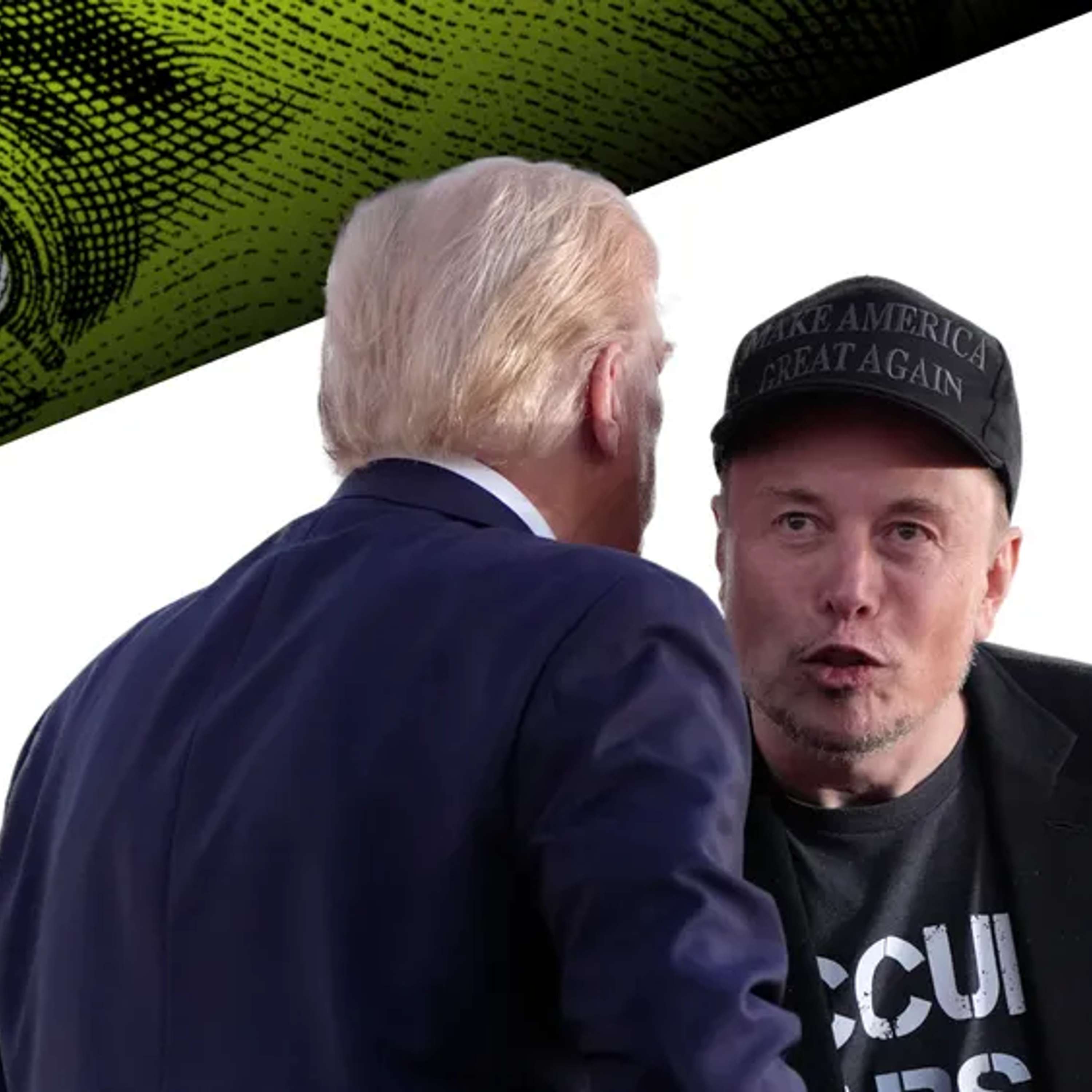
What would you say to those who look out at the current election and say, hey, wait a minute, I see Elon Musk right on the stage. I've read stories about billionaires funding this or that, you know, this or that candidate, this or that super pac. The problem isn't that we, that we don't know. Like, Elon Musk has made clear that he is bankrolling Donald Trump's election bid, right? So, like, I guess the question is, is like with, with, with billionaires so out front now, I think that's kind of, in some ways what's changed. It's like they're right in our face now. How, how important? Like, like, aren't they essentially self Disclosing some are.
- [06:05]
Senator Sheldon Whitehouse
I mean, I think to a significant extent, El. But there are an awful lot who aren't. And there is an entire architecture of anonymity that did not exist before 2010 that has sprung up to take advantage of the Citizens United decision. And behind that architecture of anonymity are an awful lot of special interest folks who don't want you to know who they are. So I think, you know, Elon Musk is kind of the madman exception who loves the drama and the attention of being in the middle of things, watching his fat belly as he hopped up and down on the stage with his T shirt up. I mean, this is not a guy who has. Who's worried about attention for himself. But in some respects, you know, that's a lot less dangerous than the complete wipeout of bipartisanship, for instance, on climate change. That happened precisely in January of 2010 when the citizens United decision came down and the fossil fuel industry was ready, and somebody went to Mitch McConnell and said, you wipe out bipartisanship on climate and we will give you unlimited amounts of money and we'll hide that it's us, so nobody can blame you for being hitched up with the polluters. And it took years to figure that out. And even now, we don't know the specifics of it. We just know generally the fossil fuel industry paid Mitch McConnell to kill bipartisanship on climate, and it worked, and we lost 15 years of progress.
- [08:00]
David Sirota
My question is looking forward because I'm trying to preserve some hope that this will change, that this immersion in the corruption that you've talked about and that we've reported on, that will change. I wonder if you think that. Let's use Elon Musk as an example, that Elon Musk's central role in this election is so in our face. And there are other billionaires who are so in our face. I wonder if you think there could be, after this election, depending on how the election goes, some kind of boomerang effect in which the corruption is so in our face that it will create some kind of more of a critical mass to do something about it. Or do you think, alternately, that the corruption is so in our face that it's just helping further normalize it and inure us to it?
- [08:52]
Senator Sheldon Whitehouse
Yeah, it's. I can't really tell. That's a really good question. I think it could go both ways. I can tell you what the sort of baseline public ish revulsion for this is, and that is that when you poll people about political dark money you get these unbelievable reactions. You know, you get 80 plus percent revulsion. You get 90% if the question is formed sometimes in, in just the right way. You get high 80s numbers in districts that went for Trump and low 80s numbers in districts that went for Biden. So it's not like it's Democrat issue. People generally, I think, are fed up, they're sickened. I think one of the reasons people are attracted to a charlatan like Trump is because they have an abiding sense that politics is ignoring them. And they're right. Politics is ignoring them. Our attention shifted to the big dark money. Look no further than climate legislation to prove that point. So I'm hoping that at some point we put enough effort into getting rid of this damn dark money on the Democratic side that people understand that there's a real difference between the two parties. There actually is a real difference between the two parties. Every democracy votes to get rid of dark money. Every Republican votes to protect dark money. But we do this like we do this maybe twice a decade, so nobody knows. So if you poll people and say, okay, you hate the hell out of dark money, you know, it's corroding and corrupting our democracy, who do you trust more to get rid of the damn stuff? And it's a toss up.
- [10:44]
David Sirota
Yeah, I'm guessing it's a toss up because people see that if the Democrats are not, and I don't, I don't think they can unilaterally disarm correct. In a, in a system like this. So they see, oh, well, dark money helps both sides. So you all must be, both parties must be the same, which I totally agree. Both parties on this issue are absolutely 100% not the same. Period. End of story. And anyone who pretends they are is ridiculous. I want to ask you, looking, looking forward, clearly, if Donald Trump wins the election, nothing is going to happen on this. Probably things will get even worse. If you look at Project 2025, what he proposes for the Federal Election Commission, if Kamala Harris wins the election, what is your big ask of a the next Democratic administration on this issues set of issues are there. Have you gotten any commitments from a future Democratic White House about what to do about this? And by the way, whether it's Supreme Court ethics reform or the DISCLOSE act or anything like what, what is your big ask? If you know, you go in there and they say, all right, what do you want?
- [11:51]
Senator Sheldon Whitehouse
The big ask would be that we take, well, first of all, the big ask really only works if we hit the trifecta Right?
- [11:59]
David Sirota
Yeah.
- [12:01]
Senator Sheldon Whitehouse
I mean it'll take some time. Otherwise, once people understand the Democrats want to get rid of dark money and Republicans are protecting it, then it will become a more operative distinction politically and we can build pressure on Republicans to come over so that we can maybe try to work through a non trifecta universe or a filibuster universe. But setting that aside, if we hit the trifecta, then the big ask is that we line up the Senate Democrats and agree to find a way around the filibuster, really to find a way around the quorum call rule to be parliamentarily technical about it. And that we put into that bill the really important stuff that we need to rebuild our democracy, to put in the Voting Rights act that the Supreme Court took down to restore the reproductive rights that Dobbs took down to get rid of dark money, to put the Supreme Court under an ethics code. We have a massive government reform package and we pass that and we let the governor, the Republicans fight about it for a month, for two months, you know, old school filibuster, get on your hind legs and complain about it on the Senate floor until you run out of breath. But at some point you're done and at some point you then vote. And that's where we change the country back.
- [13:33]
David Sirota
Here's, here's a question that I think about a lot, which is John McCain seems to me was the last politician in the Senate really national politician. I mean he's running for president to really truly elevate campaign finance and these corruption issues to the center of the national political conversation?
- [13:54]
Senator Sheldon Whitehouse
Yes.
- [13:54]
David Sirota
I guess my question for you is how was he able to do it? What elements was was he able to marshal that haven't been able to be marshaled as effectively since then?
- [14:08]
Senator Sheldon Whitehouse
Oh boy, what a good question. I think that, you know, John and I were very close. I was the one senator who he asked to be a pallbearer, for instance. And we wrote a brief together to the Supreme Court after the Citizens United decision in the Montana case that followed it, in which we pointed out, hey guys, when you said that all this new money you are letting loose into politics was going to be transparent, that hasn't happened. That wasn't true when you said it was going to be independent of candidates. Here are a half a dozen major studies, articles and reviews that show that wasn't true either. You were actually wrong in the predicates, the foundations of your decision. You were factually wrong, indisputably wrong. You got to go back and fix it and of course, they declined to do that because I think they had an ulterior motive in all of that at the Supreme Court. So something unique drove John. Mitch McConnell is driven very differently. Mitch McConnell was driven by the notion that if he could break up restrictions on campaign finance, then huge amounts of special interest money would flow to the Republican Party, the natural home of big corporate special interest money. And that would allow him to basically blow out and hold power against Democrats because he'd be way quicker to get the big, huge gobs of unlimited dark money that would be unleashed after his work was done at destroying the honesty of our campaigns. So they couldn't have been more opposite those two. And what attracted the Republicans to follow Mitch was that it actually worked. The money did, in fact, pour in, and they won races that they were predicted to lose because they had more money sooner than anybody ever had seen in politics before because the rules had changed and we didn't catch up quickly.
- [16:26]
David Sirota
How concerned should people be? And I'm summarizing questions that people are sending us. How concerned should people be that on the Democratic side, there have been billionaire mega donors who seem to be making specific demands on the Democratic nominee. For instance, this, you know, the big question is, will a President Harris fire Lina Khan? What do you say to people who look at that and say, look, this feels just as bad or similarly bad as what we see, you know, Donald Trump soliciting $1 billion from the oil industry in exchange for, you know, gutting environmental laws? What do you say about that?
- [17:08]
Senator Sheldon Whitehouse
I say, yes, it absolutely is bad, whether it's, what are you going to do about crypto?
- [17:15]
David Sirota
Right, right.
- [17:16]
Senator Sheldon Whitehouse
Or are you going to make the AI guys bring their own clean energy? Are you going to let them dump everybody back into coal by loading their electric demand into some utility system that can't bear it? I mean, they're really basic questions.
- [17:30]
David Sirota
Who do you keep?
- [17:30]
Senator Sheldon Whitehouse
Who do you fire? And that's why I think you got to get rid of the damned stuff. That's why it's so toxic. And that's why we've been, I think we haven't paid enough attention to our efforts, which should be persistent and constant, to get rid of the damn stuff. Because then what people will see is here, Democrats trying to get rid of it, here, Republicans trying to protect it. And that's an important distinction that helps us in elections. Instead, they see exactly what you just pointed out, which is, here are billionaires giving to Democrats, here, billionaires given to Republicans. It's all a racket. Nobody's Interested in me? To hell with it. Let's get vote for the biggest disruptor. And that's why you end up with a charlatan criminal like Trump as a potential candidate for potential next president. Short of repeal mad.
- [18:25]
David Sirota
Short of repealing Citizens United. Right. I mean, there's. There's the push for a constitutional amendment. Overturn Citizens United. The Roberts court's not going to overturn Citizens United on its own. Talk to us a bit about what can be done under what we presume to be. And I know it always changes, but what we presume to be under the current paradigm of the Supreme Court. And, you know, again, they go out of their way to change paradigms and precedents all the time. But taking Citizens United at its word, what can be done short of repealing Citizens United? Top three, four things.
- [18:56]
Senator Sheldon Whitehouse
Yeah, we passed the DISCLOSE Act. It's pretty simple. It says anybody who gives more than 10 grand into a federal race has to identify who they really are. And unlike super PACs, which have to disclose who the immediate donor is, namely the entity through whom the donation was last laundered, you actually, under the DISCLOSE act, have to go back to the actual donor. At the end of the day, you actually get back to the true, like, beneficial owner, and so you really can find out who is meddling in our elections. And my belief, I haven't had a chance to test it, but my very strong belief is that once you take the dark money aspect out of unlimited political money, most of the unlimited political money goes away. Because let's say that somebody wants to blow me up in Rhode island because I'm a big advocate against the oil and gas industry and the pollution that they cause. So two things can happen. One, they can run an ad against me telling Rhode Islanders that I'm a bum and a louse and a crook, that I'm no good, that I'm rotten. And then at the end they say, and this ad was brought to you by Marathon Petroleum, in which case every Rhode Islander gets the joke. And I basically say, hey, you guys want to keep running that ad? Because it's actually kind of helping me with Rhode Islanders, because they know, like, what's going. What's going on here? Or Marathon Petroleum can launder that through some phony front group with a mail drop in a, you know, little boxing company in Cranston, Rhode island, called, let's say, Rhode Islanders for Peace and Puppies and Prosperity, and nobody knows who the hell they are. That's actually happening to me right now with funds coming through some Creepy phony entity in Madison, Wisconsin, of all crazy places. So, first of all, citizens don't get the joke. You know, we're supposed to adjudicate as citizens our politics. We don't even know who the players are. So that's really disabling to our democracy. And then everybody gets, I think, irritated. Why the hell are these people on my television when I don't even know who they are? And they don't make a product or provide a service. It's just a front group. So it's demeaning to the public. It's a slap in the public space every time one of these phony ads comes on. So I think if you can get rid of that and people are accountable for what they say, a lot of it goes away.
- [21:41]
David Sirota
One last question before you have to go. I want to. I want you to give us a sense of how dark money connects to the inability to do the things in Congress that the public wants. And I asked this question because a colleague of yours told me at one point that part of the thing that a lot of people don't understand is that corruption and the influence of money is not what. Not only what lawmakers do, but what they want.
- [22:19]
Senator Sheldon Whitehouse
They don't do what that.
- [22:21]
David Sirota
He said, this person said that. That these special interests often don't even have to spend the money. They just have to shake the change in their pocket to threaten to spend money.
- [22:31]
Senator Sheldon Whitehouse
Correct.
- [22:31]
David Sirota
Which is what the systemic House corruption systemically works. Just talk to us a little bit about, you know, people who don't understand how it works.
- [22:39]
Senator Sheldon Whitehouse
So probably the best and clearest example is Congress's failure to pass significant climate legislation. If you go back to when I first got to the Senate in 2007, 2008 and 2009, those three years, there were three different very significant bipartisan climate bills being worked on in the Senate. And in 2008, a Republican Senator, John McCain ran for President with a very legit climate platform. So there was exactly what you would expect then. A lot of attention and knowledge about climate, the Senate responding and the likelihood that a bipartisan bill would pass. All of that dropped dead in January of 2010. All of that dropped dead with the Citizens United decision. We know from some of the information about Ginny Thomas that the fossil fuel guys were preparing for that in advance of the decision. They kind of knew what was going to happen, I guess, and so they were setting up the 501C3s and the 501C4 mechanism to hide their hands, and it died like that. It was like a headshot. I mean, just fell. And we have not had bipartisanship on any serious piece of climate legislation since January of 2010. For that reason, when we did the IRA stuff, we had to do that in a partisan bill pushed through the reconciliation process in the, in the Senate. It has been just, you know, the bipartisanship didn't die. Bipartisanship was killed by the fossil fuel industry with money. And now we're at a stage where I think we're in real planetary. We're on our way towards a real planetary emergency that we could have forestalled if it weren't for the corruption of the fossil fuel industry. And to your point, us not doing a thing on this because it was always easier to wait for a day later. And, you know, some of us did our best try to point out that this was a corrupt business that was going on, but we certainly didn't make enough of a case of it to really drive it home and make it a voting issue for people in the same way that we failed to drive the case home on dark money and make it a voting issue for people.
- [25:13]
David Sirota
It reminds me of my favorite scene in the movie, the old movie, the Distinguished Gentleman, the Eddie Murphy movie, where Eddie Murphy's at lunch with a lobbyist talking about money, and he says, finally at the end, there's so much money in the system. How does. How does anything get done? And the lobbyist says to him, that's the beauty of it. It doesn't. And I feel like that sort of summarized that telegraphed in a lot of ways where we are today. And I just want to say, I mean this. I'm. I'm as cynical as anybody, but I just want to be on here and say I genuinely appreciate the fact that you have made this a priority in your work. Not enough people have made this particular cause a priority in their work to focus on it. It's an issue that I feel like people can fall asleep. They think it's, you know, boring, it's not interesting, nothing's going to get done. Like, I just feel like, I just want to say, like, keep pushing it because I hope there's going to be critical mass. I hope after this election, you know, I don't want to be naive about it. So thank you so much and thank you for participating in our. In this live event and for your book and for your participation. Thank you.
- [26:17]
Senator Sheldon Whitehouse
Apologies for the trouble. Looking into the. And some other time we can talk about how dark money has facilitated the corruption of the Supreme Court because yes, that's a whole. It goes there too. It's a whole other program.
- [26:30]
David Sirota
Whole other topic. Thank you so much. We really appreciate it.
- [26:38]
Jared Jakang
Imagine waking up to find out that your private information has become available online for the world to see. Or talking personal details that you never want exposed. Well, this is the reality for countless people worldwide. For example, just this April, hackers tried to sell 2.9 billion stolen records online. Yes, billion with a B. The numbers are staggering. The major risks here include identity theft, fraud and phishing attacks. One way to fight back is with Incogni. Incogni contacts online data brokers on your behalf to remove your information from servers. Incogni also provides you with an online dashboard showing you how your data is being removed and protected. Go to Levernews.com data right now and get 55% off an annual income Incogni plan. When you use code lever55 at checkout, that's lever55. There's a 30 day money back guarantee. If you change your minds, there's no danger in trying it out. To claim your massive discount on Incog, go to lever. News. Com Data.
- [27:47]
David Sirota
Money. So we're gonna take questions from the audience now to our Master Plan team. Jared Jakang, Mayor is here, I'm here. So if you want to ask us questions about the series itself. We wanted to do that for our paying subscribers. And I just want to say thank you to our paying subscribers. You made this entire project possible. I should mention our project is now has won a number of prestigious awards in the podcast industry. So that's a huge thing. I mean, we started our the Lever five less than five years ago from complete scratch. And so it is a big deal to have a listener and reader supported news outlet that has made such an impact with a an audio series like that. So I should mention a huge thank you. So if you want to post your questions in the, in the chat, you can. And we're going to bring Oola, our other producer, onto the stage. Nick, if you can bring Oola on, that would be great. Absolutely. Thank you. So I'll just start taking questions right now. I'm reading here through everyone's questions. How can we repeal Citizens United? This is one question and I asked the question about what can be done within the context of if Citizens United isn't repealed. The answer to that question is what we get into at the. In the last episode of of of Master Plan, which is that essentially you got to either expand the court, put term limits on the court to try to get a new court ruling or you got to get a constitutional amendment which is. Both of those things are not easy. But I should mention when it comes to the court, it is worth mentioning the Roberts court is not going to overturn Citizens United.
- [29:46]
Senator Sheldon Whitehouse
But the court.
- [29:49]
David Sirota
Issuing Citizens United so soon after upholding the McCain Feingold law is just a reminder that one or two vote changes on the court can change kind of everything, like really quickly. I mean, if you really think about that McCain Feingold 2003, Citizens United 2010. So in a span of seven years, you went from a court, by the way, not a liberal court like the Rehnquist Court. Not a, not, not the Warren Court. Right. Not even the Burger Court. Right. The Rehnquist court upheld McCain Feingold. Not a perfect bill, but certainly not the Citizens United rule which was just repealed, basically everything. So you're going to have to have to change the court. And Oola worked on that episode with us, the Citizens United episode. Ola, if you have anything else to add about how to deal with Citizens United, please go ahead.
- [30:50]
Ula
Yeah, there's, it's additionally challenging I think, as opposed to other rulings because of how it's argued in the decision or I guess like how the decision is articulated, which is heavily dependent on prior precedent, including the cases that listeners know about from the show. So it's not just, it's not this one decision in a vacuum that has turned into precedent. It has sort of rewritten a perspective on how to interpret like a 76 decision making decisions from the 1980s. So there's some difficulty there that yeah, it's not, it's not just like a one off, just repeal Citizens United or just overturn Citizens United. It's, it's a perspective on that entire scheme of law that yeah. That I think like basically packing the court is sort of the only way to overcome.
- [31:40]
David Sirota
Here's a question from Michelle O. Which had come up also in episode eight of Master Plan. I didn't quite. This is Michelle O writing. I didn't quite understand the reasons why having dark money and corruption on the courts means anti abortion. Not sure if you can clarify that. What is the connection between business money corruption and anti abortion decisions? And I think this goes to the deeper connection between the master planners effort to deregulate the campaign finance system and the connection with the anti choice movement personified by a guy we interviewed, James Bopp, the legal architect of the Citizens United case. I found this to be one of the most fascinating and revelatory parts of the reporting of this. But Ula Why don't you talk a little bit about that? Sure.
- [32:27]
Ula
Yeah. This was like, I remember when we kind of realized how explicit the connection between the two was because I think like even our perspective going into the reporting was like people on, on this side of things just happen to feel those two ways on these two issues, but not that those two issues are interrelated. And what we found with BoP as sort of our, the main character that I think clarified that for us is that so he's, he's an anti abortion activist first in his career and then in order to like Roe v. Wade passes, he becomes a legal representative of the National Right to Life Committee. And in order to pressure politicians to overturn Roe v. Wade ultimately, but more immediately focusing on local and state level policies about abortion, he needed to get interested in campaign finance and politicking in order to make the NRLC an effective, like argumentative body. So that's where, how, how do we like get these issues into ads? How do we make sure that this candidate who doesn't support our views on this doesn't get elected? How can we run whatever ads we want against them? How can we pressure them in public in these ways that all becomes about campaign finance and how, how to support or not support certain candidates. And it just happens to be that this issue is his way in. So it's way more like interrelated than I think any of us really expected. I just sort of thought like, oh, you're conservative on this, you're conservative on this, but it's actually an animating impulse.
- [34:01]
David Sirota
Yeah. And I think it, I, the history of it, I frankly, I didn't know about the James Bopp in the early 1980s, late 1970s. Remember he's operating with a Republican party that is essentially, I think people forget this split on the issue of abortion. So in that time period, the anti abortion movement is trying to use Republican primaries, by the way, and Democratic primaries because the Democratic Party also had a, an anti choice faction. So they're trying to use these primary elections to push their issues into the discourse. And they're running up against campaign finance rules that they don't like. And so they, I mean, at one point, James Bopp is in a direct confrontation with the FEC over whether they are, quote, unquote, electioneering or not. So the point is they really are interrelated. And you know, you fast forward 20 years and you've got Leonard Leo, who is also at the center of this, an anti abortion activist who also is, has, you know, huge connections into the you know, billionaire corporate space. And I kind of see it now as like it really is kind of a marriage of convenience. Right. Like, okay, the anti abortion, anti choice movement and the corporate powers that be, they agree together on gutting campaign finance and bribery laws. And so this is something that they sort of can work in tandem with each other on. Right.
- [35:48]
Nick
You know, David, this is Jared and I remember when we were researching, it was episode seven, Rise of the Machine. And there's a specific moment that I realized in 2005 where you can really see that alliance forged and Leonard Leo being at the center of it. This was during the George W. Bush administration. And 2003 was when there was a lot of fighting going on between Bush pushing his conservative judges that were vetted and approved by the Federalist Society and the Senate Democrats opposing them. And there was a speech that George W. Bush made in the Rose Garden. And at that meeting or at that big speech, televised speech that they had, they in the front row were members of the groups that were working behind the scenes to basically forge this alliance that we are going to put money, effort, resources into this judicial nominee effort. And you could really see it, even the tension that was going on behind the scenes with some of the emails that we got where these weren't natural allies. But in that era, they both realized we have something very much in common is to get these conservative judges that will be both pro business and also anti abortion. And I think the pro business factions really look to the anti abortion groups, namely, you know, people like James Bopp as kind of their passionate foot soldiers that they could really deploy to change the political dynamics around some of these judges. And, you know, I still wonder sometimes how long that alliance will hold after Roe v. Wade was overturned. But it is kind of a head scratcher. But when you look at the history of it, you can see why for them, for both sides, it was a marriage of convenience.
- [38:01]
David Sirota
There's a question from Jen who asked. Well, my question is the obvious question. What happens when the election ends up in the Supreme Court? What do we do and can we ever unf ourselves vis a vis the Supreme Court? If the election ends up in the Supreme Court, I would expect, I'm not making a prediction here. I would just. If passed is prelude, I would expect that what happens is what happened in the year 2000, which was the Republican appointees handed the election to the Republican candidate and stopped the counting of votes. I think everyone, a lot of people have memory hold this. I think we've watched the Democrats campaign with touting the endorsement of one of the people who helped engineer that, Dick Cheney. I think that's been nauseating. As I said in our new episode out on the premium feed, which everyone watching this, the premium feed of lever time, I should mention, we have a whole episode about the Cheneys, whether they'll help or hurt the Democrats. As I said, if you had told me back in 2000 that the Democrats would be campaigning with Dick Cheney, I probably wouldn't have believed you. And if I did, I'd probably throw up in my mouth. That's a whole separate conversation. So I encourage everybody to listen to that episode about the Cheneys with, by the way, Adam McKay, one of the experts on the Cheneys, as he did the definitive biopic on the Cheneys. So that's what I would expect to happen in the Supreme Court in the immediate term. I want to get to the question of what to do about the Supreme Court in the long term. And you heard Senator Sheldon Whitehouse talk about an ethics bill and shaming the Republicans into imposing ethics laws on the Supreme Court. And there's questions of separation of powers. Does Congress have the right to force the judicial branch to do something, et cetera, et cetera. I step back beyond or back from just the specific things that can be done. And I think a lot about why the Democrats up until this point have been so hesitant to challenge the Supreme Court. I mean, Joe Biden opposed court expansion only belatedly up into, you know, I think it was a couple, you know, maybe six months ago, eight months ago, said he supports now term limits, et cetera, et cetera. Why has it taken the Democrats so long? And I think there's to challenge the courts. And I think there's two, there's two reasons. One, I think lots of Democrats are like Joe Biden. They are inherently institutionalists. They believe in institutions. I mean, it's kind of like a horse shitty phrase, like believe in institutions. But I think one of the religions of the Democratic Party is believing in institutions. In other words, what is here now deserves to be and must be protected in its current state like that. That has become the ethos of the Democratic Party by and large, that the Republicans are the revolutionary party, the Democrats have become the party protecting the so called institutions. And I should mention sometimes that's very necessary, right, because the Republicans are assaulting the basic institutions of democracy in a way that the Democrats are not. And so sometimes that work. But I think vis a vis the Supreme Court, having an institutionalist view at this point is at best outdated. And really more honestly kind of completely out of touch with what the country wants according to polls and all of that is to say that's the one reason. There's another reason that I think we don't talk about at all, which I am fascinated with, and I should probably at some point do an entire audio series on it, which is the internalization of the story of when Franklin Roosevelt challenged the Supreme Court and tried to pack the Supreme Court. In the establishment telling of that story, FDR lost. That's the story you read in your history books. That's the, that's just like the general accepted story. FDR tried, tried to pack the courts. He had a problem with the Lochner. Was it the Lochner court or the conservative court headed by. It was very, very conservative court that was overturning, blocking the New Deal, and FDR tried to pack the courts and he failed. That's the story. And that's been internalized in the Democratic Party for decades. But there's a one, there's a great book called FDR's Gambit is one of the books about this, which is that actually this didn't fail at all, that FDR challenging the court, threatening and trying to stack it. He didn't succeed in stacking it, but the way that they prevented him from succeeding in stacking it was by backing down and allowing the public will to finally proceed, the public will, vis a vis the New Deal, that the success of the New Deal was predicated on FDR having the fight. And I think that's important when we look ahead, if there is a Democratic administration, which I should add, I think is very, very much in question right now. We're not talking about the, you know, I'm not making election predictions, but I'm that's very much in question. But if there is a Democratic administration, this notion of it's worth having the fight with the Supreme Court, even if you're not able to win that specific fight, it's worth trying to expand the Court. It's worth fighting with the Supreme Court because the Supreme Court, it is protected by, you know, lifetime terms, et cetera, et cetera. But it does, it is in the public sphere. And it I'm not saying it can be shamed, but it's worth trying to shame this institution, the least democratic institution of our government. And so you're asking, it's a very long way of answer of answering, you know, what do we do to, you know, enough the Supreme Court part of it is getting an opposition party to the Supreme Court. That's willing to fight with it.
- [44:09]
Senator Sheldon Whitehouse
Right?
- [44:10]
David Sirota
That's really actually willing to fight with this court as opposed to defer to it. And I should add, I don't know where a Kamala Harris, if she becomes president, I don't know where she'd be on that. Joe Biden, I mean, I would say this. If Joe Biden's willing to push for term limits, Joe Biden is like Mr. Institutionalist. Maybe that's a sign that the party, if they win power, will actually have more of an appetite to fight with the Supreme Court.
- [44:42]
Ula
Can I add, like, an unsexy detail?
- [44:44]
David Sirota
Please do.
- [44:45]
Ula
The FDR story, I think, like the FDR stories, very useful in one specific way. Like, in terms of like an actionable idea that is relevant now. So one of the reasons that fdr, quote, unquote, failed is because the framing of this bill that he. He was pushing, which would allow him to reform the court, was that he, it would allow him to appoint an additional justice for every justice on the court that was over 70 years old, which is like a totally arcane, wild way to do it. It would immediately put six new justices on. And, like, it's. The framing of that seems like such obvious fodder to people who wouldn't agree with it. And to me, the lesson of that, which is extremely relevant to how that could happen today is just frame it in a better way than that, in a way that doesn't seem like such a executive overreach into the supposedly independent branch of government and all that stuff. So I think the lesson is not like, I mean, this is kind of like the nuts and bolts of politics.
- [45:42]
David Sirota
Right.
- [45:43]
Ula
It's like how you frame that bill, however that looks will it will live or die based on how that argument's articulated within it. And I think there is actually vocabulary that can get that job done that isn't this, like, I don't know, like, court packing? Derogatory, Right?
- [46:01]
David Sirota
Yeah, I mean. Right. I mean, the whole framing of court packing. Right, like packing, like, I mean, I mean, here's the thing. We have just experienced court packing. It was when Mitch McConnell didn't allow Barack Obama's nominee to move forward and then Donald Trump got three appointees instead of two. Right. That was literally court packing. I mean, it's quite literally that happened. So, you know, but to be clear, not many people call that court packing. That was actually court packing. Right. I mean, that was actually court packing. Okay, a couple more questions. This question comes in wondering if the lever had plans to continue the master plan Series, especially now with Leonard Leo's Billion Dollar fund. It would be good to know what else is happening. Okay, the answer to that is one regarding Master Plan. This was, what you've all listened to, was our first season. We have plans for another season. I can't really divulge much more than that. We have plans for more bonus episodes. We are going to let everybody know those plans at some, some, some point soon after the election. But yes, we're going to continue the Master Plan series. And I should mention, day to Day, we cover corruption at the lever in our reporting and on Lever Time. So if you haven't already subscribed to Lever Time, our weekly podcast, which is sort of on the news podcast, go subscribe to Lever Time. Let's try to take. Actually, before, before we go, I want to just ask, oh, did we just lose Ula? Did she leave? Ula left. Okay. Ula left. Well, I guess I would ask Jared, your. What do you think? What is your favorite part of what we reported? Like, if you could name one. I mean, it was such a long. It took us almost two years to do this series. I'd just be curious from your perspective, having gone through it, what was like, I don't know, a big moment. Your favorite part. Like what? Like, if you could tell people who are watching right now, if they haven't listened to the whole series, what's the one thing they got to listen to?
- [48:28]
Nick
I think it was for me, you know, and I'm biased. But episodes three and four focusing on the Powell memo and the documentation that we discovered in some of these arcane locations, kind of reversing the common belief, even among people like Senator Whitehouse, who had written a lot about the Powell memo, had incorporated it into a lot of his books and other things, that after the Powell memo was released, that it kind of disappeared or, you know, that there was a connection. We hope that what came next with the chamber of commerce and neoliberal economics, but it was hard to draw that direct connection. And then this enormous trove of documents showing the entire track record of, yes, these people did meet. Yes, they did have lots and lots of meetings and funding. And it was kind of all out there. It just never in the lens of history, had been brought out. So that was the most exciting part for me because it was the missing link, as we called it internally. We found the missing link.
- [49:44]
David Sirota
I mean, I think we've gotten used to this feeling that everything has already been uncovered, everything in the past has already been discovered, but it's actually not true. I mean, that was one revelation that I had was when you found those documents about the Powell memo. Also when we interacted with the National Archives about how many pieces of paper are not actually digitized or really archived in any searchable way. From even Watergate.
- [50:14]
Nick
Watergate, which is one of the most written about covered events in American history. And yet we were like, there's so much.
- [50:22]
David Sirota
Yeah. Finding that memo that we found from G. Gordon Liddy to John Dean. I mean, it took us forever to try to actually find that one piece of paper. And we've gotten used to being in this world where you can just, like, punch it up on a database or. Like. No. Like, there's so much buried in history that we. That. That remains buried. I mean, it's like. It's kind of. It kind of felt like those early episodes kind of felt like an archeological project. Like, really, you know, And I use the. At one point, when Jared found the. The record of the Lewis Powell cocktail parties.
- [50:59]
Senator Sheldon Whitehouse
Philip Morris.
- [51:00]
David Sirota
The Philip Morris record. I said it was like our version of that scene in Raiders of the Lost Ark when they, like, lift the ark out of, you know, the tomb. It was, like, dusty and like, it was just. That was incredibly exciting. But I should mention, just like archeology is not as exciting as an Indiana Jones movie, our daily work on this was. It was enriching and journalistically exciting, but it was a huge slog. And I think we're gonna. That's a good place to end. I just want to once again thank everybody who's listening to this. Whether you're listening to a recording on our podcast feed, we're going to put a recording of this on our. On our Master Master Plan feed. And everybody tuning in live, sincerely, thank you so much for your support of this. We truly could not do this without our paying subscribers. I say that a lot, but it is just absolutely true. This is the kind of journalism that simply cannot be done without the support of you. And so what you are doing, I hope we're giving you the content that you enjoy that enriches you, educates you, makes you a more informed citizen. But you should know you are funding an endeavor to do this. You are. It's. It's not a. You know, you're not making a charitable contribution, but you are contributing to the unearthing of these stories. And my hope for Master Plan is, you know, the series as a whole, at least season one, is that it helps give people context for why we are where we are, and that it helps remind people that if what we're living through is the product of specific decisions by specific people, it can feel hopeless. But there's hope baked into that. In this way, it means that different decisions can be made by different people for different outcomes. In other words, it's not a natural inevitability. We are living in a human created set of problems, which means there can be human created solutions. So thank you for funding this. We will be back in touch with everybody soon about what we're doing next with Master Plan. In the meantime, strap in for this election. I have. I've got very varied thoughts on this. I haven't been sleeping all that well. I hope everyone hangs in there, has a happy Halloween, and does what you need to do to white knuckle it through through this election. And stay tuned for an update on what we're doing next. Thank you everybody. Really appreciate.