Loading summary
Transcript261 lines
- [00:00]
A
Foreign. Hi, I'm Imbialik.
- [00:06]
B
And I'm Jonathan Cohen.
- [00:07]
A
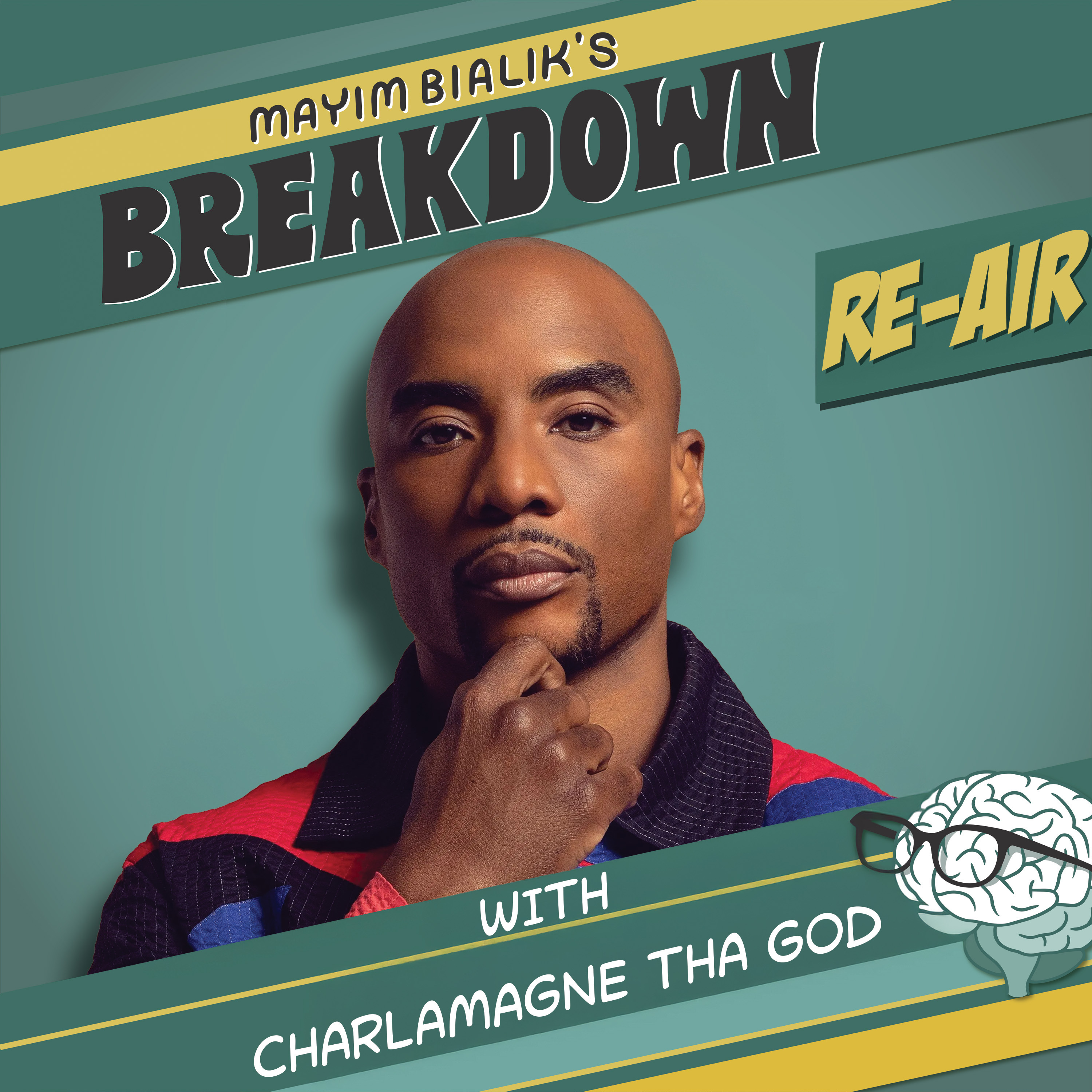
And welcome to our Breakdown. You know, we talk here a lot about the importance of emphasizing mental health for all, but this is a special month because it's actually Men's Mental Health Month. And we'd like to revisit an episode with Charlamagne, the God. He's the host of the widely popular radio show the Breakfast Club. He's also a bestselling author. He's a philanthropist. Very, very interesting spiritual personality. A big part of our conversation centered on mental health struggles that men in particular have and need extra support around, especially highlighting mental health gaps in the black community, including intergenerational trauma and institutional racism. Charlamagne also talked about his history of panic attacks, the vigilance that he developed while selling drugs when he was younger, and how anxiety can sometimes be a superpower. Also. Bet you didn't expect this one. We bond over our love for Judy Blume books.
- [01:02]
B
Marvel Comics this Men's Mental Health Month, we think it's important to shed light on the stigma that men face, particularly around their mental health. Men are less likely to seek help and more likely to use dangerous coping mechanisms like alcohol or isolation, and they face a much higher rate of suicide. With that in mind, we want to share this episode and encourage you to reach out to all the men in your lives and talk about mental health.
- [01:31]
A
Please check us out on hey, sweetie. Your mother showed me this Carvana thing
- [01:36]
C
for selling the car.
- [01:37]
B
I'm gonna give it a try.
- [01:38]
C
Wish me luck.
- [01:39]
B
Me again.
- [01:40]
A
I put in the license plate. It gave me an offer.
- [01:42]
C
Unbelievable. Okay, I accepted the offer.
- [01:46]
A
They're picking it up Tuesday from the driveway.
- [01:48]
C
I haven't even left my chair. It's done. The car is gone.
- [01:52]
A
I'm holding a check anyway. Carvana.
- [01:54]
C
Give it a whirl. Love ya.
- [01:56]
A
So good you'll want to leave a voicemail about it. Sell your car today on Carvana. Pick up fees may apply.
- [02:03]
B
Support comes from Wise.
- [02:05]
A
The smart way to manage the currencies
- [02:07]
C
you need around the globe.
- [02:09]
B
Fed up with losing out to hidden fees when you send money abroad with your everyday bank?
- [02:13]
A
Choose the smart way.
- [02:14]
B
Wise you can count on the exchange
- [02:17]
C
rate you'd usually find on Google. No unwelcome surprises.
- [02:20]
B
Plus, ditch that where's my money feeling. Most transfers arrive in under 20 seconds.
- [02:27]
C
Join millions saving billions on hidden fees.
- [02:30]
A
Be smart. Get wise.
- [02:33]
B
Download the wise app today.
- [02:35]
A
Ts and Cs apply on substack for content you can't get anywhere else. And we hope that you enjoy this episode with Charlamagne. Th.
- [02:42]
C
God.
- [02:42]
A
Break it down. It's really incredible to get to talk to you. I'm gonna ask you a funny question. Do you know who I am?
- [02:50]
C
Yeah. Yes.
- [02:52]
B
Yes.
- [02:53]
C
I used to watch Blossom back in the day.
- [02:55]
A
Are you serious? Are you younger than me? I'm 46. Yep.
- [02:59]
C
I'm two years younger than you. I'm 44.
- [03:01]
A
Okay, got it.
- [03:01]
C
Jonathan, don't even ask. I have no idea who you are.
- [03:07]
B
That's expected.
- [03:07]
A
But neither does he. He does not know who he is either.
- [03:11]
B
For a little context, she starts most interviews being like, why is this person here and why do they want to talk to me? I don't know.
- [03:19]
A
I'm gonna go ahead and say this. With all due respect to all of our other guests, including Matthew McConaughey, you are the person that we are most astounded and impressed and honored to have talked to us.
- [03:31]
C
Oh, man.
- [03:32]
A
So that's really funny that our universes have combined in some way.
- [03:36]
C
Absolutely.
- [03:37]
A
I don't even know where to start because. Well, we read. We read both of your books, first of all.
- [03:42]
C
Oh, thank you very much. Thank you.
- [03:44]
A
Your second book, you actually write with the loving support of a really knowledgeable, incredible, awesome psychiatrist. And basically every chapter, you sort of tackle a topic that is part of our mental wellness, part of mental health. And then he kind of breaks it down in terms of, like, this is why he's actually talking about things that scientifically have a basis, and here's how we kind of deal with them. It's a really lovely book. Can you talk a bit about why? Why did you choose to do this second book the way you did?
- [04:19]
C
Honestly, I didn't want to do a second book. But, you know, when you have a super successful first book, you know, your book agent and your publishers and everybody are pushing you to do a second one. And for me, I was like, man, you know, I don't really have anything I want to give to the world right now, because, honestly, you know, I've been going to therapy for the past, you know, couple of years. And any of us who've been to therapy, we all know, man, once you start peeling back those layers of, you know, just who you are as a person and why you do the things that you do, it causes nothing but utter confusion. Like, I was just confused. I had no idea who I was because, you know, I had created this identity, So I thought. And this Persona, so I thought. And this character, right? And this character had been protecting me all These years. And it was this Charlemagne tha God person. And now I'm like, yo, I really don't know who I am. I'm unlearning. That's what it did for me the first couple years of therapy, just unlearning all these things. I thought I had new. And at 40 at the time, I think, what, 40, 41, 42 years old? Like, that's. No, it's longer than that. I might have been 38, 39. I don't remember. It's like 2017. But I was just more confused than ever. And so I was telling. I told my book agent that, and she was like, well, would you want to talk about it? And I go, I guess I don't have a problem discussing some of these things that I'm learning in therapy. And my mentality when I first started writing the book was, okay, I'm going to talk about all of the things my therapist has told me in regards to my anxiety and depression. And I realized that when your therapist talks to you, it's not for you to explain to other people, to make them understand is for you to understand. Correct. And so that's why, you know, my book agent was like, well, you should. You should get a therapist to give these clinical correlations in the book. And, you know, Dr. Ish Major, you know, he went to the University of South Carolina like my wife did. I'm from South Carolina. So I just felt like he would be a good match. You know, a black man hearing this black man from South Carolina talk about these things. And I just thought he would be a good person to help, you know, explain deeper to the reader the things that I was expressing. So that's how the book came about.
- [06:38]
A
Well, and also, I think, you know, one of the things that's so impressive about the way that you write and the voice that you have is you are. You are completely authentic and unapologetic about needing to speak about things that most people don't want to talk about. And a lot of that does center around the black community and especially the mental health gaps, you know, that exist. And I think, you know, those are a lot of what I felt when I really was reading both of your books was, why has no one ever said this before the way he just said it? Because that makes sense and that's what people need to hear. And sometimes it's hard and sometimes it's painful. But, you know, obviously your mouth has gotten you lot of places because you say things that other people don't want to. But I just want to say how incredible that is to do surrounding mental health, and in particular to say there is. This is what institutionalized racism looks like in a system. This is what intergenerational trauma looks like in a system. When you have people who do not trust a system because of legitimate concerns about what the white patriarchal government did to black people. And I think that's so. It's so important that you don't push all that aside and say, like, but here's why you should have therapy. You say, this is real, and it is now in your power to try and seize your life. And in many cases, that means confronting your darkest stuff. Can you speak a little bit about that? Am I close?
- [08:12]
C
Yeah. I mean, you know, for me, I'm not an expert at anything. Like, I didn't go to college, you know, and I think sometimes. I was just telling my wife this last night. I think sometimes, you know, when you're dealing with people from the academic world, the academic circle, they always have those things they learned in books to fall back on. And they can recite a lot of different things from these things that they've read and they've researched. But for me, I'm like, well, how do you feel? Like, I don't have any barrier up to fall back on. It's just me. And like I said, I'm not an expert, but I have a lot of experiences in a lot of different things. And so the only way I know how to get help for those things or to find solutions for those things is just to be, you know, very straightforward. My dad used to always tell me the fastest way between two points is a straight line. And so that's why therapy was also very good for me, because, I mean, I have no problem. I've never had a problem being transparent. I think what therapy helped me to do is to be more vulnerable. And I think also, you know, when I start having these conversations, they relate to everybody because everybody is dealing with, you know, their own different mental health issues. And that's the thing I've been really focusing on lately, you know, helping all of us to understand that we got more in common than we do. Differences. And it's wild. The type of conversations that anxiety are dealing with depression, you know, the type of conversations that you can have with a whole lot of different people just by being open about, you know, those things that you're dealing with.
- [09:49]
A
And one of the things, actually, that I really loved how you spoke about it. When you talked about anxiety, you also talk about paranoia and you talked about your time when you were dealing, as it were. And you know, you, you described a very, a very normal for the situation, a very normal amount of vigilance you had to have. Right. Like you said, like, these are the skills you have to have when you don't know if you're going to be beat up. Hustle. Like those are things that served you well. I mean, I'm saying it like in quotes, right? Like it serves you well for the, for the situation and environment that you were in, Right. And in many ways probably made you, you know, you were alert, aware of your surroundings. So what you're describing is like, there's a certain amount of behavior that's appropriate for a situation and can be helpful. But what I've learned about anxiety is that if I'm not in a war, if I'm not a gazelle on the planes, I cannot, I can't constantly have my radar up like everything's gonna attack me.
- [10:52]
B
And I mean, you can personally, I
- [10:54]
A
personally have a chance. Can you talk a little bit about sort of what that adjustment was to say, like, oh, this was anxiety. That was normal for this situation. But in the rest of my life, I wanna live like that.
- [11:04]
B
My mbialics breakdown is supported by quince.
- [11:07]
A
Summer always makes me rethink what I'm reaching for every day. Lighter fabrics, better materials, things that just feel good the moment you put them on, but also look effortless. That's why we keep coming back to quints. They focus on high quality essentials. Think breathable linen, soft, organic cotton, washable silk, but without the luxury markup. It's that rare balance where everything feels elevated but still easy. Quinn's has beautiful everyday pieces like 100 European linen pants, dresses and tops with style starting at $32. Their denim is soft and easy to wear. Their organic cotton sweaters are perfect for layering on cool summer nights. Everything at Quince is priced 50 to 80 less than similar brands. Quince works directly with ethical factories and cuts out the middle people. So you're paying for quality, not brand markup. And it's not just clothing. Quince has really become a destination for elevated essentials across home, kitchen, bedding and beyond, making it easy to bring a more premium feel into everyday life. I actually just bought two sets of quince sheets for my son. They were on sale and now he has two different colors. Quince's 100% European linen wide leg pants. That's quickly becoming my summer uniform. They feel like pajamas, but look like I put more effort in than just showing up in pajamas, whether I'm dressing for casual work days, lazy weekends or feeling those vacation vibes. Elevate your summer wardrobe. Go to quince.com breakdown for free shipping on your order and 365 day returns. Now available in Canada too. That's Q-U-I-N-C-E.com breakdown for free shipping and 365 day returns. MeTV is America's number one classic TV entertainment network, airing over 60 of the greatest TV series every week. Now METV presents the Golden Girls of Summer, showcasing the best of the Golden Girls. Watch Dorothy, Blanche, Rose and Sophia Weeknights on MeTV at 10pm 9 Central. Log on to metv.com now to find out where to watch MeTV free over the air and on cable, satellite and select streaming services. METV is memorable entertainment Television.
- [13:09]
B
METV is America's number one classic TV
- [13:12]
C
entertainment network, airing over 60 of the
- [13:14]
B
greatest TV series every week.
- [13:16]
C
Now METV presents the Golden Girls of
- [13:19]
B
Summer, showcasing the best of the Golden Girls. Watch Dorothy, Blanche, Rose and Sophia weeknights on MeTV at 10pm 9 Central.
- [13:28]
C
Log on to metv.com now to find
- [13:30]
B
where to watch MeTV free over the air and on cable, satellite and select streaming services. METV is Memorable Entertainment Television.
- [13:40]
C
Well, yeah, first of all, I want to say I used the gazelle reference earlier today because me and My wife and two of my daughters, my 14 year old and 7 year old, we were walking and my 7 year old was lagging behind and I said, I said to her, I said, you cannot lag behind. You have to walk with your family. That's how gazelles, that's what Jonathan always
- [13:58]
B
says, they get picked off.
- [14:00]
C
Guess what she said to me? What's a gazelle? Oh, no, she's seven. And I had no explanation. So I was trying to think, I was like, man, what would she know? So I started referencing, yeah, it was the hyenas. Yeah, I started referencing hyenas from the Lion King. And it's just like it did. Long story short, I think she got it, but it didn't work.
- [14:18]
A
That's funny though. Jonathan says that you'll get picked off if you don't hang with the pack.
- [14:23]
C
Yeah. Cause you know what's so interesting when I think, and I learned this in therapy, I had been dealing with panic attacks way prior to that. I think the first panic attack I remember having was being dropped off at Meminger Elementary School in first grade. And I got dropped off and I just was in tears. I can still feel that trauma from that day. I was just like, oh, my God, my mom just gonna leave me here. I don't know any of these kids. And it was weird because I don't remember feeling like that in kindergarten, but that first day of first grade, I absolutely, positively remember, you know, having a panic attack. And, yes, you know, when I was, you know, hustling, selling crack, like, it's a certain paranoia that just naturally comes with that. And that's what happens when you really don't know what it is that you're dealing with, because I was already dealing with really bad anxiety and didn't know it. And when you're selling drugs, you're adding to that when you're smoking weed. You know, I didn't know that weed would have that effect on me. I just thought that whenever I smoked weed, I just. In my mind, for lack of a better word, I just was going crazy. Like, you know, the world was like Chicken Little. The sky was falling. Like, the walls were always closing in, and I could never understand why. I'm like, why does everybody else seem like they're having such a good time? But I'm having these, you know, panic attacks. And it honestly wasn't until, man, I was 35, 36 years old, and it was like four. We started the breakfast club in 2010. So it was like, 2014, 2015. And in my mind, I'm thinking, success, money, makes all of these things go away. So when my life was, like, really relatively normal, like, I know I'm doing everything that I'm supposed to be doing, but yet I'm still having these panic attacks, and I'm still having this anxiety, and I'm still feeling like Chicken Little. The sky is falling. That's when I knew, like, okay, something's not right. And it was other people around me, you know, who I would just be having conversations with, and they would just talk to me about therapy. And when I would ask them, why do you go to therapy? You know, what's. What's. What's the problem? Like, that's. That's what we think when we hear somebody say therapy. We think there's a problem. We think there's something wrong. And then it's like, well, you know, I. I suffer from, you know, high levels of. High levels of anxiety, or, you know, I suffer from depression or, you know, ptsd. There's a lot of different things. And I was like. When I started hearing him, I'm like, man, I think I might. I might deal with those same things. And so when I started going to therapy and talking to my therapist and telling them my story, she absolutely, positively agree.
- [16:59]
A
You do cognitive behavioral therapy. Right? Cbt they call it. Was that always the kind of therapy you started doing or did you start with like, more classical talk therapy?
- [17:08]
C
Yeah, it was just. It was this classical, Classical talk therapy.
- [17:11]
A
Okay, and then what is that? Because for cbt, I've done CBT for some things. Sometimes there's homework or like exercises. What does, like, if someone doesn't know what CBT is, like, describe a little bit? What, like the kind of stuff you do?
- [17:23]
C
That's exactly what it is. You know, it's practices, it's exercises, it's actual, you know, tools, you know, breathing exercises, you know, journaling. Like, it's a lot of it's actual homework that you take home, you know, and you have to be very aware of, you know, okay, if I'm feeling this, write down what's making me feel like this in this moment. Like, so that's literally what it is. Just, you know, more homework around classical talk therapy. And what made me start even gravitating towards that more is because, you know, I got a really good friend, you know, her name is Debbie Brown. And you know, Debbie told me a long time ago, she was like, you know, therapy is great. You know, therapy is great because it's helping you to understand what it is that you're dealing with. It's giving you the language, you know, to talk about what you're dealing with. But you really have to start healing. And I was confused because you think therapy is what is part of the healing process, but it's really just a gateway drug. It's just a gateway drug to that never ending journey called healing. And healing is not a destination. We all know healing is not linear, and everybody says that all the time, but it's like, what does that mean? Healing is not linear. It means that it's not a destination. It's a constant process. Sometimes I, I could be really good and be like, everything's clicking, every. Everything's working. The energy cleansing and therapy, everything's working. And it could be one thing that makes me feel like I never did any of that stuff. Brings me right back to what, you know, that trauma felt like when I was first experiencing it. So, you know, it's a process and that's why I started going to cbt. Just because I wanted to do more than just talk.
- [19:07]
A
Yeah, well, and CBT is, it's very, you know, it's very destination oriented. Meaning what? Are the thoughts. How do we not make you go there?
- [19:17]
B
The idea that therapy as a gateway to healing is nonlinear and people don't recognize that. It's about starting to understand the trigger, understand what's coming up in the moment. And so to hear you say, you know, things are going great, and then all of a sudden. Can you give an example? I don't mean to pry, but I think there is power in the specificity. Like, what's something that, you know, set you off? You know, because it is about understanding when those emotions come up, how do you deal with it?
- [19:44]
C
How do you.
- [19:44]
B
How do you start to reset?
- [19:47]
C
For me, it's just like, a lot of times it's old relationships, old people that I'm. That I used to call friends, you know, is those individuals because, you know, they. Some people will constantly pick at you. Always, like, always, like, literally, like, they always. Just make sure you see them. Like, yeah, I don't care how good you're doing, don't forget that, you know, used to be my friend. And yes, you found out that I was a piece of shit, but so what, you know, you're never going to forget me. I think a lot of times when you've had those relationships where you were close with people and they did burn you, you know, sometimes that plays out in your current relationships because you see little things that a person may do and you like, oh, that feels like, you know, the other relationship. And, you know, now I remember how that relationship ended. Are you going that route? And. Yeah, I mean, that's happened recently, a couple of times, you know, with a couple of people who I love, I still love. I love them dearly. But, you know, I think that what helps me with that, and this is therapy talk, is just understanding. Like, man, sadly, some relationships just run its course, you know, like, people come into your life for reasons, seasons, and if you're lucky, lifetimes, you know, but it doesn't matter if the relationship was a year, 2 years, 10 years, 20 years. Like, time means nothing. Like, everybody, we all outgrow people, and sometimes people outgrow us.
- [21:24]
A
I outgrew Jonathan five years ago, but he's still hanging around.
- [21:28]
B
And you say that in your book. You talk about how we need to outgrow people sometimes to change, to really change who we are. We also have to change the people who are around us sometimes.
- [21:39]
C
Oh, absolutely, 100%. I mean, man, I love. There's so many people that I love. And I think about that, right? I think about even when I was, you know, selling Dope back in Moss Corner, South Carolina. Like, I just living in Moss Corner growing up, like, there was such a sense of community. Like, I had such a big crew of people, and, you know, now I don't have that at all. And it hurts, you know, sometimes, but it's like, yo, I chose a different route, and I can't. I can't ruin everything that I got going on now and my future just because I'm trying to hold on, you know, to what was. You know, some things are they this. They're in the past for a reason, you know, so, yeah, that's. Even thinking about it now, it's like, it hurts. I'm literally in South Carolina right now. I'm home in South Carolina, but I'm in Kiawah island, actually. And it's like, I would love to, you know, have some of my. And don't get me wrong, I do have. Still have friends that are, you know, coming over this weekend, but it's just like, I got homeboys that are no longer here that I love, like, you know, that are dead.
- [22:40]
A
Like, my man Jerrel, you write so beautifully about, especially those. Those male friendships, which I think is also really special.
- [22:47]
C
That's what it is. I just think sometimes men, we bond over the stupidest things. You know, we bond over. We bond over the most toxic things when the reality is we just all want companionship. I was thinking about this the other day, and it's something I'm exploring about, you know, peer pressure. And, you know, we always say how, you know, peer pressure, peer pressure. I don't think there is anything as peer pressure. I think that we just all long to be accepted, and we all will do whatever it is we need to do to be accepted by whoever we're trying to be accepted by. Like, nobody's. You don't have anybody pressuring us to do anything. The only pressure is that we want to be accepted by people.
- [23:24]
A
When we were in Toronto this last time, Jonathan's from Toronto. When we were in Toronto, you expressed some kind of similar anxiety about what it's like to go home when you. What it's like to go back to the place, you know, where all the people that you were raised with were. And it just reminded me of that when he was talking about it.
- [23:43]
B
I mean, there's a ton of people I love, but also the version of myself that was a confused kid is the person that they know. And so it's hard not to resort to that person or go back to that person or that way of being or have that, you know, almost viscerally be reminded of that when you're with those people. Instead of bringing the person I am now and meeting them anew.
- [24:08]
C
Yo, Jonathan, you just hit it on the head. Because that's exactly what it is. Because these people really don't know me anymore. And they know a version of me that I'm literally trying to heal. I'm trying to heal that sixth grade version of myself. I'm trying to heal that 17 year old version of myself. Like, you know, I fully embrace it. I fully embrace every single version of, of who I've been in my life. But as I'm healing this 44 year old version of me, I'm, you know, it's like, it's like back to the future, right? Like you're going back, you're fixing, you know, things from, from the past. And yes, those people bring you right back to that time. And they, they might start talking to you about things that they didn't even know traumatized you. So now you're triggered all over again. And so yeah, I don't want to be around that.
- [24:55]
B
Mayim and I talked about time not being linear. And this is kind of one of those examples where the versions of ourselves from the past exist and they can be brought up and we don't even realize that we're getting into that headspace.
- [25:08]
C
Oh man. And guess what? With the Internet nowadays, especially if you've been in entertainment for any long period of time, all of those different versions of you exist at once. It's literally like the multiverse of madness. Like all of these different versions of you exist all at one time. And it's like, man, I have people literally come up to me and ask me about things like it happened yesterday. And I'd be like, yo, I don't even know what you're talking about. But this happened to me recently. Like a few months ago, this guy came up to me. I was in Harlem and this guy came up to me and he wasn't angry, but I could tell he wasn't happy either. And he was talking to me about something that was said on the radio five or six years ago. And it wasn't even said by me. It was said on my show, but it wasn't even said by me. And when I saw that he was upset, I just was like, well, first of all, I apologize if I upset you or anything you heard on the show upset you. That wasn't our intention. And it's like I saw everything just leave from him. Like, oh, he wasn't expecting an apology. But I'm saying all that to say, this was six years ago. I had forgotten what he was talking about. I had to go back and watch what he even was addressing. But in his mind, think about how long he's probably held onto that thing that was said in 2017.
- [26:28]
B
There's something that this makes me think about, which is in your book, you talk about Wolverine, and you talk about also having a superpower yourself, and you talk about the ability to get over things quickly, which I'd love to hear more about. But what you just spoke about made me realize that you also have a tremendous ability to de escalate. You're in a lot of situations where you're confronting people with your truth, that it doesn't go that well for them, meaning that you get a big reaction from them. And that's a little bit of my nightmare scenario. I, of course, want to speak my truth. My nightmare is having. Have to say something to people that they have a massive reaction to. And, you know, you've made a career out of sitting in that and holding space for that, which is, I actually think, a superpower in and of itself, to be able to be like, this is who I am, and I'm gonna let you have whatever reaction you have, and you're gonna stay calm and not back down and de escalate or try to form an understanding. And, I mean, that, to me, is a superpower, and I think is, like, honestly, energy magic that you're doing.
- [27:35]
C
Yeah, I think because it's not my. My intent is not to. My intent is not to. Not to inflame or hurt anybody, you know, so it's just like I always say, man, I'm not gonna say anything about a person that I wouldn't say to them.
- [27:51]
A
But you're more comfortable saying things to people than other people are.
- [27:55]
C
Yeah, I would rather have that conversation with a person. I would rather tell a person, hey, you know, I'm not really feeling your music, or I'm not, you know. Well, I think what you said over here was kind of crazy. Like, I don't mind the debate. I don't mind, you know, the conversation. Like, and sometimes, you know, you have conversations with people, and they might change your mind. Like, you might have said something about an individual, and then they said something that made you look at it a totally, you know, different way.
- [28:18]
A
It's very Southern. Like, you say what you mean. You mean what you say, because the fact is, in our industry, and I consider us a Similar industry, just because, you know, we're both people and personalities and social media and we're out there. And so much of the industry and this culture of our industry is like, everything's amazing. You're great. Everything you do is perfect. Like, you shit gold, you know, like, that's just because that's how a lot of celebrities in particular are used to people treating them. And I think what's really awesome about you is that, like, you. You have a way to be true to yourself, and also, you're making it very entertaining. And I think that's a piece that people need to remember. Like, you are. You're an entertainer. Like, you are. You're creating and facilitating conversations, and you're super smart and, like, all these amazing things. But you also. I mean, you are. You are an entertainer. Meaning everything's gonna fit into. Is the mic on? You know, I don't know what you're like in your, you know, kind of other world, personal life. One thing that you didn't really mention at all, and I was looking for it in both of the books, and I was so excited to get to ask you about it. You obviously acknowledge, like, you're a very honest person. You tell people exactly what they, you know, what you think and, like, blah, blah, blah, and that's, like, a thing. But you're very funny, and you're very good with words. So there's a lot of people who are honest and they're not funny or they're not skilled with words and thoughts. You're a very quick. Like, those are things that I'm actually, like, where did that part of you come from? Like, you know, you're so. Like, you're quick on your feet. And like I said, plenty of people have been honest with me, and it didn't make me laugh. Like, even if you were to say to me, like, you're ugly, I hate you, like, I'm sure you would do it in a way that's funny and engaging. Where does that come from?
- [30:13]
C
Like, that's all the country upbringing. That's all Monks Corner, South Carolina. That's my dad. That's my uncles. That's my aunts. You know, that's my mom. That's, like, the people I was always around. Like, you got to think we didn't have anything. We didn't. We grew up on dirt roads in the rural South. All we did was clown and joke. And now that I'm older, I also realized that we turned all of our trauma and pain into laughs. Like when Kevin Hart Came out with that special called Laugh At My Pain. I understood exactly what he was talking about because literally, to this day, I do not know why everything that was not supposed to be funny was so damn funny to us. And I remember we used to say. We used to literally say good laugh. Like. Like somebody would say something funny. We'd be like, good laugh, good laugh. And that we used to. Every day we strived to get, like, a good hearty laugh. Like, that's what made us all feel good. And I'm talking about. We used to be, like, ruthless with it, like, because we used to, you know, in Moncks Corner. Moncks Corner is a small town. When I was growing up, it was, like, 7,000 people there. So there used to be a paper in the town called the Berkeley Independent. So if you went to jail, it was in the Berkeley. If you got evicted, it was independent, like, anything. And it's like, we would literally laugh at people being evicted. We'd laugh at the tax people coming to take away folks mobile homes. Yeah, my daddy was ruthless. My dad and my cousin Rel. Well, I call him Cousin Rel, but he's actually like, my dad's cousin. These guys had the darkest humor ever. And at the time, I didn't know it was dark humor. I just thought that's the way people would joke. Like, my dad will call you and be like, yeah, man, such and such won't be with us on Sunday. And I'll be like, damn, why they can't make it? Oh, they died in a car accident. Like, still, like, it's like. It'd be just always like, that's just how you're gonna deliver that. And I remember when John Ritter died, and my dad has always had, like, this, you know, like. Like a little juke joint, like a little sugar shack. You know, they sell beer and liquor and stuff. And I remember when he died, him and my cousin Red, it was like, good. Glad he died. Been in the house with them women all those years and didn't fuck nothing. And I'm like. At the time, I just laughed, right? Cause I'm just like. I didn't think nothing of it. But then you think back, and it's like, jesus Christ, that was dog Pops.
- [32:30]
A
I mean, look, my parents are from the South Bronx, and they were born during World War II. And my dad said every single person on that block, him included, had the most vile nickname. Like one of my dad's cousins, my cousin Stanley, we also. My dad's cousin, they just called him Fat Stanley. And then they called his brother Diaper because it always looked like he was wearing a diaper. It's like.
- [32:56]
C
And my.
- [32:57]
A
But my dad said like, that was the culture that you grew up in. Everybody, like you had to pick at every single thing. And it's true. It's very like borscht belt, Jewish comedians. It's like you complain about everything and everyone. It's why Seinfeld was successful. People love watching that.
- [33:12]
C
I had a homeboy named Shitty Diaper. We used to call him Shitty Diaper.
- [33:16]
A
Okay. Was there a better story how he got that name?
- [33:19]
C
Nah, he just had like a. He had like a fat ass, I guess instead of saying, yo, you got fat ass like shitty diapers.
- [33:28]
B
Sorry.
- [33:29]
C
He had a diaper full of shit.
- [33:30]
A
Yeah, no, I get it.
- [33:32]
C
And I also say, I say all the time, the craziest people in America come from the Bronx and all the Florida.
- [33:39]
A
So my grandparents lived in the Bronx and then moved to Florida. So there you have it. When it's time to scale your business, it's time for Shopify. Get everything you need to grow the way you want.
- [33:51]
C
Like all the way.
- [33:55]
A
Stack more sales with the best converting
- [33:57]
C
checkout on the planet.
- [33:59]
A
Track your cha chings from every channel
- [34:01]
C
right in one spot.
- [34:02]
A
And turn real time reporting into big time opportunities. Take your business to a whole new level. Switch to Shopify. Start your free trial today. Every day, truck and bus drivers are out there keeping America moving and working to keep our roads safe. But large and heavy vehicles don't stop like cars. They need more time and a lot more space. When you cut in front of a truck or bus too closely, you take away the space the driver needs to stop safely. That space isn't extra, it's essential. So remember, don't cut it too close. Give trucks and buses room. Stay back, stay safe. America's pros rely on you. Paid for by FMCSA At Avocado, we know that not all mattresses are created equal. While other beds trap heat, ours sets it free. Made without polyurethane foams and crafted with natural latex, cotton and wool. Breathable, comfortable and supportive. No overheating, just clean, organic sleep that performs. Save 15% on our award winning mattresses. This July 4th sale, avocado celebrate organic shop@avocadomatress.com or leading retailers nationwide.
- [35:13]
C
And you know, so even when you talk about humor, like, I never even thought about it. Like, I never literally. That's just how I grew up. Like this weekend I have friends over and family over and we're going to Be in here drinking and laughing about things that probably shouldn't even be funny. But it's like, that's just the way we were raised.
- [35:33]
A
And I think it's something that Jonathan and I talk about a lot. Both because we have terribly dark six senses of humor. We also write together, so we sometimes are also in an exchange of things.
- [35:47]
B
I know I've gone too far when she starts to cry, when he says,
- [35:51]
A
this is a piece of shit. This is a piece of shit. But I just. That's just a writer's term anyway.
- [35:55]
C
Is that. Is that. That's so interesting, like, because I. I mean, Damn, what's. What's 2022? Too far is not as far as what we came up on. Like, we came up. We grew up in the night. We grew up in the 1900s.
- [36:07]
A
Totally.
- [36:09]
C
You know what I'm saying? You go back and you watch the stuff that we used to watch and listen to the music we used to listen to. Whoa.
- [36:16]
A
Yep.
- [36:17]
C
Now it's like, what's too far in 2022?
- [36:21]
A
I think also that's. It's part of what. What you have been dealing with. And, like, it's what you deal with on your show. It's what you kind of deal with as your. Your public Persona. When you talk about our desire to kind of fit in, you know, it's like the human condition. Right? Like, you want to be unusual, but not too unusual, that you're not, you know, still seen as kind of like one of the gang. You were raised Jehovah's Witnesses, which is a denomination, as it were, that not a lot of people know about. I actually. I went to public school my whole life in Los Angeles, and there I don't. You know what, It's a very generic name, so I'll say it. Elizabeth Lee was Jehovah's Witness. And when we would say the Pledge of Allegiance, she wouldn't raise her hand. And, like, that was the first thing I learned. And when it was birthday day, like, she couldn't celebrate and she couldn't sing with us. Did you grow up in a community of Jehovah's Witness? Was it both of your parents? More your mom?
- [37:16]
C
It was my mom and dad until my dad got this fellowship, which is basically when they exile you out of the Kingdom hall and you go to the Kingdom hall and they don't speak to you. You know, which I think is so strange because I feel like you should embrace people when they're going through something.
- [37:31]
A
I mean, that's what Jesus would do.
- [37:32]
C
Just Saying, yeah, now that I think about it, Jehovah's Witnesses introduced cancel culture to the world because that's what they. That's what they would do when they would disfellowship you. That was like the earliest form of the council.
- [37:42]
A
The Mormons also have a process of excommunication. It's one of those things that is. It's very noticeable to be Jehovah's Witness because it comes up all the time, like birthdays and parties and pledges of allegiance and things. Did that have a big impact on you, or was it just like, oh, I'm a little bit different and that's weird and whatever.
- [38:01]
C
I realize now that my dad made sure that whatever is attached to those holidays, meaning, like, Christmas, my dad would make sure he's got. Right Nintendo, he's got the high tech. So at the end of the day, that's all that matters. You know what I'm saying? Like, if you're not getting any gifts, that's why I think it probably could be cruel. And, you know, the other kids are teasing you for not getting any gifts, but when you got the gifts, it's like, hey, and sometimes I got better things than y' all got for Christmas. Y' all got socks. I got the new Nintendo, Super Mario Brothers, Duck Hunt, what's happening? You know, so it's like that's. It didn't really influence me until I got older. When I got older, and I started, like, doing it for my kids because my wife is not a Jehovah Witness. So it's like, we got four kids, and I love the holidays for no other reason than I just like celebrating the holidays. Like, there's no religious aspect to it or anything. I just like Christmas, so.
- [38:57]
A
But you talk a lot about God in many different ways. And one of the quotes that I wrote down, God tells you where to go, but he's not loud and he won't repeat himself. And I love that. I love that because you talk a lot, especially in black privilege, about the work that you put in to come from where you came from, to go through what you went through, and then to get to where you are in so many versions, really, of this career and yourself. But I love that notion of, like, if you feel it, you know, if it's in your gut and you hear it, act on it, there's not a need to kind of wait. I wonder how much do you feel kind of guided by this sort of power greater than yourself?
- [39:46]
C
Tremendously. If it was NBA 2K, it'd be like a 99. Like, that's the rating I would have when it comes to being guided by a higher power. I don't know anything else. I remember being young and feeling this presence around me all of the time. And for a long time, I thought it was Michael Jackson and the Jackson 5 because I had their poster on my wall. So I always felt like it was them watching over me. It was like a poster I had over my bed. And I'd be looking up and see Michael Jackson and the Jackson 5, and I'm like, oh, that's who's watching over me. But no, it was God. Whether you are an atheist or, you know, you believe in Allah, Jehovah or Buddha, whatever it is, there's a higher power that is maneuvering us all. I mean, you can go stand on the beach and just look at the ocean and say to yourself, man, didn't make that. You don't even gotta go that far. How about just look in the mirror, look at this. Look at what we are, what we're doing, how we're divinely designed, like something greater than us. Absolutely, positively put all of this together. And I've been feeling that presence my whole entire life. And the reason I say that about, you know, God is not loud. He doesn't. She, she, she. Because I have. I believe God has to be a woman. She doesn't repeat herself is because why?
- [41:06]
A
Why does God have to be a woman? I mean, I'm fine with it. I'm just curious.
- [41:10]
C
I have a few reasons why I think God is a woman. I think God is a woman simply because when you think about divine nature and order of things, women are the leaders. Women are the bearers of life. They carry life for nine months, then they bring life into the world. And the first entity that we're attached to, our first view, I think of God. Our feeling of God comes from this woman who birthed you, you know, and then usually after that, it's the mother, it's your grandmother, the person who birthed your mom. Like, that's when you feel that unconditional love from a person, that unconditional love that they say God has for us. You feel that in your mother and your grandmother. If you don't believe me, just look at serial killers, right? A serial killer's mother will still be in court. That's my baby. My baby would never. It don't matter how many heads they found buried in this guy's yard, how many limbs they found in this guy's freezer, the mother will still be there loving on that individual.
- [42:22]
A
Sometimes the girlfriend. Sometimes the girlfriend.
- [42:25]
C
Sometimes. Sometimes the girlfriend. But even still, that still goes to my point. Like I just feel like yo God has to have more feminine, you know, qualities than he does male qualities. And even with all of that, all of that is just like, those are just terms and labels we give to each other. Like you're talking into a microphone, but that's only because somebody called it a microphone.
- [42:44]
A
Oh, I love you so much. I love him.
- [42:46]
C
Yeah. That could be a foot.
- [42:47]
A
That's right. It could be a foot.
- [42:49]
C
It's just labels.
- [42:50]
A
I love it. Okay, wait, I got another question. I just got very excited. You describe some very exceptional experiences with what other people might call supernatural things. Do you call them super normal? Did I get that right?
- [43:07]
C
Yeah, supernatural, supernormal.
- [43:09]
A
So this is something I, I have no problem with just letting you know this is a safe place. We've talked about a lot of it. We talked about ghosts, We've done it all. I'm curious though, is that something that sort of lives with you all the time, meaning feeling kind of. Not that you have access, but being aware of other energies? I don't even know what to call it.
- [43:34]
C
Absolutely 100% all the time. Like, you know, I'm very aware of when my energy goes up and when my energy goes down. And like I'm in, I'm in a. I'm in Kiawah island right now. And I told my wife, I'm like, I said, I like it here. Like, it's a lot of good energy, it's a lot of good spirits here. And I remember, you know, I'm walking, my 14 year old was like, you know, no, I was actually explaining something to somebody and I was like, man, I think the reason I love it here is because I feel like so many of my ancestors came through that water onto, you know, this land and I just, I felt them, I feel them. And like I've, I've had random encounters with like spirit guides, mediums. And like, I've had spirit guides just walk up to me in the street and say, hey, you have so many guides around you. Don't like, literally, like, don't freak out. You have so many spirit guides around you. And I just want you to know that all your spirit guides are working together to make sure you fulfill your destiny and do what it is that you're here to do. And I've always felt like that. I've always felt covered and I've seen things, I've seen ghosts, you Know, I've seen, you know, what in South Carolina we call the hag. I've had toys that I feel would come to life when I was younger. And, like, I'm seeing these things, and I could tell when some of them were evil spirits and some of them were bad spirits. I talk about it in Black privilege, how I took one of the toys that used to, you know, come alive. This little. This guy that used to. It was a farmer on top of this tractor. And the farmer used to come and come off the tractor. And I'm just like, I remember taking that tractor and throwing it on the fire because we used to have to burn our trash in the country. We didn't have garbage men picking up trash back then, so we used to have to burn the trash. And I saw this entity screaming like, ah. You know, and I listen. People can say I'm nuts and crazy. I can only tell you what I saw.
- [45:33]
A
And what'd your mom say?
- [45:35]
C
My mom was always patient. My dad probably thought I was batshit crazy, you know, but my mom was always patient. But then, you know, the interesting thing about my mom and dad, they both from the country, so they both, you know, believe in spirits and things of that nature. Like, my mom will dismiss it as, no, we don't. That's, you know, in the Bible, you need to pray more, things like that. My dad was more like, okay, all right, you know, let's make sure nobody got anything on him, like roots or anything like that. Let's make sure that the energy is clean around him. And it's funny because I do so much energy cleansing and saging and everything now. But back then, you know, that wasn't the language, you know, it was just, let's just make sure he's good. Let's make sure nobody got nothing on him. Let's pray it off him.
- [46:20]
B
This is kind of where I was going earlier when I was talking about you as a healer and a facilitator. When you're on your show and you're not. I mean, in a tense moment with someone, do you see it as an energy that you're, like, bringing a truth and awareness? Like, are you doing energy magic in that while you're having that conversation?
- [46:41]
C
Well, you know, it's funny because most of the time, you know, I know what I've said. I know what I've said about somebody, you know, and if they're coming on the show, they're coming on the show to address it. And I really just chalked that up, honestly, you know, Jonathan to just being in worse situations, you know what I mean? Like, I've had guns pulled on me before. I've been in brawls. Like a confrontation with a celebrity on a radio show that's light, you know, I mean, we're in a building with cameras everywhere. It's like, what's going to happen? Like, what's going really happen in a situation like that. And plus, I don't ever think that any of those people would resort to violence. I know I wouldn't resort to violence. Like, we all got a lot to lose.
- [47:27]
A
I don't know that I think of, like, fearing violence. It's more that there's an emotional tension, there's a charge that makes me really nervous when I think. Because also, like, keep in mind we're on, you know, kind of other sides of the microphone in that I am brought into scenarios. I mean, I've been interviewed by Howard Stern. Like, I sat in Howard Stern's studio and was like, what is gonna happen next? Right? So when someone's kind of brought into that space, like, anything can happen. I've had people say horrible things to me, you know, like, you have to just, like, you've gotta be on it and not take it too seriously. But it's intense.
- [48:05]
B
Also not even about violence, but what you're doing is you're facilitating. So I've done a ton of hands on, somatic work where people are processing emotion. And when you have a conversation with someone, you're holding space for whatever charge comes up. And so to me, that's a lot like a somatic, somatic work because you're helping someone face something. And anytime someone has a charge, you know, there has to be someone to hold space for them to have that emotion and them to work it through. And so I guess that's what I was saying. If you sense energy in your other life, I was wondering if you sense it also in the room and you're sort of navigating it and maybe it's a sixth sense that you're not even aware of. You're doing it because it's so automatic to you.
- [48:48]
C
Yeah, I mean, it's definitely some type of sixth sense. It's definitely energy. If the energy isn't right, I'm not sticking around. Like, and that's also, like, that's why I say anxiety sometimes is a superpower. And the beauty of having these conversations about anxiety now, you know, we're all sitting at home sometimes and, you know, we know we gotta be somewhere and we're like, I Shouldn't be there. Something's telling me I should not be there. And, you know, back in the day, we couldn't have these conversations, so we would have to show up, and that's when things would happen. And now when I feel like that, I'm literally like, yo, I'm not going.
- [49:28]
B
You're being guided.
- [49:29]
C
Why are you not going? That's right. And I'll say, I'm not going because I don't feel like it. Y' all know how I get down. Y' all know I'm going. I'm not putting myself in a situation where I know I'm going to have some type of panic attack, anxiety attack, or my energy is going to be drained so much that I'm going to be sitting in this place feeling exhausted and depressed. I'm not doing it anymore at all.
- [49:52]
B
That leads me to the sense of optimism that you have and the inspiration that you convey about people's ability to change their life, to have the life that they want. If they're tuned in and are following their intuition, if they're not trying to live someone else's dream, that isn't unrealistic. And you talk a lot about getting true to yourself and the power that they can then have to create the life they want.
- [50:17]
A
Well, hold on. I just. Can I tell it? I mean, the way that I see it is, like, you wanted to be a rapper, and it was finally one person who was like, dude, you're not gonna be a fucking rapper.
- [50:27]
C
Dr. Robert Evans.
- [50:28]
A
Like, that was it. And like, that was then. Then there's your life meaning. Like, that was the crossroads. And you were like, he's right. And you built something that was. I mean, you call it demotivating people. Right? Like, I think you said to someone, like, you're not gonna be the next Beyonce or Rihanna, I promise. Like, move on. Go to school, read a book. Like, live your best life. Not the life that social media is telling you to have or that the industry's telling you to have.
- [50:59]
C
Yeah. I think a lot of times when you grow up in certain environments, especially when you're a black person, the people you see on TV that you know or the people that you see that are successful, that look like you are usually in entertainment are in athletics. So you gravitate towards those things because you just want to be successful. But the truth to the matter is, it's just like, yo, that's not your dream. That's not what, you know, God has planned for you. That's something that you see working for somebody else. And that's why nine times out of 10, it doesn't work for, you know, any of those individuals. I was. I was even talking about. I was talking to somebody earlier about, you know, why people commit crimes. It's not that people wake up and want to be drug dealers. It's not that they wake up and, you know, want to be thieves. Oh, literally. Oh, yeah. A guy was giving me a shave earlier. My man Antwan and Antoine, you know, he pulled up in a Maserati and he had a blazer on. He was dressed clean. And I'm like, wow. You know, and I'm like, yo, people need to see this. And the reason people need to see this is because kids gravitate towards stuff like that. They see you with your nice car and your nice clothes, and you're like, well, what do you do? As soon as you tell them what you do, I promise you, you're planting a seed in that kid head that makes them say, I want to do that too. That is the reason so many people wanted to be rappers. That is the reason so many. You hear a million stories about people who got into the hustling game. Cause they saw somebody pull up in a nice car. And I saw Muhammad Ali. This is an old Muhammad Ali interview where he was like, yo, he has to pull up in those things. He has to have the Rolls Royce, he has to have the jewelry on. Because nobody wants to listen to you when you don't. And that's. I mean, I don't personally feel that way, but I understand, you know, the concept well.
- [52:42]
A
And also I do want to acknowledge that, you know, for most of history, you know, save the last, I don't know, five years on social media, for many even, well meaning, unknowingly bigoted or racist white Americans, the notion was black people must like to do crime and go to prison, Right? Meaning this is a new concept to say. No, there's a larger story to why every community struggles with what they struggle with and wants to do what they do to not have that. You know, does that make sense?
- [53:19]
C
Yeah, no, that makes sense. I mean, it's that what you just described is something I've been exploring as well. Because it's just like, I want to know how America has convinced themselves that black people are like the criminals and the thugs and the corrupt ones. When white Americans created colonization throughout the whole world. You know, think about how much blood has been shed in the name of colonization. If we should be fearing anyone, it should be white Americans. Like, you know, Evil is not sustainable. So right now, what white people are getting is a small, small, small dose of what minorities have been getting in this country forever. And they are losing their minds because of it. But it's simply because we collectively have not come together as a country, which we should have done a long time ago and really heal some of these things that have been going on. Really?
- [54:17]
B
Really.
- [54:18]
C
America should have done everything in its power to atone for its original sin, which was slavery. And not to mention what was done to Native Americans.
- [54:27]
A
I was gonna say. Yeah. The history of this country is certainly very unclean. And that being said, it's the only reason I exist is because this country took in, you know, my family. They were being turned away from, you know, most other places that should have given shelter. So it's very, very complicated. We have a couple more minutes with you. I do want to talk about comics and Marvel. Are you exclusively a Marvel person, not dc?
- [54:58]
C
I am exclusively a Marvel person. I think DC sucks. I will say DC's. DC's film universe. I like the villains. I think DC should focus more on the villains. The Harley Quinn. Yes. You know, the jokers. Like, those movies have been great. They always mess it up with the hero. The hero films.
- [55:18]
A
I'm a sorry. Wait, wait, hold on. Wait. One more thing. Which Batman do you hate the most?
- [55:24]
C
Ben Affleck.
- [55:26]
B
Not. Not a single pause there.
- [55:27]
C
That's amazing. Not yet. Not at all. Ben Affleck does not deserve JLO because he's ruined two super superheroes. He ruined Daredevil and he ruined Batman.
- [55:36]
A
Okay, hold on.
- [55:38]
C
He does not. He does not deserve JLO just because he won two superheroes. That should be a rule in life. If you ruin two superheroes. Two. You cannot have somebody like JLo.
- [55:47]
A
No, she's Jenny from the block. From the Bronx also. Just shout out to the Bronx. So tell me about your kind of Marvel world. Were you into comics as a kid? I mean, you talk in your book also about how you. You began life as a nerd, and it didn't go that well. Was comics sort of part of that? Part of you? You were like that guy?
- [56:06]
C
Absolutely, yeah. Jonathan mentioned earlier, you see this tattoo? This is. This is Wolverine from the X Men. I know who Wolverine is, but I don't know if you can tell because this tattoo is so trash.
- [56:18]
B
Right?
- [56:18]
C
But I got. I got this. I got this. I got this tattoo when I was like, 17 years old when tattoos were illegal to get in South Carolina.
- [56:27]
A
I was going to say that illustration's about. From 1978, I think.
- [56:31]
C
Yes. So my man T. Willis, he had a tattoo gun. And it was just one of those things like, oh, let's go to T. Willis and get a tattoo. I'm talking about, like, 20 bucks, 25 bucks, maybe 50 bucks. And I said I wanted to get. I told him, I want Wolverine holding a microphone because I thought I was gonna be a rapper. And I always gravitated towards Wolverine because I loved his healing power. Like, that literally is why I loved Wolverine. I loved his healing power. And in my mind, that's what I did. I always thought, okay, I'm able to move on from things quickly. The reality of the situation is I was just suppressing a whole bunch of things that I shouldn't have been suppressing.
- [57:06]
A
So was Wolverine. That's what the last movie was for?
- [57:08]
C
That's right. No, that's real. And so it's just like, I remember telling I was gonna get all of these covered up. Cause I was like, oh, they don't mean anything to me. And then I'm like, man, a couple years ago, it just hit me like, yo, I got Wolverine on my arm holding a microphone because I thought I was going to be a rapper. When the reality is the microphone did change my life. It was the radio microphone and podcast. And now I'm on a healing journey, and I've stumbled upon helping other people heal as well. So it's just like, man, God really does not waste anything. Like, every single thing in your life happens for some purpose that you may not even realize.
- [57:52]
A
Here's a very, very deep cut. I have a cat, and her name is Addie, because her full name is Adamantium, because she was born without a chest muscle, without a pectoral muscle. And she had to have a surgery that had a thin piece of metal inserted through her back. So my kids, we were like, she's got metal inside of her. She's like Wolverine. So that is. That is our Addie. I'm a very big X Men person. In particular, you know, a lot of those larger themes and, you know, the Holocaust origin story for Magneto, like, all of that stuff. That's. It's. You know, first class is really. I just. I love X Men, but also do love superheroes. I work for Warner Brothers, though, which is dc. So it's a whole other world. When I go to war, she's in an inner conflict with herself, in a big, big conflict. What has been your favorite kind of modern Marvel experience?
- [58:46]
C
I mean, in more recent times, it's been, well, a few things. The Ta Nehisi Coates run of Black Panther.
- [58:53]
A
Okay, got it.
- [58:54]
C
And the whole world of Wakanda that he created, that was great. I love Riri Williams Ironheart. I liked the new Captain Marvels that came out in the comics. And as far as the TV and films, man, I think that I'm not really loving Marvel movies in this phase, but I love the TV shows. The TV shows have been great. I mean, everything from Moon Knight to Wandavision to the what if cartoon to Ms. Marvel to now she Hulk. Like, that has been phenomenal. And I love that Marvel is developing, not developing, but really showcasing their women characters, because they didn't do that in the first 10 years of the films at all. That's why I hated. I thought that was like a terrible scene in Endgame when you know what happened when Captain Marvel comes in there, like, oh, Captain Marvel gets the Infinity Gauntlet from Spider Man. And he's like, I don't know how you're gonna get through all of that. And they're like, she's got help. And then all of the women characters come, and I'm just like, man, Marvel. I'm like, it just showcased how much they dropped the ball over the last 10 years.
- [60:01]
A
I totally agree.
- [60:03]
C
Because they have all of these great women characters in the Marvel universe. And not saying that those characters on the screen are great, but that's not the A team. You know, like, where's the A Team characters other than Captain Marvel? And it was. I didn't like that scene. I'm like, captain Marvel. We just saw her run through a whole shit. She don't need no help running through these people.
- [60:21]
A
A voice of reason.
- [60:22]
B
You've spoken to so many people in your career. Is there anyone on your, like, you want to talk to list that you haven't gotten to talk to one person?
- [60:31]
C
And the answer is always the same. Judy Bloom.
- [60:34]
A
Oh, my God.
- [60:35]
C
Judy Bloom. I gotta sit down and talk to Judy Bloom.
- [60:39]
A
I love Judy Blume. We read the same books. You read Ramona Quinn, like, you read all those books?
- [60:44]
C
All of them.
- [60:45]
A
We were in it together across the country. You and me were having parallel lives.
- [60:49]
C
That's right. My mom was an English teacher.
- [60:52]
A
My dad was an English teacher.
- [60:54]
C
Really?
- [60:55]
A
Yeah.
- [60:56]
C
Wow.
- [60:56]
A
Yeah. Both my parents are public school teachers, but, yeah, both of them English. And then my mom did preschool, and
- [61:01]
C
she always told me to read things that don't pertain to me, so. So when I would go in the library, that's what didn't pertain to me. All these books about Little white kids, you know.
- [61:10]
A
What was your favorite Judy Blume book?
- [61:13]
C
Are youe There, God? It's Me, Margaret.
- [61:14]
A
Classic.
- [61:15]
C
But I like Blubber as well. Are youe There, God? It's Me, Margaret was really good. Cause I related to that character so much. Because I grew up a Jehovah Witness, and my grandmother was a Baptist. And then my father got into Islam. So it was always, Talk to God. Talk to God. Talk to God, Talk to God. So when I saw the title of that book, Are youe Dead God? That's me, Margaret. I'm like, that's me every day. That's me every night. Like, so it just. And I was young. I was, man, I don't know, 7, 8 when I read that book. So it was just. It just. The title just spoke to me because I was like, oh, there's other people that do what I do. There's other people that, you know, talk to this entity called God, you know, all the time. And, you know, blubber was so good, because it's like, man, that was the first time we ever heard of people with eating disorders. And, you know, people dealing with weight issues. And, I mean, thinking about it now, that was such a heavy topic, maybe for a kid, because I go back and I read those books now I understand them more than I did then. But the reason I think Judy was so dope is because, you know, she tackled those topics and she talked about things as socially redeeming value. And the reason I want to have a conversation with her is because, number one, that's what I think got me into my journey of being able to tell a story, you know? And I feel like, you know, if you speak about real issues and you do them in a humorous way, they resonate with people more. So that's. That's. And I just want to let her know, like, yo, you really had an impact on a lot of people. She sent me a book, though. She. Because I talk about her so much about. About three or four Christmases ago, she sent me an autographed copy of all youl they Got. It's Me, Margaret. Me and my daughter. And my daughter did not like it. And I was like, I really wanted to get her blood tested. After that, I'm like, I really had to think about it. Like, yo, there's no way you don't like all you. That got to me. I know this book holds up. You're not gonna tell me this book don't hold up.
- [63:07]
A
Can I do a quick rapid fire with you? And then we'll Let you go.
- [63:09]
C
Let's do it.
- [63:10]
A
It is time for rapid fire Breakdown style with charlamagne. Thagod. What was your mother right about?
- [63:19]
C
Everything.
- [63:20]
A
Right answer. That's the right answer. Thank you.
- [63:23]
C
Every single thing. Everything.
- [63:25]
A
What was your father right about?
- [63:27]
C
Not much. Well, no, I'll say this. My father. No, I'm gonna take that back. Not much. But a lot of the things I had to unlearn was because of my father. But the one thing he said to me that stuck with me, that I hold on to that absolutely, positively got me on the right path, was he told me that if I didn't change my lifestyle, I was going to end up in jail, dead or broke, sitting under the tree. And when I saw everybody around me, when I saw that becoming their existence, I said, back then, when I was 17 years old, oh, he's right about that. That's. That's the one thing he was right about. Everything else I've had to unlearn.
- [64:02]
A
Location that promotes your best mental health.
- [64:05]
C
Anguilla. The island of Anguilla.
- [64:07]
A
You talk about it and I think both of your books. Do you have a mantra?
- [64:12]
C
Yes. I am blessed, black and highly favored.
- [64:14]
A
What is it? Say again.
- [64:16]
C
I am blessed, black and highly favored.
- [64:19]
A
I love that. Who's been your best spiritual teacher?
- [64:23]
C
Best spiritual teacher.
- [64:24]
B
Ooh.
- [64:25]
C
Oh, I have so many. I gotta give that to my mom, though, because she opened me up to everybody else. I wouldn't even have the palate to. To even take in other spiritual leaders and other spiritual teachers if it wasn't for my mom introducing me to, you know, the Witnesses, the religion of being a Jehovah Witness when I was younger, but even bigger than that, just instilling in me that. That faith and a higher power.
- [64:51]
A
Love it. You talk a lot about intuition and going with your gut. Do you have one moment that sticks out as your moment of best intuition?
- [65:00]
C
Yeah. The first one that came to my mind was it was 2010. I had been unemployed. I got fired from radio for the fourth time. I was back at home living with my mom. My now wife was back at home living with her parents. And literally, I would always go outside at night and just look up at the South Carolina sky and just talk to God and wait for a download. I remember I went outside one night and I'm talking to God and God said, go to New York. Like, just like that. Like, go to New York. Get in your car, go to New York. And I did it. I went to New York. I didn't know even why. And then you know, I kind of made up a reason. Like, I had a homegirl who at the time wanted to be a model. And so they had, like, some King magazine auditions. And, you know, I had some friends who worked at King magazine. So I kind of used that as an excuse to already do what God wanted me to do. I really just needed somebody to ride with me, right, and sharing some of the driving. So we went. And that was the week that I randomly text my man G Spin, who was at the time the music director at Power 151, and he was like, yo, where are you? And I said. I said, I'm in New York for a couple of days. He was like, yo, come to the. He said, literally, come to the station. That's what he said. Come to the radio station. And I was like, right now? He said, yes, right now. And I was staying in Fort Lee, New Jersey, and it felt like it took me forever to get across that GW Bridge at 5 o' clock in the afternoon to get to the radio station. But when I got there, I ended up having a meeting with G, Spin, and Cadillac Jack. And that's when the beginning stages of the Breakfast Club was put together.
- [66:36]
A
That's pretty good intuition. I will take that. And final question. Who are you most competitive with?
- [66:42]
C
I want to say myself, because that's the cliche answer, and that is true. But I feel like. I feel like I'm just competitive with life. I'm competitive with the world. I'm competitive with everybody who ever told me that I wasn't gonna make it. You know what I mean? Like, I make up beefs. You know what I mean? I start beefing with people who have no idea that I'm beefing with them. You know what I mean? Like, in my mind, you know, in my mind, I'm very, very, very competitive with damn near probably everybody in the space. I'm very comfortable with my position, but I'm also inspired. And I think sometimes that inspiration that you get from other people does make you competitive. But I'm not trying to beat anybody. I'm just trying to be better than me. That's why when I hear that question, it's tough to answer, because I'm like, I'm not trying to beat anybody. I want everybody to win. I'm just, you know, competing with myself.
- [67:35]
B
If someone is listening and they are struggling to find their way, struggling to get clear on their path, what advice would you give them?
- [67:44]
C
You'll be fine. That's part of life. I think that's the Thing that drives you crazy the most. One of the things. Reading the Secret by Rhonda Byrne really messed me up in a lot of ways. Ways because the law of attraction is real. But when you. When you read, your thoughts become things. When you read that with no nuance whatsoever, it can really make you go crazy because you think every time you have a negative thought, a lot of negativity is going to come to you just because that's what's on your mind. When the reality of the situation is, it's impossible to not have those negative thoughts creep into your mind. It's impossible to, you know, have it all figured out all the time. Nobody on this planet does like. Like what you just described, Jonathan, is what everybody on this planet will go through. So as soon as you feel that way to me, you on the path to, like, finding. Finding your way. It's the people that are lost and don't know they're lost, that remain lost. It's the people that, you know, are confused and are trying to figure things out who end up figuring things out. So it's like, yo, no matter what you may be going through right now, that confusion you feel, trust me, it's just all part of the process. It's all part of the process.
- [68:55]
B
Beautiful.
- [68:56]
A
One final question that I promise we'll let you go. Do you come? Is anyone in your family like a preacher? It's unbelievable. There's a way that you speak and the way you understand things. It's very special. And I think, like, 2,000 years ago, 10,000 years ago, like, he would have been like, you would have been running the whole village. I love this guidance, and I hope you write more books because I want to know all the things about you.
- [69:21]
C
I'm literally working on one right now.
- [69:23]
A
What is that about?
- [69:24]
C
You know, so I've been posted, I've scrapped and I scrapped. I've written like, two over the last three years since the pandemic. But I don't know, I just keep getting different downloads from God, right? So it's just, like, one book I wanted to do with my father, and I'm not there yet because that one is like, that's.
- [69:51]
A
Whoo.
- [69:52]
C
That's like, a lot, right? So I'm not. I'm not there yet. And then I have another one that I'm doing now, and I've had the concept for it for a while. And, like, literally, literally, I wrote, like, the forward yesterday, and I'm just in a zone. So my zone is I'm going to write a Chapter a day over the next, you know, seven days. Because I was. I was. And it just. It just literally hit me yesterday. That's how. That's another reason I feel like, you know, there's so much good energy here on Kiawah island because I'm like, oh, man. Yeah, let's go.
- [70:24]
A
I'll be there tomorrow. You'll pick me up at the airport. I'll be right there.
- [70:27]
C
I got you. I got you.
- [70:29]
A
I think we should write a book together. I don't know what it's about, but I'm gonna put that on my list of things to bother Charlamagne about.
- [70:35]
B
And a double Judy Blum interview.
- [70:37]
A
A double Judy Blume interview.
- [70:38]
B
Let's make it happen.
- [70:39]
C
Please, man. Please. I'll be there. Listen, we can make that happen. I'll fly out. We got. Cause she's getting. She's getting older. We already lost Beverly, clearly.
- [70:48]
B
All right, let's go. We'll sign it up.
- [70:50]
A
Let's do it. This has really been such an incredible treat to speak to you. I mean, I'm really, really blown away and I really, really enjoyed your books and getting to know you better and just, wow, you're freaking unbelievable. God bless you in all you do.
- [71:07]
C
Oh, and one shameless plug. Cause I know they'll get mad at me.
- [71:09]
A
Plug anything. And all the things.
- [71:12]
C
Every Thursday night, 11:30pm Comedy Central, I have a late night talk show called Hell of a Week. It comes on right after the Daily show on Thursday nights on Comedy Central.
- [71:23]
A
Awesome. That's a very special humor. I can't wait to see what his next book is. There's so much. Hell of a Week is, as he mentioned Thursday, it's executive produced by Stephen Colbert. It's a comedic look at the week's events, featuring influential guests and his hilarious and unfiltered take on the most talked about topics. Really, really cool. I don't know. I don't think there's anything else we need to say. Like, he said all the things and here's the deal. Black privilege is a book to read. You learn everything about his story. And also, I was really nervous that it would feel like a. Here's all the fun things that happened when I had sex with lots of people and, you know, dealt drugs. Because, you know, he does mention, like, he's had this kind of life and he's very, very respectful in how he talks about his life and the community that he comes from.
- [72:13]
B
Just very matter of fact.
- [72:15]
A
Yeah, very matter of fact. And not. It really did not strike me as him trying to sort of capitalize on, you know, this, the time in jail. Like, it's more about, like, what lessons did I learn from when I was in jail with my father? Like, what lessons did I learn? What did I become? What did I want to become? I just.
- [72:33]
B
One of the lines we didn't get to that, I really liked. God's always got the latest GPS update because he talks about the devil being loud and God being quiet and how
- [72:42]
A
the devil makes the most noise and
- [72:45]
B
how he learned to follow that intuition. And he has a lot of setbacks in his life, a lot of things that don't appear to take him towards the path that he ends up on.
- [72:52]
A
But he said that's like, that's the part that's. That's the. There's. And I don't mean, like, there's a plan. Like, trust God. God has a plan. What I mean is that, like.
- [73:00]
B
Well, he kind of does say that.
- [73:01]
A
Yeah. But everything is sort of moving along the way it needs to, with the lessons you need to learn and the things you need to do and the things you didn't do. And.
- [73:09]
B
And he says refuse to adopt a losing mentality. The level of optimism that he feels, even in the face of great setbacks, even in the face of panic attacks, even in the face of mental health challenges, the way that he's able to find that next step forward is truly inspirational.
- [73:24]
A
He's really. He's fantastic. And just. Yeah, I think he's freaking, freaking awesome.
- [73:30]
C
All right.
- [73:31]
A
That's all I got. Whoo. From our breakdown to the one we hope you never have. See you next time.
- [73:37]
C
It's Maya Bialix breakdown. She's gonna break it down for you. She's got a neuroscience PhD or two. Non fiction one. And now she's going to. She's going to break it down.
- [73:52]
A
This is a paid message from GoFundMe. Meet Juan Naula.
- [73:57]
C
When his son was hospitalized for a
- [73:58]
A
viral infection, Juan started a GoFundMe to pay for medical expenses.
- [74:03]
C
It was 5k to pay the bill for my son, and I need only 22 hours. It was amazing. People really trust on GoFundMe.
- [74:11]
A
How did Juan raise $5,000 in less than a day? He posted a short video on GoFundMe telling his story in 30 seconds.
- [74:19]
C
30 seconds. Be specific. Be quick and tell. What are you going to be using the funds for? I was nervous to do it because it doesn't feel okay to ask money. But you shouldn't be nervous. Sometimes you just have to do it and see the results. We were able to save my son's life thanks to gofundme that we still have my son with us.
- [74:42]
A
Start your GoFundMe today at gofundme.com that's gofundme.com gofundme.com this message reflects one person's experience. The sun is calling. Are you ready? From beach days to soccer plays. Blue Lizard Australian Sunscreen helps protect your family skin so you can focus on the fun, not the sun. With no fragrances, parabens or phthalates, our mineral sunscreen is designed for your sensitive skin and trusted by dermatologists, pediatricians and parents alike. Be fearless in the sun with Blue Lizard Australian Sunscreen. Shop now on Amazon. Com.