Podcast
Real Ones and Robots
Hosted by Casey B · EN
Real Ones and Robots is a podcast where I use today’s most powerful AI tools to dig into the stories, ideas, and forces shaping our world. From economics to culture, housing to innovation, I explore what matters through the lens of a 30-something Black Canadian woman—professional, creative, and curious. It’s part research, part reflection, and part storytelling: a space where data meets lived experience, and where technology becomes a tool for deeper understanding.
19episodes
Episodes
Newest firstAll episodes
Smoke, Tariffs, and Truth: Inside Canada's Hardest Summer
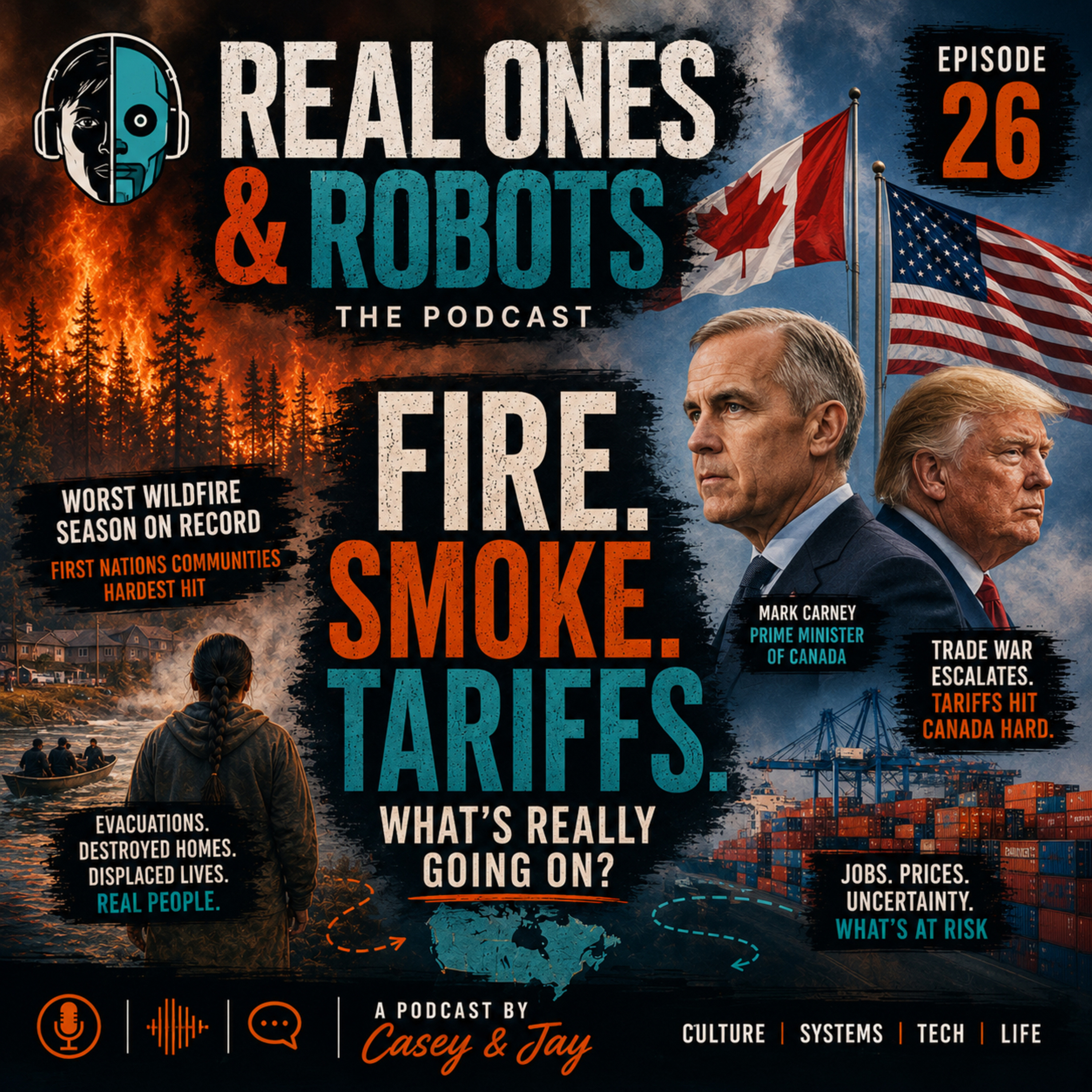
1w ago00:13:41Tap to summarizeOntario is living through its worst wildfire season on record, and the human cost — mostly borne by First Nations communities in the north — is getting buried under a louder fight: Trump blaming Canada for the smoke while threatening new tariffs, and Doug Ford firing back. Casey and Jay break down what's actually burning, who's actually displaced, and what a 50% tariff threat could really cost Canadian workers — plus a quick, honest read on where the US itself stands right now, mid-war with Iran and mid-uncertainty on its own economy.Wildfires & human tollCBC News – Ontario's worst wildfire season on record: https://www.cbc.ca/news/canada/toronto/ontario-wildfire-season-2026-9.7277682Medical Daily – Namaygoosisagagun First Nation destroyed: https://www.medicaldaily.com/first-nation-burned-ground-without-warning-exposing-canadas-wildfire-response-failures-476168CBC News – Evacuees' mental health and displacement: https://www.cbc.ca/news/canada/thunder-bay/wildfire-evacuees-mental-health-first-nations-ontario-9.7280209Global News – 1,800+ evacuated, 12 of 13 communities First Nations: https://globalnews.ca/news/11973912/ontario-wildfire-season-2026/NASA Earth Observatory – Wildfire smoke moving into the US: https://science.nasa.gov/earth/earth-observatory/ontario-wildfire-smoke-moves-east/NOW Toronto – Smoke linked to premature deaths, health costs: https://nowtoronto.com/news/canada-wildfire-smoke-economic-cost-health-report/Trump, Ford, and the smoke/tariff fightNPR – Trump threatens tariffs over wildfire smoke: https://www.npr.org/2026/07/18/nx-s1-5899009/us-canada-wildfire-smokeNBC News – Trump's original Truth Social tariff threat: https://www.nbcnews.com/politics/donald-trump/trump-fumes-canadian-wildfire-smoke-issues-tariff-threat-rcna588122CBC News – Trump tells Carney to act, at World Cup: https://www.cbc.ca/news/politics/trump-wildfire-smoke-carney-9.7276302CNN – Ford calls criticism "unacceptable": https://www.cnn.com/2026/07/17/politics/trump-canada-wildfire-smoke-tariffsTrade war / tariffsBloomberg – Carney and Trump agree to speed up trade talks: https://www.bloomberg.com/news/articles/2026-07-21/carney-trump-agree-to-speed-up-trade-talks-before-50-tariffs-hitFortune – Details on the 50% tariff announcement: https://fortune.com/2026/07/22/carney-trump-tariffs-canadian-canada-goods-negotiations/Washington Times – Tariff scope, BC alcohol ban comments: https://www.washingtontimes.com/news/2026/jul/21/mark-carney-says-trump-intensify-trade-negotiations-us-imposes-50/Yahoo/AP – Carney on the Ontario anti-tariff ad: https://www.yahoo.com/news/articles/canadian-prime-minister-says-told-140850050.htmlTD Economics – GDP impact of the 50% tariff: https://economics.td.com/ca-tariffs-2026RBC Economics – Tariffs cover ~5% of exports: https://www.rbc.com/en/economics/forward-guidance/six-takeaways-for-canada-from-latest-u-s-tariff-threats-gdp-likely-rose-again-in-may/Canada Spring Economic Update 2026 (federal government): https://budget.canada.ca/update-miseajour/2026/report-rapport/overview-apercu-en.htmlUS context: Iran war & economyCNN – Iran war live updates, July 29–30: https://www.cnn.com/2026/07/29/world/live-news/iran-trump-newsCBS News – Fed holds interest rates steady, July meeting: https://www.cbsnews.com/news/fed-interest-rate-decision-july-meeting/Indeed Hiring Lab – July 2026 FOMC reaction, labor market: https://www.hiringlab.org/2026/07/29/july-2026-fomc-reaction-the-labor-market-plays-second-fiddle/Check out my music: Charita B
Transcribe →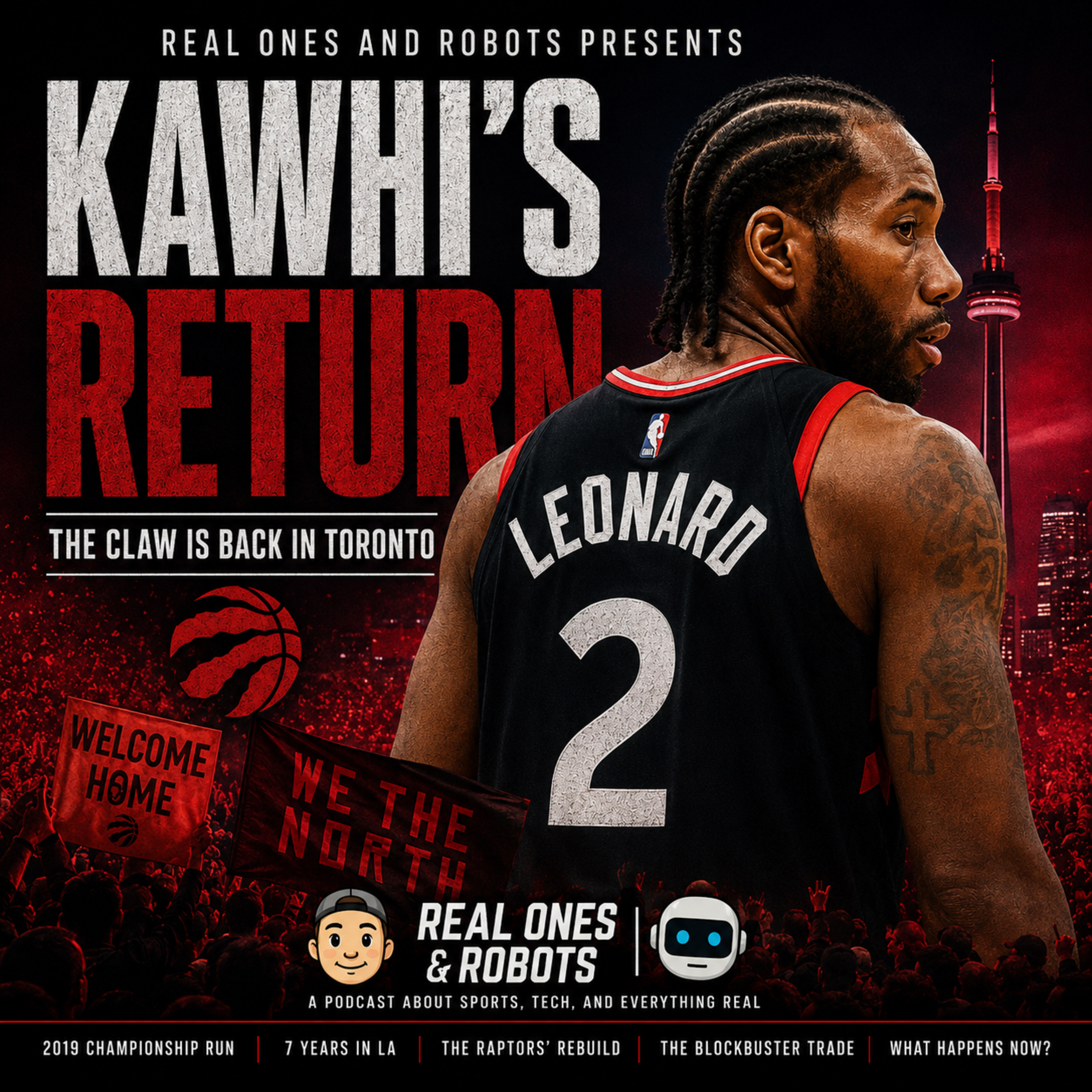
Kawhi’s Return
Jul 100:15:19Tap to summarizeSeven years after bringing Toronto its first NBA championship, Kawhi Leonard is back.In this episode of Real Ones and Robots, host Casey is joined by AI co-host Jay to unpack one of the biggest stories in basketball. Before the analysis begins, special guest Kevin—former basketball player, lifelong Raptors fan, and Toronto sports diehard—shares what Kawhi’s return means from a fan’s perspective and why this moment feels bigger than just another trade.Together, Casey and Jay break down:🏀 How the 2019 championship team was built🏆 Kawhi’s legendary playoff run and Finals MVP performance📉 What really happened during his seven years with the Clippers📈 The Raptors’ rebuild around Scottie Barnes🔄 The blockbuster trade that brought Kawhi back to Toronto🤖 Whether this is a championship move—or one of the biggest gambles in franchise historyIs this a story about redemption? Nostalgia? Or a front office making one final push for another banner?Join us as we separate the emotion from the evidence and ask the question every Raptors fan is asking:Can lightning strike twice?
Transcribe →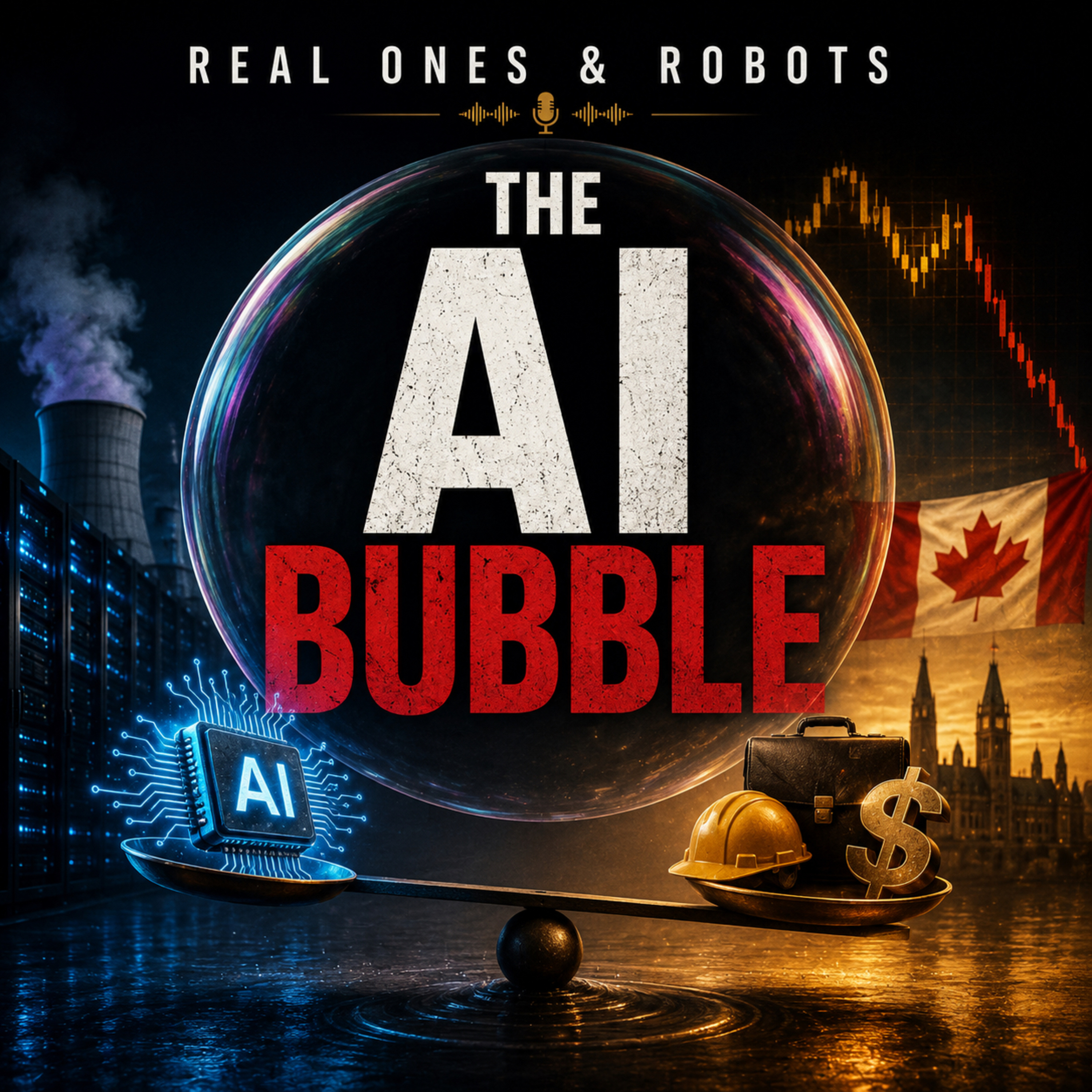
The AI Bubble
Jul 100:15:23Tap to summarizeIs AI the future — or are we watching the hype start to crack?In this episode of Real Ones and Robots, Casey and Jay unpack the real costs behind the AI boom: the electricity and water needed to run massive data centres, the companies laying people off and then realizing they still need human judgment, the stock market anxiety around an “AI bubble,” and Canada’s new AI strategy under Prime Minister Mark Carney.The conversation asks a simple question with no simple answer: is AI busting, or is it just getting real?Sources: United Nations University on AI’s energy and water footprint; Gartner on companies rehiring after AI-related cuts; Goldman Sachs on AI’s labour-market impact; Government of Canada / Prime Minister’s Office on the AI for All strategy. (unu.edu)
Transcribe →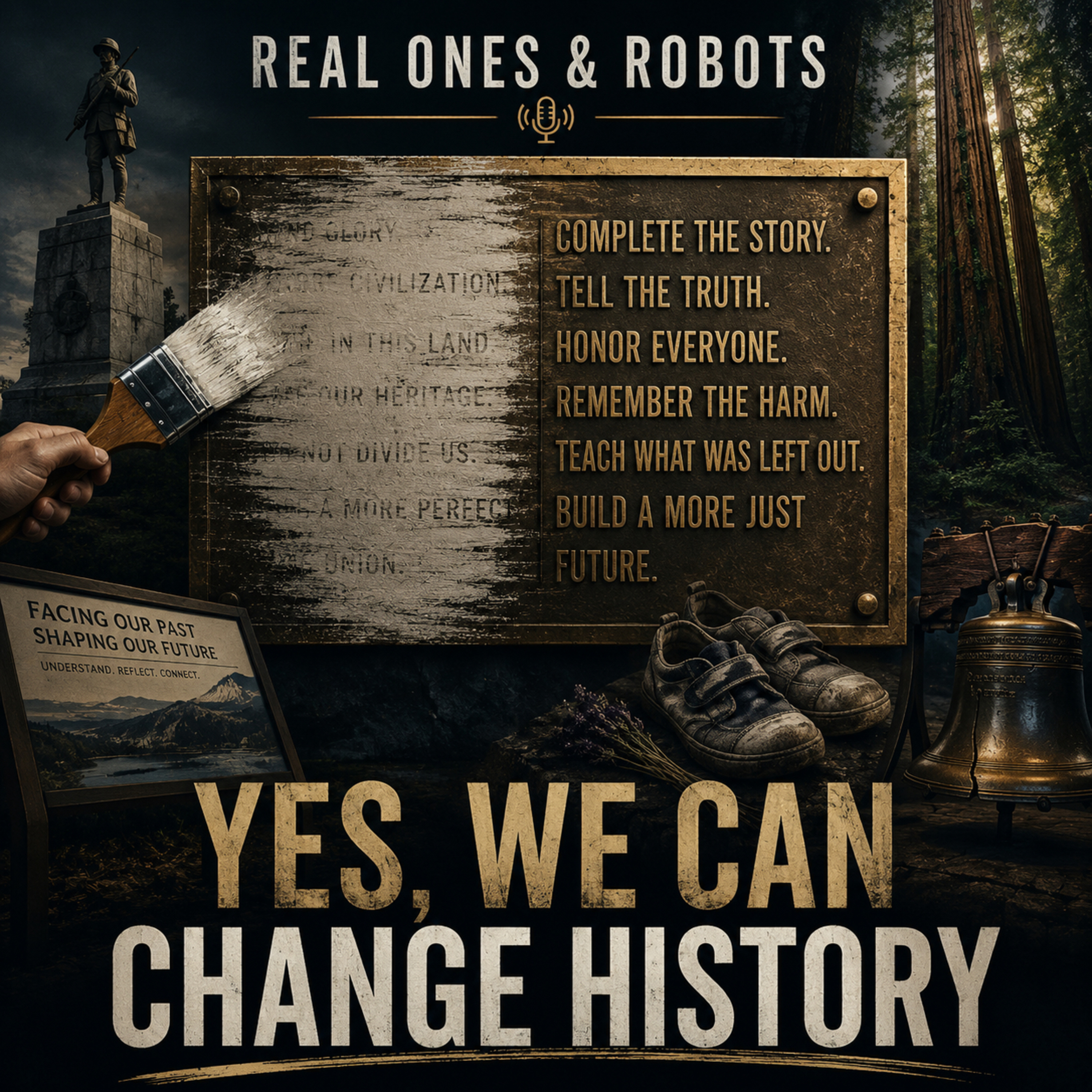
Yes, You Can Change History (Erasure, Addition, and the Fight Over Whose History Gets Told)
Jun 2100:34:29Tap to summarizeA federal judge’s ruling caught my eye a few weeks ago — a court ordering the Trump administration to restore national park signs about slavery, Indigenous history, and climate change that had been stripped under an executive order targeting anything that “disparages” America. I started digging, just to understand the ruling. I ended up somewhere much bigger.In this episode, Jay and I get into the real people and real places behind that court case — a soldier whose statue at Grand Teton leaves out a massacre, a Philadelphia house where George Washington invented the American presidency while keeping nine named people from a freedom that was legally available to them, a climate sign at Fort Sumter that vanished along with the history, and a redwood forest where a few sticky notes told a fuller story than the official signage ever had. Then we head north, to a quieter version of the same instinct: Ontario’s restoration of the John A. Macdonald statue at Queen’s Park, and the residential school memorial that didn’t come back with it. And we look at Parks Canada’s century-old, deeply imperfect system for actually adding context back into the historical record — plaque by plaque, sometimes ninety years too late.We also talk about why the hit show Yellowstone, fictional as it is, sits on the same real land and the same real questions this episode is asking.Because here’s the thing: yes, you can change history. People do it constantly, in both directions. The only question worth asking is which direction it’s moving in — are we adding back what got left out, or erasing what makes someone uncomfortable? One of those is honesty. The other is control.In this episode: The June 2026 federal court ruling restoring National Park Service signage, brought by the National Parks Conservation Association and a coalition of historians and scientists, before U.S. District Judge Angel Kelley (D. Mass.) — verify exact case caption before publishing show notes Gustavus Cheyney Doane and the 1870 Marias Massacre — Grand Teton National Park The President’s House and the nine people enslaved by George Washington — Independence National Historical Park, Philadelphia The climate change sign removed at Fort Sumter National Monument The “History Under Construction” signage at Muir Woods National Monument The John A. Macdonald statue and residential school memorial at Queen’s Park, Ontario The Rideau Canal and Duncan Campbell Scott plaque reviews — Parks Canada / Historic Sites and Monuments Board of Canada Where Yellowstone (the show) intersects with the real history of the American West
Transcribe →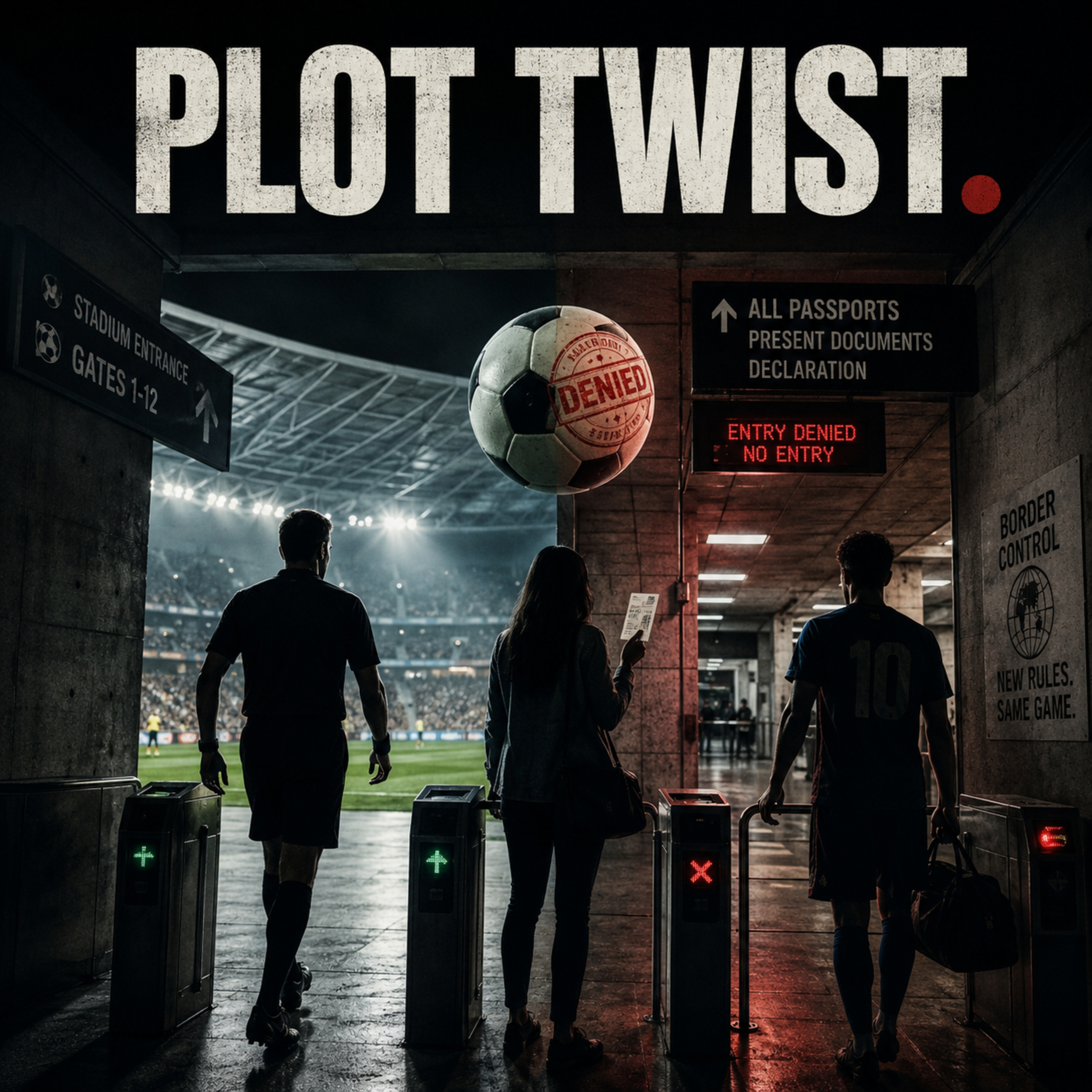
Plot Twist: Why World Cup Players (and Their Mamas) Were Denied Entry
Jun 1800:08:34Tap to summarizeThree guys, three countries, same two weeks of the same World Cup. A referee gets turned away at the Miami airport after eleven hours of questioning. A goalkeeper's mom misses her son's biggest game ever because of a fifteen thousand dollar bond she couldn't afford. And a star midfielder gets blocked from playing for a reason that has nothing to do with where he's from, even though everyone assumed it did. On this episode, Casey and Jay break down what's actually behind each denial.
Transcribe →To Ban or Not to Ban Social Media for Kids?
Jun 1600:15:26Tap to summarizeCanada wants to ban kids under 16 from social media and AI chatbots. Manitoba’s already moving. Australia tried it six months ago. So — does it work?This week, Casey B and AI co-host Jay get into what’s actually being proposed with Bill C-34, what the data out of Australia really says, and why “just explain to kids that AI isn’t their friend” is easier said than felt. Casey brings her millennial lens — the generation that lived through the first social media experiment in real time — and asks whether today’s kids are facing something genuinely different, or just a newer version of what we all survived. Jay offers the perspective only an AI can: what it’s like to be the thing everyone’s debating.
Transcribe →A New Name, A New Season
Jun 1400:02:12Tap to summarizeAfter a much-needed break, I’m back.In this short update, I share why the podcast is changing from Me, Myself & AI to Real Ones & Robots, where I’ve been over the past few months, and what’s ahead for the next season.From work and travel to parenting, creativity, and simply taking the time to recharge, life has been busy. I also talk about the unexpected reason behind the name change and why the new title feels like the right fit for the conversations I want to have moving forward.This has always been a podcast about navigating life in a changing world. The name may be different, but the mission remains the same: honest conversations about technology, housing, business, relationships, culture, and what it means to be human in an era increasingly shaped by AI.Thanks for sticking with me.Welcome to Real Ones & Robots.
Transcribe →Underdogs: The people we need
May 200:08:07Tap to summarizeIn this episode of Me, Myself & AI, Casey asks a bold question: Why am I always rooting for the underdog? From the Toronto Raptors proving the world wrong—again—in the 2026 playoffs, to Stephen Curry completely changing how basketball is played, to Zohran Mamdani challenging power through housing and economic reform, to Kanye West forcing his way into an industry that didn’t fully see him—this episode explores what makes underdogs so powerful, so necessary, and so unforgettable. Casey and Jay unpack the systems, the setbacks, the culture shifts, and the uncomfortable truths behind people who weren’t supposed to win… but changed the game anyway.
Transcribe →What Changed with Student Loans in Ontario and Why It Matters
Apr 2400:08:43Tap to summarizeStudent funding in Ontario is shifting, and it’s going to affect how much students rely on debt.In this episode of Me, Myself, and AI, Casey B and J break down the key changes from the Ontario government under Doug Ford and the federal government under Mark Carney.At a high level, the federal government is keeping student grants higher for now, while Ontario is moving toward a system where a larger share of funding comes from loans.The result? Students are likely to rely more on repayable funding over time.This episode focuses on what that shift means in real life, especially for students and families who depend on financial aid to access education.Because this isn’t just about policy, it’s about what it takes to move forward, and how long it takes to get there.
Transcribe →Cuba Isn’t in the Headlines, But It Should Be
Apr 1900:13:38Tap to summarizeCuba isn’t trending.But maybe it should be.While much of the world looks elsewhere, millions of people in Cuba are dealing with real, daily challenges—food shortages, blackouts, and limited access to basic resources.In this episode, Casey unpacks the history behind it all, questions the narratives we’ve been given, and explores what’s actually happening right now—and why more people aren’t talking about it.
Transcribe →