← Me, Myself, and AI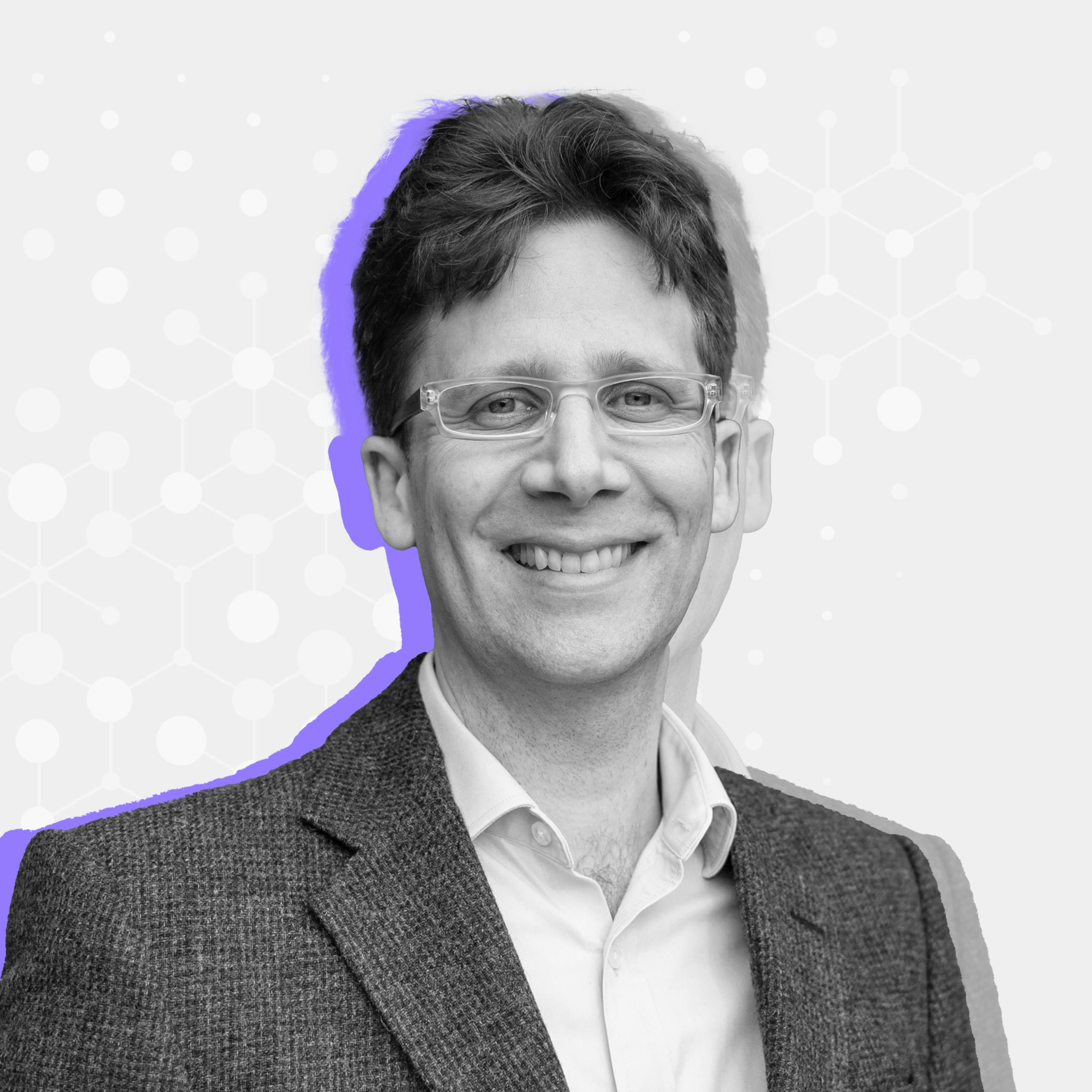
Me, Myself, and AI
Connecting Language and (Artificial) Intelligence: Princeton’s Tom Griffiths
00:43:26
Loading summary
Transcript36 lines
- [00:03]
A
Hi, everyone. While we're on winter break, we're dropping a couple of bonus episodes featuring cutting edge academic researchers. On today's episode, Sam is joined by professor and Director of Princeton's Computational Cognitive Science Lab, Tom Griffiths. Tom is the author of the forthcoming book the Laws of Thought, and joined Sam today to speak about AI's mathematical and linguistic backgrounds. It was a fascinating conversation and I hope you enjoy it.
- [00:27]
B
I'm Tom Griffiths from Princeton University, and you're listening to Me, Myself and AI.
- [00:33]
C
Welcome to Me, Myself and AI, a podcast from MIT Sloan Management Review exploring the future of artificial intelligence. I'm Sam Ransbotham, professor of analytics at Boston College. I've been researching data analytics and AI at MIT SMR since 2014 with research articles, annual industry reports, case studies, and now 12 seasons of podcast episodes. On each episode, corporate leaders, cutting edge researchers, and AI policymakers join us to break down what separates AI hype from AI success. Hi, listeners. Thanks everyone for joining us again. Our guest today is Tom Griffiths, professor of Psychology and Computer Science and the Director of the Princeton Laboratory for Artificial Intelligence. Tom has a new book, the Laws of Thought, which I suspect our listeners will enjoy learning about. Tom, great to have you on the podcast.
- [01:31]
B
Thanks, Sam. Great to be here.
- [01:33]
C
Why don't we start with. I think people know it's kind of fun to be a professor because people know what professors are. But maybe let's start with a little bit of a bio. Can you give us some background on what your roles are with the lab at Princeton?
- [01:46]
B
Yeah. So Princeton has, like a lot of other educational institutions, been trying to figure out how to respond to all of the things that are happening with AI in the world at the moment. And so the AI lab is the starting point for doing that in terms of thinking about being able to make some targeted investments in research areas where we see potential for transformative impact for AI in a way that's maybe more nimble than a traditional academic institution might.
- [02:11]
C
Yeah, there's a lot going on within universities trying to figure out what exactly all this means, and I guess all of society. But let's start with the laws of thought. Can you explain maybe in some simple terms what these laws are and how they relate to human cognition and artificial intelligence?
- [02:28]
B
Yeah. So the idea behind the book is that I think all of us in school learn about the laws of nature, Right. These sort of principles of physics or something like that, that tell us about how it is that the world around us works. And one interesting thing is that the same scientists who all hundreds of years ago were trying to figure out what those laws of nature were, using math to describe the physical world. We're just as interested in using math to try and understand the mental world, the world inside us. And so the book is really the story of that effort. It turns out understanding our inside world is a bit harder than understanding our outside world. It took us a little bit longer to figure out what the fundamental principles are, but it charts the story from people first introducing this idea of using mathematics to understand the mind through some of the first discoveries about what kinds of mathematical principles could be used for explaining how minds work, things like mathematical logic, to the discovery that that was not going to get us all the way to understanding things like how people learn complex concepts that have fuzzy boundaries, things like languages, and then ideas like artificial neural networks, which are very popular at the moment in artificial intelligence, and then probability and statistics as another approach that really helps us understand why it is that some of those AI methods actually work.
- [03:47]
C
Yeah, I think you approach this from three different frameworks, Kind of rules and symbols is one framework, neural networks is another, and then Bayesian probability is a third. And maybe I'm grossly oversimplifying these three big prongs in the book, but maybe take a minute and explain what each of those pieces are, and then more importantly, how they all weave together.
- [04:10]
B
Well, you got it. Those are the three big pieces. So basically, the story is that I think the origins of people trying to think about mathematical principles for understanding the mind are really tied up in that rules and symbols approach. And that was because that seemed like the first tool that we had that really described something like how thought worked. So if you kind of go back to the origins of logic, the title of the book, the laws of thought, is a phrase that's used by George Boole, who was working in the 19th century, and sort of figured out some of the first sort of principles of mathematical logic. And those principles turned into the principles that underlie our computers today through the work of Alan Turing and John von Neumann and others. And when psychologists were trying to work out how to rigorously study something that you can't see or touch. Right, Something inside our heads, our minds, they discovered that those mathematical principles of logic were actually really useful for expressing rigorous, precise hypotheses about how minds work. And so that was the starting point for what we now call cognitive science, which is trying to use these mathematical principles to figure out how minds work. And for a while, it seemed like that was going pretty well. Right. So it turned out that Those systems of rules and symbols worked well for describing things like deductive reasoning, things like problem solving or planning, things like even the structure of languages through the work of people like Noam Chomsky. But after a while, they started to realize that maybe that wasn't going to be all that we'd need in order to understand how minds work. One of the big problems for that rules and symbols approach was explaining learning. It helps us to explain how we reason, helps us to explain what the structures or languages are like, but it doesn't help us to explain how those things get into our heads in the first place. How do we learn these kinds of strategies for thinking? How do we learn what the structure of those languages are? And it also didn't work for capturing some of the kind of fuzzy boundaries that we see in real concepts, right? Like if you're trying to decide, if you ask people, isn't olive a fruit? People are quite uncertain about that in a way that's maybe hard to capture if you're really just thinking in terms of something like logic. And so in the 1960s, 1970s, people started to explore different ways of thinking about the mind in terms of different kinds of mathematics and thinking about things like maybe our concepts are related to. We can think about something in the world as being a point in space, where it's an abstract space that picks out the features that that thing has. And maybe a concept is like a region in that space. And so now a new kind of mathematics is needed for describing these kinds of continuous representations. And it turns out that when you start thinking in those terms, you end up getting to new ways of thinking about how to solve that learning problem. And that's where artificial neural networks come in. They're essentially a way of thinking about how to represent things as points in space and then learn the relationships between those points in space so you can map from one space to another. And so that solved a bunch of problems that we had for logic. But then we have a bunch of other questions. So, for example, if we look at things like our large language models today that are very successful in doing all sorts of things, like learning language, really understanding why it is that they're able to do that requires us to take one more step and think about a different kind of mathematical idea. That's ideas that come from probability and statistics. And so statistics is really the science of inductive inference that tells us what we can infer from data. And probability theory gives us a tool for understanding how we can work with uncertainty and how we can make inferences from the data that we see.
- [07:45]
C
So I'm tempted. Is there a fourth one? We've got three nice things, and each time you pointed out some aspect of them that were strong and some aspect that led to a limitation. Is there number four out there that we need that we haven't figured out yet, or is it just a matter of getting these three mixed in the right proportions and emphasized in the right ways?
- [08:04]
B
Yeah, I think these three are actually pretty good. And that's one thing that was a funny thing that happened to me when I was writing this book, is that I've been teaching these kinds of ideas to undergraduates for 20 years. And when I give my class on computational approaches to understanding cognition, I would normally start that class by saying, unlike taking a class in physics or something like that where you can expect to hear the answers, we're still figuring these things out, and we have good ways of asking the questions. So we haven't quite sort of got to those answers. But I actually think in the last 10 years, in the period that I was working on the book, I think there's been a change in how much we understand about these things and how well they fit together, and we can kind of start to see some glimmers of really figuring out what those laws of thought might look like.
- [08:49]
C
Okay, is this laws of thought going to be understanding the borders between these better, or is it going to be some sort of complementarity between them or some sort of combination in a unique way?
- [09:02]
B
Yeah. So complementarity and combination are, I think, the two ways to think about this. One is that I think one thing that we've started to realize is that there's different ways that you can provide an explanation for something like the human mind. Right. So again, if you're a physical scientist and you want to explain a phenomenon, say the behavior of an animal, you could think about explaining that phenomenon at lots of different levels. You could explain it in terms of the environment that the animal's in. You could explain it in terms of the muscles and bones of the animal that are doing certain kinds of things and the nerves and so on. You could explain it in terms of the chemical reactions that are happening to produce those things, or you could explain it in terms of the atoms and molecules that are interact. There are all of these different levels of analysis that we're used to thinking about when we think about physical systems. And so one of the insights of cognitive science, something that goes back to theoretical neuroscientist called David Marr, is The idea that there's similar kinds of levels of analysis that we can think about when we're trying to understand something like human behavior or the behavior of an intelligent system more generally. And so Maher suggested you can think about this in terms of three levels. The most abstract is what he called the computational level, which is what's the abstract problem the system is solving, and what does the solution to that problem look like? And then more concrete than that, there is what's called the algorithmic level, which is what are the actual processes that are going on inside that system? What's the sort of the algorithms that are being executed to produce that solution? And then the third is what's called the implementation level, which is about how is that algorithm implemented inside the brain. And so one important insight here is that these three different systems of mathematics that we've been talking about don't need to be fighting with one another. They can be cooperating by giving us explanations that operate at different levels of analysis. So in particular, logic and probability theory are at that most abstract level. They kind of describe how an ideal agent should solve problems that that agent faces. Problems like how do I figure out what's true based on the things that I already know or what inferences can I draw from the things that I've seen already? Whereas the neural networks give us a story about how you can actually create systems that implement different kinds of algorithms, that are strategies for approximating solutions to those more abstract, more idealized kinds of mathematical systems. And so part of the reason why I think maybe three is enough is that logic tells us how to solve what we call deductive problems, problems that require figuring out what's true and we have all the information. Probability theory tells us how to solve what are called inductive problems, problems where we don't have all the information and we have to kind of do the best we can to figure out what to do based on what we know. And then our brains somehow solve both of those kinds of problems using things that look very much like the kinds of structures of artificial neural networks. And so that combination of three things actually gives us ways of describing the abstract problems we solve, as well as the kinds of physical systems that might actually implement solutions to those problems.
- [12:11]
C
Language is a pervasive idea. Through the book, we can give a nod to my frequent co author, David Kiron, who's super into Wittgenstein and if he can't express in language it doesn't exist type of ideas. It's a major function of the book what's the relationship between maybe the fact that we are coming up with all this in a moment of English language dominance? And would all these things be the same if we'd had them 200 years ago with a French language dominance? And we at the same time have another layer of mathematical language which is pervasive? Is coding language another one of these languages that is going to be pervasive? How do these, all these connections between language and intelligence link up in your mind?
- [12:58]
B
Yeah. So language is a recurring example because it has characteristics that line up with all of these three kinds of mathematical ways of thinking about minds. Right. So the rules and symbols part is what you can think about in terms of a traditional sort of way of thinking about grammar in language, right? Yeah. Like a sentence has a noun and a verb, and they're combined in particular ways, and you can move them around in certain kinds of ways. That was this sort of important insight that Noam Chomsky had that really organized most of 20th century linguistics and continues to influence the way people think about these things. But that is not enough to explain everything that happens involving language. One of the challenges that Chomsky had was explaining how it is that human children come to speak language, because there wasn't really a good way to formalize learning in that rules and symbols approach. And so he ended up concluding you just had to build it all in, and then based on the limited information you get, you've got enough constraints in the system that the right thing comes out. Neural networks offered a way to think about how you could learn things like language from data by showing that even if you had something that was described by a system of rules and symbols, it didn't need to be implemented as a system of rules and symbols. So some of the key insights that came from early work using neural networks were that you could take grammar and you could have a neural network learn that grammar, and it could do so without ever having explicitly represented a noun or a verb or any of those kinds of things. And so that gives us a different way of thinking about what language is and a way of understanding how it is that languages might be learned. And then probability theory helps us to understand how, in general, we could imagine those processes of learning working and sort of understand what it is that they do. So if we think about what language is, it also has this inductive component where when I say something, you're trying to figure out what I'm trying to communicate to you, and you're making an inference from the things that are coming out of my mouth in order to know what's going on. And your brain is also trying to solve a prediction problem where it's trying to queue up, oh, what are the concepts that are likely to come up in this conversation next In a way that makes it easy for you to understand the things that we're saying. And so if you think about language as a probabilistic object, then we can understand some of the things about how it works and how it's learned in a way that goes beyond just how we might actually be able to create something like a neural network that instantiates that language. So when we look at things like large language models, I think they're actually a great illustration of how these three things come together, where first of all, in order to create these systems which are able to demonstrate a remarkable amount of intelligence, we need to train them on something which has this kind of rules and symbols structure. Right. And large language models aren't just trained on natural language, and they're not just trained on English. Right. So you get trained on English, you get trained on French. They also get trained on a large amount of computer code. And so they're getting a lot of symbolic structure built into them through that training process. And that's part of what underlies the intelligence that they manifest. So they're based on these big artificial neural networks. So that's that second piece. That's the reason why it's possible to learn those things. And then the third piece is that the way that they're trained is by predicting the next token which is going to appear in a sequence. Right. The next word or part of a word that they're going to see based on all of the words or parts of words that they've seen before. And so that training is explicitly setting this up as a probabilistic model where what it's trying to do is to learn a probability distribution over sequences of tokens. And what it's trying to do when you're interacting with it is make inferences about what sequences of tokens you might want it to generate based on the sequences of tokens that you've typed into it.
- [16:41]
C
Let me push back though, a little bit on. You mentioned the rules and symbols. It feels like that's a place where these currents, implementations of large language models might be a bit weak. So I think one of the examples you gave in your book is that we can pick up a word from the first use, or we can even make up words that should be real words, even if they aren't really words. And we do that based off of an understanding of how those symbols work and how those tokens work. And so people can learn a word on their first hearing. They don't require the 14 million images of ImageNet to learn. You kind of implied that given this large corpus of knowledge that it would extract those rules and symbols. Why not push them a little bit more and give them some rules and symbols to work with rather than learn about gravity. Say, hey, here's gravity. This is how it works always, not just in the four examples you've seen. It works that way all the time. Where is that? And maybe I'll push back a little bit to say when I've seen some examples of some of the large language models struggling with math, they've struggled not with what is two plus two because they've seen millions of examples of that, but if you take a super long number and add it to another super long number, you tend to get a random super long other number rather than the symbolic representation. And you know, you mentioned, I think in one of the chapters we understand numbers without ever having seen that specific number before. Is there room for more symbolic processing here? More rules based approach?
- [18:18]
B
Yeah. So I think you highlighted two of the important ways in which current AI systems differ from human cognition and two of the kinds of things where we can imagine learning things from how human minds work that might make those AI systems better. So those two things are generalization. So being able to generalize in a systematic way beyond the data that they're provided and learning from small amounts of data. So I gave the example of kids learning language, right? A kid learns language on the order of 10 years, whereas the kinds of large language models that are deployed today require more like on the order of 10,000 years of continuous speech or something like that in order to reach the level of competence that they reach. So those are places where we have opportunities to learn from people. So the first of those, this sort of point about generalization is really about have you formed the right kinds of representations of a domain such that when you start to see things that go beyond the training data you've seen, you're able to then respond to those in ways that are consistent with what you should have learned in order to represent the domain that you're operating in. And that remains an outstanding problem for language models. Part of the way that they're able to do this is they've been exposed to so much linguistic data that they're able to do very well without necessarily needing to do a lot of extrapolation beyond the kinds of data that they've seen before. And I have colleagues who have developed paradigms for measuring the extent to which they can extrapolate, and they can actually do fairly well. You can do things like have them compose ideas together that they've not encountered before and come up with new kinds of things when you put those pieces together. But I think that's something where there are still limitations in the systematicity of generalization. One of the things that surprises us about large language models is they sometimes behave in ways that make very little sense to us, and that's because we're expecting them to generalize in ways that are like the ways that we're used to human beings generalizing. The other part of that, the learning part, I think, is perhaps one of the keys to thinking about how we can make systems that generalize better, because being able to learn from less data very much requires being able to engage in good, systematic generalizations. And the way we talk about that in machine learning and in cognitive science is in terms of what we call inductive bias. So inductive bias is what the learner brings to a problem that means that they favor some solutions over others. Right. So if you see only a limited amount of data, there are many possible ways that you could explain those data that you saw. How do you choose between those many possible explanations? If you're learning a language, how do you choose which structure of the language you're going to infer? And inductive bias is the thing that breaks ties there, that tells us, oh, you should think about it this way rather than this way. And so humans undoubtedly have a systematic set of inductive biases that are not instantiated in our neural networks. And so one of the important challenges for both AI and cognitive science is figuring out what those human inductive biases are and figuring out how to put them into things like these kinds of neural network systems. And that's something that I work on in my lab. It's something that a lot of cognitive scientists are sort of actively thinking about at the moment.
- [21:40]
C
One of the things I enjoyed was kind of with each chunk in your book, you take a little bit of a historical path through how we got to this point. You mentioned before Bool and the development of Boolean logic and Bayes and how that added to the equation. Now, I'm going to be mean here and say that, okay, these are some summaries of historical information leading to a path. And my main part is, what did you Tom, the Human add to this book, were I to summarize the development of language or the development of Bayesian thought or probabilistic reasoning. And I put that in an LLM and asked, give me four paragraphs about that. What did you, the human, add to this equation, to this book, that would not have been done by that summarization process?
- [22:34]
B
I mean, there are a couple of things. One thing is the book actually involves a lot of primary source research. So the story of where the book came from is partly that I realized that our field of cognitive science is one where at the time when I started this project, many of the people who were there at the sort of birth of modern cognitive science in the 1950s were still alive. And I was able to go around and interview them and collect their stories. And so a lot of the book is really telling those stories and using those to explain where those ideas come from. But in terms of the writing, I think the thing that I am able to do as a human author is engage in what we call theory of mind in cognitive science. This is me thinking about what it is that is going to make sense to a reader, and that's going to be appealing not just as a story, but also so clear in terms of conveying those ideas and putting those together in a structure that makes sense for the reader. And I'm not going to claim that that's something which only humans are going to be able to do forever. I think at the moment, it's something that still humans are better at doing than the current models that we have. But we actually have been doing experiments in my lab and showing that large language models are not bad at putting together a sort of curriculum for people to help them learn a concept, sort of figuring out, oh, you need to introduce this simpler idea first, and then this other idea, and then put them together and so on. And so they're definitely able to extract some of the kinds of structures that we use for solving these problems through our own intuitions about pedagogy and theory of mind and so on.
- [24:12]
C
Maybe a different thing is that there's a lot of stories that you didn't include in the book. There's a lot of curation that's happening, and that's one thing that I guess I'm thinking about a lot. As we have the machines capable of effectively infinite memory of all possible stories. There's definitely value in you stitching out and saying, these were important for this reason, and this is important for another reason, because these were some big steps. And in doing so you've inherently had to leave out some things. There's a curation going on there that I feel like that's something that you knew what to focus on, that was important for the story. And maybe, like you say, the machines aren't quite there for that.
- [24:52]
B
Yeah. This is actually, I think, a good connection to a question that I get asked a lot. What's going to happen to the kinds of jobs that humans do? Right. Because we've previously seen technology replace certain kinds of labor. Right. Physical labor, various kinds, manufacturing, things like that. And now we're seeing machines start to replace cognitive labor, which is different. And I think as a psychologist, one of the things that I think about is there's another kind of labor that maybe is going to become even more important, which is metacognitive labor. So this is what you're doing as a manager when you're thinking about who is going to be the best employee to do this job and how is it, Should I describe it to them in order to ask them to do it so that it ends up being done in a way that's effective or thinking about for yourself, what strategy should I use to solve a problem and what's the right way to approach this problem? Right. So what we're starting to do with these machines is outsource the cognitive component of the work. They're able to do some of that for us, but we're still having to do a lot of the metacognitive part. And so that curation process you're describing is a good example of something which is it's not the telling the story. It's like figuring out the structure around that. That's going to be the analogues of the prompts that you'd be providing to the AI system to maybe tell that story for you.
- [26:17]
C
Are there other things besides metacognition? What else is in that list?
- [26:21]
B
Well, first thing is, I would say metacognition is quite a big item. You're giving it the same status as physical labor and cognition. There are lots of people today whose jobs are metacognitive jobs in management roles. And I think that's going to be just a skill set that becomes more and more important. One of the things that happens in graduate school, well, at least when I work with my graduate students, is not just learning how to do research, but also learning how to think about what a good research project is. And what I say to my students is, there's a difference between the projects that we could do and the projects that we should do, right? And figuring out how to prioritize and work out what the best ideas are, that's one of the hardest things for people to learn. And that's part of why it takes quite a long time to do a PhD. And, and I think that kind of skill set is going to be one that becomes increasingly valuable as it becomes easier to execute on these kinds of things.
- [27:17]
C
One of the things that you mentioned and others have mentioned too is just some of these constraints that are constraints on human intelligence are not the same as the constraints on machines. So maybe a, what are some of those constraints that you see differences between machines and humans? And then what are the implications of, of there not being those constraints in the future?
- [27:40]
B
So the three that I would normally highlight are we have limited lifespans, right? Limited time in this world. That means limited data. We can learn from limited compute. So limited cognitive resources because we just carry around two or three pounds of neural tissue and we have to do everything with that and then limited bandwidth for communication, right? So if I want to share some of the, the data or compute that I have with you, I have to do it through this very inefficient mechanism that we're using right now of making honking noises, right? And so that set of constraints, I would say that's what makes human intelligence what it is, right? We've evolved minds in response to those constraints. And if you look at what's going on for AI systems, really none of those things are true, right? So we are, are able to turn up the knob of compute as high as it can go. It's somewhat limited at the moment because we're running out of money and energy resources to be able to keep building data centers. But that's something where the expectation that we should have is that we should, over time continue to be able to have greater compute capacity for training these systems. That translates into being able to train systems on just much more data, Right. And all of the breakthrough AI systems that we have have been trained on more data than human beings will ever experience, right? So AlphaGo got many human lifetimes of playing Game of Go. And our language models today have many human lifetimes of linguistic data and then bandwidth. You can take one AI system that's been trained on one set of things and then train it on some more things or transfer the weights that it has between machines or split them up in all these ways. This idea of foundation models is that you can have one model and then copy it many times and then fine tune those to solve different problems and that's just fundamentally different from humans. And so for those reasons, I think we're going to see a meaningful divergence between the kinds of minds that humans are and the kinds of minds that the AI systems are. We shouldn't expect them to be the same because they're operating under different constraints, but we can still learn meaningful things about one another by comparing these different species. When we take into account the fact that we've sort of evolved in these different environments.
- [29:55]
C
I liked your. We communicate by making honking noises to each other. Is that holding us back? Is there a need For a Language 3.0 Type of a thing to move us to better bandwidth?
- [30:07]
B
Rene Descartes wrote about this idea all the way back when he was starting to think about math for the physical world. But he talked about this idea that maybe there's a similar sort of structure to language. You could imagine creating a language where just hearing somebody say something in that language, you know what that thing is. In the same way that if I say 10,542, even though that's not a string you've ever heard before, it tells you exactly the thing that it's referring to. You can sort of figure it out from the expression. And Leibniz was also obsessed with this idea. He had this idea that he called the universal character, which was a language in which you would be able to express things and then perform some mathematical operations on those things and then figure out what the consequences of those things were. So just by expressing things in that language, you would know whether those things were true or false and whether they were compatible with other things and so on. And so that's what motivated him to think about mathematical logic. And there was this spirit that sort of traced through the book in terms of thinking about what the consequences of having these kinds of mathematical formalisms for understanding thought can be. And so it's an interesting question. Can you turn all of that back around and come up with better languages for humans? There's a little bit of work along these lines. Bean Kim and colleagues at Google have a paper which looks at neologisms for language models, where it's kind of looking at what are places where introducing a new term can help a language model capture a concept that's relevant to the operations that model is doing, but also help us understand what it is that the language model is doing. And so I think you can imagine building better interfaces between us and AI systems by allowing language to evolve in ways that captures concepts that are relevant to those systems. That sounds like an Interesting cognitive science problem.
- [31:59]
C
We may be headed that way anyway by communicating with emojis. It doesn't convey well this audio format, but the chapter you've got about the representation of those universal symbols and how those work, I didn't know about that beforehand, so I was able to pick up on that. One of your things on your website says, and I'll quote you, it's natural to ask what makes human intelligence special. So if it's natural, let me ask it, what makes human intelligence special?
- [32:26]
B
I would say those things that I mentioned, the constraints are the things that really shape the nature of human intelligence. But I think it's maybe a mistake to think about that as being special and rather maybe we should think about that as being different. Right. So I think there is a tendency that people have when they talk about AI to think about intelligence being a one dimensional scale. And so people ask questions like, have we made super intelligence? Have we made whatever the next iteration of this is? Right. And I think that's a very limited way of thinking about what it is minds are and what intelligence is where I think it's maybe better to think about intelligence as being shaped by the kinds of problems that minds have to solve and the kinds of constraints that they have to solve those problems under. Right. And that's maybe more like a sort of evolutionary way of looking at things where we can imagine minds being shaped by those problems and constraints. But it's something where if we apply that to thinking about AI, we're just going to have expectations that humans and AI systems are going to be meaningfully different. And there are ways that you can imagine making AI systems better by incorporating things that come from people. That's part of what makes it exciting to think about these things from the perspective of cognitive science. But I don't think it's obligatory that we do that because we can come up with completely different ways of solving those problems that make it possible for us to make AI systems that can do the things that we want AI systems to do without them necessarily having to be exactly like us. Right. I think when people talk about AGI and wanting to make systems that are like people but better in whatever way, my reaction to that is to say, well, maybe we should just think about them as being different from us, but having a set of capabilities that are perhaps harmonious with and complementary to the abilities that we have as humans. I think another thing that we should think about when we're trying to think about these differences between humans and AI systems is exactly what it is that we want to use our AI systems for. In general, we kind of have a higher bar for the behavior of our AI systems than we have for a human being. And that's appropriate, right? If we're going to be deploying a system intentionally and we could make it better, we should try and make it better. And so I think some of these things like reasoning and being able to solve math problems and so on, that are within the capacity of AI systems, but are in some ways a challenge for our current large language model based systems are places where there's opportunities to use what people call a neurosymbolic approach, right? Where you build in aspects of logic or other kinds of mathematical tools that these systems can use to be able to do things that make them better than the base large language models are. That's an important thing to do if you want to make better AI systems. It's not necessarily something that's going to help us understand human minds better, because human minds are built out of the same sort of messy stuff that we're trying to build our large language models out of and mess up in the same kinds of ways as those models when you have them solve math problems or do other kinds of things. And so part of that is suggesting that again, there's a kind of divergence that could happen where we need to do a bunch more work to figure out how to make our AI systems reliable in ways that they need to be reliable in order to be deployable. But we have enough of the basic principles figured out that we still have good insight into human cognition already.
- [35:58]
C
What I like about that is it speaks to the idea that LLM, though wonderful, is not necessarily the end of the chapter of the book. There are whole different ways of approaching these problems that may or may not have strengths and weaknesses. And just like you mentioned, with the growth of the different approaches, whether it's symbols and rules or Bayesian logic or neural networks, that we can realize some limitations and then build on them and try to combine those in different ways. So maybe there's hope for some entirely new approaches. So what should. This is all interesting. Given these laws of thought, what should our listeners change about how they anything that they do tomorrow?
- [36:40]
B
I think one thing is it might change the way that you think about what AI systems are doing, right? So I think we all have a model of how minds work that's based on interacting with other humans. And when we think about our AI systems, we think about them using the same set of tools that we use for thinking about other Humans. And that can be something which is misleading in a few ways. One way is that we can have incorrect assumptions about how they're going to generalize. We say, this AI system solved, this Olympiad math problem is extremely hard. And then if we think about a human being who is able to do that, you'd say, oh, they must be incredibly smart. They must be able to do all sorts of things that I can't do. But in fact, that's a relatively narrow piece of the profile of these systems. And in some ways, getting better at solving these kinds of problems might make them less good at solving other kinds of problems. And there's a kind of balancing act that goes on there. And so when you try and make generalizations about if this kind of machine can solve this problem, it's going to be able to solve this other problem. I think if you approach it as not something that's like us, but rather something that's shaped by the way in which it's been trained and the constraints that it operates under and all these other kinds of things, our expectations about how the systems are going to generalize would be different. And so that might make you a little more pessimistic about timelines for building AGI. Right. Because we shouldn't make the same generalizations from the peaks covering the entire surface of the abilities of these systems. I think the other thing it might do is help us to imagine futures that are perhaps less scary in terms of the way that we imagine these systems affecting human societies. Where if we start thinking about AI systems as being sort of just different from us, then that suggests this kind of view of complementarity, where there are going to be things that you're going to be better at and there are going to be things the AI is going to be better at. And just like you try and figure out how to divide jobs up across people who have different kinds of abilities, thinking about how it is that we're going to divide the kinds of things that we want to be able to accomplish between humans who can do certain kinds of things and AI systems that can do other kinds of things is maybe a healthier way of thinking about this than sort of imagining that we're going to be completely replaced.
- [39:01]
C
It's fascinating talking to you. We've been talking about the Laws of Thought, which is coming out February 10th. Tom, thanks for taking the time to talk with us today.
- [39:08]
B
Thank you.
- [39:10]
C
Thanks for joining us today. We have another bonus episode coming up next month with MIT professor and Nobel Prize winner Duran Acemoglu.
- [39:20]
A
Thanks for listening to me, myself and AI. Our show is able to continue in large part due to listener support. Your streams and downloads make a big difference. If you have a moment, please consider leaving us an Apple Podcast review or a rating on Spotify and share our show with others you think might find it interesting and helpful.