
Podcast
Metcalf Money Moment the Podcast
Hosted by Jeb Graham, Ethan Hutcheson, & Eric Wymore · EN
Looking for trusted financial planning, retirement planning, wealth management, investing, tax planning, and estate planning advice you can actually use? Welcome to Metcalf Money Moment – The Podcast, where individuals, families, business owners, professionals, and retirees gain practical financial planning strategies to build wealth, prepare for retirement, reduce taxes, protect assets, and make confident financial decisions.
Hosted by Jeb Graham, Ethan Hutcheson, and Eric Wymore of Metcalf Partners Wealth Management, each episode delivers expert financial planning insights, retirement planning strategies, wealth management guidance, and investment knowledge designed to help you navigate today's financial landscape with confidence. Drawing on decades of experience, the hosts simplify complex financial topics into practical conversations that help you avoid costly mistakes and make informed decisions for your future.
Whether you're preparing for retirement, growing your investments, planning for a major life transition, selling a business, managing significant wealth, or creating a legacy for future generations, you'll gain actionable financial planning advice that can be applied to real-life situations.
Each episode explores topics including:
• Financial planning, wealth management, and personal finance strategies
• Retirement planning, retirement income, and Social Security decisions
• Investing, investment management, and building long-term wealth
• Tax planning, estate planning, trusts, and legacy planning
• Business succession, exit planning, and financial planning for business owners
• Market trends, economic insights, and financial strategies for major life transitions
If you're approaching retirement, you'll learn how to create reliable retirement income, optimize Social Security decisions, manage investment risk, reduce taxes, and develop a retirement plan that supports the lifestyle you've worked hard to achieve.
If you're a business owner or entrepreneur, you'll discover strategies for business valuation, succession planning, exit planning, tax considerations, liquidity planning, and preparing your business for a successful sale or transition.
If you're focused on building and preserving wealth, you'll gain practical guidance on investing, wealth management, estate planning, family wealth conversations, charitable giving, trust planning, and creating a lasting financial legacy.
Financial professionals, CPAs, attorneys, and trusted advisors will also benefit from timely discussions on financial planning best practices, wealth management trends, retirement strategies, investment planning, tax-efficient wealth transfer, and opportunities to better serve their clients.
At Metcalf Partners Wealth Management, we believe financial planning should be practical, understandable, and actionable. Our mission is to help people make smarter financial decisions through education, thoughtful planning, and personalized wealth management strategies ...
31episodes
Episodes
Newest firstAll episodes

Ep 39 - Retirement Clarity: How to Know When You're Really Ready
1w ago00:30:07Tap to summarizeRetirement planning takes more than picking a date on a calendar; it takes a real strategy for income, taxes and healthcare. On this episode of Metcalf Money Moment, hosts Jeb, Ethan and Eric walk through the retirement clarity plan, covering Social Security timing, Roth conversions, required minimum distributions and estate planning essentials. They explain how to know when you can retire, why tax diversification matters and how a solid income plan protects your family for the long run ahead. If retirement is on your horizon, this episode offers a practical roadmap for building lasting financial security.What you will learn in this Episode:✅ Learn how to know when you can retire by weighing your needs, wants and inflation, then stress testing the plan with Monte Carlo analysis.✅ Understand why tax diversification, Roth conversions and required minimum distributions determine how much of your retirement paycheck you actually keep.✅ Discover how cash reserves, spousal benefits and a trusted financial advisor team come together to protect your income and your family.Tune into the Metcalf Money Moment podcast for expert insights on wealth management and retirement planning! Join Jeb, Ethan, and Eric for practical Estate Planning strategies that you can implement to unlock financial clarity and confidence. Listen now to inspire your financial journey!TIMESTAMPS: 00:00 Why a Retirement Clarity Plan matters for anyone nearing retirement04:41 How do you know when you can retire07:34 Ethan breaks down Retirement Income Planning, Cash Reserves and running a Monte Carlo Analysis stress test12:53 Eric explains Tax Diversification, Roth Conversions and how Medicare and IRMAA Surcharges affect your budget16:12 A closer look at Social Security timing, Spousal Benefits and coordinating claiming strategy19:43 Jeb covers Estate Planning essentials, trusts, Beneficiary Designations and Qualified Charitable Distributions25:58 Building your retirement team and why ongoing reviews keep your Retirement Paycheck on trackKEY TAKEAWAYS: 💎 A written estate plan, including Beneficiary Designations and updated account titling, protects your family far better than assuming things will sort themselves out.💎 Long-Term Care Insurance and proper Inflation Planning keep unexpected costs from derailing decades of careful saving.💎 A Donor-Advised Fund lets you take a tax deduction now while deciding later which charities receive your generosity.DISCLAIMER:This information is not intended to be a substitute for specific individualized tax or legal advice. We recommend discussing your particular situation with a qualified tax or legal advisor.RESOURCES MENTIONED: Metcalf Partners - WebsiteJeb Graham - LinkedInEthan Hutcheson - LinkedInEric Wymore - LinkedInEp 2. Annie Burndrett Maximizing Your Philanthropy Metcalf Money Moment, Jeb Graham, Ethan Hutcheson, Eric Wymore, Estate Planning, Retirement Planning, Social Security, Medicare, Roth Conversions, Required Minimum Distributions, Estate Planning, Tax Efficient Withdrawals, Long Term Care Insurance, IRMAA Surcharges
Transcribe →
Ep 38 - The Real Cost of Waiting to Hire a Financial Advisor
3w ago00:25:17Tap to summarizeFinancial advisor strategies are the focus as Jeb, Ethan, and Eric break down the real cost of procrastination. Tax planning windows close every year you wait. The hosts explore how portfolio rebalancing prevents costly drift, why the timing of Roth conversions matters more than most people realize, and how behavioral coaching from a trusted advisor can prevent emotional decisions that derail decades of progress. From missed tax loss harvesting cycles to life insurance premiums that rise with age, the compounding effect of delay touches every corner of your financial planning journey. This episode makes the case that a written financial plan is not a luxury for later. It is the foundation on which your future is built right now.What you will learn in this Episode:How missing annual tax planning windows, including Roth IRA contributions, tax loss harvesting, and Roth conversion timing, creates a compounding gap of lost opportunity that you can never fully recover.Why portfolios left unattended experience portfolio drift, shifting from a balanced allocation to a concentrated risk profile that only reveals itself when market volatility strikes at the worst possible moment.How behavioral coaching from a financial advisor protects you from emotionally driven decisions like selling during downturns or chasing returns on high-profile IPOs that statistically underperform in their first year.Tune into the Metcalf Money Moment podcast for expert insights on wealth management and retirement planning! Join Jeb, Ethan, and Eric for practical Estate Planning strategies that you can implement to unlock financial clarity and confidence. Listen now to inspire your financial journey!TIMESTAMPS: 00:00 Ethan explains missed tax planning opportunities, including Roth IRA contributions and tax loss harvesting cycles07:00 Eric covers portfolio drift, portfolio rebalancing, and the risks of account sprawl in a DIY investment approach11:31 Jeb discusses the behavioral coaching value of an advisor and how emotional selling destroys long-term wealth management16:25 Ethan highlights the compounding effect of delay on life insurance costs, estate planning, and financial planning decisions18:40 Eric revisits Roth conversion strategy and why the ideal window for retirement planning is shorter than most people expectKEY TAKEAWAYS: A five-year delay in financial planning is not one missed plan. It is five missed cycles of tax planning, portfolio rebalancing, and strategic opportunities that cannot be recovered retroactively.Portfolio drift is a silent risk. A balanced investment strategy can quietly shift toward dangerous concentration during a bull market, leaving investors exposed when market volatility eventually arrives.The greatest hidden value of a financial advisor is not investment returns. It is the behavioral guardrail that prevents a single emotional decision from wiping out more value than years of advisory fees would ever cost.DISCLAIMER:This information is not intended to be a substitute for specific individualized tax or legal advice. We recommend discussing your particular situation with a qualified tax or legal advisor.RESOURCES MENTIONED: Metcalf Partners - WebsiteJeb Graham - LinkedInEthan Hutchison - LinkedInEric Wymore - LinkedIn
Transcribe →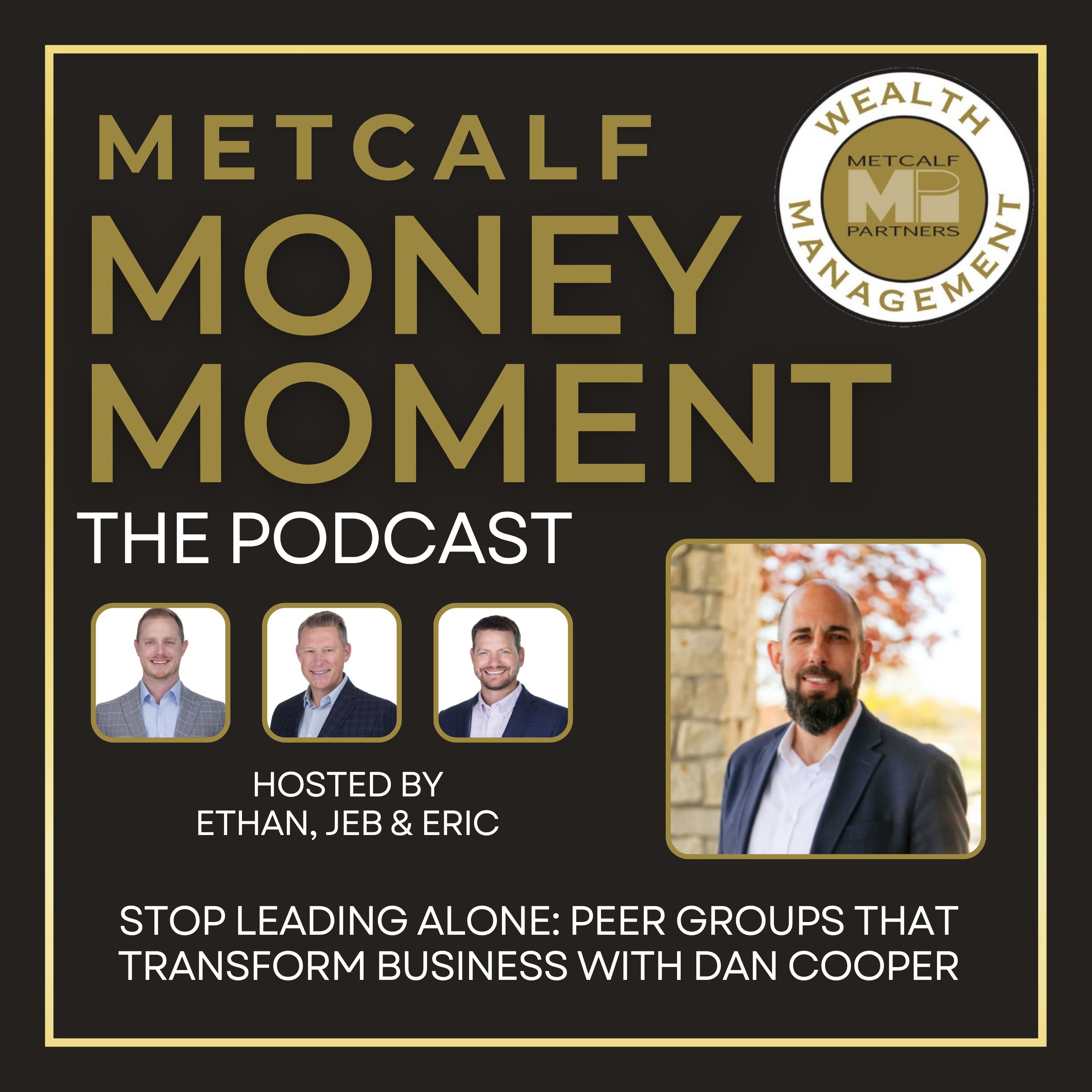
Ep 37 - Stop Leading Alone: Peer Groups That Transform Business with Dan Cooper
Jul 800:19:23Tap to summarizeWhat if the most powerful tool for growing your business was simply being in the right room? Peer advisory groups are changing how business owners lead, grow, and connect. On Metcalf Money Moment, Jeb, Ethan, and Eric sit down with Dan Cooper, CEO of Acumen, to unpack the real value of executive coaching and mastermind groups for today's leaders. Dan shares how bringing diverse professionals together sparks a personal renaissance through what he calls the Medici Effect. From accountability partnerships to faith-infused leadership development, this conversation goes beyond profit and digs into the whole person. Whether you run a startup or scale a billion-dollar operation, there is a peer group built for your season.What you will learn in this Episode:✅ How peer advisory groups create powerful accountability that drives real change in your business and personal life, moving leaders from isolation to intentional community built on trust and shared experience.✅ Why executive coaching combined with mastermind group dynamics produces the Medici Effect, helping business owners collect best practices across industries to accelerate their own business growth.✅ How Acumen's faith-infused approach to leadership development encourages whole-person conversations covering family, health, and faith alongside profit and business performance.Tune into the Metcalf Money Moment podcast for expert insights on wealth management and retirement planning! Join Jeb, Ethan, and Eric for practical Estate Planning strategies that you can implement to unlock financial clarity and confidence. Listen now to inspire your financial journey!TIMESTAMPS: 00:00 Dan Cooper on why executive leadership feels isolating and the power of peer advisory groups02:25 Meet Dan Cooper, CEO of Acumen, and the mastermind group model03:52 What makes a great peer advisory group member: ownership, decision-making, and business stage05:23 How Acumen's faith-based leadership approach creates a safe space for whole-person conversations08:30 Real stories of business owners tackling family, toxic employees, and business challenges together14:26 Acumen's business growth expansion into Denver, St. Louis, and Phoenix and what cities shareKEY TAKEAWAYS: 💎 Leadership at the top is not lonely; it is isolating, and the antidote is a trusted peer advisory group where you receive as much as you give. Dan Cooper built Acumen on this truth.💎 The most valuable outcome of mastermind groups is not one great idea but ongoing accountability. When you commit to something in front of peers, real and lasting change follows in your business performance.💎 Faith-based business communities like Acumen create permission for deeper conversations. When one person is vulnerable about a hard challenge, it opens the door for everyone to bring their full selves to the table.ABOUT THE GUEST: Dan Cooper co-founded ej4, a video-based online training company, in 2003 and served as its CEO until its sale in 2012. During his time with ej4, he grew the company from a startup to a nationally-recognized firm, serving clients including Pepsi-Cola, Dr. Pepper Snapple, Honeywell, Monsanto, and Syngenta. Channel partners included SAP and Oracle. As of 2012, ej4 was serving 1,000+ customers, delivering millions of program views, was highly profitable, and debt-free. Today, he is the CEO of Acumen, a mastermind community platform for CEOs and Owners of strong, growing companies.https://www.linkedin.com/in/dancooper2/Podcast: https://acumenimpact.com/sharpen-podcastDISCLAIMER:This information is not intended to be a substitute for specific individualized tax or legal advice. We recommend discussing your particular situation with a qualified tax or legal advisor.RESOURCES MENTIONED: Metcalf Partners - WebsiteJeb Graham - LinkedInEthan Hutchison - LinkedInEric Wymore - LinkedIn
Transcribe →
Ep 36 - What Wealthy Families Do Differently With Their Money
Jun 2400:21:39Tap to summarizeMany people think wealth building is about a lucky break. Jeb, Ethan and Eric of Metcalf Money Moment the Podcast prove otherwise. In this episode, they unpack the financial habits that quietly separate millionaires from everyone else: early investing, tax diversification, estate planning, and treating money as a tool for freedom rather than status. Whether you earn six figures or are just starting, these strategies are not exclusive to the ultra-rich. They are disciplines anyone can adopt, starting today. Tune in for a conversation that could change how you think about money for good.What you will learn in this Episode:Why wealth-building habits like paying yourself first and early investing matter more than any lucky windfall, and how starting in your 20s, even with limited cash flow, creates dramatically different outcomes over decades.How tax diversification strategies such as Roth conversions, after-tax savings accounts, and smart asset allocation help high earners avoid unnecessary tax burdens and build long-term financial freedom.Why truly wealthy families maintain organized systems, surround themselves with a professional team including CPAs and attorneys, and regularly review their estate planning to protect and grow generational wealth.Tune into the Metcalf Money Moment podcast for expert insights on wealth management and retirement planning! Join Jeb, Ethan, and Eric for practical Estate Planning strategies that you can implement to unlock financial clarity and confidence. Listen now to inspire your financial journey!TIMESTAMPS: 00:00 Introduction to wealth-building habits and common careers of millionaires04:21 The role of early investing, discipline, and long-term investing in building real financial freedom06:01Tax diversification, Roth conversions, and saving outside your 401 (k) for smarter retirement planning09:06 How wealthy families approach asset allocation, diversification, and avoiding get-rich-quick traps13:14 Using money as a tool: experiences, philanthropy, estate planning, and generational wealth conversations and book recommendations17:12 Final thoughts on building wealthKEY TAKEAWAYS: Wealth building is not about hitting a lucky investment. The wealthiest families Jeb, Ethan and Eric work with built their net worth through decades of consistent saving, long-term investing and disciplined financial planning, not windfalls or market timing.Tax diversification is one of the most overlooked tools in wealth management. Balancing pre-tax, post-tax, and Roth accounts helps protect families from excessive tax burdens in retirement, especially when required minimum distributions come into play.Wealthy families do not just accumulate money. They use it with purpose, funding experiences, practicing philanthropy, teaching their children about money, and building generational wealth through intentional giving and strong estate planning.DISCLAIMER:This information is not intended to be a substitute for specific individualized tax or legal advice. We recommend discussing your particular situation with a qualified tax or legal advisor.RESOURCES MENTIONED: Metcalf Partners - WebsiteJeb Graham - LinkedInEthan Hutchison - LinkedInEric Wymore - LinkedInThe Richest Man in Babylon - BookDie With Zero - BookThe Millionaire Next Door - Book
Transcribe →
Ep 35 - Is Long-Term Care Insurance Worth It? Aaron Clark Has Answers
Jun 1000:21:49Tap to summarizeMost people spend decades building wealth, yet a single extended stay in a nursing home can erase it within months. On Metcalf Money Moment, hosts Jeb, Ethan, and Eric sit down with long-term care insurance specialist Aaron Clark to discuss the real numbers behind nursing home costs, the power of a hybrid policy, and why retirement planning without an extended care strategy is incomplete. Aaron brings personal experience and industry data to show how protecting your financial plan now can mean the difference between leaving a legacy and leaving a burden.What you will learn in this Episode:Why your mid-50s is the optimal window to purchase long-term care insurance, how waiting until your 70s makes coverage nearly unattainable, and how rising premium payments can price out even motivated buyers who delay the decision.How a hybrid policy solves the biggest objection to long-term care insurance by converting unused benefits into a death benefit for your heirs, ensuring that 100% of your policy value pays out to someone at some point.Why you do not need to insure for the full nursing home cost, and how coordinating Social Security, pensions, and other assets to bridge the gap makes long-term care coverage far more affordable for those on a fixed income.Tune into the Metcalf Money Moment podcast for expert insights on wealth management and retirement planning! Join Jeb, Ethan, and Eric for practical Estate Planning strategies that you can implement to unlock financial clarity and confidence. Listen now to inspire your financial journey!TIMESTAMPS: 00:00 Long-term care insurance statistics show a 70% chance of needing extended care after turning 6502:15 Nursing home costs average $9,000 monthly, and memory care can push costs even higher05:40 The best age to buy long-term care insurance and why your 70s may be too late to qualify08:25 How a hybrid policy eliminates use-it-or-lose-it fears through death benefit conversion for heirs12:05 Finding policies that fit a client’s needs15:58 Overfunded life insurance as a tax-free income tool when Roth IRA limits restrict high earnersKEY TAKEAWAYS: Families do not need to insure for the full nursing home cost. By accounting for existing income sources and assets, a well-designed long-term care insurance plan can cover the gap at a far more manageable premium level.A joint plan built on a hybrid policy chassis is the most cost-effective structure for couples, requiring only one death benefit while giving both spouses full access to extended care coverage throughout their lifetime.Estate planning for high-net-worth individuals depends heavily on life insurance as the most reliable tool for preventing estate tax from consuming the legacy a family has spent decades working to protect and preserve.ABOUT THE GUEST: A graduate of Kansas State University, Aaron Clark knew that when things didn’t work out to become a rapper or a point guard for the Chicago Bulls or the LA Lakers, the financial services industry was where he needed to be. Having been an agent for over 20 years, Aaron enjoys and appreciates the opportunity to work with other agents because he can relate to them. He has field sales experience, which gives him a competitive advantage and shows that OCI is more than a typical IMO. Aaron has been married to his high school sweetheart, Abie, for over two decades. They have 3 children: Jameson, Meredith, and Garret, and spend each day teaching them that being a KU fan is just not ok.https://www.linkedin.com/company/oci-insurancehttps://www.facebook.com/ociserviceshttps://www.ociservices.com/DISCLAIMER:This material contains only general descriptions and is not a solicitation to sell any insurance product or security, nor is it intended as any financial or tax advice. For information about specific insurance needs or situations, contact your insurance agent. This article is intended to assist in educating you about insurance generally and not to provide personal service. They may not take into account your personal characteristics such as budget, assets, risk tolerance, family situation or activities which may affect the type of insurance that would be right for you. In addition, state insurance laws and insurance underwriting rules may affect available coverage and its costs. Guarantees are based on the claims paying ability of the issuing company. If you need more information or would like personal advice you should consult an insurance professional. You may also visit your state’s insurance department for more information.Aaron Clark, and OCI Insurance is not affiliated with or endorsed by LPL Financial and Metcalf Partners Wealth ManagementRESOURCES MENTIONED: Metcalf Partners - WebsiteJeb Graham - LinkedInEthan Hutchison - LinkedInEric Wymore - LinkedIn
Transcribe →
Ep 34 - The Silent Tax Bomb That Could Cost You in Retirement
May 2000:23:38Tap to summarizeMost people think their financial advisor's job is picking winning investments. Jeb, Ethan, and Eric of Metcalf Money Moment want to change that. In this episode, they expose the silent tax bomb, the stealth costs that inflate your tax bill in retirement without warning. From capital gains tax on appreciated accounts to required minimum distributions that push you into a higher bracket to Medicare premium surcharges and the social security tax trap, the hosts walk through every major risk and the strategies that defuse them, including tax-loss harvesting, Roth conversions, and donor-advised funds. Your biggest lifetime expense is taxes. This episode shows you how to fight back.What you will learn in this Episode:How capital gains tax works inside non-retirement accounts, including the critical difference between long-term and short-term gains, and why holding mutual funds in a taxable account can trigger tax drag you never saw coming.Why required minimum distributions can silently push retirees into a higher tax bracket and how strategic early withdrawals, Roth conversions, and account sequencing can shrink that future burden before it hits.How the social security tax trap and Irma Medicare premium surcharges work together to punish higher earners in retirement, and why coordinating with your advisor on income timing is one of the most valuable moves you can make.Tune into the Metcalf Money Moment podcast for expert insights on wealth management and retirement planning! Join Jeb, Ethan, and Eric for practical Estate Planning strategies that you can implement to unlock financial clarity and confidence. Listen now to inspire your financial journey!TIMESTAMPS: 00:00 Retirement tax planning and the silent tax bomb concept03:51 Ethan breaks down capital gains tax, long-term vs. short-term rates, and unrealized gains in taxable accounts07:02 How tax loss harvesting and asset location protect your non-retirement portfolio from unnecessary tax drag10:13 Eric explains the three-leg retirement income model and how each bucket affects your tax-efficient retirement income12:57 The required minimum distribution trap: how RMDs can spike your tax bracket and what to do before age 7314:07 Social security taxation, Irmaa Medicare premiums, and why your income level determines your retirement costs18:20 Jeb wraps up with Roth conversions, qualified charitable distributions, and what to expect from a comprehensive wealth managerKEY TAKEAWAYS: Asset location matters as much as investment selection. Placing tax-inefficient assets, such as actively managed mutual funds, outside taxable accounts and using ETFs strategically within them can meaningfully reduce your annual capital gains tax exposure without changing your overall investment risk.The gap between ages 65 and 73 is your most powerful window for Roth conversion planning. Moving money from pre-tax accounts into a Roth before required minimum distributions kick in can dramatically lower your lifetime tax bill, even if it costs a little more in taxes today.Donor-advised funds and qualified charitable distributions are two underused tools that offer a double tax advantage, letting charitably inclined investors reduce both their taxable income and their embedded capital gains tax liability at the same time.DISCLAIMER:This information is not intended to be a substitute for specific individualized tax or legal advice. We recommend discussing your particular situation with a qualified tax or legal advisor.RESOURCES MENTIONED: Metcalf Partners - WebsiteJeb Graham - LinkedInEthan Hutchison - LinkedInEric Wymore - LinkedIn
Transcribe →
Ep 33 - Maximize Your Business Valuation Before You Exit with Stephen Hilborn & Timothy Hosie
May 600:22:46Tap to summarizeMost business owners spend decades building something valuable and far too little time planning how to actually leave it. On Metcalf Money Moment, Jeb, Ethan, and Eric sit down with Stephen Hilborn and Timothy Hosie of Planned Exit Partners to explore business exit strategy from every angle. Whether it is a private equity deal, an ESOP, or a management buyout, the guests reveal what truly drives business valuation, how to reduce key-man risk and customer concentration, and why starting exit planning at least 5 years out creates the most options and the most value.What you will learn in this Episode:Why business exit strategy planning should begin well before the five-year mark and how starting early opens up more exit planning pathways.How reducing key man risk and customer concentration directly increases your EBITDA multiple and makes your company more attractive to private equity buyers and strategic acquirers.What tools, like exit readiness assessments, business valuation reports, and discovery checklists, can help owners understand where gaps exist in their business transfer plan so they can close those gaps before going to market?Tune into the Metcalf Money Moment podcast for expert insights on wealth management and retirement planning! Join Jeb, Ethan, and Eric for practical Estate Planning strategies that you can implement to unlock financial clarity and confidence. Listen now to inspire your financial journey!TIMESTAMPS: 00:00 Planned Exit Partners frame the conversation around exit planning03:45 Why starting exit planning early creates more options and better business valuation outcomes05:53 The team discusses the scale of business transfer demand and how the Exit Planning Institute data reveals owner readiness gaps07:00 Breaking down ESOP, management buyout, and family succession12:23 Private equity fund structure and why lower middle market buyers typically offer higher EBITDA multiples to business owners17:30 Breaking down the three risks that drive business valuationKEY TAKEAWAYS: Succession planning is not a one-time event. It is an ongoing process that requires years of intentional effort to strengthen management, improve financial reporting, and reduce owner dependency, so the business can stand on its own before it ever goes to market.Seller financing and installment structures are common across nearly every business transfer pathway, including private equity, family succession, and management buyouts, meaning structure and payment terms matter just as much as the headline valuation number.Enterprise value is built or lost long before the sale conversation begins. Owners who address customer concentration, document processes, and secure key leadership years in advance.ABOUT THE GUESTS: Timothy Hosie is the Founder and Managing Director at Planned Exit Partners, advising lower-middle-market business owners through exit planning and sell-side M&A transactions. With over eight years of experience across transportation, construction, marketing, and industrial services, Tim helps owners navigate the sale process with clarity while aligning outcomes to their financial and personal goals.Stephen Hilborn is Managing Director at Planned Exit Partners, supporting business owners through every stage of ownership transition. He leads sell-side, corporate development, and exit planning engagements, guiding owners through exit options, readiness assessments, and succession planning. His industry expertise spans aviation, construction, engineering, and manufacturing.Planned Exit Partners - LinkedInPlanned Exit Partners - WebsiteDISCLAIMER:This information is not intended to be a substitute for specific individualized tax or legal advice. We recommend discussing your particular situation with a qualified tax or legal advisor.RESOURCES MENTIONED: Metcalf Partners - WebsiteJeb Graham - LinkedInEthan Hutchison - LinkedInEric Wymore - LinkedIn
Transcribe →
Ep 32 - Investing During Uncertainty: War, Elections & Your Money
Apr 2200:27:32Tap to summarizeInvesting amid uncertainty is the focus of this week's Metcalf Money Moment, as Jeb, Ethan, and Eric unpack what the data say about market volatility during wars and elections. Across 20 major geopolitical events since World War II, stocks recovered in an average of 47 trading days. Election year investing also shows surprising strength, with 83% of presidential election years producing positive S&P 500 returns. The team explores how to protect your portfolio during geopolitical uncertainty and why staying the course almost always beats reacting to headlines.What you will Learn in this Episode:✅ How investing during uncertainty has historically played out across major conflicts, including the Korean War, Cuban Missile Crisis, and 9/11, and why stock market recovery tends to happen faster than most investors expect.✅ Why election year investing is less about which party wins and more about the market cycle itself, and what the data shows about midterm elections and the strong performance that typically follows them.✅ Practical steps for managing market volatility, including opportunistic rebalancing, building a cash allocation buffer, and why dollar cost averaging can smooth your entry point during turbulent periods.Tune into the Metcalf Money Moment podcast for expert insights on wealth management and retirement planning! Join Jeb, Ethan, and Eric for practical Estate Planning strategies that you can implement to unlock financial clarity and confidence. Listen now to inspire your financial journey!TIMESTAMPS: 00:00 Introduction to investing during uncertainty, war, and what markets historically do during geopolitical risk03:41 Eric reviews stock market recovery patterns across the Korean War, Cuban Missile Crisis, and Gulf War10:07 Jeb breaks down election year investing data, party performance, and the truth about political impact on the S&P 50013:50 What the midterm election cycle means for portfolio management and why 2026 may see a significant market drawdown16:18 Discussion of diversification, rebalancing, risk and the importance of cash allocation22:45 The team tackles the question of market timing and why dollar cost averaging versus lump sum investing matters25:01 Why compound interest and disciplined savings rates build more wealth than trying to time or predict the marketKEY TAKEAWAYS: 💎 History shows that geopolitical risk creates short-term fear, but investor emotions are often the biggest threat to long-term wealth. The average drawdown across 20 major conflicts was just 5%, and markets recovered within an average of 47 trading days.💎 A well-structured financial plan aligned with your risk tolerance is your best defense against volatility. Clients who maintain a stable asset allocation for one to two years rarely need to react when markets drop.💎 Compound interest and disciplined saving rates build more wealth over time than any attempt at market timing. The most financially successful people focus on what they can control, not on predicting the next crisis.DISCLAIMER:This information is not intended to be a substitute for specific individualized tax or legal advice. We recommend discussing your particular situation with a qualified tax or legal advisor.RESOURCES MENTIONED: Metcalf Partners - WebsiteJeb Graham - LinkedInEthan Hutcheson - LinkedInEric Wymore - LinkedIn
Transcribe →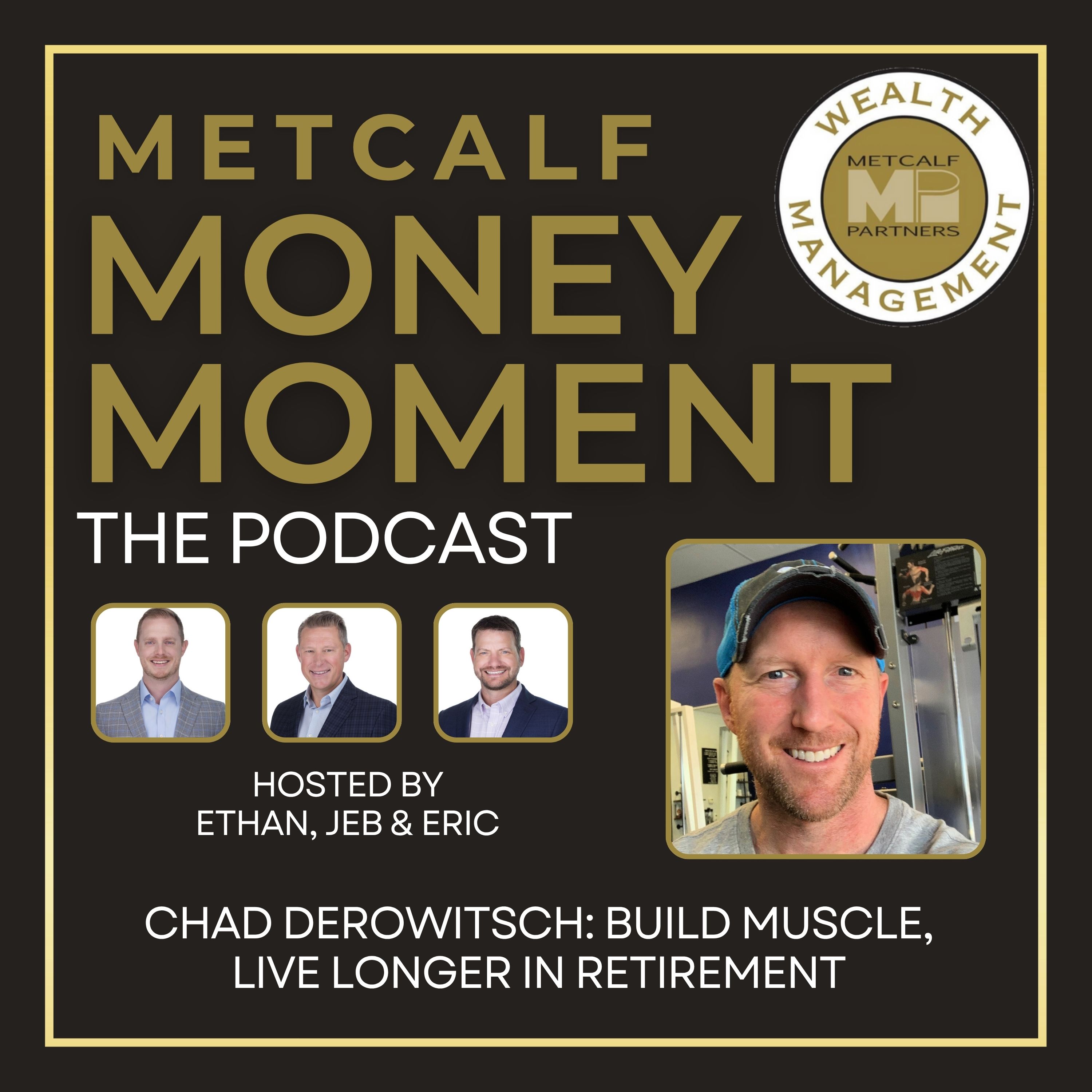
Ep 31 - Chad Derowitsch: Build Muscle, Live Longer in Retirement
Apr 800:20:54Tap to summarizeWhat if the most important investment you make before retirement has nothing to do with money? On Metcalf Money Moment, hosts Jeb, Ethan, and Eric sit down with longevity coach Chad Derowitsch of KCFITCLUB to talk about healthy aging, muscle mass, and why your body is your greatest asset. Chad breaks down how strength training, smart protein intake, and the right supplementation, including creatine, can transform your retirement years. Whether you are 45 or 70, this episode delivers a practical, data-driven roadmap to staying strong, sharp, and independent for the long haul.What you will Learn in this Episode:Why muscle mass is considered your most important longevity organ and how strength training just two to three times per week can protect your independence as you age, reducing the risk of entering a sedentary, disease-prone lifestyle in retirement.How protein intake powers protein synthesis, fuels your metabolism, and why older adults actually need more protein than younger people to maintain lean body mass, making nutrition the true foundation of healthy aging.How creatine supplements and other key supplements like omega-3s, probiotics, and magnesium play in filling nutritional gaps, supporting brain health, improving sleep recovery, and keeping your body performing at its best after 50.Tune into the Metcalf Money Moment podcast for expert insights on wealth management and retirement planning! Join Jeb, Ethan, and Eric for practical Estate Planning strategies that you can implement to unlock financial clarity and confidence. Listen now to inspire your financial journey!TIMESTAMPS: 00:00 Chad introduces holistic wellness and his role as a longevity coach at KCFITCLUB. 03:22 Muscle mass is your longevity organ, strength training slows age-related loss, and nutrition being 80% of an active lifestyle05:34 Discussion of the importance of supplements, the biggest nutrition mistakes people make 10:20 Chad's five steps for easing into healthy aging with consistency14:20 The role of sleep recovery, mobility training, and inflammation recovery in a complete fitness programKEY TAKEAWAYS: Body composition matters far more than scale weight. Chad explains why shifting focus from pounds lost to body fat percentage and lean muscle mass gives a far more accurate picture of your true health and long-term vitality.Nutrition accounts for roughly 80% of your fitness results. Undereating, skipping protein, or relying on low-carb strategies strips away the very muscle mass your metabolism depends on, leading to yo-yo weight cycling and long-term decline.Mental health and physical health are deeply connected. From journaling and faith to the natural release of hormones through strength training, guarding your mind is just as critical as fueling your body for a thriving retirement lifestyle.ABOUT THE GUEST: Chad Derowitsch is a longevity and metabolic health coach and the founder of KCFITCLUB. With over 20 years of coaching experience and a background in Exercise Science and business (MBA), Chad specializes in helping busy professionals improve muscle mass, metabolic health, and long-term physical independence. His approach combines strength training, body composition analysis, and structured nutrition strategies to help clients stay strong, energetic, and capable as they age.Chad Derowitsch - LinkedInKCfitclub- FacebookChad Derowitsch - InstagramKCfitclub - WebsiteDISCLAIMER:This information is not intended to be a substitute for specific individualized tax or legal advice. We recommend discussing your particular situation with a qualified tax or legal advisor.RESOURCES MENTIONED: Metcalf Partners - WebsiteJeb Graham - LinkedInEthan Hutchison - LinkedInEric Wymore - LinkedIn
Transcribe →
Ep 30 - How AI Is Reshaping Wealth Management and Your Future
Mar 2500:26:42Tap to summarizeArtificial intelligence investing is no longer a concept of the future. It is reshaping wealth management today. Jeb, Ethan and Eric break down the key AI stocks and players driving this revolution, from model builders like OpenAI and Anthropic to infrastructure giants like Nvidia. They explore how portfolio diversification remains essential as AI transforms industries, including healthcare, logistics and finance. They also discuss real risks, such as hype cycles and market volatility, and share how their firm uses AI tools to serve clients better. This episode is your guide to navigating the AI era with confidence.What you will Learn in this Episode:Who the major artificial intelligence investing players really are, from foundational model builders like OpenAI and Anthropic to infrastructure leaders like Nvidia and Microsoft, and how they each fit into the broader AI stocks landscape that is transforming the global economy.How AI productivity gains are already delivering measurable results across wealth management, healthcare, logistics and retail, and why companies that adopt AI early are gaining a significant competitive edge over those that do not.Why portfolio diversification remains your most powerful tool in the AI era, and how to avoid the common mistakes of chasing hype or making concentrated bets in a fast-moving investment strategy environment.Tune into the Metcalf Money Moment podcast for expert insights on wealth management and retirement planning! Join Jeb, Ethan, and Eric for practical Estate Planning strategies that you can implement to unlock financial clarity and confidence. Listen now to inspire your financial journey!TIMESTAMPS: 00:00 Artificial intelligence investing overview and why AI is the biggest topic in business today03:08 Real-world AI applications in wealth management: Jump AI and wealth.com tools explained06:00 Key AI stocks and players: model builders, semiconductor stocks, and cloud infrastructure12:00 The AI gold rush analogy and how AI productivity is improving margins at Walmart and Costco17:23 Market volatility, regulation, economic disruption, and investment strategy for the next decade23:46 There will be job disruptions in certain industries as a result of AIKEY TAKEAWAYS: You do not need to buy individual AI stocks to benefit from the artificial intelligence boom. Broad index investors already have significant exposure through the Magnificent Seven, which accounts for nearly 50% of the S&P 500's weighting today.Artificial intelligence investing is not only about tech companies. AI is quietly improving profit margins across healthcare, logistics, retail and finance, meaning almost every sector in a diversified portfolio stands to benefit from wider adoption.The professionals who embrace AI productivity tools will outpace those who do not. As Jeb, Ethan and Eric note, the financial advisor who refuses to use AI is the one most at risk, not the profession itself.DISCLAIMER:This information is not intended to be a substitute for specific individualized tax or legal advice. We recommend discussing your particular situation with a qualified tax or legal advisor.RESOURCES MENTIONED: Metcalf Partners - WebsiteJeb Graham - LinkedInEthan Hutchison - LinkedInEric Wymore - LinkedInSomething big is happening in AI by Matt Shumer
Transcribe →