
Podcast
Micah Zarin Podcast
Hosted by Micah Zarin · EN
Teenager asks smart people dumb questions. Formerly titled Elite Ball Knowledge Philosophy (EBKP).
21episodes
Episodes
Newest firstAll episodes
Arguing With a Logician About Reality (w/ Graham Priest)
May 601:06:41Tap to summarizeGraham Priest
Transcribe →Why Gen Z Can’t Connect (w/ Max Lippmann)
Apr 2200:54:06Tap to summarize00:00 Intro + phone ban and distraction02:30 Why Gen Z feels lonely06:15 Emotional intelligence and gender09:58 Micro-communities and loss of shared culture12:19 Third spaces disappearing15:58 Doomscrolling and addiction24:32 Why you don’t do what you want (self-sabotage)48:07 Thinking, AI, and pure math
Transcribe →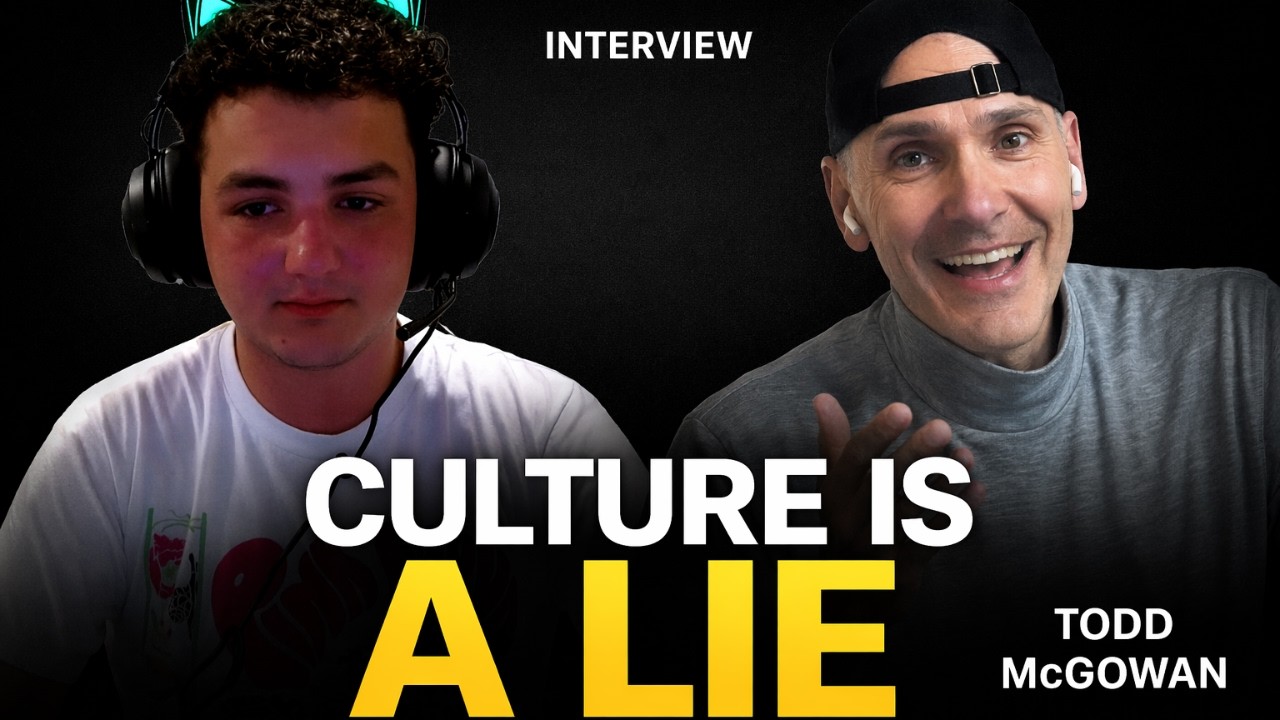
Is Culture Fake? (w/ Todd McGowan)
Apr 1601:08:10Tap to summarizeRecommended watch - https://youtu.be/K1kxCBvExsU?si=nQbYKDq1n0X_-mDf Todd McGowan returns to the podcast for a conversation about Lacan, language, desire, culture, AI, and the mental health crisis. We talk about the master signifier, the sinthome, why subjectivity emerges where language fails, why people desire things that do not make them happy, and why social media seems engineered to intensify anxiety, guilt, and psychic fragmentation. We also get into race, culture, identity, purity politics, trans subjectivity, domestication, and whether large language models could ever truly desire anything or become subjects in the psychoanalytic sense. Somewhere in there, we also discuss Hegel, Star Wars, Michael Phelps, and more. 00:00 – Intro / Todd McGowan returns 00:52 – What is the sinthome? (Lacan + Joyce) 04:50 – What is the master signifier? 07:01 – Cultural appropriation and instability of culture 09:19 – Why culture isn’t “owned” (and why it’s always oppressive) 12:27 – Is all culture oppressive? 13:40 – Race, pride, and why race doesn’t “exist” biologically 16:58 – Should you be proud of intelligence? 17:39 – Language, abstraction, and why clarity can confuse 19:20 – Israel, Zionism, and what people actually mean 22:06 – Why race is a product of racism 23:00 – Signifier vs signified vs referent 27:15 – Naming, identity, and why your name isn’t “you” 30:34 – Subjectivity = where language fails 32:27 – What is the subject? (Kant, Hegel, Freud) 35:05 – How desire forms (and why it resists authority) 37:35 – Why you can’t know your own unconscious 38:45 – LLMs, language, and meaning 40:22 – Can AI be a subject? 43:40 – Does AI have desire? 46:39 – Can anything exist without desire? (animals vs humans) 48:54 – Domestication and “neuroticizing” pets 49:02 – Trans identity, biology, and desire 52:17 – Desire as collision between body and language 55:21 – Why desire ≠ what you want 57:24 – Michael Phelps, success, and emptiness 58:23 – The mental health crisis (social media + superego) 1:00:00 – Attention spans and students post-social media 1:02:21 – Purity culture, canceling, and moral signaling 1:03:08 – Hegel’s “beautiful soul” 1:04:27 – Is politics replacing religion? 1:04:58 – Loss of public space / third spaces 1:06:24 – When should you push back vs ignore people? 1:07:33 – Life advice: thinking dialectically
Transcribe →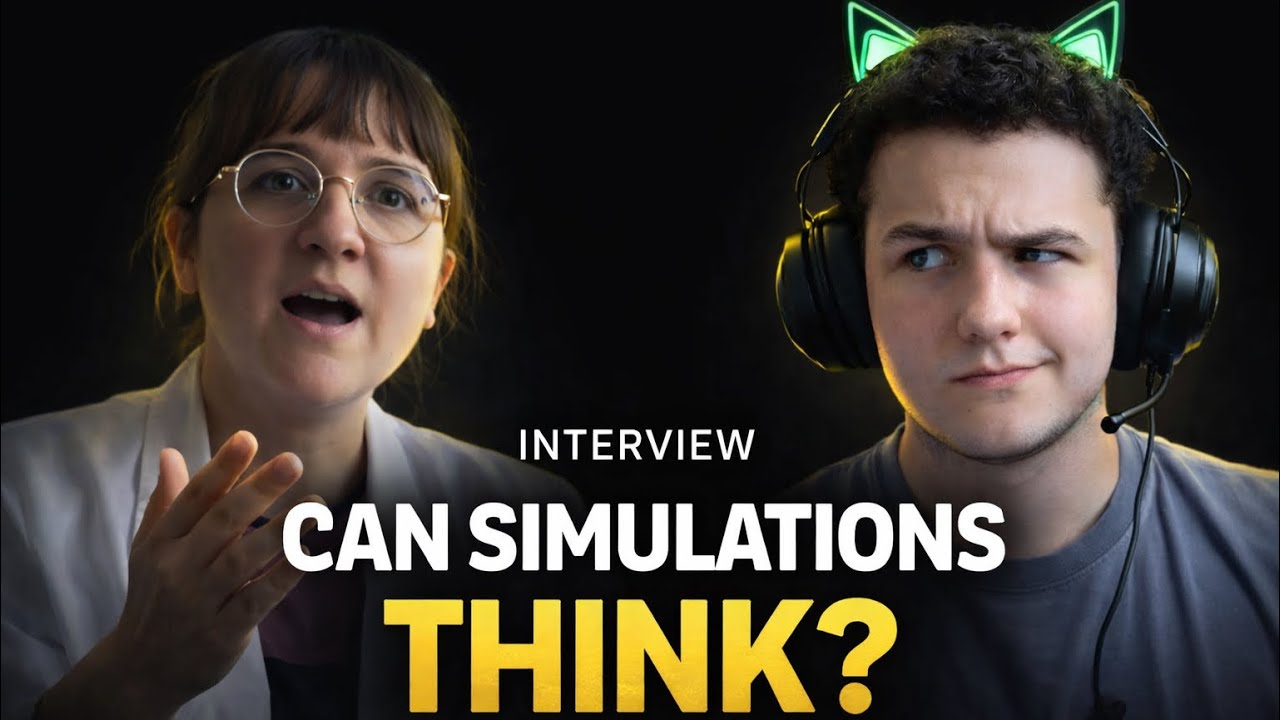
Can Science Explain Consciousness (w/ Grace Lindsay)
Apr 1000:45:58Tap to summarizeCould a computer simulation be conscious? I sat down with Grace Lindsay, professor of psychology and data science at NYU and computational neuroscientist, to talk about modeling the brain, free will, emergence, the hard problem of consciousness, and whether uploading your mind to a computer would actually be you. We cover: • The fruit fly connectome and what’s still missing • Is the brain deterministic or probabilistic? • Why randomness doesn’t save free will • What the “self” actually is • Whether a self-modeling system could be conscious • The line between science and philosophy Subscribe for more conversations on philosophy, neuroscience, and the biggest questions. Substack: https://substack.com/@micahzarin Instagram: @ebkphilosophy X: @micahzarin
Transcribe →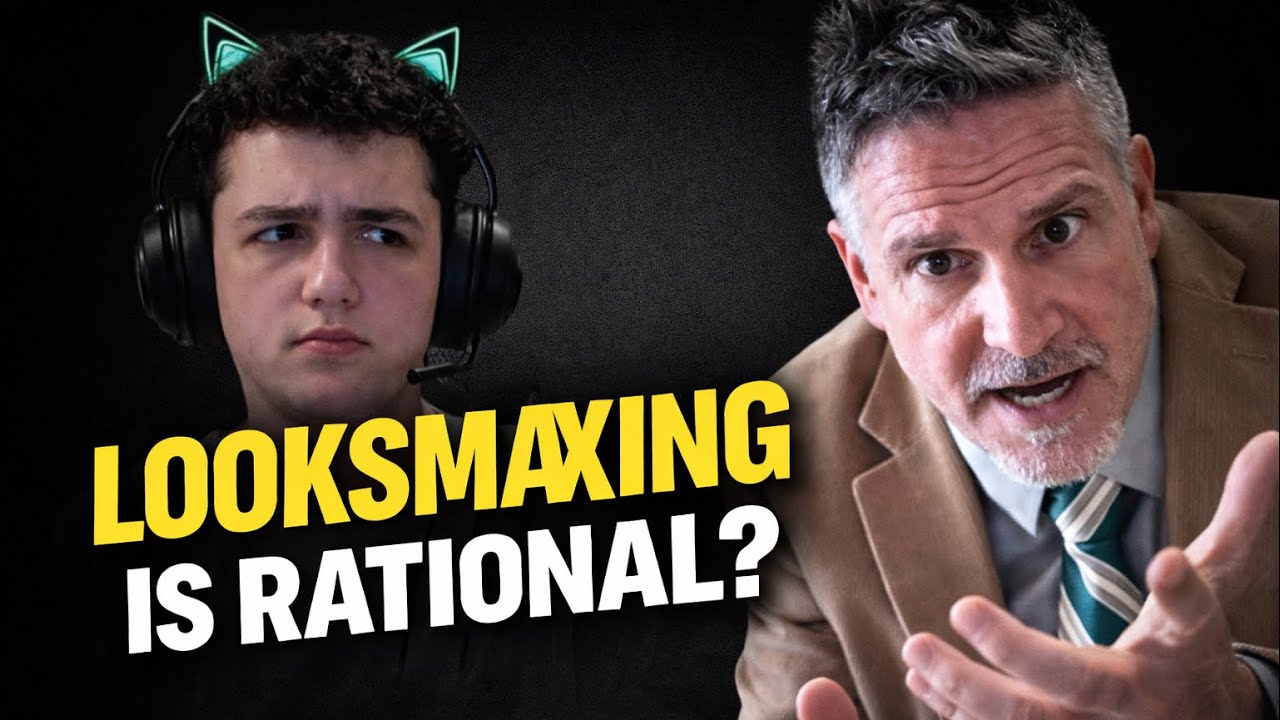
Is Looksmaxing Rational? (w/ Dan Demetriou)
Apr 401:09:17Tap to summarizeMy Substack: https://substack.com/@micahzarin Dan's website: https://www.dandemetriou.com/ Dan's paper "Virgin vs. Chad: On Enforced Monogamy as a Solution to the Incel Problem": https://philpapers.org/rec/DEMVVC Dan's ResearchGate: https://www.researchgate.net/profile/Daniel-Demetriou References mentioned: Bowling Alone — Robert Putnam Calhoun's Mouse Utopia Experiment (1950s) William Costello's research on cross-sex mind reading (UT Austin / David Buss lab) Malcolm & Simone Collins, Basecamp Podcast Nick Fuentes "Jester Maxxing" clip 0:00 Intro 0:24 What do you make of looksmaxing? 2:30 The loss of third spaces (Bowling Alone) 4:37 Why guys lack emotional literacy 6:15 Charisma vs. looks on dating apps 8:07 The proxy-vs-goal trap (deadlift maxing) 11:00 The PSI scale and sexual market value 12:35 Who is Clavicular? 13:35 "Dating girls is gay" — courtship as simping 15:32 Jester maxing and the simp problem 17:48 Validation without sex 19:53 Situationships vs. relationships 21:41 Trading richness for convenience 23:33 Short-term vs. long-term mating strategies 27:27 The Mouse Utopia and the Beautiful Ones 30:33 The peacock alpha vs. the patriarch alpha 32:03 Why discomfort around the opposite sex has spiked 34:53 Competing with the entire city 37:50 Why guys actually are being creepy 39:11 What courtship used to look like 43:08 Playing hard to get meets harassment culture 47:49 The male over-perception bias 52:40 25% of women think asking for coffee is harassment 54:20 Is cultural fragmentation the real problem? 58:46 Incel violence and the limits of "let them die out" 59:51 The political divide between young men and women 1:01:34 The Scandinavian paradox — more freedom, more divergence 1:03:48 Redistribution and the male loneliness problem 1:07:31 "Monogamy was the socialism of women"
Transcribe →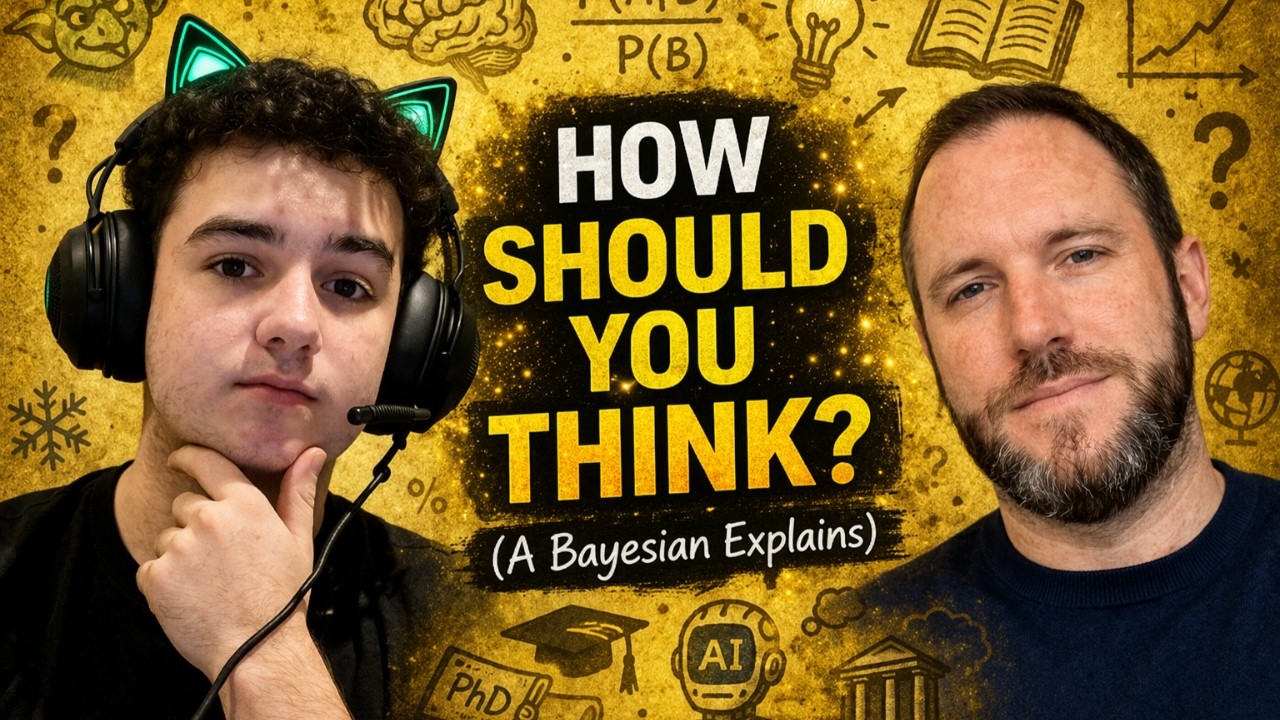
Can You Choose Your Beliefs? (w/ Mike Titelbaum)
Mar 2601:05:50Tap to summarizeMike Titelbaum is a professor of philosophy at the University of Wisconsin–Madison whose work focuses on epistemology, especially Bayesian epistemology, probability, and how we form rational beliefs under uncertainty. His research explores how evidence should guide belief, how confidence levels change over time, and how people should respond to disagreement. He’s also the author of Quitting Certainties, a book that examines the limits of certainty and how rational thinking actually works in real life. 00:00 Introduction to Belief and Evidence 01:32 The Nature of Belief and Evidence 04:40 Philosophical Perspectives on Evidence 07:14 Induction vs. Deduction in Reasoning 09:57 Navigating Uncertainty in Life 13:03 Bayesian Epistemology Explained 15:48 Confidence and Self-Perception 18:27 The Role of Higher Order Confidence 21:26 Disagreement and Epistemic Bubbles 31:37 Exploring Astrology and Epistemic Bubbles 33:50 The Role of Experience in Evidence 36:34 The Uniqueness Thesis in Philosophy 39:12 Challenges to the Uniqueness Thesis 43:20 AI and Bayesian Epistemology 51:41 The Future of Philosophy in the Age of AI
Transcribe →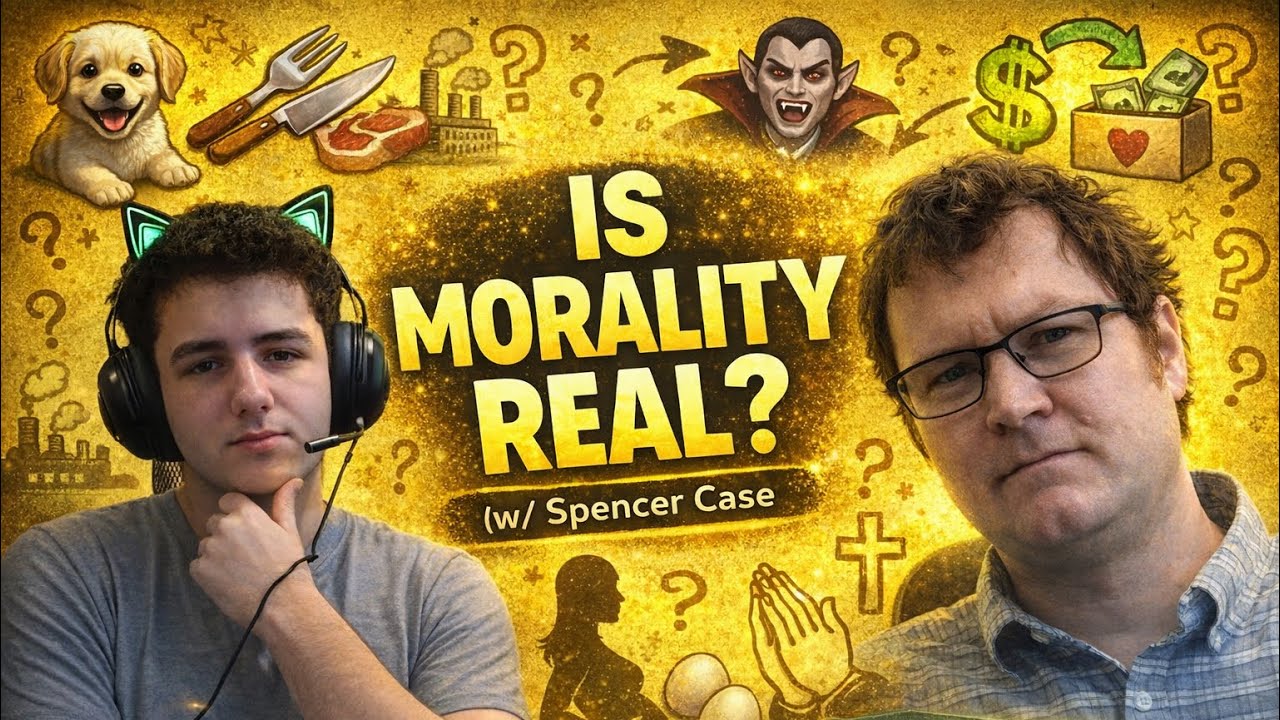
Should a Vampire Starve to Death? (w/ Spencer Case)
Mar 1900:48:19Tap to summarizeSpencer Case is a philosopher specializing in moral realism, ethics, and political philosophy. He’s the author of Why It’s OK to Be Patriotic and has published extensively on the relationship between epistemic and moral reasons. We talked about whether morality is something real or something we made up, his argument that if we have reasons to believe things then we have moral reasons too, why the error theorist position collapses under its own logic, whether ethical veganism is as airtight as philosophers claim, Peter Singer’s drowning child argument and why Singer himself softened his conclusion, whether doing philosophy is morally justified when you could be doing something more directly useful, mathematical realism and what the trillionth digit of pi tells us about discovery, moving from Mormonism to atheism to hopeful agnosticism, and why you should see your own views as a lifelong draft you never stop revising. 0:00 Hook 0:24 From Epistemic Reasons to Moral Reasons 6:34 Are Moral Truths the Same Type of Thing as Factual Truths? 7:36 Mathematical Realism and the Language of Discovery 15:34 The Case for Ethical Veganism 22:45 Vampires, Puppies, and Weird Thought Experiments 31:55 Are Philosophers Intellectually Honest? 37:12 Is Doing Philosophy Morally Wrong? 40:30 Life Isn’t Meant to Be Minmaxed 43:45 Mormon to Atheist to Hopeful Agnostic 46:29 Spencer’s Advice
Transcribe →
Neurodiversity, Abstraction, and Predictive Minds | Anders Sandberg Conversation
Mar 1501:33:51Tap to summarizeWhy do some people think so differently from everyone else? In this conversation, I talk with Anders Sandberg about how the brain learns to see, why abstraction comes more naturally to some people than others, how attention and inhibition shape personality, what neurodiversity actually changes, and why insight so often fails to transform a life. We also get into predictive processing, psychedelics, mysticism, creativity, academia, and the strange process of becoming yourself. Anders is a researcher, futurist, and one of the most genuinely wide ranging thinkers I’ve spoken with. This ended up being a conversation about minds, learning, temperament, and what it means to explore the world without getting trapped in a single framework. 0:00 Ideas 2:28 Neuroscience 15:36 Development 23:18 Impulsivity 25:30 Neurodivergence 31:02 Optimism 46:28 Toddlers 49:54 Psychedelics & Mysticisim 1:20:00 Life
Transcribe →
Delete Suffering From Human DNA | David Pearce
Mar 100:53:29Tap to summarizeLINKS https://x.com/@micahzarin https://substack.com/@micahzarin 0:00 – Suffering 18:15 – Psychedelics 27:49 – Immortality and Eugenics 32:06 – Animals 42:40 – AI, QM, and The Brain
Transcribe →
What Makes an Experience Yours? | Michael Huemer
Feb 2300:53:18Tap to summarizeMichael Huemer is a philosophy professor at the University of Colorado Boulder, author of The Problem of Political Authority and Skepticism and the Veil of Perception.We talk about phenomenal conservatism, anarcho-capitalism, whether AI could be conscious, what makes an experience belong to someone, and whether your dog has concepts. 0:00 How Huemer forms his beliefs 0:45 Phenomenal conservatism 3:36 Descartes and radical doubt 5:04 Anarcho-capitalism 24:21 AI — net positive or net negative? 25:57 Could AI be conscious? 28:19 Where does consciousness start? 36:09 Is the mind the only teleological thing? 42:28 Can you have experience without a self? 50:45 Do animals have concepts? 52:30 Advice for 17-year-olds
Transcribe →