← Mick Unplugged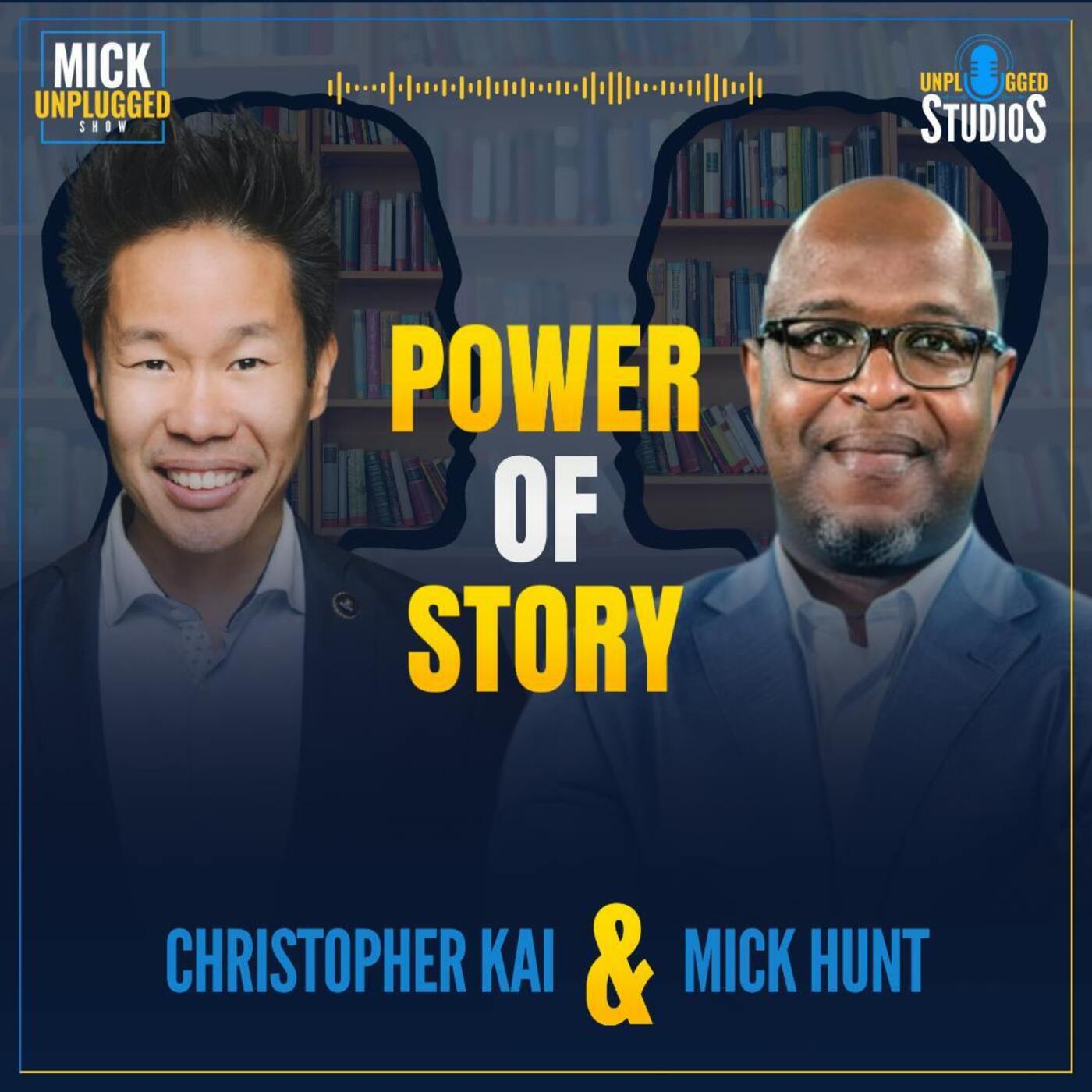
Loading summary
Transcript40 lines
- [00:00]
A
If you look at society before it was even written paper that the Chinese invented thousands of years ago, it was stories that your mom and dad talked to you about your grandfather, your grandmother. And that's why when we talk about life and what I talk about stories, it's not a coincidence that every single thing I do, at least for my brand gift directs talks. I believe your stories give to the world.
- [00:21]
B
Welcome to Mick Unplugged, the number one podcast for self improvement, leadership and relentless growth. No fluff, no filters, just hard hitting truths, unstoppable strategies and the mindset shifts that separate the best from the rest. Ready to break limits? Let's go.
- [00:47]
C
Ladies and gentlemen, welcome to another exciting episode of Mick Unplugged. And today we've got a special one for you. We're talking about going from the streets of Queens to global stages across five countries. He's the CEO and founder of the gifted professional speakers and the man whose insights have shaped Fortune 500s, billionaire entrepreneurs and global change makers. Today we're going to go deep into legacy, purpose and the business of storytelling with my brother, my friend, the incomparable Mr. Christopher Kai. Christopher, how are you doing tonight?
- [01:21]
A
What's up, Mick? World's watching. Give Mick some love.
- [01:24]
C
Let's go, let's go, let's go. Chris, man, you know, met you what, seven, eight months ago. We were in LA at a Les Brown event. And I've been a huge follower of yours on social media, you know, looked at a lot of your content, studied a lot of your content. And when I met you, man, like what I loved and what I appreciated was that you were just a dude.
- [01:47]
A
Yeah, right.
- [01:48]
C
Like you're just a dude at the core. And we were cutting up, we were doing the robot out on the dance floor, like you were about to break dance, like with your New York flair and all that. But I just appreciated the fact that you were a dude, bro.
- [02:01]
A
Yeah, I mean, frankly, making when you meet people, when you're on stages, I mean, I literally wrote a book about networking with billionaires, executives, and I've easily met over 100 billionaires and celebrities and royalty. And so we actually meet that level of success, at least on the outside, you start seeing what do you want to be on the inside. And if you saw that or more felt my vibe as a dude, because that's what my mom raised me as. Right. She was a immigrant from Hong Kong. My father, my mother immigrated from Hong Kong to the US and they raised three boys. I'm the youngest one. So I always remember I want to remember my roots, right? So when I meet you, good dude, good heart, good spirit. Because at the end of the day it's easy to flex and show certain things you might have which is, which is cool. Everyone wants to do their own vibe, but they the fact that you feel that way, I'm grateful because that's the vibe I want from people that I meet, you know?
- [02:49]
C
Yeah, man, I love it, brother. So growing up in Queens, you know, I like to ask people about their. Because that thing, that is their purpose, their real reason of doing what they do. If I were to say today, Christopher Kai, what's your. Because why do you keep doing the things that you do, man?
- [03:07]
A
It's still the same. Because when I was a six year old kid talking a lot and first grade at St. Mary's Elementary School in Woodside, Queens, four miles east of Manhattan, where I just wanted to talk. But difference is, now that I know there's a purpose in life beyond just sharing words is really how can we serve? How can we serve individuals? You'll get someone like a Michael Jordan when people ask him, hey, why do you still go on courts and shoot balls? And like, well, someone in that audience might not have seen me. And for those who you don't have a genuine authentic value in yourself, you might look at me and say, well, how dare you compare yourself with Microsoft? Well, how dare me not? He's a human being as you and I are. And I know that I'm a gift from God and my mother raised me right. So when you start seeing that we all are similar in terms of our value, then you're okay saying, yeah, I don't mind comparing myself Michael Jordan. If he's a goat, I'm a goat, right? But it's still the same purpose. But now it makes you know, when you see these people and you meet these people and you feel their heart, how can you not go on? How can you not serve? Because we all know we're going to be here for a short time, at least physically. But if I have the ability to literally be flying to Atlanta in a few days and speak in front of a thousand people or be on a yacht tomorrow or be speaking at one of the largest realtor associations in the whole country of the United States, why wouldn't you? Right? Because how many people, Mick can actually do what we do? Meaning we actually genuine love what we do. We get to serve people and make a good living, right? So from the moment I am here till let's say Andrew Young, I don't know if you ever met Andrew Young.
- [04:40]
C
Yeah.
- [04:41]
A
Dr. Martin Luther King Jr's ambassador. That boy is like 90 years old. Or when I met Reebok co founder who I interviewed recently for Gift or X Talks, which is one of my speaker platforms. It's been called the TED Talks for entrepreneurs. He's nine years old. When I interviewed the TED founder who created the TED Talks, who literally created this renaissance of public speaking, he just turned 90 years old. Right. So whether you're 90, 30, 20, 50, or a young man like yourself, maybe you're 28, who knows? You know, it's about service to others. But as business owners, why not be a business owner? We are living in the most catatonically inspiring yet scary time in human history where technology has always moved things forward. But with AI, if you're not on that AI ride, you're going to be left behind. This is not instilling fear, this is just letting you know. I'm not a tech guy, but if I can use AI as a non tech guy to help my business, help my clients, you have to really understand how the world can be moved exponentially forward. This isn't no linear thing. This is like when Jeff Bezos talks about it's like electricity. If you think about that process, that, that AI is like electricity which affects everything. Everything. It's kind of a inspiring time we live in now.
- [06:03]
C
Oh, totally, man. And we're only in the emphasis stages of AI. Like what AI is going to be tomorrow and next month and 12 months from now is going to be night and day of what it is and what it's capable of today. So totally agree. Christopher. Man, you're a man of many talents and I talk to you about this offline all the time. But I think one of your greatest gifts is storytelling and you've made many comments and you talk about it in your books that leaders who are great storytellers are 22 times more likely to be memorable. Talk to us, the listeners and viewers, a little bit about the science behind that and more importantly, why storytelling is something that is a common theme with every billionaire, every great entrepreneur that you're associated with.
- [06:53]
A
Yeah. Let's first give credit to the person from Stanford University. Her name is Professor Jennifer Acker. So she studied this actual science of storytelling. Right. So Jennifer Acker, I've never met her before, but I love learning about the science. Right. So the fact is, if people have studied this at Stanford at that level. Right. It gives you this credence and awareness that it is important. But when you pick it down, the most basic things. How do we meet? At a Les Brown event. Who is the goat of public speaking? Seven months ago. So we're already building our story or history, right? But if you look at society before there, it was even written paper that the Chinese invented thousands of years ago. It was stories that your mom and dad talk to you about your grandfather, your grandmother. And that's why when we talk about life and what I talk about, stories, it's not a coincidence that every single thing I do, at least for my brand gift directs talks. I believe your stories. Gift to the world. GPS Gifted professional speaker. I teach entrepreneurs how to be speakers. The Gifters podcast. My podcast. Because imagine in a networking world, in a relationship world, that every single time you met someone, you're either giving a gift that is your story, or receiving a gift which is feeling their heart and even your story, right? Last time we spoke, dude, you're a South Carolina guy. You're going back to your home. I asked you why. Because if you don't share your story, especially the more vulnerable ones, you're not really connecting on a deeper level. It's very easy to be surface and say, oh, yeah, Mick, how are you? I've written seven books. I have shared the stage with President Clinton, President Trump, Richard Branson, Bill Gates, who cares? But if you know that I've had struggles as you have, I've had challenges. I have obstacles. Those are the challenges, Obstacles and things that we allow ourselves to catapult ourselves future. So anyone who's listening or watching, whatever you see in Mick or myself, it's good to admire us, but don't put us on a pedestal because we're human beings. And that's why I love what you said, literally, is what my good friend Michael Lee said. I've known him since college. When I was on his. When I was in his wedding party, he said, you know, I really admire that you're real and genuine. I've had many compliments and many criticisms and, and many shout outs, right? But dude, literally, I literally say dude still, because when you lose that authenticity, you've lost your soul. And especially when you're rolling in circles as I am, I literally still take public hesitation deliberately to remind myself to know what real people are. Because if you lose sight of that, yeah, I can be on the yacht and private jets and mansion parties and pen house. They're nice. I'm not going to deny that. But if we lose track of who the people are, who I am, who I was, who my Mother was. As an immigrant, I mean, it's important, you know.
- [09:44]
C
No, wholeheartedly, man. What are some other traits? Because you work with so many entrepreneurs, you work with, I'd say ton of billionaires. They're not ton of billionaires, but you work with a good percentage of them, right? Like you have a good batting average when it comes to working with billionaires. What are some other traits that you see that they have in common that are important for us to understand, for us to work towards?
- [10:10]
A
That's a great question, Mick. I mean, first let's talk about why you should even learn from billionaires. You know, some people, I don't even want to be a billionaire. I've met enough billionaires. It's more about a mindset. For instance, if there are 8 billion people in the world and you know there's only 3,028 billionaires according to Forbes magazine, and if you are a capitalist and if you're an entrepreneur and if you're a business person, which all of you should be, frankly, even if you're an employee working for some man or woman, why would you not want to learn from the Picasso, the Dali's and the Michelangelos of capitalism? That's how I thought it's less about how much money they've made is the fact that there's 8 billion people and only 3020 of them are billionaires. Why am I going to waste my time learning for someone else? And so when you realize that, okay, I want to learn from the Picassos, I will learn from Michelangelo, it's really an art form. You look at a Mark Cuban, he's like, I, I'm, I love business because it's the most creative thing in the world, right? So first is letting everyone know why you should learn from billionaires. And the key things that most of them have, at least the self made ones are they're like what I just said. I don't mind comparing myself with Michael Jordan and Kobe Bryant. I'm not a basketball player. But if I am a goat, meaning I've spoken at the top corporate events, I spoken at the top self development events, I spoken for the crown prince's charity in Saudi Arabia. You know, I've spoken for a prince in Thailand. So I'm just saying, recognizing that they have this mindset that Steve Jobs once said, once you realize that you are no different from someone else, that created the laptop that we're on right now, that created the actual lights that are looking at me, right? That created the camera, that created the microphone, right if you realize that every single one of those people, man or woman, created the very things that we're using right now, then why shouldn't you be more bold and more excited? Because Michelangelo, going back to art, once said, the challenge that most of us have is not to aim too high and miss it. We aim too low and reach it. I'll say that again, Michelangelo. And mind you, for those of you listening and watching, Michelangelo was in his 20s who crafted this thing called David 500 years ago, in his 20s. But he said that most of people's challenges is not that they aim too high and miss it. They aim too low and reach it.
- [12:23]
C
That's powerful, brother. That's powerful. You know, I talked about one of your skill sets being storytelling. I'm going to tell you, and I'm looking you in your eye and you know, you know how I feel about you. I don't know if there's three other speaker development coaches in the world that are better than Christopher Kai.
- [12:41]
A
Right.
- [12:42]
C
So being able to tell your story is one thing, Christopher, but being able to then go on stage, especially that first time. Right. That first time you get on stage, it's a little bit different. So how do you coach speakers? I don't want secret sauce. But like, what are the first three or four things that you're working on when a speaker comes to you or someone that wants to really get into it? Because again, telling your story is one thing, but being able to tell it on stage in a commanding presence is a totally different one.
- [13:14]
A
Yeah, that's a great question. And just to be clear, when I teach my clients how to speak, it's either for corporations, I'm speaking at ebay, Amazon, Google, or more of the post development space where you're offering a program and selling a program. Right. So the first thing is just recognizing why are people afraid? And again, there's a lot of physiology involved with it. Because if you're on stage, I'm on stage. Back in the day, if you're away from an audience, a group, a tribe, you have a higher probability of being eaten by a bear, a lion, or a wildebeest. Right. So you have to understand, why are we afraid? And then we look at objectively. Okay. When you see someone on stage, I don't really like Christopher's face or his eye color or his hair. It's kind of thin, you know. So we are very critical. So I first laid down the bare foundations of accepting the fact that, you know what, I've been on a lot of stages. I Met a lot of people. At the end of the day, no matter how you look, no matter how your English might not be your first language, if you share with your heart, they'll vibe with that. And those that don't, I don't know if I can curse, but F them, you know, the reality is you don't have to please everyone. You know, I have some people that like me, some people don't. But I just know genuinely, if they are feeling my heart and they're learning, and, yeah, I will sell you something. Why shouldn't I, right? If they accept that, biologically, physiologically, where are the oddballs? Where are the weird ones that actually want to be on stage? Because we're literally opening up vulnerability. So if you accept the fact that physiologically, you're not supposed to be on stage because you're literally wanting and allowing yourself to be more vulnerable, from a physiological standpoint, we all think that we're so rational and logical, but from our brain system, we have the prefrontal cortex, which is more the rational, imaginatory side. We have this thing called the limbic system, where there's a thing called the amygdala.
- [15:05]
C
And.
- [15:05]
A
And you're a science guy, so it's like the actual fight or flight. So if you just understand basic biology and know that when I started in high school and in college, I was literally pacing outside the room before going into the room to give a speech. My palms were sweaty, my stomach was churning. I was looking back and forth, I was pacing. And I remember telling one of my friends named Dustin in college, he said, christopher, you walk around back and forth. You pace around. When you speak, I'm like, do I? No, I don't. And I, again, my ego likes to share his opinion. But he showed me the video, and there I was walking back and forth. Now, if I walk back and forth, it's because I want to show love to everyone on stage and everyone offstage, because it really is a skillset and an art. And so anyone I talk to, I first always ask them, hey, Mick, what is your end goal? Do you want to inspire people? Do you want to make money? What do you want to do? Right? It's always understanding who your audience is. Because whenever I meet people that brag about how much they love speaking and have a lot of ego, I run the other way. I don't care how much money they have. It's actually easier for me to coach someone who's humble and is not that skilled in speaking because I literally break down what They've learned in the past to rebuild what they want to do in the future. Because in the speaking world, especially in the speaking to sell world, meaning you're speaking on stage and selling a program like Les Brown does, like he is a goat in so many levels because he, he's 80 years old, as you know, Mick, But I just want to always, never assume who's listening and watching. This man is 80 years old and you know this Mick because we both met him. He's like a father figure to you, this man. His heart, his spirit. He still has that jovial, happy, innocent laugh as if I met him at an 8 year old kid. That's what I hope to be like when I'm 80. And even the age thing doesn't matter. It's like if you have a voice, which all of you have, if you have a purpose to serve and make you want to make money, which all of you should have, then you should start speaking by first accepting where you're at. Don't compare Mick or myself. Know that we're all on a journey. As long as you compare yourself with how you're yesterday. Meaning if you, let's say, have issues with enunciating your words and I still have an issue enunciating my words. And if you can say something like strategy or setenta in Spanish, which means 70, because sometimes I mumble those words and I did it better than yesterday. Great job, Christopher Kai. Great job, Nick. So for those who are watching, don't be so impressed with who we might be, at least where we are now. Look back at the journey, look back at the struggles, look back at the sacrifice. Because I know, Mick, we're getting to know each other, but I can feel your heart every time you talk to me, there's a sense of deference and respect. Every time you talk to Les Brown, is that a coincidence that I feel the same way as you do to Les? Because there's a respect, right?
- [17:55]
C
Right. Totally, man, totally. So where did this all start? Right? And by start again I know a lot, but I want you to be able to tell the audience, you know, speaking for corporations, everybody doesn't land that opportunity. And again, this is the, the, the genius of Christopher Kai. You can get it once if you're, if you're there, but to be, as I call it, bankable to get the repeat. Hey, Christopher, we need you for this event. We need you for that event. How did that journey for Christopher Kai start, brother?
- [18:33]
A
You know, from an entrepreneur standpoint, 7 year old Christopher Kai Was knocking on doors in my neighbor's homes when it's really cold in New York City and just saying, can I shovel your yard, your porch, your driveway? We were a 7 year old kid not having a lot of money. You have like 100 bucks in your hand. You're like rich, right? It's from a very early age. A lot of entrepreneurs start that young. But from a business standpoint, as a speaker, it started when I was in college where a young man named Henry, who's a buddy of mine, he's like running for office and he's like, I want to be like Christopher. I want to be charismatic. It was someone else telling me that I was charismatic. I didn't even know that meant right. So it's just, that's why I love coaching, by the way, Mick. It's like I get to recognize who they are, not who they think they are, but I know who they are from their heart. And then lastly, when I was, I think 26th, I was at an all black Pentecostal church in Stanford, Connecticut. At that point I wrote a book about college success. And my colleague at American Express was also a pastor named Reverend Desmond Hamilton. I'll never forget this. He asked me to speak at his church. They're literally speaking in tongues. At one point before I walk in, I'm like, well, what's going on? I grew up Catholic, but it's all good. You praise the Lord. I'm down with this. Give my speech, sell a few books, I'm all happy. But Mick, he hands me a check for $50 and I'm like, woo, I'm rich. Yeah, because again, you rewind. All those times I was punished and teased and told I was stupid, told I was ugly, I was really short. But a man of faith, a man of stature, a man of authority. It didn't matter if he gave me a quarter, even five cents, even penny. I'm like, wow. And now I made a little more than $50 for a speech. But it's always those moments. That's why I want to remind everyone on this call this podcast man, just go out there and share your store on Instagram. And in time you get more bankable when you become more branded. Not I'm a branded speaker, where I didn't know this whole stuff, right? Like, I almost want to cry every time I meet people because they think it's just a story, they think it's just their content, they think it's just their heart. But I don't want them to go through the pain That I went through eight years writing my first book, having a website, having speeches, spending hundreds, if not thousands of hours and a lot of money. And me, if I was more smart, I would have hired a coach earlier because I ended up moving my ego away and my arrogance away and ignorance. And ended up hiring a guy named Dan Poynter. Kind of, God rest his soul. He's since passed away, but he wrote over a hundred books, had a seminar in Santa Barbara. I literally flew out there, didn't have the money, bought his program, didn't have the money. He upsold me, didn't have the money. But guess what? That eight years could have been eight weeks. Because after investing in a coach, I exponentially improved my awareness and ability. Not what I think I need to do to write a book. Now I knew what to do because this man wrote over a hundred books. That's what for me. I've easily given over a thousand presentations globally for anything. That's why it pains me because usually, especially with men sometimes that have had some success, I tell them what I charge and they like, they look at me as like real. I'm like, do you want to spend 20 plus hours, tens of thousands of hours, that last year alone, Mick, you want to guess how many miles I flew last year alone?
- [21:55]
C
Tell me.
- [21:56]
A
Close to 200,000 miles. That's more than seven times. That's just one year. So when people ask me to help them, it's really a pay to play model because I'm a coach and a consultant, right? It's like if you don't recognize the amount of time I've spent and you don't honor my value and you don't have the ability to pay me, that's okay. I still think you're a good person. I just don't realize that when people go to school, they go to a restaurant. If you go to a nice five star restaurant, are you going to eat that meal? And if it didn't meet your expectations, you're like, I don't want to pay the restaurant. Like, it's so insulting. If you're a coach or speaker, know your value and charge for it. Because frankly, if you have a job and a salary, why wouldn't you want to charge for it? Especially if you have a voice as you do, you know?
- [22:45]
C
No, wholeheartedly. I agree with that 1,000%. And you know one of my other mentors, you know him very well, Damon John, Right? So, Damon, when I started the consulting piece outside of my insurance business, I was like, damn it, I Don't know what to charge, right? Like, I feel like I'm always gonna have to prove myself. And he said, mick, you charge what you're worth, and as long as one person or one entity is willing to charge you that, then that is your worth right there. And so I think a lot of times when people look at and I'm gonna say coaches, but I'm gonna say, Chris, you're more of a sponsor, right? Because, yeah, you coach, but the real person that you are is you help people get into rooms that they belong in. You help people get on stages that you are. And to me, that's the difference between coaching, mentoring, and sponsor. Like, yep, I can coach you, I can mentor you, but I pride myself on being a sponsor, meaning I am going to put you in the actual places, I'm going to get you in the rooms, and that is literally who you are. And so I love that fact because, one, you already know you're worth every penny. But two, for those that are listening, that's what separates Christopher. He's not just going to coach you. He's not just going to mentor you. He is going to put you on stages. He is going to get you in front of opportunities. And that's what makes my guy, Christopher, very special.
- [24:05]
A
It's about transformation, man. Do you want a transaction or transformation? I mean, it literally, just like all the mentors, coaches, and trainers that I've met through my life, for me, it's about three Cs of explosive success. When you look at gunpowder, Mick, you know how many basic qualities are in gunpowder? You know the basic qualities are in gunpowder.
- [24:23]
C
What's that?
- [24:24]
A
It's literally just charcoal, sulfur, and potassium nitrate. But in business, regardless what scale, whether you had 5, 6, 7, 8, 9, 10, doesn't really matter. It's connections, credibility, and communication. I figured out, okay, I'm going to get them in the right room, I. E. Network. But I realized they don't have the credibility to help build their personal brand. And lastly, even if they have that, they don't communicate. You're a great communicator. You're genuine, you're humble, you're authentic, you're respectful. But communicating is also on a stage, and that's a different skill set. So if I can help my clients build their connections, build the credibility and build the communication skills, they realistically can pursue whatever the dream they are. Whether they want to make the first million, 10 million, 100 million billion, it doesn't really matter. Because every scale in every country, in every culture, I Literally spoke in Saudi Arabia. I talked about leadership, I talked about heart. And this woman, who's a sad woman, mind you, she's fully in her job. I can only see your eyes as an American. I can hear a voice like, oh my gosh, Christopher, you talked about Chinese character, about leadership. My first inclination was to hug her, but obviously that's not appropriate in the Muslim culture. But she wasn't American, wasn't a man. But what I'm saying is when you speak with your heart, you can connect with anyone. And for those who are listening and hearing what we're talking about, you have a purpose to serve and your story is a gift and it's like a seed. You're not placed in this earth to just keep that seed in your hand. You're placed in this earth to place those seeds of your story into someone's heart. The more you connect people and you're more genuine people and you have to again, don't worry about oh my gosh, Christopher, Mick, you guys are so amazing. What if they don't like me? Who cares? You don't need everyone to like you, but as long as you speak with your heart and authenticity and you're a good, genuine person, you're good all day.
- [26:16]
C
All day. Christopher, you know we could do this all day, right? We're going to have to have some of those behind the scene moments that you and I have and give people insights to some of those conversations if we can. But man, where can people follow and find you?
- [26:30]
A
Christopherkai.com My last name is Kai. Instagram ChristopherKaidum K A I D U M not Kingdom but Kaidom. Hit me up there. Love to hear what your thoughts are. And Mick, thank you so much for the opportunity. If you wanted to learn more about Nick, make sure you reach out to him.
- [26:47]
C
Absolutely, brother. I appreciate it. I will make sure that we have links in the show notes to all the great things you have going on. Next time we do this, we're going to get into some of your books too because Chris is also a best selling author.
- [26:59]
A
We got this.
- [27:00]
C
Exactly.
- [27:01]
A
Big game hunting. This is something excited about. It's actually the wizard of words, how to speak, persuade and sell like Steve Jobs. That's the one that's coming out this year.
- [27:10]
C
There we go. Well, we'll make sure that we actually have a second conversation to promote and talk about that book.
- [27:15]
A
Great. Thanks so much for your time, Nick.
- [27:17]
C
I appreciate you. To all the viewers and listeners, remember your because is your superpower, go unleash it.
- [27:25]
B
Thanks for tuning in to this episode of Mick Unplugged. If today hits you hard, then imagine what's next. Be sure to subscribe, rate and share this with someone who needs it. And most of all, make a plan and take action because the next level is already waiting for you. Have a question or insight to share? Send us an email to hello icunplugged.com until next time, ask yourself how you can step up.