Loading summary
Transcript42 lines
- [00:00]
Armando Pantoya
Foreign.
- [00:05]
Mick
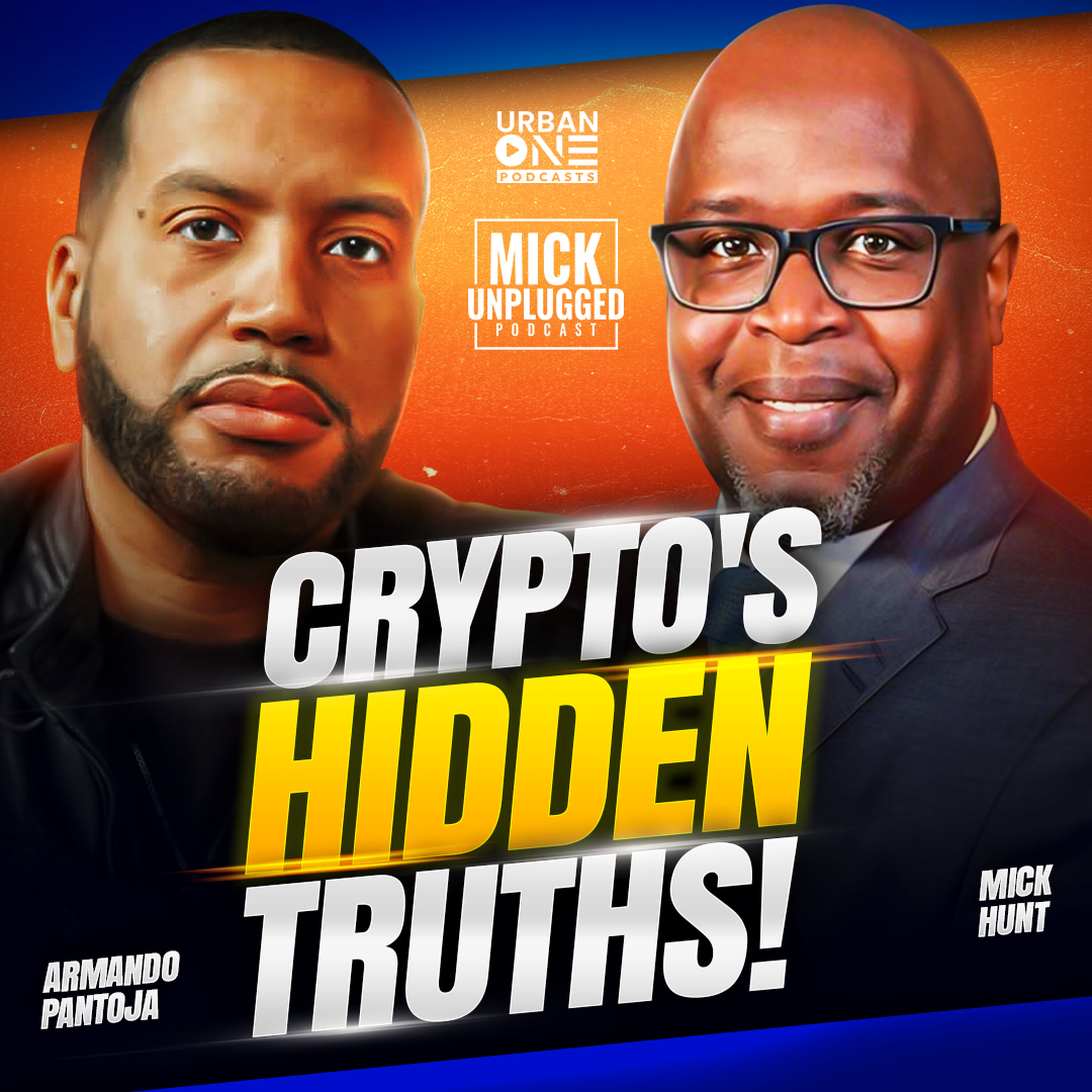
Welcome to Mick Unplugged where we ignite potential and fuel purpose. Get ready for raw insights, bold moves and game changing conversations. Buckle up. Here's Mick.
- [00:16]
Unknown Host
Ladies and gentlemen, welcome to another exciting episode of Mick Unplugged. And today's guest is a visionary in the financial technology space, lending his expertise in blockchain, cryptocurrency and software engineering to reshape the future of finance. Known for his influence on social media as the Tall Guy Tycoon, he continues to inspire millions by sharing insights on wealth building and the future of financial markets. Please join me in welcoming the innovative, the driven, the tall guy tycoon himself, Mr. Armando Pantoya. Armando, how are you doing today, brother?
- [00:51]
Armando Pantoya
I'm good. I appreciate you having me.
- [00:53]
Unknown Host
Hey, I am honored to be here. And I want to just go straight in, man, like you have. I don't want to say you figured out blockchain and crypto, but you, you've, you figured it out. But the most important part is you're sharing your knowledge and expertise with others. So my, my initial question is, man, what got you into blockchain and crypto?
- [01:17]
Armando Pantoya
So it's an interesting story. I was a software engineer for many years. Uh, so around 2009, 10, I decided to go back to grad school. Uh, so when I got first day in grad school, you know, you know, you, you, you learn the base of software engineering in undergrad, but then you go on that grad school, you have to pick a specialization. So first thing they asked me, what's your special specialization going to be? I, I don't know, I guess software, you know, software security. Well, you need further specialization. What are you going to focus on? I said, well, looked at the list of stuff, cryptography, cryptology, which is the study of computer encryption. And then, you know, I got into it and I liked it and everything. But then right in the middle of grad school, cryptocurrency came out. Now cryptocurrency and cryptology and graphics, two different things. Now cryptocurrency is a currency based on the science or the study of cryptology or cryptography, which is the study of encryption. And that's why crypto is so transformative, is because it's the most advanced database ever known to man. And that's what people don't realize. They see Bitcoin is like some kind of money or some kind of investment, but it's way deeper than that. So I was just early, I was just lucky to get in so early because I was studying that at the time, and I thought it was a cool technology. Now for about three years, I didn't really realize it as a, as an investment. So with my, the, the, the opportunity I saw in cryptocurrency the first three years was way I could be a crypto developer. I can integrate stuff on people's sites. I can also was looking into like buying Bitcoin ATMs cause I thought it was going to be the next currency. So around 2015, Ethereum came out. And that's when I actually 1415, I started seeing the investment potential. I started investing in it instead of just developing on the technology side. So I was just lucky to be around the right people and got in early being around, you know, studying the technology that cryptocurrency is based on.
- [03:02]
Unknown Host
Yeah, man. So, you know, I told you offline, I'm a huge fan of you and what you do for people and helping them understand. Right. Because you know, there's you, you just hit on it. There's this big thing, well, what is bitcoin and what does it do? And for some people, it's one of those things. Oh, it's just a fad. It's going to play out. And there's other people that really go hard into it. But what I love is that you're helping people with financial literacy also. Right. Like, how important is financial literacy to you and what you're about?
- [03:32]
Armando Pantoya
Yeah. So I got into Bitcoin 2011. I'd been playing around with stocks for a little bit before then I made some money. Uh, and before that, I did have a guy that would, you know, train me in stocks and how they work and everything like that. So, so, you know, he was a, he was actually a close friend. He was an older gentleman. He brought me along his stocks, but I really didn't put any real money into it. So when I got into crypto, I remember the first three years of crypto was on the technology side. So I really didn't look at charts and markets and how things work. Uh, so 2013, I bought. Had a bunch of bitcoin here. I, I put up a post the other day and I was buying Bitcoin at $200, you know, $150, $100, $80, you know, but at the time I thought it was a currency. But around that time, for about 14, I start seeing investment potential. Yeah. And so I started like actually buying it, you know, for investment purposes. 2013, one of the only exchanges, I think it was the only bitcoin exchange on earth got hacked and somebody stole like $50 million of Bitcoin. @ the time, that's like billions now, but, you know, but it was 50 million at a time, which was like a lot of bitcoin. So everybody panicked. The news starts saying that bitcoin was a scam. It wasn't. It really wasn't. You know, that's proof that this is a Ponzi and all this stuff. Because people got panicked and bitcoin dropped all the way from a thousand all the way down into the hundreds again, 90% drawdown. And then so I gave for two years, I didn't even look at it no more to like late 15, early 15. And then I saw it start to creep back up and I was like, well, you know, that's weird. Why would it creep back up? I thought they said it was over. And then so I started buying it again. 20, 15, 16. And then, you know, and I started looking deeper into how markets work. Like why did they tell us that it was going to crash? And I started researching. I realized that there's underlying truths in all of that. There's a cycle, there's a dot, there's cycles, there's patterns, there's all these things that happen almost predictably in markets. I started applying it to stocks and crypto at that point, and that's why I've done so extraordinarily well, is because there's underlying truths in all of that. There's a four year cycle in bitcoin. There's also market cycles in the stock market. There's times when the media will tell you that things are over, it's done, they'll make you scared. And it all deals with cycles, curves, curve cycles, and also human psychology. All of that is interwoven into like a tapestry of, of that underlies all these financial markets. Now we figured it out. You can figure out everything on top. So that's what I've been trying to teach people over the years is that these things is very simple to understand. If you just look past all the fluff and just look at the base and see what's happened.
- [06:04]
Unknown Host
Yeah. And you know, you've done a lot, you made a ton of money. Obviously you're helping people understand, you know, crypto and blockchain. But you're also an award winner, man. In 2020 you won the IBM Blockchain Award. Right. So tell us a little bit about that project that led to that award. And then I know that's not the pinnacle of your success. Right. Because that was Four years ago. But at that moment, man, like, how did Armando feel? Like, did you feel validated that, yes, I'm doing the right thing?
- [06:32]
Armando Pantoya
Yeah. That was one of the validation points along my life, you know, because that was one of the big moments, because, you know, IBM, a company like that, recognized you for your innovations on blockchain. That was. We came up with a solution to get people, you know, working with IBM, to get people to use the blockchain, to get people hired back after Covid, to get people back to work. And we won an award for that. It was me and my business partner, actually, and we. We, you know, that was a big moment to win that award. But, like, like you said, that's a big validation point. It makes you feel like you're doing the right thing. And, you know, I was proud to win it. And actually, that was after I won that award. I got a blue check, like, the next week on. On Instagram. That was before the blue checks. You could pay for them. You had to earn it right.
- [07:14]
Unknown Host
Before everybody get blue checks, Right.
- [07:17]
Armando Pantoya
IBM, main ticket, the main Twitter page on, you know, shouted me out and said, you know, I want this to work on my picture. And then I then, like, the next week, I got a blue check on Instagram. That was before you had to pay for it, so you had to earn it, and you couldn't even, like, ask for it. They just had to recognize you. So, yeah, that was really the biggest thing. So I was really excited about those two things.
- [07:36]
Unknown Host
Yeah. So I. I want to go into your book, man, because there are a lot of listeners and viewers that I know you can give strategic insight and tips, too. So the. The strategic millionaire, right? We're talking the seven laws of wealth. I love for the man, the myth, the legend himself, right there. There's no better source than the source, right? What are these seven laws of wealth? And how can people start imparting them into their routine and their habit when it comes to finance?
- [08:07]
Armando Pantoya
It's about, like, these market cycles and patterns that we, you know, that we. I just talked about. So these are the seven laws that I've learned over time. And a lot of them, you know, almost fly in the face with what traditional logic is, because traditionally I've learned in life is that when everybody does something is probably wrong, when everybody thinks a certain way, it's probably wrong. And. And then if you just fly in the face of that, a lot of times, you'll be right, because the system does not allow everybody to be, you know, rich. It just. It's relative and it's based on ratio. So only a certain amount of people can be rich and everybody else has to be middle class and poor. That's just how it works. The more people that move up, the system will readjust. And then now, you know, the goal poster move. And now all of a sudden, this is rich, you know, so everybody can be rich. So the only way you can be rich is by thinking differently than the masses. And that's what those seven laws are. It's like, you know, you don't have to hustle and be up three, four, you know, days straight to make money. A lot of the billionaires I know, they don't have, you know, their schedules are pretty free because they got everybody else doing this stuff for me, you know, and also I learned in that book we talk about how you have to have a certain amount of your week free because if you're maxed out, you're hustling, you're working 60 hours a week, early, early in life is different. When you get later 30 and 40, you got to start pulling that back. It's because if you don't have a certain time, you're free. If an opportunity comes, you don't have time to chase it. You see, if you're working 60 hours a week, somebody comes to you. Look, man, I got this idea. This is going to make a lot of money. You don't have any time to work on it, so you have to, what you have to do is you have to find something, work on it, and reduce the time it takes for you to make money on it, then put it like in a basket. And that basket is your passive income. So when you reach a opportunity, let's say somebody comes and say, man, I got an opportunity to build a website that can make a bunch of money. All right, well, I'm going to build a website. I'm going to go, I'm going to work on it. We're going to get it developed. But over time, I have to reduce the amount of time it takes me to work on it to finally a zero. Then I throw that in my basket of passive incomes and I move on to something else, you know, so that's. You have to think about things in life like that. That's, that's actually a law. It's called be lazy. And it talks about how, not actually technically, ladies, but it talks about always find ways to not make money with your time. Constantly be jealous with your time because you need that time to build up new passive. You can't work all the time and you won't be able to build up anything. So. And then if you stop working, the money stops. So a lot of that book is focused to that. Some of the book is it talks about the trends that we talked about, trends and patterns and stuff that exists in markets. It talks about having the right circle of friends around you. That's very important, building a circle of winners. And it also talks about how a lot of people think that they just can show up to a group of people and all of a sudden that group is going to feed into them. It doesn't work like that. So you have to show up to the group. Let's say you show up to a group of millionaires. You're not the millionaire the first year of that group. You have to be giving them stuff. You have to. You know, I've heard people just show up to a network of events, say, now what do I do? It doesn't work like that. You know what you do when you show up to a networking event? You find the people that can help you and you offer them something first. Everybody's trying to get. Everybody's trying to take them out to lunch, pick their brain. That's nothing. So I don't even. People ask me to lunch five times a day. I don't go because I'm not driving over to Tampa because I live a little bit outside Tampa. Yeah, it does. It's not worth it to me. So you have to come to these people and say, hey, look, do you need somebody to pick up your laundry every week? I'll do that. Don't ask for anything in return. Say, hey, do you need somebody to spot you at the gym? I'll do that. Especially when you're young, you need somebody to help you with anything. I'll do that. And don't ask for anything in return and do that to all the people in the group. Over time, they will pull you up to their level. Eventually you'll build and get into their life. You're helping them, they'll start to like you, hopefully. And then they'll start. You'll hear stuff and you'll start understand how they think. They'll put you on opportunities and that's how things work. It's not like you show up and they're not going to. Why would. There's no incentive to pull you up unless you integrate yourself into their lives. And that's how you have to do it. That's why most people fail in those situations.
- [12:06]
Unknown Host
No, I'm on spot with you a million percent. So I want to unplug a few things that you said about what I'm going to say, the hustle culture. Right. And I've been saying this for years. Hustle works to a certain extent, but then it's got to be strategy. To me, real wealth comes when I can work on the business, not in the business. Real growth for me as an individual works when I can work on me and not in me all the time. And so I love the fact that you said that, because I think that people miss that, both in business and in life. You do have to be able to. To. To work, but you've got to work smarter. And people talk about, you know, the person that works smart and hard always wins. No, the person that works smart and hard usually is burnout. And the person that's working smart and smart and smart is always looking to the future.
- [13:00]
Armando Pantoya
Is.
- [13:00]
Unknown Host
Is the one that gets to wealth faster than those who don't. And so I love the fact that you said that, man like that to me, that validates some things that I say.
- [13:08]
Armando Pantoya
Yeah, I agree with you. Yeah. So you have to just work smart. A lot of times, labor is not needed. If you're strategic about anything at first, you do, especially if you come from poverty or a lower income because you don't have the initial capital. Yeah, you got to grind. That's your capital. That's all you got. But once you start building up capital, you got to look for ways out of labor because nobody of any significant wealth has gotten a labor for it. It's normally the ownership of some idea, a technology, or they got other people doing it for them.
- [13:39]
Unknown Host
That's right. That's right.
- [13:41]
Armando Pantoya
And then the other thing, because most people don't want to. You can always find workers because most people don't want to take the risk of owning a business. So you take on the risk, which is not that bad. And then you always have workers.
- [13:52]
Unknown Host
Yep, agree. And then the other thing I want to unplug is also something that I wholeheartedly agree about. And it's leveling up. Right. And so it's, you know, you get to a certain level, you should always be looking at, how do I now level up. Right. Because. And you know this, and I got to see this now, going into these different worlds, there's always somebody a level above you. Right. Like always. I don't care who you are, there's always somebody that you can level up and strive to get into that room, into that table. Right. And you're exactly right. About networking, Most people look at it selfishly, right? I go to events all the time and I laugh at people that just want to be around celebrities or influencers and take a picture. I'm like, that person, he or she gave you 30 seconds and you wanted to take a selfie. Do you know how valuable those 30 seconds really could have been? Like, you could have asked an amazing question, right? You could. To Armando's point, what do you need help with? What can I do for you for free, right? To prove myself. People get it wrong. Like, the next time I see somebody taking selfies with celebrities or influencers at a, at a networking event, I'm going to go crazy. I'm probably going to grab a mic and say something because that's not, that's not that time, man. Like, it's. If you really want to grow your influence, if you really want to level up, spend 30 seconds and ask an amazing question, right? And if you can't ask an amazing question, you really probably shouldn't have been in that room anyway because you were there for the selfie. And I promise you that celebrity is not going to remember you in five minutes from the selfie. Ask an amazing question. They can't sleep because they're thinking about that question that you have.
- [15:37]
Armando Pantoya
Exactly. I agree with you.
- [15:39]
Unknown Host
Yeah.
- [15:40]
Armando Pantoya
And it's funny about these events and stuff is that when I go to events, especially at Invest Fest last year, it was like a lot of people come to me with these business ideas, apps, or, you know, mostly tech. And, and the thing about it is that it's so many, I can't really. You know how I stop people from. You know how I stop you from doing that? They come up to me, they show me an idea to give me the elevator elevator pitch, and I say, hey, yeah, sounds great, man. So here's my email. Send me a. A full business plan by Monday. 95% of people never send it.
- [16:09]
Unknown Host
Of course. Of course.
- [16:11]
Armando Pantoya
You know, of course. So I cut the conversation short. I said, look, man, I love the idea. Send me a business plan. Bob, Watch. Call. Here's my email. And 95% of people never send it. So that's, that's that. That shows you how people will show up to networking events and really don't have a plan or a strategy or even don't want to put in the effort to get to the next level.
- [16:28]
Unknown Host
Nope. That's. That's it, man. That's it. So, Armando, again, I've been a huge fan of yours and I'll make unplugged we talk about your because, right? That. That purpose, that thing that's deeper than your why, that. That really moves the needle for you. That's almost like your accountability. So for Armando to get to where he is today, what's been your because or what's been one of your becauses? If we look at it that way, that. That holds you accountable, but is really your mission and your purpose.
- [16:58]
Armando Pantoya
So I grew up in poverty. My father left when I was three, so I really didn't have a lot of money. I didn't even get a computer until I was 19. And that's when I bought it with the Pell Grant money from college.
- [17:07]
Unknown Host
Austin Peay University.
- [17:09]
Armando Pantoya
Austin Peay, Yeah. So that was the first time I had a computer in the house. Right. So technology took me out of Tennessee, Clarksville, Tennessee. Poor kid. And made me into what I am today, just technology. And I know, I can see that we're in a transformative time from the late 90s to about maybe 20, 30, 35. It's almost like. It's like the Industrial Revolution in the early 1900s. It has the power to transform a lot of people's situations, transform entire communities, transform entire ethnicities to a whole different level if people would just pay attention and learn. And that's my. Because it's like I just. I scream from the top of the roof as many people listen, because there's never been a time I can see in my life where things to me are more obvious than what they are today, like where to invest, where to grow, where to build your businesses at. Because the thing about technology, it makes it so much different than other industries is that the amount of money that can be made, that's why most companies are becoming tech. It's because if I make a factory and I sell, let's say, widgets, and I'm selling these widgets and I can make them for 20, 20, and I sell them for 50. So that's a. Let's say I sell it for 100. So that's like a big profit. 80 profit for each one. So in order to increase my production, I have to, you know, let's say I double it. Well, I'm still making 80. Oh widget. But now I have to have twice as many employees. The factory has to be twice as big. I'm using twice as much electric, twice as much material, so my profit is still linear. It's the same no matter what. It may go down up a little bit, you know, based on the. The math of scale, you know, that does help, but it's still basically linear. Now technology is different. I can develop one app, I can have four or five people running it. And as users come onto that app, spending money, the. The chart looks more like a hockey stick. Right? Because it, because it. The. The amount of money you can make on. On technology is exponential. And that's all. That's why stocks reflect it, like reflect the profit and stocks tech stocks like that. And that's the reason people start tech companies that can make money like that. That's a transformative technology where a lot of people can build a lot of wealth rapidly with small teams, just with a great idea and great execution. And I understand that. That's why I appreciate so much because I know it has the potential for people to hear that message and make a lot of money and change their lives, their children's lives and their grandchildren's lives, which is one 5 to 10 year execution on a set of ideas or an idea.
- [19:30]
Unknown Host
I love it, brother. I love it. And I know, you know, we're. We're pinched for time today. I love for you to tell people, you know, what does Armando have going on? And then following up with, where can they find and connect with you? I mean, I already gave them in the opener, but. But I want you to tell it yourself.
- [19:48]
Armando Pantoya
So I'm available on all social media platforms. Tall got tycoon on Twitter. It's an underscore before. Somebody got my name before. So I'm also on the Crypto Trends podcast. You can see back here about to film it in a few seconds. That's what me and Robert Croak talk about the. What's happening this week in crypto. And we try to predict where things are going. So it's a very popular. I think it's the biggest right now, the biggest crypto podcast on Spotify. So reach out, you know, make sure you guys listen to that and. And that's it, really. So I would appreciate if you guys.
- [20:18]
Unknown Host
Will follow me, I will make sure we have the description both on YouTube and on the audio versions. While I appreciate everything in the show. Notes, man. Just honored to have you here. Really quick rapid fire with Armando. Right. So grew up in Clarksville. Tall guy, tycoon. How tall is Armando for those that don't know? Oh, six, six, six, six. Ken. I'm Wando hoop.
- [20:43]
Armando Pantoya
Yeah, I used to be good. I messed my knees getting bad now, though. But I played overseas. I played in Puerto Rico.
- [20:50]
Unknown Host
Yep. So. So still hooping?
- [20:53]
Armando Pantoya
Yeah. As soon as my knee gets better, I'VE been going through physical therapy, so I was ducking before. I was still ducking before that. So off to catch them off the rim and everything.
- [21:01]
Unknown Host
All right.
- [21:01]
Armando Pantoya
Hopefully I get back to it. That was, like, eight months ago.
- [21:04]
Unknown Host
All right. That's the new YouTube channel. Armando getting back. Armando getting back. All right, man. So again, appreciate your time. I know you're a busy guy. Truly honored all the nuggets and wisdom that you dropped. For the viewers and listeners appreciate you more than you know, brother.
- [21:19]
Armando Pantoya
I appreciate it, man. Thanks so much.
- [21:21]
Unknown Host
You got it. For all the viewers and listeners, remember your because is your superpower. Go unleash it.
- [21:31]
Mick
Thank you for tuning in to Mick Unplugged. Keep pushing your limits, embracing your purpose, and chasing greatness. Until next time, stay unstoppable.