← Mick Unplugged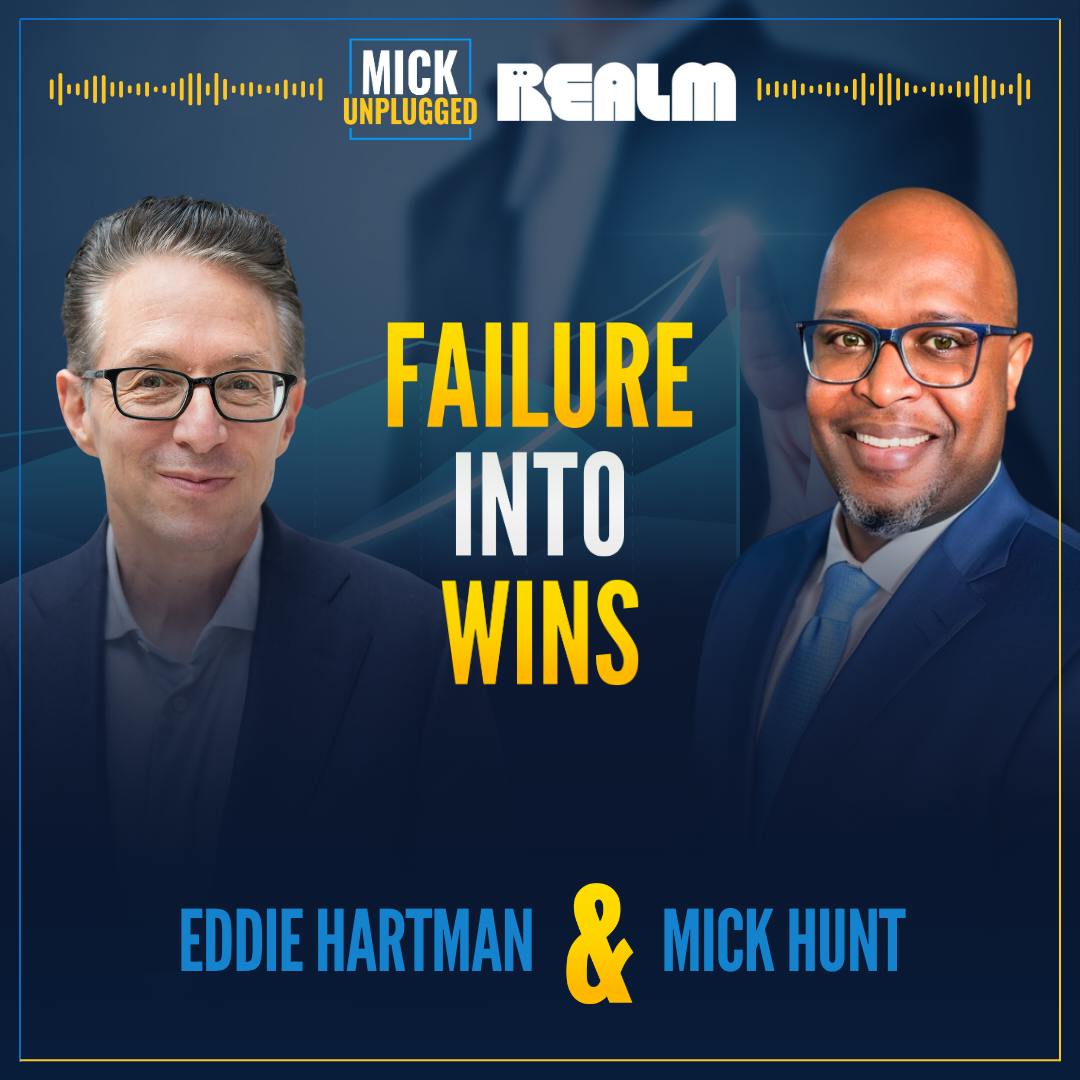
Loading summary
Transcript40 lines
- [00:01]
A
I'm Alex Honnl, professional rock climber and founder of the Honl Foundation. I wanted to let you know about a brand new season of the Planet Visionaries podcast in partnership with the Rolex Perpetual Planet Initiative. This is the podcast exploring bold ideas and big solutions from the people leading the way in conservation. Join me in conversation with the likes of climate champion Mark Ruffalo, biologist and photographer Christina Mittermeier, and one of the most successful conservationists of our time, Chris Tompkins Joseph. Join us on Planet Visionaries wherever you get your podcasts.
- [00:34]
B
You're listening to Mick Unplugged, hosted by the one and only Mick Hunt. This is where purpose meets power and stories spark transformation. Mick takes you beyond the motivation and into meaning, helping you discover your because and becoming unstoppable. I'm Rudy Rush and trust me, you're in the right place. You. Let's get unplugged. Ladies and gentlemen, welcome back to another exciting episode of MC Unplugged. And I'm honored to be sitting in front of someone that I've looked up to for a very long time. He revolutionized how America accesses the law by Co founding LegalZoom and bringing legal empowerment to millions. He's not only that, he's a trained thinker, he's a tech visionary. He and a scale architect. He's helped launch many businesses and mentor the next wave of entrepreneurs. He's innovative, he's disruptive, he is relentless. He is my mentor. Mr. Eddie Hartman. Eddie, how you doing today, sir?
- [01:35]
A
Mick, my friend, you are. You are too kind. Thank you so much for having me on the show. I'm honored myself.
- [01:40]
B
I appreciate you, like I said, much more than you'll ever know. And today I want to kind of talk through those things. You know, I always ask my guests, what, what's there? Because that thing that's deeper than your why, you know, Simon Sinek said start with your why, and I like to take that a little bit further. Right. Like, your why is awesome, your why is cool. But if I were to ask you but why? Usually that sentence starts with well, because. And I care about what you say from well, because. So if I were to say, Mr. Hartman, what is your because? What is your purpose? What is your mission today? Why do you keep doing the great things that you do?
- [02:17]
A
Mick, I want people to thrive. I've been an entrepreneur. Entrepreneur. And here's the thing that nobody tells you. I have been a failed entrepreneur. You talk to anyone and they're going to talk to you about their successes and of course, you know, that's the. That's the sizzle, right? That's what's sexy. What people do not talk about is the failures. I think they should talk about it more. It's very real in entrepreneurship. You know, it's anybody who puts themselves out there, there's always the chance, you know, it's not going to work. The thing is the discipline that I've been focusing on, the reason we wrote the book is it does not need to be as bad as it is. That is my message. And I'm not apart from the book. I'm not selling anything. And I understand I get four pennies for every book sold, so I'm not even really selling that. What I want to do is spread the gospel that you do not have to face the odds, which are daunting that most people face as entrepreneurs today. You don't have to. There are a few things you can do to radically improve your chances of success. I would, you know, I would consider my life to be an amazing life if 10 years from now, everywhere I went, people were like, you know, Mr. Hartman, your stuff helped me to thrive. Not just survive, but thrive, you know, so, Mick, that's what gets me up in the morning.
- [03:27]
B
I love it. And before we get to the book, which I want to deep dive, you've mentored and advised countless startups, right? For those that are watching, for those that are listening, what's the most common blind spot that you see or have seen in, like, early stage founders?
- [03:46]
A
Sure. You create something that you have passion about, that you love and of course. Cause why else would you do it? And then two things happen. I'll talk about the first one and then the second one. First one is you love it so much, you think everybody else is going to love it. I like to say you think you're going to bake muffins and you think everyone is going to love these muffins. And maybe they do. But if you're only saying, do you love this muffin? You know, hey, would you, you know, seem like a good muffin? You have half the story, the other half is, yeah, but would you pay for this muffin? Would you pay enough that I have the ability to get a business going? If you only perfect the recipe, get it out there, try it with your friends, and only then find out are people willing to pay $6 for a muffin and that's what you need to cover your costs and get things going, then you are, you are not in possession of a business idea. You're in possession of a really, I'm sure be. By the way, I'm sure I would love your muffins, Mick. If you were to make muffins, I'm gonna guess I would be like, I will have these muffins all day. But how long can you do that? You have a hobby essentially. And I think that's the, the first thing a lot of people go in. You know, failure rate is 72%. I think it's because a lot of people, they say I'm gonna follow the thing I love without figuring out is it something other people love enough that they're going to pay for it the first thing. Second thing is even if you succeed with a good product where people were willing to pay for it, as an entrepreneur you have to be a little bit crazy. You have to do something that some people are going to laugh at you. Mick, I don't know if you had that experience launching your podcast and getting out there, but I'm guessing sometimes you told people, yeah, I'm going to do a podcast. And they were like, everybody's doing a podcast. Come on, get real, get serious. So you have to have a crazy self belief as an entrepreneur. If you don't, you will fail. If you don't believe in yourself, you're going to fail. But that self belief can also be a kind of quicksand. You lean into it so hard, you take the one thing you're good at. It might be sales, it might be product, it might be building a community. And before you know it, you built the whole company around that one thing. We call it the single engine trap. You lean so hard into it because it's the same self belief that got you off the ground and it becomes its own kind of trap. So those are the. If I can do two problems. One, yeah, they like it, but are they going to pay for it? And second, did your own self belief push you into a corner?
- [06:04]
B
That's why you are who you are, man. That's why I love listening to you. You know, I was telling you before, like, I love how you break things down simply and that it's relatable to everyone and I appreciate you the most for that. One question that I've always wanted to ask you, Eddie, is this like knowing who you are and all the great things that you do, how do you balance innovation in a highly regulated industry? Right, or industries? Because I know you're in multiple industries, but most of the industries you're in are highly regulated. So how do you balance innovation with.
- [06:39]
A
That it's like anything, Nick. You. You have to know what the rules are, right? No matter where you are. And by the way, there. There are written rules. There are unwritten rules, right? You. I'll tell you a story. Back in the day, we were getting together a product for Legal Zoom. Legal product, right? It happened to be divorce, and it was accepted everywhere. And then we kept getting rejected from this one county in Louisiana. And we were like, why do all the filings in Louisiana get rejected? So we. We checked the letter of the laws. Everything, everything. Everything was. Was airtight, perfect. And then the clerk said, well, it's supposed to be on pink paper. When you file and you've been filing on white paper, I want to let you know. We then took our printers and we took, you know, they got those multiple printer drawers with multiple, you know, paper. Took one, and we loaded it with pink paper so that we would have those filings in that county in Louisiana, all the right color, right? They're still getting rejected. So we call back the same county clerk, we say, we. Why? Right? They're legally perfect. They're on pink paper. She says, it's the wrong shade of pink. And we say, really? It's the wrong shade of pink. What would be the right shade of pink? She said, well, you know, the judge here, his brother owns a paper store, and I believe that the pink paper he has there, that would be the right shade of pink if you want these filings to get accepted. So anywhere you go, there's going to be regulation. It might not be the kind of regulation that's written down. You got to find out, like, what are the. What's the hidden handshake that sometimes you need to do to get through. All I tell people, though, is you gotta be aware of it. You can't be the prisoner of that. Find out what you need to do to get through, but don't let that dictate things for you.
- [08:15]
B
Wow. So it's fascinating that in that county in Louisiana, which we will keep nameless, the only pink paper happens to be sold.
- [08:26]
A
I would recommend, Mick, if you want to get your divorce filing or really any filing through that court, I would recommend going to the judge's brother's paper shop and buying that particular shade of paper.
- [08:36]
B
You know, that actually says something to entrepreneurs, too, right? It's like, hey, if you're going to own a market or own an idea, make sure you've got it really nailed down so that they have to use specifics to. To get things done, right? Like, that's the business strategy right there in and of itself.
- [08:53]
A
Yeah. Find out those objections. I mean, listen again. Entrepreneurs who tend to be risk takers, people who are willing to do something other people were not, that means that you can't just expect the world's going to give you something back. You gotta go the next step and say, if I'm not seeing the progress I hope for, why not? Like, what's going on? Right. If you don't keep. If you just give up because your court filings are being rejected or nobody's buying your muffins or whatever it is, gotta push. You gotta find out why.
- [09:19]
B
Absolutely. Absolutely. Well, Eddie, I want to. I want to deep dive and go into this book because I have a lot of questions and a lot of praise I want to give you. But for. For those that are watching or listening, let's talk through the. The title of the book. And then more importantly, what made you say this book needs to be seen?
- [09:40]
A
Yeah, sure. Let me start there. We wrote a book in 2015 called Monetizing Innovation. We're very proud of that book. There is a major company that you know of, and they are in the provisioning of music tracks. You know, I'm not gonna say who.
- [09:55]
B
They are, but I'll be honest. The hardest part of staying consistent in the gym isn't motivation. It's knowing exactly what to do when you walk in. That's why I've been using fitbod. I open the app and it builds my workout instantly based on my goals, the equipment I have, and even how my muscles are recovering from my last session. It honestly feels like having a personal trainer in my pocket without the guesswork. What I love most is I don't have to waste time planning. The workout is there. It pushes me and it adapts as I get stronger. So I'm not hitting plateaus or getting bored. If you want to level up your workout in the new year, join Fitbod today to get your personalized workout plan. Get 25% off your subscription or try the app free for seven days at Fitbod. Me, Mick. That's f. I tbod me, Mik. Here's the real truth about AI. AI didn't change my businesses because it's cool. It changed my businesses because it removed friction. My teams move fast. Podcast production, media deals, leadership development. We have systems everywhere, and for a long time, speed meant chaos. Then we leaned into Zapier. Zapier is how we stopped talking about AI and started deploying it. We use Zapier to connect the tools that we already use every single day. Leads get enriched automatically. Workflows trigger without reminders, systems talk without meetings. And here's what matters. You don't need to be technical. You don't need it. You don't need complexity. Zapier is built for real teams doing real work who want real results. No hype, no buzzwords, just time back and momentum forward. Join the 3.4 million companies already automating with Zapier and transform how you work with Zapier and AI. Get started for free by visiting Zapier.com Mick that's Z A P I E R.com M I C K When you.
- [12:04]
A
Walked into their office, they had a copy of Monetizing Innovation on everyone's desks. And they called it the Bible. Very, very proud of it. What that book was all about was, if you think about it, if there are two packages that you're looking at, and one is the silver and one is the gold, or one is the standard and one is the pro or really anything, you're looking at two options. Part of your brain is always saying, for the extra money, what do I get? I think that's just human nature. And if you think about it, that money needs to match up to the additional value you think you're going to get. You know, the gold package, more valuable. Okay, what's there? If it doesn't match up, you don't buy. If it does match up, you might buy. And if the money is actually not bad at all for the extra value, you might really be quite eager to buy. But the point is you made a comparison. You made a measurement. Price paid. The amount that you want to pay for something is a measure of value. It should correspond to the amount of additional value you think you're going to get. Okay, if you flip that on its head. If people are not willing to pay for something, they probably don't see the value in it. That is the core idea of that first book. Think about price not as something you slap on when you're done. Think about price as your guide to where is the value. Because if they're willing to pay for it, that shows you where the value is. Next thing, we're all different. So the same thing may be valuable to you, but not valuable to me. I like to illustrate this with a story. I have an incredibly handsome kid brother. He lives in the city of Los Angeles. He looks like. You ever get a picture frame. You didn't put a picture in it yet. And there's that, like, model. He looks like that okay. He. He until recently did not have children. Has a child now, and I've got four now I've got a minivan. I love this minivan. It is a great minivan as far as I'm concerned. I paid $45,000 for this minivan and it was cheap. My brother looks at the same minivan. How much do you think he would pay to trade in his very nice little sports car for a minivan? And the answer is, he would never do it. He does not want to be behind the wheel of a minivan. He does not want to be picking up, you know, some girl in LA on a date in a minivan. So we are all different. What you value, what I value, what my brother values is going to be different, Right? So the first thing is price shows you where value is. But not everybody wants to pay the same for something because they may value it very differently. You find a group of people, though, that they value the same thing. Things which you can determine by they want to pay the same. Roughly, you found a segment, and now you can speak to that segment with precision. So that's what the first book was all about. It's make sure your company is on the best possible footing and not headed for a cliff because you did the work ahead of time. To say, really, where's the value based on what are people willing to pay for? The second book says, yes, but there are people who create a good product. Now you actually have to put in the work. You have to put in the sweat. That's the second book. It's a roadmap. It says, what do you do about setting the right price so that people are attracted to it? What do you do about raising prices when you need to? How do you negotiate when things are tough? Like, what should I be looking for? It has all of those real world, very pragmatic steps to go from good product to good functioning business. That's what it's all about.
- [15:08]
B
So I'm going to let the viewers and listeners in on some insight here. You know, Eddie, we were talking offline and, and I was telling you how, you know, I've been fortunate. You're such a huge mentor and I didn't want to tell you everything specifically why, but now I do. And I want the viewers and listeners to know with you and my other mentor, Daymond John, and my best friend and mentor, Robert Irvine, the three of you have taught me something about pricing your services and Chris Voss with negotiating your pricing. But what you specifically taught me was how to have dynamic Pricing. And I want you to talk through a little bit what you and your firm do. And I know it's also laid out some in the book, but I would say where entrepreneurs that are in the professional services, even those that have products, where we all struggle, and I'm, I'm including myself in this, where we all struggle is we think our value is X, but sometimes we get afraid that people won't pay for X because we haven't shown enough value. And what you taught me was one, Mick, you're never going to figure it out till you figure it out, essentially. But there is a method to say or to project what your value is dynamically. So I'd love for you to talk a little bit about dynamic pricing, why that's important and to help those entrepreneurs that are like me, that are like, I need to figure that part out.
- [16:30]
A
Yeah, sure. And by dynamic, of course, what we're talking about here is working your way into the optimal price, right? As opposed to. Because there's also a concept called dynamic pricing. They do this in stores sometimes where the price on a turkey will fluctuate during the day based on how many people are buying turkeys. We're not talking about that. We're talking about how do you determine dynamically the right price to charge? First thing to know is as an entrepreneur, if you're like me, Mick, I don't know about you, man, but you're probably charging too little. And the reason is this. You start your business and a lot of people said it won't work. Some people laughed. You do not want to hear no. You're like a 12 year old in love. The only thing you want to hear is yes. And you're willing to do a lot to get to yes. The, the easiest thing to do is to price it low. Who's going to say no if you price it low? We, we tend to chronically price ourselves low. And here's a great story about a guy who created a company called Segment that was purchased for a huge amount of money. The story that he tells is he went into a sales meeting, right, with a friend of his dad's. His dad was very experienced, very senior. Peter was young at the time, early 20s. And the very senior guy that his dad had hooked him up with, just as they're about to step into the room, says, listen, by the way, I need to give you my letter of resignation. Peter said, what? You just started. I mean, you just started like, what do you mean you're resigning? He said, I'm resigning unless we go in that room, you double the price that you're asking for. And Peter said, I can't do that, double the price, I'm not gonna do that. And he said, I understand, I didn't think you would. That's why I've got my letter of resignation. Well, Peter thinks about it, he says, like, I'll try it. And if they, they laugh us out of the room, well, they go in and they get double the price that they thought they were gonna get. So a week later they've got another big sales meeting, same thing. The friend of his dad says, before we go in there, I need you to double the price or I cannot be associated with your business anymore. According to Peter, he did that three times doubled, quadrupled, octupled eight times. Eight times the price that he'd started with. And now they started to get pushback, but they still won more than they lost. And I think that's the thing. There's something you can do called a Van Westendorp. You look it up, Google it, you'll find it. Essentially what this does is you ask people three questions, mainly three you could do four. What would be a no brainer price to pay for this product or service? What would be a price where you considered a little expensive, you might not buy? You'd have to think about it, maybe you need to talk it over with somebody. But eventually you're probably likely to buy. 80% likely. And then what's a price that's so expensive you wouldn't even listen to me, you'd walk me out of the room, right? We call that the acceptable, expensive and prohibitively expensive price. Right? Here's the thing. A lot of people want to go for that acceptable price. That's the no brainer price. The price that like of course I'd buy it buy without even thinking about it. It's too low. It's undervaluing yourself, what you should be doing. You should be going for that expensive price. That's the story of Peter at Segment. That is what he did. He realized actually if everyone is buying, that's not a good thing. You're not valuing yourself sufficiently. Go for the price level where 20%, 30% of the time, you're going to hear no, but at least you're asking for your full value.
- [19:39]
B
And that changed my, my business thinking, you know, again you saying that Robert Irvine in my ear, Daymond John telling me, hey Mick, if you think your consulting services are worth $75,000 charged for it and all you need is One person to pay it, to validate it, Right? Like it's that same type of philosophy. And then I went to the school of Eddie Hartman again a couple of years ago and I know everybody that's listening or watching needs to hear this part of the conversation that Eddie and I are going to have because you taught me about recurring revenue models. Round this episode is brought to you.
- [20:16]
A
By FX's the Beauty Official podcast. Join host Evan Ross Katz on the official podcast for FX's hottest new series, the Beauty, taking you behind the scenes.
- [20:25]
B
With its amazing stars as they discuss the show's most jaw dropping moments. Featuring Evan Peters, Anthony Ramos, Jeremy Pope, Ashton Kutcher, Rebecca Hall, Bella Hadid, Meghan Trainor, Isabella Rossellini, Jessica Alexander and Ari Grayner.
- [20:40]
A
Sarah Search FX is the Beauty.
- [20:41]
B
Wherever you listen to podcasts, close your eyes, exhale, feel your body relax and let go of whatever you're carrying today. Well, I'm letting go of the worry.
- [20:53]
A
That I wouldn't get my new contacts.
- [20:55]
B
In time for this class.
- [20:56]
A
I got them delivered free from 1-800-contacts. Oh my gosh, they're so fast. And breathe.
- [21:01]
B
Oh, sorry.
- [21:02]
A
I almost couldn't breathe when I saw.
- [21:04]
B
The discount they gave me on my first order.
- [21:06]
A
Oh, sorry. Namaste. Visit 1-800-contacts.com today to save on your first order. 1-800-contacts.
- [21:14]
B
It's, it's. I don't even want to say it's a fad anymore. I mean, everyone has a community now. If you're on social media, everyone has some type of recurring thing that they're offering. Even celebrities now have access programs and things that are on a recurring deal. And I didn't understand it. Well, I'm sorry. I understood conceptually, but again, I didn't understand how to price it and I didn't understand the long journey, the long view of it because I did something that Eddie taught me not to do, which was I put myself in the buyer's seat too long, meaning I thought how I would buy. And because I probably wouldn't join a community, I said, no, it's not going to work. But there's a billion people in communities, so obviously communities work. So I launched the community. But I thought about the recurring revenue strategy and Eddie, bro, I would tell you 60% of my whole portfolio income comes from a recurring revenue strategy that I needed you to break down for me. So I'd love for you to talk through the power of recurring in particular subscriptions, because I think everyone could figure out some type of subscription model that works for Them. But I'd love for you to talk through that strategy as well, because I owe you that.
- [22:31]
A
I used to tell people I thought it was a joke, right? I'd say, like, every business is moving toward some kind of a relationship. It may not be a true subscription, right? But almost every business. And then I would joke, I would say, except for, I guess, coffins, right? If coffin. That's. That's it. You buy one time. And then one of my German partners said I was. I won't do the funny accent. But he said, you know, Eddie, that's. That's actually no longer true. Funeral homes these days tend to give you a lower price on the first service in the hopes of then getting the whole family and then getting you on a. Like a recurring and bureau. So apparently even. Even death is a subscription. Nick, you know, everything. Everything we used to say. We used to joke that I was the guy who turned divorce into a subscription. What we meant by that was we thought that if you. I mean, could you imagine anything more final than divorce? You get divorced, why would you ever want to talk to me again as the person who facilitated it? Yeah, I help you with that, and it's goodbye. The truth is, there are so many things that people want you to do if they trust you, if you built a good healing with them. I'm sure you have this experience to yourself. There are people in this. In this life that you enjoy working with that you've gotten to know, and you kind of trust them. Usually, if you have more value on offer, people will take you up on that if you've built a good situation with them. So with the case of divorce, it turns out after you've been divorced, if you're the woman, you gotta change your name. And that means you got to change all your credit cards. And there's a million things that come after that. If you get your will done, I thought, oh, well, you know, check the box. That's job done. No, turns out people really want to talk to you after that. They want to know, how is this? How should my life change? Where should I store it if I need to revise it? What do I do? So legal. Zoom. The whole business changed from transactional to recurring. The world itself. I mean, you get a BMW, you get a Mercedes. These days in many cars, they are going to give you a subscription for the headlights. You know that? A subscription for the heated seats on the Mercedes. These days, you can get additional horsepower unlocked in the car you own in your garage. And think about how smart that is. You're on the lot. It's a Mercedes. Do you want the additional horsepower? No, I don't. You bring it home. It's in your garage now. It's my Mercedes. Do you, Mick, want to unlock the additional 50 horsepower that are sitting right there under your hood? The answer is yeah. Now you do. So moving even from a car sale, even a coffin sale, even a divorce, into a relationship, incredibly powerful. But then once you've done that, suddenly you have a new problem. And the problem is in sales. The problem is retention, keeping people in those subscriptions, or potentially expanding the accounts. Like, how do you do that? I tell everybody, if you wait until the moment that they're canceling, it's like going to the dentist when your tooth is about to fall out, right? Instead, when you onboard people, when you bring them in, they're never going to be happier with you than at the moment that they sign and say yes, right? So ask them all the data, all the information. Ask them where they going, like, what do they want to do next? Set appointments to check in with them if you can. That's your kind of service. But don't let those accounts start to rot and then lead to a cancellation. Because if you stop them at cancellation, it's too late. During. During the period. Remember that every person who leaves you has one thing in common, which is at one point they said yes. They couldn't be leaving with you unless at one point they said yes to you. Figure out what changed. When you look at your customers, say, how do they go from good customers to risky customers to cancellations? Is it about you or is it about them? And is it about the price or is it about the value? It's very simple balance. You can actually draw out a little grid. Find yourself, where are the people living Somewhere in that grid, you're going to find, this is where most people are. They're leaving because the price accelerated too high and you didn't tell them why. Right? And they think they can get a better deal elsewhere in the market. Great. That's price in you. It might be value in them. They might have said, you know what, we're full up. We did what we thought it was going to do, and now we don't need anything more. And then in that situation, you could say, great. But, you know, we do more than just that. If you don't say, how did they go from yes to cancel? Right. If you don't map that out, you're doing yourself a disservice and you're. You're Cheating yourself of an opportunity to de risk accounts. I'd like to say stop the churn before it happens.
- [26:27]
B
Wow. Wow. That's. This is a masterclass in and of itself. This is why, again, I'm asking you personal questions because you've helped me and I know that my audience is going to need that same type of help. And Eddie, I know how gracious you are with your time and I want to make sure I do justice before we hop off here. But again, I want to talk about the book. We share the same publisher, so Wiley did my book as well, too. So I want to, again, make sure I'm giving you justice. Where do you want people to purchase the book? Where do you want people to find and follow you? The floor is yours to be. Eddie Hartman.
- [27:04]
A
Well, I love. I love entrepreneurs. So I would say support your local bookstore. If you can walk in, if you don't see it, ask for it. See if they've got monetizing innovation, see if they've got scaling innovation, see if they've got Mixbook, and if they don't, say, why not? But if you can't find it there or you can't get it or it's not a reasonable period of time, yeah, sure, go to Amazon, but I'll tell you, steal a copy if you need to. This is not about book sales. I want to see people thrive and honestly. Go to a library and read it. Find a friend who has it and read it. But read it, because I'm telling you, the 72% failure rate is tragic, it is wasteful, it is wrong. We should have more people succeeding and thriving.
- [27:41]
B
And here's what I'm going to do, Eddie, because both books are amazing. The first 20 people that message me monetize, and the first 20 people that message me scale, I will purchase those books and make sure that I send them to you as well, too, because they're going to change the trajectory of your business mind the folks on your team, because I know a lot of folks, a lot of businesses. You have C suites. The people on your team need to read this book as well, too, or these books as well, too. So I'm going to make sure that I provide links in the show, notes in the descriptions. But I don't care if it's LinkedIn, if it's Instagram. If you personally know me and you have myself text me scale or monetize, and the first 20 people that do of each of those books, I'm going to send.
- [28:24]
A
That is so generous of you, Mick, but I want to match that. So, sure, count me in the next 40 people, right? 20 from you, 20 from me. We just want people to read this book. We just want you to thrive.
- [28:35]
B
And let's. Let's make it real. So tag us in social. So I know Eddie's on LinkedIn. I'll have his LinkedIn profile there, too. Tag us on LinkedIn scale or monetize. It'll also help us just make sure people are paying attention to us as well, too. But I want to do my part. Eddie, brother, I owe you more than you'll ever know. I'm honored to have you as a mentor. I'm honored to have you on the show means the world, brother. And if there's anything I can do, you know I'm always there.
- [29:04]
A
Thank you, Mick. I really appreciate it. And I'll say hi to Damon for you when I see him next.
- [29:09]
B
You got it. And to all the viewers and listeners, remember your because is your superpower. Go unleash it. That's another powerful conversation on Mick Unplugged. If this episode moved you, and I'm sure it did, follow the show wherever you listen. Share it with someone who needs that spark, and leave a review so more people can find there, because I'm Rudy Rush. And until next time, stay driven, stay focused, and stay unplugged.