Loading summary
Transcript98 lines
- [00:00]
Dr. Amara Pope
Honestly, in everyday communications, AI has been so helpful. I would say just in terms of testing ab, testing different marketing campaigns, being able to input the data that we want, and saying, okay, this. If we could frame it this way, A or B, let's test those things out and see how it works.
- [00:22]
Mick
Welcome to MYC Unplugged, the number one podcast for self improvement, leadership, and relentless growth. No fluff, no filters, just hard hitting truths, unstoppable strategies, and the mindset shifts that separate the best from the rest. Ready to break limits? Let's go.
- [00:44]
C
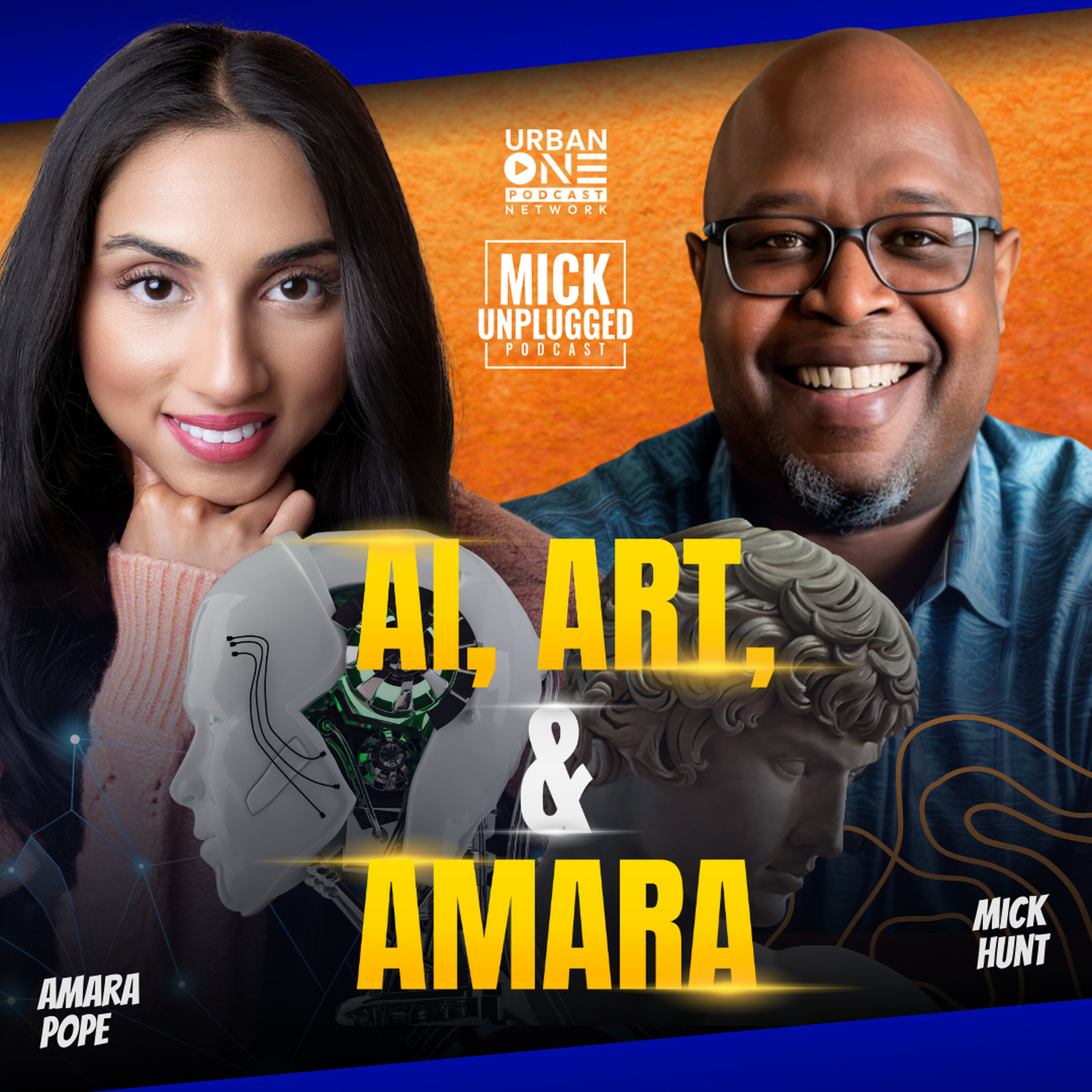
Ladies and gentlemen, welcome to another exciting episode of MC Unplugged. And today we are doing. I don't want to call it a redo, maybe a remix with one of my really, really, really close friends. She's one of the most intelligent people that I know. She's also one of the best painters and artists that I know. I have representation that she's created in my home. And we're going to talk about all things life. Today I'm talking to the brilliant, the fascinating, the beast. Ms. Dr. Amara Pope.
- [01:20]
Dr. Amara Pope
Wow. Thank you. I'm flattered.
- [01:21]
C
How are you, dear?
- [01:23]
Dr. Amara Pope
I'm doing well, thanks. It's so nice to catch up. It's been a couple months since we last chatted.
- [01:27]
C
It has been. It has been. And so much has changed. Not only in the world, but I think in our lives, too. Like our personal lives, our business lives, like, everything is going amazing. And so, you know, when we talked last time, Amara, we talked about that brain of yours and how brilliant you are. And then it was like, wait, Amara paints? Amara is an artist? And then, you know, Amara, I purchased some things from you. They're like centerpieces in my home. Where did that come from? Where did that artsy side of you come from? Because you and I talk offline. Most people that are brilliant, from a mental perspective, that creative side just isn't there. I'm one of those. I'm not creative at all. Stick figures, maybe. I can barely write the Alphabet to make it legible. Right. Where did this side of you come from? When did you first know that that was a thing for you?
- [02:25]
Dr. Amara Pope
Well, first off, everyone's creative in different ways. I will say, just. Just because you can draw stick figures doesn't mean you're not creative. And just your expressions, you know, your. Your mannerisms. That's very, very creative. I would say so. Everyone has their superpowers. Everyone has their talents.
- [02:40]
C
Amar. Santa made me feel good.
- [02:41]
Dr. Amara Pope
No, I know. I'm serious.
- [02:42]
C
You have great expressions, Mick.
- [02:45]
Dr. Amara Pope
No, No, I always say that. And to be honest, I grew up in a household where no one liked to paint and draw. I got my little brother into it, but honestly, that was something I didn't really get from my parents. So that's why I always say we're. We have our own skill sets. But I remember watching TV at home, and like I had told you in our past conversation, I grew up in a really small town where there was not a lot going on, and my brother and I were very close. And I found a really cool hobby that I picked up was just drawing the cartoons we saw on tv. And that just evolved into a passion for art. I would volunteer my time to draw with little kids. And that also led me to pursue one of my two majors in my undergrad is fine arts. And I kind of. So I did that during my undergrad. Enjoyed it so much. But I ended up going down more of the academic route in communications and media. And as you know, on my corporate side, I'm more in marketing and communications. But I always found that fine arts helps me learn, like compositional analysis, that that affects the way I create social media posts or marketing campaigns. So those soft skills resonated with my academic work as well as my industry career. But it wasn't until I was wrapping up my PhD that I was able to pick up that paintbrush and kind of ignite that passion in me that I had time. PhD was done. I was married. Everything was kind of like falling into place in life, and I took that time to really explore or that creative side of myself again.
- [04:13]
C
So I know, again, talking with you offline a lot, it's like your nights and weekends, right? Like, you like to have paint and canvas and brush. So how much time does artist Pope spend? Right. Walk us through that process of you've got a vision or someone's commissioned something for you. Like, what's that? What's that moment in the moment like for you?
- [04:40]
Dr. Amara Pope
Well, for me, when I do take on a commission or there's one piece that I'm working on, it's just that it's in my head. I have to get it out. That becomes kind of the focal point of my life for those couple months, however long it takes. And I think it's because I really like to wrap myself up into one piece at a time. I tend to kind of block out everything. We have an unfinished basement, so I go in there, plug my headphones on. Around me is very chaotic, and it's a mess. But because it's unfinished, I Can make a mess. And I have all of my paintbrushes around me, and that tends to be when I'm outside of work. So in my evenings and on the weekends when I just want to wind down, because to me, art has become a form of meditation. So I've. I'm very busy. You're very busy. You understand the need to kind of decompress and have that downtime. So for me, it's either the gym or it's painting.
- [05:30]
C
And sometimes both.
- [05:32]
Dr. Amara Pope
Yeah, and usually both at the same time.
- [05:36]
C
I got you. I gotcha. You said you plug your headphones in and you go. So, you know, last year was some music controversy out there in your world of hip hop, Right? So talk to me in your earphones. Are you team Drake because you're Canada? Are you going Kendrick, you going Pac? You going big? Like, oh, man, I saw the face. Yeah, yeah, you're getting called out.
- [05:57]
Dr. Amara Pope
You're coming at me with a hard question.
- [05:59]
C
Let's go.
- [05:59]
Dr. Amara Pope
I did. I was interviewed by NBC. See, when the Kendrick Lamar and Drake battle came out. And what I did say was, depending on your taste of hip hop music, I think Kendrick Lamar is more the traditional route. The hard raps, the hard beats. I would arguably say Drake, as you know, on my PhD thesis, is a more contemporary side of things. He's a little bit more experimental. Sometimes you hear a song of his and he's got three different compositions in one piece. So I don't know. I. I lean right now, it changes, but I lean right now more towards the traditional hip hop side of things. So there's my answer there. I want some hard beats going in my ears as I paint and as I work out.
- [06:41]
C
So you said team Kendrick is indirectly.
- [06:44]
Dr. Amara Pope
I'm saying at different times, different people.
- [06:47]
C
Amara, you can answer the question.
- [06:49]
Dr. Amara Pope
Okay. All right. Well, I did. Did actually do an analysis of Kendrick Lamar's super bowl performance, and I thought he was a genius. So I'll. I'll leave it there.
- [06:57]
C
Okay. She's not answering the question, ladies and gentlemen, but we got the answer. She. She is in Canada, so.
- [07:04]
Dr. Amara Pope
Yes, I am. I understand.
- [07:06]
C
I understand. Cool. So another thing about you, and we were just talking about this is you're making it a purpose in 25 to. To spend more time with family and particularly your parents. Right. So. So talk to us about that. Why is that important to you?
- [07:24]
Dr. Amara Pope
I think that for a very long time in my life, I prioritized my career and my academia. I knew I was going through those years of the grind, and it was really important to me that I finished my Ph.D. that took seven and a half years because I was working full time during that entire process. So it did take me a long time. And then kind of building up my industry career. I was at some points doing four different jobs at a time just to try to get that work experience.
- [07:50]
C
No.
- [07:51]
Dr. Amara Pope
Having immigrant parents, I saw the sacrifices they made for me and my younger brother. So I had that drive in me to kind of make it somewhere when it came to academia and industry. But now that the PhD is done, I want to focus on having a family one day. That time for me is so priceless and I've been able to kind of accomplish those personal career goals of mine. I'm still going, I mean, I'm never going to be completely satisfied, but priority shift in different stages of life. And I think I'm at that stage now where I can put that a little bit to the side and focus on my family time. I know parents are aging. Stuff happens in life. I lost somebody very close to me last year and I know how precious like value and time is. So, yeah, that to me is the new kind of shift for 2025. Focus.
- [08:39]
C
I love it. I love it. In our last recorded conversation, we talked a little bit about your parents and their journey and everything. But for the viewers and listeners, because, you know, I know you personally, but what do your parents mean to you?
- [08:53]
Dr. Amara Pope
They are my world. I mean, I, I am very close with my parents. I. They're Trinidadian, so family is huge to Trinis. And growing up, you know, they immigrated to Canada kind of on their own. We have a few aunts and uncles in the States in Canada, but again, moving to a really small town, we were a far stretch away from a lot of family members. So as a unit, my brother, my mother, my father and I became very, very close. And that is such a blessing. That was something I didn't really recognize at the time when you're growing up. But now that I had moved away to actually Vancouver and then I moved back to somewhere closer to my parents, I'm about a 40 minute drive. I still make sure at least twice a week to see them. Whether I'm driving down and working from home by them because I work remotely or just seeing them for like a Sunday brunch, I think that that's really important. And their drive really enabled me to ignite a passion of mine to follow kind of the pursuits I have now.
- [09:49]
C
Yeah. And I know you spend a lot of time with your parents. Right. Like I see it on social over the last couple of years, what's been your favorite memory with your parents?
- [09:58]
Dr. Amara Pope
Oh, that's a good question. I would say. We went to a boat party for Caribana last year, and my family are, they're very turning to the bone, I would say. They, they know how to party, they know how to move, they can drink. They were outdoing me, and I was trying to keep up with my parents, and that was a very harsh reality to see. Wow. My parents can party better than I can. It was lovely. My, my brother was there with his wife, my husband, my parents, and we just, we had such a good time and my cousin and, and his father was there too, so we just, we made a big family affair. We suffered the next day and we made sure we got some food in us, but I don't know if that night or, or, you know, the next day was more fun for me. Just kind of seeing us all rally together.
- [10:46]
C
Yeah, no, that's awesome. Like, to me, and I remember seeing those images on Instagram. Like, to me, that's like, just great for your soul, right? So, so from a, from a self improvement mental health standpoint, when you can have those moments with your family, right, and you can celebrate and you can, as we call it, you can go hard in the paint with your parents and your, your brother and your. And your husband, what does that do for your soul?
- [11:14]
Dr. Amara Pope
I think that is a very grounding experience because it just reminds you of what really matters to you in life. And to me, those moments of just laughing with my parents, being able to just spend, spend time with them. My parents both hit kind of milestone birthdays this year, and I was this past year, and I was able to take my mom horseback riding for the first time. That was something she's always wanted to do in her life. And being able to kind of take some of the things I've been able to accomplish and bring that back to them has always been a goal of mine. I was able to just take my dad on a surprise trip to Florida to see his family out there. And just those are the things that I live for right now. Being able to kind of spoil my parents in a way that I've wanted to do for so long.
- [11:53]
C
Yeah, that's cool. That's really cool. I know earlier this year you spent some time in Japan.
- [11:59]
Dr. Amara Pope
Oh. So yeah, that was actually last November. I went.
- [12:03]
C
Okay, okay.
- [12:04]
Dr. Amara Pope
I actually. So I went with my husband and my aunt and uncle, and it was a trip we've always wanted to do because I Just found Japan was it. We knew it was going to be a complete culture shock for us. Completely different. And we wanted to go for two weeks and explore the country. We didn't want to see kind of only the tourist traps. So we booked this trip with kind of a larger group and we went to a different city almost every night and sleeping on floors in. In different places and, and just really it was. We went to a monastery. So we were able to experience that. And that's where we slept on the floor. Then we would go to. To just downtown seeing Tokyo and being able to see all the different car meets, going more to Osaka and the beautiful landscape there. It was just such a variety of different experiences in. In one country. So that's why I wanted to cover as much as I could in that one space. And then the cuisine. I'm a sushi lover, so of course I love the food there. And snacks. They have every little snack. You know how many Kit Kat, different flavors they have. It was amazing.
- [13:05]
C
Really?
- [13:05]
Dr. Amara Pope
Yeah. Oh, man, there was. Oh, there's just so, so many. And then for me, before we go into KitKat, I will say they had these little tuna sandwiches that they come in little triangles and they're wrapped in seaweed. And that became. It's every gas station or rest stop that became my go to snack. Like they. They have all the things I wish I could have here. And the drinks are unbelievable. I'm going on and on about the food. The culture itself is also really amazing though. I got to dress up as a geisha. I got to do like a nice tea ceremony, learn the kind of practices and the customs, went on some hikes. It was just. It was crazy to do in two weeks. We were exhausted after. But I can say I felt fulfilled after that trip because I find that going to different countries with completely different scenarios and cultures, it just takes you out of your comfort zone, but also reminds you of what you've become so accustomed to and what becomes mundane in your everyday life. Because there's certain things that you take for granted, like the practices of just greeting people there is so different from here or just. Just everyday ways of communicating. And I found that it was really, really great for me to just kind of step outside the box and see those differences.
- [14:16]
C
No, I love that. I love that. What's one thing from the culture in Japan that you didn't know going in that just totally wowed you when you were there?
- [14:27]
Dr. Amara Pope
I think that the tea ceremonies were the most interesting to me because there was such a particular way to sit down, to slurp the tea, to demonstrate a real appreciation for the meal in front of you. The way that you eat the little biscuits they give you and drink. There's like a certain pattern to do things and it's just so very polite and there's so much etiquette to it that I. I didn't realize. Like, I. I mean, I'm. I'm oblivious. I've gone to a high tea thing once, you know, like, I've never. But that's so different from the customs and practices they do there. And I think just the level of respect that they have for one another in kind of the different scenarios I was in, at least that was something I really appreciated.
- [15:08]
C
That's awesome. So I have to ask you, ask everybody that goes to Japan this one thing. So at dinner, did you get to pick your own fish and eat it fresh? Did you experience that?
- [15:21]
Dr. Amara Pope
I did not know. I did go to the fish market though, and I got to see kind of the crazy shuffling and the bargaining they do in the fish market is so crazy. It's such a high energy space. But no, I. I did get to select certain things when I came to sushi, but I didn't just get to pick a fish and have it cooked for me. No, I didn't get to.
- [15:41]
C
Oh, so next time you go, you got to do that.
- [15:44]
Dr. Amara Pope
Okay, sounds good.
- [15:45]
C
Got to do that. So these Kit Kats though, these. So I don't even like Kit Kats, but if you told me that I could have peanut butter, I would do it because my weakness.
- [15:55]
Dr. Amara Pope
Oh my gosh, that's so funny. The one. I actually have some still downstairs, but I brought home a whole bunch of snacks for my little bro to try because he's a huge snacky. And the kick I love the most was a strawberry flavored. I can't even tell you what's in there because everything's written in Japanese, but it's really, really good. And they're actually like a strawberry colored, like pink. So it's really cute.
- [16:16]
C
Yeah, I love it. I love it. So let's switch gears a little bit. Since the last time we talked, AI has like completely blown up in a good way. Right? Like when we talked the first time, like ChatGPT had been around and there were some other AI things, but nothing that was really confirmed. And now it's like everything has some type of artificial intelligence component around it. How are you utilizing artificial intelligence in the things that you're doing from a business perspective or personal perspective?
- [16:51]
Dr. Amara Pope
Honestly, in Everyday communications AI has been so helpful, I would say just to. In terms of testing ab, testing different marketing campaigns, being able to input the data that we want and saying, okay, this, if we could frame it this way, A or B, let's test those things out and see how it works. But I also find if you're using platforms like ChatGPT for copywriting, so say you want to write an email, you pump it in there, it presents it in a, in a professionalized way. There's so many key words that if you look for in an email, in a LinkedIn post, oh, you know, in an Instagram that just, it gives in a way. Don't use delve. I found delve is like a go to kind of way to spot it. But so there's been ways I've been able to utilize it to better my corporate communications. But also recognizing what are the key things that you should make sure you look out for. But it's definitely helpful in everyday life when it comes to comms and marketing.
- [17:48]
C
Yeah, Like I've created some closed sourced AI of my brain, right? My intellectual property, things that I've done and I've been able to train it so that it is me, right? And it is freaking scary. But I guess that's what it's supposed to be, right? Like it's artificial intelligence. So you train it, it learns you and it's been kind of cool. So I'm definitely into closed source building. Like I think that's where the next wave is. So imagine Amara, right? You're talking about wanting to have kids and create a family. What if you can take your brain, right, and continue to build so that generations after Amara know Amara, right? And to me that's what it's about. It's being able to create a legacy that passes on, but then also being able to be me, but smarter than me and faster than me and quicker than me and analyze better than I can. So like if it knows how you think, it can make you think better. So communicating in my style, reasoning in my style is totally awesome as well. What are some of the platforms, the different platforms that you're using today?
- [18:59]
Dr. Amara Pope
I think honestly a go to for me is actually ChatGPT, which is why I'm talking about it. But I think it's really important the way you're explaining it, that the more data you feed into it, the more improved the outcome is going to be. Because if you're putting stuff, just say, even just verbiage, that sounds more like you, it'll pick up Your tone of voice, it'll pick up your mannerisms, it'll pick up the way that you communicate and have dialogue. So when it speaks back to you, it sounds more like you, the more frequent that you communicate with it. But I always think that AI, there's. There's so much scare around AI. And working at a telematics company, we try to demonstrate how it. There's so many ways it can be used in, in. In powerful ways that it can help diminish errors, improve safety, do a lot of different things that the human brain and human capabilities cannot. And I think that rather being than being scared of it, working in tandem with it is so important.
- [19:56]
C
No, I totally agree. So for the person, Amara, who. I'm not going to say they're afraid of AI. They just, they're like, oh, I'm not going to use ChatGPT. I'm not going to use the Canva new tools that are AI powered. I'm not going to use AI to edit videos. Give them the stance and reasons of why they should. Because you're going to say it much nicer than I am. I'm going to say, quit being old and quit digging your heels in the world is going there. Right? It's almost like the Internet 20 plus years ago, right? It's like, hey, it's evolving. This is where the world is going. Adapt. So you say it better than me, please.
- [20:35]
Dr. Amara Pope
Okay, well, we can start with something like canva. I also use that platform regularly. Yeah, you can take a simple task. Say you want to edit a wedding photo and you just need to remove a little person or something in a corner. All it takes is a quick eraser. AI generates it and you have a beautiful picture. Something as simple as that. It doesn't have to be scary, but if you start off with baby steps and see how it can help you in your everyday life, I think that's beneficial. If you're already on Word, say you're using Microsoft Word and you're using spellcheck, you're already working in tandem with a computer to help you spit out that essay or that email or that report. So just think about it as a, as an additional tool rather than something you're battling. I think that's the best way to put it.
- [21:19]
C
No, totally agree. And I'm a huge fan of Canva too. So shout out Canva with some of the tools that they have as well.
- [21:26]
Dr. Amara Pope
Definitely.
- [21:27]
C
Amara again, gonna switch gears one more time because you are one of the smartest people that I know on Earth that's very yes for the viewer or listener. And when I say this, I don't mean institutions all the time, but how powerful, how important is continuous education for society today? And again, I don't mean you've got to go get multiple degrees like Dr. Pope over there, but I do. I am a huge proponent of, of self growth and self education. So from your words, how important is that for society?
- [22:11]
Dr. Amara Pope
I think that any kind of form of education is important. And continuing education, whether that be through skills and trades or that's through a traditional institution at a university or college, I think it really helps you when you graduate. You're a young adult, you're still learning about the world and learning about yourself. I found that going through university. Of course, I went through my undergrad, master's, PhD. I was going through a long haul, but I also had those real world skills where I was jumping into the workforce and trying a bunch of different things. You learn a lot about what your likes are, what your passions are, and also develop a lot of soft skills. Your discipline, your ability to focus on something, your ability to communicate with others. I don't think that we should think about higher education as just learning books and theories and ideas and facts. It's also about developing the self and understanding. These are soft skills that are going to take you forward.
- [23:05]
C
Yeah. I love it. I love it. All right, Amara, are you ready for your hot five? Okay, hit me Hot five with Amara Pope. All right, Amara, your favorite comfort meal.
- [23:18]
Dr. Amara Pope
Oh, right now it is overnight oats, which just sounds so boring and old, but really, really like overnight oats.
- [23:26]
C
Oats, Right now I said comfort.
- [23:29]
Dr. Amara Pope
That is comfort. You know, you could add chocolate chips, maple syrup, some berries to that.
- [23:34]
C
I thought I was gonna at least get poutine or something like. No, just overnight oats.
- [23:39]
Dr. Amara Pope
I don't know.
- [23:40]
C
Okay, what's the best meal that Amara cooks?
- [23:45]
Dr. Amara Pope
Oh, a good chicken Alfredo. And my Italian husband says it's comparable to his nonnas, so I will take that.
- [23:53]
C
Oh, okay. Okay. Yeah, I like it. I like it. Your favorite rapper, Dead or Alive.
- [24:06]
Dr. Amara Pope
That is controversial, but I was always go with Lil Wayne. Lil Wayne, because to be honest, I think his. Some of his lyrics are, to me like modern day Shakespeare, which sounds crazy, but there is.
- [24:24]
C
That might be the first time I've heard that comparable.
- [24:28]
Dr. Amara Pope
No, seriously, that.
- [24:29]
C
And I might like it. I might like it.
- [24:31]
Dr. Amara Pope
The, the, the interplay, the word play he has. And if you really analyze some, of course there's going to be outlying songs that are just hilariously dumb. But Some of the wordplay that he makes, if you listen to. Oh, just the metaphors and just analyze it through a poetic stance, it's very. I think it's great. I did my under. My second major was in English, so I can analyze something as, like, a poem. And I see the different forms of wordplay, the rhythm, the beats. It's just. That is what gets me through a hard workout as Lil Wayne.
- [25:04]
C
Everybody that knows me knows poetry was my first love. So, you know, I try it. Poetry sits in my heart every day.
- [25:11]
Dr. Amara Pope
Just take out his voice, read the lyrics, and you're gonna see it'll hit you in a different way.
- [25:15]
C
Okay, I will do that. I will do that. All right, so you've had a. You've had a challenging day, right? And it's time to go into the gym. What's. What's the workout you're doing to relieve that energy, release that stress?
- [25:31]
Dr. Amara Pope
Always heavy lifting when I'm frustrated and angry. It's not cardio. It's not doing abs. It's not doing lightweights. Anger translates well into heavy lifting. Definitely that.
- [25:45]
C
I like it. I like it. All right, last for your hot five. What's the. What's the piece? The art that you haven't created that you want to create?
- [25:58]
Dr. Amara Pope
I think something paying homage to Trinidad and Tobago and just the vibrancy of that space, the beauty of that country. Something I want to create soon. Okay.
- [26:11]
C
I like it. I dig it. That was your hot five. You did good.
- [26:14]
Dr. Amara Pope
Yay.
- [26:15]
C
You did good.
- [26:16]
Dr. Amara Pope
Although the overnight oats was questionable, but.
- [26:20]
C
Yeah, you couldn't give me a meatloaf. You couldn't give me a curry chicken.
- [26:24]
Dr. Amara Pope
Like you were just straight and wings. I don't know. But to me, that's overnight Oats.
- [26:32]
C
Tells me a lot about you.
- [26:34]
Dr. Amara Pope
Oh, my gosh. Don't judge me based on the overnight oats. Oh, totally judging.
- [26:38]
C
So this is my podcast. I can vote how I want to, and I am judging.
- [26:43]
Dr. Amara Pope
Just don't title it Overnight Oats, please.
- [26:49]
C
Yes, absolutely. Absolutely. Amara, again, I just appreciate you. I know how busy you are. I appreciate you being a great friend. I appreciate the pieces that you built for me. The New Orleans piece. Like, when I'm going to send you pictures of my downstairs so that you can see we've totally themed around your. The piece that you did for us.
- [27:13]
Dr. Amara Pope
So amazing. Thank you so much.
- [27:15]
C
It is awesome. It is awesome. So how can people follow and find you and purchase some artwork from you?
- [27:23]
Dr. Amara Pope
They can visit my website. It's www.doctoramarpope.com and my handles are all the same across YouTube, Facebook, Instagram, X. It's all @RMARA POPE Dr. MARPOPE yes.
- [27:37]
C
Dr. Pope, thank you for being a great friend. Thank you for all the inspiration that you provide and just thank you for being present. You don't know what that means to me. Just you being present means a lot.
- [27:47]
Dr. Amara Pope
Well, I really appreciate it. And all of our chats, they're always grounded, they're always full of random conversations and I appreciate you so much.
- [27:55]
C
I appreciate you back. And for all the viewers and listeners, remember your because is your superpower. Go unleash it.
- [28:02]
Mick
Thanks for tuning in to this episode of Mick Unplugged. If today hits you hard, then imagine what's next. Be sure to subscribe, rate and share this with someone who needs it. And most of all, make a plan and take action because the next level is already waiting for you. Have a question or insight to share, send us an email to hello nickunplugged.com until next time, ask yourself how you can step up.