← Mick Unplugged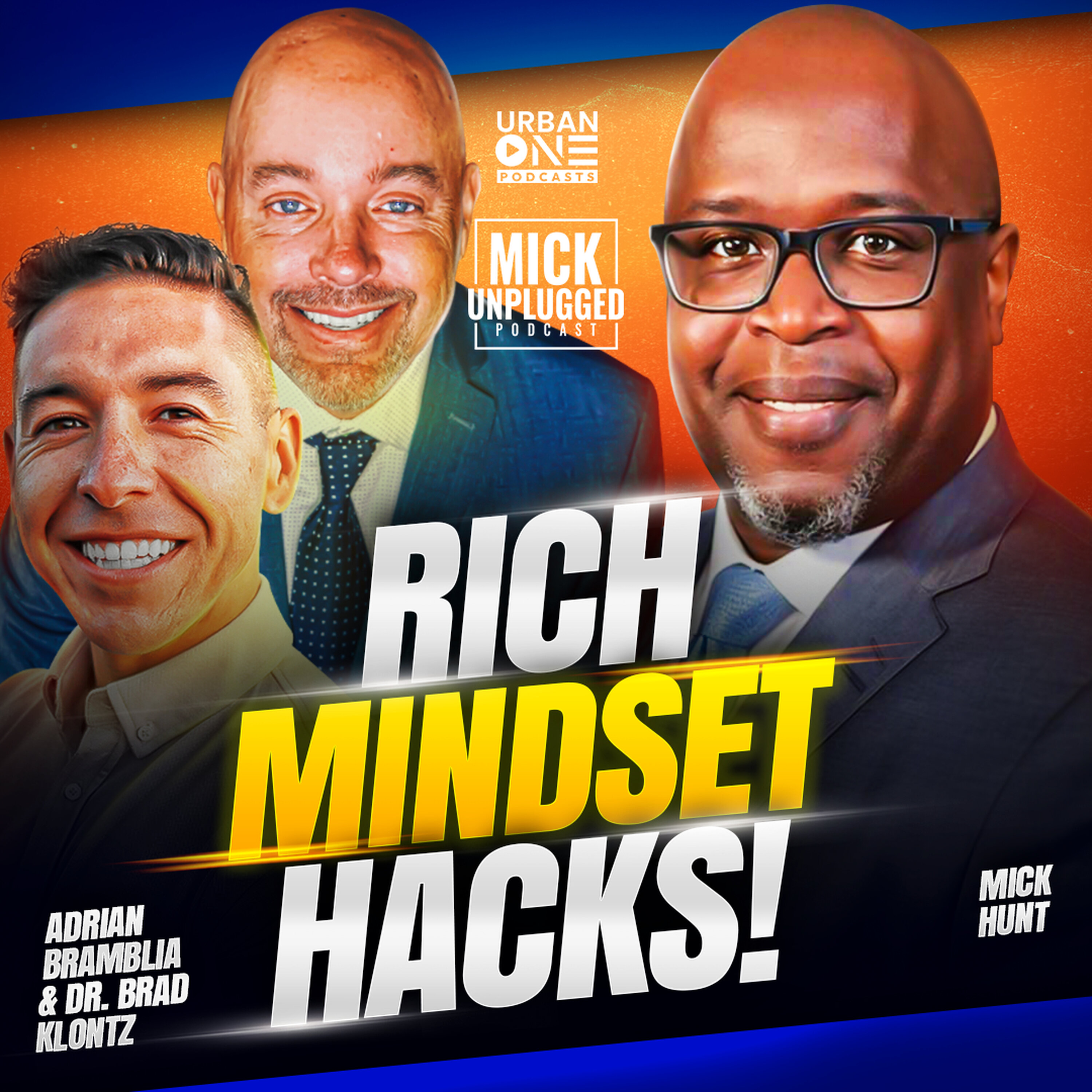
Loading summary
Transcript49 lines
- [00:00]
Adrian Brambila
Foreign.
- [00:05]
Mick
Welcome to Mick Unplugged where we ignite potential and fuel purpose. Get ready for raw insights, bold moves and game changing conversations. Buckle up. Here's Mick.
- [00:16]
Host (possibly Mick)
Ladies and gentlemen, welcome to another exciting episode of Mick Unplugged. And today's exceptional guests are pioneers in their respective fields, each bringing a unique blend of of expertise and experience that has transformed the lives of countless individuals. One is a groundbreaking financial expert and specifically in financial psychology. The other is an entrepreneur and digital marketing powerhouse. Together, they represent the powerful intersection of psychology and entrepreneurial spirit. Please join me in welcoming the transformative, the visionary and the amazing Dr. Brad Klontz and Adrian Brumbilla. Fellas, how are you doing today?
- [00:57]
Adrian Brambila
Hey, thanks so much for having us.
- [00:59]
Host (possibly Mick)
I am honored to have both of you here and you know, just talking a little bit offline and knowing a little bit about your stories from, from what me and my team have done. Honored to have you both here. And it's about to get real on Mick Unplugged, man. Like financial psychology, something that we definitely need to go into in digital marketing. I mean, it's 2024, going into 2025. If you don't have that plan, you're not being seen. So I'd love for each of you to just take a moment, tell the audience and viewers a little bit about your background and how you got here. And I'll start with Dr. Brad.
- [01:35]
Dr. Brad Klontz
Yeah, so first of all, you know, Adrian and I are here together because we have a recent national bestseller in book, Start Thinking Rich. And that that's really what we've been focused on lately. And the passion there has been essentially what, what can we teach people who want to level up their finances, their relationship with money? And so for me, I grew up in a lower income, broken family. There was, there was drama, there was trauma, and we didn't have any money. Uh, and I looked around and I saw a lot of hardworking, God fearing good people. And Adrian has a very different story. But some parts of my family have been around since the Mayflower. And as a young kid I'm like, why are both sets of grandparents? Why are we in trailer parks? Like, what's going on here? Like, it doesn't make sense. The American dream has not worked for us along the way. And so as a kid I just got really curious about that. I remember going to one of my friends houses and having dinner with his family and I just thought they were so rich. And I was so intrigued by this. And in retrospect, it was like a middle class Home. And it had two bathrooms. And for me, I was like, that's incredible. Two bathrooms. To, to me, that was like the, that's, that's what I decided Rich was. But I remember asking, sort of interviewing this guy. So I'm in sixth grade and I'm interviewing this guy, my friend's dad, like, what do you do for work? Like what? And I was just fascinated about how do I get into this world? And then fast forward, I. I became a clinical psychologist essentially to try to help people grow and heal childhood trauma and wounds, which I had a lot of. I mean, I had to get over myself. And then I got out of school, I owed a hundred thousand dollars in student loan debt, and I had no idea how to get out of debt. And I saw a friend of mine make a hundred thousand dollars in a year trading stocks. And this is just before the tech bubble. And I got really excited. I sold everything I had of value. I started to trade stocks. And then the tech bubble broke and I watched all my money melt away. And that's when I became a financial psychologist. Because I'm like, why would a reasonably intelligent person be his own worst enemy? You know, obviously I didn't know what, what was happening. I didn't know how to do it. But I got sucked into sort of a get rich quick scheme. And then my friend was sucked into. And that, that really set me on the search to, to research the psychology of money, the psychology of wealth. So what are the psychological differences between ultra wealthy, middle class, low income, and then secondly, what. How can we use psychology to help people improve their relationship with money?
- [04:02]
Host (possibly Mick)
Wow, that's amazing. I want to unplug a couple of things before I come to you, Adrian there. So, you know, Dr. Brad, we were talking offline and you told me for all the hip hop folks out there, you were the original B rabbit, right? Like you grew up outside of Detroit in 8 mile. No, I'm joking.
- [04:21]
Dr. Brad Klontz
I used to go to the club. You know, they were playing house music back when I went, but I used to go to the same club that they filmed.
- [04:26]
Host (possibly Mick)
Yeah, but what's amazing for you, and I know it's something that all the viewers and listeners can connect with. As a kid, for you, seeing two bathrooms was like, holy crap. Like, that's, that's amazing. Right? And I know that there are a lot of us that had that same sense when you saw something and maybe it wasn't two bathrooms, right. For some people it was like, whoa, like your dad lives here, right? Like, like to see something As a kid that just makes you say, life is different and there's a thing that I can get to. Would you say that sixth grade year old Brad is what kind of started that connection of, okay, if I, if I strive, if I set goals, if I create standards, I can have two bathrooms too? Like, was that kind of the genesis of who you are now?
- [05:15]
Dr. Brad Klontz
Yeah, I. And I think it's. It's like, I think one of the biggest psychological barriers for people around success is the belief that if they can do it, I can do it.
- [05:25]
Host (possibly Mick)
Yeah. And.
- [05:26]
Dr. Brad Klontz
And that is the thing that I, If I could sell anything to your audience, it would be the belief that if they can do it, I can do it. And so I think what you have to have too, quite frankly, is a role model that you can connect with. And so Adrian has a whole story. He has a different background than I do. You do too. And I, I think it's like, whatever it takes to get over the hurdle. Like, well, if they can do it, I can do it. And. And so that's really what we're trying to do. And so that's why I actually like to talk about my journey of growing up lower income and coming from a pretty tumultuous history with some trauma in it and all that, because I think a lot of people can relate to that. And it's like, whoa, if he could do it, maybe I could do it. And I think to me, that's the biggest barrier.
- [06:06]
Host (possibly Mick)
No, wholeheartedly. Wholeheartedly. Which is a great segue to our digital marketing and entrepreneur guru over here, Adrian. So, Adrian, a little bit about your background and how you got here today, brother.
- [06:17]
Adrian Brambila
Well, I think the first thing I like to talk about is in college, my parents, they actually, I grew up in a Mexican household. They to a deficit, saved so much money to make me the very first Brenbula to graduate college debt free. So always will be indebted and grateful for them. And then my first semester in college, what did I do with that amazing gift? I started partying and drinking and, like, doing what everyone else was doing. And then when I came back after first semester to my, my, My dad, he asked, are you working hard and studying? And I, and I lied to him. I said, oh, yeah, of course. I am like, yeah, of course. And then on my flight back to Dubuque, Iowa, I went to a really private small school. I felt really guilty. So I actually, cold turkey, quit drinking and partying. And in Dubuque, Iowa, there's not much to do besides that, especially in the winters. So I went to YouTube and I started looking up like, like hobbies. I learned guitar. And then one of the things I. I picked up from YouTube was learning how to dance the robot. And after a couple years of, of learning how to dance on the Internet, T. Pain had an open call audition to submit a. A YouTube video. And I. And I did not thinking anything would happen and I actually made it to the audition already. I felt like my life was changed. This was my sophomore year in college now. And then I made it to basically be a professional full time dancer backing up for T Pain. So I feel like my life changed a lot in that experience. But dancing was always a hobby. I never wanted to be a pro dancer. Just. I just felt really like it was, it was a God's miracle. And the most defining moment in that whole experience, which I think has really changed the way I look at success and redefining wealth is taking. T. Pain launched a song in, in front of the dancers. I remember the first time we did this. He did this a couple times. But the first time was crazy because he, he's like, hey, you guys want to hear the new songs? He music video before it rolls out? We're like, yeah, of course. So he plays it for us. It's called Reverse Cowgirl by the way. It's not a very good song. It's also not about a western. When, right when he, when he launched it, he played the music video, he launched it. And this is like I would say not in the prime of T. Pain, but just a little bit after. So he's still, he's still on the radio and stuff like that. And back then, this is 2010 era, there's no Spotify, so every song is iTunes. You pay 99 cents to download. And he launched it within a couple minutes. We're looking at the dashboards. He looks over his marriage like, hey, yeah, launch it, launch it. And then you could see like a hundred thousand, five hundred thousand million downloads. And after like ten minutes it was like five, over five million downloads. And I was trying to comprehend, like, I think, wait, yeah, he just made millions of dollars in a minute. And he. And it was just so hard to comprehend because like I think this is a good thing for when you're scrappy, when you have nothing. This mindset that like I need to work hard to make a lot of money, I need to sacrifice a lot to. In order to become wealthy. And these are all things I used to consider true. But what I was watching was a total opposite. Obviously not, not to discredit where T. Pain came from cause he has a really harsh background as well. But just in this moment, I'm meeting T. Pain. He's only five years older than I am and he just looks over his manager. They launch a song, something he loves to do for fun. And then it says around 10am he gets. After that he just gets obliterated like super drunk. And this is a regular thing. And so I'm watching like wait a second, where's the sacrifice? Where's the working hard? I'm watching someone party like a rock star, make music for a living and have an abundance of wealth. So it really shattered a lot of the traditional beliefs I had of like what it means to make a lot of money. Because although T. Pain definitely did have to sacrifice and work hard as, as any successful person did, that's I think one window of wealth and success is like there's actually other factors in the equation that I think are a lot more healthier. Because one thing I had to work through when I started creating YouTube content after dancing on teaching people how to dance, a robot, which is, which was my first business. I actually started feeling guilty when I started making money because it didn't fit this script that I inherited. That money had to be painful and I had to work hard for it. I had to change it to actually if I create value. The more value I create, the more money I make. Which is the same script that I had to evolve. And I still have that today, which is pretty healthy. So from dancing I basically grew the number one website online teaching people how to dance the robot. And, and that led to a whole different world of like learning how to market yourself as a dancer. And then I started experiment, experimenting with all the different ways you can make money online. And I've done them all except for anything like NSFW or selling feet picks. But man, I've tried everything.
- [11:07]
Dr. Brad Klontz
He's got ugly feet otherwise.
- [11:09]
Host (possibly Mick)
So I was literally gonna ask as a follow up question, how did you guys meet? But now I know you were teaching Dr. Brad how to do the robot and so he's. Awesome story man. Like so that does leave me. How did you guys where this intersection come to? How did you guys meet?
- [11:27]
Adrian Brambila
You know, TikTok is such an incredible place and this is why I encourage everyone even if you don't consider yourself or identify as an influencer or content creator. Like I think everyone should be creating content just for the sake of. You never know who's going to come across your message, who's going to see it. Like, Brad and I are completely opposite on paper. He's really educated. This is our book together. Is his ninth book. We. And our past would never come. We would never come across each other ever. We're just totally different circles. There's a. An obvious age gap. Sorry. Just. Okay.
- [12:01]
Host (possibly Mick)
Dang, bro.
- [12:03]
Adrian Brambila
Sorry. We're. We actually. No joke. We started becoming friends on Tik Tok because we. We kept roasting each other. I lived in a van, and that's how I got really popular online. During the pandemic, I would talk about how I have a super high income. I would. And I was really transparent back then. I would say, hey, I made a hundred thousand dollars last month, and I live in this van. And I only work one day a week with wifi. Cause I literally am in the mountains the rest of the time. And then Brad would make fun of me living in a van. And then I would make fun of Brad pretending I was really smart. And so, like, we just started roasting each other and a friendship formed. And it's just so crazy. It goes to show, like, you should post content just for the sake of, like, relationships that you have no idea how they might impact you. Because it was such a privilege and honor to get to work with Brad and collaborate with him on a book. Because I think if it wasn't for TikTok, I wouldn't have this amazing lifelong relationship.
- [12:53]
Host (possibly Mick)
That's awesome. So, Dr. Brad, like, what was it about Adrian that you were just like, I got to get to know that guy. Well, what was that?
- [13:02]
Dr. Brad Klontz
Yeah, so. So I. As I mentioned, I've done a lot of research on rich mindsets. And.
- [13:08]
Host (possibly Mick)
And.
- [13:09]
Dr. Brad Klontz
And quite frankly, when I got on TikTok, I did it out of anger because my nephews were showing me TikTok videos. And they're. They're great and they're so funny, and you get sucked in. And then all of a sudden, I saw videos pop up about day trading, you know, and day and people telling you what stocks to buy. And I made this much yesterday, and I got so upset. Cause I remember I lost all my money day trading in early 2000s. And I was like, oh, my gosh, it's back. And I got really worried because my nephews and kids his age are seeing this misinformation around money. And so I started to create, like, anger content, essentially going against sort of these get rich quick schemes and trying to educate people on how people actually get rich. Because I've done the research and went along that path myself. And Then I saw videos of Adrian popping up, and he was giving really solid, good information on entrepreneurship and on money and managing money. And. And so I could tell that this. This guy had a rich mindset. And so I. We started. I started commenting on his videos, and then we became friends, and then we. Then we started roasting each other after we're friends. But it really did develop a relationship there, and so I had to develop a rich mindset the hard way. His parents actually instilled much of that in him and his incredible story. I've met his parents, and I, We. We often talk about, or at least I've noticed that it's really tough to compete with an immigrant mindset. Like, if you're ever in a competition with somebody who's an immigrant, it's like, good luck. Okay? So there's a good chance they're going to work way harder than you, and they're. They're just hungry for it. But, yeah, I saw that manifest in him, and it was the course. We were friends for several years, and then we both had, I think, an inspiration to try to help out our audience. And so that's where this book came, is sort of the manual that I wish I had growing up around, you know, the psychology of wealth and how do they think and what is their mindsets, and what does the research say about how we get wealthy? And then weaving in Adrian's incredible inspirational stories from his childhood and his family stories, family history, as well as how to make more money, too. That's part of it. Like, part of it is investing, and how do you invest and what's the mindset and how do you save more? And then another component is how do you make more money? Because that's actually more fun than budgeting and cutting down all the things you love in your life to try to reach your financial goal. So the combo I think, is, first of all, you know, you only get one life, and I want to spend that life with people I love and my friends, and Adrian is one of. One of my dear friends. And so it just made this project so much more fun and so much more valuable. Collaborating with him.
- [15:43]
Host (possibly Mick)
That's amazing. And, you know, we talked about how I'll make unplugged. We talk about your because, that thing. That's deeper than your why. And I think for both of you, that's truly resonating with the power of the book. So, Adrian, from your perspective, what are, like, two things that. That, you know, people are going to get from this book? Right? So what are Two tips or two pointers that this book is going to help solve for the listeners and viewers.
- [16:09]
Adrian Brambila
I think The Working with Dr. Brett Klont, I learned so much about the the psychology of wealth. I have an assumption that there's, you know, there's thousands and thousands of books on money and I have an assumption that actually everyone knows what to do to get rich. They know. Correct me I'm wrong if you have a different opinion, but I believe people know that they should save more than they should spend. I also assume that people know they should invest in things like their 401k or anything that's for their future self and not just hoard it all in a bank account. Now, if that's the general assumption, I would call this common sense. Why is it that the average American has not even $10,000 saved for retirement and has racked up credit card debt and is living a lifestyle? Why is it that 50% of people that make six figures live paycheck to paycheck? Why is it if we know the tactics. So I truly believe, and this is just learning from someone that's like Dr. Brad Clonz who studies millionaires is that's the psych of how we think about money that really affects if we execute on the tactics. So the first thing is really just understanding that your beliefs about money keep you poor. Also your beliefs about money are the same beliefs that can get you rich. So your beliefs about how the world works, how money works, do you associate a negative connotation with it or positive? Is money just a medium? Is it a tool like thinking about how it's affected? And then, you know, think about how we were raised around money, which affects a lot of our life. Yay. More things we can blame our parents for. But we have to work through, work through these things. I actually just in my opening story I shared like my parents, I, I, I thought I was learning a really good habit, work hard, sacrifice. But when you think in terms of like living in having a mindset, of having an abundance, then those things actually aren't in the formula because, well, today I, I don't know if I can say I'm working hard yet. I'm making more money in a month than I, than I did used to work in a whole year. And I feel like I was working harder back then. So I think really that first step is like the psychology of like understanding what your beliefs are and then realizing that most of us don't get good beliefs from our parents. We have to work through those and Then also like the internal looks of control versus external looks. Control, these are fancy words of saying, like, how much of your life do you feel like is in your control? And how much do you feel like, does life happen to you or does life happen because of you? Now understanding that life 100% can't be in our control. But this is really just more of a mindset of how you look at things. Because if you feel like there's always external things happening to you that like you're, you can't make more money because your boss is jerk, you know, we're about to change presidents here because of the new president. You feel like they're going to oppress you or the current president that was. You feel like you couldn't be successful because of who was in office last four years. Like all these, like, there's infinite amount of excuses you can blame the external circumstance. And so this is typically a thing that we, we, we define. This is what how poor people think. And again, poor people, I'm just talking about a way of thinking. It actually has nothing to do with money. It's just a thought process. And same thing with thinking. When I say a rich person, I'm actually not talking about their money, I'm talking about the way they think. So the way you think affects everything. What your beliefs are, affects everything. Because I believe once you lock in, have awareness of what your beliefs are, and you work on trying to change your habits and beliefs, the tactics become really easy.
- [19:52]
Host (possibly Mick)
Right, Right. That's awesome. So for my psychologist Now, Dr. Brad, I want to take some things that Adrian said and get your take on it or have you explain it to us. So the, the latter part of what you just said, Adrian, so you know, it's thinking like a rich person, thinking like a poor person. Dr. Brat, can you give us some examples of that? Like this is, this is how a poor person is thinking, whether it's a scenario or, or example or whatever. And then this is how a rich person thinks through that same thought process or scenario.
- [20:23]
Dr. Brad Klontz
Yeah, so there's. So I've done research on thousands of multimillionaires and looking for these patterns. So giving them tests on locus of control, giving them tests on their belief, their specific beliefs around money. And so we've found very, very clear patterns here. And the first one that Adrian spoke about, which I think is so, so important, is that locus of control, so taking personal responsibility for as much as you possibly can turns out to be the most effective mindset across the board when it comes to well, income, net worth, success in school, success in relationships across the board. That is the mindset you want to embody. So always be looking to take more responsibility in your. In your life. Like, if you walk in the door, your wife's grouchy at you, it's real easy to blame her, you know, because I'm great. I'm out here hustling. I love her, I take care of whatever. You know, why she's so irritated at me? Okay, that. That's great. You can blame her the rest of your life and be unhappy the rest of your life, or you can say, well, okay, so what is. What is it that I can do? You know, like, think about it. Have I been really expressing to her how much I appreciate her? Can I take some of that action? So, by the way, that is the hack to so much happiness and joy and success in life. The other one we found are specific beliefs around money. And these are things, like, we found categories. So Adrian talked about this a little bit. He said, if you have a negative association with money. Well, I grew up in a family where we did, like, we looked at rich people as being greedy, selfish. The. The only way to get rich is you got to take advantage of other people. Like, and we call that money avoidance in the research. And by the way, that belief set is subconscious for many of us. We inherit it, you know, and by the way, you can then find examples of greedy rich people who are horrible human beings. It's not like there's not a lack of examples of that. There absolutely are plenty, but it's only part of the story. There are also rich people, and I hope everyone listening to this becomes rich and does great things in the world, who cure diseases, who donate their fortunes to making the world a better place, who are actually really, really good. Um, these are most of the people I've met, by the way, I've. Most poor people I meet are really good people, and most rich people tend to be really good people, at least in my experience. That mindset, if you're not aware of it, it will knock you down. It will keep you down. You'll have a confirmation bias where you're screening out all information. Like, if I tell you, for example, that some billionaire is donating 97% of their wealth, that money avoidance mindset will say, yeah, yeah, but, you know, they're doing it for these nefarious reasons. And it's like, whoa, whoa, whoa, I just told you. They're giving away 97% of their wealth, Right? And so you got to Be aware of that. You got it. You got to be aware. And so the other thing I'll say and to wrap this up is an open mindedness. So one of the things that's really associated with success, a growth mindset, a rich mindset, is being open to new experiences and open to new information.
- [23:14]
Host (possibly Mick)
Yeah.
- [23:14]
Dr. Brad Klontz
And so always being curious. So you know, Adrian likes to joke that I'm edumacated. I grew up lower incomes. I always feel like I'm sort of faking in that environment, the educated environment. But one of the things I've learned along the way is the more that I have studied in psychology, so the more I realize how much I don't know, it's like I feel like I don't, I was way more confident about what I knew before I be got a doctorate. And I think that's sort of the mindset you need to have is don't be so cocky, don't be so self assured that you got it all figured out. Because even for us, even for me, when it comes to psychology of money, I feel like I know about this much. You know, I know a little bit, I know a quarter's worth when the world is just so expansive and there's so much more to learn. So always be curious because what you're getting, what you're getting in life right now because of what you know and probably what you don't know. And so that curiosity is so incredibly important if you want to level up.
- [24:12]
Host (possibly Mick)
Totally agree. Totally agree. You know, one of my pillars is decision making. Right. And I say our days are built of decisions and people talk about what about choices. Well, choices are external. Right. Like I've got a choice to talk to Adrian or Brad. Right. I can't control that. Those are the choices that I have. The decision is who am I going to talk to. Right. So I'd love to talk to you about the importance of decisions. And I'll start with Dr. Brad. Like more importantly, from a financial perspective, how important or not important are emotions in making financial decisions? I know your answer because I follow you and I know what you're going to say. But I think it's important for the listeners and viewers to understand emotions when we talk about financial decisions.
- [25:02]
Dr. Brad Klontz
Yeah. So I, my conclusion is that we are absolutely wired to be totally self destructive when it comes to money. And I've traced it all the way back to our prehistoric days of living in small little tribes of people. And if you want to understand why you've messed up around money, ask yourself what a Cave person would do because that's how we've spent most of our time on earth. And so, for example, crypto is hot, baby. It's back. Okay? Now I've been alive long enough to see people lose all their money like several times in crypto, but it's back and it's hot. Okay? And what's gonna happen if it hasn't happened already? There's gonna be something in the back of your mind. Cause you're seeing all these people making money on crypto and I'm not sure how many actually are, but they're all over social media. Right. And so what that does to your brain, the tribal brain, it says, oh no, the tribe's running in this direction, I need to go with them. And it's that sense of fear. It's fear that I'm missing out. It's fear that I'm going to get destroyed. Whether it's, you know, people selling in the market or buying when it comes to investing. And so if you feel like everyone around you is getting richer faster than you, if you see people running for a certain shiny new object, it is going to be so difficult for you to not go with the herd because this is baked into your DNA, your ancestors. If everyone, imagine a tribe of 150 people back in caveman day, they all get up and they all run north. You're sitting there, guess what happened to the people who just sat there. They got picked off by the saber toothed tiger. Because there's a reason everyone's running over there. And it's life or death. That wiring is inside of us. And so when we see something, even though it's not life or death, it feels that way. We have an animal brain. And so it's really difficult for people to stick with a financial plan. For example, they have actually done studies and dead investors outperform living investors. So wrap your head around that. You know, talk about lack of emotion. Well, if you're dead, you're. You're not feeling any emotion and you're not making any trades in your account. You do better than people who are alive because people are alive, get sucked into I need to get rich fast or social media, for example, seeing people with outward displays of wealth. So this is one of the things that we've actually found is that statistically speaking, most self made billionaires describe themselves as frugal. You know, they're not the ones that are flashing the brand new cars, you know. Yeah, they're not the ones in the middle class home with two Brand new cars out front. Those people are always going to be middle class. By the way, studies show that the people who become wealthy are money vigilant. So we talked about those beliefs, right? They believe it's important to save for a rainy day. They're sort of nervous about the future. They're taking chips off the table. They have a vision of the future that they want to invest in. They're not doing what we're wired to do, which is consume everything. Right now. The whole concept of saving goes against our wiring, let alone not sharing it all with the tribe. This is another huge thing from my socioeconomic background. If anyone got any money, you better share it. Like, what are. What's wrong with you? You know, and so it, it kind of goes against that lower income tribe too, for you to even be setting money aside. It's like you're saving 20% of your income. Don't you know your sister's about to lose her house? It's like, what are you doing? And it's like, whoa, whoa, whoa. I love my sister, but by the way, it's just an example. My sister's doing okay, but it's like, I got plenty of cousins who aren't, and it's like there's tons of pressure there. So the question you gotta ask yourself is, how can I save and invest for my future? Which, by the way, is gonna put you in a better position to help out the people you love, frankly, and not fall into that. So for me, so much of our struggles with money can directly be related to our emotional brain and that tribal sort of instinct that we have.
- [28:51]
Host (possibly Mick)
Yeah, that's amazing. And I feel the 100% the same way that you do, which is why I purposely asked you that question because I knew where you were going to go. So now, Adrian, for you, same thing for the, for the entrepreneur, the solopreneur, the person that, you know, they're building a brand digitally and socially. How important is decision making for that person?
- [29:14]
Adrian Brambila
Decision making, I think, because we're emotional creatures when it comes to investing and money, I don't believe that anyone has the stomach to consciously invest and win. So the decision is almost one of the most difficult to say because we can't see into the future. 30 years trying to wrap our minds around time is always so tough to do. When we're having a great time, moments are fleeting. When we're bored, time seems long. And now we're trying to look, what does my life look like when I'm 65 or whatever age and so to think I need to put money in right now, money that is tangible, that I could go spend, make that decision every day or every month consciously to then say, and I'm not going to touch this money and it's going to be there in 30 years. I think that that is so hard of a decision to make. And I think that's why you need to make the decision to invest one time versus consciously every day or every single month. And what I mean by one time, this is one decision you have to make and really not think about is you set up a decision to say, I'm going to invest a percentage or a dollar amount every single month. And that's what we call in finance, dollar cost averaging into the stock market, for example, into like a target date fund. And then that is automatic, it's passive. And then you don't think about the decision. Because I think the problem is when you think about the decision and you're looking at the stock market and it's high or low, our emotions come into play. Well, if it's high, you might say, you know what, it's a little too expensive. I'm going to wait till it dips down. And then if it's crashing, you're like, you know, how low is this thing going to go? I'm just going to hold back. And so you don't get into the game. So you just got to make that decision actually one time. If anything, I'm oversimplifying, but how easy? If you want to be a millionaire and have money work for you, you just got to make the decision. Once you set up the account, you pick your number of how much you want, a dollar cost average, and you set it and forget it. And that one decision could literally make you a millionaire, depending on that value and how long you're going to be investing for. If you try to make it an active decision, I think you lose.
- [31:26]
Host (possibly Mick)
Totally agree. And I love the fact that you said that too, because, you know, as I was talking with, with my kids and we were talking about a million dollars, right? And so, you know, Brad Adrian already called you and I old, right? But for you and I, when we were younger, a million dollars was a lot of money, right? I would argue today a million dollars isn't that much. It's still a good amount of money, but I don't think it's a significant amount anymore. So much so that I truly believe that with the right plan and more importantly, the right strategy and the right financial acumen and awareness that you have you should be able to make a million dollars a year, right? Because there are people that make a million dollars a month. There are businesses that make a million dollars a day, right. And I'm talking new money, not. Not rolled over revenue. I'm talking new revenue. And so I'd love both of your feedback or opinion that. Like one, what does $1 million mean today? And then what are things people can do to. To further Adrian's point, to set that barometer, to make that a realization, not just a dream.
- [32:38]
Adrian Brambila
Well, I'll share. This is my fifth year of making over a million dollars in a year. And I think that the things that changed from when I was making my first job paid $27,000 a year and I worked on, like, my stuff. Most of my money comes from the Internet. All of my money comes from the Internet. And I needed something that could scale without my, without my time. And I really think a normal job usually doesn't offer that. Uh, you have to have some equity into something or you have to be in sales and you have to be crushing it. But the Internet is just a great avenue. There's so many opportunities where you can work on something once and it can scale. You can build leverage. So social media can, you know, leverage. And having an email newsletter, like I have 50,000 people on my email newsletter, with a click of a button, I can. 50,000 people can see my offer and then that, you know, a percentage of them buy and thousands of dollars can appear. I think that it's like understanding either leverage or things at scale that you can really make over seven figures. I never thought I'd be in this position, especially when I was making minimum wage after graduating. And I think the, no matter what you're doing, momentum, I think carries forward. And so, like, it compounds in a way that's hard to fathom. But this is why I feel like working hard and sacrifice were things I did at the beginning. And now I just have this momentum that keeps carrying. But I think the avenue platform, one of our chapters in our book is about how, how we make money and analyzing it. If you're in the right game, we use a metaphor, that how you make money is a game how. And it's kind of like, are you playing the right game? Do you know the rules? And do you know, do you know, like, how long you need to play this game in order to get rich? And so when I was making $27,000 a year, there's only one person in the entire call center that was working at that made six figures. It was a manager and the manager had been there for 14 years. So it, that to me is like the rules of the game. If I want to make six figures at this call center, I probably need to work 10 years here and be on time and like slowly start increasing my income. So some people are in scenarios like this, but they never really like kind of map it out. And when I got, when I learned the answers of the how the rules of the game this call center is to make six figures, I was like, wow, I, I'm in the wrong game. I need to find a different game to play. Some people have resistance to changing the game they're in, AKA changing jaws because they have like, it's like lost opportunity cost of like, well, I went to college for this major or I've already been with this company for six, seven years. Like what happens to all this time I put in when, when reality is if you are unemotional, you, you just take a look at the rules. Like, you know what there's. If, if my goal is to, you know, have financial freedom or make more money, then I really need to change the game. And I think if your emotions are wrapped up in your identity of your job, this is what makes it really tough. I feel like when I was a full time minimalist, I got to really be practice this idea of detaching my identity to consumerism or even my, my job and my income. And I think that's a great practice of like, that's really challenging for Americans because we're constantly marketed that the, the more stuff we have, the better it is. We needed the fanciest upgrade. Like our identity is marketed that it's wrapped up into what we own or the car we drive in our house. And I think this is like, I don't, I'm not telling everyone you need to live in a van like I did, but I do encourage you to explore what your identity could look like if it, if it wasn't defined by your job or any of the stuff you own. Because I think that's a great position that will allow you to make decisions for yourself that are, that could be better for your life. Um, because you're not attaching it to, to something that really has nothing to be part of you.
- [36:24]
Host (possibly Mick)
Amen. Brad, your thoughts on a million dollars?
- [36:27]
Dr. Brad Klontz
Yeah, so, you know, I, I would say that a million dollars goes fast if you're spending it. Um, and if you, if you look at a million dollars though, as a, as an asset, that's going to Spin off cash for you. That's when it starts to look really good. And so we talk about in our book the four percent rule, which is essentially how much money do I need to set aside to have freedom? And so one of the things that we define in the book is what is rich? It is owning your time. Yeah, owning your time. And by the way, so as a psychologist, I've read all the studies on owning stuff and it turns out that this stuff doesn't really make you happier. You know, I mean, I think we're all here to like have a good experience in life, you know, to be around the ones we love, to have happiness, have joy, help other people have that experience. And stuff just doesn't do it. And so if you're addicted to stuff, I worry about you. Because what I have found is that when young people come to me and say, hey, Dr. Brad, you know, I want to become rich. And I say, well, why? And it's like, well, I want to get a Lamborghini. I'm, I'm, I'm giving sort of the extreme example here. I want a Rolex, I want a Lamborghini, I want a mansion with a pool. I start to get a little bit concerned about that, to be honest. And I understand why we're attracted to that stuff. Stuff. But unless that young guy, young woman sort of shifts their mindset a little bit, I know what's going to happen because I see it happen all the time. They're going to get a six figure job. Incredible. And then they're going to go lease a Mercedes. And then they're going to go get the most expensive apartment they can get. They're going to get the best stuff they can get. They're going to get a new wardrobe and people can stay stuck in that cycle of not creating any wealth for a very long time because they got the wrong focus. And so we're trying to reorient people to owning your time. And so that's where a million dollars spinning off 40,000 a year for you. It's like, well, how much more of your time can you own by doing that? And I'll also say this. I believe that everyone can become a millionaire. And by the way, without any fancy hacks, quite frankly, like, I'm in it for the hacks too, right? Like I want to increase my income, et cetera. I'm a multimillionaire now because I'm a multimillionaire because of what I'm about to tell you. And I became a millionaire working in a Public school. Okay. As a psychologist in Hawaii. And I became a millionaire by doing this one thing. When a dollar comes into your life, you save and invest a percentage of that for your financial freedom. And so I've run the numbers on this, too. $5 a day invested at average market returns. So you don't even have to do anything crazy with. Investing is a million dollars in just 42 years. And I say just 42 years. And I know you're saying 42 years, that's forever. And so I always say, well, then invest $6 a day. You know, get there faster. I mean, and obviously you want to level up, but I truly believe that everyone could absolutely be a millionaire just by doing that. That's. That's how the math works.
- [39:16]
Adrian Brambila
Yep.
- [39:16]
Dr. Brad Klontz
But to your other point, let's say that you're making a hundred thousand and you really want to make a million a year. Right. And so how do you do that? Well, as Adrian said, are you playing the right game? Because you might not be playing the right game. And you might say, well, how do I play that new game? Well, this is where you have to look at almost going to another tribe. Okay, so now I'm back to my tribal metaphor here. So I grew up in a lower income tribe and we all did things a certain way. Nobody had a 401k. Nobody was doing that. You know, money comes into your life, you spend it. Not on lavish things. Whatever, it's gone. That was my tribe. When I wanted to become a millionaire, I had to learn. It was almost like going to a new country. It's like these people trust the stock market. Are you kidding me? Isn't that a bunch of greedy bankers taking all our money, keeping us poor people suppressed for my entire family, I have to put my trust into them. Well, guess what? That's what rich people do. Rich people have financial advisors. They have CPAs, and it's. And you have to overcome all these mental blocks because it's like this tribe is doing things very, very differently. And so that. That's what I think you need to do, is keep looking for, well, what is that tribe that's making a million a year? What are they doing? Or making a million a month? What are they doing? And then you have to. What you got to do is study them. Study their mindsets, their habits. What are they doing? How are they looking at the world? What sort of businesses are they in? Because what I have discovered is if you decide what it is you want and you can find some models on people who've Gotten it. Gotten it. It's a very simple path. You just replicate it. It's like nobody's out here doing magic. Maybe there's a couple people who are, but most of it's it. It's. You can replicate it. When I decided to be a psychologist, it's like, oh, how do people do it? Oh, well, they do this and this and this. Okay. And the first time I tried to get into graduate school, I wasn't accepted. And I'm like, okay, well, what do I gotta do the next time to get accepted? It's like, if you decide you want it and you're willing to put in the effort, you can absolutely have it. But understand this, other people have achieved these things. You just need to figure out the formula and replicate it.
- [41:13]
Host (possibly Mick)
Love it. Absolutely Love it. Adrian, Dr. Brad, you both have been so amazing with your time today, and this was a straight financial master class. And so I applaud you both for the work that you're doing in the communities that you're a part of, and more importantly and selfishly, for the community here at MC Unplugged. So definitely appreciate the work that you're doing. So where can people find and follow you? And I will make sure in the show notes and descriptions, we have links to the book and everything as well, too.
- [41:46]
Adrian Brambila
Awesome. Yeah. Our book, Start Thinking Rich is available everywhere you get books. But as a way we can say thank you for having us and to your audience, we do have a place that can get extra bonuses, resources, tools, and worksheets. Also, a really amazing community. We just did a. We have a monthly mastermind that we just did where we kind of go over the same financial process. My wife and I do that kind of help us keep our finances in touch, a pulse. We just do it once a month, and that's how we manage all of our wealth. The funny thing is, I. I remember when I asked Brad this, I was like, do rich people budget? And he's like, the truth is, rich people don't budget, but we do plan. And so it's kind of one of the things that we bake into our community. So that resources and more is@startthinkingrich.com unplugged. And that's a special link just for your audience here to get it. Otherwise, you can get the book everywhere. And I'm on social media. You can look me up at Adrian Brambila and then Dr. Bad Cluntz as well. We're on all the platforms.
- [42:43]
Host (possibly Mick)
Good stuff. When is the next robot competition?
- [42:46]
Adrian Brambila
Next time you're in Austin. Let's break it down.
- [42:49]
Host (possibly Mick)
Hey, I'm there. You know, I'm close to Austin with my oldest son, so I will definitely be out there.
- [42:56]
Adrian Brambila
Epic.
- [42:57]
Host (possibly Mick)
Awesome. Dr. Brad, any final words of wisdom for the group?
- [43:00]
Dr. Brad Klontz
You know, I feel like the biggest thing is to just realize that you can have everything you want to have, and if they can do it, you can do it. And so if you can just flip that switch, you can have anything you want in life. I'm convinced, and I believe it.
- [43:16]
Host (possibly Mick)
Totally agree. Totally agree. Again, thank you both for taking time. For the listeners and viewers, remember your because is your superpower. Go unleash it.
- [43:30]
Mick
Thank you for tuning in to Mick. Unplug. Keep pushing your limits, embracing your purpose, and chasing greatness. Until next time, stay unstoppable.