← Mick Unplugged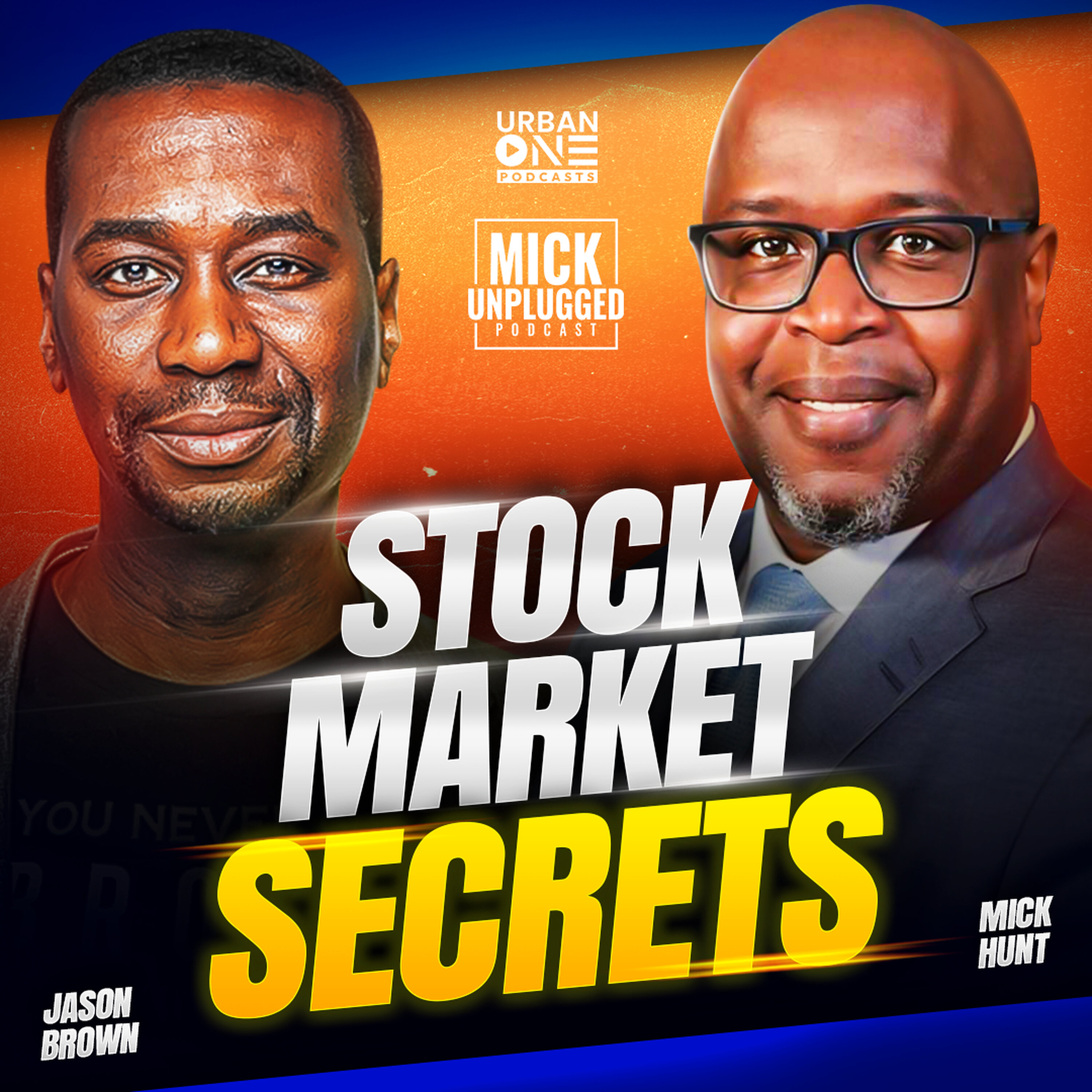
Loading summary
Transcript40 lines
- [00:00]
Mick
Foreign.
- [00:05]
Welcome to Mick Unplugged where we ignite potential and fuel purpose. Get ready for raw insights, bold moves and game changing conversations. Buckle up, here's Mick.
- [00:16]
Jason Brown
Ladies and gentlemen, welcome to another exciting episode of Mick Unplugged. And today's guest is a seasoned stock market coach who transformed a $10,000 student loan and into a six figure portfolio in under a year. As the founder of the Brown Report and Power Trade University, he is dedicated over 15 years to demystifying stock trading for the everyday investor. Get ready for an enlightening conversation with the insightful, the empowering, the transformative Detroit's own what up Doe Jason Brown. Jason, what's going on, brother?
- [00:49]
Mick
Mick, glad to be here. I'm surprised you knew the what up though.
- [00:53]
Jason Brown
See, I had this conversation with Marcus Collins, man. Like there's, there's four places where you know where everybody's from in New York. You know by the accent, right? Like you hear that people from Baltimore have a weird accent. So you, you understand that everybody that I know from Detroit starts the conversation with what up though?
- [01:15]
Mick
What up though?
- [01:16]
Jason Brown
And then people from California, you never have to guess because they're just going to tell you.
- [01:20]
Mick
So.
- [01:21]
Jason Brown
So, brother, I am honored to have you on the podcast, man. I was telling you offline, huge fan of the work that you're doing. I'm one of the subscribers to your Instagram or to your YouTube channel and I take tips and tricks on a weekly basis from you. So I wanted to thank you just for, for what you're doing. I know you have paid services, but I want to thank you for what you're doing for free.
- [01:44]
Mick
I appreciate that. Yeah, I believe that, um, you should at least get a taste of the information and the way that a person teaches without having to pay them. And I know when I first got started, I was just scouring all kinds of videos, trying to look for information. So now that I'm in a place to give back and teach that information, I like to make sure there's a platform where people can at least get started and feel comfortable before they even put a dollar up. And that was, that was YouTube for me.
- [02:13]
Jason Brown
Absolutely, absolutely, man. So I opened this introduction with talking about you taking a $10,000 student loan and turning it into a six figure portfolio. How, what did Jason do? Like, how did that happen? Where was the, the, the mindset to even know that you could do that? I want to start with that journey, brother.
- [02:35]
Mick
Absolutely. So that's like the pinnacle of one of the stories. And so I think it's important for listeners to understand the story behind the story. And so growing up poor, single family home in Detroit, Michigan, my mother raised, you know, two young boys, and we had bars on the window. I actually never had a bed growing up until, like, later on in life. But when I was little, we used to sleep with sleeping bags. And so I didn't really realize we were poor until we went to my friend's house and he had a bed. And I remember telling him, I was like, wow, you have a bed? And he's kind of looked at me like, of course I got a bed. And I was like, well, I thought beds was for grownups, because you only need a good night's sleep when you got to go to work and make. Make money. That's when I was like, well, maybe we just poor. And he had two parents. So I'm like, well, maybe that's why he can afford the bed. The reason I'm sharing that was that was my early introduction to starting to realize, like, there was a difference in money and, and. And. And having it, not having it, because where we from, everybody had bars on their window. And so I just thought that was normal. I thought everybody, every kid, slept in sleeping bags. So from an early age, then I started becoming even more aware when I would see TVs on. I mean, houses on TV that didn't have bars. I'm like, well, where are those neighborhoods at? And it was typically California. We watching Beverly Hills 90210 and those high school shows. And so basically, I started to ask myself, like, how do we get out of this situation? How can we have bars on our window? How come we don't have a bed? So I got real interested in money and where I'm from, if you graduate from high school and you didn't sell dope, you didn't get locked up, you didn't get a girl pregnant. Like, you didn't get killed, by the way. That was the big thing. So we at 18, in our neighborhood, we have these big parties when you graduate high school, as if you got a college degree. And at these parties are these. Like, you made it. You didn't get someone pregnant, you didn't kill someone, you didn't get locked up. People would give you money, like that was it. If they got you through to high school, like, that was an accomplishment. And So I got $2,000 from my high school graduation. And so I took that $2,000, and I would hear people say, well, you want to be rich, you got to invest in the stock Market. I started, you know, researching what do people that don't look like me, specifically white people. How they make money is always talking about the stock market. So nobody in my circle was in the stock market. I took the $2,000. I went down to a well known bank. I tell the girl, I want to be rich. I mean, why? I want to invest. She said, why? She asked me two questions. She was like, so you want aggressive funds, right? And I was like, yeah, I'm 18, I need aggressive growth. And she's like, well, what's your goal? I was like, I want to be rich. Like, why else do people invest? I'm not thinking people invest for retirement. They invest for. I'm just, I'm like, if I get rich, that take care of retirement, mobile home, vacation home, it takes care of everything. So I'm like, I just want to be rich. I gave her the $2,000. I come back to some 18. I come back about two, two and a half years later, I'm 21, and I'm like, how's my investment going? I'm thinking, this is great. It's going to be at $6,000, $7,000. It was down to $700.
- [05:42]
Jason Brown
Wow.
- [05:42]
Mick
And so I asked the lady, I said, well, what happened? That was my life savings. Like, I'm not about to graduate high school again, so I don't know where I'm gonna get $2,000 from. And she just kind of looked at me like, I don't know what to tell you. And so I said, I thought the professionals don't lose money. And she like, market goes up, it goes down. I said, give me my $700, I can do this myself. I could have lost my own money. At least I would've known why I lost it. Cause I didn't even know how they lost it. I just handed it over.
- [06:09]
Jason Brown
No explanation, just.
- [06:11]
Mick
Yeah. And it just disappeared, Right? And so that was the beginning for me. So what happened, Mick, was I was making $8 an hour selling cell phones for Sprint PCs. I'm that guy in Best Buy or you going to Costco, Sam's company, Like, who's your cell phone provider? Well, that was me. I was like 20, 21 years old. And so I did what most people do. I was like, I spent $200 on some gym shoes. To make me feel better, I bought some Jordan. So I had $500 left. I was like, man, if I can make $50. Because after making $8 an hour, 64 bucks on a Saturday, you take taxes out. I'm left with $50. I've been working Saturday since I was, like, 16 in retail. I worked for McDonald's. I worked for Mervyn's. I work for Best Buy. I worked for Sprint PCs selling for. I'm always working retail. I'm. I'm finally like, if I could just take a Saturday off and not lose pay, that would be, like, amazing. So I got 500 bucks. Like, if I can make 10%, that's $50. I could take one of these Saturdays off. And then I said, if I could do that once a week, then I could take a whole month of Saturdays off. So I bought Sprint stock at $5 a share. Sprint stock fell down before. I was like, oh, man, this doesn't work. Maybe I'm not as smart as I thought I was. Sprint stock went back up to $5. I'm like, okay, let's go to 5:50. It fell back down to 4. I'm like, the stock market rigged. It's a setup. It's a scam. That's why they asked for my Social Security number. They know I needed to go to 5:50. They won't let it go to 5:50. Stock went back up to $5, Mick. And I said, I've seen this before. I got out at $5 and broke even. It fell down to four. I got in. It went back up to five. I made my first hundred dollars. I didn't know that at the time that was called a channeling stock. And so I started like, well, what other patterns out there exist that I don't know about? I got really good at studying the stock market. Spent countless hours studying these patterns. Then I get really good at flipping my $500. I made my first a hundred like I just told you about. I started making 2, 300 bucks. And then I was like, wow, if I had a thousand dollars, I mean, I would have made 200. I was like, if I had $10,000, I was like, oh, my gosh, I'd be rich. Right? Right. And so, you know, I read books like, Rich Dad, Poor Dad. And one of the things he said in the book was when, you know, if you know the story, when the kids went to work for the daddy, like, you want you to work for free? Like, you want us to work for free. He's like, by not paying you, you'll see money around you that would have before gone unnoticed. So for me, I was like, how am I going to get $10,000? Me and my cousin went to all our family. My cousin was trading, too. We Were going to our family members, like, hey, can 10 people give us a thousand dollars? We're trying to raise $10,000. Nobody wanted to do it. I had saw my friends get. So I had a scholarship to the Mikula School of Business, Wayne State University here in Detroit, Michigan. So full circle to your question. How did I get to the $10,000? I saw my friends getting their student loan refund checks and they were partying, they were shopping, doing all this stuff. I went and talked to my financial advisor, said, hey, I got a scholarship, but I know we poor enough to qualify for financial aid, so what would happen if I qualify for financial aid? He said, well, your scholarship would pay books and tuition first. And since it doesn't cover room and board, you can use it to move on campus. You could use it for living expenses if you just want to go to school full time, whatever you want to use it for. So I'm like, I can use it for whatever I want. Like, yeah, you'll get a refund check. That was the light bulb moment for me. I was like, I'm taking the refund check and I'm putting it into the stock market. So that's how I got the $10,000. And I know people be like, well, isn't that risky? It's not risky because I had got so good at doing it with my $500 that I was just doing the same thing with a little bit more money. So when I put that $10,000 in there as a 21 year old college student, I grew my trading account to over $100,000. So that's, that's the full circle of how that $10,000 student loan turned into.
- [09:54]
Jason Brown
A six figure trading account in less than a year.
- [09:57]
Mick
In less than a year.
- [09:59]
Jason Brown
That's wild. Applaud you for that. You know, I'm picking up a lot of things, Jason. I mean, again, I followed you on YouTube for, for a long time, but hearing this story, you know, I'm, I'm seeing the studying habits, right? I'm seeing the, hey, let me not be impulsive. Let me see what's going on after. You were impulsive first, right? You were impulsive and it didn't get you anywhere. And then you said, wait, I need to research, I need to truly understand. And then what I love about it is you took action, right? Because a lot of people, not even a lot, most people, the reason they're not successful when they try to trade on their own is they get very impatient and they get that one downturn and it's over, right? But. But you were disciplined, and I love the fact that that was you. Where did that discipline come from? When. When did you realize that you were a disciplined researcher, a disciplined person?
- [10:56]
Mick
You know, I, I, I, I look back, I don't think I knew until, you know. You don't really know until you look back over your life. But as I look back over my life, I was always different. You know, I was in a gang here in Detroit, Michigan. And I remember when, kind of like when report cards came out, all the gang members, we'd be like, what'd you get on your report card? Like, I got three Fs and two Ds and an incomplete. It's like, what you get? I got four Fs and two extra Ds, right? And they was like, jay, what you get? And I was like, y'all don't want to know what I got on my report card, because I had, like, four A's, two B's, and, like, one C. Cause I'm like, look, I'm getting up out of here someday. I ain't trying to be running these streets with y'all. And so even back then, I was disciplined because I always knew, like, that wasn't the lifestyle that I wanted. And then even when I worked retail, a new level of discipline kicked in. Because it's like, I know I don't want to work retail all my life. No disrespect to anybody who works retail. I just knew I didn't want to stand on my feet every Saturday, selling cell phones all the holiday seasons. And so I look back on different points in my life. I think that discipline always came from knowing that I wanted more and wanting something other than what I currently had. And I knew that I would have to do something different or different than the people around me to get that success or to get to the levels that I wanted to get to. And now that I look back, I'm like, oh, you know, a little bit of that was discipline. A little bit was vision. And a whole lot of that was my mother praying.
- [12:20]
Jason Brown
Probably a lot of that was mom praying for sure. So I want to go back and unplug something. Man. I didn't know Jason Brown was in a gang. So let's talk about. I don't even need to know why or how, right? Like, that's pretty much going to be understood. But what I want to talk about is, in kind of the theme of Mech Unplugged is your. Because that thing that's deeper than Your why, right? What was your. Because. What was your purpose of leaving the gang and then staying away from the game? Because to me, that's the hard part, right? It's. Yeah, you can. You can say, all right, this is. This is not me. And then two weeks later, it's like, I got no money. I got to go back to doing what I was doing. What was your. Because, what was your purpose of saying, I'm out and I'm staying out?
- [13:06]
Mick
You know, my purpose was my mom. My mom, I don't think I've told this story anywhere else, but I had like an ounce of weed. And my mom was like, I gotta talk to you when you get home. And I don't know why, but I'm like, she found the weed. Cause I was selling weed. We selling drugs. I'm like, damn, she found it, right? I just knew. She didn't tell me what it was. She's like, I gotta talk to you when we get. When I get home. I was like, she found the weed, right? And I ended up getting home before. Took the weed, gave it to my friend. I just knew. I mean, my. She didn't whoop me or anything like that. You know what I mean? I'm not grown. I'm like 13, which is even weird to be selling weed at 13. But again, I even think like, the guy who sold us an ounce to break down and sell, like, what was he thinking selling 13 year olds an ounce to break down? But okay, so when my mom found that I was 13, I think it was eighth grade, seventh or eighth grade. And just how hurt she was. And I remember how hurt she was when she found that she like, this not us. This is not how I raised you. I told her at the time, I was like, mom, I was holding it for somebody. It wasn't mine. My mom passed away last year. But, you know, so I ended up giving the weed to my boy. I was like, you can sell it, do whatever. Like, I'm kind of done with that. And then even with the gang, I was just like. I was just like, man, you know, my cousin was the leader of a gang. And I'll never forget what my cousin said. They went to do, like, some dirt, you know, I don't want to say what they went to go do, but I'm talking, you know, stuff that ends up on the news. And I'm like, okay, we riding out tonight. And I never forget. My cousin was like, she passed away since as well. But my cousin was like, no, not like, you got to stay back. She was like, we need you to go on and become a lawyer or something so you can get us out of. Out of prison. And I, you know, like, at the time, I'm like, no, I'm down. This the hood. We. But I looked back and I was like, wow. Like, they saw something more in me than I saw in myself. And I remember when she said, like, nah, you can't go with us, by the way. Yes. My cousin was a female leader of a gang, and they told me, stay back. And I did. You know, they went. But, like, even I was in the gang, they had. They would never let me do something that would, like, compromise my future, you know? And when I look back, I just was like, man, my mom, my family, it was like there was always something where it was like, you meant for a little bit more than what this path has for you. And there's a part of me that just wanted to prove them right, you know, I remember saying that on my own podcast. I want. I remember once saying, like, my mom, I will be the best investment my mother has made. Cause my mom's from Mississippi. She grew up in slavery times. They grew up picking cotton. My dad passed when I was two in a car accident. And I was like, my mom didn't have a lot of money. She didn't know about the stock market. I was like. But she did one thing right. She had me. And so, you know, when I was 13 and I broke her down from selling drugs, I just. I just never wanted to disappoint. I was like, I want to make sure I'm the best investment that my mom has made. And so that's, like, my driving force. I'm, ah, getting emotional even thinking about it, man. That's.
- [16:06]
Jason Brown
That's wonderful. And here's what I'm going to tell you, man. Like, your mom, your cousin, everybody's looking down, smiling, man, because not only have you made them proud, you've changed the legacy of the family. And I want you to know that, man, like, if there's one thing that Jason Brown should be proud of, is you created the legacy, man. You personally changed the trajectory of your family. And I don't know if you know that, Jay, but I'm freaking proud of you too, bro. Not even knowing that full story, it makes me that much more proud of you. Because changing family legacies, breaking curses, showing new paths is what we all should be destined for. And you've actually done it, man. So everybody's freaking proud of you, dude.
- [16:50]
Mick
I appreciate that.
- [16:52]
Jason Brown
Yeah, man, I'm like, making me cry on the podcast. That's. I'm here for it, man. I got a big shoulder you can lean on. I got you, brother, virtual shoulder. But, you know, one of the things that I love about your YouTube channel, again, you break down and give a bunch of information. I'm a huge fan, and so I don't want to give it away. I want you to talk about it, man. Like, one of your latest segments is six words that changed your life for Jason Brown. What were those six words? And how can people use those six words to change their lives too?
- [17:25]
Mick
Oh, man, that's another one that, man, you got all the emotional stuff bubbling up. Let's go, Jay. You know, that was my cousin who, you know, uh, you know, just. That episode was deep to me. Cause, you know, I had dropped outta school. Most people don't know that. When I had made six figures in the stock market, I'm like, what am I gonna go back to school for? I'm making more money than when you went.
- [17:47]
Jason Brown
The game was over.
- [17:48]
Mick
Yeah, I'm like, I'm richer than anybody with a degree at 21. I'm just going to be an engineer. I'm like, engineers are making like 80,000. I'm like, I made over a hundred thousand not working. So I dropped outta school. And what most people don't know too, is I ran that account up to about $300,000, moved out to the suburbs, partied for a couple years, all that stuff. Bought a Lexus. And then year three, I'm like 25. I actually risked a quarter million dollars trying to make half a million dollars. I lost it all. So I'm flat broke. I have to move back to the hood in Detroit, back to the house with bars on, and back in with my mom, which is very humble point in my life. And so it comes full circle to you saying, what were those six words at that time? I said, I got to do it. Only I know what to do is go back and get a job. And so I got a job at Verizon Wireless selling cell phones. And I was like, all right, I'm gonna base my lifestyle off the hourly, and I'm gonna use my commission checks to get back into the stock market. And at the time, they had tuition reimbursement. Cause remind you, I dropped outta school, so I'm not eligible for any scholarships and stuff like that again. And so they had tuition reimbursement. So I'm working full time, I'm going to school, I'm trying to invest, and Build myself back up and, you know, my. My pseudo senior year, I guess, like, my second time being a senior in college, going part time this time. Cause I switched to finance from engineers. I switched majors. I'm like, now I know what I want to be. It was just a really tough time with going to school, battling, living back at home, being broke after living high for so long. My cousin calls me. I'm sitting in the driveway. Well, we didn't have a driveway. Sitting in front of the house. And my cousin called me, and she's like, how you doing? And I just vented. I'm like, I'm tired of school. I think I'm gonna drop out. I don't need a degree anyway with where I'm going. I just, like. I just was just tired and I was fatigued. And the six words was. She was just like, boy, it ain't even about you. And so that's what my cousin said to me. And she said, boy, it ain't even about you. And she said, you don't know what young black men, what person from that neighborhood need to see you finish, need to see you get the degr so that, you know, you can inspire them and get them hope that they can do it. And for the first time, I was just like, you know, I don't know. I thought she was gonna be like, it's okay, or like, take a break if you need to. She was like, boy, it ain't even about you. You better finish that, you know? She like, I just. It shocked my system because that's not what I. I was expecting sympathy and all this and that. And she just said, boy, it ain't even about you. And those words really resonated with me. And they stick with me to this day when I want to quit or I'm tired or I don't feel like shooting a video or doing a podcast, I'm like, it ain't even about you. You don't know who go hear this, see this. That's. Go get inspired. Let's go push them to keep going. When I lose money, if you look at my channel, I only talk about when I make money. I got videos. Like, I lost $50,000. I lost a hundred thousand dollars. Because if you don't talk about that stuff, somebody thinks you just come on and hit home runs every time you press the button. He just. He has the Midas touch. All he does is make money. And I'm like, no, I'll lose money, too. And I put that stuff out there because I remember My cousin, it ain't about me. It ain't about my ego. And I'm such a good trader. It's like, I lose money, too sometimes. I doubt myself too sometimes. I'm not sure when I wake up every day if I still can do this or got it. And so those were the six words that changed my life. And I just think about it in everything that I do. Even with writing the book that I have coming out, I'm like, I got here. It's tough writing the book if you've never written the book. I got to some points where I was just like, do I really need to publish a book? It's like, boy, it ain't even about you. You need to publish this book. And so I, I, I take that, those six words with me into a lot of lessons in life, that sometimes it's not about you. It's about the next generation. It's about the person on the other end of these, the microphone and the person on the other end of these headphones. Listen to this. That you're going to impact that goes far and beyond, you know, you and yourself and your personal benefit.
- [21:48]
Jason Brown
Totally agree. I tell leaders that same thing all the time when I'm doing my leadership development or leadership consultations with people. As a leader, it's not about you. Right. And I think that's one of the biggest challenges that Most entrepreneurs have, CEOs have, is that they're focused on them and their vision. And I'm not saying that's not important, but it's not about you. Like, if you don't have the right support, support team around you, if you don't have the right leaders that are doing their job, if you're not allowing your people to groom and be themselves, you're never going to be as far as you want to go. And then for the influencers, the podcasters out there, everything you should be doing should be for your listeners or you're never going to grow. And so that's why I totally was in alignment with that statement. And then before we get to the book, there's another one that's my favorite of yours, and I forget the title, but this was the message. And it's the difference between Getting to a million versus being a millionaire. It's two different mindsets, Right. And so I want to hear your breakdown of that. Like the difference of Getting to a Million versus Being a Millionaire by Jason Brown.
- [22:58]
Mick
Yeah, it's, you know, so I think it's important to understand the reason I talk about my Titles are like that. These are stuff that's just going on in my life. I'm just sharing my life is not stuff like, I read the book and I'm like, this should go viral. This is stuff I went through in my life. And what I realized was, you know, I'm in the stocks and options trading, but I realized it's much more than that. And if you don't have the right mindset, you'll never be successful trading stocks and options just like you want to be successful in real estate or podcasting. Because it's a mindset, the energy, a consistency, a commitment that goes with it. And a lot of times, all we talk about is the craft. Look at a stock, look at a chart, press the button, buy here. But it's like there's a mindset that you got to master before you can even press the button. You got fear, you got greed, you got worthiness. Can I do this? Do I believe in myself? Who am I to be an investor? Am I smart enough? It's all that stuff. And so in that episode, you know, I had always wanted to make a million dollars, but it wasn't until I became a millionaire that I made a million dollars. And I don't mean I became a millionaire, meaning even though I've hit millionaire status and done that several times, it wasn't until I became a millionaire right here that I actually made a million dollars. And so the difference between making a million dollars, becoming a millionaire is the simplest way I can put that episode is think about anybody who's a lottery winner, a high school football player or basketball player or some type of sport that gets drafted. They instantly make a million dollars. But how come some of them, or majority of them go on to blow the money, lose the money, get on drugs, hookers, you know, all the things they talk about, all the bad business deals that they invest in, there, it's because they made a million dollars, but they never became a millionaire. And becoming a millionaire means you know how to manage the money. You know how to make it back if you lose it. You know how to evaluate a good or a bad business deal deal. You know how to evaluate your investment. You're not just pawning that off on your agent or your financial manager. And so that was me. It was like, I don't really have a fear of money because I. I'm the millionaire. Not my bank account. My bank account just adds up the X's and O's and the ones and zeros of the results of me. I did that it didn't just show up like, you a millionaire. You know, me and my buddy joke about this all the time. It's like, if you said, if I said, mick, you're going to win a million dollars next week, two weeks, how would you act over the next two weeks? You didn't get the money yet. You'd be walking around like, what? I'm Mick, don't you know? I'm a millionaire, Multi millionaire. It's like, but what changed? You didn't get the money yet. You changed your mindset. You like, I can't do this anymore. I'm a millionaire. I need to. You like, I need to go hire financial advisor. I need to learn about investments. Why don't you have that mindset now? Because two weeks is not here. You still didn't get the money yet. So what? Change your mindset changes. Be like, I'm gonna carry myself like a millionaire. And once I started doing that, I started saying, well, what do millionaires do? I said, they know about the stock market. What do millionaires do? They get up early, they work late, they give. They're not selfish. Are millionaires scared? Or do they get the answers, the knowledge and the resources, and they learn how to manage risk. They don't get scared. They're like, what's the downside? How do I mitigate the downside? All right, I'm like, well, let me figure out how to mitigate the downside. So that's when I became a millionaire versus making a million dollars. I don't care what my bank account say. Jason Brown is a millionaire. I know how to make it. I know how to think like it, walk like it, talk like it, and I could probably help a couple other people get there. So that's what being a millionaire versus making a million dollars, that episode was about. It was just my own realization that, like, I'm the machine, I'm the millionaire, and I'm my bank account.
- [26:42]
Jason Brown
Yes, sir. I love it. So now let's go to the book, man. Talk to us about five Year Millionaire.
- [26:49]
Mick
Yeah. So five Year Millionaire again. What I, what I look back on my life, my episodes, my podcast, stuff that I do. I, I. One of the things I'm really proud of is that none of it is something I pulled out of the sky, took from somebody else. It's all based on my real life experiences. And so five Year Millionaire to Book was about from the time that I lost all that money, decided to go back to school, live below my means, and then invest in the stock market. It Took me five years before I became a millionaire. From losing it all to the time I made a decision and there's some stuff in between that actually wrote out a vision board and all that stuff. And I eventually hit it. I made a million dollars, right? And so when I look at the timeframe, it was five years. When I looked at the formula about how to make a million dollars, I realized if you take $4,000 and you invest it in the stock market, if you can earn 10% a month. So if you can earn one trade a month, 10%, if you do 60 trades or one trade a month for five years, you'd have $1.2 million at the end of five years. And so number one, I realized everybody can come up with $4,000. Number two, one trade a month doesn't require you to be sitting in front of your computer all day. Because I couldn't sit in front of my computer all day. I was working a full time job, I was going to school, and so I couldn't sit in front of computer. Despite what society tells you, like, you got to do this all day. It's like, no, you don't, right? And then I was like, can you earn 10% a month? Well, I'm an option trader. So when I trade options, I absolutely can make 10% a month. In fact, when I was trading that $500 with Sprint, that's all I was trying to make was 50 bucks, which was 10%. So if you can make 10% off $4,000 once a month for five years, you'd have $1.2 million. And so that's what Five Year Millionaire is about. It's about giving hope to regular people that they who can start without having a lot of money. I'm talking you can save your tax returns and drive Uber on the weekend and hustle up and get $4,000. And if you can learn the strategies and the skills to make one trade a month, 10%, you'd have $1.2 million. So anybody that's late feel like they're late in retirement or started late or had a hard time in life, everybody can do this in about the same time that it takes to get a college degree. And in my program we find. So I invest my own money. I don't just talk about this. I'm actually a real trader. So in my program, I find 10% trades for me and I do the write up a video and then we send a text alert out to our members so that they can follow along. So all of our Trades are documented, tracked and timestamped in the back end of our platform. So five Year Millionaire to Book is really a documentation of my life and how I became a millionaire and how we came up with the program, basically, and then how people can do something similar. I like to say something similar because I can't guarantee you'll be a millionaire. Also, every trade we do. If I looked at last year's track record, out of 12 trades, what we did a little bit more, probably 15 trades, two of them were losses, but 13 of them were profitable. Roughly. I have to look back at the numbers. Either three were losses and 11 were profitable. So, like everything is not a home run, but it's about the average. If you can do one trade a month, 10% return over five years, you'd have $1.2 million.
- [30:04]
Jason Brown
Lessons learned. Lessons learned. I love it. I love the wisdom you dropped today, Jason. So here's what I'm going to do. In listeners and viewers, you always know I do this and I do it for the first 10 people. So if you're one that hadn't received, it's because you were not first. So first 10 people that message me, five year millionaire. And I don't care which platform, I get the notifications and I go straight there. I personally am going to send you a copy of Jason's book. The book comes out February. What date, Jason?
- [30:32]
Mick
February 18, 2022.
- [30:33]
Jason Brown
February 18. So don't say Mick, I hadn't got it yet. We gotta wait for it to come out February 18th. But I am personally gonna purchase 10 and give them to the first. Actually, I'm gonna purchase 11. Cause I want one for myself.
- [30:45]
Mick
So.
- [30:46]
Jason Brown
But the first 10 people, I want you to know, I will send you a copy of the book on behalf of Mick Unplugged podcast and Jason Brown. So, Jason, man, honored that you were here. Thank you for breaking bread with us, taking some time. Where can people follow and find you? And I'll make sure that these are all in the show notes and the descriptions on YouTube too.
- [31:07]
Mick
Yeah. First, thanks for having me. And thanks for being willing to give some books out. That's super cool. I didn't expect that. So I appreciate that, love. And everyone can find me at the Brown Report. So I'm Jason Brown, it's the Brown Report. And I just want to say one other thing. The way that the Brown Report started, when I lost all my money, I had a crazy idea that I was going to record myself making it back. And so that's how I started my YouTube channel. I just started reporting on trying to make the money back and that's when people start asking me like, how are you finding these trades? How are you finding these investments? And that's how I started the business. I had no intentions of starting a stock market coaching business. I was just sharing my story on YouTube of how I was making the money back. So my point is they can find me at the Brown Report on all social platforms, YouTube, Instagram, it's the Brown report. Or they just go to thebrownreport.com and all the socials are listed there.
- [31:59]
Jason Brown
All right, we'll make sure that they're here. Jason, again, thank you so much for your time, brother. For all the viewers and listeners, remember your because is your superpower. Go unleash it.
- [32:14]
Mick
Thank you for tuning in to MC Unplugged. Keep pushing your limits, embracing your purpose and chasing greatness. Until next time, stay unstoppable.