Loading summary
Transcript77 lines
- [00:00]
Mick
Foreign.
- [00:05]
Eddie Brill
Welcome to Mick Unplugged where we ignite potential and fuel purpose. Get ready for raw insights, bold moves and game changing conversations. Buckle up. Here's Mick.
- [00:16]
Mick
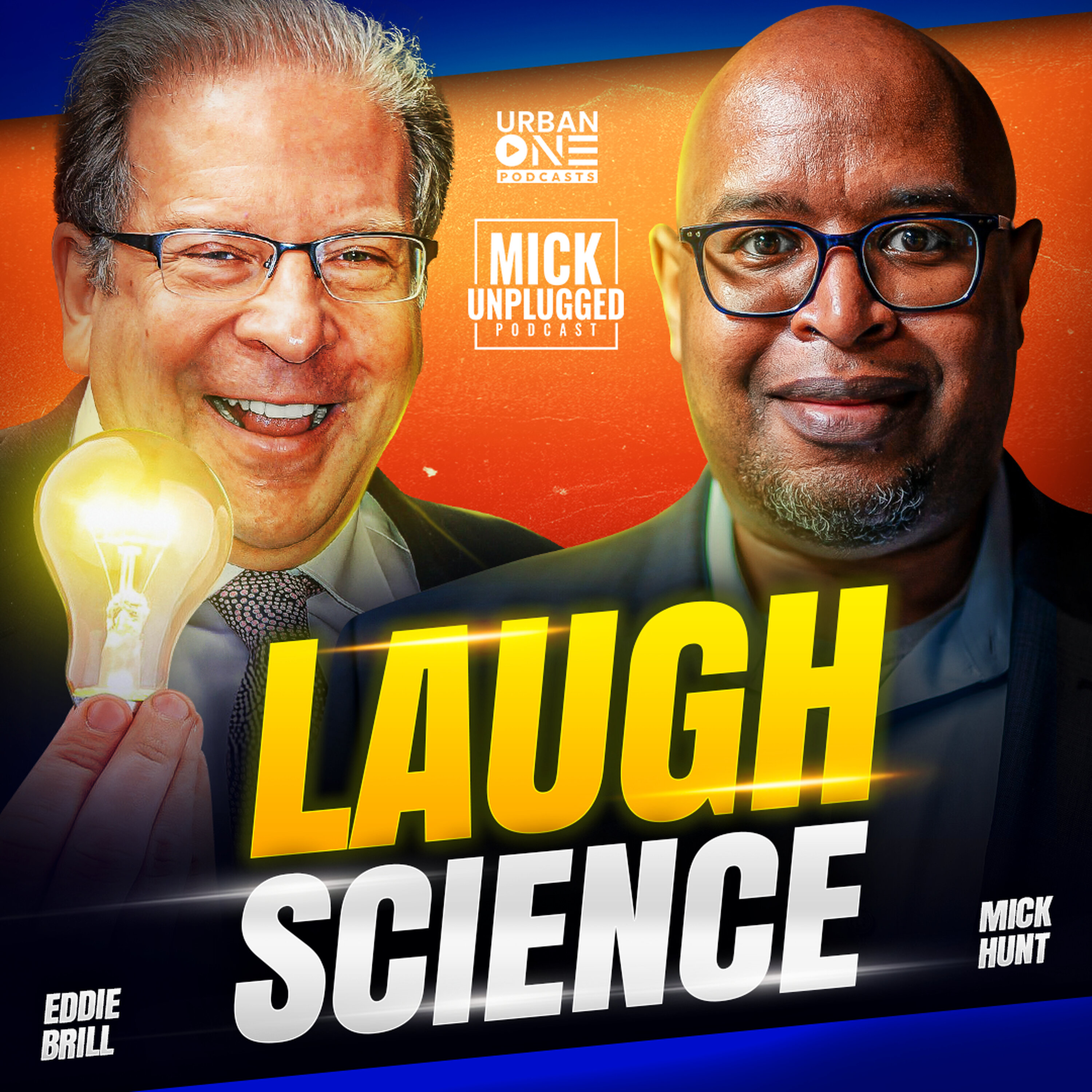
Ladies and gentlemen, welcome to another exciting episode of Mick Unplugged. And today we have a legend. From his early days at Emerson College where he co founded the renowned Emerson College Comedy Workshop, along with legends like Dennis Leary, to his 17 year tenure as the warm up comedian and comedy talent coordinator at the Late show with David Letterman, he has been the cornerstone of the comedy landscape. With a reputation for discovering and nurturing comedic talent, he continues to inspire audiences around the world. Get ready to deep dive into the art of humor with the insightful, the dynamic, the trailblazing, New York's own Mr. Eddie Brill. Eddie, how are you doing today, brother?
- [00:58]
Eddie Brill
I'm all right. You know, long intros are fun because you have to get through them. You know what I mean? They're lovely. You know, I'll tell you an interesting story right off the bat. In America, we do intros and it's very important. When I first went to London, the very first time to do standup, I think it was 89, that era. And I told the emcee my intro, gave it to him and they looked at me like really not very happy. And he went, he brought me up without saying anything, you know, just Eddie Brill. And luckily the, it went well, you know, it was good and I got to be friendly with him and I said, why were you so mean to me that first night? He said, because you were, came up to me, I never met you. And you bragged to me about your career. And I went, I wasn't bragging about my career. I was giving you my intro. He said, intro? Why would you do an intro if you're funny, the audience will laugh and you know, you could give, have all the credits in the world. And you know, he said, you know just as well as I, there are a lot of people who are not that talented who get big TV shows or work in theaters. So your intro doesn't mean anything. It's your, it's who you are on stage that really makes a difference. And I really like that a lot.
- [02:14]
Mick
Yeah, no, that's, that's actually honest. Right, because you're exactly right. I mean, I get pitches, I'm sure you receive pitches, right? Of all these people, it's like I've never heard of them. And then you go research them because it's 2025 now when information is in abundance and there's Nothing there. So it's like all this stuff you just wrote, how come I don't see this anywhere else?
- [02:38]
Eddie Brill
And it doesn't mean you didn't do it. Like, you know, people will say to have said to me, hey, you know, I have this comedian, it's another Chris Rock. And I said, well, you know what you're saying I should book Chris Rock, you know, because why would I want another Chris Rock? I want each person to be their authentic self. You know, it's, it's interesting. And one of the things I realized at the time also was how much we pander to the crowds in America. Like, hey, give yourselves a round of applause for coming out tonight. And why would I applaud going out tonight? I've done it before. I'm very good at it. It's just you're BSing the audience into making noise for you instead of creating it yourself with your talent. It's very interesting.
- [03:21]
Mick
And I love that about you. Right, because again, I've been a huge fan of yours forever. I love the joke about your mom. I forget, oh, my God, if we were not here, I could repeat the joke verbatim. But it was one that you did on Letterman and you were talking about your mom, always being honest. But she's in prison now, right?
- [03:43]
Eddie Brill
Oh, no, that's my grandmother. You know, your grandmother, when you do a five minute set for television, you need to get a laugh in the first 5, 10 seconds. So the audience, you know, if you're famous, it's different. You're gonna get a laugh even if you suck, you know, because the audience is already based on what you've done before. But a comic who's not well known, you know, needs to get a laugh in the first 5, 10 seconds. So the joke was, you know, my grandmother told me, the truth will set you free. And then she went to prison for perjury. And then I said, oh, I lied. You know, it's just taking it to.
- [04:15]
Mick
That level, setting it up for the deal. So I love Eddie, man. To go back to when you got started, right? Like to be the co founder of the Emerson Workshop, the comedy workshop, right? Like it had to be in you. When did you know that? Not only this is what I want to do? Because anybody can have the dream, the idea, right? But doggone it, you're good at this. When did you know that I'm going to do that?
- [04:43]
Eddie Brill
You know, there's so many ways to answer that. I remember the first laugh I got in the comedy workshop on stage. And it Feels so good that there's very few things like getting a laugh. And when you get a laugh, because you can write Patch Adams and make people cry. Not. There's nothing wrong with the movie, it's just, you know, formulaic crying. But laughter is a very difficult art form to create. So when I got that very first laugh and the very first Emerson Comedy Workshop bit, it's like heroin. You chase it for the rest of your life. It's really great. But your question was more about, how did I know? How did I feel? I grew up in a house where my mom was very funny. We had comedy albums around the house. I. For Christmas, I would get a. I remember I got a comedy book. And the great thing about the comedy book, there's a joke in it. And it said, what did. Tennessee? And the answer was the same thing, Arkansas. And I'm five, and it's the funniest thing I've ever heard in my life. And, you know, then I saw George Carlin on television, and he did wordplay. And so in between that birthday book and Carlin, I was doing my own wordplay. Like, I draw a picture of, like, salt shaker and a knife assault with a deadly weapon, and I would just love wordplay. So I was a, you know, a very shy kid growing up, and when I'd get laughs, it was my way of, you know, letting go. And it felt really great. So the more I would make people laugh, the more I felt strong about who I was. And then the biggest change was finding out the. That the. The bottom line is the foundation for all comedy, is the truth. So, I mean, you could be silly and you could be and do comedy whatever way you want, but the kind of comedy that I've always loved is the foundation is the truth. And once I connected to that, I'm like, I'll give you another example. Not long ago, Rick Rubin, I heard him talking, the producer, music producer, and he said, you know, I don't write my music for the audience. I write it for myself, and I do what I love. And I went to college with Steven Wright, the comedian, and he, you know, started back then with us, and he said, yeah, I don't write my jokes, you know, for the audience. I mean, I want them to enjoy themselves. I have. I love when they love it, but I write what makes me laugh. And that was another step for me to tell my truth. Like, there's. When you start out as a comedian, you act like another comedian because you don't know yourself, right? Plus, we can go Deeper society says that we're pieces. I don't know. What's the language on this podcast?
- [07:29]
Mick
Whatever Eddie Brew wants it to be.
- [07:31]
Eddie Brill
Oh, okay. I was going to say advertising, politics, and many forms of religion teach us that we're sinners and pieces of shit. And the only way we could be good is if we are consumers. And it's a very smart way to, you know, it's a very smart way to make money. If you're a smart business person, that's how you make money. So when you start out as a human being in society, you go on a date, you don't feel comfortable to be yourself. You have to create a character you think the other person wants. And what I've learned is to, you know, like people with like, all the. Like, when I was starting out, I sounded like George Carlin. My rhythms. When Jerry Seinfeld started out, he sounded like Robert Klein. Because we're acting like comedians. Once I, you know, I found out who I was or at least had some idea, that's when things the burst. The dam burst open. You know, it. So in reality, it was a very long winded answer. You know what's interesting about that? When I was like one and a half, two, I didn't talk really. They took me to the doctor and figuring out what was wrong, and they said, nothing's wrong. Some kids now, I don't shut up.
- [08:42]
Mick
You were a big thinker at too, huh?
- [08:45]
Eddie Brill
Big stinker.
- [08:48]
Mick
So, Eddie, one of the things on Mick Unplug that we talk about is your because that thing that's deeper than your why, right? Like for me, it's your purpose. And, you know, my because started out as a promise that I made to my mom, and then it became, you know, promises that I made to my brother, my sister, my kids. So my because is always around, a promise. And I know that you are so philanthropic and you, you do more unseen than people will ever know. Like, what is Eddie's. Because when.
- [09:18]
Eddie Brill
When I was very little, we, you know, we didn't have any money and we parents eventually got divorced and, you know, it was. We were living very poorly. But love, love, love. And all. All through the house. Love, laughter, lot of laughter. And that really carried us. You know, we didn't. We once a week we'd get ice cream and it was the greatest night of our lives. You know, and my stepfather, who was incredibly great, got very sick and died of cancer. You know, I was 15 and we're five of us, and I raised the kids and I got such A joy in being, you know, the, like, the, the leader, the teacher, the, it just gave me such a joy. And I think I've carried that all the way through in my life. Not, not to everyone's happiness. But I, I, I, I love doing that. That's why, like, if you, you book comedians for television or you book communities or anything, you have to say no to 99% of the people who audition. And you're not loved because of it, because people want you think you're a jerk for not doing that, but you learn to live with what you can do. And my purpose has been just be the best. There's a great book called the Four Agreements. I don't know if you're familiar with it. My bible. And one of the things is to just be impeccable with your word. Don't make assumptions, don't take things personally, and do the best you possibly can. And that's how I live my life. I follow that pattern. I don't know if I answered the question or just, you know, no, that's.
- [10:54]
Mick
Truly, truly, truly amazing. And you know, again, been a huge fan of yours forever. And this is something I wanted to ask you. You know, I hear, and I've heard a lot of comedians, whether it was Robin Williams, a Deon Cole, talk about, you know, the dark side of comedy. When people expect you to always be funny and to always love and to always be humorous, they forget a lot of times that you're going through the same things that they're going through and you just have 30 minutes, an hour to go be funny. But as soon as you come off the stage, you're dealing with that same monster, whatever it is that everyone else is dealing with, how hard, either for you or people that you've been around or even just for the industry of comedy, how hard is that for people to really understand that you really are funny? For an hour, right? But outside of that, you were going through the same stuff. And probably right before you're supposed to be funny, you just received some horrible news. They're expecting Eddie to be funny. As soon as Eddie grabs the mic, huddle up.
- [12:02]
Angel Reese
It's me, Angel Reese. You can't beat the post game burger and fries, right? Know what else you can't be Angel Reese Special. Let's break it down. My favorite barbecue sauce, American cheese, crispy bacon, pickles, onions, and a sesame seed bun, of course. And don't forget the fries and a drink. It's gonna be a high C for me.
- [12:20]
Eddie Brill
Sound good?
- [12:21]
Angel Reese
All you have to do to get it is beat me in a one on one. I'm just playing get the angel re special at McDonald's now I participate in.
- [12:30]
Eddie Brill
Restaurants for a limited time. That's happened to me, you know, I've gone just before I went on stage, you know, get some really horrible news. It was one of the biggest comedy nights of my life where I ended up performing at Carnegie hall and Caroline's and at the Letterman show and one other venue. And I, it was a misdiagnosis, but I had heard that my. One of my brothers had pancreatic cancer. And knowing that Bill Hicks, the great genius comedian, had just recently died of that very quickly, I had to go on stage and do these shows and I took all the energy that I had and put it together. It had some of the best shows of my life and then collapsed when it was over, only to find out a couple of days later it was pancreatitis and it was misdiagnosed and he lived and wow. But, you know, you find out this news, you gotta go, you gotta do the work and it's actually beautiful. My sister had a lot of loss and I'm gulping because I have, you know, my sister died in 1997 and it just hurt so bad that she did. And it was, it was very interesting because when she had, you know, when she had passed away, you know, took a lot out of me. So I learned after a while to celebrate the life as. Instead of mourning the loss. I, you know, it's, it's funny because in this conversation about this, I was actually going somewhere else, but my brain took me over here. Yeah, it's, it's just, it's an interesting, it's an interesting life because you, you never know what's around the corner. You can't really plan. You could, I mean, you can, but it's not always going to work out. So to be able to ad lib, to be able to play in the moment, and to never take things so seriously, you know, like some jokes that I write are not politically correct. Not mean, not mean spirited. It's just funny. And I can't spend my life trying to please everybody. Like, people will say to me, hey, you know, I saw Chappelle's Special and I didn't like it. And I say to them, he's not here to please you. If you don't like Chappelle, who is one of the most talented comedians on the planet, if you don't like him, change the channel or go watch somebody else or complain about Something else. There's. Life's too short, right? Boy, did I go all over the place on that one. I watch. I'll watch this later and go, what did. I mean? Why did I bring my sister up?
- [15:01]
Mick
This is raw and authentic with Eddie Brill. I love it. I love it. So, you know, you get your stint with Letterman. You. You earn it. And here's what. Again, just being a huge fan of you. You're in New York. There's. And I mean this as lovingly as I can. There's 200,000 Eddie Brills in New York trying to get that same job, right? Same thing in Chicago, Toronto, like all these big cities that are just comedy houses. Everyone's vying for and applying for and auditioning for what you got. How the heck did Eddie Brill get that?
- [15:42]
Eddie Brill
You know, what's the. Weirdly enough, it's as simple as the two. You know, when I was in. I lived in la, in New York for a while, and one of the guys I went to college with contacted me out there. I was broke, and he said, I'm working at this show called Saved by the Bell, and they need a warmup comedian and you'll make a thousand bucks or something. And I had, like, 35 cents in my pocket, and I said, I. I've. Yes, I'm a warmup comedian. I never had done it before, and I had done it, and it was babysitting. It was just babysitting. The only. The great thing about it was the money, of course, but so I can afford to live. But across the hall, literally, you know, a couple of feet across the hall, was the Tonight show with Johnny Carson. That was great. But anyway, I did the warmup, and it was a very hard job to do, but I did it and it was okay. And then I moved to New York and I got an offer to work at the Dana Carvey show to warm up the audience. Now, the Dana Carvey show was a really smart and funny show, and the. It was too smart for American television. And it was taken off after only a couple episodes. You know, Steve Carell and Robert Smigel and Louis CK and, you know, it was just all the best of the best. And the show only lasted a few episodes. So now Louis CK Went over to the Letterman show to do some writing. Everyone dispersed into different shows, and Letterman approached the writers and said, do you know a comedian who. We need a warmup comic. So Louis said, yeah, I worked with Eddie Brill at the Dana Carvey show, and. And so I met Letterman and had a six week trial period and it lasted 17 years. You know, you have to be able to do the job when you get there, and you have to work hard. Like, I would average between 5 and 600 standup shows a year just running around, working sets and. Because you got to love it, you got to marry it, you got to love it, and you got to hold it and you got to squeeze it and you got to nurture it. And that's what I did. And I still love it. I love it more. I'm now doing it 40 plus years, and I just. I can't get enough of that funky stuff.
- [17:44]
Mick
Yes, sir. You know what else I love about you, Eddie, is that you are genuinely who you are and you. You hone in your craft. Even 40 years later, like, you're still, you know, honing in your craft. And these are the words of Mick and Mick only and are only part of the Mick Unplugged podcast. So I don't want anybody coming at me. But, you know, over the last, what, seven, eight years, the YouTube and the Instagram comic has gone craze, right? To me, they're not that funny, Eddie. Like, to me, they can't go on stage and work a crowd like it is. I respect what they do, so I don't want anyone to come at me and say, I'm not respecting you. I totally respect what you do. But when you can hold your phone and edit and do whatever, it's a little bit different than when you're in a room. I don't care if it's 50 people.
- [18:36]
Eddie Brill
In a room, right?
- [18:37]
Mick
It's different than you got to work this out in the room. And this is what a lot of people don't know. I love live comedy. I go to comedy shows monthly, always going somewhere. There's always 15 to 20% of the room that paid to go see this comic that's sitting there saying, yeah, but I'm not gonna laugh. I bet you he's not that funny. Or she's not that funny, right? Like, people don't understand. So for that Instagram or YouTube comic, man, like, how. What does Eddie feel about that? I just. I had to get that off my chest.
- [19:07]
Eddie Brill
I'm sorry. No, it's okay. And it's understandable. The comics, we talk about it all the time. You know, the. The whole idea, the whole idea of writing comedy and performing it and trying it out. You know, there was very few people who were amazing at it, you know, like Richard Pryor, George Carlin, Lily Tomlin. Jonathan Winters from that era, and then before them, Jack Benny, and then before that, Charlie Chaplin and Mark Twain before that. And comedy consistently goes through time. What's happening now? The pandemic hit and you're at home and you can't really do stand up in front of a crowd, which is the way it's supposed to be done. So what someone does is they use their brains to create this Internet comedy. And it's different from stand up comedy because you're just using the Internet. So it's nothing for me to be jealous of. But what a smart person would do who has popularity, who has 2 million followers or whatever, they take five of their friends who are good standups and go on the road, and the emcee who's popular and brings in the crowd, goes up on stage and just chats. And it's not that funny. Might be a funny person, might, might have jokes, but mostly they don't. They're mostly like, hey, I'm the la la la clown, clown, clown. And that's okay. Nothing wrong with being a clown. You know, many comics are clowns and, and many clowns or comics. And then they'll bring on, like, their friends who are talented, so the audience gets a show. That's the smartest way to use the Internet. But there, you know, but I think that I want to stay away from being the comic. Like when I was a kid, you know, there are comics, we used to go up and we didn't have two legs. You know, we would go out there and, you know, so I don't appreciate the. I appreciate the art of standup and I love the writing the joke and, you know, trying it out and then rewriting the joke and then trying it out and getting into a place and then writing a new joke and then trying that out. That part, to me is the art form. But it doesn't mean that these people who are playing on the Internet are, you know, are that talented at standup. They're talented at creating a phenomenon. There are comics who work the Madison Square Garden who are not funny to me. It doesn't mean I don't like them or hate them or wish them poorly. It's just that they've learned to use the Internet. And I think it's a very smart ploy on their part. Doesn't mean I have to enjoy it or love it. But I respect the people who said, for instance, when you had TV shows like the Lucy show or Mr. Ed or Green Acres and you had these sitcom shows, they were written by Some of the greatest writers in the business, you never saw them. You only saw their names on the credits and they never got the exposure. But you watch Mr. Ed now, it's still hilarious. You watch Lucy. It is a great, well written show. So nowadays you have, you know, just a really good performer at the head of the show and then you have a bunch of comics in there. So I don't hate it. At the beginning I was like, darn those kids. But I actually respect a lot of them.
- [22:27]
Mick
No, I mean, I respect the work. Don't get me wrong, I respect the work. It's just when they start talking about comedy and stand up, I'm like, wait, it's a little bit different. It's not. Those two are not the same thing. Right. But it's okay. Work hard, I appreciate. You got to follow.
- [22:43]
Eddie Brill
Yeah. If you work hard, I respect it. You know, you can, you know, I work with a bunch of younger comics and you can't, I don't believe you could teach someone to be funny. You either have it or you don't. And I tell that to the people I work with. I, but you can workshop it. You can say, okay, here's a joke and I don't know how to finish it, or the middle is a little bit weak or whatever and you can actually workshop it and get the joke to be the way it is. But it's, but, and the process of working out a joke or working out a scene or working out a movie that's funny is, that's really an incredible process that you know. You know, like you watch a famous comedy movie, like being There, it might not be like, laugh out Loud, like if you watch Blazing Saddles, but they're both brilliantly great comedy films written by two, you know, like Jersey Kosinski is one and then Mel Brooks and Richard Pryor is the other one. And they're completely different writers, but they have created, you know, really brilliant comedy. And I, I, that's what I respect. The people who put the work in, you know, shortcuts. It's eventually going to burn you out.
- [23:53]
Mick
Absolutely, absolutely. So, you know, you said workshop several times in that, that segment. Let's talk about it. Eddie Brill and his workshop. So, so not only are you the, the world renowned writer, the world renowned comedy, I'm gonna say expert guru, Right? Like, you are the king of funny to me. Talk to us about these workshops that you do.
- [24:18]
Eddie Brill
Yeah, I, I, I've been doing it for like 25 years around the world. And what it really is, is Bringing a whole bunch of people together and working out your material and hearing the other people's perceptions. Like, if I go on stage and I do my set, and then I have the whole group sort of give me their perceptions, I don't have to agree with any of it. I don't. The person might be. Have never had done standup, or the person has been doing it for 20 years. But it's great to hear their perception, because we don't know what we're like as much as other people. So if someone says, hey, you're always touching your chin, or when you say, you say, you know, all the time. And when. A lot of times we're afraid of the silence. And the silence is one of our most cherished partners in comedy. Jack Benny got all his laughs on pauses. So in the workshop, a lot of times, a lot of workshops, I'll do. You'll hear people say, you know, and. And I used to say that all the time, but now I've learned to just use. Because words are only one form of communication. You use your body. Like, if I said to you, I was walking down the street and I saw this beautiful car. You got it. But if I said, I was walking down the street and I saw this beautiful car, that little face that I made is just as much writing as the words that I wrote. And it's all. It's all part of it. So the more I do it, the better I enjoy it. And I've learned and have grown myself from doing these. Like, I recently got a really great compliment. There was that movie everywhere, everything, every place I forgot the name of the film. There are two guys who had written it named Daniel, the two Daniels. And they. They were being interviewed, and they said, yeah, we took Eddie Brill's workshop a million years ago. They won the Academy Award. And they said, you know, he did this thing where he made us listen. And I learned a lot about pausing and listening and how powerful that is. You know, it's pretty good. I. First time I did Letterman as a guest, Joan Rivers, and I was on the plane that I was coming back home on, and I introduced myself at the gate, and she came and switched places with the woman next to me. And I told her I was doing Letterman as a guest for the very first time. And she had me go over my set with her on the plane and then gave me great advice, including the pausing and using the silence as your friend. And when I was on stage that night doing the Letterman show, Joan Rivers were right here. She was Right in the. You know, she was right there the whole time. And I'll never forget what she did. And then years later, I was ho. I was doing this thing at the Studio 6B, which is where they film Saturday Night Live. I think it's 6B. And I was hosting an event and it was all celebrities. And they're all. A lot of them are coming in late and they're doing, why are you late? What'd you forget? Your watch, you know, stupid, you know, little things. There was laughing and all of it. And then Joan Rivers walked in and the audience was like, all right, here we go. And I said, I'm not gonna make fun of her. And I explained to her how good she was to me. And they gave her a standing ovation and she like, you know, had tears and, you know, comics will help comics. You know, I got help from David Brenner. I got help from Joan Rivers. I got help from, you know, just people, you know, so many wonderful people took very good care of me. And I vowed to do the same for young comics along the way.
- [27:33]
Angel Reese
Huddle up. It's me, Angel Reese. You can't beat the post game burger and fries, right? Know what else you can't be the Angel Respect special. Let's break it down. My favorite barbecue sauce, American cheese, crispy bacon, pickles, onions, and a sesame seed bun, of course. And don't forget the fries and the drink. It's gonna be a high C for me.
- [27:52]
Eddie Brill
Sound good?
- [27:54]
Angel Reese
All you have to do to get it is beat me in a one on one. I'm just playing get the Angel Reese special at McDonald's now. Ba da ba ba ba.
- [28:01]
Eddie Brill
I participate in restaurants for a limited time.
- [28:03]
Mick
I love it. So speaking of comics, if I were to ask Eddie Brilliant of all time, who was your favorite comic of all time?
- [28:14]
Eddie Brill
I would mix. I would say there's 1 and 1A. 1A, 1B is Carlin and Pryor. Yeah. And I would say that Jonathan Winters is right up there too. But it was different. He did. You know, there's a clip of him on the Jack Parr show and it's called the Stick. And he just takes a stick and for six minutes he just. It's just brilliant. Genius.
- [28:34]
Mick
Yeah.
- [28:35]
Eddie Brill
How about you? Who's your favorite comic of all time?
- [28:38]
Mick
So my 1A is prior and then I probably am gonna say Red Fox.
- [28:46]
Eddie Brill
Ah, yes, right.
- [28:48]
Mick
Like red. Like again, people, don't they remember San Francisco? But you know, I still have the old 45s. I got a 45 player right there.
- [28:57]
Eddie Brill
That's fantastic. I will.
- [28:58]
Mick
In most of the records that I have, believe it or not, are comedy. I have comedy and jazz. Like, literally, that's it, right?
- [29:04]
Eddie Brill
Comedy and jazz, it's the same thing. It's the same thing. You know, jazz and comedy, they're very mathematical.
- [29:10]
Mick
Yeah. Red Fox.
- [29:12]
Eddie Brill
Redd Fox was very good to comedians. One of my heroes is Flip Wilson. And Flip Wilson had Redd Fox on the show the night before Sanford and Son was going to air, and he was plugging the show, and it was one of the funniest episodes ever. Flip Wilson was doing stand up and Redd Fox was heckling him from the audience. It was just brilliant. When I was. I went to Viva Las Vegas once with my friend Robert Schimmel. And Robert Schimmel was a brilliant comic who helped me a lot. And he. Red Fox loved him and put him on all these things. And he was playing poker at the tables. And so I joined the table, Robert and I, and I got down to. I got in a hand with me and Red Fox, and we're the only two people left. And I have a queen's boat, and I'm ready to kick his ass. And we're laughing and we're taunting and we're having fun. And all of a sudden I lay down my queen's boat and he has a king's boat and wins and goes, kid, you gotta be doing comedy a lot longer than that for me to beat me in poker, you know, it was such a thrill, man.
- [30:14]
Mick
Those were the good old days, man.
- [30:16]
Eddie Brill
I'll tell you a great George Carlin story.
- [30:18]
Mick
Let's go.
- [30:19]
Eddie Brill
You know, again, at the beginning of my career, I was acting like George Carlin. And my jokes were very word, but ish and still are. And I wrote a joke that I liked that was, you know, how can you have a word like nonchalant when there's no such word as shalant? And then I acted out, oh, my God, I'm late for work. I can't find a thing to wear God, on my shalant today. And I was like, calm down, Ray. Be like me, nonchalant, right? And it would always get big laughs. So I did the joke on Star Search in October of 86. It aired January of 87. And I got a call from a comedian friend who said, you know, why did you do George Carlin's joke on tv? And I went, I, he's my hero. I know all his material. I would not never do George Carlin's joke. I wouldn't do anybody's joke. Not on purpose. So I took the joke out of my act because I don't want people thinking I stole the thing. And I was ashamed because I loved the joke and it was crushing with the audiences. So years later, I was at the Ballys in Las Vegas and working with Robert Schimmel in this, the Comedy Room Catch Rising Star. And Carlin was in the big room. I'm in the lobby, I see Carlin. I go up to him and I introduce myself. He couldn't have been nicer. And I told him the story. And he goes, well, first of all, you're smart to get rid of the joke because people are going to think you stole it and they're going to not think well of you. But secondly, someone told me that joke and I thought it was so funny, I didn't know it belonged to a comedian. So it turns out I'm the son of a bitch who took your joke, you know, which was such a thrill, which started our friendship and my relationship with his daughter and his brother and family. And. And then when George had passed away in 2008, his daughter called me up and said, you know, now that my dad has passed away, I'd love you to do that joke again to keep that joke alive. And it was like, okay. But I said to myself, I would never do it like the joke. I would explain it so that people understand. If they remembered Carlin doing it, they wouldn't think that I took it, because that's the worst thing you could do. Yeah.
- [32:26]
Mick
So question for you, and this is totally kind of off topic, but you went there. How serious is joke stealing in the comedy world?
- [32:33]
Eddie Brill
It does.
- [32:33]
Mick
All from the viral moments last year.
- [32:35]
Eddie Brill
It does happen because there's a lot of insecurity and people can't write and they need material, and people will do what it takes, whatever it takes, not always with integrity, to get far. And I know very good friends of mine who've stolen material a lot, and they don't care because they've had wild success because they were noticed. To us, to most comedians, it's like stealing your baby. No one's allowed to steal your baby. But some. A lot of people don't care because there's one life they live and they have. They don't live in integrity, and they, you know, they'll steal material. And I, you know, like, I've been in shows where friends of mine have done material. I've had friends do it on the Tonight Show. I've seen some of my jokes and they did very well. They did, but not with me saying it. And I've had a few people admit over the years later, I took your joke. I'm sorry, you know this. And it's just. It's really evil. It's an evil thing to do. But people, a lot of people don't care because they'll do what it takes to be famous or to have money or their values are low and their greediness, or again, lack of integrity is more powerful.
- [33:47]
Mick
Yeah, you know, I was telling my wife, because last year we were talking about it, and, you know, I was like, babe, it's a little bit different than, like, leadership, right? Because I do leadership consulting and advising. And I can say, hey, you know, Abraham Lincoln, a great leader, once said, and it's cool. A comedian can't go on stage and say, hey, I got this from Eddie Brill. Let me tell you this joke, right? It doesn't come across the same.
- [34:07]
Eddie Brill
It doesn't. Now, a situation might come up where something happens. You're chatting with the audience, and someone goes, you know, it's funny you said that. And my friend John Mendoza has this great joke he does in his act. Not that I've ever done that. And John and I are friends, but I was, you know, you could say that. And it's still. Some audience member might go, hey, I heard. Here's an Eddie Brill joke. So you don't do that. But if you're going to ever do it, there's a. That's the situation you do it in. What kind of leadership stuff do you do?
- [34:38]
Mick
So I'm all about the modern leader and modern practices, right? Because it's 20, 25. Humans have changed, right? Humans have gotten younger, but humans have also changed. We buy differently now. You know, 20 years ago, Eddie, you wouldn't have your credit card or checking account stored on a computer somewhere, right?
- [34:56]
Eddie Brill
Yeah. Right.
- [34:57]
Mick
Now, that's kind of the way it is. We don't go into places. And so if people have changed who we are in our habits, leadership kind of has to change, too. We have a lot of, I'm going to say, mandates. We have a lot of doctrines from the 1800s, the 1900s. And while a lot of those are true to the core, how we communicate is much different now. Right? Again, these are the words of Mick and Mick, only people a little bit softer than they were when Eddie and I were growing up, right. We'd walk home from school and 15 people, 15 adults could yell at us, and we'd have to accept it. And Say, yes, ma'am. Yes, sir. Whatever. Now you do something and it's like, oh, my God, like the police come to your house if you look at somebody the wrong way.
- [35:39]
Eddie Brill
Right.
- [35:40]
Mick
So it's just. I feel like leadership and more importantly, emotional intelligence is different now. And I think we need to lead with emotional intelligence, and we need to. Again, a lot of the core of leadership is the same, but how do we communicate? How do we get people to no longer be motivated but to be inspired? And that's what I really want to say.
- [35:59]
Eddie Brill
Yeah, I think that there's a. You know, the gut is the brain of the body, and the gut never lies. Now, you can rationalize anything in your head, but. But your gut, if you trust it and learn to trust it, you will know the truth, and you will know your truth, and you'll be able to do that. And I think it's important. A lot of people, you know, it's funny, I use, you know, Nina Simone and what's her face, Celine Dion, as an example. Celine Dion gets all the notes right. She has an incredible voice, but she's in her head. She's painting by numbers. You know, I'm doing an A and then a G and then a C and all this kind of stuff. And Nina sings from the gut. She's. The camera's not low enough, but from the gut. And she might make a mistake. It might not be perfect, but it's real and it's human and it's soulful. So people say to me, when you. I want to book a comedian, what do you do? And I say, I look for Nina Simone. Nothing wrong with Celine Dion. You know, she has her. She has a beautiful voice. It is. But there's the soul that's missing for me, is so important. So when I look at people, I look at them from the gut, and I realize this is again, the brain of the body. We should do something together where we do a leadership program and we talk about how people laugh and teach them why comedy is so important and inherent in the history of our world and how you can laugh at the. The most horrible things and, you know, just to relieve. To have a relief or a release.
- [37:35]
Mick
Eddie, I would be honored. Consider that done. We will. If. If you really want to do that, Eddie, that is going to happen this year.
- [37:43]
Eddie Brill
Very cool.
- [37:44]
Mick
I love that.
- [37:45]
Eddie Brill
I'm serious. I. You know, I am, too. Yeah, good.
- [37:47]
Mick
I am, too. Well, Eddie, I know you're very, very, very, very, very busy human being. You have. You always have things going on. Last moments like, what do you want people to know about Eddie Brew? What do you have going on now, what's upcoming, what's new out there?
- [38:03]
Eddie Brill
There's so many things. There's a club that I don't know if it's going to happen, but they want to change their. What they've been doing and they've asked me to help them kind of do that. That's kind of the newest project. You know, I'm doing standup all the time. I'm. You know, you can find me on Instagram at evvy comic. It's very easy. The. You know, I produced 12 comedy videos last year. You know, it's nonstop. I. Whatever I can do, I do, you know, you can, you know. But my favorite thing of all of them is doing standup. That's. I. The other night, I was supposed to do 45 minutes. I looked at my watch, figuring I'd done about 25 and I had done an hour and five. It's just. I can't get enough of that, you know, it's so good.
- [38:47]
Mick
You are the man, Eddie. You are the man. So all the listeners and viewers, I'll make sure we have everything associated with Eddie in the show, notes in the descriptions, make sure you are following it is going to be definitely worth your time because you're going to get the funny. And when he talks about to the gut, I like to do what I call gut laughing when. When Eddie is blessing us with this time. So, Eddie, brother, thank you so much.
- [39:12]
Eddie Brill
My pleasure.
- [39:13]
Mick
Definitely going to make this happen. You made my day by making that comment. So we're going to do it.
- [39:17]
Eddie Brill
Okay. Wonderful. It was such a pleasure. I had no idea what to expect. I like to go in without an idea and I'm richer for it.
- [39:26]
Mick
No, you bless the millions of downloads and listeners and viewers that we have. So thank you, Eddie.
- [39:31]
Eddie Brill
Brooke, wonderful. Be well. Have a beautiful day and be in touch. You have my info?
- [39:35]
Mick
You got it. For all the listeners and viewers, remember your because is your superpower. Go unleash it.
- [39:46]
Eddie Brill
Thank you for tuning in to Mick. Um, Unplugged. Keep pushing your limits, embracing your purpose and chasing greatness. Until next time, stay unstoppable.